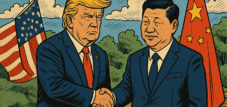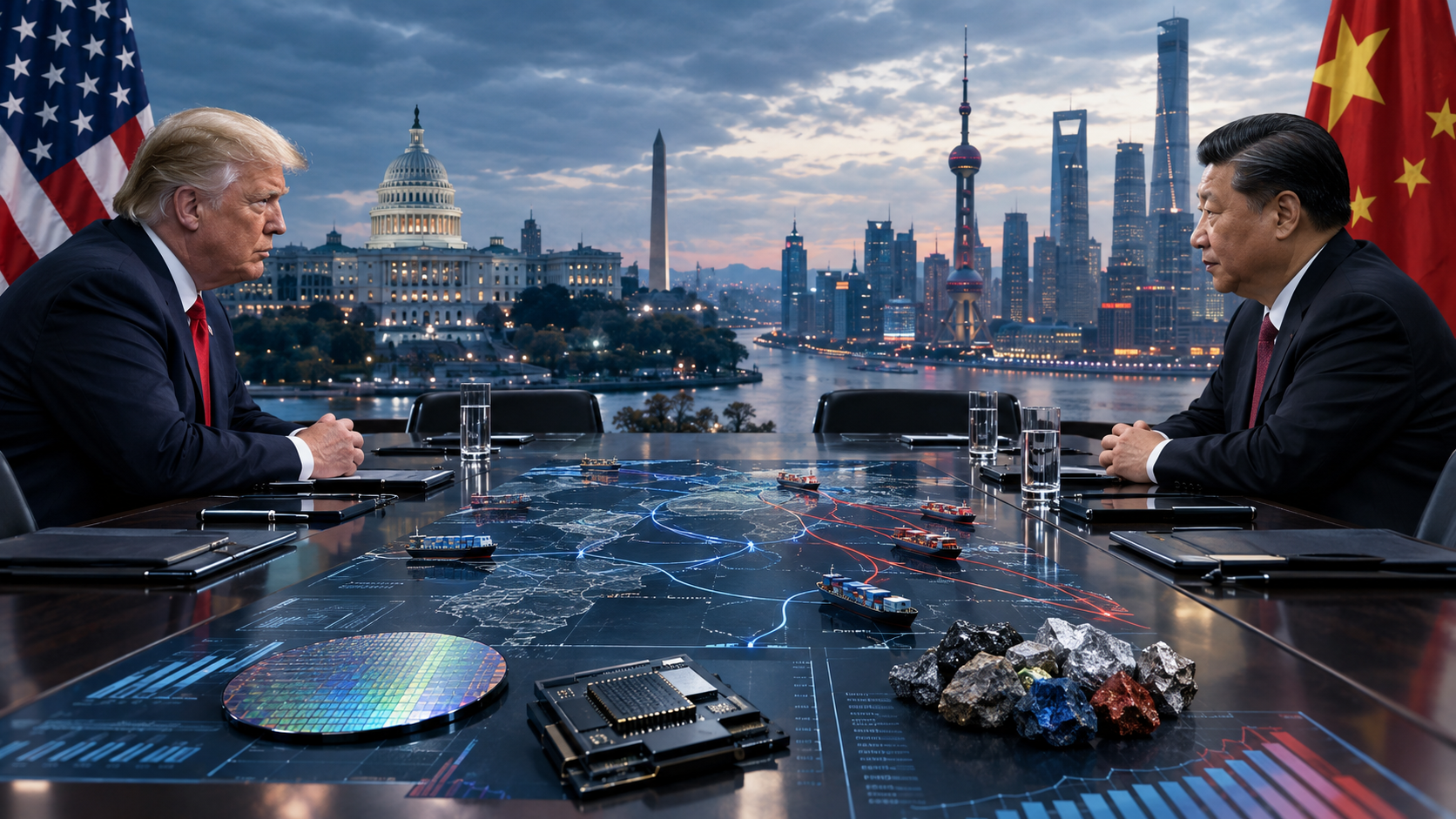
Xi Jinping and Donald Trump: Partnership or strategic calculation? – Creative image on the topic, created with AI: Xpert.Digital
Taiwan as a bone of contention: Borderlines in the US-Chinese relationship
China's economic stability in focus: What does the dialogue mean for global trade?
Artificial intelligence and geopolitical tensions: Where do the USA and China stand?
Relations between the US and China are currently undergoing a phase characterized by contradictory signals and strategic realignments. While Xi Jinping and Donald Trump promote a partnership based on dialogue and cooperation, behind this rhetoric lies a complex web of rivalry and power plays. Neither nation is striving for complete reconciliation, but rather for a stable competitive order in which they can safeguard their own interests.
The agreed-upon tariff reductions totaling $30 billion and the opening of communication channels in areas such as artificial intelligence and military crisis communications suggest a pragmatic approach. However, the question remains whether these measures will actually lead to a lasting improvement in relations or merely serve as a tactical maneuver to appease markets and the public. While the US aims to limit China's influence, Beijing is seeking ways to secure its economic stability and expand its international reach.
This analysis examines the background of current developments, the strategic goals of both sides, and the challenges hindering a genuine partnership. The Taiwan issue, the technological race, and geopolitical tensions are key themes that will continue to shape the dynamics of US-China relations.
USA and China: A partnership born of necessity? The great peace that isn't one
Recent signals from Washington and Beijing suggest a political about-face. Chinese President Xi Jinping declared that the United States and China should be partners, not rivals. US President Donald Trump received Xi with demonstrative appreciation, while both governments extended their trade truce, acknowledged reciprocal tariff reductions totaling $30 billion, and agreed on new channels of communication regarding artificial intelligence and military crisis communications. After years of escalating tariffs, export controls, and geopolitical posturing, this paints a picture of the beginnings of normalization.
This picture isn't entirely wrong, but it's misleading to conclude from it that rivalry is over. Xi isn't seeking a partnership in the classical sense, where both powers align their strategic goals. He's aiming for a more predictable form of competition, one in which China can grow economically, catch up technologically, and expand its international influence without constantly having to reckon with new American tariffs, financial sanctions, or export bans. Nor is the US government abandoning its goal of limiting China's growing power. Rather, it's trying to keep Chinese countermeasures regarding rare earths, industrial components, and key export markets manageable.
The most reliable interpretation is therefore this: Both sides are not seeking reconciliation, but rather a sustainable competitive order. Cooperation is offered where escalation would be too costly for both. In key strategic areas such as semiconductors, artificial intelligence, military security, Taiwan, critical raw materials, and industrial leadership, the conflict persists. The rhetoric of partnership is thus neither mere propaganda nor the beginning of a new era. It is the diplomatic operating system for a rivalry that is to be contained, but not ended.
Xi offers stability, not subordination
Xi's formulation that China and the US should be partners, not rivals, serves several functions simultaneously. Externally, it conveys a sense of responsibility and a willingness to make peace. It is aimed at international companies, financial markets, emerging economies, and American interest groups that would suffer from further decoupling. Domestically, it reinforces the image that China engages with the United States as an equal and can compel Washington to negotiate without relinquishing key positions.
The term "partnership" is deliberately interpreted in a flexible manner. From a Chinese perspective, it does not mean that Beijing adopts the Western understanding of political order, market rules, or military transparency. Rather, it refers to the recognition of equal centers of power, each with legitimate security and development interests. Washington is expected to accept that China cannot be permanently contained technologically, economically disciplined, or curtailed in its regional influence. In return, Beijing offers to manage conflicts in a controlled manner and to provide certain economic concessions.
This logic differs fundamentally from the period following China's WTO accession. At that time, the United States hoped that increasing trade integration would open China up to a market economy and make it more politically predictable. Today, the focus is no longer on convergence, but on coexistence. China wants access to markets, capital, and technology without jeopardizing its industrial policy control, the dominant role of the Communist Party, or its long-term geopolitical ambitions.
Xi's offer is therefore serious, but tied to Chinese conditions. The desire to defuse the trade conflict, reduce investment risks, and improve access to key technologies is genuine. However, the equation of American and Chinese interests, while ignoring fundamental asymmetries, is merely tactical. Both economies benefit from stability, but they define it differently. Washington demands verifiable concessions, greater market openness, and reduced security risks. Beijing understands stability primarily as the renunciation of new American pressure measures and the recognition of core Chinese interests.
Trump operates within deadlines and levers
The American side is also not pursuing a classic policy of détente. The Trump administration is using tariffs not only as a protective measure but also as a negotiable power tool. An announced or existing tariff creates costs and uncertainty; a postponement is then offered as compensation. The value of the concession therefore often lies less in a permanent tariff reduction than in the temporary non-application of an even stricter measure.
The extension of the trade moratorium until January 10th is characteristic of this approach. While it initially prevents a new escalation, it does not resolve any of the key conflicts. Instead of a long-term framework, companies were given only an additional two months. The central issues concerning Chinese agricultural purchases, rare earth elements, industrial subsidies, technology transfer, export controls, and market access were not permanently resolved but rather postponed to the next round of negotiations.
For Trump, this approach has several advantages. Short deadlines maintain pressure on China and allow him to repeatedly exploit visible concessions for political gain. At the same time, the administration can temporarily limit the negative consequences of an escalation for US consumers, farmers, technology companies, and industrial producers. Unpredictability becomes part of the negotiating strategy, intended to prevent Beijing from treating an American position as permanent.
This strategy, however, comes at an economic price. Companies cannot efficiently plan supply chains, investments, and procurement when key customs and export regulations are renegotiated every few months. The short-term postponement reduces the acute risk, but not the structural uncertainty. For the real economy, a provisional peace is therefore less valuable than a long-term, institutionally secured agreement. Such an agreement is precisely what is still lacking.
The numbers refute simplistic success stories
Trade data shows that the confrontation has significantly reduced bilateral trade. In 2025, according to US figures, US-Chinese trade in goods amounted to approximately $414.6 billion. The United States exported goods worth about $106 billion to China and imported goods worth roughly $309 billion. The bilateral US trade deficit thus fell to about $203 billion, almost a third lower than the previous year.
At first glance, this seems to confirm Trump's strategy. Direct imports of goods from China declined significantly, and the bilateral deficit also shrank. However, a sound economic assessment cannot be limited to the balance with a single country. The total American trade deficit in goods and services remained at approximately $901.5 billion in 2025. The goods deficit alone reached a record high of about $1.24 trillion. Part of the previous China deficit shifted to other supplier countries, particularly to production sites in Southeast Asia and Mexico.
This is not merely a statistical shift. Companies have actually diversified their supply chains, relocated final assembly, and processed Chinese intermediate products through new production networks. This can reduce their direct dependence on finished products from China. At the same time, Chinese value creation remains embedded in many supply chains, for example, in machinery, electronic components, battery materials, chemicals, or intermediate products for assembly in third countries. The bilateral trade balance only partially reflects this indirect dependence.
China, in turn, demonstrated remarkable resilience in its foreign trade in 2025. Total Chinese foreign trade rose to 45.47 trillion yuan. Exports grew by 6.1 percent to 26.99 trillion yuan, while imports increased by only 0.5 percent to 18.48 trillion yuan. The trade surplus reached the equivalent of approximately US$1.2 trillion. While exports to the United States declined, Chinese suppliers expanded more strongly in Africa, Southeast Asia, and Latin America.
This leads to a contradictory result. The US tariffs were effective enough to alter direct trade flows and penalize Chinese suppliers in the American market. However, they were not effective enough to fundamentally break China's export-oriented growth model or to significantly reduce the overall American trade deficit. China lost relative importance as a direct supplier to the United States but expanded its position in other markets. Washington achieved diversification, but not complete decoupling. Beijing suffered market losses in the US, but not an external economic collapse.
China's peace offer has a cyclical core
Behind Xi's rhetoric of détente lies a tangible economic interest. China's economy continues to grow faster than that of most industrialized nations, but its growth model is unbalanced. The International Monetary Fund forecasts real growth of approximately 4.5 percent for 2026. This is high by international standards, but below previous Chinese rates and is accompanied by significant structural problems.
Private domestic demand remains weak. The housing crisis is straining wealth, consumer confidence, and local government finances. Consumer prices stagnated on average in 2025, while the overall price index continued to decline. Such deflationary tendencies exacerbate debt problems because real liabilities weigh more heavily and companies may postpone investments in anticipation of falling prices. At the same time, the population is aging, the labor supply is shrinking, and the returns on further capital-intensive investments are declining.
In this situation, exports fulfill a crucial stabilizing function. They keep industrial capacity utilized, secure employment, and enable technological economies of scale. A renewed massive escalation with the United States would therefore hit China at a vulnerable time. Even if Chinese companies develop further sales markets, the US market remains difficult to replace due to its size, purchasing power, and technological importance.
Xi's offer of cooperation is therefore not merely a foreign policy stunt. It serves to protect the Chinese growth model. Beijing needs time to strengthen domestic consumption, stabilize the real estate sector, expand its technological self-reliance, and develop new markets. A more reliable relationship with Washington would reduce the costs of this transition. From a Chinese perspective, strategic stability is thus an economic resource.
However, this does not automatically make China a weaker negotiating partner. The Chinese leadership can politically cushion economic burdens for longer than many democratic governments. State-owned banks, capital controls, industrial policy, and administrative interventions enable a concentration of resources. At the same time, China possesses effective countermeasures, such as its position in rare earths and industrial intermediates. The desire for stability is therefore not a sign of capitulation, but rather an expression of rational prioritization.
America's strength meets industrial vulnerability
The United States enters the negotiations with different advantages. Its economy is projected to grow by around 2.5 percent in 2026. Productivity gains, high investment in artificial intelligence, a deep capital market, leading technology companies, and a strong energy position provide significant benefits. The dollar remains the central international reserve and transaction currency, giving Washington fiscal leverage that China does not possess to a comparable extent.
However, American strength is unevenly distributed. US companies dominate in digital platforms, high-performance chips, software, aerospace, and capital markets. In contrast, significant dependencies exist in the processing of critical minerals, certain magnets, battery precursors, electronic components, and large parts of the industrial supply chain. Modern defense, energy, and automotive production, in particular, rely on materials whose processing is heavily concentrated in China.
This asymmetry is particularly evident in the case of rare earths. Despite increasing American mining and processing capacities, significant import dependency is expected to persist well into the 2030s. China continues to control the majority of global rare earth processing and also holds very high market shares in many other critical minerals. The United States can curb Chinese high-tech development through semiconductor controls; China, in turn, can exert pressure on physical supply chains.
This mutual vulnerability explains why both sides threaten and negotiate simultaneously. The US has greater leverage at the technological forefront, while China possesses exceptional power in certain industrial sectors. Neither side can fully utilize its instruments without harming itself. Trade peace is therefore less a product of growing trust than a consequence of mutually credible retaliatory mechanisms.
Rare earths are China's most effective insurance
The term rare earths might sound like a niche topic, but in reality, they affect key areas of modern industry. High-performance magnets are needed for electric motors, wind turbines, robotics, sensors, guided missiles, fighter jets, and numerous electronic systems. In addition, there are gallium, germanium, antimony, graphite, and other materials in which China holds strong positions in mining, processing, or export.
The Chinese government has recognized that export controls on these materials can have a similar strategic impact to American semiconductor restrictions. Crucially, it is not only the absolute quantity of shipments that matters, but also the ability to delay approvals, scrutinize end uses, or put pressure on individual companies. Even the uncertainty surrounding future deliveries can trigger inventory build-up, price spikes, and production shifts.
The agreed-upon trade moratorium is therefore intended not only to limit tariffs but also to secure the flow of critical raw materials. For Washington, this is of considerable importance in the short term. New mines, processing plants, and magnet factories require lengthy permitting, financing, and ramp-up phases. Even ambitious investment programs cannot resolve the existing concentration of resources within a few quarters.
Beijing, however, is using this advantage cautiously. A complete supply halt would force customers to develop alternatives with even greater urgency. Furthermore, overly aggressive restrictions could permanently damage China's reputation as a reliable supplier. The most effective strategy, therefore, is not a total blockade, but rather controlled scarcity and politically revocable permits. This way, leverage is maintained without prematurely destroying its market position.
Semiconductors remain Washington's red line
On the American side, advanced semiconductors and manufacturing facilities represent the most important strategic lever. Since 2022, the United States has gradually restricted exports of high-performance chips, manufacturing technology, and related services to China. The goal is not to cut off the entire Chinese technology sector from global trade, but rather to limit China's access to the most powerful computing capacities and state-of-the-art manufacturing capabilities.
In 2026, the licensing policy for certain high-performance chips became somewhat more flexible. Products in the performance class of Nvidia's H200 or AMD's MI325X can be approved on a case-by-case basis under strict conditions. These conditions include, among other things, supplying American customers, security audits, end-user controls, and independent testing in the United States. This relaxation is significant but does not eliminate the regulatory framework.
Rather, the structure reveals how Washington intends to combine economic and security objectives. US chip manufacturers should continue to be able to generate revenue in the Chinese market as long as this does not result in the transfer of any military or technological capability deemed critical. At the same time, the government retains control over quantities, recipients, and performance limits. Market access becomes a revocable license and thus a political instrument.
For China, this dependence remains unacceptable. Artificial intelligence, autonomous systems, scientific computing, and modern weapons technology require immense computing power. Beijing is therefore investing heavily in its own chip development, manufacturing, storage technology, software, and data centers. Even if American controls slow progress, they ultimately accelerate the political will toward technological independence.
This is Washington's strategic dilemma. Too weak controls allow China faster access to cutting-edge technology. Too strict controls deprive US companies of revenue, promote Chinese alternatives, and hinder international coordination. The selective easing of restrictions in 2026 is therefore not a vote of confidence, but an attempt to find the optimal balance between containment and commercial self-interest.
Artificial intelligence combines cooperation and systemic conflict
The agreed-upon commencement of a structured dialogue on artificial intelligence is among the more interesting outcomes of the meeting. Both countries possess leading research institutions, enormous data repositories, powerful companies, and large-scale government programs. Both also have a vested interest in preventing uncontrolled military escalation, flawed decisions by autonomous systems, and serious security incidents.
The dialogue should not, however, be confused with a shared regulatory philosophy. Xi emphasizes human control, societal benefit, and the prevention of abuse. Trump places greater emphasis on technological acceleration, national leadership, and limited regulation. Behind these differing formulations lie different political systems, logics of liability, and conceptions of state control.
Practical progress is most likely to be achieved in narrowly defined areas. These include communication mechanisms for AI-related security incidents, rules for the use of autonomous systems near military units, scientific exchange on technical risks, and agreement on particularly dangerous applications. Cooperation will be more difficult regarding access to models, computing power, data, chip exports, and technical standards because these areas directly affect economic and military power.
The announced dialogue therefore has real, but limited, value. It can reduce misunderstandings and create minimal guidelines. It will not end the competition for data centers, chips, models, skilled workers, and global standards. On the contrary: the more important artificial intelligence becomes for productivity and security, the stronger the incentive grows to secure technological advantages nationally.
🎯🎯🎯 Data-driven B2B industry hub as a quasi-in-house solution


The quasi-in-house solution: How Xpert.Digital closes operational gaps in B2B marketing and sales – Smart Content-Driven Business - Image: Xpert.Digital
Xpert.Digital is a data-driven B2B industry hub led by Konrad Wolfenstein . The company acts as an external, quasi-in-house solution for industrial partners, closing operational gaps in marketing, content, and sales – without requiring additional resources on the client side.
More information here:
The risks of a new trade truce between Washington and Beijing
Taiwan sets limits on every partnership
No economic arrangement can remove the Taiwan issue from the relationship between the United States and China. For Beijing, the island is part of Chinese territory, and the political leadership considers a permanent separation incompatible with national revival. Xi therefore demands that Washington reject independence aspirations and exercise caution with arms shipments and political contacts.
The United States, on the other hand, maintains a policy aimed at enabling Taiwan to develop military self-defense capabilities and preventing a violent change to the status quo. This position remains deliberately ambiguous. It is intended to deter Beijing from attacking and Taipei from issuing a formal declaration of independence. However, this balance only works as long as both sides perceive the costs of escalation as extremely high.
The new intention to strengthen military crisis communication and conclude a corresponding memorandum is therefore more substantial than many of the summit's symbolic pronouncements. Dangerous encounters between American and Chinese ships and aircraft occur regularly. Reliable communication channels can prevent a local incident from spiraling out of control due to misinterpretations.
However, they do not eliminate the source of the conflict. China will continue to increase its military pressure on Taiwan and its capacity for regional power projection. The United States will not abandon its alliances in the Indo-Pacific, its military presence, and its support for Taiwan simply because of a détente in trade relations. Therefore, any economic partnership remains subject to the caveat that a Taiwan crisis could render all agreements worthless within a matter of days.
The 30 billion is a signal, not a system change
The reciprocal tariff reduction of $30 billion is economically significant, but its political impact is likely to outweigh its overall economic magnitude. Measured against the more than $400 billion in bilateral merchandise trade and the total Chinese and American foreign trade, respectively, this does not represent a return to free trade. The measure reduces burdens in selected areas and creates winners on both sides without dismantling the underlying protectionist framework.
Crucially, it's important to understand how the figure is defined. A volume of 30 billion US dollars could refer to the value of goods covered by lower tariffs or to a politically calculated relief figure. Without detailed lists of products, tariff categories, timeframes, and exemptions, the actual impact remains difficult to quantify. Therefore, companies should not directly extrapolate their individual cost burden from the political headline.
From a Chinese perspective, the agreement demonstrates that resistance to American pressure can yield concessions. From an American perspective, it shows that tariffs can be used as bargaining chips. Both governments can thus portray the same outcome as a success of their previous hardline stance. This dual political utility facilitates compromise because neither side has to publicly capitulate.
The real test begins with implementation. Will tariffs actually and permanently be reduced? Will rare earth elements be delivered without arbitrary delays? Will China accept the promised American agricultural products? Will new non-tariff barriers be avoided? Will export licenses and investment reviews remain predictable? Only when these questions are answered positively over several quarters will a signal become an economically viable mechanism.
Decoupling has neither been achieved nor is realistic
The past few years have shown that a complete economic separation of the two superpowers would come at an enormous cost. The United States can diversify certain strategic supply chains, bring production back home, and shift procurement to allied countries. China can develop its own technologies, tap into new export markets, and reduce its dependence on the dollar. Both processes are underway, but they are selective and slow.
A more accurate description is risk reduction rather than decoupling. Strategically sensitive sectors are being more tightly controlled, while trade in less critical goods continues. In this process, the interconnectedness is increasingly shifting from direct to indirect dependency. Chinese components find their way into American end products via third countries, while Chinese companies continue to source foreign technology through complex supply chains.
Even US allies do not automatically share the same priorities. European and Asian economies want to reduce security risks but are interested in Chinese market access and inexpensive intermediate goods. Overly far-reaching American secondary measures could therefore trigger resistance. China, in turn, can diversify its trade relationships but remains dependent on external partners for certain technologies and to meet the demand of wealthy markets.
The new arrangement confirms this reality. Both sides talk about partnership because the costs of radical separation are too high. At the same time, they are building redundancies because the political reliability of the other side is low. As a result, the global economy is not moving back to carefree globalization, but rather toward a politicized entanglement with higher inventories, parallel supply chains, government subsidies, and more frequent controls.
The Global South is becoming the real arena of competition
While public attention remains focused on Washington and Beijing, much of the economic competition is shifting to emerging and developing countries. Chinese exports to Africa, Southeast Asia, and Latin America grew significantly in 2025. Vehicles, solar technology, machinery, telecommunications equipment, and consumer goods meet a high demand for affordable infrastructure and industrial modernization in these regions.
For China, these markets partially compensate for the more difficult access to the United States. At the same time, Beijing is forging long-term economic ties through loans, construction projects, technology platforms, and supply chains. While the US offers strong financial, technological, and security options, it cannot achieve the same combination of price, speed, and government-coordinated financing in many countries.
The détente between the US and China could even intensify competition in these regions. If the risk of an immediate trade war decreases, both powers can invest more resources in standards, infrastructure, commodity partnerships, and technology markets. A partnership between Washington and Beijing, therefore, does not necessarily mean less competition for third countries. Rather, it could trigger a more orderly, but still fierce, struggle for influence.
This puts the European Union in a difficult position. It benefits from more stable great-power relations but fears a diversion of Chinese overcapacity to the European market. At the same time, a bilateral US-China deal could disregard European interests. Europe must therefore develop its own instruments for trade protection, investment screening, securing raw materials, and technological competitiveness, instead of relying on a lasting harmony between Washington and Beijing.
The media narrative exaggerates the turning point
Current reporting oscillates between two equally problematic extremes. One interpretation sees Xi's words as a historic step toward peace and the tariff deferral as the beginning of lasting normalization. The other dismisses all statements as tactical theater devoid of any real value. Both underestimate the structure of modern great-power politics.
Diplomatic language is rarely an accurate description of political intentions. It creates room for negotiation, calms markets, and allows for domestic justifications. Nevertheless, it is not meaningless. When both governments publicly advocate a stable relationship, controlled competition, and military communication, they increase the political cost of an abrupt change of course. Words cannot replace interests, but they can coordinate expectations.
The economic agreements are neither revolutionary nor empty. A two-month tariff moratorium prevents real costs. Reciprocal tariff reductions ease the burden on specific trade flows. AI dialogue and military communication mechanisms can reduce risks. The mistake lies in treating limited progress as proof of strategic reconciliation.
The media's heightened drama also stems from the personalization of the relationships. The demonstrably good relationship between Trump and Xi generates powerful images and easily digestible narratives. However, economic and security conflicts are not solely dependent on personal affinity. Government agencies, armed forces, corporations, parliaments, regional allies, and domestic interest groups pursue their own objectives. A friendly summit can influence these structures, but it cannot override them.
What is actually possible
A realistic first step would be a series of limited, verifiable agreements. These include extended customs grace periods, specific product exemptions, reliable export licenses for rare earths, additional Chinese purchases of American agricultural goods and aircraft, and clearly defined approvals for certain chip classes. Such measures will not resolve systemic competition, but they will create economic benefits and reduce short-term uncertainty.
Institutionalizing communication is also a possibility. Regular meetings between business and defense representatives, crisis hotlines, technical working groups on artificial intelligence, and coordinated procedures for military incidents could make the relationship more robust. Precisely because political trust is low, technical protocols are gaining importance. They replace trust with verifiable processes.
Agreements on global problems are more difficult, but not impossible. There are partially overlapping interests regarding drug precursors, nuclear non-proliferation, international shipping, financial stability, and selected climate issues. However, cooperation will remain case-by-case. Both sides will avoid committing themselves so strongly that the other could gain a strategic advantage.
A comprehensive free trade agreement or a return to a policy that fundamentally prioritizes economic integration over security concerns is hardly realistic. The conflicts surrounding state-owned enterprises, subsidies, data, market access, technology transfer, human rights, Taiwan, and military power run too deep. It is equally unlikely that Washington will completely abandon its key semiconductor controls or that Beijing will forgo its industrial policy support of strategic sectors.
What can cause the supposed new beginning to fail?
The greatest immediate risk lies in the short duration of the trade truce. As the new deadline approaches, the incentive for both sides to create a threatening atmosphere grows. Washington could announce further tariffs or export controls, while Beijing could delay approvals for critical raw materials or reduce agricultural purchases. This would bring back precisely the uncertainty that the summit had temporarily reduced.
A second risk lies in the differing interpretations of the agreements. Even in previous agreements, both sides disputed whether commitments had been fully met. Purchase volume promises can be distorted by prices, market conditions, and transport capacities. Export licenses may be formally granted but rendered practically worthless by lengthy procedures. Conversely, tariff reductions can be offset by new safety requirements, anti-dumping proceedings, or technical regulations.
Third, a foreign policy conflict can overshadow economic détente. A crisis surrounding Taiwan, a dangerous military incident, new sanctions against Chinese companies, or an escalation of regional wars could generate domestic political pressure. In such an environment, economic concessions are quickly interpreted as weakness. The strong personalization of these issues increases the risk of abrupt policy changes if one president believes the other has violated a personal agreement.
Fourth, structural domestic political forces work against a comprehensive rapprochement. In Washington, there is widespread, bipartisan distrust of China, even if the preferred instruments differ. Trade unions, industry associations, security agencies, and parts of the technology sector are demanding protective measures. In China, the leadership legitimizes itself, among other things, through national strength and technological independence. Therefore, overly far-reaching concessions to the US could also be perceived in Beijing as a strategic setback.
Finally, economic imbalances can create new conflicts. China's high industrial capacity and weak domestic demand fuel export surpluses. This creates the impression for the US and other importing countries that Chinese overproduction threatens domestic industries. As long as China does not shift its growth model more towards consumption and the United States fails to address its own savings, investment, and budget imbalances, tariffs will remain politically attractive. Diplomacy can mitigate these macroeconomic tensions, but not eliminate them.
Between substance and tactical inactivity
The question of what in the current statements has substance and what is merely tactical posturing can only be answered with nuance. Substantial is the recognition by both governments that an uncontrolled escalation would be too costly. This insight is based on real-world experience with triple-digit tariffs, disrupted raw material supplies, fluctuating markets, and growing uncertainty in global supply chains. It establishes a solid minimum interest in communication.
Substantial results also include those that can be technically verified: specific customs classifications, transit times, export licenses, purchase volumes, firmly agreed-upon meeting dates, and military communication protocols. The more precisely an agreement is defined and the less room there is for political interpretation, the greater its economic value. Businesses don't need declarations of friendship, they need reliable rules.
Tactical inaction begins where grand pronouncements mask meager actions. A partnership doesn't exist simply because both presidents use the term. As long as the US seeks to limit China's technological rise and China seeks to diminish American leadership, the relationship will remain strategically competitive. A dialogue on artificial intelligence doesn't constitute a shared order, and a brief tariff pause doesn't guarantee trade peace.
Tactically, the mutual staging of personal harmony is also advantageous. It helps both heads of state portray compromises as the result of exceptional leadership. At the same time, it can distract from a lack of institutional progress. The more an agreement is tied to personal understanding, the less resilient it is to changes of government, bureaucratic conflicts, or domestic crises.
The correct assessment therefore lies somewhere between euphoria and cynicism. The recent steps are more than mere theater, but less than a new beginning. They reduce the short-term risk of escalation and create limited economic benefits. However, they change neither the power dynamics nor the fundamental objectives of the two states.
The most likely scenario until 2027
The most likely scenario is a continued, unsettled stabilization. Both sides may extend the trade truce again, but link it to new demands. Individual tariffs will be reduced or suspended, while controls in security-relevant technology sectors will remain in place. China will supply critical raw materials under a licensing regime and purchase selected American products without fundamentally altering its industrial policy.
Discussions are likely to take place in the field of artificial intelligence, and limited safety principles are expected to emerge. At the same time, the United States will continue to control China's access to the most powerful chips, manufacturing facilities, and computing infrastructure. China will accelerate its substitution of foreign technology and attempt to establish its own international standards. Cooperation and accelerated competition will thus proceed in parallel.
A more favorable scenario would be a multi-year framework with transparent tariff ceilings, reliable raw material supplies, clear product lists, and regular reviews. This would facilitate investment and reduce the risk of sudden price shocks. However, this would require both sides to effectively communicate domestically why predictability is more valuable than constantly maximizing short-term gains.
An unfavorable scenario begins with the failure of individual commitments. A lack of agricultural purchases, new Chinese export restrictions, or American sanctions could trigger an escalation spiral. The short deadline until January increases this risk because it allows little time to build trust. Should a crisis surrounding Taiwan also occur, trade agreements would likely be relegated to the background.
A genuine strategic partnership by 2027, however, is extremely unlikely. For this to happen, both sides would not only have to resolve individual points of contention, but also reconcile their visions of regional order, technology, economic policy, and security. Nothing in the results achieved so far suggests such a rapprochement. A modus vivendi is realistic: no friendship, no complete decoupling, and, if possible, no open confrontation.
What companies should conclude from this
For internationally active companies, the most important message is that short-term easing of restrictions should not be mistaken for long-term planning security. Procurement, sales, and investment decisions should continue to consider multiple political scenarios. The regulatory situation remains volatile, particularly for semiconductors, batteries, critical minerals, mechanical engineering, telecommunications, aviation, agriculture, and data infrastructure.
A complete withdrawal from China is neither economically sensible nor realistic for many companies. Equally risky would be interpreting the new partnership rhetoric as a return to the pre-trade conflict situation. A tiered risk strategy is more appropriate. Critical components require alternative suppliers, higher inventory levels, and transparent proof of origin. Less sensitive product groups can continue to be sourced cost-effectively, provided that customs and sanctions risks are continuously assessed.
Companies should also distinguish between direct and indirect dependencies on China. A supplier in Vietnam, Mexico, or Malaysia may, in turn, use Chinese intermediate products, machinery, or financing. Simply changing the country of origin on the invoice therefore does not automatically eliminate the risk. An analysis extending to deeper stages of the supply chain is necessary, especially for magnets, electronics, basic chemicals, battery materials, and precision components.
For sales in China, the market remains attractive, but more politically charged. Local data storage, cybersecurity, technology transfer, export controls, and potential countermeasures must be considered as early as the product development and contract drafting stages. Business models where a single product is simultaneously subject to American export regulations, Chinese localization requirements, and European compliance standards are particularly problematic.
The most sensible response is neither panic nor passivity. Political risks must be permanently integrated into investment calculations, supplier evaluations, and customer portfolios. The current easing of tensions offers time to build resilience. Those who interpret this period merely as a return to normalcy could be surprised again by the next political upheaval.
Europe's room for maneuver between the powers
For Europe, the limited easing of tensions offers opportunities but does not eliminate strategic problems. More stable US-Chinese relations reduce the risk of sudden supply disruptions and a global recession. Export-oriented economies like Germany benefit from this. At the same time, there is a risk that Washington and Beijing will agree on bilateral solutions while European companies continue to suffer from Chinese competitive pressure and the secondary effects of American actions.
The European response should not consist of a mechanical equation of the two powers. The US is a security ally and key technology partner, while China is simultaneously an important market, supplier, and systemic competitor. This necessitates a selective strategy: close transatlantic coordination on security and cutting-edge technology, independent European representation of interests in trade matters, and targeted diversification in critical raw materials and industrial intermediates.
Building domestic industrial capabilities is particularly important. Europe cannot reduce dependencies solely through trade protection. It needs competitive energy prices, faster permitting processes, capital for scaling, digital infrastructure, and reliable raw material partnerships. Otherwise, the geopolitical realignment will simply result in European companies losing ground between American technological dominance and Chinese manufacturing dominance.
At the same time, Europe should utilize channels of communication with both sides. A rules-based trade policy, transparent subsidies, and international standards are in Europe's interest. The EU can mediate where Washington and Beijing require minimal common rules. However, it must not rely on diplomatic balance to compensate for a lack of economic strength.
A ceasefire with a built-in expiration date
Xi Jinping does not want to end the rivalry with the United States, but rather to limit its most dangerous consequences. Donald Trump does not want to make China an equal partner in a common world order, but rather to coerce predictable concessions through pressure. Both approaches converge in a temporary stabilization, although their long-term goals diverge.
The tariff deferral, the reciprocal tariff relief, the AI dialogue, and the planned military crisis communication are real steps forward. They deserve more than cynical dismissal. However, their scope is limited, their implementation is partly unclear, and their political sustainability is unproven. The short timeframe until January demonstrates how low the level of trust remains.
Economically, both powers are in a situation of mutual deterrence. The US controls key technological bottlenecks, while China dominates important industrial supply chains and raw material processing. Both can inflict significant damage on the other, but neither can force a painless victory. This very constellation makes limited cooperation rational.
The provocative truth, therefore, is this: it is not growing trust that brings Washington and Beijing together, but rather the fear of the costs of their own capacity for escalation. The current peace is not a counter-model to systemic rivalry, but its more mature form. It can last as long as both sides expect more from controlled competition than from open confrontation.
Anyone who interprets the current images and explanations as evidence of a historic reconciliation is confusing diplomatic choreography with strategic change. Conversely, anyone who dismisses it entirely as empty theater underestimates the economic significance of even limited stability. The appropriate perspective is sober: a partnership on probation is emerging, based on mutual dependence, secured by mutual threat capabilities, and constantly threatened by technology, Taiwan, and domestic nationalism.
📈🚀 From visibility to trust 👀🤝 Your scalable path with Xpert.Digital


From visibility to trust: Your scalable path with Xpert.Digital - Image: Xpert.Digital
In industrial B2B, sustainable business relationships rarely emerge overnight. They develop step by step – through visibility, professional relevance, recurring touchpoints, and growing trust. Xpert.Digital's 4-stage model addresses precisely this: It offers a structured path that begins with a manageable entry point and can evolve into deeper collaboration in business development if needed.
Instead of relying on loud marketing promises, this model puts the relationship at the forefront. Companies start with clearly defined, easily calculable measures and then decide, based on their own experience, how far they want to expand the collaboration. A key factor for this undisturbed trust-building process: The platform completely avoids annoying advertising ads, so the editorial focus remains solely on the companies' expertise.
More information here:
Your global marketing and business development partner
☑️ Our business language is English or German
☑️ NEW: Correspondence in your native language!

Konrad Wolfenstein
I and my team are happy to be available to you as your personal advisor.
You can contact me by filling out the contact form here wolfenstein@xpert.digital:or simply call me at +49 7348 4088 965. My email address is
I'm looking forward to our joint project.