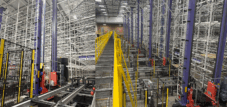
Optimize or renew? The strategic balancing act that determines your future – Image: Xpert.Digital
The strategic tightrope walk of industrial transformation: When optimization becomes a trap
The deadly efficiency trap: Why perfection can be your company's downfall
Industrial companies today face a fundamental dilemma that will determine their long-term survival. It's a strategic tightrope walk between two extremes: On the one hand, there's the perfection of the existing system – the relentless optimization of processes, the maximization of efficiency, and the reduction of unit costs. On the other hand lurks the uncertain search for the new – the risky experimentation with innovative technologies, the exploration of uncharted markets, and the development of radically new business models. For too long, companies have believed they had to choose one path. But this choice is a trap.
The first path, known in technical terms as "exploitation," is tempting. It promises predictable successes, measurable profits, and a clear competitive advantage through economies of scale and process control. However, those who focus exclusively on this will undoubtedly improve at what they do—but risk becoming stagnant in their own perfection and being overwhelmed by disruptive changes. In contrast, there is "exploration": a path fraught with uncertainty, where investments don't yield immediate returns and many experiments fail. But without this deliberate innovation, a company loses the ability to adapt to a changing world and saws off the branch it's sitting on.
The solution to this paradox is as challenging as it is ingenious: organizational ambidexterity. This refers to the ability to operate with both hands – that is, to simultaneously run the core business with high efficiency and drive radical innovations. This article shows why this "ambidexterity" is no longer a luxury, but rather a crucial survival strategy in Industry 4.0. We examine the economic pitfalls of pure optimization, the potential of innovation, the decisive role of leadership, and how modern technologies such as digital twins and AI can serve as a bridge between these two worlds to ensure long-term resilience and competitiveness.
Related to this:


Between short-term success and long-term downfall
Today's industrial companies are walking a tightrope between two precipices. On one side lies overspecialization and a rigid focus on efficiency, driving organizations into dangerous inflexibility. On the other lurks uncontrolled experimentation, which devours resources and delivers no measurable results. The ambidexterity concept from innovation management promises a way out of this dilemma, but its implementation is proving to be one of the most difficult leadership challenges in modern business.
The Economics of Exploitation: When Perfection Becomes a Competitive Disadvantage
Optimizing existing processes follows a seductive logic. The classic exploitation strategy relies on scientifically sound effects that have been documented in business literature for decades. The experience curve effect states that the real unit costs of a product decrease by twenty to thirty percent as soon as product experience doubles. This phenomenon results from several mutually reinforcing mechanisms. The learning curve effect leads to lower labor costs with increasing output, as employees become increasingly proficient in work processes and errors decrease. In addition, there are economies of scale that arise from increasing production volume. The more that is produced, the better fixed costs can be distributed across more units, resulting in lower unit costs.
The strategic importance of these effects explains why companies have strived for scale since the Industrial Revolution. Economies of scale offer a tremendous competitive advantage that can be quantified mathematically. For example, an automobile manufacturer producing 500,000 cars per year can achieve production costs of 20,000 euros per vehicle, while at 800,000 cars per year, costs can fall to 16,000 euros per vehicle. This cost reduction enables either higher profits with the same selling price or larger market shares through aggressive price cuts.
The exploitation strategy relies consistently on specific automation. Tailor-made, dedicated solutions maximize efficiency for a clearly defined use case. Linked production systems, as used in classic assembly line manufacturing since Henry Ford, break down complex processes into simple, easily repeatable tasks. The cycle time determines the pace of the entire production line; each work step is assigned a precisely defined time. This standardization ensures consistent quality and enables the production of large quantities of products in a short time.
Extensive industrial engineering is necessary for this highly optimized production. Methods such as Lean Manufacturing and Six Sigma aim to systematically eliminate waste and minimize process variability. The underlying philosophy is radical: every element that does not directly contribute to customer value must be eliminated. Companies invest significant resources in analyzing and optimizing their value streams, identifying bottlenecks, and standardizing workflows.
In exploitation logic, the make-or-buy decision is primarily based on cost and capacity. A company's vertical integration, i.e., the proportion of in-house production in the manufacturing process, is determined through a cost-benefit analysis. If a supplier can manufacture a component more cheaply due to economies of scale, traditional calculations favor outsourcing. Vertical integration is viewed as a strategic decision, focusing on which value-added stages must be controlled internally and which can be outsourced.
Perhaps the most fascinating element of modern exploitation is the use of artificial intelligence for process optimization. AI systems can recognize patterns in production data and automatically adjust processes to improve quality. In quality control, machine learning methods automatically analyze images of products and check them for defects such as cracks, stains, or irregularities. This automated fault diagnosis detects problems early, before they lead to serious failures. The precision and consistency of these systems surpass human capabilities because they do not tire or exhibit lapses in attention.
But this perfection comes at a price. The exploitation strategy leads to high overhead costs, meaning fixed costs and infrastructure expenses that are incurred regardless of the production volume. Rent, administrative staff salaries, insurance, depreciation of machinery—all these overhead costs continuously burden the company. The more specialized and interconnected the production process, the higher these structural costs become. A highly automated production line with specialized multi-path machines requires massive investments that only pay for themselves with consistently high production volumes.
The strategic trap is that this optimization drives the company into a dangerous path dependency. Deeply ingrained process know-how becomes organizational memory, hindering change. Employees are experts in highly specialized processes but have little experience with alternative production methods. The equipment is designed for specific products and cannot be retooled without considerable effort. This lack of flexibility becomes an existential problem when market conditions change or new technologies disrupt the industry.
The economics of exploration: Calculated risk as a survival strategy
The exploration strategy follows a fundamentally different logic. While exploitation focuses on leveraging existing certainties, exploration aims to uncover new possibilities. This approach is based on the understanding that long-term survival requires continuous experimentation and knowledge building. The theoretical foundation for this was laid by James March in 1991 in his seminal essay on organizational learning. March described the fundamental problem that exploration systematically yields less certain, more distant, and organizationally more diffuse returns than exploitation. The certainty, speed, proximity, and clarity of feedback connect exploitation to its consequences much faster and more precisely than is the case with exploration.
This structural asymmetry explains why companies tend to favor exploitation and neglect exploration. The short-term successes of optimization are measurable and rewarded, while the long-term benefits of experimentation remain uncertain and often materialize only after years. Adaptive processes that respond to immediate feedback rapidly refine exploitation while leaving exploration underdeveloped. This tendency becomes self-destructive as organizations lose their adaptability and become rigid in their own efficiency.
The exploration strategy relies on flexible automation rather than dedicated systems. Collaborative robots, or cobots for short, represent this paradigm shift. These machines are designed to work directly alongside humans without separating safety barriers. Thanks to integrated sensors, cobots can physically interact with people and automatically shut down when they encounter obstacles. Their key advantage lies in their versatility. Unlike conventional industrial robots, which are designed for high-volume manufacturing environments with consistent production processes, cobots open up a new dimension of collaboration. They feature adaptable robot arms that can handle a wide variety of payloads and can be equipped with customized end effectors for specific applications. Their user-friendly design ensures easy integration into workflows and increases overall efficiency.
Additive manufacturing technologies, also known as three-dimensional printing, further expand the scope of exploration. These processes enable entirely new approaches to design and manufacturing. The design freedom offered by three-dimensional printing allows for the creation of intricate shapes for the first time, resulting in significant weight and cost savings. Prototype construction can be completed up to fifteen times faster than with conventional methods. This means that ideas or design concepts can potentially be realized within hours instead of days. Industrial applications focus on rapid prototyping, rapid tooling (the additive manufacturing of tools and components), product customization, and the production of spare parts that would no longer be available through conventional means.
In the exploration-based approach, the make-or-buy decision shifts from cost to competence. The primary question is no longer what is cheaper, but rather what the company strategically needs to master. Focusing on competence instead of just cost acknowledges that certain skills are central to innovation. Core competencies that differentiate the company from competitors and create customer value must be developed and maintained internally. Peripheral activities, on the other hand, can be outsourced to free up resources for truly critical areas.
Product expertise is paramount in the exploration approach. While exploitation focuses on process know-how—that is, the perfected mastery of manufacturing processes—exploration develops a deep understanding of how products function and are used. This product knowledge enables radical innovations that arise not from incremental improvements to existing processes, but from rethinking solutions. A company with strong product know-how can respond to changing customer needs by developing new functionalities or fundamentally redesigning existing products.
Artificial intelligence also plays a central role in exploration, but as a driver of innovation for new solutions rather than as a tool for optimizing existing processes. Generative AI is used to automatically create unique content, from text and images to music, which is fundamentally changing the media and advertising industries. AI enables new business models based on personalized customer interaction. Recommendation systems analyze user behavior to make individual content suggestions that improve customer loyalty. The disruptive power of this technology lies not in incremental improvement, but in the fundamental transformation of business processes and value creation logics.
The challenge of exploration lies in its inherent uncertainty. While exploitation can offer quantifiable efficiency gains, exploration initially incurs costs without a guaranteed return. Experiments often fail, and even successful innovations take time to reach market. This time lag between investment and return presents a fundamental economic challenge. Companies under short-term margin pressure tend to cut exploration budgets, as the savings translate immediately into improved quarterly results, while the long-term consequences of this underinvestment only become apparent years later.
The paradoxical imperative: Why companies must pursue both strategies simultaneously
The concept of ambidexterity, developed by researchers such as Michael Tushman, Charles O'Reilly, and Julian Birkinshaw, recognizes that successful companies cannot choose between exploitation and exploration, but must pursue both approaches simultaneously. The term originates from the Latin words "ambo" (both) and "dexter" (right), and literally means ambidexterity. In organizational research, ambidexterity refers to the ability to be equally attuned to the demands of day-to-day operations and the requirements for developing innovation.
The empirical evidence for the necessity of ambidexterity is overwhelming. Meta-analyses have shown that ambidextrous companies perform significantly better than those that focus solely on exploitation or exploration. However, the positive effect is not unconditional. Research by Johannes Luger and colleagues from 2018 shows that the benefits of ambidexterity are highly context-dependent. In environments of incremental change, companies benefit from maintaining a balanced ambidexterity, as the learning effects lead to superior performance. In discontinuous change contexts, however, ambidextrous companies suffer from the problems of misalignment that accompany the reinforcement of ambidexterity.
This contingency explains why ambidexterity is not a guaranteed formula for success, but rather a demanding leadership challenge. Its structural implementation requires parallel organizational structures. Alongside the classic hierarchical organization, optimized for exploitation, a network structure must be established in which ideas are developed and implemented across departments. This structural ambidexterity physically separates explore and exploit units, gives them different orientations, and strategically integrates them at points where shared resources can be utilized.
The greatest challenge, however, lies not in the structure, but in the leadership. Empirical studies of fifteen organizations that have experimented with ambidexterity show that while articulating a clear strategic intent and an overarching vision is helpful, it is not sufficient for success. Instead, five specific mechanisms are crucial. First, a senior team is needed that explicitly embraces the exploration and exploitation strategy and is bound together by a shared incentive system. Second, this strategy must be communicated and embedded throughout the organization. Third, separate but aligned subunits with clear responsibilities, resources, and structures are required. Fourth, these units must be differently oriented, with different processes, cultures, and incentives, while simultaneously being integrated at strategic points. Fifth, the leadership's ability to manage the inevitable conflicts and trade-offs inherent in ambidexterity is essential.
This ability to deal with contradictions is identified in the literature as the most critical success factor. Tushman and O'Reilly put it drastically: The ability of the leader and their team to embrace contradictions and paradoxes is the single decisive factor that determines success or failure. This competence to accept contradiction and act consistently inconsistently is what distinguishes the most successful ambidextrous organizations. Unlike typical leadership approaches that demand consistency, ambidextrous leaders must embrace contradiction and give the organization an identity that can sustain it.
Nadine Kearney's research on ambidextrous leadership shows that this leadership style is particularly effective when certain moderators are present. The correlation between ambidextrous leadership and overall team performance is especially pronounced in cases of high task complexity, an effect that is partially mediated by team effectiveness. Furthermore, the correlation between ambidextrous leadership and team innovation is particularly strong when the leader's approach is highly prototypical, mediated by information elaboration within the team. These findings underscore that ambidextrous leadership is not simply the coexistence of directive and participative elements, but rather represents a qualitatively new form of leadership that dynamically integrates both poles.
🎯🎯🎯 Benefit from Xpert.Digital's extensive, five-fold expertise in one comprehensive service package | BD, R&D, XR, PR & Digital Visibility Optimization

Benefit from Xpert.Digital's extensive, five-fold expertise in a comprehensive service package | R&D, XR, PR & Digital Visibility Optimization - Image: Xpert.Digital
Xpert.Digital possesses in-depth knowledge across various industries. This allows us to develop tailored strategies precisely aligned with the requirements and challenges of your specific market segment. By continuously analyzing market trends and monitoring industry developments, we can act proactively and offer innovative solutions. The combination of experience and expertise generates added value and provides our clients with a decisive competitive advantage.
More information here:
Staying resilient: cleverly balancing exploitation and exploration
The technological dimension: How digital twins enable ambidexterity
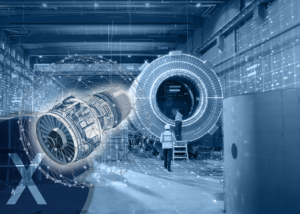
One of the most promising developments for enabling organizational ambidexterity lies in digital twin technology. A digital twin is a virtual representation of a physical object or system that accompanies it throughout its entire lifecycle. In the context of Industry 4.0, this technology is gaining enormous importance because it can bridge the gap between exploitation and exploration.
Digital twins offer massive optimization potential for exploitation. By integrating sensors and embedded systems, manufacturers can continuously collect data from all aspects of the manufacturing process. The digital twin creates an environment where this data can be used for analysis and simulation without disrupting ongoing production. Process parameters can be tested virtually, maintenance activities can be optimally planned, and errors can be detected early. The Mitsubishi Hitachi Power System power plant exemplifies how digital twins, together with AI and machine learning, provide insights into the best time to schedule maintenance activities without interrupting production. The benefits include more efficient detection of faulty components and a maintenance culture that reduces downtime.
At the same time, digital twins enable exploration without jeopardizing existing production. New production processes, alternative materials, or innovative product designs can be tested virtually before investing physical resources. Simulation allows for playing through different scenarios, identifying potential problems, and optimizing parameters in ways that would be too expensive or risky in the real world. Companies can experiment, learn, and iterate without compromising the efficiency of their ongoing operations.
The vision of self-organizing, flexible production, as described in studies on the car factory of the future, demonstrates the transformative potential of this technology. Instead of moving on an assembly line, the car body navigates the factory on a driverless transport system, following an individually optimized course between modular, versatile, and fully networked machines. Behind this vision lies a digitized, AI-driven self-organization that extends across the entire supply chain. The traditional, linear manufacturing principle is broken down in favor of an adaptive system that combines efficiency and flexibility.
The challenge lies in the fact that implementing digital twins requires significant investments in data infrastructure, sensors, and analytical capabilities. Furthermore, the virtual models must be accurately calibrated to make reliable predictions. The complexity of data management, the need for real-time processing, and cybersecurity requirements present significant barriers. Nevertheless, this technology is increasingly seen as essential for international competitiveness. A survey of 552 manufacturing companies in Germany reveals that 63 percent consider digital twins indispensable for international competitiveness.
Related to this:

The economic trade-off: flexibility versus efficiency
At the heart of the ambidexterity debate lies a fundamental economic trade-off between flexibility and efficiency. Classical production theory shows that these two goals are in conflict. A process is flexible if average costs remain constant even when output changes. This flexibility can refer to quantity, i.e., the ability to produce different volumes at the same unit cost, or to method, i.e., the ability to manufacture different products without proportional cost increases.
Flow production, designed for high efficiency, achieves its lowest average costs at an optimal production volume. Deviations from this optimum lead to increased unit costs, as either capacity remains unused or expensive overtime is required. The arrangement of tools and workstations according to the sequence of processing steps, the high degree of specialization, and the absence of setup times create a production environment that is maximally efficient with constant capacity utilization and a consistent product mix, but quickly reaches its limits with product variety or fluctuations in demand.
Flexible automation systems, on the other hand, accept higher costs per unit in exchange for the ability to quickly switch between different product variants. These systems, based on computer-controlled, programmable machines, can respond to varying requirements without significant reconfiguration costs. The higher investment costs and potentially lower utilization of individual components are offset by the strategic option of reacting to market changes, introducing new products, or customizing for customer needs.
The crucial question for companies is not whether they want to be efficient or flexible, but how to find an intelligent trade-off between the two. This trade-off is not a static decision, but must be continuously adapted to market conditions. In times of stable demand and established technologies, it makes economic sense to optimize for efficiency. In phases of technological upheaval or shifting customer preferences, flexibility becomes a vital asset.
Production planning has the task of mediating between the conflicting interests of sales and production. Sales prefers flexible capacity utilization, small batch sizes, and short delivery times to optimally meet customer needs. Production, on the other hand, strives for large production runs and high planning reliability to minimize costs. An effective planning model cannot fully satisfy both interests but must strike a balance appropriate to the situation. Those who fail to find this balance risk missing both goals: being neither efficient nor flexible, but rather remaining in a suboptimal middle ground.
Organizational resilience as a synthesis of exploitation and exploration
The ability to manage the tensions of ambidexterity is closely linked to the concept of organizational resilience. Resilient organizations are characterized by strategic adaptability, which enables them to remain successful and effective under changing conditions, even if this means moving away from their core business. This adaptability is not a passive reaction to crises, but rather an active process of anticipation, coping, and adaptation.
The British Standards Institution defines organizational resilience as a company's ability to anticipate change, survive, and grow in a complex and dynamic environment. Surveys show that 81 percent of decision-makers in Germany consider the topic highly relevant; however, more than one in three companies rate their own resilience as low. Eighty-seven percent of companies currently lack an explicit resilience strategy.
This gap is economically disastrous, as resilience forms the basis for long-term survival in volatile markets. Resilient organizations combine robustness—the ability to withstand stress—with adaptability—the ability to adjust and transform. They create redundancies in critical areas to absorb failures while simultaneously investing in flexibility to seize new opportunities. This duality necessitates paradoxical management: on the one hand, standardization and control for stable processes, and on the other, decentralization and autonomy for innovation.
The connection to ambidexterity becomes clear when resilience is understood as a dynamic ability to continuously balance exploitation and exploration. In stable phases, exploitation enables the accumulation of resources and the development of competencies. In crisis phases, exploration enables the search for new solutions and adaptation to changing conditions. Companies that only exploit become efficient but brittle. They break under unexpected stress. Companies that only explore waste resources in aimless experimentation. Resilient companies dynamically switch between both modes and develop the sensitivity to recognize which approach is appropriate at any given time.
The strategic reformulation of industrial competitive advantages
Analyzing the exploitation-exploration dichotomy leads to a fundamental reassessment of what constitutes sustainable competitive advantage in modern industry. The traditional notion that size, efficiency, and cost advantage form the basis of long-term success is challenged by the reality of disruptive technologies and accelerated change. Companies that define their identity solely through operational excellence fall into a success trap where past strengths become future weaknesses.
The economic rationale of ambidexterity lies in its ability to enable companies to keep multiple options open simultaneously. In financial theory, this is known as the real options approach. Every investment in exploration can be understood as buying an option to profit from a technology or market in the future. This option may initially cost money without generating an immediate return, but it creates strategic flexibility. If the world changes, the company can exercise this option and expand into the new area. Companies without such options are forced to continue using their existing assets, even if their value is rapidly declining.
The art lies in managing the right portfolio of exploitation and exploration activities. Too much exploitation leads to the competency trap, where companies become increasingly better at doing things that are becoming less and less important. Too much exploration leads to chronic immaturity, where new projects are constantly launched but never developed into profitable businesses. The optimal portfolio depends on the industry, the market stage, and the company's specific capabilities.
The implications for industrial engineering are far-reaching. The discipline must move beyond its traditional focus on process optimization and develop the ability to design production systems that are inherently adaptive. This requires a shift away from the premise of maximum specialization towards modular architectures that allow for reconfiguration. Modern concepts such as cyber-physical systems, the Internet of Things, and artificial intelligence provide the technological building blocks for such adaptive systems.
The make-or-buy decision is transforming from a transactional cost calculation to a strategic competency analysis. The primary question is no longer what is cheaper, but rather which capabilities the company needs for its long-term competitiveness. Competencies that could be critical for future exploration activities should be retained internally, even if external procurement appears cheaper in the short term. This strategic perspective recognizes that cost advantages gained through outsourcing come at the cost of learning opportunities that will be lacking later when developing new product generations.
The role of artificial intelligence in this context is twofold. As a tool for exploitation, AI enables unprecedented efficiency gains through adaptive optimization, predictive maintenance, and flawless quality control. As a tool for exploration, AI enables entirely new business models based on personalization, real-time adaptation, and autonomous systems. Companies that use AI solely for exploitation are missing out on its transformative potential. Companies that use AI solely for exploration will fall behind their operationally superior competitors.
The long-term viability of industrial companies in the era of Industry 4.0 depends on their mastery of organizational ambidexterity. This is not a question of structure or strategy alone, but rather a question of leadership, culture, and the collective ability to deal productively with paradoxes. Companies must learn to be consistently inconsistent, to embrace stability and change simultaneously, and to understand contradictions not as a problem, but as a source of strategic strength. Only those who can use both hands equally skillfully will survive in a future that demands both perfected execution and radical innovation.
Your global marketing and business development partner
☑️ Our business language is English or German
☑️ NEW: Correspondence in your native language!

Konrad Wolfenstein
I and my team are happy to be available to you as your personal advisor.
You can contact me by filling out the contact form here wolfenstein@xpert.digital:or simply call me at +49 7348 4088 965. My email address is
I'm looking forward to our joint project.
☑️ SME support in strategy, consulting, planning and implementation
☑️ Creation or realignment of the digital strategy and digitization
☑️ Expansion and optimization of international sales processes
☑️ Global & Digital B2B trading platforms
☑️ Pioneer Business Development / Marketing / PR / Trade Fairs
Our EU and German expertise in business development, sales and marketing

Our EU and German expertise in business development, sales and marketing - Image: Xpert.Digital
Industry focus areas: B2B, digitalization (from AI to XR), mechanical engineering, logistics, renewable energies and industry
More information here:
A thematic hub offering insights and expertise:
- Knowledge platform covering global and regional economies, innovation and industry-specific trends
- A collection of analyses, insights, and background information from our key areas of focus
- A place for expertise and information on current developments in business and technology
- A hub for companies seeking information on markets, digitalization, and industry innovations