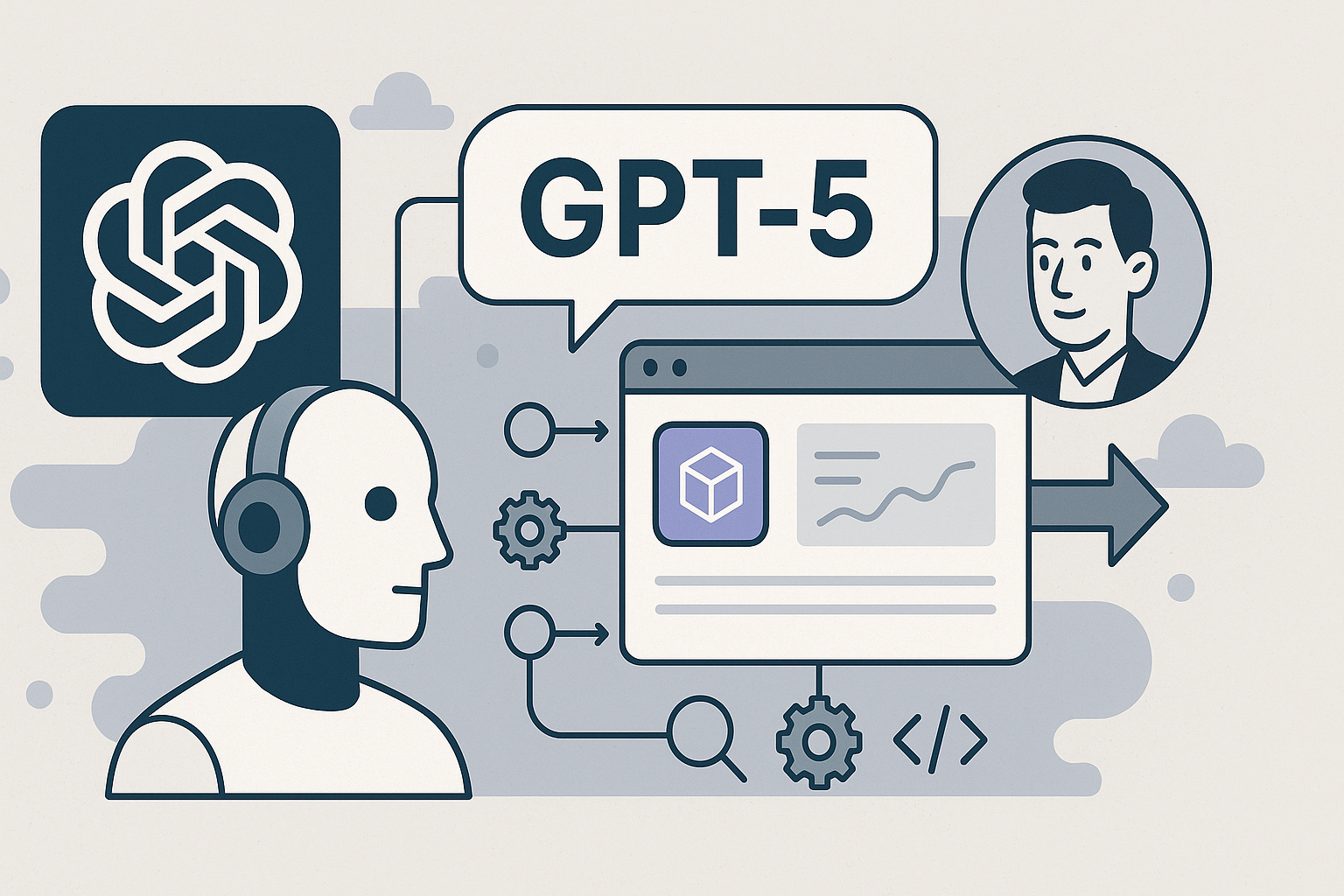
OpenAI's ChatGPT plans for GPT-5: Integration of tools and update of the operator agent – Image: Xpert.Digital
OpenAI GPT-5 – A platform concept for the next generation
The future of AI: How OpenAI's GPT-5 will change everything
OpenAI is developing GPT-5 as its next major language model, designed to improve existing features and unify various AI tools into a single platform. The focus is on the seamless integration of codex, operator, and memory – with the goal of providing users with a simpler and more powerful AI experience.
Related to this:

The vision of a unified AI system
Jerry Tworek, Vice President of Research at OpenAI, describes GPT-5 as the next "Foundational Model." It is intended to "simply do everything our current models can do better—and with fewer model changes." This statement suggests a pragmatic approach that prioritizes improving the user experience.
OpenAI's original vision was ambitious: GPT-5 was intended to fully merge the previously separate GPT and o-model suites. However, this strategy had to be adjusted. In April 2025, OpenAI realized that integrating all components was more complex than anticipated, leading to a postponement of the GPT-5 release and the separate release of the reasoning models o3 and o4-mini.
The current goal is to link the various tools in such a way that they feel like a unified system to users. Tworek explains: "The aim is to reduce the previously necessary manual use of different models and tools." Instead of complete technical integration, GPT-5 should therefore at least offer a unified user experience.
OpenAI has officially announced the postponement of GPT-5 to April 4, 2025. CEO Sam Altman confirmed this in a post on the X platform.
"Change of plans: We will indeed release o3 and o4 mini, probably in a few weeks, and then GPT-5 in a few months. There are several reasons for this, but the most exciting is that we can make GPT-5 much better than we originally thought. We also found that integrating everything smoothly was more difficult than expected. And we want to ensure that we have sufficient capacity to meet the anticipated unprecedented demand."
Key components of the integration
The integration includes several key components:
- Codex: The new code model is designed to work closely with other tools. Codex has already been released as a standalone tool and offers various security modes such as "Suggest", "Auto Edit", and "Full Auto".
- Deep Research: This research component will also be integrated into the GPT-5 platform.
- Memory system: This function is designed to store and retrieve personal information and past interactions.
The Operator Agent: Desktop Assistant with new features
The plans for the operator agent are particularly exciting. This screen agent is currently in the research phase and can already perform basic tasks such as browser control – but it is not yet reliable.
Jerry Tworek has announced an update that is expected to be released "soon" and could make Operator a "very useful tool." The long-term vision for Operator appears to be that of a comprehensive desktop assistant: "In the long run, Operator could become a central hub for daily tasks – not in the browser, but directly within the operating system.".
Related to this:

Why the integration of GPT-5 is more complex than expected
The development of GPT-5 faces several challenges:
- Technical complexity: The complete integration of all components has proven more difficult than expected.
- Increasing resource requirements: Token consumption is rising continuously. OpenAI is therefore investing heavily in computing capacity to meet the expected "unprecedented demand".
- Balancing costs and benefits: Tworek is convinced that tokens will not only become more useful but also cheaper over time.
According to current information, GPT-5 is expected to be released "in a few months." A release in spring or summer 2025 seems realistic, provided no further technical hurdles arise.
OpenAI has distanced itself from traditional benchmarks and instead focuses on practical tasks to evaluate its models. Tworek emphasizes: "Traditional performance indicators are hardly meaningful these days. Instead, concrete tasks should be used to truly evaluate the models.".
Pragmatic perfection? OpenAI and the vision behind GPT-5
OpenAI's plans for GPT-5 reflect a pragmatic approach: While complete technical integration of all components remains a goal, it has initially been replaced by a tighter integration of existing tools. The focus is on an improved user experience with fewer manual model switches. The planned update for the Operator agent could represent a significant step towards a powerful desktop assistant that can operate beyond the limitations of the browser.
The coming months will show whether OpenAI can implement its ambitious plans and whether GPT-5 will actually be the promised quantum leap towards a “magical unified intelligence”.
Related to this:
Your AI transformation, AI integration and AI platform industry expert
☑️ Our business language is English or German
☑️ NEW: Correspondence in your native language!

Konrad Wolfenstein
I and my team are happy to be available to you as your personal advisor.
You can contact me by filling out the contact form here wolfenstein@xpert.digital:or simply call me at +49 7348 4088 965. My email address is
I'm looking forward to our joint project.