

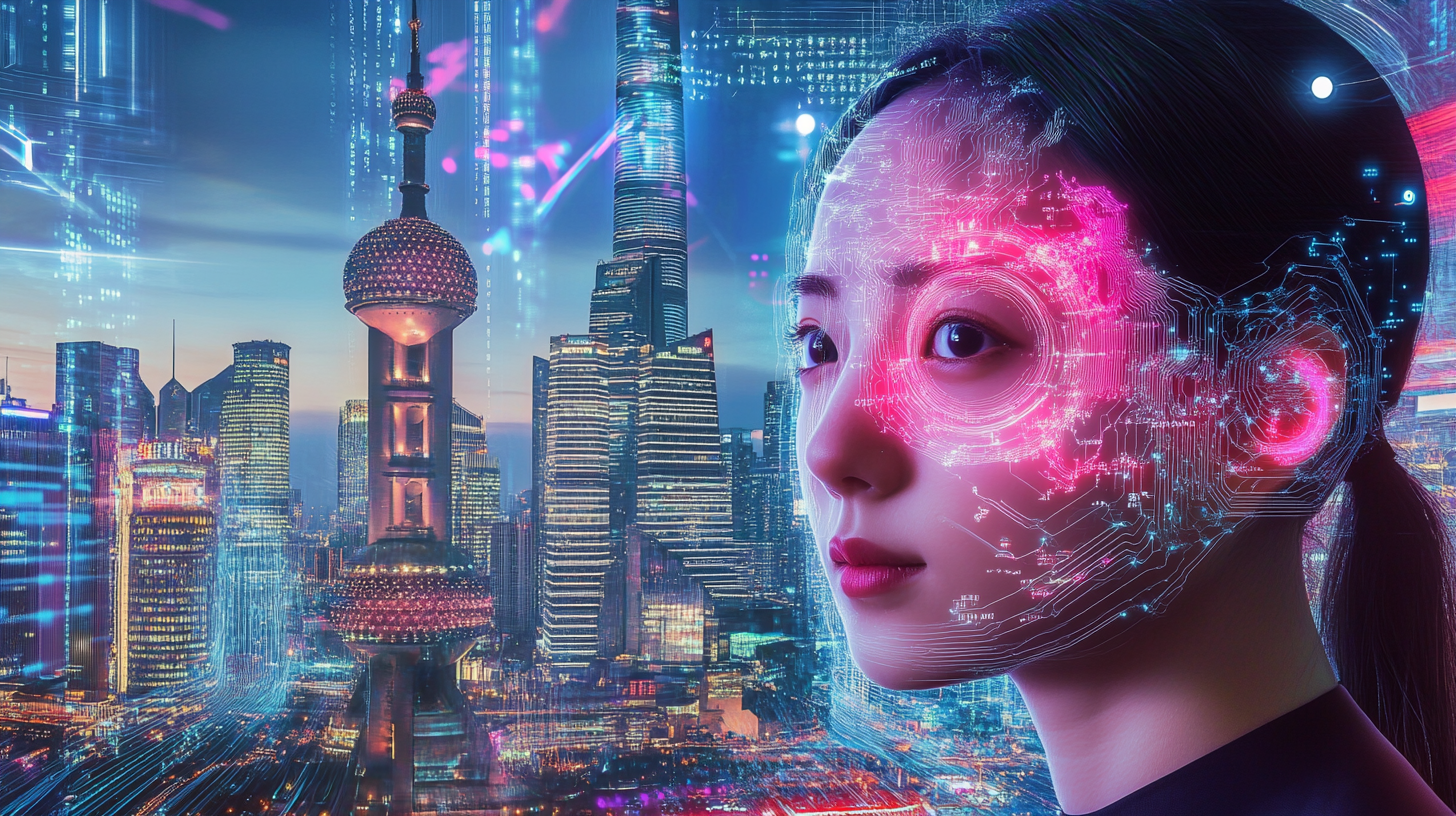
Open-source AI and multimodality – Alibaba's Qwen 2.5-Max is shaking up the AI world – How the wonder child works – Image: Xpert.Digital
China's AI rise continues: What Alibaba's Qwen2.5-Max means for the market
AI Duel of the Giants: Is Qwen2.5-Max stronger than GPT-4o and Llama-3.1?
Alibaba has caused a stir in the tech world with the announcement of its new AI model, "Qwen2.5-Max." According to the company, this model is designed to outperform current top-of-the-line models like the GPT-4o, DeepSeek-V3, and Llama-3.1-405B in numerous benchmarks. This claim alone has garnered significant attention, and the timing of its release—on the first day of the Chinese New Year—underscores the growing importance of artificial intelligence as a key area of innovation. At the same time, Alibaba emphasizes that Qwen2.5-Max is not just about raw computing power, but also about a more efficient use of existing resources. The company promises a solution that is not only more powerful but also more economically attractive. The following text will explain what makes Qwen2.5-Max so special, how the model fits into the global competitive landscape, and what potential impact its development could have on the market and the future of AI. Furthermore, selected background information on the Chinese and global AI landscape will be explored.
Related to this:
A sense of optimism prevails in the AI industry
The AI industry has been experiencing a veritable boom for several years. Ever faster processors, ever larger datasets, and increasingly sophisticated algorithms have led to a rapid acceleration of research and development. In China, tech giants Alibaba, Tencent, Baidu, and ByteDance have been particularly prominent in this field. Western companies such as OpenAI, Google, Microsoft, and Meta are also pioneers in various AI disciplines. This has resulted in intense competition between major economies, often referred to as the "AI race.".
The reasons for this race are multifaceted: On the one hand, there is a growing interest in technologies that can make automated decisions, process vast amounts of data, and support humans in complex tasks. On the other hand, it has become clear that AI not only opens up economic opportunities but also has strategic importance for innovations of all kinds. The Chinese market is particularly interesting in this regard. The government in Beijing actively promotes AI projects, and the country has a huge user base of digital platforms that provide a wealth of data.
In this context, Alibaba has already unveiled several new AI models, but the latest step with Qwen2.5-Max represents a significant turning point. Alibaba announces that the model not only catches up in many areas but even surpasses the leading systems. With this, the company sends a strong signal that the race is far from over and that new players can continue to come up with impressive innovations.
Related to this:
Qwen2.5-Max: Technical Basics
Alibaba itself promotes Qwen2.5-Max as a blend of high performance and efficiency. It's based on a "Mixture-of-Experts" (MoE) architecture. This approach divides the model into multiple experts, each specializing in different tasks or sub-areas. These experts collaborate on a request to achieve the best possible result. The advantage is that not all parts of the model need to be activated at any given time, but only those that are relevant. This saves computing power while still achieving high accuracy.
Another important point is the training on over 20 trillion tokens. Alibaba refers to this as a new record for a Foundation model. The AI community frequently debates how much the sheer size of a training dataset actually contributes to the model's quality. However, it's clear that extensive training data consumes enormous resources. This includes not only computing time but also the acquisition, preparation, and curation of the data. Alibaba—like other tech companies—has access to vast amounts of data from e-commerce, cloud services, digital payments, logistics, and many other areas. This access to diverse data can be a crucial competitive advantage, which is reflected in the model's performance.
At the same time, the company praises the efficiency of Qwen2.5-Max, stating that it is significantly more resource-efficient than comparable models. However, in the world of large AI models, efficiency is a relative term. Often, custom-designed hardware solutions, specialized software frameworks, or optimized data pipelines are used to reduce the cost per training run. Scalability frequently plays a major role: the same data centers that train a massive model today can run several smaller models tomorrow – or even the same model in an even more powerful version. Alibaba emphasizes: "Qwen2.5-Max is designed to meet the high demands of modern AI applications without driving up costs and energy consumption." This is intended to make the model attractive to companies with limited budgets.
Market reaction and economic significance
The announcement of Qwen2.5-Max had an immediate impact on the stock market. Alibaba shares reacted positively, rising by 2.8%. While individual price movements often have many causes, market observers interpret this increase as a signal that investors are placing high hopes on the tech giant's AI initiatives. "In recent years, Alibaba has repeatedly faced criticism for not investing as aggressively in new technologies as other major players," said one analyst. "The unveiling of Qwen2.5-Max demonstrates that the company is indeed very active and not standing still."
Furthermore, the new focus on AI could also significantly advance Alibaba in other business areas. Alibaba Cloud, one of the largest cloud service providers in China and increasingly important worldwide, offers an ideal infrastructure for running sophisticated AI applications. Customers who want to train or deploy their AI models may access Alibaba's optimized offerings. This, in turn, could strengthen customer loyalty and increase revenue in the cloud segment. While Western providers like Amazon Web Services (AWS), Microsoft Azure, and Google Cloud dominate their services in much of the world, Alibaba Cloud has a strong presence in Asia. With an AI model like Qwen2.5-Max, new business areas could be developed, such as machine translation, text generation, image recognition, customer service, and decision support.
Beyond cloud computing, AI offers enormous potential in many sectors. E-commerce, traditionally Alibaba's core business, can benefit from personalized product recommendations, automated customer chats, and precise sales forecasts. If Qwen2.5-Max is indeed as powerful as claimed, Alibaba could further optimize its platforms and differentiate itself from the competition.
Comparison with DeepSeek-V3 and GPT-40
DeepSeek V3 has caused quite a stir in recent months. The company behind DeepSeek specialized in cost-effective training and adaptive algorithms. "DeepSeek is popular in the community because it delivers very good results with comparatively little effort," says an AI developer who works with various models. Alibaba, on the other hand, apparently places more emphasis on sheer size and data volume.
At the same time, Alibaba claims to have calibrated the model to prevent cost explosions. Whether this is true cannot yet be independently verified. However, it is a fact that training costs for large AI models are constantly rising, especially as one strives for ever larger datasets and more refined parameters. Companies like OpenAI, the driving force behind GPT-4, have also invested enormous sums in computing power, data collection, and expertise. Nevertheless, the race for the highest model quality appears to be continuing.
GPT-4 has proven to be extremely versatile. It supports multiple languages, processes complex logical relationships, and can even generate code. Furthermore, there are rumors of GPT-4o, an optimized or further developed version specifically designed for enterprise and research applications. Alibaba makes the bold claim that Qwen2.5-Max "almost consistently" outperforms GPT-4o in various benchmarks. This sounds ambitious to many observers, but it could prove realistic if the tests were conducted under identical conditions and Qwen2.5-Max truly demonstrates its strengths in all areas of the test.
Another competitor is Llama-3.1-405B, developed by Meta, which garnered significant attention within the community. Some Llama models have since been made openly accessible, attracting a broad developer base. If Alibaba now presents a model that surpasses this already highly praised AI system, competitive pressure will intensify. Here, too, it remains to be seen whether independent benchmarks will substantiate these claims.
Role of open-source AI
A trend toward open-source AI is emerging in China. ByteDance, Tencent, and smaller providers have begun to open up models or parts of their AI technology. The idea behind this is that a large developer community can improve, adapt, and integrate an open model into new applications more quickly, thus accelerating innovation. Alibaba indicated that while Qwen2.5-Max has an OpenAI-compatible interface, this does not necessarily mean it is open source.
An open model, however, could accelerate adoption and build trust. Many developers and companies prefer verifiable systems where they can understand the functionality to a certain extent. "Transparency is extremely important in AI development," emphasizes an industry expert. "If a corporation offers a high-performance model but treats it like a black box, doubts always remain as to whether certain results, biases, or incorrect decisions are due to the architecture or the training data."
Although Alibaba hasn't yet published any concrete plans, it's possible that in the future at least parts of Qwen2.5-Max or individual components will be released to the developer community. This would be a strategic move to establish itself as a platform provider, similar to what OpenAI has done with its API services.
Multimodal capabilities
A key trend in AI is the development of multimodal models that can handle diverse data types – from text and images to audio and video. Many companies are already using these methods to offer comprehensive solutions. Customers can submit text queries, upload images, or use voice input. Models that can handle this variety can cover a broader range of use cases.
Alibaba has announced that Qwen2.5-Max can handle not only text processing but also image and video data. Whether this proves true in practice and how well the implementation works remains to be seen. However, multimodal AI promises significantly greater flexibility. One example would be its use in quality control in factories: cameras provide video images that the model analyzes in real time. Simultaneously, alerts can be generated in a text dashboard if anomalies are detected. Or in e-commerce, a customer could upload a picture of a product, and Qwen2.5-Max would automatically provide relevant information and purchase recommendations.
Impact on the Chinese AI market
In China itself, a fierce battle for AI dominance is raging. Besides Alibaba, Baidu, Tencent, and ByteDance are the most prominent players, but numerous startups and universities are also involved. Everyone is trying to secure a piece of the growing market. Government funding, investors, and a number of major clients ensure that new models are usually implemented quickly. The rapid development in China is further fueled by the country's enormous population and the widespread use of digital technologies.
“The Chinese market has a very high adoption rate for new tech solutions,” says one analyst. “When a new AI model emerges and proves to be powerful, it can be integrated and used within a very short time. This increases the pressure on the competition enormously.”
Alibaba, with its ecosystem encompassing online retail (Taobao, Tmall), the payment service Alipay, the logistics arm Cainiao, and cloud services, is ideally positioned to rapidly scale a new AI. At the same time, Tencent is working on its own models, and ByteDance is continuously expanding its AI expertise. This creates a dynamic environment where cooperation and competition often coexist. For example, ByteDance could license Qwen2.5-Max via an API while simultaneously researching its own model. This keeps the market in motion, ensuring no company rests on its laurels.
Importance for global competition
China and the US are considered the world's two largest tech hubs. While in the US, companies like Google (DeepMind), Microsoft (in cooperation with OpenAI), and Meta (Llama) are making headlines, China has been catching up in recent years. The shift towards open-source AI in China could further accelerate innovation and simultaneously create a degree of independence from US technologies. Goldman Sachs sees great potential for widespread application in powerful Chinese AI models – both in the B2B sector and for consumer applications.
Countries in Europe, South America, and Africa often face the question of whether to use US or Chinese solutions. Aspects such as data protection, compliance, and geopolitics play a role in this decision. Alibaba could be attempting to not only dominate the Chinese market with Qwen2.5-Max, but also to gain a stronger global foothold. The company already has a presence in several regions in the cloud business, although its market share in Europe and North America is smaller than that of AWS, Azure, or Google Cloud.
“Qwen2.5-Max could be a game-changer,” says a European AI researcher. “If the model is indeed affordable and powerful, it could become interesting for many companies, especially since it will likely also work well with Chinese customers or suppliers. At the same time, however, Alibaba has to adapt to local data protection regulations and compliance requirements, which are often stricter in Europe than in China.”
Opportunities and risks of new AI models
Every major leap in AI development is accompanied by debates about regulation and ethics. Models like Qwen2.5-Max or GPT-4 can now generate texts that are virtually indistinguishable from human contributions. They can write code, analyze images, and make recommendations for decisions. This increases the responsibility to avoid incorrect decisions, discrimination, disinformation, or other negative effects.
The Chinese government has already published guidelines to regulate the use of generative AI technologies. Europe and the US are also working on regulations to counteract the uncontrolled spread of potentially harmful technologies. For Alibaba, the question is how to develop Qwen2.5-Max in a way that complies with local regulations while still ensuring maximum freedom of innovation.
“An AI that processes billions of parameters and huge amounts of data is always a potential risk factor if it is not properly controlled,” commented a security expert. “That’s why it’s important that large players like Alibaba pay attention not only to performance, but also to security and trustworthiness.”
Besides the ethical and security aspects, the economic side also plays a role. Large AI models consume enormous resources. Data centers need to be cooled, maintained, and powered. If Alibaba is indeed pursuing a more efficient approach, the model could become a blueprint for more sustainable AI solutions. Ultimately, it remains to be seen whether Qwen2.5-Max will live up to these promises in practical use.
Related to this:
Integration into Alibaba's ecosystem
The success of an AI model depends not only on its theoretical performance but also on its integration into concrete use cases. Alibaba plans to integrate Qwen2.5-Max into the Qwen Chat platform and make it available via the Alibaba Cloud. This means that customers can gain access to the model very quickly without having to run it on their own servers.
For developers, the interfaces are likely to be of particular interest. Alibaba advertises an "OpenAI-compatible API," meaning that applications using GPT-like interfaces could relatively easily migrate to Qwen2.5-Max. This could be a real advantage because the migration barrier is low. Companies experimentally testing different AI models can also quickly determine whether Qwen2.5-Max meets their requirements.
In the long term, Alibaba could expand its entire product range with AI capabilities. This could include intelligent assistants in online shops, automated translation services in cross-border e-commerce, enhanced search functions, or personalized video recommendations on content platforms. If Qwen2.5-Max proves versatile and delivers clear added value, it will likely quickly lead to new business models and partnerships.
Reactions from the competition
The introduction of a new, high-performance AI model is naturally prompting reactions from other industry giants. ByteDance, known for the TikTok platform, already has its own AI research departments, which are working, among other things, on providing users with better video content recommendations. Tencent, which owns WeChat, could also further enrich its ecosystems with AI services, thereby increasing engagement with its vast user base. DeepSeek, which garnered attention with its AI assistant DeepSeek-V3, may now be trying to quickly present an improved version.
The international community is also paying close attention: Google (DeepMind) plans to introduce a new model called Gemini, which is generating considerable excitement. Microsoft is working closely with OpenAI and integrating AI functions into its Office and cloud platforms. Meta continues to rely on Llama. All these developments are creating an acceleration effect: If one of the major players achieves a breakthrough, the others must quickly follow suit to avoid falling behind. This results in a dynamic characterized by ever-shorter innovation cycles.
Perspectives for the coming years
The race between Chinese and Western tech companies is expected to intensify further. AI has become a strategic element that will determine outcomes across many industries and areas of society. This is not just about market share, but also about the technological sovereignty of entire countries. China is investing heavily in research and development, while the US is relying on strong private companies and a close integration of the military, science, and business.
Qwen2.5-Max could be a milestone, demonstrating that Chinese models are no longer just catching up, but might even be ahead in some areas. If this is confirmed through independent testing and widespread adoption, it would secure Alibaba a significant share of the global AI market. This would also mean that European and American companies would increasingly integrate Chinese AI into their systems – or conversely, that Chinese companies would increasingly rely on US solutions if these prove superior.
At the same time, the question arises as to how new business models will develop. Until now, AI has often been a tool to improve existing services. However, entirely new offerings are now emerging that are only possible in this form thanks to AI. These include chatbots that can communicate almost like humans, digital assistants in the healthcare sector, automated negotiation systems in the financial sector, and autonomous robot systems in factories. If Qwen2.5-Max offers strong multimodality capabilities, this could further expand its range of applications and enable complex tasks such as video editing, intelligent image recognition, and real-time translation.
Related to this:
Qwen2.5-Max: Turning point in the global battle for AI dominance?
With Qwen2.5-Max, Alibaba has unveiled a model that is generating high expectations. "We believe that Qwen2.5-Max is not only a technological but also an economic step forward," the company announced. While such announcements are not unusual in the industry, here they seem to be falling on fertile ground. The stock market reacted promptly with a price increase, and experts are actively debating whether Qwen2.5-Max truly leaves the competition behind.
The reportedly lower computing resources, the new record of over 20 trillion trained tokens, and the mixture-of-experts architecture are factors that make the model a serious rival to GPT-4, DeepSeek-V3, Llama-3.1-405B, and other established systems. Integration with the Alibaba Cloud and the Qwen Chat platform allows the model to be quickly incorporated into existing applications, potentially benefiting both Alibaba's own services and external customers.
However, questions remain: How does Qwen2.5-Max perform in real-world applications compared to its promises on paper? Will independent benchmarks confirm the claims? How quickly will competitors adapt their models? And what role do regulations in China and other parts of the world play in the technology's adoption?
In any case, the launch of Qwen2.5-Max demonstrates that the global AI race is accelerating. After DeepSeek and other Chinese providers caused a stir, Alibaba is now making another bold statement. It will be interesting to see how these developments influence the dynamics of innovation. Further breakthroughs are to be expected in the near future – both from China and the West.
The AI industry thrives on the rapid improvement, combination, and reimagining of ideas and technologies. Qwen2.5-Max could prove to be one of the pioneers of an era in which AI is no longer just a niche product for specialized applications, but becomes commonplace in numerous industries and areas of life. "Artificial intelligence will continue to revolutionize our daily lives. Whether in customer service, medicine, transportation, or education – powerful models like Qwen2.5-Max are key to creating intelligent, human-centered solutions," commented a research representative.
The greatest potential unfolds when various stakeholders collaborate and agree on common standards and interfaces. China, with its openness to open-source projects and large user base, can act as a catalyst in this regard. At the same time, security, data protection, and ethical considerations will continue to take center stage as AI becomes more integrated into everyday life.
What is certain is that Alibaba, with Qwen2.5-Max, is making a significant contribution to redefining the boundaries of what is possible in AI. And it is equally certain that this contribution will not go unnoticed – neither in China nor in the rest of the world. After all, the company promises to support the advancement of Qwen2.5-Max across various industries and to combine it with technology stacks that cover all areas of modern AI, from machine learning to natural language processing.
The race is in full swing. Who will ultimately win, however, remains to be seen. It may even turn out that there isn't one single winner, but rather a diversity of models, providers, and platforms, each with its own strengths depending on the use case. With Qwen2.5-Max, Alibaba has certainly made it clear that it is determined to take a leading role in this race. The industry's attention is now focused on practical testing, the next development stage, and the moment when external tests and comparisons provide transparency. Until then, Qwen2.5-Max will be seen as a symbol of China's ambition and innovative strength in the AI sector – and Alibaba as a company that wants to actively shape the future of artificial intelligence.
Related to this:
Your global marketing and business development partner
☑️ Our business language is English or German
☑️ NEW: Correspondence in your native language!

Konrad Wolfenstein
I and my team are happy to be available to you as your personal advisor.
You can contact me by filling out the contact form here wolfenstein@xpert.digital:or simply call me at +49 7348 4088 965. My email address is
I'm looking forward to our joint project.