New Xpert.Digital AI study: AI models as industrial production factors – AI model overview as a new operating system – Image: Xpert.Digital
The ROI myth of AI: Why simply saving time does not create business value
End the knowledge chaos: Forget the "best" AI model – this is what really matters in business
Industry under AI stress test: Where the technology now brings decisive competitive advantages
Artificial intelligence has finally arrived in everyday business – yet the hoped-for, widespread productivity boost often fails to materialize at the corporate level. Why is that? The answer is as provocative as it is insightful: Too many companies still treat AI as an isolated tool and not as what it truly is – a universal production factor. Simply accelerating an old, inefficient process with a new language model does not automate value creation. The real lever for measurable ROI, more efficient knowledge management, and genuine competitive advantages lies not in the constant search for the supposedly best AI model. It lies in intelligent process design, the strategic orchestration of different model classes, and a clear governance structure. This study provides a thorough analysis of why the real disruption begins not with the technology but with the business process, how different industries, from manufacturing to logistics, can specifically benefit, and why AI must evolve from a simple chatbot to an enterprise-wide operating system for knowledge.
The real disruption begins not with the model, but with the business process
Artificial intelligence is often still treated as a standalone technology: A company acquires access to a language model, allows individual teams to use a chatbot, or launches a few pilot projects in marketing, customer service, or software development. This perspective is too narrow. AI models are not isolated tools, but increasingly universal production factors for knowledge work, communication, analysis, software, planning, and operational control. Their economic relevance does not stem from their ability to formulate compelling text, analyze images, or generate code. It arises from their ability to connect previously separate activities along information processes.
For companies, this represents a fundamental shift in perspective. Competitiveness is no longer determined by which model narrowly outperforms another in a benchmark. What matters is whether a company can integrate AI securely, transparently, and effectively into recurring value creation processes. The difference between a company that occasionally uses AI and one that becomes more productive with it doesn't primarily lie in the choice between Claude, GPT, Gemini, Kimi, GLM, DeepSeek, or Qwen. It lies in process design, data access, responsibilities, quality control, and the ability to reorganize workflows.
The use of AI has spread rapidly. According to a 2025 McKinsey study, 88 percent of the organizations surveyed reported using AI regularly in at least one business function. At the same time, only about a third had taken the step to scaling it across multiple business units. This leads to a key economic finding: AI is widespread as an individual productivity tool, but by no means established as an enterprise-wide operating system.
This gap also explains the current disillusionment of many decision-makers. Employees frequently report noticeable time savings in research, writing, programming, documentation, or preparing customer communications. At the corporate level, however, revenue growth, profit improvement, and productivity indicators often fall short of expectations. Individual efficiency only translates into economic value when it is embedded in a redesigned process: with a clear division of tasks, aligned data sources, defined quality standards, and a decision about what is automated, what is supported, and what is consciously handled by humans.
The provocative truth, therefore, is this: Companies rarely fail because their AI model isn't powerful enough. They fail because they try to accelerate an old process with a new tool without checking whether that process still makes sense.
From chatbot to value creation architecture
Simply buying answers does not automate performance
The current landscape of computing models presents both an opportunity and a distraction for companies. Modern systems like Claude, GPT, Gemini, Kimi, GLM, DeepSeek, Qwen, Grok, Nemotron, Llama, or Mistral can support large portions of standard cognitive tasks. However, they are not interchangeable because their performance profiles, interfaces, costs, data privacy options, context processing, and tool integrations differ. At the same time, the differences at the top end of the performance spectrum are often smaller than marketing, social media discussions, and benchmark tables suggest.
For business purposes, a functional categorization is therefore more useful than a ranking. A source-referenced search model fulfills a different task than a model with a particularly large context window. A coding model is not better because it rewrites a technical article, but because it can operate more consistently during refactoring, debugging, structuring of software projects, or tool calls. A multimodal model provides added value when information is contained in PDFs, tables, diagrams, product images, screenshots, or technical drawings. An open-weight model can be more strategically attractive when companies have requirements for data control, local hosting, adaptability, or long-term cost management.
The following classification does not describe an absolute technical hierarchy. It shows which types of models can be used effectively in which operational contexts.
| Model group | Typical examples | Primary economic role | Special suitability | Meaningful addition |
|---|---|---|---|---|
| Research and search models | Perplexity Sonar, Deep Research, search-integrated models | Finding and structuring current external information | Market monitoring, company research, regulation, competitors, suppliers, news situation | Analysis and editorial model |
| Strategic analysis and writing models | Claude, GPT, Kimi | Structuring, evaluating, and formulating complex information | Strategy, white papers, management templates, offer logic, argumentation analysis | Search model and fact-checking |
| Multimodal document models | Gemini, Qwen VL, multimodal GPT and Claude variants | Evaluate text, tables, images and documents together | PDFs, presentations, scans, technical documents, screenshots | Technical model for evaluating results |
| Coding and automation models | GLM, DeepSeek, Qwen Coder, Kimi Code | Software development, testing, and automation of technical processes | Web development, data processing, APIs, scripts, debugging | Second coding model for review |
| Agent and tool models | GPT, Claude, DeepSeek, GLM, Nemotron, Qwen | Managing multi-stage processes with tools, data sources and systems | Research chains, ticketing, CRM preparation, data reconciliation, workflow automation | Governance and approval layer |
| Open-weight and sovereign models | Qwen, Llama, Mistral, DeepSeek, Gemma | Gain control over operations, data, and customization | Private RAG systems, internal knowledge databases, European or local infrastructure | Cloud model for top-level tasks |
| Radar and discourse models | Grok, search and social systems | Identifying early themes, debates, and market sentiment | Trend monitoring, technology observation, hypothesis formation | Source-based research |
This categorization highlights the central point: No single model needs to master all tasks. Companies are more likely to succeed with a well-coordinated suite of models than by searching for a supposedly universally best model. The most efficient organizations will likely not be those that exclusively use a single model, but rather those that consciously build an architecture of research, analysis, processing, automation, and control.
Industries undergoing AI stress tests
The greatest benefit lies where information loss becomes costly
The economic benefits of AI are not evenly distributed across all industries. They are particularly high where large amounts of unstructured information are processed, decisions are made under time pressure, skilled workers are scarce, documentation is complex, or errors result in significant consequential costs. These include industry, logistics, trade, energy, financial services, healthcare, construction, professional services, media, software, and public administration.
The decisive variable here is not the technological sophistication of an industry. Even traditional sectors can benefit significantly if they have information-intensive processes. A medium-sized machine manufacturer with numerous product variations, service reports, spare parts lists, and international customer documents can create more value in the short term through AI than a digital company that merely produces AI-generated marketing copy. Similarly, a logistics company can achieve significant economic benefits simply by improving the analysis of disruptions, supplier data, shipment information, and customer inquiries, without immediately implementing a fully autonomous dispatching system.
| Industry | High-quality AI applications | Suitable model categories | Economic leverage | Key risks |
|---|---|---|---|---|
| Industry and mechanical engineering | Quotation management, technical documentation, quality knowledge, service, maintenance, sales | Analysis, document, coding and RAG models | Shorter lead times, less knowledge loss, better service | Incorrect technical statements, poor data quality, IP protection |
| Logistics and intralogistics | Scheduling, exception handling, customer service, tenders, warehouse knowledge, damage analysis | Research, agent, analysis and multimodal models | Fewer manual cases, faster response, better capacity utilization | Lack of real-time data, unclear responsibilities, faulty prioritization |
| Energy and infrastructure | Network documentation, regulatory analysis, project planning, asset knowledge, fault management | Research, document, analysis and sovereign models | Faster planning, less documentation effort, better compliance | Safety-critical errors, data access, regulatory requirements |
| Trade and e-commerce | Product data, customer communication, assortment analysis, content, returns, demand forecasts | Text, image, analysis and agent models | Higher conversion rates, lower content costs, better service quality | Brand dilution, false product information, data protection |
| Financial and insurance industry | Document review, customer communication, risk analysis, compliance, knowledge retrieval | Document, analysis, RAG and sovereign models | Shorter processing times, lower error rate, better consultation preparation | Regulation, traceability, discrimination, hallucinations |
| Construction, real estate and facility management | Tenders, protocols, plan analysis, defect management, energy data | Multimodal, document and analysis models | Less coordination effort, higher planning quality, faster proposal preparation | Liability issues, inconsistent building documents, image errors |
| Healthcare and medical technology | Documentation, coding, research, patient communication, quality management | Specialist models, multimodal and sovereign systems | Time savings in administration, better access to knowledge | High regulatory and ethical risks, data protection |
| Consulting and legal and tax-related services | Research, document analysis, drafts, comparison of contract statuses, presentations | Research, analysis, RAG and writing models | Higher case count per team, faster preparation, better use of knowledge | Confidentiality, liability, over-reliance on model responses |
| Media and B2B publishing | Topic selection, research, translation, SEO, structuring, format production | Search, write, image, coding and agent models | Higher publication frequency, better reuse, more efficient editorial teams | Loss of quality, duplicate content, unverified facts |
| Public administration | Application preparation, case search, citizen communication, translation, documentation | RAG, document and sovereign models | Relief in standard cases, faster information, fewer media breaks | Transparency, rule of law, data sovereignty |
Most economically valuable applications don't lie in spectacular full automation projects. They lie in the frequent, error-prone, and labor-intensive intermediate steps: searching for information, comparing documents, reformatting data, clarifying responsibilities, creating texts, evaluating exceptions, and documenting results. These very activities have evolved organically in many companies over years, but have rarely been systematically optimized.
Industry and mechanical engineering
The first lever is not the factory floor, but the chaos of knowledge
In industrial companies, public debate often focuses on robotics, autonomous production, digital twins, and predictive maintenance. While these topics remain important, they typically require significant investment, clean machine and sensor data, and a long-term integration approach. More immediate and broader value often arises elsewhere: in the technical knowledge surrounding products, variants, customer requirements, spare parts, service histories, standards, and sales processes.
Many mechanical engineers possess valuable knowledge scattered across design, service, sales, project management, and individual long-term specialists. This knowledge resides in PDFs, CAD-related documents, emails, Excel spreadsheets, maintenance reports, ticketing systems, and personal files. AI cannot automatically transform this material into truth. However, it can drastically reduce search times, structure information, highlight similar cases, and support specialists in preparing decisions.
A typical example is quotation preparation. A sales team receives a customer inquiry with technical specifications, delivery terms, variant requests, and regulatory requirements. Without AI, a time-consuming search for similar projects, suitable components, experience, and potential risks begins. With a controlled RAG system, sales can access approved product information, historical quotations, technical rules, and internal calculation logic. The model doesn't autonomously generate a binding quotation. However, it prepares a transparent draft basis, identifies missing information, suggests relevant reference projects, and generates questions for technical clarification.
The economic benefits lie in shorter lead times, greater consistency, and better utilization of existing knowledge. This is particularly valuable in markets with many product variants, international sales, and limited technical resources. The bottleneck is not the model's ability to generate language. The bottleneck is whether product data, versions, pricing logic, and approvals are structured in such a way that the model does not inherit outdated or contradictory information.
New possibilities are also emerging for technical documentation. Operating instructions, maintenance guidelines, service reports, and training materials can be prepared, translated, and adapted to target groups more quickly. In international business, AI can significantly accelerate the preparation of multilingual documents. However, final technical approval must remain with the relevant department. Particularly in matters of safety, warranty, standards, or product liability, the unchecked publication of AI-generated content would be economically risky.
Logistics, transport and intralogistics
The economic damage occurs in exceptional cases, not in the normal process
Logistics is a particularly suitable field for AI because it is characterized by high throughput, numerous interfaces, time-critical decisions, and extensive communication. At the same time, it is not a simple case for automation. Standard processes are often already digitized through transport management systems, warehouse management systems, telematics, or scanning software. The greatest costs often arise from exceptions: delayed shipments, missing information, damaged goods, incorrectly assigned documents, escalations, capacity bottlenecks, or unclear customer inquiries.
Language models and agent systems can play a crucial role in these exceptional processes. They can consolidate emails, tickets, delivery notes, status data, and internal notes, prioritize cases, identify missing information, and generate decision templates for dispatchers. For example, a model can create a clear situation report from a customer complaint, shipment tracking, warehouse status, and carrier update: What happened, which shipment is affected, what information is missing, what courses of action are available, and what customer communication is appropriate?
The benefit doesn't come from AI completely replacing scheduling. Rather, it arises from a reduction in search, coordination, and documentation efforts. Especially in times of skilled labor shortages, this can increase the number of cases a team can reliably handle. Simultaneously, the quality of customer communication improves when responses are no longer improvised based on incomplete information.
In intralogistics, multimodal models can also assist in the evaluation of photos, damage reports, maintenance logs, or safety documents. While an image model cannot provide a legally binding assessment of damage, it can categorize damage, highlight anomalies, and structure the processing. Combined with process data and human approval, this results in a realistic automation approach.
The research aspect is also relevant for international supply chains. AI-supported systems can continuously monitor country, port, customs, infrastructure, and risk information. For companies with operations in Central and Eastern Europe, this can help, for example, to identify changes in transport corridors, energy prices, industrial developments, funding programs, or border crossing times at an early stage. However, the decisive quality criterion remains the source. Models can aggregate information, but they do not replace a reliable primary source.
A new dimension of digital transformation with 'Managed AI' (Artificial Intelligence) - Platform & B2B solution | Xpert Consulting

A new dimension of digital transformation with 'Managed AI' (Artificial Intelligence) – Platform & B2B solution | Xpert Consulting - Image: Xpert.Digital
Here you will learn how your company can implement customized AI solutions quickly, securely and without high entry barriers.
A managed AI platform is your all-inclusive, worry-free solution for artificial intelligence. Instead of dealing with complex technology, expensive infrastructure, and lengthy development processes, you receive a ready-made solution tailored to your needs from a specialized partner – often within just a few days.
The key advantages at a glance:
⚡ Rapid implementation: From idea to ready-to-use application in days, not months. We deliver practical solutions that create immediate added value.
🔒 Maximum data security: Your sensitive data stays with you. We guarantee secure and compliant processing without sharing data with third parties.
💸 No financial risk: You only pay for results. High upfront investments in hardware, software, or personnel are completely eliminated.
🎯 Focus on your core business: Concentrate on what you do best. We take care of the entire technical implementation, operation, and maintenance of your AI solution.
📈 Future-proof & scalable: Your AI grows with you. We ensure continuous optimization and scalability, and flexibly adapt the models to new requirements.
More information here:
Beyond the hype: How companies are using AI for genuine decision support
Energy, infrastructure and supply
The bottleneck is often not the network, but the speed of decision-making
Energy companies, grid operators, municipal utilities, and infrastructure operators are under increasing pressure. Decarbonization, electrification, volatile feed-in, regulatory requirements, skills shortages, investment needs, and rising expectations for security of supply are increasing complexity. AI can provide significant benefits in this environment when used as decision support and knowledge infrastructure.
A key area of application is the processing of regulatory and technical documents. Energy and infrastructure projects are often accompanied by extensive permits, standards, tenders, environmental documentation, grid connection conditions, and contracts. AI can compare documents, extract requirements, highlight changes, and prepare audit trails. This doesn't necessarily shorten the permitting process itself, but it allows internal teams to more quickly identify which requirements are relevant and where documents need revision.
Another area concerns fault and asset knowledge. In many organizations, experience from maintenance, repair, and operation is scattered across various systems. AI can process service reports, tickets, sensor alerts, and technical documents so that maintenance teams can access similar cases more quickly. This improves preparation, reduces search times, and can increase diagnostic quality. However, decisions regarding interventions in critical infrastructure must not be delegated unchecked to a language model. A clear separation between analysis, recommendation, approval, and execution is essential.
For the economic evaluation of projects, AI can structure scenarios: investment assumptions, energy price variants, supply chain risks, regulatory timelines, and funding options. Models are not the source of the figures themselves. They are useful as a tool to visualize assumptions, document computational models, and formulate alternative scenarios. Particularly with complex investment decisions, a second model run can help identify implicit assumptions, unrealistic causal relationships, or overlooked risks.
Trade, e-commerce and digital media
Content is no longer a competitive advantage if everyone can create it
Retail and e-commerce were among the first sectors to see the visible application of generative AI. Product descriptions, translations, marketing copy, campaign variations, customer service, and images can all be created with low barriers to entry. This is precisely why the mere ability to generate large amounts of content is quickly becoming a standard feature. The competitive advantage is shifting to data quality, brand management, offer logic, speed of testing, and the ability to connect content with real-world demand.
Product data is a particularly attractive use case. Many companies have incomplete, contradictory, or poorly structured information about products, variants, technical specifications, target groups, compatibilities, and delivery times. AI can identify data gaps, standardize descriptions, prepare translations, and extract attributes. A clean approval process is essential. If a model invents properties or misinterprets technical details, this can lead to returns, complaints, warnings, or a loss of trust.
In customer service, the benefit lies primarily in the combination of knowledge access and case preparation. An AI assistant can not only formulate an answer but also consolidate order history, product knowledge, delivery status, return policies, and previous interactions. This relieves the burden on employees and makes responses more consistent. However, the full impact only materializes when systems are integrated and the assistant can access reliable data. An isolated chatbot without access to real order and inventory data often results only in nicely worded, noncommittal responses.
For B2B publishing, SEO, and digital trade media, AI is primarily transforming production economics. Research, structuring, translation, reformatting, metadata, structured data, and variant generation are all becoming faster. However, this also increases the pressure on quality. If AI makes content creation more affordable, the issue isn't the quantity of text, but rather its credibility. In-depth expertise, current primary sources, clear contextualization, original perspectives, and industry-specific experience are becoming more important than ever. For publishing companies, the competitive advantage therefore lies not in the automated generation of articles, but in an editorial team that can prioritize topics, fact-check, and explain economic relevance.
Consulting, sales and international market development
The most valuable AI doesn't save sentences, but improves decisions
Consulting, business development, sales, and international market development are among the areas with the greatest immediate benefit. These functions work intensively with information, hypotheses, documents, communication, and decision-making under uncertainty. At the same time, the value of a good result is high: A better-prepared market entry strategy, a qualified partner, an earlier identified risk, or a more precise sales pitch can achieve significantly more than the time saved in writing a text.
For market analysis, AI can systematically compile information on industries, companies, competitors, locations, logistics, labor costs, regulations, investments, and funding programs. The combination of a research model, a long-context model, and a strategic analysis model is particularly useful in international markets. The research model identifies current and verifiable sources. The long-context model processes extensive collections of materials. The analysis model then uses this information to formulate a clear, differentiated, and decision-oriented evaluation.
A company looking to explore production or partnership options in Bulgaria, Romania, Poland, or another European market needs more than just a cost overview. Relevant factors include labor availability, supplier networks, energy infrastructure, transport corridors, administrative practices, investment dynamics, political risks, customer proximity, cultural factors, and specific target companies. AI can accelerate research and structure a dossier. However, it should not replace local market knowledge, solid discussions, or legal due diligence.
In sales, a particularly interesting application lies in preparing for complex customer interactions. Models can generate conversation plans from CRM data, publicly available company information, industry trends, and existing product documentation. They can identify potential customer problems, relevant references, open questions, and key benefits. This doesn't replace the salesperson, but rather better prepares them. The human element remains crucial: trust, negotiation, relationship building, contextual understanding, and the ability to recognize a customer's actual decision-making process.
Technology, software and digital processes
Code is getting cheaper, but architecture and responsibility are getting more expensive
The impact of AI on software development, web technology, and digital processes is already significant. Tasks such as code explanation, debugging, test design, documentation, SQL queries, API integrations, HTML structures, CSS customization, and JavaScript functions can be handled much faster. For smaller companies and freelancers, this translates into a substantial expansion of their implementation capacity. For larger companies, the focus shifts more towards architecture, quality assurance, security, product responsibility, and integration expertise.
Coding models like GLM, DeepSeek, Qwen Coder, or Kimi Code are particularly useful when tasks are precisely defined and deliver verifiable results. A model can write a function, document an interface, analyze a bug, or suggest tests. Its best use occurs when the result is not blindly accepted but rather tested by machine and critically reviewed through a second model run. This form of model combination is economically advantageous because it reduces the cost of errors.
A robust approach consists of four steps. First, the technical task is clearly specified: goal, input data, expected output, constraints, and security requirements. Next, a coding model creates an initial draft. Then, a second model systematically examines security risks, edge cases, data loss, performance issues, and unclear assumptions. Finally, tests are conducted in a separate environment before any changes are deployed to production. This ensures that AI does not replace development, but rather accelerates a disciplined development process.
For web publications and SEO, the benefit also lies in the connection between content and technology. Models can prepare structured data, metadata, internal linking suggestions, tables, HTML output, FAQ formats, and translations. However, the strategic question remains: Does the technical optimization support genuine informational value for users, or does it merely produce more interchangeable content? In the long run, search engines, customers, and the professional community will reward not quantity, but verifiable quality, originality, and trustworthiness.
The ROI myth and the harsh reality
High utilization does not necessarily translate into measurable company value
The economic debate surrounding AI is currently suffering from two opposing exaggerations. One side expects comprehensive cost reductions and a widespread replacement of knowledge work in the short term. The other side points to failed pilot projects and prematurely declares AI an overrated fad. Both perspectives overlook the fact that the technology is in a transitional phase: Individual capabilities are already high, but organizational implementation remains incomplete.
The available data reveals this discrepancy. AI is used in many organizations, particularly in marketing, IT, product development, customer service, and knowledge work. At the same time, a large proportion of companies do not yet report company-wide scaling. In the McKinsey 2025 survey, almost two-thirds of the organizations surveyed were still in experimental or pilot phases. Around 64 percent saw AI as a support for innovation, while a broad, sustainably demonstrable impact on results was significantly less common.
This doesn't mean that AI doesn't create value. It means that the value often remains limited to individuals, teams, or specific use cases. An employee writes emails faster. A developer creates a prototype more quickly. An analyst summarizes documents more efficiently. These advantages don't automatically translate into revenue, EBIT, or a competitive edge. Only when workflows are redesigned, capacities are used differently, and quality losses are avoided do tangible economic effects emerge.
A common mistake is calculating ROI solely based on saved working time. If an employee saves ten percent of their time through AI, a genuine economic benefit only arises if this time is repurposed productively, if external costs are reduced, if lead times are shortened, or if additional value-adding tasks are completed. Otherwise, efficiency is simply translated into invisible buffer time. Therefore, the business case shouldn't end with "hours saved," but should measure key performance indicators (KPIs) such as offer duration, response time, error rate, first-time-right rate, reuse rate, conversion rate, processing volume, project margin, or customer retention.
The risks lie in the process, not just in the model
Those who view governance as a hindrance will later pay the price with the costs of mistakes
AI risks are often reduced to mere hallucinations. In reality, the problem is broader. A model can formulate convincing arguments even though data is outdated, incomplete, or contradictory. It can process sensitive information in an unsuitable system. It can prepare a decision whose criteria are not sufficiently defined legally, ethically, or economically. It can reproduce errors in automated processes if no release points exist.
A robust AI governance model must therefore be pragmatic. It should not block every use, but rather distinguish clear risk classes. Low-risk applications include brainstorming, internal drafting, translations without confidential content, or structuring publicly available information. Medium-risk applications include customer communication, proposal drafting, internal analyses, technical recommendations, or publishable technical texts. High-risk applications involve legal assessments, financial decisions, safety instructions, personal data, health data, critical infrastructure, or binding external commitments.
The higher the risk, the more stringent the regulations must be regarding data sources, origins, permissions, logging, and human accountability. This applies regardless of whether a closed-source model from the US, a Chinese cloud model, a European solution, or a locally operated open-weight model is used. Model origin is relevant, but it does not replace governance. Even a locally hosted model can produce economically risky results if its data foundation is poor, its permissions are too broad, or its usage is uncontrolled.
The mixing of generated and verified information is particularly critical. Companies should clearly distinguish between three levels: documented facts from trustworthy sources, model-generated summaries, and interpretive recommendations. This separation increases traceability and prevents plausible-sounding model texts from being inadvertently adopted as facts in reports, proposals, or decisions.
The target vision: AI as a controlled operating system for knowledge
The winners are not building a model empire, but a learning organization
The successful companies of the future will not treat AI as a singular software product. They will establish it as a layer between data, employees, processes, and decisions. This layer does not need to be perfect immediately. However, it should grow deliberately: from individual productive assistance tasks to cross-functional knowledge systems, and finally to controlled agents that take over clearly defined task chains.
A realistic approach doesn't begin with a large-scale, company-wide project. It begins with three to five recurring processes that meet four criteria: They are time-consuming, they contain sufficient, structured information, their results can be verified, and their consequences are manageable. Examples include preparing proposals, evaluating technical service reports, handling recurring customer inquiries, summarizing regulatory changes, or compiling market and competitive analyses.
The next step for every project should be to establish a clear measurement logic. What processing time should be reduced? What error rate should be lowered? What level of offer quality or response speed should be improved? Which data sources are permitted? Who verifies the results? Which decisions may a system prepare and which should it never initiate itself? Without such questions, AI remains an impressive but economically ambiguous tool.
For data- and knowledge-intensive B2B companies, a combination of three model roles is particularly useful. First, a source-oriented research model for externally sourced information. Second, a powerful analysis and writing model for structure, argumentation, and communication. Third, a technical or locally controllable model for automation, integrations, and sensitive internal knowledge repositories. Supplemented by multimodal capabilities for PDFs, tables, images, and presentations, this results in a flexible architecture that is not dependent on a single vendor.
Especially for industry, logistics, energy, international market development, and digital trade media, the greatest value lies not in producing additional texts, but in reducing information loss. Those who can more quickly identify reliable sources, relevant customer requirements, existing technical expertise, regulatory changes impacting projects, or market developments presenting opportunities, improve the quality of their decisions. AI can amplify this information advantage, but only if it is integrated into professional workflows.
AI will not decide the competition, but its use will determine the speed
Leading AI models are increasingly converging in their general capabilities. This is good news for companies: reliance on a single, supposedly superior model is no longer economically viable. At the same time, the importance of a clear selection based on the use case is growing. Search models are suitable for working with current sources. Long-context models help with large dossiers. Analytical models support strategy and editorial work. Multimodal models analyze PDFs, tables, and images. Coding models accelerate technical implementation. Open-weight models expand the possibilities for data protection, integration, and sovereignty.
The real competitive advantage doesn't come from the model itself. It arises from the ability to improve information flows, make decisions more transparent, relieve the burden on employees, make data available in a controlled manner, and systematically ensure quality. Companies that merely use AI as a typewriter will achieve short-term efficiency gains but will remain interchangeable. Companies that develop AI as a tool system for research, knowledge acquisition, analysis, automation, and responsible decision-making can sustainably improve their responsiveness, scalability, and market knowledge.
The most important management decision is therefore not: Which model is the best? It is: In which process are we currently losing time, knowledge, quality, or speed – and how can we measurably improve this process with AI?
🎯🎯🎯 Data-driven B2B industry hub as a quasi-in-house solution

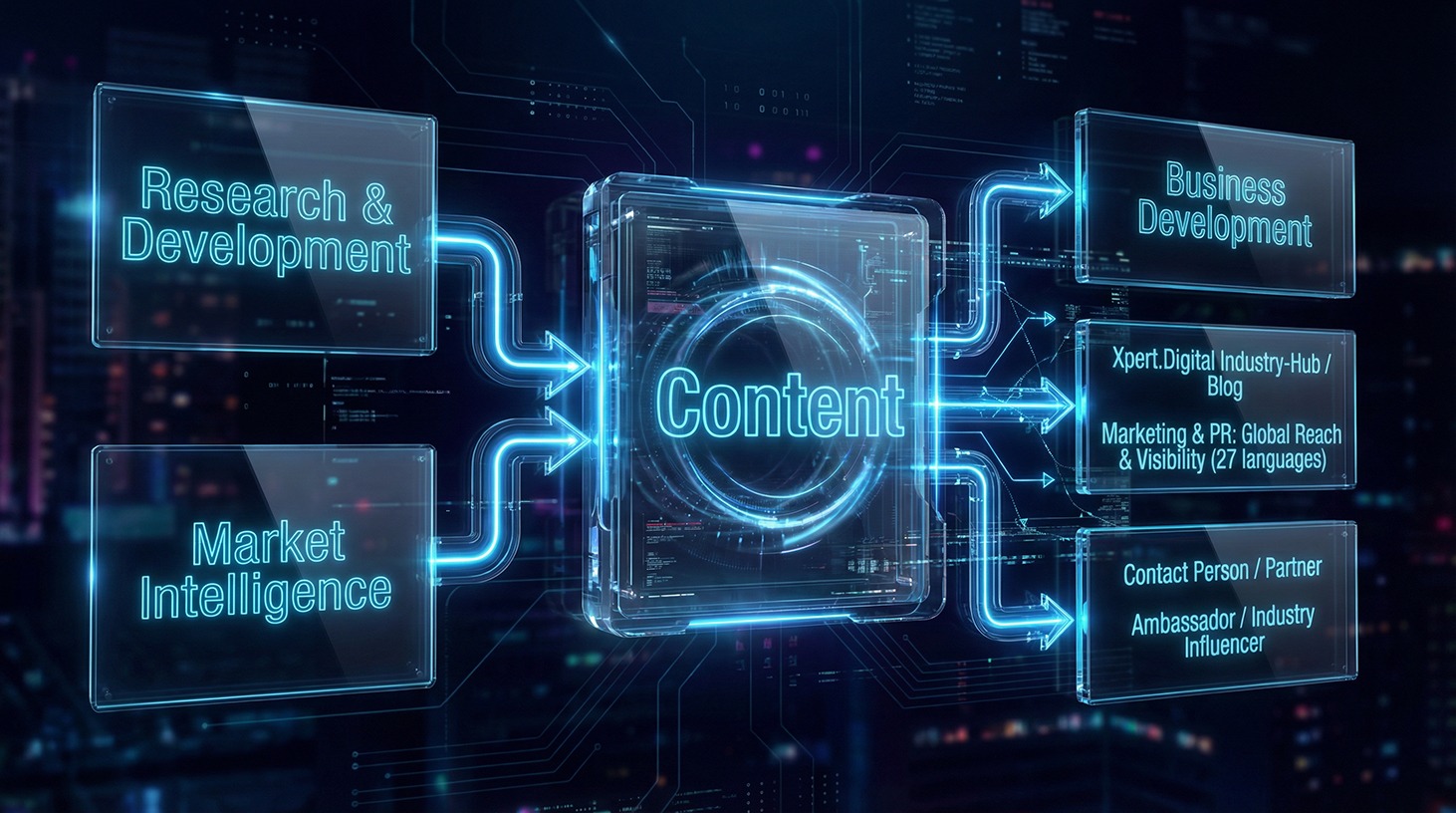
The quasi-in-house solution: How Xpert.Digital closes operational gaps in B2B marketing and sales – Smart Content-Driven Business - Image: Xpert.Digital
Xpert.Digital is a data-driven B2B industry hub led by Konrad Wolfenstein . The company acts as an external, quasi-in-house solution for industrial partners, closing operational gaps in marketing, content, and sales – without requiring additional resources on the client side.
More information here:
How to properly combine AI models: Your strategic guide to efficient workflows
Why you're not looking for the one best AI model, but rather a portfolio of tools
Today's AI models don't represent a clear "top 10 race," but rather a portfolio of tools with largely overlapping capabilities. Therefore, what's crucial for you is the role a model plays in the research, analysis, editorial, and technical processes – and which second model can be effectively used to validate or complement it.
Legend and deployment logic
● Primary: particularly useful as a first choice.
○ Strong: very well suited, but usually not exclusively superior.
△ Supplementary: useful as a cross-check, specialist, or cost-effective alternative.
↔ Combinable with: a model or model type that fulfills a different role.
⚠ Verification required: never publish results without source/fact verification.
The information provided does not imply that one model is objectively "smarter." It describes the most effective use of each model for your specific topics: international business, Bulgaria/nearshoring, industry, logistics, energy, AI/XR, SEO, B2B content, and tasks related to HTML/CSS/JavaScript and WordPress/Cloudflare. Model families can still be relevant even if they are not listed here. They are particularly interesting for API usage, alternative platforms, local testing, data privacy architecture, coding workflows, or independent quality comparisons.
Current market overviews list several high-performing Chinese or open families alongside the large, closed models – including GLM, DeepSeek, Kimi, Qwen, MiniMax, Nemotron, and Gemma. The trend is not toward a single winner, but rather much greater interchangeability across different cost and deployment profiles.
Overview of AI models
| Model / Family | Potential use cases | fitness | Meaningful combination | Classification | |
|---|---|---|---|---|---|
| 1 | GPT-5.6 Sol / GPT-5.x top models | Universal analysis, complex work assignments, strategy papers, technical texts, tables, programming concepts, methodological planning, agent processes | ● Universal premium all-rounder | ↔ Sonar for sources and timeliness; ↔ Claude for argumentation and style checks; ↔ Gemini for documents and images; ↔ GLM, DeepSeek, or Qwen for code review | The GPT family is the best-known model brand and the most widely established in everyday business. It is a reliable choice for demanding all-round tasks, although it is not a clear leader in every specialized discipline. |
| 2 | GPT-5.6 Terra / GPT-5.x standard models | Everyday texts, reformulations, structuring, tables, summaries, translation, simple programming, routine analysis | ○ Universal and efficient | ↔ Sonar; ↔ GLM or DeepSeek for technical review; ↔ Claude Sonnet for editorial work | A practical standard option for recurring tasks. The difference to top-of-the-line options often lies more in computational effort, response quality in borderline cases, limitations, and costs than in fundamentally different capabilities. |
| 3 | Gemini 3.1 Pro | Long PDFs, tables, presentations, screenshots, images, diagrams, mixed document packages, visual plausibility check | ● Documents and multimodality | ↔ Sonar for current sources; ↔ Claude or GPT for analysis and final text; ↔ Qwen VL for independent image and PDF checking | Gemini is particularly suitable when important information is not available as clean, copyable text. It is one of the most important model families for large documents, spreadsheets, scanned PDFs, and visual materials. |
| 4 | Gemini Flash / Flash-Lite | Rapid extraction, classification, pre-structuring, summarization, large volumes of standardized documents, routine tasks | ○ Speed and volume | ↔ Gemini Pro for difficult documents; ↔ Claude or GPT for conclusions; ↔ Sonar for sources | A throughput model for preparing and scaling repetitive tasks. Suitable when speed and high sample sizes are more important than maximum analytical depth. |
| 5 | Claude Opus 5 / Opus Family | Strategy papers, critical synthesis, white papers, complex argumentation, management templates, counterarguments, high-quality specialist editing | ● In-depth analysis and final editing | ↔ Sonar for researched facts; ↔ Gemini for PDFs and tables; ↔ GPT for an independent second opinion; ↔ GLM or DeepSeek for technical implementation | Particularly effective for long, objective, and logically structured analyses. Often very suitable for C-level communication, economic classification, and demanding technical texts. |
| 6 | Claude Sonnet 5 / Sonnet family | Editorial work in daily operations, text revision, translation, structured drafts, rapid analysis, prompt iterations | ● Editorial work and daily knowledge work | ↔ Sonar for sources; ↔ Claude Opus for complex final review; ↔ GPT for independent counter-perspective | The pragmatic working method within the Claude family. Useful when high-quality results are needed quickly, without having to use a top-of-the-line model for every task. |
| 7 | Perplexity Sonar 2 / Sonar | Web research, current company announcements, government, EU and statistical sources, competitors, market monitoring, news situation, source lists | ● Research, factual basis and up-to-dateness | ↔ Claude, GPT or Kimi for analysis and editing; ↔ Gemini for documents; ↔ Grok for discourse radar | The most important tool for the initial research phase. Its advantage lies less in the textual prose than in the search, source linking, and rapid access to current public information. Nevertheless, every significant source should be opened and checked against primary sources. |
| 8 | Grok 4.5 / 4.6 | Tech discourse, AI developments, signals close to X, trend hypotheses, opposing perspectives, early issue detection | △ Radar and counter-perspective | ↔ Sonar for source and fact verification; ↔ Claude or GPT for objective analysis; ↔ Gemini for document material | Useful for observing dynamic debates, market sentiment, and emerging topics. Not to be used as the sole basis for sound market, legal, corporate, or investment decisions. |
| 9 | DeepSeek V4 Pro | Coding, tool and agent workflows, technical automation, complex problem solving, cost-sensitive knowledge work | ○ Technical workflows and agents | ↔ GLM, Qwen Coder or Kimi Code for review; ↔ Claude for specification and documentation; ↔ Sonar for research | One of the best-known Chinese model families. Particularly interesting for technical, repeatable, and cost-conscious workflows. DeepSeek V4 Pro, hosted in the US, has been added to Perplexity Computer for multi-stage tasks. |
| 10 | DeepSeek R1 / Reasoning family | Mathematics, logic, step-by-step problem solving, assumption testing, methodical cross-calculation, model comparison | ○ Analytical Tester | ↔ Claude or GPT for cross-checking; ↔ Sonar for factual basis; ↔ DeepSeek V4 Pro for technical implementation | Less a model for publishable texts than for critical questions: Which assumptions are unsubstantiated? Which computational logic is flawed? Which risks are overlooked? |
| 11 | DeepSeek V4 Flash | Quick coding assistance, routine agents, data evaluation, preliminary analyses, classification, structuring tasks | △ Throughput, speed and costs | ↔ V4 Pro for difficult tasks; ↔ GLM or Qwen Coder for code review; ↔ Sonar for research | Useful for large volumes of similar tasks. For complex or business-critical tasks, a more robust model or human review should follow. |
| 12 | Qwen 3.8 Max / Qwen top models | Multilingual thesis, German–English–Bulgarian, coding, data structures, analysis, API workflows, agents | ● Flexible Open/API alternative | ↔ Sonar for research; ↔ Claude or GPT for final editing; ↔ GLM, DeepSeek or Qwen Coder for technical review | A very relevant model family, even if it's not always visible in the standard Perplexity model menu. Its benefits lie in vendor diversification, multilingual work, APIs, cost control, and potentially more flexible deployment options. |
| 13 | Qwen Coder | HTML, CSS, JavaScript, Python, SQL, debugging, refactoring, APIs, technical documentation | ○ Coding | ↔ GLM; ↔ DeepSeek; ↔ Kimi Code; ↔ Claude for a clear technical explanation | Particularly suitable as an independent second reviewer of program code. A useful application would be, for example, the targeted search for security, logic, performance, and edge-case errors in an initial code draft. |
| 14 | Qwen VL / multimodal variants | Screenshot and UI analysis, PDF pages, technical photos, diagrams, tables, visual data extraction | ○ Visual documents | ↔ Gemini Pro for cross-checking; ↔ Claude or GPT for expert conclusions | Interesting as an independent visual inspection option. Particularly useful when information needs to be extracted from technical images, scans, or poorly structured PDF documents. |
| 15 | Llama 4 / Llama Family | Own hosting environments, internal knowledge systems, RAG, customer-specific applications, data-sensitive processes, local AI | ○ Control, sovereignty and integration | ↔ Sonar for external research; ↔ Qwen for multilingualism; ↔ Mistral for European alternatives; ↔ Claude or GPT for top-level tasks | A central open-weight family. Not necessarily the best choice for every single top-level task, but strategically relevant for companies that need data control, adaptability, cost control, or their own AI infrastructure. |
| 16 | Mistral Large / Magistral / Codestral | European AI strategy, enterprise integration, coding, French-language content, data protection and data residency projects | ○ Europe and Enterprise alternative | ↔ Claude or GPT for quality comparison; ↔ Sonar for research; ↔ Llama and Qwen for open-model architectures | Particularly relevant for companies where European providers, data residency, regulatory arguments, or the strategic reduction of US and China dependencies are important. |
| 17 | Kimi K3 | Large dossiers, lengthy studies, multiple documents, country analyses, industry and logistics dossiers, long-context syntheses | ● Long context and abundance of material | ↔ Sonar for source detection; ↔ Claude or GPT for final standpoint; ↔ Gemini for visual documents | Particularly useful when many documents, notes, reports, and data points need to be brought together in a consistent working context. Very interesting for comprehensive market, industry, and location analyses. |
| 18 | Kimi Code / Kimi-K2 code family | Repository understanding, code changes across multiple files, debugging, technical specifications, agent coding | ○ Coding and long-term technical tasks | ↔ GLM or DeepSeek for cross-checking; ↔ Qwen Coder for code review; ↔ Claude for documentation | Useful for larger web projects, multiple scripts, repositories, and complex technical relationships. Less necessary for purely text-based or research work. |
| 19 | GLM 5.2 / 5.3 | JavaScript, HTML, CSS, WordPress, Cloudflare, data structures, API logic, debugging, technical analysis, multilingual tasks | ● Technology, web work and automation | ↔ Sonar for current documentation; ↔ DeepSeek or Qwen for code review; ↔ Claude for technical explanation and specification | Particularly interesting for web technology and specific implementation tasks. Suitable for iterative technical work, error analysis, automation, and the creation of structured code. |
| 20 | Microsoft Phi family | Small local specialized applications, edge and offline scenarios, classification, embedded AI functions, prototypes | △ Edge prototypes and resource efficiency | ↔ Gemma, Llama or Qwen for open-model comparison; ↔ Cloud models for complex tasks | Phi models are not the first choice for lengthy analyses and high-quality technical articles. They become relevant for small, resource-efficient, and locally controllable applications. |
| 21 | Cohere Command R / R+ | RAG, corporate knowledge, document retrieval, internal search systems, knowledge databases, customer service with knowledge access | ○ Enterprise RAG | ↔ Sonar for external sources; ↔ Claude or GPT for final editing; ↔ Llama or Mistral for in-house infrastructure | This is particularly important for companies that do not primarily need generative creativity, but rather reliable answers based on their own documents and knowledge sources. |
| 22 | Nemotron 3 Ultra / Super | Agent logic, enterprise AI, NVIDIA GPU infrastructure, industrial AI, model operation, inference, scaling, robotics | ○ Industrial and AI architecture | ↔ Claude or GPT for strategy; ↔ DeepSeek or GLM for implementation; ↔ Llama/Qwen for open model architectures | Not a necessary first model for everyday texts. Its relevance lies in industrial AI, agent architectures, GPU ecosystems, and technically scalable enterprise scenarios. |
| 23 | MiniMax M3 / MiniMax family | Price-performance testing, agent workflows, long context, fast text production, alternative API architectures | △ Alternative and comparison model | ↔ Kimi, GLM or DeepSeek for comparative work; ↔ Claude/GPT for final quality | Another high-performing model from the Asian market. Interesting for tests and cost comparisons, but not necessarily a core model for most users. |
| 24 | Gemma 4 / Gemma family | Small local experiments, on-device models, edge applications, data-efficient prototypes, internal tools | △ Local and lightweight | ↔ Llama or Qwen for open-model comparison; ↔ Phi for resource-efficient applications | More relevant for local, embedded or prototypical applications than for large market analyses, complex B2B articles or long document syntheses. |
Practical and possible sequence of use as an example
For your work in management consulting, international market analysis, industry, logistics, nearshoring, B2B communication, SEO, and web technology, you shouldn't confuse awareness with relevance. Your personal order of preference would be significantly different:
- Perplexity Sonar for current research, sources, companies, authorities, markets and international developments.
- Claude Opus or Claude Sonnet for in-depth analyses, specialist articles, white papers and strategic argumentation.
- Gemini 3.1 Pro for PDFs, spreadsheets, presentations, screenshots and visually complex documents.
- Kimi K3 is ideal for very large dossiers, country analyses, and many related documents.
- GLM 5.x for HTML, CSS, JavaScript, WordPress, Cloudflare, debugging and technical automation.
- GPT-5.x as a universal counter-model and independent second line of argumentation.
- DeepSeek V4 Pro or Qwen Coder for technical agent processes, larger scripting work and code review.
- Qwen 3.8 Max as a multilingual, flexible, open/API-based alternative.
- Mistral or Llama for projects with European data residency, their own infrastructure, or AI sovereignty.
- Cohere Command R/R+ for building robust internal knowledge systems and retrieval applications.
Important classification
Brand awareness is not an objective measure of quality. GPT, Gemini, and Claude are particularly well-known primarily due to their platform reach, the large number of providers, their integration into office, cloud, search, and developer ecosystems, and their high media presence.
For specific work results, Kimi, GLM, DeepSeek, Qwen, Mistral, or Nemotron can be equally useful or even more suitable in certain areas. Especially when considering large amounts of context, coding, costs, API integration, local deployment, multilingual support, and data control, there is no single, clear winner.
The most economically viable architecture therefore does not consist of a model, but of a clear division of tasks: Sonar for sources, Claude or GPT for analysis, Gemini for documents, Kimi for long context, GLM/DeepSeek/Qwen for technology and Llama/Mistral/Cohere for controllable knowledge and enterprise systems.
Overlapping use cases
The following matrix shows where you should use models in parallel. A checkmark means the model can be used effectively there. A star marks the preferred first choice – not necessarily an objective winner.
| Use case | sonar | Claude | GPT | Gemini | Kimi | GLM | DeepSeek | Qwen | Nemotron | Grok |
|---|---|---|---|---|---|---|---|---|---|---|
| Current source research | ★ | ✓ | ✓ | ✓ | ✓ | △ | △ | △ | △ | ✓ |
| Company, market and competitive analysis | ★ | ★ | ★ | ✓ | ★ | △ | △ | ✓ | ✓ | △ |
| Long studies and dossiers | ✓ | ★ | ★ | ✓ | ★ | △ | △ | ✓ | △ | △ |
| B2B technical articles and white papers | ✓ | ★ | ★ | ✓ | ★ | △ | △ | ✓ | △ | △ |
| German final editing | △ | ★ | ★ | ✓ | ✓ | ✓ | △ | ✓ | △ | △ |
| Multilingual, including Bulgarian | △ | ★ | ★ | ★ | ★ | ✓ | ✓ | ★ | △ | △ |
| PDFs, tables, screenshots, images | ✓ | ✓ | ✓ | ★ | ✓ | △ | △ | ✓ | △ | △ |
| HTML, CSS, JavaScript, web technology | △ | ✓ | ✓ | △ | ✓ | ★ | ★ | ★ | △ | △ |
| Debugging and code review | △ | ✓ | ✓ | △ | ✓ | ★ | ★ | ★ | △ | △ |
| SEO, schema markup, content operations | ✓ | ★ | ★ | ✓ | ✓ | ★ | ★ | ★ | △ | △ |
| Agents, tool calls, automation | ✓ | ✓ | ★ | ✓ | ✓ | ★ | ★ | ★ | ★ | ✓ |
| Industrial, robotics, GPU/AI infrastructure | ✓ | ★ | ★ | ✓ | △ | ✓ | ✓ | ✓ | ★ | △ |
| Real-time trends and discourse radar | ★ | △ | △ | △ | △ | △ | △ | △ | △ | ★ |
| Local hosting / sovereignty | — | — | — | △ | △ | △ | ✓ | ★ | ✓ | — |
Key overlaps
- Claude, GPT, and Kimi overlap significantly in terms of analysis, writing, structure, and long-form text. The practical difference lies primarily in style, adherence to prompts, contextual behavior, and your post-editing time.
- GLM, DeepSeek, Qwen Coder, and Kimi Code have significant overlap in web technology and coding. In this case, a second model run as a code review is more beneficial than searching for a nominally "best" model.
- Gemini, Qwen VL, and Claude/GPT with file support overlap for multimodal tasks. I would choose Gemini as the first option for complex PDFs, tables, charts, and visual sources.
- Sonar and Grok can both provide current information, but they fulfill different functions: Sonar for verifiable research and source work; Grok for discourse, hypotheses, and early signals. Grok does not replace source work.
- Nemotron, DeepSeek, GLM, and Qwen are functionally very similar when it comes to agent/automation topics. Nemotron is particularly interesting here as an NVIDIA/enterprise context model, not necessarily because of better overall text quality.
Possible setup for you
You don't need all models to be active. An efficient core consists of six roles:
| role | Recommended first choice | Second model / Control | Purpose |
|---|---|---|---|
| Source research | Sonar / Deep Research | Gemini or GPT | Find current facts and primary sources |
| Dossier work | Kimi K3 | Claude Opus | Many sources and long document packages condense |
| Final analysis and technical article | Claude Opus or Sonnet | GPT-5.x | Strategic logic, C-level benefits, reliable editorial team |
| PDFs, tables and screenshots | Gemini 3.1 Pro | Qwen VL or Claude | Evaluate visual and unstructured documents |
| Web technology and automation | GLM 5.x | DeepSeek V4 or Qwen Coder | Implement, debug, review |
| Scenario and counter-argument review | GPT-5.x or DeepSeek R1 | Claude | Identify assumptions, logical fallacies, risks, and opposing positions |
For a typical international industrial or nearshoring analysis, the most reliable procedure would be:
1. Sonar gathers current primary sources: Eurostat, national statistical offices, the European Commission, ministries, company reports, and investor communications.
2. Kimi processes the entire material dossier and creates a chronological and thematic fact structure.
3. Claude or GPT uses this to develop a strategic analysis with a clear separation of facts, interpretation, risks, and recommendations.
4. Gemini checks tables, graphs, and PDF attachments to ensure that figures are not incorrectly extracted from images or scans.
5. A second text model checks exclusively for: unsubstantiated claims, outdated figures, causal oversimplification, missing counterarguments, and linguistic inaccuracies.
6. GLM, DeepSeek, or Qwen Coder implements HTML, table layout, structured data, schema markup, or technical SEO elements as needed.
The best selection is role-based, not brand-based
Companies should therefore not try to keep pace with every new model change or search for a supposedly permanently leading system. What is crucial is identifying which tasks actually need to be solved, what data is required, what consequences of errors are acceptable, and where human review remains indispensable. A source-oriented research model, a robust analysis and editorial model, a multimodal document model, and a technical model for automation and integration can collectively generate significantly more economic value than a single top-tier model without clear process integration.
The strategic advantage therefore arises not from the brand name, but from the ability to meaningfully orchestrate AI along the company's own value chain. Those who combine research, data access, expertise, quality control, and technical implementation in a transparent process reduce information loss, accelerate decision-making, and increase the scalability of knowledge work. The question, therefore, is not whether Claude, GPT, Gemini, Kimi, GLM, DeepSeek, or Qwen performs slightly better in a single test. The crucial question is which interplay of models, employees, and processes reliably translates a company into better results.
📈🚀 From visibility to trust 👀🤝 Your scalable path with Xpert.Digital

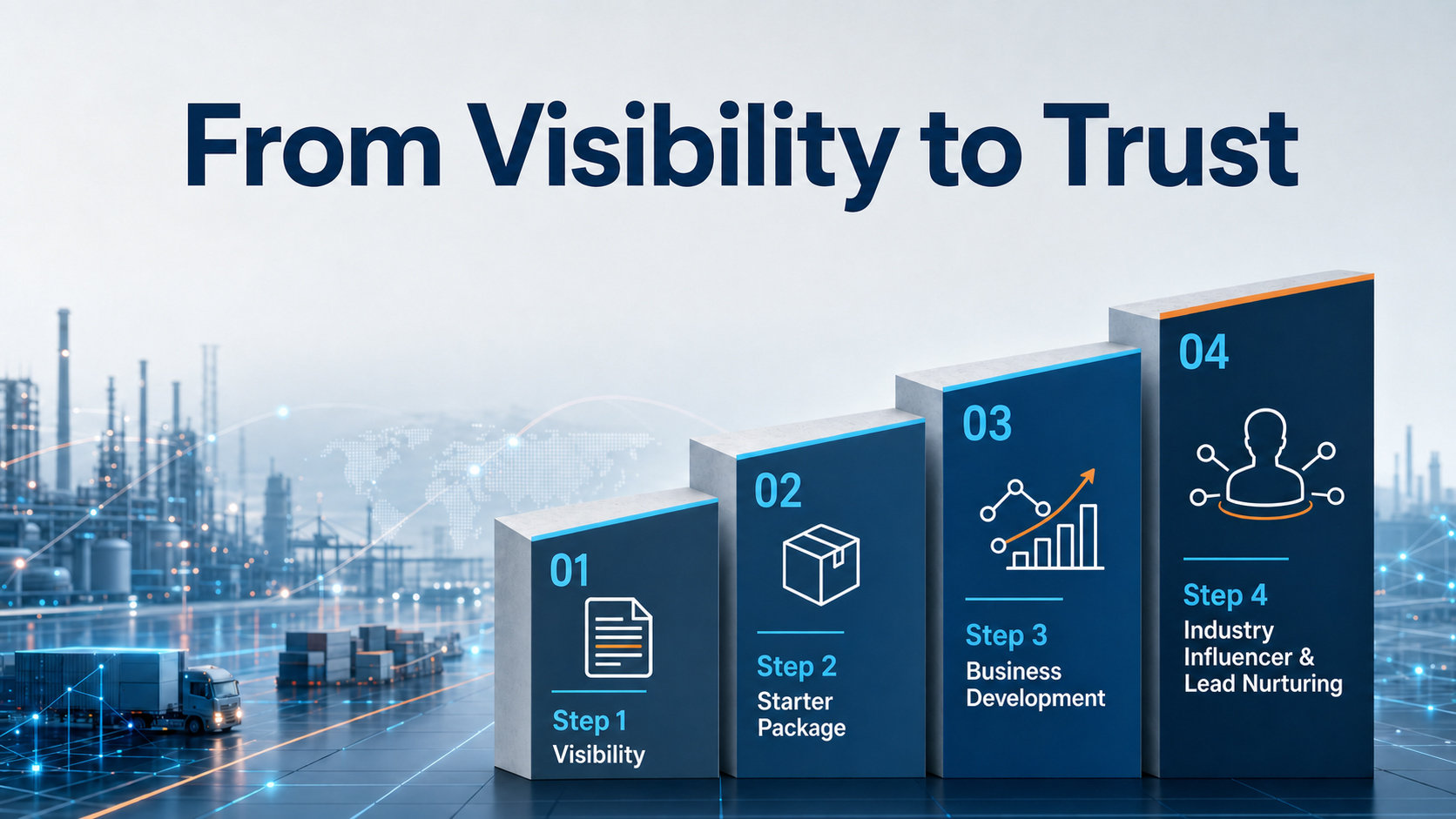
From visibility to trust: Your scalable path with Xpert.Digital - Image: Xpert.Digital
In industrial B2B, sustainable business relationships rarely emerge overnight. They develop step by step – through visibility, professional relevance, recurring touchpoints, and growing trust. Xpert.Digital's 4-stage model addresses precisely this: It offers a structured path that begins with a manageable entry point and can evolve into deeper collaboration in business development if needed.
Instead of relying on loud marketing promises, this model puts the relationship at the forefront. Companies start with clearly defined, easily calculable measures and then decide, based on their own experience, how far they want to expand the collaboration. A key factor for this undisturbed trust-building process: The platform completely avoids annoying advertising ads, so the editorial focus remains solely on the companies' expertise.
More information here:
Your global marketing and business development partner
☑️ Our business language is English or German
☑️ NEW: Correspondence in your native language!

Konrad Wolfenstein
I and my team are happy to be available to you as your personal advisor.
You can contact me by filling out the contact form here wolfenstein@xpert.digital:or simply call me at +49 7348 4088 965. My email address is
I'm looking forward to our joint project.