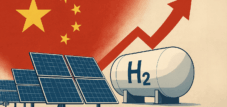
Neijuan, China's secret weapon, and what measures Latin America, the USA, and Europe can each take to counter it for their economies – Image: Xpert.Digital
Trade War 2.0: How the USA, Europe and Latin America are reacting to China's overproduction
When growth becomes a trap: China's production excess is shifting global power dynamics
The global balance is faltering: When China's strength becomes a threat – The dangerous game with China's gigantic overcapacities
For decades, the global economy benefited from China's growth engine. But the dynamics have fundamentally changed: the former hunger for raw materials and Western technology has transformed into an aggressive export offensive, flooding global markets with goods that no longer find buyers domestically. Behind this structural imbalance lies a phenomenon known in China as "Neijuan"—literally translated as "inward rolling.".
What originally began as a sociological term for the ruthless but stagnant competition within Chinese society is now the most accurate description of an economy trapped in a spiral of state-subsidized overproduction and ruinous price wars. Whether electric cars, batteries, or solar panels: China produces far more than global demand and exports its deflation to the world.
But the rest of the world is no longer standing idly by. The following article provides an in-depth analysis of how the geopolitical power centers are reacting differently to this challenge. Learn how the US is countering with a return to hardline industrial policy and reshoring, why Europe is attempting the difficult balancing act of de-risking without losing its important trading partner, and what key strategic role Latin America plays in the tug-of-war between the major powers. An assessment of a global economy at a crossroads.
Related to this:


The paradox of self-destructive expansion
The global economic order is under pressure that, paradoxically, stems from China's greatest strength. While Western economies have warned for decades of shrinking industrial bases and migrating production capacity, the world's second-largest economy is grappling with the opposite problem. China produces more than the world can absorb, and it does so at prices that defy all conventional economic logic. This phenomenon has a name that has become widely known far beyond academic circles: Neijuan.
The term Neijuan, literally translated as "rolling inwards," describes a state of destructive competition without productive progress. Originally coined by the American anthropologist Clifford Geertz in the 1960s to describe stagnant development processes in Indonesian agriculture, the expression has experienced a resurgence in China and now reflects a profound social and economic crisis. Since around 2020, Neijuan has characterized the feeling of an entire generation that, despite enormous effort, is not progressing because everyone else is making the same efforts. It manifests itself in the infamous 996 work culture, where people work from 9 a.m. to 9 p.m., six days a week, in extreme educational pressure, and in ruthless competition in the housing market.
While Neijuan originally described a social phenomenon in Chinese society, it has evolved into an economic policy concept that precisely captures the structural imbalances of the Chinese economy. In an industrial context, Neijuan refers to systematic overinvestment leading to massive overcapacities, triggering ruinous price wars, and ultimately destabilizing the entire global value chain. Recognizing the urgency of this problem, the Chinese government made combating "involutional competition" a priority at the Central Economic Labour Conference in December 2024. Premier Li Qiang warned of the increasing "spiral involution" in the global economy in Davos in June 2025.
The figures speak for themselves. China now controls roughly 80 percent of global solar panel production, 75 percent of lithium-ion batteries, and 70 percent of electric vehicles. For critical components like polysilicon, the Chinese market share reaches 94 percent, and for wafers, 96 percent. This dominance is not solely the result of comparative advantages or superior innovation, but rather the product of a state-orchestrated industrial policy that systematically builds up overcapacity. The solar industry produces roughly twice the global demand. In the battery sector, China's production capacity of two terawatt-hours exceeds global demand by 60 percent, while the planned capacity of six terawatt-hours would be sufficient to meet global demand until 2035.
The structural foundation of overproduction
The Chinese economic model under President Xi Jinping has fundamentally shifted from a consumption-driven to a production-oriented system. This realignment systematically creates the conditions for overinvestment, overcapacity, and overproduction. While investment in the manufacturing sector shows double-digit growth rates year after year, consumption growth stagnates. The result is a structural imbalance in which domestic demand cannot absorb domestic production, and the resulting surplus pushes onto global markets.
The mechanisms behind this overproduction are multifaceted and deeply rooted in China's hybrid economic system. Government subsidies, competition between provinces for growth targets, and the protection of state-owned enterprises create powerful incentives for continuous expansion, regardless of demand signals. According to estimates by the International Monetary Fund, industrial support reached approximately 4.4 percent of GDP in 2023, with direct cash subsidies accounting for the largest share at 2.0 percent, followed by tax breaks at 1.5 percent, subsidized land at 0.5 percent, and low-interest loans at 0.4 percent.
Local governments compete fiercely to attract investment and boost their GDP figures, leading to a multiplication of production capacity far beyond rational market demands. This competition results in systematic duplication of investment across provinces. Industries such as steel, cement, and solar panel manufacturing see nearly identical plants in multiple regions, each hoping to capture market shares that do not actually exist to that extent. State-owned enterprises receive continuous government support, preventing natural market consolidation and allowing unprofitable operations to continue indefinitely. These so-called zombie companies perpetuate cycles of overcapacity due to concerns about political and social stability.
The effects are manifesting as persistent deflation at the producer level. China's producer price index fell for the 39th consecutive month in December 2025, this time by 1.9 percent year-on-year, following a 2.2 percent decline in November. For the full year 2025, producer prices contracted by 2.6 percent. In the twelve sectors covered by the "Made in China 2025" initiative, average producer price inflation is minus 2.2 percent, while real value-added growth, at 6.9 percent, is significantly higher than the national average of 5.4 percent. Not only are traditional industries such as chemicals, non-metal minerals, graphite, and glass particularly affected, but also high-tech sectors such as electrical machinery (29 percent of companies reported losses), communications equipment and computers (34 percent), and medical and pharmaceutical products (32 percent).
The global shockwaves of the Chinese Neijuan
The effects of China's overcapacity are not limited to the domestic economy but are increasingly spilling over into global markets. With a trade surplus of nearly US$1.2 trillion projected for 2025, China is demonstrating its ability to systematically export excess production. This export drive is taking place at prices that, in many cases, are below cost, putting immense pressure on international competitors and exacerbating trade disputes.
The figures from Latin America illustrate this dynamic. Between January and May 2025, China's exports to the region rose by 10 percent to US$109.3 billion. The increase was particularly dramatic in Argentina, where Chinese exports surged by 90 percent to US$5.2 billion, while Brazil saw a 15 percent increase to US$39.1 billion. This expansion is strategic and targeted. China is diversifying its export markets away from developed economies like the US and systematically deepening its commercial ties with rapidly growing emerging markets in Latin America. Currency flexibility plays a crucial role in this. In countries like Argentina, which suffer from chronic dollar shortages, China has expanded currency swap lines that allow trade in yuan, thereby significantly increasing the competitiveness of Chinese exports.
The reactions of trading partners are becoming increasingly restrictive. In 2024, the European Union imposed countervailing duties of up to 45.3 percent on electric vehicles manufactured in China after an investigation concluded that Chinese subsidies were distorting competition. Beijing retaliated by imposing tariffs of up to 42.7 percent on certain EU dairy products and tariffs of up to 34.9 percent on brandy imported from the EU. In a 173-page report published in July 2024, the World Trade Organization accused China of a lack of transparency regarding state subsidies, particularly in the photovoltaic sector. Many members expressed skepticism about the thoroughness of Chinese subsidy reporting and feared that China's subsidies were distorting global markets and promoting overcapacity.
China firmly rejects these accusations, arguing that Western governments also heavily subsidize their industries. The US Inflation Reduction Act, for example, provides $369 billion for climate-friendly technologies. Furthermore, China maintains that its competitive advantage is primarily based on fierce competition in its largest domestic market, which drives innovation and efficient production. The Kiel Institute for the World Economy acknowledges that cost advantages are not solely attributable to subsidies, but also to consistent industrial policies, favorable energy and labor costs, and access to raw materials.
The American answer: industrial policy and reshoring
The United States has responded to the challenge posed by Chinese overcapacity with a comprehensive paradigm shift in economic policy. After decades of market-oriented restraint, the Biden administration marks a return to proactive industrial policy, combining both defensive and offensive elements. This realignment is manifested in several major legislative initiatives aimed at strengthening the domestic manufacturing base, securing critical supply chains, and maintaining technological leadership.
The CHIPS and Science Act forms the centerpiece of this strategy. With a total volume of approximately $280 billion, including $52.7 billion directly for the semiconductor industry, the law aims to massively expand domestic semiconductor research and manufacturing. Specifically, the package includes $39 billion in subsidies for chip manufacturing on American soil, a 25 percent investment tax credit for manufacturing equipment costs, and $13 billion for semiconductor research and personnel training. By March 2024, analysts estimated that the law had spurred between 25 and 50 separate potential projects, with projected total investments of $160 to $200 billion and 25,000 to 45,000 new jobs. By the beginning of 2026, the Commerce Department had provided more than $32 billion in CHIPS Act subsidies and nearly $29 billion in loans to 17 companies in 16 states, prompting recipient companies to announce nearly $400 billion in additional investments.
The Inflation Reduction Act complements these efforts in clean energy technologies, allocating $369 billion for climate-friendly technologies. Tax credits and subsidies support both producers and consumers. The Clean Vehicles Tax Credit strengthens the U.S. electric vehicle industry by reducing the cost of American-made electric vehicles and plug-in hybrids. Expanded Home Energy Tax Credits support the American appliance and building materials industries by encouraging home energy audits, energy-efficient renovations, and the installation of renewable energy systems and appliances that meet the Energy Star standard.
The reshoring movement is showing measurable successes, though not without challenges. The Reshoring Initiative projected that nearly 240,000 manufacturing jobs would be brought back to the U.S. by 2025, although this represents a decrease of about 7 percent compared to 2024. Since 2010, more than two million jobs have been announced for reshoring or foreign direct investment. These inflows have been driven largely by rising geopolitical risks, supply chain vulnerabilities, and growing bipartisan support for American competitiveness.
However, the reshoring strategy faces significant structural challenges. The most serious is the shortage of skilled workers. A study by Deloitte and the Manufacturing Institute projects that 2.1 million manufacturing jobs could remain unfilled by 2030 due to a lack of qualified personnel. The cost of these missing jobs could reach one trillion US dollars in 2030 alone. In the semiconductor sector, the situation could be even more dramatic. A 2023 forecast by the Semiconductor Industry Association and Oxford Economics predicts that 58 percent of the required manufacturing and design positions for semiconductors in the US could remain unfilled by 2030, with the most acute shortages among qualified technicians. Some already see these shortages as contributing to production delays, such as at the Taiwan Semiconductor Manufacturing Company's factory in Arizona.
Contemporary manufacturing demands expertise in areas such as machining, robotics, and automation. However, outdated perceptions that portray manufacturing as low-tech and poorly paid discourage younger generations from pursuing careers in this field and exacerbate the skills gap. To close this skills gap, it is crucial to redefine the narrative surrounding manufacturing. Modern manufacturing environments are clean, technologically advanced, and offer rewarding career opportunities without necessarily requiring a four-year college degree. The integration of AI and automation is creating new job opportunities, such as robotics technicians and systems analysts, which require a combination of technical and cognitive skills. Investing in training to develop these competencies is essential to ensure the workforce evolves in line with technological advancements.
Alongside strengthening its domestic industry, the US is pursuing a strategy of technological isolation from China, particularly in the semiconductor sector. In October 2022, the Biden administration imposed export controls restricting the sale of AI chips to China, as well as the technology to manufacture those chips. In January 2025, the Commerce Department announced a proposed AI proliferation rule that implemented a three-tiered system for accessing advanced AI hardware and limited the number of advanced chips that foreign nations could receive. The Trump administration later repealed these rules but simultaneously tightened controls in other areas.
The effects of these export controls are complex and potentially counterproductive. Export controls on semiconductor sales to China reduce the revenue of American chip manufacturers, lower their investment capacity in research and development, and decrease employment in the industry. A BCG study estimates that technological decoupling between the US semiconductor industry and China would lead to a $12 billion, or 30 percent, drop in R&D investment. In the long run, the missing supply of semiconductors that would otherwise be delivered to the Chinese market by US companies would be captured by foreign competitors, particularly China's domestic semiconductor industry. This would give companies in these countries greater revenue to reinvest in R&D, accelerating their innovation capacity. Chinese and other firms could then steadily close the technological gap with the US.
Our China expertise in business development, sales and marketing
Our China expertise in business development, sales and marketing - Image: Xpert.Digital
Industry focus areas: B2B, digitalization (from AI to XR), mechanical engineering, logistics, renewable energies and industry
More information here:
A thematic hub offering insights and expertise:
- Knowledge platform covering global and regional economies, innovation and industry-specific trends
- A collection of analyses, insights, and background information from our key areas of focus
- A place for expertise and information on current developments in business and technology
- A hub for companies seeking information on markets, digitalization, and industry innovations
Neijuan: Why China's internal problem is reshaping the global economy
Europe's balancing act: De-risking without decoupling
The European Union is navigating a complex middle ground between economic interdependence with China and strategic autonomy. With a bilateral trade volume of approximately €730 billion in 2024, China is an indispensable economic partner, but the structural imbalance, with an EU deficit of €305.8 billion in the same year, is fueling growing concern. The EU's "de-risking" strategy aims to reduce critical dependencies without completely relinquishing the economic benefits of the trade relationship.
The European Economic Security Strategy forms the conceptual foundation of this realignment. It establishes a three-part structure comprising a strategic superstructure, competition policy, and defensive instruments. As the strategic superstructure, the strategy focuses clearly on increasing economic resilience and protecting European economic security. It constructs a dual system of objectives based on "economic benefits" and "economic security," balancing efficiency and security by strengthening supply chain resilience and safeguarding technological sovereignty. The governance logic follows the pattern of "risk identification – risk mitigation," identifying four main risks, three priorities, and eleven risk mitigation measures that the EU faces.
The Critical Raw Materials Act translates this strategy into concrete targets. By 2030, the EU aims to achieve the following benchmarks: at least 10 percent of annual EU consumption from extraction, at least 40 percent from processing, at least 25 percent from recycling, and no more than 65 percent of annual consumption from any single third country. The regulation establishes a list of strategic raw materials that are most important for strategic technologies in the green, digital, defense, and aerospace sectors. In March 2025, the European Commission announced the list of 47 projects classified as strategic under the Critical Raw Materials Act, which will receive substantial support for permits, funding, and accelerated timelines.
The Net-Zero Industry Act complements these efforts in the field of clean technologies. Its aim is for the Union's total strategic manufacturing capacity for net-zero technologies to reach or exceed at least 40 percent of annual demand by 2030. This is intended to accelerate progress towards the EU's 2030 climate and energy targets and the transition to climate neutrality by 2050. The Act also simplifies the regulatory framework for manufacturing these technologies, helping to increase the competitiveness of the net-zero technology industry in Europe. Net-zero strategic projects benefit from particularly fast permitting procedures to enhance planning and investment certainty.
The European Semiconductor Initiative, the European Chips Act, provides over €43 billion to double Europe's global share of chip production to 20 percent by 2030 and to support factories in Germany, France, and Italy. This initiative is part of a broader effort to achieve technological sovereignty in critical areas and reduce dependence on Asian suppliers, particularly China and Taiwan.
At the trade policy level, the EU has sharpened its instruments. The countervailing duties on Chinese electric vehicles, with company-specific rates that result in total tariffs of up to 45.3 percent, send a clear signal. The anti-coercion instrument provides the EU with tools to combat economic coercion. The Commission is also examining how trade measures can be accelerated, as anti-dumping and subsidy duties are currently only imposed after extensive investigations that take a year.
Supply chain restructuring is taking place through multiple channels. Business surveys show that some EU manufacturers are onshoring critical inputs from China to the EU to increase supply chain resilience and mitigate the risk of disruptions. At the same time, the EU is creating a “strategic buffer zone” against China by shifting its industrial chain to Southeast Asia and other regions surrounding China. According to the 2024 Business Confidence Survey by the China-EU Chamber of Commerce, China’s share as a preferred investment destination has reached a record low, while ASEAN was the top beneficiary for the second year running. Europe is now the second most important alternative destination for redirected or potentially redirected investments, at 19 percent.
However, the de-risking strategy is encountering structural limitations. Economic security and development are difficult to reconcile. The EU's de-risking strategy towards China is essentially a balancing act between "economic losses" and "security gains." For the EU, however, excessive security measures would hinder its economic growth and development. The costs of restructuring supply chains are substantial, and the fragmentation of the single market and differing national agendas impede a unified approach. Dependence on US technology companies and weapons systems limits Europe's practical independence, while its defense and high-tech industries remain highly fragmented.
Related to this:

Latin America's strategic tightrope walk
Latin America stands at an economic crossroads. On the one hand, the realignment of global supply chains through nearshoring and friend-shoring offers a historic opportunity to establish the region as a production hub and overcome its chronic dependence on raw material exports. On the other hand, China is systematically intensifying its engagement through the Belt and Road Initiative, massive infrastructure investments, and trade credit lines, creating new dependencies. The crucial question for Latin American policymakers is: How can they leverage Chinese demand for raw materials and infrastructure financing without becoming strategically dependent on them in the long run, as this could undermine their own development goals?
The Belt and Road Initiative has proven to be a catalyst for Chinese engagement in the region. In 2017, Panama became the first Latin American country to sign a Memorandum of Understanding to jointly promote the construction of the Belt and Road Initiative. By April 2023, 21 of the 33 independent countries in Latin America and the Caribbean had signed cooperation agreements with China on jointly developing the Belt and Road Initiative. The projects encompass transportation, electricity, communications technology, energy, and urban development. Between 2005 and 2020, China invested more than US$94 billion in 138 completed or ongoing infrastructure projects in Latin America, creating over 600,000 local jobs.
The flagship project is the Port of Chancay in Peru, one of the milestones of the Belt and Road Initiative in Latin America. Upon completion, it will become a major hub and gateway to the Pacific for the Latin American region. The port could fundamentally reroute trade between Latin America and Asia by bypassing the Atlantic Ocean and the Panama Canal. In Argentina, the rehabilitation project of the Belgrano freight railway was 94.63 percent complete by the end of March 2023. Thanks to this project, the annual transport capacity of the Belgrano railway increased from 760,000 tons in 2013 to 2.65 million tons in 2023, boosting economic development and job growth in Argentina's inland provinces.
At the level of bilateral financing and investment, China significantly intensified its economic engagement with Latin America in 2025, announcing a series of substantial investments and credit lines aimed at strengthening infrastructure, energy, and technological development in the region. At the fourth ministerial meeting of the China-CELAC Forum in Beijing in May 2025, President Xi Jinping announced that China would provide 66 billion yuan (approximately US$9.18 billion) in loans to member states of the Community of Latin American and Caribbean States. Trade volume between China and Latin America exceeded US$500 billion in 2024.
At the same time, the nearshoring movement offers substantial opportunities. The Inter-American Development Bank estimates that nearshoring in Latin America and the Caribbean could generate nearly US$78 billion in additional annual exports of goods and services in the medium term. In 2022, the nearshoring production strategy led to a 51 percent increase in investments allocated to Latin America. For many investors, relocating to these markets promises lower logistics costs and greater customer reach, as they offer access to competitive local suppliers, a skilled workforce, and a consumer base of 660 million people in middle- to high-income countries.
Mexico benefits most from its strategic location on the border with the United States and the USMCA trade agreement. The Mexican government has introduced tax incentives for highly export-oriented manufacturing industries, including automobiles and auto parts, pharmaceuticals and medical equipment, electrical and electronic products, aerospace equipment, and agriculture. This policy allows companies to deduct 56 to 89 percent of annual tax payments, plus an additional 25 percent deduction for employee training expenses over a three-year period. The IMMEX and maquiladora programs support manufacturing near the United States.
Brazil, the region's second-largest economy, benefits from a robust domestic market and Mercosur membership as a prime nearshoring hub for automakers seeking proximity to North America. Its leadership in biofuels and expanding renewable energy sectors aligns with global shifts toward greener technologies and reinforces Brazil's position as a major energy exporter. The Brazilian government announced tax incentives for 2024, including a reduction in import duties for automakers that import parts or components and invest at least 2 percent of the total cost in research, development, and innovation projects within that supply chain.
Argentina has created the Régimen de Incentivo a Grandes Inversiones (RIGI), an incentive program that offers long-term stability and predictability for projects exceeding US$200 million. RIGI provides investors with 30-year legal guarantees and targets strategic sectors such as industrial forestry, tourism, infrastructure, mining, technology, steel, energy, and oil and gas. Incentives include reduced corporate tax rates, accelerated depreciation, value-added tax credits, and exemptions from import and export duties. Since its implementation, seven projects worth more than US$13 billion were approved in the first year.
However, the region faces significant structural challenges that limit its ability to realize the full potential of nearshoring. The innovation gap is severe. Latin American countries systematically underinvest in research and development. This lack of investment in R&D and intellectual property hinders Argentina's ability to commercialize research, attract foreign investment, and position itself as a competitive player in global innovation networks. Efforts to modernize Argentina's intellectual property regime have met with resistance from local pharmaceutical companies that benefit from restrictive patentability standards.
Infrastructure deficits remain a critical bottleneck. According to the Inter-American Development Bank, every dollar allocated to promoting new foreign direct investment could generate nearly $42 in additional foreign direct capital over the long term. The bank underscores the need for further infrastructure improvements across the region, including in more developed economies such as Brazil, Mexico, and Argentina. Institutional weaknesses in the form of regulatory frameworks, bureaucracy, and gaps in intellectual property protection undermine the region's attractiveness for high-value manufacturing investment.
The strategic challenge for Latin America is to leverage Chinese infrastructure financing and demand for raw materials without becoming unilaterally dependent on China, which would undermine its own industrial development. Brazilian President Lula issued a stark warning at the China-CELAC forum: “It is crucial to recognize that Latin America’s fate depends on no one else. It does not depend on President Xi Jinping, the United States, or the European Union, but solely on our desire to be great, not small.” This statement captures the region’s need to pursue its own agenda rather than becoming a mere pawn in the great power competition between China, the US, and Europe.
Systematic consequences and strategic imperatives
The global reaction to China's Neijuan reveals fundamental differences in economic policy philosophies and strategic priorities. While the US is pursuing a combination of industrial policy, reshoring, and technological isolation, Europe is attempting a balancing act between de-risking and maintaining economic ties. Latin America is navigating between leveraging Chinese investment and positioning itself as a nearshoring alternative for Western companies.
For the United States, the central challenge lies in striking a balance between protectionism and maintaining innovation leadership. While CHIPS and IRA investments are substantial, their success critically hinges on the ability to address the structural skills shortage. By 2030, 2.1 million manufacturing jobs could remain unfilled, with potential costs of one trillion US dollars this year alone. This necessitates a fundamental reform of the education system, focusing on STEM education, career and technical education, and apprenticeship models that adapt successful programs from Germany and other countries.
Export controls in the semiconductor sector illustrate the complexity of technological decoupling. While short-term security gains are possible, there is a risk of long-term competitive disadvantages. Reduced revenues from the Chinese market weaken the investment capacity of American companies in research and development, which could undermine their innovative strength in the medium term. China is responding with massive investments in domestic semiconductor development, which could lead to a catching-up or even overtaking in the long run. The careful calibration of these controls will be crucial to balancing security interests with economic vitality.
Europe faces the challenge of de-risking without complete decoupling. With a bilateral trade volume of €730 billion, the EU cannot afford a complete separation from China. The 40 percent target for domestic manufacturing capacity in critical technologies is ambitious, but requires massive investment and coordination across fragmented national industries. The 47 strategic projects designated under the Critical Raw Materials Act are a start, but implementation is hampered by regulatory complexity, funding constraints, and a shortage of skilled workers.
Diversifying supply chains to Southeast Asia, Africa, and Latin America reduces dependence on China but creates new vulnerabilities. Coordination with allies is essential, but increasing instability in transatlantic relations under changing US administrations makes a coherent strategy difficult. The EU must invest strategic resources in maintaining the stability of the transatlantic alliance while simultaneously strengthening its relationships with emerging powers and regional organizations.
For Latin America, the greatest opportunity lies in its strategic positioning as a friend-shoring alternative, combining geographic proximity to the US with cost advantages, cultural affinity, and time zone alignment. The region could generate an additional $78 billion in exports annually. However, this requires significant investment in innovation capacity, STEM education, and research and development infrastructure. Institutional frameworks must be strengthened, bureaucracy reduced, and intellectual property protection improved.
The balance between Chinese infrastructure investment and diversified partnerships is delicate. While the $9 billion in yuan-denominated credit lines is attractive, the region should avoid over-reliance that weakens its negotiating position. Developing its own value chains in areas such as electromobility, renewable energy, and advanced manufacturing could transform the region from a mere raw material supplier to an integral part of global high-tech supply chains.
China's Neijuan is more than an economic phenomenon. It reflects the limitations of a state-driven growth model that prioritizes production over consumption, investment over demand, and market share over profitability. Its global repercussions are forcing all major economic blocs to strategically realign. While the US flexes its industrial muscles, Europe erects a regulatory bulwark, and Latin America navigates between East and West, the fundamental question remains unanswered: Can a fragmented global trading system ensure long-term prosperity and stability, or will the increasing Balkanization of the world economy inevitably lead to reduced efficiency, higher costs, and heightened geopolitical tensions?
The answer will determine the fate of the global economic order in the 21st century. Neijuan is not China's secret weapon, but a structural symptom of a system reaching its limits. How the US, Europe, and Latin America react will not only determine their own economic future, but also shape the architecture of global trade relations for generations to come.
Your global marketing and business development partner
☑️ Our business language is English or German
☑️ NEW: Correspondence in your native language!

Konrad Wolfenstein
I and my team are happy to be available to you as your personal advisor.
You can contact me by filling out the contact form here wolfenstein@xpert.digital:or simply call me at +49 7348 4088 965. My email address is
I'm looking forward to our joint project.
☑️ SME support in strategy, consulting, planning and implementation
☑️ Creation or realignment of the digital strategy and digitization
☑️ Expansion and optimization of international sales processes
☑️ Global & Digital B2B trading platforms
☑️ Pioneer Business Development / Marketing / PR / Trade Fairs
🎯🎯🎯 Benefit from Xpert.Digital's extensive, five-fold expertise in one comprehensive service package | BD, R&D, XR, PR & Digital Visibility Optimization

Benefit from Xpert.Digital's extensive, five-fold expertise in a comprehensive service package | R&D, XR, PR & Digital Visibility Optimization - Image: Xpert.Digital
Xpert.Digital possesses in-depth knowledge across various industries. This allows us to develop tailored strategies precisely aligned with the requirements and challenges of your specific market segment. By continuously analyzing market trends and monitoring industry developments, we can act proactively and offer innovative solutions. The combination of experience and expertise generates added value and provides our clients with a decisive competitive advantage.
More information here: