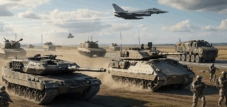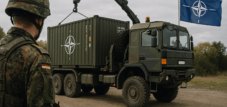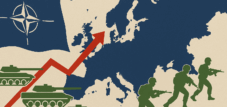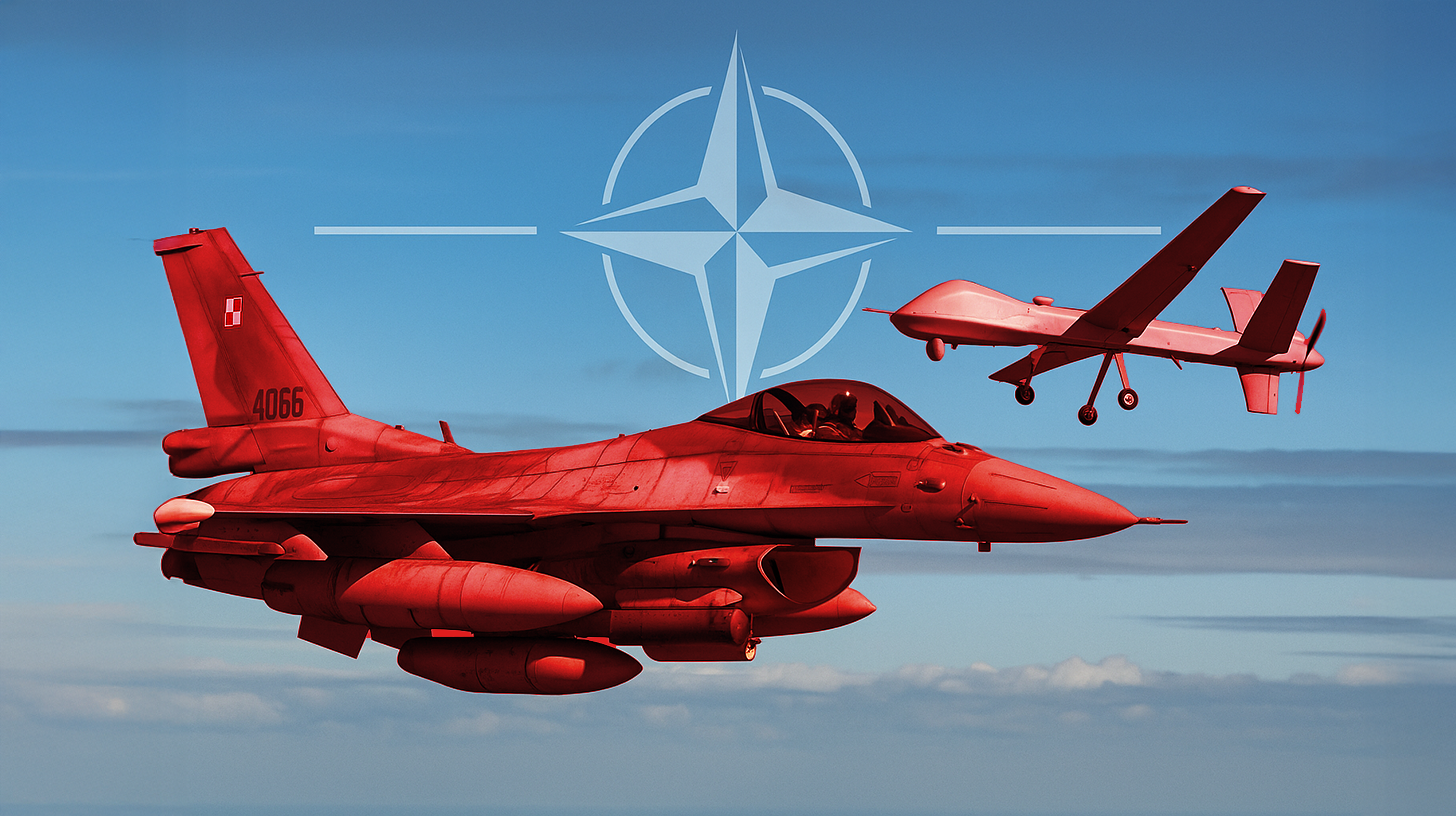
NATO on high alert – Nighttime drone attack: Poland shoots down Russian drones for the first time after airspace violation – Creative image: Xpert.Digital
NATO airspace: The Polish airspace violation by a Russian drone and its significance for European security
What happened on the night of September 9th to 10th, 2025?
On the night of September 9-10, 2025, a significant incident occurred that once again heightened tensions in Europe. While Russia was conducting massive drone attacks on Ukraine, several Russian drones penetrated Polish airspace. This was not the first such incident since the beginning of Russia's war of aggression, but it was the first time Poland had taken active military action and shot down the intruding drones.
The Ukrainian Air Force had previously warned that Russian drones were heading west and threatening the Polish cities of Zamość and Rzeszów. Rzeszów is of particular strategic importance because its airport serves as a key hub for Western arms shipments to Ukraine.
In response to this threat, Poland, along with allied forces, activated its air defenses. The Polish Armed Forces' operational command stated that "Polish and allied aircraft are operating in our airspace, while ground-based air defense and radar reconnaissance systems have been placed on high alert." Several drones were successfully shot down, though the exact number remained unclear.
How did the Polish authorities react to the incident?
The Polish government's reaction was swift and decisive. Prime Minister Donald Tusk confirmed on Platform X that weapons had been used against the aircraft. He emphasized that he was in constant contact with the military leadership, the defense minister, and the president.
Defense Minister Wladyslaw Kosiniak-Kamysz added that Poland was also in constant contact with NATO command. This communication was crucial, as Poland, as a NATO member, had to inform its allies about developments.
As a security measure, four airports were temporarily closed, including the country's main airport, Warsaw Chopin Airport. The strategically important Rzeszow-Jasionka airport, through which a large portion of Western military aid to Ukraine is processed, also had to cease operations.
The population in the particularly vulnerable voivodeships of Podlaskie, Masovia, and Lublin was urged to stay home and follow announcements from the authorities. These measures underscored the seriousness of the situation and the Polish authorities' readiness to act decisively.
What military infrastructure protects Poland on NATO's eastern flank?
Poland has significantly expanded its defense capabilities in recent years and has become one of NATO's leading partners in the region. The country now spends 4.7 percent of its gross domestic product on defense, exceeding both the NATO target of two percent and the spending of the United States.
As part of international cooperation, German Patriot air defense systems are stationed in Poland. Since January 2025, two German Patriot squadrons with approximately 200 personnel have been protecting the airspace around Rzeszow. These systems replaced US units and are part of NATO's integrated air defense in the region.
The Patriot system is a state-of-the-art, ground-based air defense system capable of intercepting aircraft, ballistic missiles, and cruise missiles. It consists of a radar unit for target acquisition, a fire control center, and multiple launch units for interceptor missiles. The German systems operate in close cooperation with Polish and other NATO forces, including US Avenger systems and Norwegian NASAMS units.
Furthermore, Poland is developing the ambitious "Eastern Shield" program, which is to be implemented by 2028 along the 700-kilometer border with Belarus and Russia. This project comprises a security belt up to 50 kilometers deep with integrated surveillance, defense, and infrastructure measures. With a budget of 10 billion zlotys (2.4 billion euros) from the Polish defense budget and potential EU loans of up to 20 billion euros through the SAFE program, this represents the largest defense infrastructure project on NATO's eastern flank since the alliance's inception.
What do Articles 4 and 5 of the NATO Treaty mean in this context?
Articles 4 and 5 of the NATO Treaty are the central elements of the alliance and define how the alliance responds to threats. Article 4 states that "the Parties shall consult each other when, in the opinion of one of them, the territorial integrity, political independence or security of one of the Parties is threatened.".
This article has been invoked seven times since NATO's founding in 1949, most recently on February 24, 2022, when several Eastern European states, including Poland, requested consultations following the Russian attack on Ukraine. Article 4 does not automatically lead to military action, but rather allows for initial consultations on the threat situation and possible responses.
Article 5, however, governs the actual collective defense clause. It states that "an armed attack against one or more of them in Europe or North America will be considered an attack against them all." This does not, however, mean the automatic entry of all NATO members into war. Each alliance partner can decide for itself "what measures it considers necessary to restore and maintain the security of the North Atlantic area.".
Article 5 of the NATO treaty has only been invoked once in NATO's history: following the terrorist attacks of September 11, 2001, in the United States. It is important to note that Article 5 requires unanimous agreement from all NATO member states before it can take effect.
How do experts assess the current threat situation?
Security experts view the repeated airspace violations as a serious security risk for Poland and NATO's entire eastern flank. Due to its geographical location between the Russian exclave of Kaliningrad, Belarus, and Ukraine, Poland occupies a particularly exposed position.
The Polish government takes the Russian threat extremely seriously. As early as 2008, after the Russian attack on Georgia, then-Polish President Lech Kaczynski prophetically warned: "We know very well that today it will be Georgia, tomorrow Ukraine, the day after tomorrow the Baltic states, and after that perhaps my country, Poland." This assessment has proven accurate with the Russian invasion of Ukraine.
Military experts emphasize that the airspace violations are not merely random collateral damage of the war in Ukraine, but rather part of Russia's hybrid warfare strategy. Poland already sees itself in a hybrid conflict with Russia, which, in addition to military provocations, also includes cyberattacks and disinformation campaigns.
The strategic importance of the region is underscored by the Suwalki Gap, a land corridor only 65 kilometers wide between Poland and Lithuania that connects the Baltic states to the rest of NATO. A Russian breakthrough in this area could cut off the Baltic NATO partners from the West and spell a serious crisis for the alliance.
What role does Poland play in the European defense strategy?
Poland has developed into one of Europe's leading defense actors in recent years and plays a key role in strengthening NATO's eastern flank. With defense spending of 4.7 percent of its GDP, Poland invests more in its security than any other NATO country.
Poland's defense strategy follows a multi-layered approach. In addition to the aforementioned Eastern Shield program, Poland plans massive investments in modern weapons systems, including 96 attack helicopters and a new missile defense base on the Baltic Sea. This modernization is intended to make Poland a regional security guarantor while simultaneously strengthening the entire NATO alliance.
Poland's role as a logistical hub for aid to Ukraine is particularly significant. Rzeszow Airport and other infrastructure facilities are key nodes for Western arms shipments. This strategic position makes Poland an indispensable partner in Western support for Ukraine and, at the same time, a potential target for Russian provocations.
The Polish leadership under Prime Minister Donald Tusk is pursuing an active diplomacy within NATO and the EU. Poland is pushing for greater European responsibility in defense, particularly given the uncertain stance of the US under various presidencies.
Hub for Security and Defense - Advice and Information

Hub for Security and Defense - Image: Xpert.Digital
The Security and Defence Hub offers expert advice and up-to-date information to effectively support companies and organizations in strengthening their role in European security and defence policy. Working closely with the SME Connect Defence Working Group, it particularly promotes small and medium-sized enterprises (SMEs) that wish to further develop their innovative capacity and competitiveness in the defence sector. As a central point of contact, the Hub thus creates a crucial bridge between SMEs and European defence strategy.
Related to this:
German-Polish axis: How Patriot systems and brigades build trust – Can Poland make Europe a true deterrent power?
How does the situation affect the European security architecture?
The incident of September 2025 illustrates the fundamental changes in the European security architecture since the Russian attack on Ukraine. Europe is at a turning point that requires a realignment of defense policy.
In response to the changing threat landscape, the EU adopted the "ReArm Europe" plan (later called "Readiness 2030"), which aims to mobilize around €800 billion for defense by 2030. This plan comprises five key measures: activating the national escape clause of the Stability and Growth Pact for defense spending, the SAFE program with €150 billion in loans for joint procurement, better use of EU budget funds for defense purposes, expanding lending by the European Investment Bank, and mobilizing private capital.
In parallel, NATO has strengthened its deterrence measures in Eastern, Central, and Southeastern Europe. Germany is contributing more than 35,000 troops on high alert for the new NATO Force Model and plans to permanently station a combat brigade in Lithuania. These measures are part of a comprehensive strengthening of the eastern flank, which also includes the German Patriot mission in Poland.
European states are simultaneously negotiating security guarantees for Ukraine for the period following a potential peace agreement. A multinational force of 26 to 30 nations, under Franco-British leadership, is being discussed to prevent renewed Russian aggression. This "porcupine strategy" aims to strengthen Ukraine to such an extent that it becomes a difficult target for an aggressor.
What impact will this have on German-Polish relations?
Recent developments have significantly strengthened German-Polish relations in security policy. Germany has overcome its historical reluctance on defense issues and is assuming active responsibility on NATO's eastern flank.
The deployment of German Patriot systems in Poland symbolizes this changing relationship. During his visit to Poland, Defense Minister Boris Pistorius emphasized the importance of continued support for Ukraine and German-Polish cooperation. The joint installation of a repair hub for Ukrainian military equipment demonstrates how both countries are deepening their collaboration.
Germany also plans to station a robust combat brigade in Lithuania, which will provide Poland with additional security. This "Lithuania Brigade" is a flagship project of Germany's new era and underscores Germany's willingness to stand by its allies.
The close coordination between the two countries also extends to airspace surveillance. Germany has offered Poland assistance with airspace monitoring, which can be supplemented by German Eurofighter patrols over Polish territory. This practical cooperation significantly strengthens trust between the two NATO partners.
What does this incident mean for the future of NATO alliance solidarity?
The incident of September 2025 tested the functionality of NATO's alliance solidarity in a critical situation. Poland demonstrated through its decisive response and close coordination with its allies that Articles 4 and 5 of the NATO Treaty are more than just paper tigers.
Rapid communication with NATO command and the integration of allied forces into Polish air defense demonstrated the effectiveness of collective defense. German, Norwegian, and American systems worked seamlessly with Polish forces to counter the threat.
At the same time, the incident revealed the limits of automatic alliance solidarity. Although Poland was technically the victim of an attack, this did not automatically trigger Article 5 of the NATO treaty. The decision as to whether and how to respond ultimately rests with the individual NATO members and their parliaments.
For this reason, NATO has further developed its deterrence strategy. Instead of relying on reactive measures after an attack, the preventive effect is strengthened through forward defense and integrated air defense. This strategy aims to deter potential aggressors in advance, rather than reacting only after an attack has occurred.
How does American policy influence European defense?
The uncertain American stance on European defense is increasing the pressure on Europe to assume greater responsibility. Regardless of the US presidency, Washington will continue to shift its strategic focus to the Indo-Pacific and expect greater autonomy from Europe.
This development has led Poland to conceive of its Eastern Shield program as a "European-led project" that implements strategic autonomy while simultaneously strengthening NATO's eastern flank. Poland is thus positioning itself as a bridge between American security guarantees and European self-reliance.
The Trump administration has signaled that the US will continue to contribute crucial military capabilities, but that Europe should take the lead. This includes intelligence, command and control structures, air defense, and potentially the monitoring of no-fly zones. This division of labor could become a model for future transatlantic defense cooperation.
What are the long-term consequences for Europe?
The incident of September 2025 marks another turning point in the development of an independent European defense capability. Europe is increasingly recognizing that it can no longer rely unconditionally on American protection and must develop its own capabilities.
The EU is working intensively on building a European defense industry. The SAFE program is intended to provide up to €150 billion for joint procurement, focusing on priority capabilities. At least 40 percent of procurement is to be joint, in order to increase efficiency and interoperability.
Poland is playing a pioneering role in this development. The country combines massive national investments with European cooperation and NATO integration. The Eastern Shield program could become a model for other European border regions and form the basis for an integrated European border defense.
In the long term, such incidents could lead to the normalization of active air defense on Europe's borders. What is currently perceived as an exceptional escalation could become standard procedure for protecting European airspace. This development would enable Europe to form a more equal partnership with the US while simultaneously strengthening deterrence against Russia.
The events of September 2025 demonstrate that Europe is ready to take its security into its own hands. Poland, with its resolute response, sent a clear signal: violations of NATO airspace will not be tolerated and will be met with military force. This newfound resolve could mark the beginning of a European security architecture that is less dependent on American decisions and, at the same time, more effectively counters threats from the East.
Consulting - Planning - Implementation

Markus Becker
I would be happy to serve as your personal advisor.
Head of Business Development
Chairman SME Connect Defense Working Group
Consulting - Planning - Implementation
Konrad Wolfenstein
I would be happy to serve as your personal advisor.
You can contact me at wolfenstein∂xpert.digital or
Just call me on +49 7348 4088 965 .