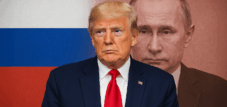
Fortress America: Why the US is resigning from its role as "world police" – The new US National Security Strategy – Image: Xpert.Digital
The National Security Strategy 2025: Farewell to liberal internationalism – How the return to the nation-state redefines the global order
The end of an era: America's new security doctrine and what it means for the rest of the world
The global security architecture is facing a fundamental upheaval. With the "National Security Strategy 2025," the US president has presented a document that is far more than a routine update of diplomatic guidelines—it is the manifesto of a geopolitical counterrevolution. In a world increasingly characterized by fragmentation and rivalry, the United States, under this doctrine, is definitively abandoning the liberal internationalism of the post-war era.
This analysis deconstructs the anatomy of this "America First" restoration and reveals how radically the superpower is reinventing itself. The dream of the "end of history" and global democratization is buried; in its place comes a cold, transactional realism. In this new paradigm, security is no longer understood as an abstract good of an international community, but as the concrete, physical protection of one's own borders, economic base, and cultural identity.
From aggressive protectionism and reindustrialization to the militarization of migration policy and the demand for “cultural resilience”: we are looking deep into the mechanics of a strategy that is once again elevating the nation-state to the undisputed primary unit of world politics. This realignment marks the transition from “world police” to “Fortress America”—a power that projects its strength selectively but with overwhelming force, demanding tribute from allies and adversaries alike. Anyone who wants to understand what the world order of 2030 might look like must understand this departure from the globalist consensus.
Related to this:


The Return of Sovereignty: A Strategic Reorientation
The present “National Security Strategy 2025” marks far more than a routine update of national security protocols; it represents a fundamental turning point in American foreign and security policy. In an era characterized by geopolitical fragmentation and the erosion of the unipolar world order, this document represents a radical break with the interventionist consensus that has dominated US policy since the end of the Cold War. Instead of relying on the expansion of liberal democracies and multilateral institutions, the strategy redefines the national interest of the United States—narrowly defined, transactional, and uncompromisingly focused on strengthening its own sovereignty.
The relevance of this document lies in its unequivocal rejection of globalist universalism. It posits a world in which the nation-state is once again the undisputed primary unit of international relations. Security is no longer understood here as an abstract good of the “international community,” but as the concrete protection of the physical borders, cultural identity, and economic base of the American republic. This analysis deconstructs the strategy into its atomic components in order to understand how this realignment is intended to transform the global security architecture. We are moving away from the “police of the world” toward a “Fortress America” that projects its power selectively and with overwhelming force, but only where immediate, tangible interests are at stake.
The End of the Globalist Consensus: A Historical Reckoning
To grasp the implications of Strategy 2025, a chronological contextualization of American strategic history is essential. The document itself offers a sharp historical critique, serving as the "root of the present." It identifies the post-1989 era as a period of strategic misstep. According to the analysis, after the collapse of the Soviet Union, American elites succumbed to a hubris of perpetual dominance.
The 1990s and 2000s were characterized by the assumption that the American model could be universalized. This led to costly nation-building projects in the Middle East and an economic opening to China, in the hope that trade would bring about change. Strategy 2025 diagnoses this era as a failure of historic proportions. Globalization and free trade are interpreted not as engines of prosperity, but as instruments of deindustrialization that eroded the American middle class and created strategic dependencies on rivals.
A key moment in this genealogy is Donald Trump's first term, which the document portrays as a "necessary correction." However, it is the Strategy for 2025 that systematizes these impulses into a coherent doctrine. It draws lessons from the "perpetual wars" and the financial crisis, stating that US resources are finite and that internal stability—both economic and cultural—is the non-negotiable prerequisite for external strength. Historically, this is a return to pre-Wilsonian traditions, a kind of modernized Monroe Doctrine, but one amalgamated with the technological and nuclear realities of the 21st century.
The Architecture of Strength: Core Pillars of the ‘America First’ Doctrine
In detail, the strategy rests on a complex architecture that extends far beyond purely military aspects. It merges domestic and foreign policy into an inseparable whole. The mechanisms can be divided into four central pillars:
First: Economic autarky as a guarantee of security.
The economy is no longer merely an area of private exchange, but the foundation of national security. The strategy calls for aggressive reindustrialization. Mechanisms for this include strategic tariffs, the reshoring of critical supply chains, and absolute dominance in the energy sector (oil, gas, nuclear). Energy is understood as a weapon and a geopolitical lever to bind allies and weaken adversaries. The focus is on independence from foreign resources, particularly from China.
Secondly: border security and demographic control.
A notable novelty in a security document of this kind is the prominent placement of migration control. The “era of mass migration” is declared over. Border security is elevated to the primary task of national defense, equated with repelling military invasions. This is based on the assumption that national sovereignty is illusory without physical control over who enters the state's territory.
Third: Peace through superior deterrence.
Militarily, the strategy relies on the principle of "Peace Through Strength." This does not mean more troops everywhere, but rather more lethal technology at key points. Priorities include modernizing the nuclear arsenal, building a comprehensive missile defense system ("Golden Dome"), and achieving superiority in future technologies such as AI and quantum computing. The doctrine is defensive in its stance (no interventions to promote democracy), but offensive in its capacity (massive retaliation capability).
Fourth: Cultural and spiritual resilience.
An often overlooked but central mechanism here is the nation's "spiritual and cultural health." The strategy argues that a polarized or self-loathing society cannot project global power. The fight against internal ideologies perceived as corrosive (such as DEI) thus becomes a matter of national security. Soft power only works if the nation believes in its own "greatness and decency."
Hub for Security and Defense - Advice and Information

Hub for Security and Defense - Image: Xpert.Digital
The Security and Defence Hub offers expert advice and up-to-date information to effectively support companies and organizations in strengthening their role in European security and defence policy. Working closely with the SME Connect Defence Working Group, it particularly promotes small and medium-sized enterprises (SMEs) that wish to further develop their innovative capacity and competitiveness in the defence sector. As a central point of contact, the Hub thus creates a crucial bridge between SMEs and European defence strategy.
Related to this:
The end of the benevolent hegemon: How the USA is becoming a classic superpower with high entry prices
Realpolitik in the 21st century: The operational implementation of the doctrine
The status quo, as defined by this strategy, is one of fierce competition without illusory friendships. In today's context, applying this doctrine means a departure from multilateralism toward bilateral, transactional relationships. International organizations will only receive support where they explicitly serve American interests; otherwise, they will be ignored or reformed.
In practice, this leads to a new approach of "burden-shifting." Allies, particularly within NATO, are no longer merely politely asked, but rather forced, under threat of consequences, to drastically increase their defense spending (the target of 5% of GDP is mentioned). The US is positioning itself as a "convener" and supporter, no longer as the automatic guarantor of security for wealthy free riders.
In its dealings with rivals like China, a policy of decoupling in strategic sectors is pursued, combined with military encirclement through allied proxies. This strategy accepts that China and other powers pursue their own interests and does not attempt to change them through moral appeals, but rather to steer them through harsh economic and military incentives. It represents a return to classical realpolitik, where power relations and interests are the currency, not values or norms.
Related to this:
Geopolitics in action: The 'Trump Corollary' and the Pacific Pivot
To make the theoretical constructs tangible, two concrete use cases can be derived from the strategy, which illustrate the operational logic:
Case Study 1: The Trump Corollary to the Monroe Doctrine in the Western Hemisphere
The strategy reactivates the Monroe Doctrine with an aggressive new twist. Specifically, this means that the US will not tolerate the influence of non-European powers (primarily China and Russia) in Latin America. In practice, this could mean that Chinese investments in critical infrastructure (such as ports in Peru or Panama) will not only be criticized diplomatically but also blocked through massive economic pressure or covert operations. The US would recruit "regional champions" to act as proxies for stability, thereby stemming migration flows at their source. A country cooperating militarily with China would face the threat of losing access to US financial markets. This is the application of economic power to enforce a classic sphere of influence.
Case Study 2: The Technological Iron Curtain in Asia
In the Indo-Pacific, the strategy illustrates the transition from mere trade protection to technological warfare. A concrete application would be a complete ban on US companies and allies exporting or manufacturing high technology (semiconductors, AI chips) in China. Simultaneously, the US would require Japan and South Korea to expand their defense capabilities to such an extent that they could independently defend the First Island Chain. The US would concentrate on nuclear deterrence and maritime dominance in the deeper Pacific, while its allies maintain the conventional front line. This demonstrates the mechanism of burden-shifting: the partners bear the immediate risk, while the US provides strategic backing and technological superiority.
Between isolation and dominance: The strategic dilemmas
Every strategy has its downsides, and the radical realignment of "Strategy 2025" carries significant risks and controversies. Critics would argue that the focus on narrow national interests could paradoxically undermine the global influence of the United States.
First, there is the risk of economic self-isolation. The aggressive application of tariffs and the demand for reshoring could trigger trade wars that would affect not only China but also traditional allies in Europe and Asia. This could fragment global markets and drive up costs for American consumers and businesses, thus undermining the goal of economic strength.
Secondly, a transactional approach to alliances risks their erosion. If security protection is tied solely to payments or economic deals, the alliance system loses its credibility as a deterrent community. Allies like Germany or Japan might be forced either to develop their own nuclear weapons (which increases the risk of proliferation) or to come to terms with rival powers to avoid being caught in the crossfire.
Third, the internal focus raises questions about the ability to act in crises. The “predisposition to non-intervention” could be misinterpreted by aggressors as a green light to resolve regional conflicts by force, under the assumption that the US will not intervene as long as its direct interests are not affected. This could lead to a more unstable world where the law of the jungle prevails and humanitarian disasters are ignored.
Finally, the definition of "cultural health" is highly controversial. Linking security policy with domestic culture wars polarizes the population and could politicize the security apparatus, jeopardizing its professionalism and neutrality.
The New World Order 2030: Scenarios of a Multipolar Era
Looking to the future, this strategy outlines the path to a decidedly multipolar, but sharply defined world order. If the trends of this strategy take hold, by 2030 we will see a world defined not by multilateral rules, but by competing power blocs.
A re-regionalization of the global economy is to be expected. Instead of global just-in-time supply chains, regional economic clusters will form: a North American zone under US leadership, a European bloc (struggling for relevance), and a Sino-centric sphere in Asia. Innovations in AI and energy will no longer be shared globally, but will be closely guarded state secrets that determine a nation's superpower status.
A potential upheaval lies in the financial system. The strategy emphasizes the defense of the dollar, but the aggressive use of financial sanctions could drive rival powers to accelerate the development of alternative payment systems (based on cryptocurrencies or commodity currencies). Should the dollar lose its role as the world's reserve currency, it would bring down the central pillar of American power—the ability to cheaply finance debt and exert global pressure.
Another trend is the privatization of security by allies. We will see a massive arms buildup in Europe and Asia as states realize that the American security umbrella has become porous. This could lead to a world that, while more "stable" in the sense of fewer US interventions, is more dangerous due to the multitude of heavily armed, nervous actors.
A watershed moment in global security architecture
The synthesis of these findings reveals that the "National Security Strategy 2025" is a document of compelling clarity and brutal consistency. It ends the era of strategic ambiguity and replaces it with a doctrine of national egoism. Its significance lies in the fact that it transforms the US from a benevolent hegemon into a classic superpower that jealously guards its privileges and is no longer willing to pay for the common good of the planet.
This strategy is neither isolationist in the old sense nor imperialist in the neoconservative sense. It is neo-nationalist and defensively aggressive. It recognizes that the relative power of the US is waning and seeks to secure absolute advantage through the ruthless consolidation of its own resources. For the rest of the world, this means: the US is still there, but the price for its protection and its market has risen dramatically. Friends must pay, enemies must fear, and neutral observers must choose sides. It is a strategy for a world in which Hobbes has been proven right and Kant has been forgotten.
Consulting - Planning - Implementation

Markus Becker
I would be happy to serve as your personal advisor.
Head of Business Development
Chairman SME Connect Defense Working Group
Consulting - Planning - Implementation
Konrad Wolfenstein
I would be happy to serve as your personal advisor.
You can contact me at wolfenstein∂xpert.digital or
Just call me on +49 7348 4088 965 .
Your dual-use logistics experts

Dual-use logistics experts - Image: Xpert.Digital
The global economy is currently undergoing a fundamental transformation, a watershed moment that is shaking the foundations of global logistics. The era of hyper-globalization, characterized by the relentless pursuit of maximum efficiency and the "just-in-time" principle, is giving way to a new reality. This new reality is marked by profound structural breaks, geopolitical power shifts, and increasing fragmentation of economic policy. The once taken-for-granted predictability of international markets and supply chains is dissolving and being replaced by a period of growing uncertainty.
Related to this:
Our global industry and economic expertise in business development, sales and marketing

Our global industry and economic expertise in business development, sales and marketing - Image: Xpert.Digital
Industry focus areas: B2B, digitalization (from AI to XR), mechanical engineering, logistics, renewable energies and industry
More information here:
A thematic hub offering insights and expertise:
- Knowledge platform covering global and regional economies, innovation and industry-specific trends
- A collection of analyses, insights, and background information from our key areas of focus
- A place for expertise and information on current developments in business and technology
- A hub for companies seeking information on markets, digitalization, and industry innovations