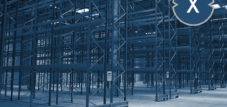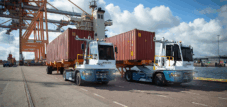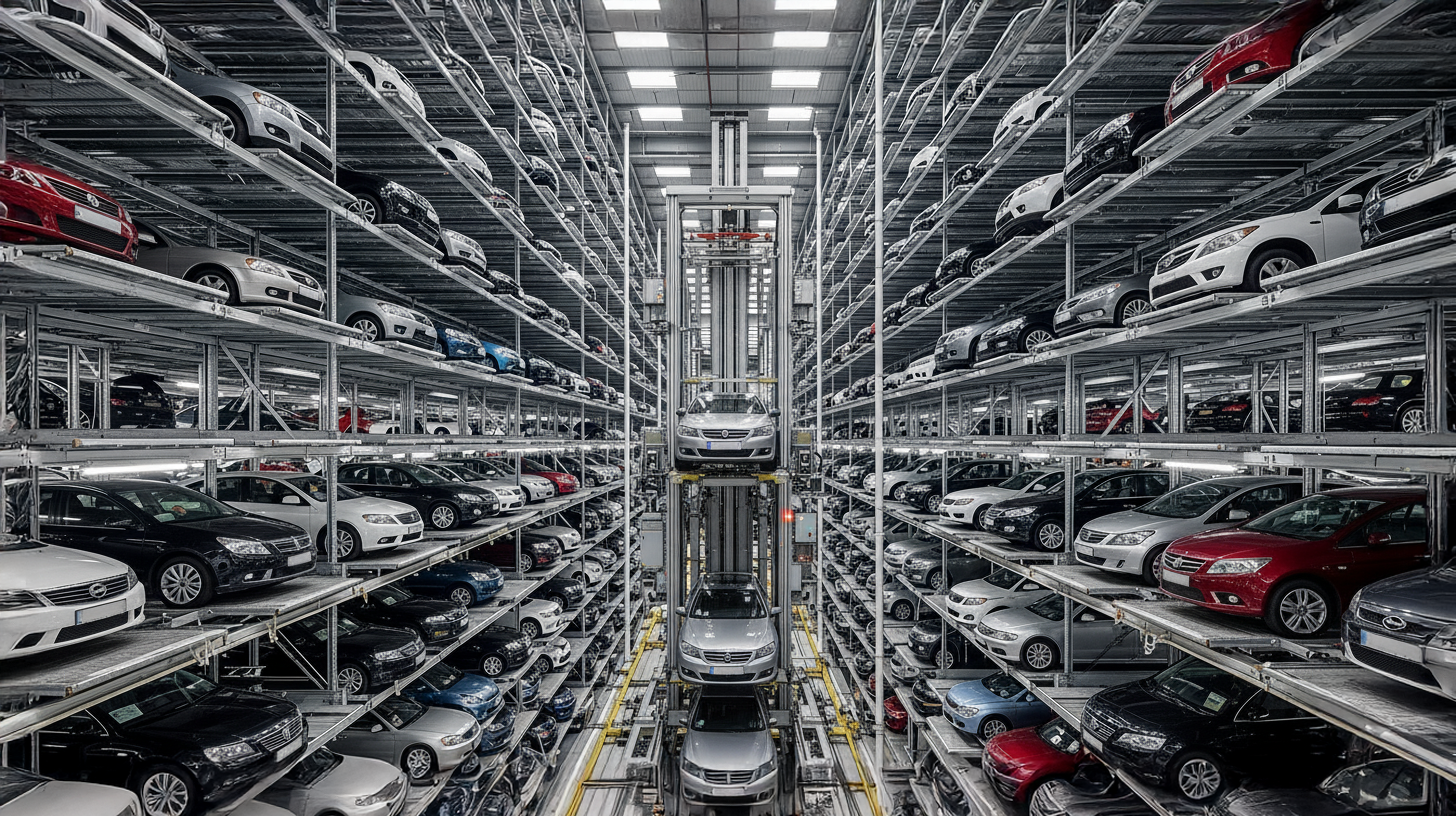
A multi-storage garage for 10,000 vehicles – stock image: Xpert.Digital
Vertical densification as a response to structural capacity bottlenecks: The strategic transformation of European car terminals
When space becomes a bottleneck: Why Europe's largest car port is building upwards instead of outwards
International Car Operators' announced investment in a 10,000-vehicle multi-storage garage in Zeebrugge marks more than just an infrastructural expansion. It symbolizes a fundamental paradigm shift in European automotive logistics, where the physical limits of horizontal expansion collide with the structural limitations of traditional business models. At a time when European car terminals are facing declining throughput, geopolitical upheaval, and a fundamental shift in global trade flows, the question arises: Is vertical integration a future-oriented efficiency model or merely an expensive interim solution in a fundamentally unstable industry?
The triple crisis of European car terminals
European automotive logistics faces an unprecedented challenge resulting from the convergence of three fundamental shifts. First, Europe has transformed from a net exporter to a net importer of vehicles, with Chinese electric vehicles in particular reversing trade flows. In the first nine months of 2024 alone, Europe imported approximately 581,000 vehicles from China, while Chinese brands now represent eight percent of the European electric vehicle market. This fundamental reversal of historically established logistics structures necessitates a complete realignment of terminal capacities.
Secondly, European car terminals are suffering from a structural decline in capacity, exacerbated by geopolitical upheavals. The Houthi attacks in the Red Sea have led to a 72 to 75 percent reduction in container traffic through the Suez Canal since the end of 2023. For RoRo traffic, the diversion via the Cape of Good Hope means an average increase in transit times of 33 percent between Asia and Europe, tying up approximately five percent of the global RoRo fleet capacity. These extended delivery times not only increase inventory levels in ports but also simultaneously reduce available transport capacity on the world's oceans.
Thirdly, the lack of space in urban port regions exacerbates the structural shortage. The Port of Antwerp-Bruges, which includes Zeebrugge, recorded a 9.4 percent decrease in vehicle throughput to 3.2 million units in 2024. At the same time, vehicle dwell times in terminals are increasing due to changing business models among automakers, who are increasingly using port terminals as temporary storage for customer-specific finishing work. This development leads to a paradox: while the absolute number of vehicles is decreasing, the demand for storage space is increasing disproportionately.
The economic significance of these developments cannot be overstated. Zeebrugge is Europe's largest car port and, together with Antwerp, handles over 2.3 million vehicles annually. ICO operates 300 hectares of terminal space there with approximately 120,000 parking spaces. A ten percent inefficiency in space utilization effectively means the loss of 12,000 parking spaces or about 230,000 vehicle movements per year, which corresponds to a loss of revenue in the hundreds of millions.
From endless expanse to strategic scarcity: A brief history of terminal areas
The development of European car terminals is inextricably linked to the globalization of the automotive industry after 1990. During this period, European manufacturers aggressively expanded into export markets, while Asian producers began to penetrate the European market. Zeebrugge emerged as the preferred hub, as the port offered a unique combination of geographical proximity to the main European car markets, direct motorway access, and ample land reserves.
The first major expansion phase occurred between 2000 and 2010, when ICO gradually expanded its premises in Zeebrugge to over 200 hectares. During this period, the paradigm of horizontal expansion dominated: land was relatively inexpensive, and the efficiency of logistics processes was primarily optimized through minimal vehicle movement and direct ship-to-land connections. Average land costs in port areas were significantly lower than those of inner-city commercial properties, making extensive land use appear economically rational.
The second phase, beginning in 2010, was characterized by densification strategies, without abandoning the fundamental model of horizontal expansion. In 2018, ICO signed a concession agreement for an additional 54 hectares at the Bastenaken terminal, increasing the total area to 300 hectares. This expansion enabled the simultaneous handling of up to 16 ships and increased the annual throughput capacity by 350,000 vehicles. In parallel, ICO invested in sustainability measures, including eleven wind turbines with a total capacity of 44 megawatts and 308 charging points for electric vehicles to accommodate the increasing share of battery-electric vehicles.
The third phase, which began around 2020 and was accelerated by the COVID-19 pandemic, marks the transition to vertical densification. Several factors drove this development: First, land reserves in established port areas reached their physical limits. The Port of Antwerp-Bruges has a total of 974 hectares for automotive logistics, but these areas are already largely occupied and limited by urban planning, environmental, and infrastructural constraints.
Secondly, the opportunity costs of land use have risen dramatically. In densely populated port regions, automotive logistics increasingly competes with other uses such as container terminals, chemical logistics, and urban development. As a result, implicit land costs have risen to levels where structured parking solutions have become economically attractive. Market studies show that multi-storey garages become cost-efficient at land prices of around three million euros per hectare, a threshold that has already been exceeded in many European ports.
Thirdly, the requirements of automotive manufacturers changed fundamentally. The transformation to electromobility necessitates temperature-controlled storage, charging infrastructure, and expanded finalization options. Simultaneously, business models shifted from just-in-time deliveries to longer storage times for customer-specific configurations, increasing the average dwell time of a vehicle in the terminal from five to seven days to ten to twelve days.
The Economics of Height: Actors, Drivers and Market Logic Behind the Vertical Strategy
ICO's decision to build a multi-storage garage with 10,000 parking spaces is part of a complex constellation of actors and economic mechanisms that fundamentally shape market behavior. The key players form a hierarchical system: at the top are port authorities such as the Port of Antwerp-Bruges, which, as concession grantors, make strategic land allocation decisions and set regulatory frameworks. At the second level are terminal operators like ICO, a wholly owned subsidiary of the Japanese shipping company Nippon Yusen Kaisha, which, with a market share of 14.7 percent of global RoRo capacity, is among the world's leading companies.
The third level comprises automotive manufacturers and their logistics service providers, who, as end customers, determine the demand side. ICO serves all major automotive manufacturers and 23 shipping companies, giving the company a pivotal position in European automotive logistics. This neutral market position allows ICO to function as a hub for a wide variety of trade flows, analogous to Heathrow in air traffic.
The primary economic drivers of vertical densification can be categorized into four groups: First, the marginal costs of horizontal expansion increase exponentially, while the average costs of vertical solutions decrease with increasing volume. A conventional land expansion of 67 hectares would theoretically be necessary to accommodate 10,000 additional parking spaces at a density of 150 vehicles per hectare. With estimated land prices of four to six million euros per hectare in Zeebrugge, this would result in land costs of 270 to 400 million euros. In contrast, a multi-storage garage, with estimated construction costs of 4,000 to 5,000 euros per parking space, would likely require total investments of 40 to 50 million euros, although the actual costs could be higher due to the complexity of large car garages.
Secondly, the proximity between berths and storage areas generates significant efficiency gains. ICO emphasizes that the planned garage will be located directly at the Bastenaken terminal, where vehicles will only have to travel minimal distances between ship and storage. This not only reduces CO2 emissions per vehicle by an estimated 60 to 80 percent compared to peripheral storage areas, but also accelerates throughput. With an annual volume of 2.3 million vehicles and an average of ten minutes of travel time saved through optimized positioning, this results in a theoretical savings potential of approximately 383,000 driving hours annually, which, at a calculated hourly rate of €50 for personnel and equipment, corresponds to a value of €19 million.
Thirdly, vertical densification allows for more flexible land use. While horizontal areas are typically used monofunctionally for vehicle parking, multi-story structures can integrate different functions: multi-level storage, finalization areas for technical modifications, charging infrastructure for electric vehicles, and quality control zones. This functional integration reduces internal transport routes and enables process synergies that are not achievable with dispersed land use.
Fourth, the investment responds to changing demand patterns in the automotive sector. The share of electric vehicles in European new car sales reached a record high of 17 percent in the first half of 2025, with China playing a dominant role as a production location. The logistics requirements for electric vehicles differ fundamentally from those of conventional vehicles: they require charging infrastructure, temperature-controlled storage to preserve battery health, and advanced technical finalization. Multi-storey garages can meet these specialized requirements more efficiently than open storage areas through controlled environmental conditions and integrated charging infrastructure.
The underlying market mechanisms follow a logic of structural scarcity coupled with a shift in demand. European car terminals operate in an oligopolistic market dominated by a few large operators such as ICO, Wallenius Wilhelmsen, and UECC. This market structure leads to limited price competition, while competition based on quality and capacity becomes increasingly important. Terminal operators who increase their effective capacity through investments in vertical infrastructure can gain market share without having to engage in price-driven cutthroat competition.
At the same time, the market is subject to an asymmetric risk sharing between port authorities, terminal operators, and automakers. Port authorities grant long-term concessions and benefit from port fees regardless of actual capacity utilization. Terminal operators like ICO bear the full investment and capacity utilization risk but can realize synergistic advantages through vertical integration with their parent company, NYK Line. Finally, automakers largely externalize storage risks to their logistics partners but retain control over strategic logistics decisions.
The capacity paradox: Fewer cars, but more space required
The quantitative assessment of European automotive logistics reveals a paradoxical picture: despite stagnating or declining vehicle volumes, capacity bottlenecks are worsening. The Port of Antwerp-Bruges recorded a total throughput of 277.7 million tons in 2024, representing growth of 2.3 percent. However, this growth was driven entirely by containers, which increased by 8.9 percent. RoRo traffic, on the other hand, fell by 3.4 percent, with new vehicles declining by 9.4 percent to 3.2 million units. This trend continued despite the decrease in absolute volumes and the simultaneous increase in average dwell times.
The reasons for this paradox are multifaceted: First, the business models of automotive manufacturers have fundamentally changed. Instead of shipping vehicles directly from the terminal to dealerships, many manufacturers use the terminals as warehouses for customer-specific finalizations. This includes the installation of optional equipment, increasingly complex software updates, and the execution of quality control checks. These transformations from mere transit terminals to value creation centers increase dwell time by an average of 40 to 60 percent.
Secondly, disruptions in global supply chains are leading to increased inventory levels. The diversion of shipping traffic around the Cape of Good Hope not only extends transit times by an average of seven to fourteen days, but also makes delivery times less predictable. Studies show that the reliability of schedules, measured as median delay, has deteriorated from under two days before the crisis to four to six days. This uncertainty is forcing automakers to maintain higher safety stocks, which increases the space required at port terminals.
Thirdly, the shift to electromobility exacerbates the space shortage. Electric vehicles require an average of 30 percent more space per unit than conventional vehicles, as fire safety clearances must be greater and charging infrastructure demands additional space. An analysis of the European market for mechanical parking systems shows that the submarket for multi-story garages is expanding at an annual growth rate of 14.8 percent until 2030, driven by the need to store electric vehicles in a space-saving and secure manner.
The financial implications of these developments are considerable. The European automotive logistics market had an estimated volume of approximately €85 billion in 2024, of which port terminals accounted for about 15 percent, or €12.8 billion. The average cost per vehicle handled at European terminals ranges from €200 to €350, depending on berthing time and additional services. A ten percent decline in throughput, as recorded in Antwerp-Bruges in 2024, translates to revenue losses of approximately €65 to €110 million for the terminal operators there.
At the same time, operating costs are rising disproportionately. Energy costs for lighting, air conditioning, and charging infrastructure have increased by an average of 80 to 120 percent in real terms since 2021. Personnel costs have risen by approximately 15 to 20 percent due to a shortage of skilled workers and negotiated wage increases. Since 2022, the European Central Bank's interest rate hike has increased the cost of capital for new investments from under one percent to three to four percent for top-rated borrowers, making financing capital-intensive projects such as multi-storage garages more expensive.
The competitive situation is intensifying due to the geographical shift in trade flows. While traditionally German and French manufacturers were the main users of Belgian terminals, today increasing volumes originate from Asian imports. In 2024, China exported a total of 5.9 million vehicles, of which approximately 22 percent, or 1.3 million, were electric vehicles. Of these, roughly 35 to 40 percent went to Europe, corresponding to a volume of approximately 450,000 to 520,000 units. These Chinese imports compete directly with European production and are fundamentally changing the utilization patterns of the terminals.
Your container high-bay warehouse and container terminal experts

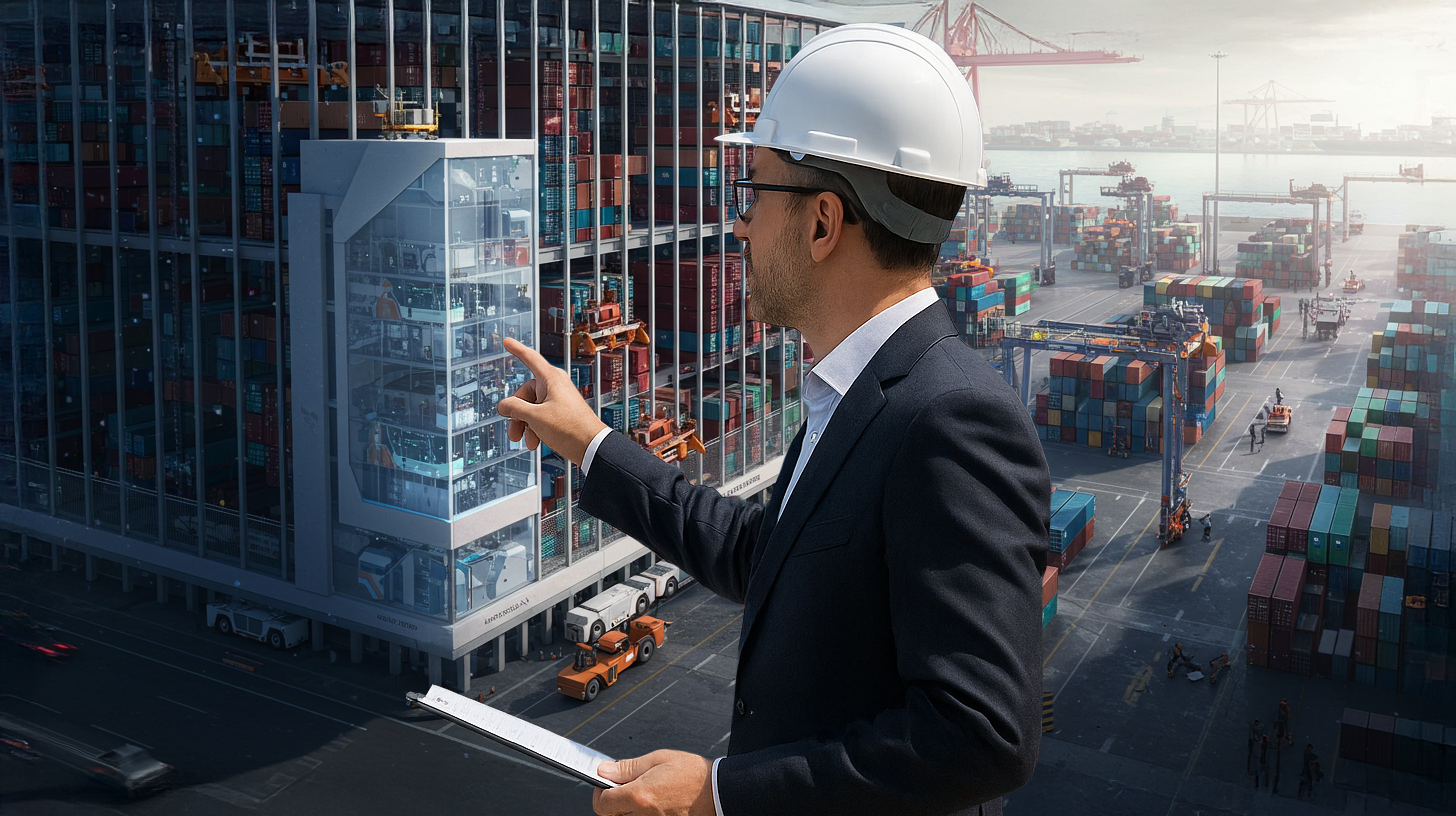
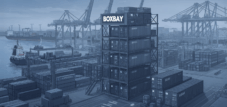
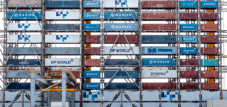
Container high-bay warehouses and container terminals: The logistical interplay – expert advice and solutions - Creative image: Xpert.Digital
This innovative technology promises to fundamentally change container logistics. Instead of stacking containers horizontally as before, they will be stored vertically in multi-story steel racking structures. This not only allows for a drastic increase in storage capacity within the same area, but also revolutionizes all processes at the container terminal.
More information here:
Vertical instead of horizontal: Why ports are now focusing on multi-storey garages
Two ports, two routes: Koper vs. Zeebrugge in a strategic comparison
A comparative look at two European car terminals pursuing different strategies to address capacity constraints illustrates the complexity of decision-making. The Port of Koper in Slovenia and the Bastenaken Terminal in Zeebrugge represent different market positions and strategic approaches, providing insightful information about the advantages and disadvantages of vertical integration.
Luka Koper, the operator of the Slovenian port, invested approximately €18.9 million between 2017 and 2021 in the construction of a multi-storey parking garage with a capacity of 6,000 vehicles. This investment was co-financed by EU funds from the Napa4Core project at a rate of approximately 25 percent, reducing the net investment to around €14 million. The cost per parking space thus amounted to approximately €2,300 to €3,150, significantly lower than the estimated €4,000 to €5,000 for Zeebrugge. This cost difference can be explained by several factors: Firstly, construction costs in Slovenia are approximately 30 to 40 percent lower than in Belgium. Secondly, the Koper garage is a relatively simple structure without sophisticated automation, whereas a more technologically advanced solution with integrated terminal operating systems is likely planned for Zeebrugge.
The economic logic behind the Koper investment differs fundamentally from the situation in Zeebrugge. In 2016, Koper handled approximately 749,000 vehicles, ranking ninth among European car ports, significantly behind Zeebrugge with 2.8 million vehicles. The garage enabled an estimated capacity expansion of 162,000 vehicles annually, with a throughput of 27 cycles per parking space per year. This corresponded to a capacity increase of approximately 22 percent, significantly higher than the eight to ten percent planned by ICO for Zeebrugge.
The difference stems from the initial situation: Before the investment, Koper had only 8,000 covered parking spaces and operated almost exclusively with open-air parking. The multi-storey garage not only enabled an expansion of capacity but also a qualitative upgrade of the service, as many premium manufacturers prefer covered storage. Zeebrugge, on the other hand, already has extensive covered capacity and a highly developed infrastructure, so the new garage primarily serves to increase density and efficiency.
The strategic differences are also evident in its positioning within the European port hierarchy. Koper has developed into the most important car terminal in the Mediterranean and primarily serves as a gateway for Central and Southeastern European markets. Investment in covered capacity has enabled Koper to gain market share from Western European ports that were suffering from capacity constraints. Between 2016 and 2024, Koper increased its vehicle throughput by approximately 35 percent, while established ports such as Bremerhaven and Barcelona stagnated or contracted.
Zeebrugge, on the other hand, operates as a dominant hub with network effects. ICO serves 23 shipping companies and 75 automotive manufacturers, giving the terminal a central position in European logistics networks. The investment in the multi-storage garage is less about gaining market share than about defending its existing position against emerging competitors. With an estimated investment volume of €45 to €50 million and a capacity expansion of 10,000 parking spaces, the implicit break-even point is reached at an occupancy rate of approximately 75 percent over a period of 15 to 18 years, assuming average port fees of €250 per vehicle and 27 transshipments per year.
A further instructive comparison arises from examining the Wallenius Wilhelmsen investment at Bastenaken West Terminal, completed in 2022. Wallenius Wilhelmsen expanded its facilities by approximately 50 hectares and invested an estimated €180 to €220 million in three new berths and yard capacity. This equates to costs of €3.6 to €4.4 million per hectare, significantly exceeding the historical average of €1.5 to €2.5 million. The investment illustrates that horizontal expansion is becoming increasingly prohibitively expensive, even for well-capitalized players.
The different strategies also reflect varying risk assessments regarding future market developments. Koper focused on moderate growth in an emerging market and opted for a cost-effective, scalable solution. Zeebrugge, on the other hand, is preparing for a scenario in which absolute volumes stagnate or shrink, while at the same time the demands for storage capacity and flexibility increase. In this context, the multi-storage garage serves as a hedge against structural uncertainty, enabling ICO to respond to different market scenarios without making irreversible misinvestments in extensive land expansion.
How regulatory pressure and space constraints are reshaping terminal strategy
Investing in vertical densification raises fundamental questions about the long-term profitability and strategic robustness of this capital allocation. Critics point to several structural risks that call into question the economic logic of the multi-storage garage.
First, there is a risk of structural overcapacity in the European automotive terminal sector. Vehicle production in Europe reached approximately 11.4 million units in 2024 in the pessimistic scenario or 13.5 million in the optimistic scenario, significantly below the historical peak of over 17 million units before 2008. At the same time, production is increasingly shifting towards electric vehicles, which tend to have shorter supply chains as manufacturers seek to minimize transportation risks associated with expensive batteries. A study by the International Council on Clean Transportation forecasts that the share of locally produced electric vehicles in Europe could rise from around 65 percent currently to over 80 percent by 2030, which would structurally dampen demand for port terminals.
Secondly, technological disruptions could fundamentally challenge the business models of car terminals. The development of autonomous vehicles could, in the medium term, lead to vehicles driving directly from the production site to the end customer, without intermediate storage in port terminals. Even if this vision still seems speculative today, all major car manufacturers are investing heavily in autonomous driving technology, with initial applications for closed logistics areas already being implemented. A reduction in the average storage duration from ten to five days would effectively halve the demand for parking spaces.
Thirdly, there are significant doubts about the financial viability of the investment under realistic utilization scenarios. With estimated construction costs of €45 to €50 million, annual operating costs of approximately €3 to €4 million for personnel, maintenance, and energy, and a calculated depreciation period of 25 years, the annual debt service amounts to approximately €5 to €6 million. At 80 percent utilization and 27 vehicle movements per year, this equates to 216,000 vehicle movements. The break-even fee per vehicle is therefore approximately €42 to €46, which represents about 15 to 20 percent of the average total fees at the terminal. This leaves only limited margins for profit generation and no buffer whatsoever for fluctuations in utilization.
Fourth, environmental aspects raise controversial questions. While ICO emphasizes the CO2 reduction achieved through shorter transport routes, critics overlook the significant emissions generated by the construction of the multi-storey garage. A typical concrete structure of this size produces approximately 8,000 to 12,000 tons of CO2 equivalents during the construction phase, equivalent to the emissions of roughly 40,000 to 60,000 vehicle transports. Assuming a saving of 50 kilograms of CO2 per vehicle through optimized logistics, it would require 160,000 to 240,000 vehicle movements to offset the construction emissions, which corresponds to approximately nine to twelve months of full occupancy.
Fifth, concerns exist regarding the flexibility and adaptability of vertical structures. While horizontal spaces can be relatively easily repurposed for alternative uses, multi-story car garages are highly specialized structures with limited potential for repurposing. In the event of a structural decline in demand in the automotive sector, these assets would become stranded assets with a residual value significantly below their acquisition costs. This lack of flexibility represents a considerable strategic risk in times of fundamental transformation in mobility.
Sixth, the financing of the investment raises questions about risk sharing. ICO, as a subsidiary of the well-capitalized NYK Line, can finance the investment from within the group, something smaller terminal operators cannot do. This could lead to market consolidation, squeezing out less financially strong players. The oligopolistic market structure would thus be further intensified, with potentially negative consequences for prices and service quality for end customers.
Proponents of vertical integration, on the other hand, point to several counterarguments. First, they argue that the investment should not be seen as a speculative bet on volume growth, but rather as a necessary adaptation to changing market conditions. The structural shift towards longer storage times and higher-value services necessitates a transformation of the terminal infrastructure, regardless of the development of absolute volumes. The multi-storage garage enables ICO to position itself as a premium provider with expanded value-added services, thus justifying higher margins.
Secondly, vertical densification offers an option for future growth without irreversible land-use decisions. Should volumes unexpectedly increase, the garage could be retrofitted or expanded. Should they decrease, the horizontal areas would remain available for alternative uses. This flexibility has an intrinsic value that is not adequately reflected in traditional net present value calculations.
Third, critics underestimate the regulatory constraints under which port terminals operate. Environmental regulations, noise protection laws, and urban planning restrictions increasingly make horizontal expansion impossible, regardless of its economic advantages. In this context, vertical densification is less a strategic option than a regulatory necessity.
Three scenarios for the future: Between growth, stagnation and decline
The medium- to long-term development of European automotive terminals is determined by the interaction of several megatrends, the respective impact of which is subject to considerable uncertainty. Three distinct scenarios can be conceptualized, each with different implications for the profitability of investments in vertical integration.
In the optimistic scenario, European automotive production stabilizes at around 13 to 14 million units annually, with the share of locally produced electric vehicles rising to 75 percent by 2030. The transition to electromobility proceeds smoothly, supported by massive public investment in charging infrastructure and purchase incentives. Geopolitical tensions in the Red Sea ease from 2026 onward, allowing normal shipping routes through the Suez Canal to be used again. In this scenario, vehicle volumes through European terminals would resume growth from 2027, driven by robust intra-European trade flows and a recovery in Asian exports to Europe to a normalized level of 600,000 to 700,000 units annually. Under these conditions, ICO's investment would pay for itself within 12 to 15 years and generate attractive returns thereafter.
In the medium baseline scenario, European automotive production stagnates at around 12 million units, while the structure of trade flows shifts fundamentally. China establishes itself permanently as a net importer to Europe with volumes of 800,000 to 900,000 units annually, replacing traditional export volumes of European manufacturers to Asia. The transition to electromobility proceeds more slowly than politically intended, with the share of battery-electric vehicles reaching only 60 percent by 2030. Disruptions in the Red Sea persist with intermittent escalations, making structurally longer transit times and higher inventory levels at terminals the new normal. In this scenario, the ICO investment would generate just sufficient returns to cover the cost of capital, without offering attractive excess returns. The payback period would be 18 to 22 years.
In the pessimistic scenario, the structural decline of the European automotive industry accelerates. Production falls below eleven million units by 2030, driven by a loss of competitiveness against Chinese manufacturers and structurally weak demand due to changing mobility preferences among younger generations. European manufacturers increasingly shift production to North Africa and Eastern Europe to optimize cost structures, reducing the importance of traditional seaport terminals. At the same time, breakthroughs in autonomous vehicle technology lead to shorter inventory times and more direct supply chains. In this scenario, the ICO investment would become a partial misinvestment, its value significantly below the acquisition costs. The garage would likely never achieve more than 60 percent capacity utilization and would generate continuous losses.
Which of these scenarios materializes depends on factors that can only be partially influenced by decision-makers in automotive logistics. Key uncertainties include regulatory developments at the EU level, particularly regarding import tariffs on Chinese electric vehicles, which vary between ten and 45 percent. Higher tariffs would dampen Chinese volumes but would also force European manufacturers to invest more heavily in local electric vehicle production, potentially impacting the demand for port terminals in different ways.
A second critical factor is the development of battery technology. Breakthroughs in solid-state batteries could fundamentally change the cost structure of electric vehicles and ensure their competitiveness against combustion engine vehicles even without subsidies. This would accelerate electrification and potentially increase the demand for specialized storage and charging facilities at terminals. Conversely, persistent technological problems or safety concerns with batteries could delay the transformation and keep conventional vehicles relevant for longer.
A third factor concerns geopolitical developments and trade policy. An escalation of trade conflicts between Europe, the US, and China could lead to further fragmentation of global supply chains. In such a scenario, automotive terminals might function less as global hubs and more as regional distribution centers for localized production networks. This would increase the importance of flexibility and multifunctionality in terminal infrastructure.
Technological developments in terminal automation could further increase the efficiency of vertically integrated facilities. Advances in artificial intelligence enable optimized vehicle placement, minimizing storage times and maximizing throughput. Next-generation terminal operating systems integrate predictive analytics that calculate optimal storage strategies based on historical data and real-time information. Such systems could increase the effective capacity of a multi-storage garage by 10 to 15 percent without physical expansion.
In the long term, the evidence points to a fundamental transformation of the port economy. European ports are evolving from mere logistics hubs into integrated industrial clusters where production, processing, and distribution are spatially concentrated. This development favors investment in multifunctional infrastructure such as multi-storage garages, which can integrate various functions. At the same time, however, capital intensity increases, along with barriers to market entry, which is likely to lead to further consolidation of the sector.
Vertical densification as insurance against unpredictability
International Car Operators' planned investment in a multi-storage garage for 10,000 vehicles in Zeebrugge represents more than a pragmatic response to space scarcity. It marks a turning point in the strategic direction of European automotive logistics, where the paradigms of the 20th century – horizontal expansion, economies of scale through volume, optimization through geographical proximity to automotive production – are being replaced by new imperatives: vertical densification, flexibility in usage concepts, integration of value-added services, and resilience to structural uncertainties.
The economic rationale for this transformation is robust, but not without ambiguity. Vertical densification solves the fundamental problem of land scarcity in established port areas, where land prices of three to six million euros per hectare make conventional expansion prohibitively expensive. With estimated costs of 4,000 to 5,000 euros per parking space and the possibility of accommodating 1,000 to 1,500 parking spaces per hectare, multi-story structures achieve cost parity with horizontal expansion even at moderate land prices. The additional advantages—reduced internal transport routes, integrated loading infrastructure, and weatherproof storage—further enhance its economic appeal.
At the same time, the risks should not be underestimated. Amortization periods of 15 to 22 years in realistic scenarios are long, especially in an industry undergoing fundamental transformations. The lack of flexibility in highly specialized infrastructures creates stranded asset risks, the materialization of which could result in significant asset losses. The implicit bet on the continued relevance of traditional port terminals in an era of potentially disruptive technologies—autonomous vehicles, additive manufacturing, and changing mobility preferences—carries strategic uncertainties.
Several implications arise for policymakers. First, port development strategies should consider vertical densification as an equivalent option to horizontal expansion and reduce regulatory hurdles for multi-story structures. This includes simplified permitting processes, adjustments to building codes, and potentially financial incentives for sustainable construction methods. Second, the long amortization periods and high capital intensity necessitate stable regulatory frameworks that guarantee investment security for decades. Uncertainties regarding environmental regulations, customs regimes, or port concessions increase risk premiums and could deter necessary investments.
For business leaders in automotive logistics, the central challenge lies in balancing the necessary adaptation to changing market conditions with the avoidance of irreversible misinvestments. Optional and modular approaches that allow for gradual expansion reduce risks. Cooperation between terminal operators to share expensive infrastructure could lower capital burdens. The integration of digital technologies to optimize space utilization should be a priority, as it increases flexibility without requiring massive capital investments.
For investors, the automotive terminal sector presents a complex risk-return profile. Structural uncertainties justify risk premiums on capital costs, implying return expectations of eight to twelve percent. At the same time, established terminal operators with diversified customer portfolios and integration into global logistics chains offer defensive qualities that are attractive in macroeconomically volatile times. Furthermore, consolidation dynamics could generate acquisition premiums for well-positioned players.
The long-term significance of the ICO investment transcends its immediate financial implications. It demonstrates the ability of established players to adapt to fundamentally altered market conditions without succumbing to defensive passivity. In an industry characterized by uncertainty and transformation, this adaptive capacity could be the decisive competitive advantage that distinguishes long-term success from structural decline. The multi-storage garage in Zeebrugge is thus less a bet on the future of automotive logistics than an insurance policy against its unpredictability – a strategic option in a world of structural volatility.
Consulting - Planning - Implementation

Markus Becker
I would be happy to serve as your personal advisor.
Head of Business Development
Consulting - Planning - Implementation
Konrad Wolfenstein
I would be happy to serve as your personal advisor.
You can contact me at wolfenstein∂xpert.digital or
Just call me on +49 7348 4088 965 .
Our EU and German expertise in business development, sales and marketing
Our EU and German expertise in business development, sales and marketing - Image: Xpert.Digital
Industry focus areas: B2B, digitalization (from AI to XR), mechanical engineering, logistics, renewable energies and industry
More information here:
A thematic hub offering insights and expertise:
- Knowledge platform covering global and regional economies, innovation and industry-specific trends
- A collection of analyses, insights, and background information from our key areas of focus
- A place for expertise and information on current developments in business and technology
- A hub for companies seeking information on markets, digitalization, and industry innovations