

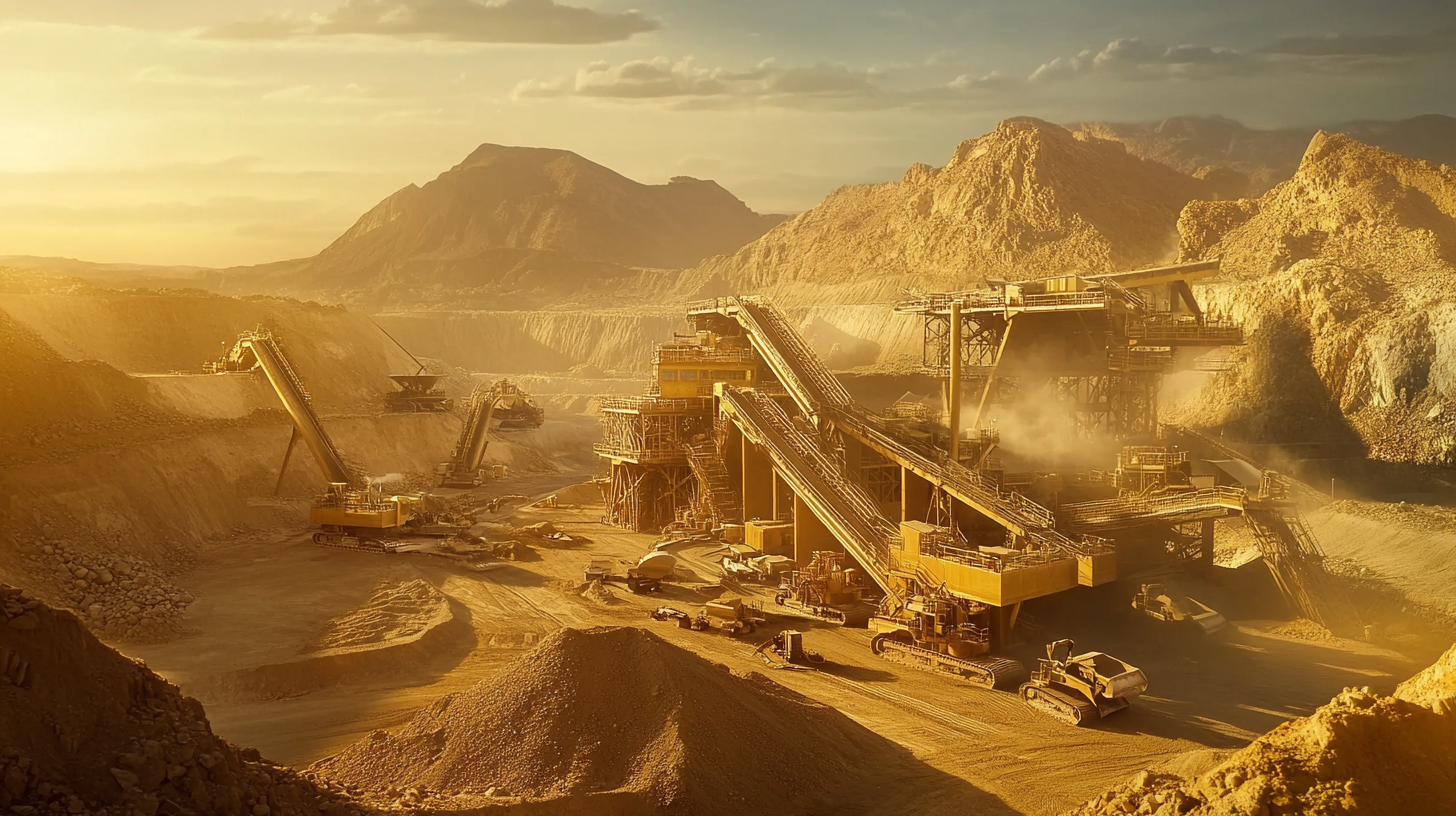
Did you know that? Leading economic sectors in Morocco – from mining to agriculture and food processing – Creative image: Xpert.Digital
Morocco's success story: Leading economic sectors and their importance
Bridge between continents: Morocco's success story in global competition
Over the past few decades, Morocco has established itself as an economically dynamic country, propelling several industries to global leadership through diversification and strategic investments. This economic development is based on a combination of its geographical location, natural resources, and political and economic reforms. Today, the country acts not only as a bridge between Europe and Africa but also as a platform for innovative and sustainable industries.
Automotive industry: Morocco's engine of growth
The automotive industry is a flagship sector of the Moroccan economy and at the heart of its industrial progress. With production facilities manufacturing hundreds of thousands of vehicles annually, Morocco has established itself as Africa's leading car producer. International corporations such as Renault and Stellantis have opened factories in cities like Tangier and Casablanca to take advantage of the strategic location and the availability of a low-cost, yet skilled, workforce.
Export orientation
Around 80% of the vehicles produced in Morocco are exported to Europe, giving the country larger export volumes than China or Japan in certain European markets.
Focus on electromobility
The transition to environmentally friendly mobility is another goal. Morocco is investing in the production of batteries for electric vehicles, supported by access to raw materials such as phosphate and cobalt.
These advances are making Morocco a center of automobile production, serving not only the African, but also the European and global markets.
Aviation industry: A rising star
The aviation industry in Morocco is a prime example of diversification. Clusters have formed in cities like Casablanca, ensuring both the supply and production for international corporations.
High-quality supply
Companies manufacture components that are integrated into aircraft from major manufacturers such as Boeing and Airbus. This is done under strict quality requirements, which is why Morocco is increasingly seen as a reliable partner.
Education and Development
Morocco is investing in training centers such as the Institut des Métiers de l'Aéronautique (IMA) to create a skilled workforce that meets international standards.
The aviation industry is developing rapidly and contributing to job creation and the improvement of technological infrastructure.
Mining: Morocco's Treasure Trove
Morocco is a world leader in phosphate production and processing, possessing approximately 50% of global reserves. This raw material is essential for fertilizer production and thus for global agriculture.
Value chain
In addition to phosphate mining, the country is developing processes for the further processing and export of refined products.
Additional resources
Besides phosphate, manganese, copper and cobalt are also playing an increasingly important role, especially for the electronics and battery industries.
This sector remains a central component of the Moroccan economy and contributes significantly to export revenues.
Textile and clothing industry: Tradition meets innovation
The textile industry has a long tradition in Morocco and is currently experiencing a renaissance through the introduction of sustainable practices. With its proximity to European markets, Morocco is a preferred production location for international fashion houses.
Sustainable production
Brands like Zara and H&M have parts of their collections manufactured in Morocco, with environmentally friendly processes becoming increasingly important.
Flexible supply chains
The geographical proximity to Europe allows for fast delivery, which is particularly crucial for the fast-paced fashion industry.
This combination of tradition, innovation and sustainability allows the industry to successfully hold its own in the global market.
Energy sector: Morocco focuses on renewables
Morocco is a pioneer in the use of renewable energies. With projects like the Noor solar complex, one of the world's largest solar power plants, the country demonstrates its ambition to build a sustainable energy system.
Goals by 2030
By 2030, 52% of electricity should come from renewable sources, including solar, wind and hydropower.
Hydrogen economy
Morocco is increasingly investing in the production of green hydrogen in order to play a key role in the global energy transition.
This vision makes Morocco a pioneer in climate protection and energy innovation.
Tourism: A magnet for travelers
With its rich culture, impressive landscapes and hospitality, Morocco has established itself as one of the world's top travel destinations.
Variety of attractions
From the beaches of Agadir to the historic cities of Fez and Marrakesh, and on to the Sahara Desert, the country offers an unparalleled range of experiences.
Tourism strategy
The government is focusing on sustainability and promoting environmentally friendly travel options to make tourism fit for the future.
Tourism remains an important economic sector and contributes to job creation and cultural networking.
Agricultural and food industry: Generation Green
Agriculture is traditionally one of the most important sectors in Morocco. With the "Generation Green" program, the country is pursuing ambitious goals to increase productivity and sustainability.
Export markets
Agricultural products such as citrus fruits, olive oil and tomatoes are very popular on European markets.
Food processing
In addition to exporting raw materials, Morocco is investing in food processing to achieve higher added value.
Promoting agriculture not only contributes to food security, but also strengthens rural regions.
Strategic expansion into Europe
Morocco is using its geographical proximity and trade agreements with the European Union to strengthen its industries and act as a bridge between continents.
Automotive and electronics industries
Products from Morocco, ranging from vehicle parts to electronic components, are in high demand in European markets.
Packaging and recycling industry
Companies like Sumilon and ALPLA Morocco are focusing on sustainable solutions and are increasingly exporting to Europe.
This expansion demonstrates how Morocco effectively utilizes its strategic location to both strengthen its economy and open up new markets.
Morocco's path to economic leadership
Morocco has established itself as a country that has developed impressive economic dynamism through innovation, sustainability, and strategic partnerships. With a diversified economic model based on the automotive, aerospace, textile, energy, and agricultural industries, as well as a strategic focus on the European market, the Kingdom is an example of successful economic transformation.
The future promises further growth, particularly through investments in renewable energies, electromobility, and innovative technologies. Morocco proves that it is possible to combine tradition and modernity and position itself as a global player.
Related to this: