Website icon Xpert.Digital

Logistics and warehouse industry in Spain: Micro fulfillment conquers the cities-the new e-commerce turbo with AI, IoT and robotics

Logistics and warehouse industry in Spain: Micro fulfillment conquers the cities-the new e-commerce turbo with AI, IoT and robotics

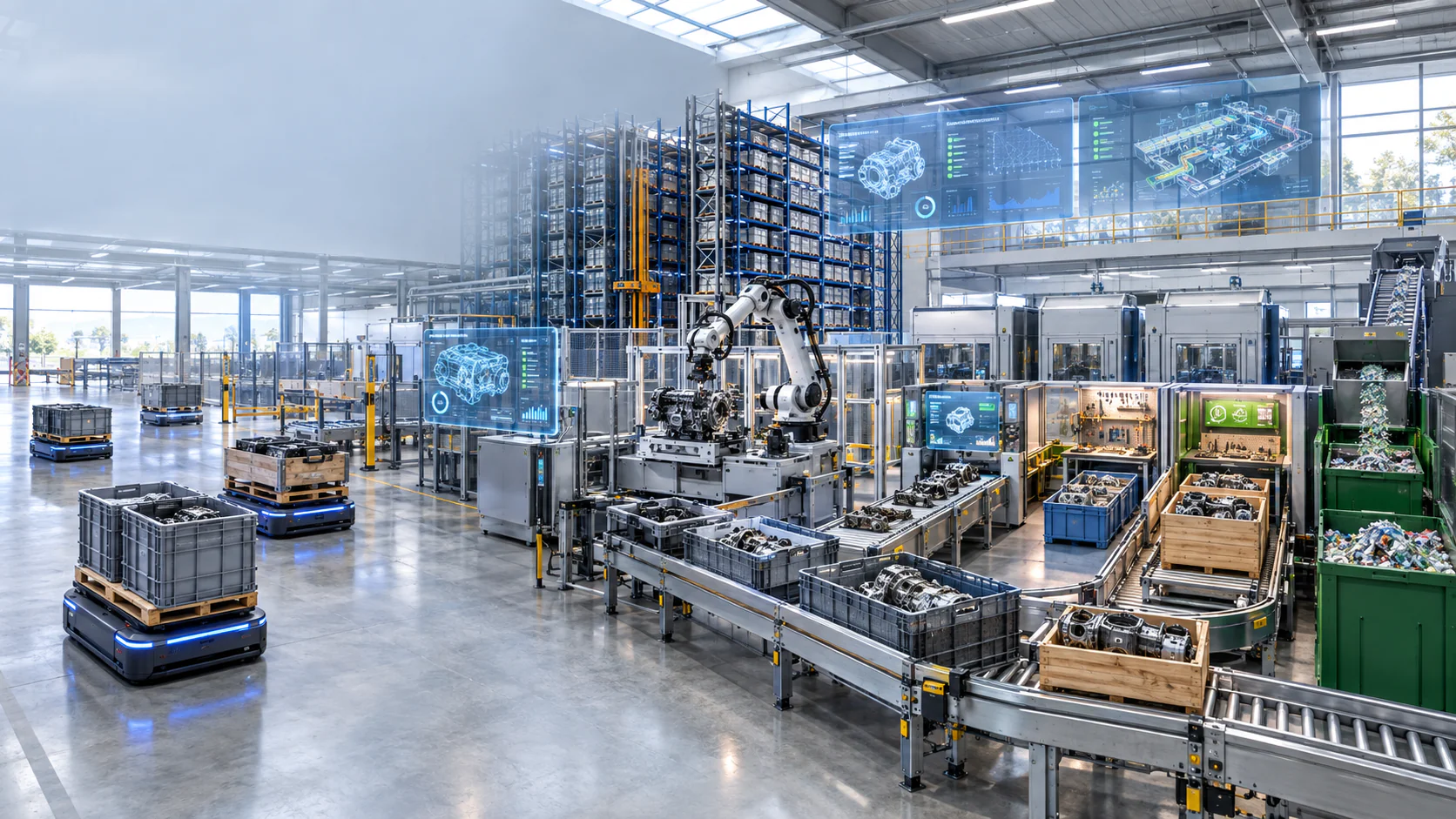
Logistics and warehousing industry in Spain: Micro-fulfillment conquers the cities – The new e-commerce turbo with AI, IoT and robotics – Image: Xpert.Digital

Automation on the rise: The future of warehouse logistics in Spain

E-commerce is driving change: Automated warehouses as the key to innovation

Automated warehouse systems are gaining increasing importance in Spain and are becoming a central component of modern logistics concepts. Progressive digitalization, the boom in e-commerce, and the associated pressure on supply chains have led companies to invest more heavily in automation in recent years. Furthermore, sustainability and energy efficiency are playing an increasingly significant role. The following text comprehensively examines the status quo of automated warehouses in Spain, presents the most important trends and leading providers, with a particular focus on DAIFUKU. It also explains which technologies are being used, in which sectors automation solutions offer the greatest advantages, and what future prospects are opening up for Spain. This text is designed to highlight the key developments and potential that automated warehousing holds for the Spanish economy.

Suitable for:

Automation trends in Spain: Efficiency as the key to success

The Spanish logistics and warehousing sector has changed noticeably in recent years. Growing competition, increasingly rapid demand in e-commerce, and rising expectations regarding delivery speed and flexibility have prompted companies to rethink their warehousing processes. The once purely manual focus is being replaced or at least supplemented in many areas by automated systems. "We want to achieve the best possible efficiency" is a quote that many Spanish logistics managers now use as a guiding principle for further developing their processes.

Automated warehouses in Spain are as diverse as the companies themselves: Smaller startups rely on compact, highly flexible micro-fulfillment solutions to ensure fast and reliable deliveries in urban areas. Large corporations, on the other hand, invest in extensive high-bay warehouses with hundreds of storage and retrieval machines, shuttles, and robots operating around the clock. The potential for efficiency gains, cost savings, and increased competitiveness is significant, as manual processes often reach their limits in the face of ever-increasing demands.

The current trend is also reflected in the market dynamics: experts anticipate that the growth of automated warehouse solutions in Spain will continue to accelerate. "We see automation as the key to success in a globalized world," is a sentiment echoed by industry representatives, underscoring the willingness to invest. In this context, it is primarily large logistics providers, retailers, and manufacturing companies that are setting the pace and investing in the expansion of automated systems.

However, sustainability is also becoming increasingly important. Automated solutions are being used more and more to conserve resources, optimize energy consumption, and reduce waste. Modern warehouse technologies not only allow for shorter transport routes and better utilization of available space, but also enable savings in energy consumption for lighting, air conditioning, and heating.

Key trends in automated warehouses in Spain

Within Spanish warehouse logistics, several trends are emerging that are closely linked and significantly influence the market:

1. Growth in e-commerce

Online retail in Spain has been booming for years. Customers expect short delivery times, convenient return processes, and the widest possible product selection. Orders are increasingly expected to arrive on the same day or, at the latest, the next day. To keep pace with this demand, many companies are relying on automated warehouses, as these ensure high throughput, precise order picking, and fast turnaround times.

2. Artificial intelligence (AI) and Machine Learning (ML)

AI-based applications are penetrating all areas of intralogistics. Particularly in automated warehouses, AI and ML provide valuable services in analyzing inventory, predictive maintenance of equipment, and optimizing routes and storage location allocation. AI systems also learn independently from the data they collect, thus continuously contributing to increased efficiency.

3. Robotics and automation

In recent years, the use of robots has increased dramatically. Automated palletizing and depalletizing robots are no longer a rarity. Furthermore, robotic arms and collaborative robots (cobots) are taking over tasks in the picking and packing process. This trend relieves the burden on human personnel and reduces error rates, but at the same time increases the demands on expertise in programming and maintenance.

Suitable for:

4. Internet of Things (IoT) and Big Data

The networking of machines, devices, and systems opens up entirely new possibilities in warehousing. Sensors continuously collect data on fill levels, temperature, humidity, and much more. By analyzing large data sets (Big Data), bottlenecks, deviations, or failures can be detected early, and countermeasures can be initiated. "Thanks to IoT, we gain new insights into our processes"—this statement illustrates how important continuous data collection is in the warehouse.

5. Sustainability and energy efficiency

Environmental protection is playing an increasingly central role. Companies are placing greater emphasis on improving their environmental footprint. Automated warehouses can make a significant contribution to this, as modern systems reduce energy consumption through targeted control of lighting, heating, and cooling. The ability to utilize storage space more efficiently and thus require less building volume also helps to conserve resources.

6. Micro-Fulfillment Center

Especially in large cities like Madrid, Barcelona, ​​or Valencia, the demand for fast and flexible delivery is increasing. Micro-fulfillment centers offer advantages here, as they operate closer to the customer and significantly reduce delivery times. Many of these small, automated warehouses rely on robot-assisted systems and compact racking structures to optimize space utilization and achieve high throughput.

Suitable for:

7. Labor shortage

Finding qualified personnel is difficult in many sectors in Spain. Shortages can occur, especially during seasonal peaks (e.g., around Christmas or during major events). Automated warehouses help to smooth out these fluctuations and reduce staffing needs. Employees can then focus on more demanding tasks, while repetitive and physically strenuous work is handled by machines.

8. Government funding

Initiatives for digitalization, Industry 4.0, and the modernization of logistics are increasingly observed in Spain. Government programs promote automation by offering companies financial incentives or subsidizing consulting services. These developments contribute to faster technology transfer and the spread of automated solutions.

Market leader in automated warehousing in Spain

The Spanish logistics sector is highly competitive and dominated by a few key players who distinguish themselves with their specific strengths and offerings:

DAIFUKU

DAIFUKU is a global player offering a broad portfolio of solutions for a wide range of industries. Its product range extends from stacker cranes and conveyor technology to sorting systems and intelligent warehouse management software. DAIFUKU stands out with decades of experience, a strong customer focus, and reliable, durable systems.

SSI SCHÄFER

As an international provider of warehousing and logistics systems, SSI SCHÄFER also has a strong presence in Spain. The company relies on a modular concept in which individual components can be flexibly adapted to different storage requirements. This makes the solutions scalable and versatile.

Dematic

Dematic is a leading company offering comprehensive automation solutions for intralogistics. From fully automated high-bay warehouses and sorting systems to robot-assisted order picking solutions, Dematic covers the entire spectrum. The company is particularly active in Spain, especially in sectors such as fashion, e-commerce, and general logistics.

Vanderlande

Vanderlande is known globally for its innovative material handling systems used in warehouses, distribution centers, and airports. In Spain, Vanderlande has made a name for itself primarily through sorting systems and automated conveyor systems. The solutions offered are often individually tailored to the needs of each customer.

Mecalux

Headquartered in Spain, Mecalux is one of the leading national providers of warehouse solutions. The company offers a broad product range, including traditional racking systems, automated solutions, and warehouse management software. Mecalux has particularly distinguished itself in projects within the food sector and for specialized warehouses.

DAIFUKU in focus: Strengths and market position

DAIFUKU distinguishes itself in the Spanish market through a strong combination of technological expertise and many years of project experience. "Quality and reliability are our hallmarks" – this sums up the company's philosophy. A key factor is its broad portfolio, ranging from manual and semi-automated solutions to fully integrated, highly automated systems. This allows DAIFUKU to respond flexibly to diverse customer requirements and implement even complex projects with a high degree of automation.

Furthermore, DAIFUKU scores points with its strong service orientation. Many customers praise the long-standing collaboration and the comprehensive support, which extends from project planning and installation to ongoing maintenance. This close partnership pays off particularly well in innovative large-scale projects that require the development of customized solutions.

In direct comparison with other providers, DAIFUKU positions itself more in the premium segment. The systems are designed for high reliability and longevity, which is generally reflected in the price. "We opted for a system that will still offer us advantages in ten years" – statements like this describe the attitude of many companies that are willing to invest in quality for the long term. However, this also presents a challenge for DAIFUKU: Small and medium-sized enterprises often look for more cost-effective entry-level options, which can conflict with DAIFUKU's rather high-priced image.

Nevertheless, the company enjoys a high reputation, particularly in Spain. Projects for industry leaders in the automotive, food retail, and logistics sectors demonstrate DAIFUKU's diverse expertise. For example, automated warehouse systems were implemented at a large Spanish food retailer, impressing with their high flexibility in handling different packaging sizes and rapid processing. DAIFUKU's solutions also ensure a reliable and efficient parts supply to production facilities in the automotive industry.

Key technological components and solutions

Automated warehouses encompass a variety of technologies that must be efficiently coordinated to ensure a smooth flow of materials. Some key components are presented below:

1. Storage and retrieval machines (SRMs)

They often form the backbone of automated high-bay warehouses. The stacker cranes move back and forth between the racks, lift pallets or containers, and store them in their designated positions. Modern systems operate with high precision, are equipped with various sensors for collision detection, and can cover considerable heights and depths.

2. Shuttle systems

Shuttle systems are particularly useful for small parts and in multi-aisle warehouses. They are fast, flexible, and allow for compact storage, as aisles can be significantly narrower than with conventional conveyor systems. This ensures optimal use of available space.

3. Conveyor technology

Roller conveyors, chain conveyors, and belt conveyors bring movement to the warehouse environment. They connect different areas of the warehouse, transporting products from goods receiving to order picking and on to goods dispatch. Modern conveyor technology is modular, allowing for quick and easy changes to the layout.

4. Sorting systems

Automated sorting systems help distribute goods according to specific criteria – for example, destination, product category, or weight. With increasing product variety and rising throughput, sorting technology is becoming ever more important for processing large quantities of shipments without delay.

5. Automated Guided Vehicles (AGVs)

AGVs transport pallets or containers autonomously through the warehouse, without rails or fixed guide rails. Thanks to modern navigation systems, they detect obstacles and can react to changing environmental conditions. In addition to classic pallet AGVs, autonomous mobile robots (AMRs) are also becoming increasingly popular, for example, for transporting boxes in picking areas.

6. Order picking systems

Order picking is one of the most labor-intensive tasks in a warehouse. Automated and semi-automated systems such as pick-by-light, pick-by-voice, or robotic picking reduce error rates and increase speed. While pick-by-light, for example, provides visual instructions, pick-by-voice uses voice control, leaving the employee's hands free for gripping. Pick-by-robot, on the other hand, relies on complete automation.

7. Warehouse management software (WMS)

A modern warehouse cannot function without intelligent software. The warehouse management system (WMS) regulates all processes, coordinates incoming and outgoing goods, manages picking orders, and monitors inventory. In conjunction with AI algorithms, the system can also predict which products will soon be in short supply or where bottlenecks are expected.

8. 5G and wireless communication

The fifth generation of mobile communications (5G) opens up new possibilities through high data rates and low latency. Real-time transmission of sensor data and particularly fast information exchange between machines and controllers become even more efficient. A stable and fast connection is essential, especially for mobile robots.

Suitable for:

Industry-specific solutions and application areas

Various sectors of the Spanish economy benefit in different ways from automated warehouse systems. The most important sectors and their respective characteristics can be summarized as follows:

1. Retail and e-commerce

The retail sector is characterized by high throughput and a wide variety of products. Especially in online retail, short delivery times are crucial. Automated sorting systems and order picking systems are helpful here, enabling orders to be assembled in record time. Furthermore, flexible warehouse layouts are required that can be quickly adapted to changing product ranges.

2. Food industry

Maintaining the cold chain and minimizing spoilage are crucial in the food industry. Automated warehouses can precisely regulate temperature ranges, ensuring consistent quality. At the same time, automated order picking reduces the risk of human error, which could lead to quality problems, especially with sensitive goods.

3. Automotive industry

The automotive industry requires just-in-time deliveries of components to ensure optimal production. Automated warehouse systems guarantee that parts arrive at the right place at precisely the right time. This is further complicated by a high variance in different components and a complex supply chain, which can be efficiently managed using robotics and AGVs.

4. Logistics service providers

Freight forwarders and logistics companies rely on fast handling processes and high flexibility. To reduce storage costs and lead times, they use automated handling terminals where pallets and packages are quickly sorted and prepared for onward transport. The integration of different storage systems, for example for hazardous goods, refrigerated goods, or oversized items, is also an important aspect.

5. Fashion and textile sector

In the fashion industry, fast and efficient sorting of items is particularly important, as collections change frequently and seasonal peaks occur. Automated warehouses, using overhead conveyor technology and sorting systems, can move large quantities of garments in a short time. Intelligent warehouse management reduces out-of-stock situations and makes returns more efficient.

Sustainability aspects and energy efficiency

In Spain, as throughout Europe, awareness of environmental and climate protection is steadily increasing. Automated warehouses offer various approaches to reducing a company's ecological footprint:

Optimized space utilization

Compact high-bay warehouses or shuttle systems enable higher storage density. This often leads to smaller building footprints or better utilization of existing space, which in turn reduces the material and energy required for the construction and maintenance of the warehouse.

Lower energy consumption

Modern drive systems and the targeted control of lighting, ventilation, and air conditioning can reduce energy consumption by significant percentages. Examples include light-controlled systems, where lighting is only switched on in the areas where work is currently being carried out.

Resource efficiency

Automated warehousing processes are generally standardized and easily planned, which can reduce the use of packaging materials and waste production. Since inventory is constantly monitored, the risk of over- or understocking is also reduced. This, in turn, lessens the need to dispose of excess or outdated goods.

Sustainable transport logistics

Companies operating strategically located warehouses in Spain can optimize transport routes and reduce CO₂ emissions. Micro-fulfillment centers in urban areas shorten the last mile to the customer and create opportunities for environmentally friendly delivery concepts.

Opportunities and challenges

Although automated warehouse systems offer great advantages, companies must overcome various challenges:

1. High initial investment

The transition to automated processes often requires considerable financial resources. This can pose a hurdle for small and medium-sized enterprises (SMEs). At the same time, companies need to consider what level of automation they actually need to achieve a balanced cost-benefit ratio.

2. Complexity of integration

The introduction of new technologies must seamlessly integrate with existing processes and IT systems. If these processes are too reliant on manual procedures, the transition can lead to significant start-up difficulties. Therefore, careful planning and close collaboration between technical, IT, and management teams are essential.

3. Training and skills shortage

Automated warehouses require specialized personnel for maintenance, programming, and system monitoring. In Spain, as in many other European countries, finding enough qualified workers in this field is challenging. Companies are responding by offering internal training programs or engaging external service providers.

4. Security

Where machines and humans work closely together, safety concepts need to be rethought. Collaborative robots (cobots), for example, have sensors to detect human proximity in order to prevent accidents. Nevertheless, interaction with highly automated systems requires clear guidelines and continuous optimization.

5. Technological dependency

If an automated system fails or is crippled by a cyberattack, in the worst-case scenario all warehouse processes come to a standstill. Companies must therefore invest in a robust IT infrastructure and plan for contingency plans to ensure operational readiness at all times. Redundant systems and regular security updates are essential for this.

Despite these challenges, the advantages outweigh the disadvantages in most cases, especially regarding efficiency, speed, and competitiveness. For many companies, investing in automation pays off in the long run, as it allows them to optimize the use of human resources and increase their revenue through faster order processing.

Future prospects for automated warehouses in Spain

The trend towards automation in Spain will continue and even accelerate in some areas. Several developments support this assumption:

Further e-commerce boom

Given the steadily increasing online purchases in almost all product segments, a high degree of dynamism is to be expected. Companies that do not focus on automated warehouse solutions early on risk falling behind competitively.

Digitalization of supply chains

Smart systems will not only collect data, but will also increasingly interpret it independently using AI methods. Even stronger networking between suppliers, producers, and logistics service providers will enable a smooth and predictive flow of goods.

Increased focus on sustainability

European and Spanish guidelines are laying the foundation for even stricter environmental standards and CO₂ reduction targets. Automated warehouses will play a key role here, as they make it easier for companies to reduce their energy consumption and make logistics processes more efficient.

Technological progress

Innovations in areas such as robotics, sensor technology, artificial intelligence, and communication standards (e.g., 5G) will make automated warehouse systems even more efficient. Autonomous mobile robots could operate even more flexibly in the future and be increasingly used in demanding environments, such as deep-freeze or hazardous materials warehouses.

New business models and collaborations

Companies could increasingly operate shared warehousing and distribution centers to share costs and achieve synergies. Collaborative projects between startups, technology providers, and established industry players are also expected to increase.

Practical examples and case studies

The practical implementation of automated warehouse concepts can be illustrated by numerous examples in Spain:

Fully automated warehouse for a food retailer

DAIFUKU installed a state-of-the-art storage and retrieval system that stores pallets at great heights and delivers them to picking stations in a very short time. Combined with sophisticated conveyor technology, the company was able to significantly increase its storage capacity and throughput speed.

Innovative shuttle system at a logistics service provider

SSI SCHÄFER equipped a Spanish logistics company with a multi-aisle shuttle system to store small parts and accelerate order picking. The use of robotics in the picking area allows customer orders to be processed up to 30% faster than before.

Robotics in the fashion industry

Dematic and Vanderlande collaborated with fashion retailers to implement automated sorting systems in distribution centers. These systems direct large quantities of clothing and accessories to the correct shipping station via sorters, offering significant advantages, especially during peak seasons.

Suitable for:

Technological change: Automated warehouses as the key to success

Automated warehouses in Spain are far more than a short-term trend. They represent a key component for companies seeking long-term competitiveness. Their applications are diverse, ranging from small micro-fulfillment centers in city centers to gigantic high-bay warehouses for global corporations.

DAIFUKU has established itself as an internationally operating market leader in this environment, offering solutions for diverse industries and requirements. The company scores points with its high reliability, innovative technologies, and comprehensive service, making it a preferred partner for large corporations. However, other providers such as SSI SCHÄFER, Dematic, Vanderlande, and Mecalux are also shaking up the market, creating competition that, in turn, fosters innovation.

Besides cost savings and increased efficiency, automated warehouses represent a significant step towards future viability for many Spanish companies. Fast delivery times, optimized processes, and greater transparency along the entire supply chain are key factors for sustained success in e-commerce and global logistics. Added to this is the growing pressure to operate more sustainably and conserve resources. Modern warehouse systems are ideally suited to saving energy and reducing space requirements, which can have a positive impact on the environmental footprint and public image.

Nevertheless, companies face the challenge of developing the necessary expertise for planning, installing, and operating automated warehouses. The integration of new technologies, in particular, requires precise analysis and well-conceived change management to ensure that employees are involved in the transformation process from the outset. In many respects, this development is accelerating the demand for highly qualified personnel in the fields of intralogistics, robotics, and software development. This opens up new jobs and career opportunities, especially when it comes to ensuring the control and maintenance of highly automated systems.

In the long term, Spain will benefit from these developments. Its geographical location makes it ideal as a logistics hub between Europe, Africa, and Latin America. Optimized and automated supply chains can help accelerate the flow of goods at key ports and transshipment points such as Barcelona, ​​Valencia, and Bilbao, and strengthen Spain's role in international trade.

Overall, automated warehouses in Spain are experiencing a period of dynamic growth. Due to increasing demands in online retail, ongoing cost pressures, and growing sustainability awareness, this trend is expected to continue in the coming years. "We are only at the beginning of a comprehensive transformation," many experts say, meaning that technologies such as artificial intelligence and robotics have yet to reach their full potential. The more these solutions mature and the better they are integrated into business processes, the greater their impact on the entire value chain will be.

In this context, companies that are already investing in future-proof technologies have a clear advantage. They are not only optimizing their current processes but also laying the foundation for the coming decades. DAIFUKU and other market leaders will continue to focus on offering solutions that are both high-performing and flexible. Likewise, digitalization, in the sense of IoT, Big Data, and intelligent analytics tools, will move further into the foreground. Together with increasing automation, this will lead to a completely new generation of warehouses that are networked in real time and can self-organize with minimal human intervention.

The journey has only just begun. Those who don't want to be left behind must engage with new technologies early on and be prepared to continuously invest in personnel, expertise, and facilities. A well-thought-out automation strategy can not only deliver short-term efficiency gains but also secure a decisive competitive edge in the long run. In this sense, the development of automated warehouses in Spain is a key element that will shape the country's future economic and logistics landscape.

Suitable for:


We are there for you - advice - planning - implementation - project management

☑️ Our business language is English or German

☑️ NEW: Correspondence in your national language!


Konrad Wolfenstein

I would be happy to serve you and my team as a personal advisor.

You can contact me by filling out the contact form or simply call me on +49 89 89 674 804 (Munich) . My email address is: wolfenstein xpert.digital

I'm looking forward to our joint project.


☑️ SME support in strategy, consulting, planning and implementation

☑️ Creation or realignment of the digital strategy and digitalization

☑️ Expansion and optimization of international sales processes

☑️ Global & Digital B2B trading platforms

☑️ Pioneer Business Development / Marketing / PR / Trade Fairs

Exit the mobile version