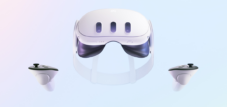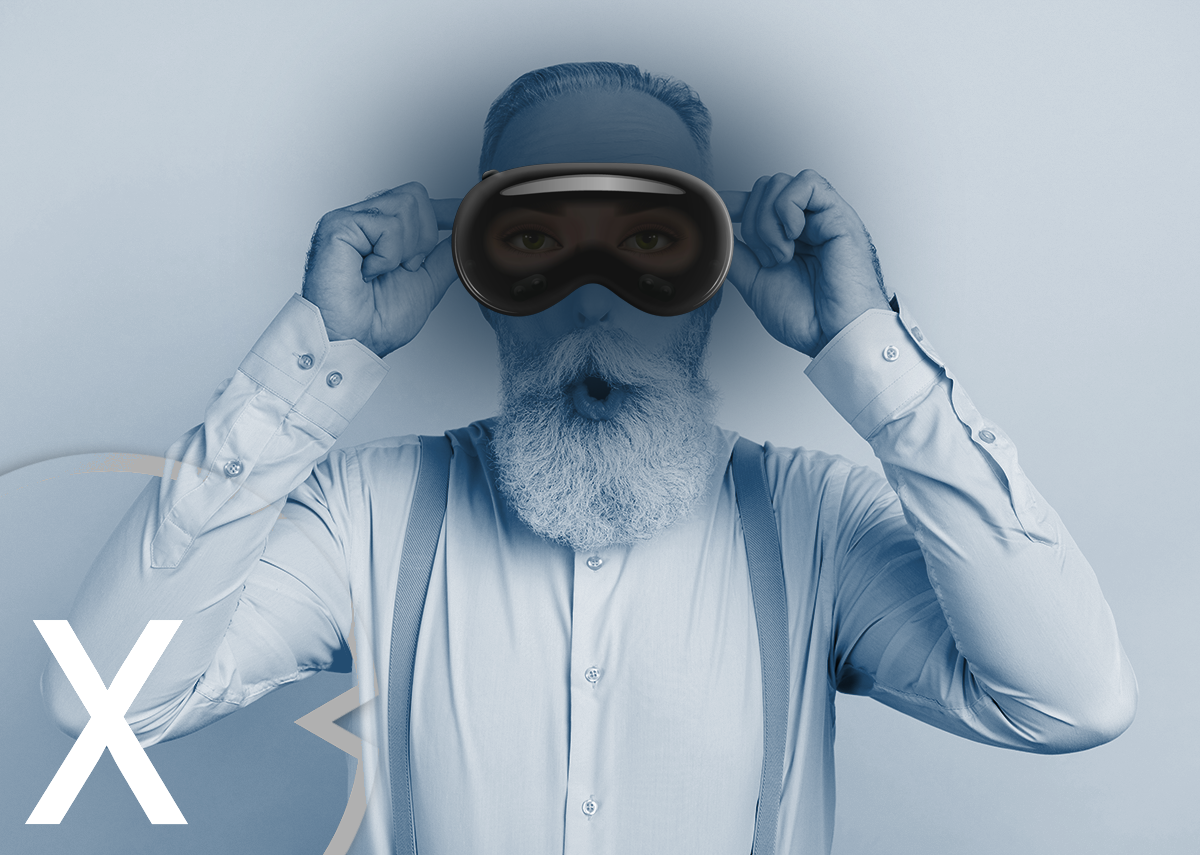
Mixed & Augmented Metaverse Reality – Virtual Vision Metaverse – Image: Xpert.Digital
The collection of terms: Virtual & Extended & Mixed & Augmented Reality & Metaverse & Metaverse
The recently announced Apple Vision Pro headset represents a significant entry into the world of augmented and virtual reality and has the potential to shape the future of the metaverse. With its advanced features, seamless integration, and ambitious price point, the Vision Pro aims to revolutionize the gaming industry and deliver immersive experiences to users.
The Vision Pro was designed to offer "spatial computing," a term Apple uses to describe the merging of the real and virtual worlds. It boasts advanced features such as eye tracking, hand gesture recognition, and immersive gaming experiences. Resembling futuristic ski goggles, the device is expected to launch early next year at a price of $3,500.
Spatial Computing = Space-based data processing
Spatial computing is a term that refers to a technology in which the computer perceives and uses the physical environment to integrate virtual content into the real world. It is an advanced form of computing that not only takes place on a screen but also considers the spatial experience and interaction of the user.
Spatial computing combines various technologies and concepts such as augmented reality (AR), virtual reality (VR), mixed reality (MR), 3D modeling, computer vision, and machine learning to create immersive and interactive experiences. By capturing and analyzing data about the physical environment, computer-generated content can be seamlessly embedded into the real world.
An example of spatial computing is the use of AR glasses or headsets, which allow users to see and interact with virtual objects or information in the real world. This technology opens up applications in various fields such as gaming, education, architecture, medicine, design, and many others.
The goal of spatial computing is to create an immersive and intuitive user experience by blurring the boundaries between the physical and virtual worlds. It enables the manipulation and rendering of virtual content in real time, based on the environment and the user's actions. By integrating spatial perception and interaction, a new dimension of computing is created, offering diverse application possibilities.
Spatial computing was described by Simon Greenwold in 2003 as "human interaction with a machine in which the machine maintains and manipulates references to real objects and spaces".
With the advent of consumer virtual reality, augmented reality, and mixed reality, companies like Microsoft and Magic Leap use the term "spatial computing" to refer to the use of physical actions (head and body movements, gestures, speech) as input for interactive digital media systems, where the perceived physical 3D space serves as a canvas for video, audio, and haptic output. It is also related to the concept of "digital twins.".
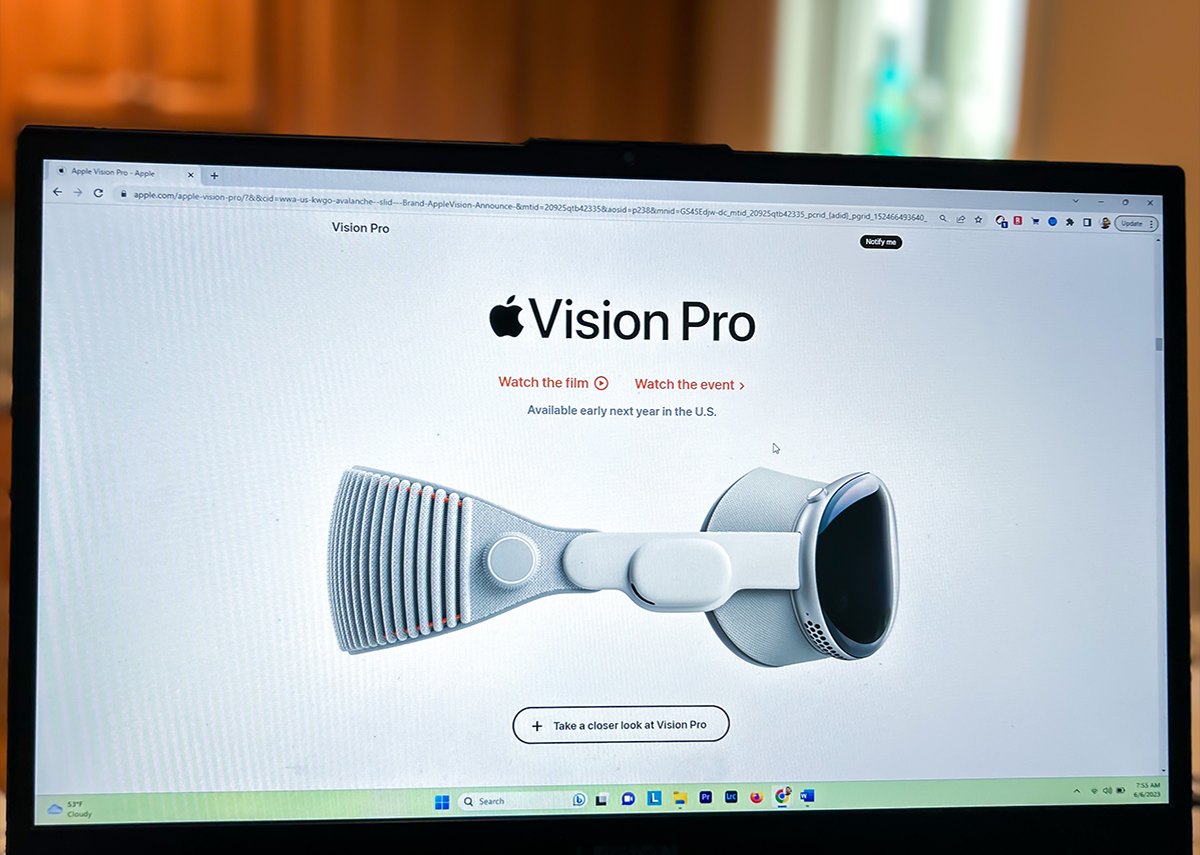
Apple Vision Pro, a wearable headset for spatial computing, on the Apple website – Apple's newly introduced innovative first device for spatial computing – Image: gg5795|Shutterstock.com
Apple announced the Vision Pro, a spatial computing platform, on June 5, 2023. It features various functions such as spatial audio, two micro-OLED displays, the Apple R1 chip, and eye tracking. The device is scheduled for release in the United States in 2024.
The agency's online metaverse configurator
For media professionals, 3D artists, online, media and advertising agencies, and other service providers: Take advantage of the opportunity to offer your clients their own metaverse by leveraging the expertise of Xpert.Digital and its partners. Furthermore, you can integrate our metaverse configurator into your service portfolio as a white-label solution.


Agency Metaverse Configurator – Image: Xpert.Digital
More information here:
The Apple Vision Pro Headset
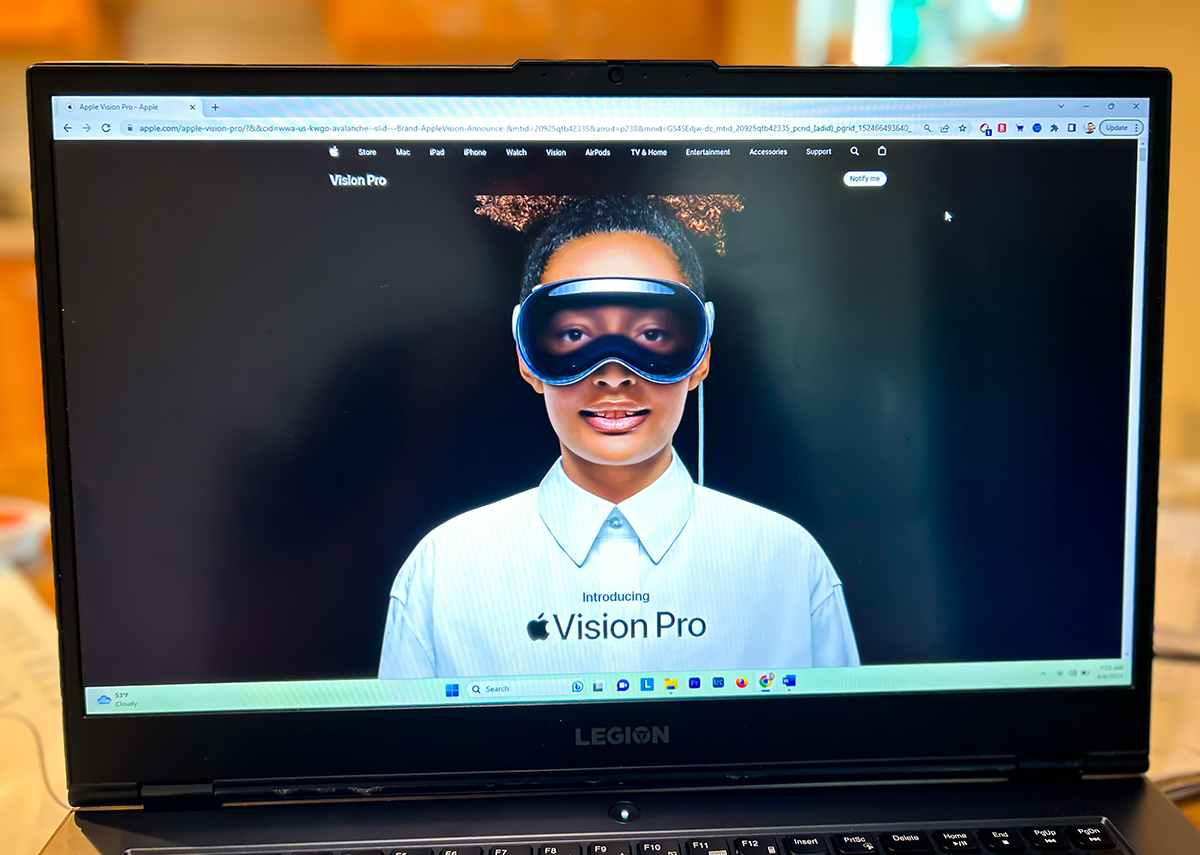
Apple website featuring the newly introduced 'Apple Vision Pro' – Apple's first device for 'spatial computing' – Image: gg5795|Shutterstock.com
The Apple Vision Pro headset features a housing made of three-dimensionally molded composite glass that curves around the user's face. It is equipped with advanced cameras and sensors that provide clear vision, environmental awareness, and hand gesture recognition. Spatial audio is delivered through speakers positioned close to the user's ears, blending with the sounds of the real world.
Key specifications of the Apple Vision Pro headset include 4K resolution per eye, hand tracking, voice input, an external battery, and a two-hour battery life. The headset runs on the visionOS operating system and is expected to cost $3,500.
The term "Apple Vision Pro" refers to Apple's mixed-reality headset, which was announced at the WWDC23 keynote. The headset is designed to offer a spatial computing experience by seamlessly merging digital content with the physical space around the user. It allows users to navigate using their eyes, hands, and voice.
What is the WWDC keynote?
The WWDC keynote is the opening event of the Worldwide Developers Conference (WWDC), which Apple holds annually. WWDC is a developer conference where Apple introduces developers to new software, technologies, and tools that will be released in the coming months.
The keynote presentation is the main event of WWDC and traditionally takes place on the first day. During the keynote, high-ranking Apple representatives, such as CEO Tim Cook or other executives, give presentations in which they present Apple's latest announcements and updates. The keynote presentation is often eagerly anticipated, as it offers insights into new products, software updates, and potential technological innovations.
During the WWDC keynote, new versions of Apple's operating systems, such as iOS for iPhones and iPads, macOS for Mac computers, watchOS for Apple Watches, and tvOS for Apple TVs, are typically unveiled. In addition, new hardware products, developer tools, software developments, and other important announcements may also be made.
The WWDC keynote offers developers and the public a chance to get a first look at Apple's latest innovations and prepare for upcoming changes in the Apple ecosystem. The event is often live-streamed, allowing people worldwide to follow the announcements in real time.
Summary of the Apple Vision Pro Headset
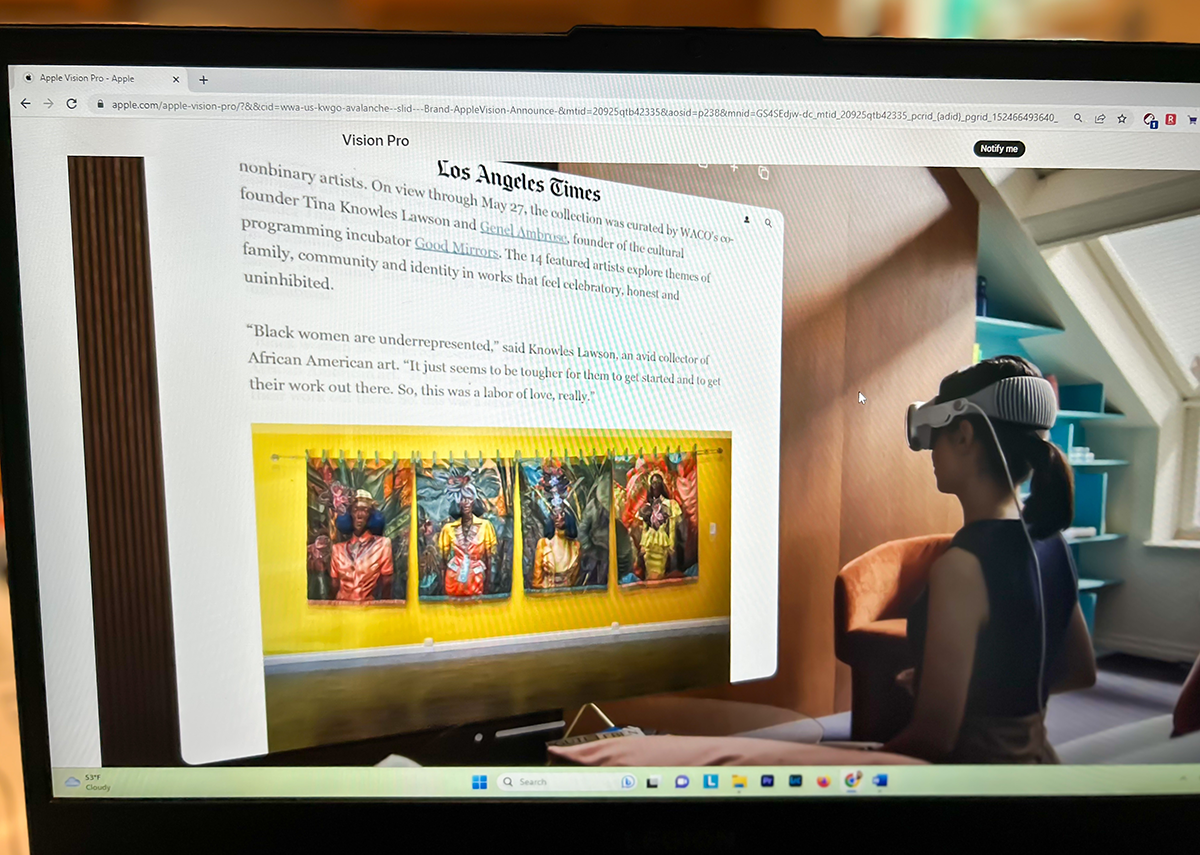
Apple website introducing the newly launched Apple Vision Pro – Apple's first device for spatial data processing – Image: gg5795|Shutterstock.com
The Vision Pro headset offers advanced features such as eye tracking and hand gesture recognition, enabling developers to create immersive gaming experiences that respond directly to the player's movements. The headset features an intuitive user interface, making it easy for users to navigate various applications using eye and hand tracking technology. Furthermore, it promises a seamless fusion of digital content with the physical world, allowing users to interact with digital content as if they were physically present in their environment.
However, it's worth noting that public interest in a $3,500 headset remains uncertain. While the Vision Pro headset has generated buzz and is considered a significant product in the AR/VR field, its mass adoption and widespread use in the metaverse are yet to be determined.
In summary, the Apple Vision Pro headset has the potential to contribute to the metaverse by offering advanced features and immersive experiences in the gaming industry. Its seamless integration of digital content into the physical world and its intuitive user interface provide users with new ways to interact with virtual and augmented reality experiences. However, its suitability for the metaverse and its adoption by the general public depend on factors such as market acceptance, affordability, and further technological advancements.
Initial reviews and opinions on the Vision Pro were mixed. Some skeptics doubted Apple's ability to bring virtual reality into the mainstream, while others saw Apple's track record and design expertise as indicators of potential success in this field. The high price of $3,500 was also a point of contention. Nevertheless, Apple's entry into the mixed reality market generated considerable excitement and anticipation within the tech community.
Expert commentary on the Apple Vision Pro headset
Apple's WWDC keynote this year was dominated by the unveiling of the Apple Vision Pro, despite numerous other announcements. The mixed-reality headset is slated for release in early 2024 and is expected to cost $3,500. It is designed primarily for productivity applications.
The Apple Vision Pro is considered a groundbreaking device that combines augmented reality (AR) and virtual reality (VR). It allows users to seamlessly integrate digital content into their physical environment and interact with it. The headset is said to offer advanced technologies such as powerful processors, high-resolution displays, precise tracking capabilities, and an ergonomic design for lasting comfort.
The Apple Vision Pro focuses on productivity, suggesting it's designed for professional applications. The headset is expected to offer features that can improve collaboration, communication, and efficiency in various work environments. From virtual offices and meeting rooms to advanced visualization tools for designers and engineers, the Apple Vision Pro promises a new dimension of productivity.
Although the price of $3,500 may be considered high, the Apple Vision Pro is expected to be a premium product aimed at professional users. The anticipated release in 2024 gives Apple ample time to further refine the headset and develop a comprehensive ecosystem of applications and content.
With the unveiling of the Apple Vision Pro, Apple once again demonstrates its commitment to advancing AR and VR technologies and its ambition to shape the field of mixed reality. The headset's release was highly anticipated, as it has the potential to transform how we interact with digital content and our physical environment.
Due to its high price, the Apple Vision Pro headset is uninteresting for the Metaverse
Apple would probably like to, but can't compete due to development costs and the resulting expenses. The price of extended and mixed reality technology also likely appeals to a smaller target group in the premium segment. Will it be successful? We'll see.
Consulting, planning and implementation of augmented reality, webAR and industrial applications | B2B | Business Metaverse
Xpert.Plus is a project by Xpert.Digital. We have many years of experience in supporting and consulting for (Extended) Augmented Reality and warehouse optimization, which we combine under Xpert.Plus in a large network.

Konrad Wolfenstein
I would be happy to serve as your personal advisor.
You can contact me by filling out the contact form below or simply call me on +49 7348 4088 965 (Munich) .
I'm looking forward to our joint project.
Write to me



Xpert.Digital – Konrad Wolfenstein
Xpert.Digital is a hub for industry focusing on digitalization, mechanical engineering, logistics/intralogistics and photovoltaics.
With our 360° Business Development solution, we support renowned companies from new business to after-sales.
Market intelligence, smarketing, marketing automation, content development, PR, mail campaigns, personalized social media and lead nurturing are part of our digital tools.
You can find more information at: www.xpert.digital – www.xpert.solar – www.xpert.plus
Keep in touch