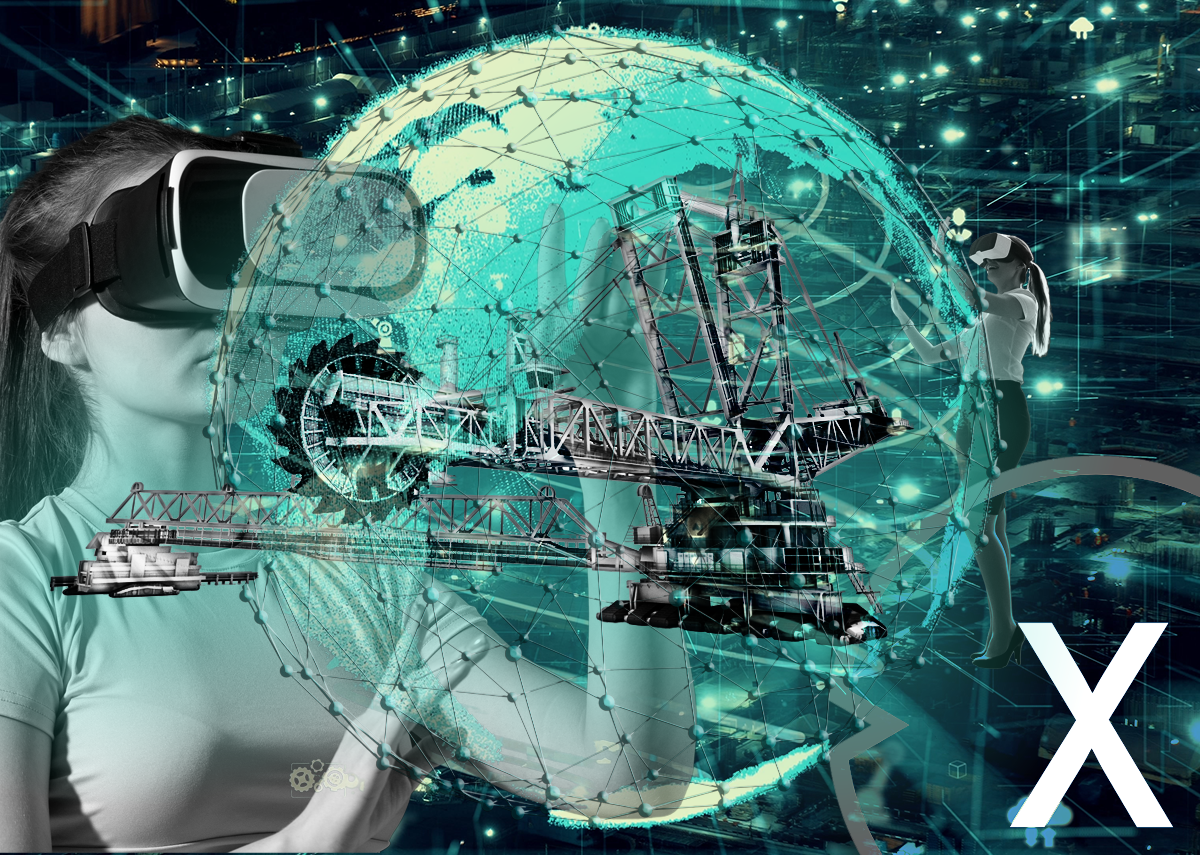
Metaverse 360° – The biggest misconception about Metaverse – It's more than 3D, communication, and chatrooms – Image: Xpert.Digital
For those in a hurry, here's the short version: The merging of the physical and digital worlds: The potential of the metaverse and XR technologies
Until a few years ago, the internet and the physical world were separate. With sensor technology, the "internet" began to function in the physical world. Industrial sensors played a significant role in the development of the Internet of Things (IoT) and drove the digitalization of industrial environments.
Digitization aims to connect the physical and digital worlds and create interfaces between them. Physical objects, processes, and systems are converted into digital formats to better understand, control, and optimize them.
XR technologies (Extended, Augmented, Mixed, and Virtual Reality) go a step further, enabling augmented reality in 3D where the perception of reality can be optimized through additional information. This opens up new possibilities for various applications and industries.
Global logistics, for example, is preparing for the switch to 2D matrix codes in 2027 (Sunrise 2027) to provide even more data for intelligent solutions and improvements. This includes 3D interaction possibilities with XR and the metaverse.
The metaverse is seen as the next step in further advancing digitalization. The use of 3D technology enables rapid, real-time availability and improves the efficiency of logical processes. It allows for cross-border, real-time interaction from anywhere in the world. When the physical world is inaccessible due to distance or absence, the digital twin in the metaverse can serve as a temporary substitute.
Currently, the metaverse is often reduced to virtual communication and encounters, similar to an improved 3D chat room. However, this does not represent progress in terms of digitalization, but rather a step backward due to the (still) limited imagination for its comprehensive potential uses.
The following points will be addressed in the text below:
- From Industry 4.0 to the Metaverse: The Evolution of Digitalization
- Sunrise 2027: Logistics in the age of 2D matrix codes and global networking
- The next stage of digitalization: The metaverse and its diverse application possibilities
- From sensors to the metaverse: How technology is overcoming the boundaries between worlds
Our Industrial Metaverse Configurator
Simply try out our universally applicable (B2B/Business/Industrial) Metaverse Configurator for all CAD / 3D demo options:
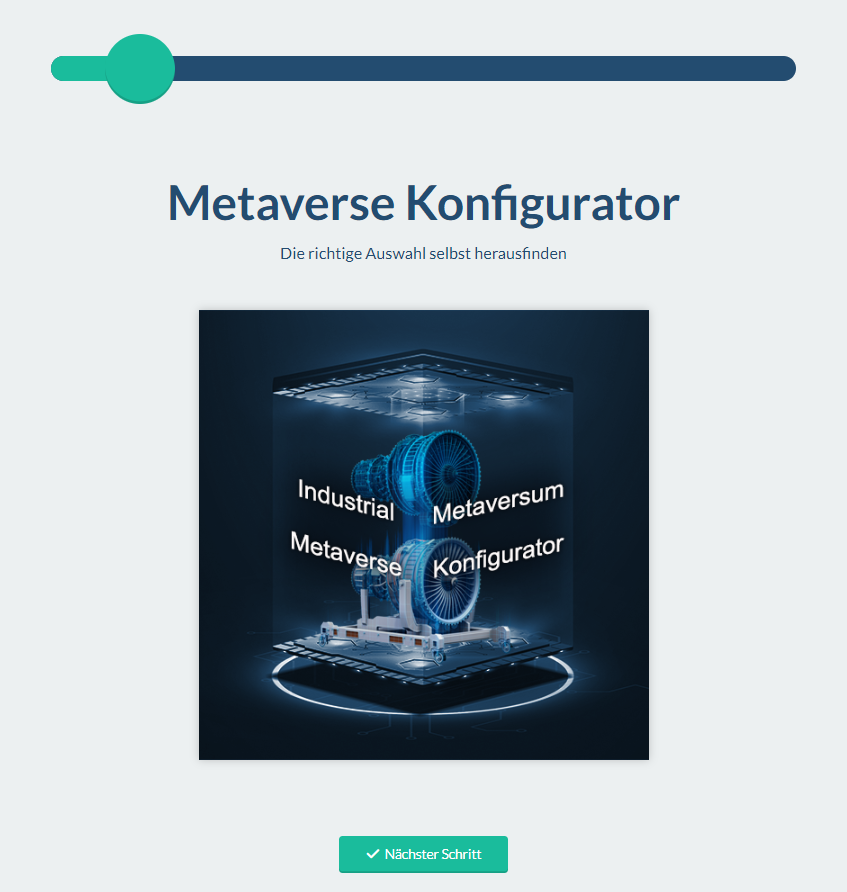

Xpert (B2B/Business/Industrial) Metaverse Configurator for all CAD / 3D data, usable on all end devices, one platform!
Related to this:
The power of data: How industrial sensors and XR technologies are driving digitalization forward
Until a few years ago, the internet and the physical world were largely separate. The internet was a global "visual" space where information was exchanged and digital content was provided. The physical world, on the other hand, was the real space where we live, work, and interact. However, with the development of sensor technology, the "internet" began to operate and interact within the physical world as well.
Industrial sensors have played a crucial role in the ongoing development of the Internet of Things (IoT). These sensors are used in industrial environments to collect data from the physical environment, such as temperature, pressure, humidity, or motion. The collected data is then transmitted wirelessly and can be used for machine monitoring, production process optimization, inventory tracking, and quality assurance.
However, digitalization goes far beyond simply networking sensors. It involves converting physical objects, processes, and systems into digital formats to better understand, control, and optimize them. Digitalization generates, analyzes, and utilizes vast amounts of data to make informed decisions and enable more efficient processes.
XR (Extended Reality) technologies go a step further, enabling an immersive 3D experience where the perception of reality is enhanced with supplementary information. These technologies open up new possibilities in areas such as design, simulation, training, and virtual collaboration.
Global logistics is also preparing for the switch to 2D matrix codes in 2027 to provide even more data for intelligent solutions and improvements. Combining 2D matrix code data with 3D technologies will enable even faster, real-time information availability, further increasing the efficiency and accuracy of logical processes, and in this example, logistics processes.
The metaverse is often considered the next step in this development. It enables seamless, borderless, and always-available interaction with digital content and people. The metaverse opens up new possibilities for virtual collaboration, education, commerce, entertainment, and much more. It allows people to interact with others anywhere, anytime, and experience digital content in an immersive environment.
Currently, the metaverse is often perceived merely as a kind of expanded 3D chat room, which is due to a limited imagination of its possibilities. The metaverse has the potential to go far beyond this and create a comprehensive connection between the digital and physical worlds. It can be a platform where people, businesses, and machines collaborate, exchange ideas, and develop innovative solutions.
Digitization is about connecting the digital world with the physical world and creating interfaces between them. Industrial sensors have undoubtedly made a significant contribution to the progress of the IoT by enabling the collection and transmission of data from the physical environment. However, digitization itself encompasses a broader range of technologies and concepts, including XR technologies, 3D visualization, global logistics optimization, and the metaverse.
From separation to fusion, from virtual chat rooms to comprehensive digital transformation in the metaverse
The vision of a largely paperless world is not actually part of digitalization, but rather a positive side effect. The core of digitalization lies in converting physical objects, processes, and systems into digital formats to better understand, control, and optimize them. This involves generating and analyzing vast amounts of data to gain insights and create more efficient workflows.
XR technologies such as augmented reality (AR) and virtual reality (VR) expand our perception of reality and offer additional information and interaction possibilities. They are used in various fields such as design, training, simulation, and virtual collaboration. By integrating XR technologies into digitalization, complex tasks can be handled more effectively and better decisions can be made.
The global logistics industry is preparing for the deployment of 2D matrix codes by 2027 (Sunrise 2027) to provide even more data for intelligent solutions. This will enable improved tracking, monitoring, and increased efficiency of logistics processes. Furthermore, the use of 3D technologies will allow for faster availability of real-time information, further optimizing logistics.
The concept of the metaverse goes beyond existing virtual worlds, offering a comprehensive connection between the digital and physical worlds. It opens up the possibility of moving freely within an immersive environment, interacting with others, and experiencing digital content. The metaverse can serve as a platform where people, businesses, and machines collaborate, exchange ideas, and develop innovative solutions.
Currently, the metaverse is often reduced to a virtual 3D communication and meeting place, which doesn't fully exploit its true potential. It offers the opportunity to overcome physical limitations and create temporary digital twins to operate in a virtual environment when the physical world is distant or unavailable.
The role of industrial sensors in the development of the Internet of Things (IoT)
Industrial sensors have certainly played a significant role in the development of the Internet of Things (IoT), but it would be inaccurate to say that they enabled the IoT in the first place. The IoT is the concept of connecting physical devices and objects via the internet to collect, exchange, and utilize data. It encompasses a wide range of technologies, including wireless communication, data processing, and cloud services.
Industrial sensors play a crucial role in the IoT ecosystem. These sensors collect data from the physical environment, such as temperature, pressure, humidity, motion, or other measurements, and transmit it wirelessly to other devices or systems. This data can then be analyzed and used to optimize processes, make decisions, or offer new services.
Industrial sensors have helped advance the IoT in industrial environments by enabling a wide range of applications, such as monitoring machines and equipment, overseeing production processes, inventory tracking, quality assurance, and much more. They are an essential component of connected devices, machines, and systems in industry.
However, it is important to note that the IoT is also used in other areas such as smart homes, healthcare, transportation systems, agriculture, logistics, and many other applications. Various types of sensors and technologies play a role in these areas, not just industrial sensors.
Overall, industrial sensors have certainly contributed to the development and spread of the IoT by enabling the collection and transmission of data from the physical environment. However, they are not the sole foundation of the IoT, but rather an important component of a broader technological ecosystem.
The basic idea of digitalization
The basic idea behind digitization is to connect the digital world with the physical world and create interfaces between them. Digitization transforms physical objects, processes, and systems into digital formats to better understand, control, and optimize them.
The connection between the digital and physical worlds makes it possible to collect information from the real world, process it digitally, and then use that information to perform actions in the physical world. This is achieved using sensors, data transmission technologies, data analytics, software platforms, and other technologies.
The creation of interfaces is a central aspect of digitalization. This involves enabling communication and the exchange of information between digital systems and physical objects, such as machines, devices, or sensors. These interfaces serve as a bridge between the digital and physical worlds, allowing data to be collected, transmitted, processed, and used to execute corresponding actions.
Providing interfaces also includes developing standards, protocols, and technologies to ensure interoperability and seamless data exchange between different systems and devices. Examples of interfaces in the context of digitalization include APIs (Application Programming Interfaces), protocols such as MQTT (Message Queuing Telemetry Transport) or OPC UA (OPC Unified Architecture), and other technologies that enable data exchange and system integration.
By connecting the digital world with the physical world and providing interfaces, digitization opens up new possibilities for increasing efficiency, automation, monitoring, analysis and optimization of processes in various areas such as industry, healthcare, transport, energy and many others.
The future of business: The metaverse is conquering industry, business, and e-commerce
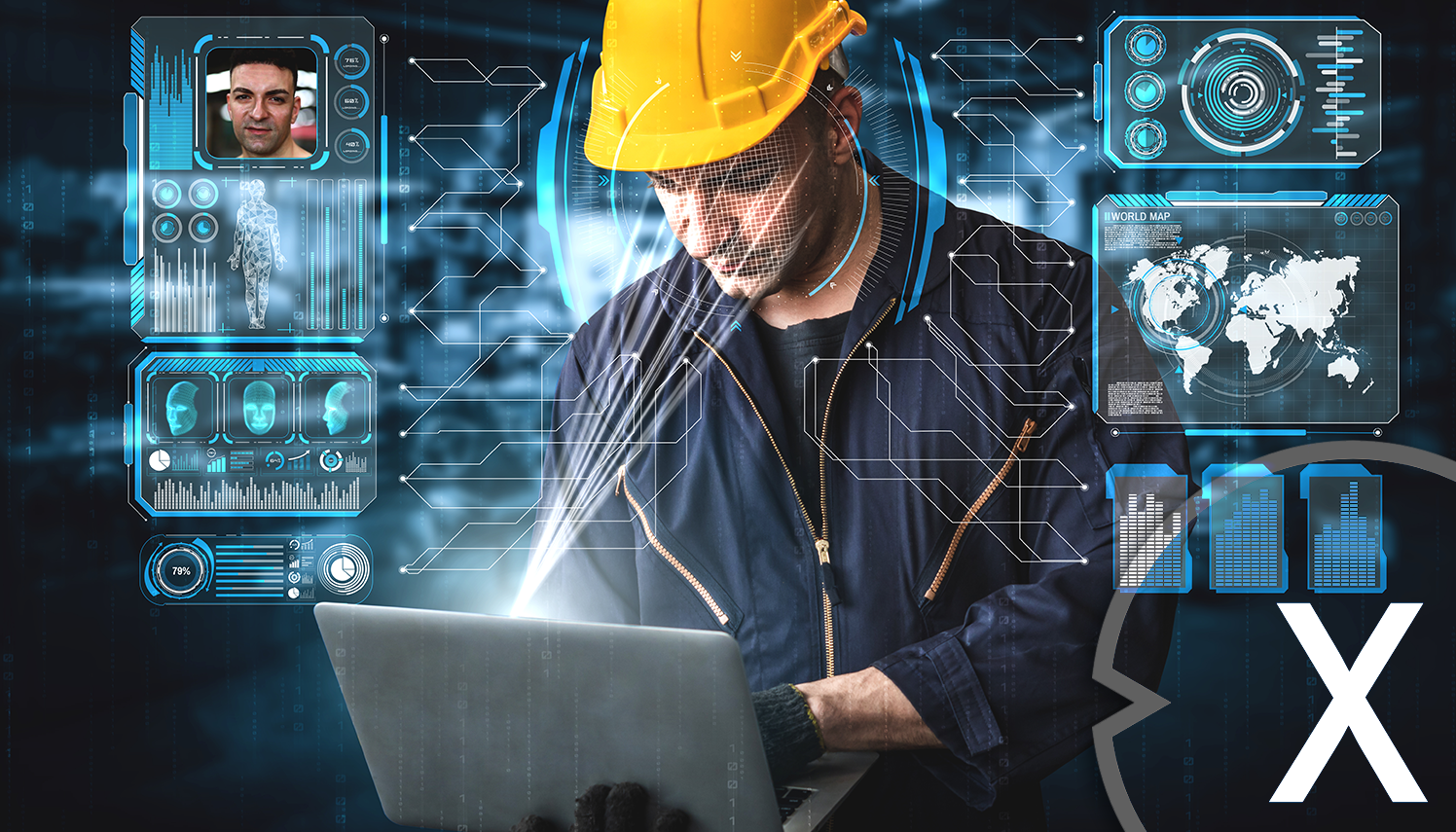
Industrial Metaverse – Optimal use and management of sensor data – Image: Xpert.Digital
The concept of the metaverse has gained increasing importance in recent years and is considered a potential next step in virtual development. It encompasses a non-physical reality that allows people to explore, interact with, and conduct business in digital worlds. Within the metaverse, three areas have emerged that are particularly relevant to business: the industrial metaverse, the business metaverse, and the e-commerce metaverse. Each of these areas has its own characteristics and distinctions.
1. Industrial Metaverse
The Industrial Metaverse refers to the use of metaverse technologies in industrial applications and processes. Companies can use the metaverse to simulate and optimize virtual factories, production facilities, or plants. It enables virtual collaboration between teams in different locations, remote inspection and maintenance of equipment, and employee training in safe and realistic virtual environments. The Industrial Metaverse thus offers increased efficiency, cost savings, and improved working methods for companies in various industries such as manufacturing, construction, and energy production.
2. Business Metaverse
The Business Metaverse focuses on leveraging the metaverse for business purposes. It's about creating virtual offices, conference rooms, and work environments where employees can collaborate remotely. The Business Metaverse enables companies to hold meetings and events in an immersive environment where participants can use their digital avatars. It also offers the opportunity to showcase products and services virtually and facilitate customer interactions in a realistic setting. The Business Metaverse revolutionizes how businesses operate by breaking down the barriers of the traditional office setting and creating new opportunities for global collaboration.
3. E-Commerce Metaverse
The e-commerce metaverse refers to the application of the metaverse in the realm of electronic commerce. It involves creating virtual marketplaces and stores where consumers can purchase products and services. The e-commerce metaverse enables an immersive and interactive shopping experience, allowing customers to use their digital avatars to explore virtual stores and view products from various perspectives. It also offers the possibility of presenting personalized recommendations and tailored offers based on individual user behavior. The e-commerce metaverse opens up new sales channels for businesses and creates a unique shopping experience for consumers.
➡️ These three areas of the metaverse—the Industrial Metaverse, the Business Metaverse, and the E-Commerce Metaverse—are all significant developments that are making non-physical reality a serious economic force. Each area offers unique opportunities and benefits for businesses across various industries. While the Industrial Metaverse enables efficiency gains and cost savings in production, the Business Metaverse facilitates global collaboration, and the E-Commerce Metaverse creates an interactive and personalized shopping experience for consumers. As the metaverse continues to evolve, these areas are expected to grow further, creating new opportunities for businesses to thrive in the virtual world.
A metaverse, as an interface to physical trade fairs and events, offers several advantages (including as a hybrid trade fair) and brings added value in various ways
Global reach
A metaverse allows people from all over the world to participate in trade fairs and events without having to be physically present. This opens up a larger target audience and enables companies to present their products and services to a global audience.
Cost and time savings
Attending physical trade fairs and events often requires significant investment in travel, accommodation, and booth rentals. Using a metaverse can reduce these costs, as participants can attend the events virtually. This saves time and money and allows participants to focus on interaction and networking without having to worry about logistical challenges.
Interactive and immersive experiences
A metaverse can offer a highly immersive and interactive environment where participants can access virtual booths, try out products, watch presentations, interact with other participants, and even conduct virtual business. This creates a realistic experience that closely resembles physically attending a trade fair or event.
Flexibility and scalability
A metaverse allows organizers to design trade fairs and events flexibly and in a scalable way. There are no spatial limitations, so more exhibitors and participants can take part than at a physical event. Furthermore, events can run over a longer period, as the virtual environment is accessible around the clock.
Data and analysis capabilities
The digital nature of a metaverse allows for the collection and analysis of extensive data on participant behavior. Organizers and exhibitors can gain insights into visitor behavior, interests, and preferences to improve their offerings and marketing strategies.
sustainability
By reducing travel and utilizing virtual resources, the use of a metaverse contributes to sustainability. This results in fewer CO2 emissions and less environmental impact, making it more environmentally friendly overall than physical events.
➡️ These advantages make a metaverse a sensible interface to physical trade fairs and events, offering added value for organizers, exhibitors and participants by expanding reach, reducing costs, enabling immersive experiences, providing flexibility and using data to make better decisions.
The Metaverse: Where the digital and physical worlds merge – The synergistic fusion of reality and virtuality
The metaverse has the potential to usher in a new era of interaction between the digital and physical worlds. It goes beyond mere entertainment and offers diverse applications where digital and real-world elements interact synergistically. Below are 10 exciting examples that illustrate the enormous potential of the metaverse:
1. Education and training
The metaverse can serve as an interactive learning environment where pupils and students can visit virtual classrooms, visualize complex concepts, and gain practical experience in immersive simulations.
2. Telepresence and remote work
The Metaverse allows people from different parts of the world to collaborate virtually, hold meetings and present themselves in a shared environment to strengthen the sense of presence and collaboration.
3. Architecture and Design
Architects and designers can use the Metaverse to create virtual models of buildings and spaces, present them to clients, and make adjustments in real time. This allows for an immersive and realistic presentation of the final project.
4. Tourism and travel
The Metaverse allows people to explore travel destinations virtually, visit historical sites, and have cultural experiences without being physically present. This opens up new opportunities for the tourism sector and enables barrier-free travel.
5. Healthcare and Medicine
The Metaverse can be used for medical training, virtual surgery, and the treatment of phobias and anxiety disorders. It also offers the possibility of telemedicine consultations and remote patient monitoring.
6. Art and Creativity
Artists and creatives can use the Metaverse to create virtual artworks, hold exhibitions, and design interactive experiences. It opens up new avenues for collaboration and access to artworks worldwide.
7. Trade and e-commerce
Companies can use the metaverse to open virtual stores where customers can explore and buy products in an immersive environment. It enables personalized shopping experiences and a close connection between customers and brands.
8. Entertainment and Gaming
The metaverse offers endless possibilities for interactive games, virtual concerts, film screenings, and other forms of entertainment. It creates a profound and social experience for players and viewers.
9. Sports and Fitness
The Metaverse allows people to engage in sports activities, participate in competitions, and interact with other participants in virtual environments. It also offers the possibility of providing personalized fitness programs and increasing motivation for an active lifestyle.
10. Social Interaction and Community
The metaverse allows people to meet in virtual worlds, find new friends, participate in events, and connect with like-minded individuals. It creates a global community and fosters collaboration and cultural exchange.
➡️ These 10 application examples offer just a glimpse into the diverse possibilities of the metaverse. As this technology continues to develop and become more established, exciting new applications will emerge, profoundly impacting our daily lives in both the digital and physical worlds.
Smart Sensors: From Antiquity to the Present Day: The Development of Sensor Technology and the Basic Idea Behind It
The development of sensor technology has a fascinating history, closely linked to the progress of humanity and its needs. The fundamental idea behind sensor technology is to capture and measure information about the environment in order to facilitate human activities, gain scientific knowledge, and monitor complex systems.
The origins of sensor technology date back a long way. Even in antiquity, simple sensors were used to measure things like temperature, air pressure, or humidity. However, it was only over the centuries and with the progress of technology that increasingly powerful and specialized sensors could be developed.
A significant milestone in sensor technology was the invention of the mercury thermometer in the 17th century by the German physicist Gabriel Fahrenheit. This instrument enabled the precise measurement of temperatures for the first time. Subsequently, various types of sensors were developed to detect electrical, magnetic, chemical, and other physical quantities.
With the advent of electronics and microchip technology in the mid-20th century, sensors became increasingly smaller, more energy-efficient, and more cost-effective. This paved the way for numerous applications of sensor technology in various fields.
A significant advancement was the development of the Hall effect sensor in the 1960s. This sensor is based on the Hall effect, in which an electrical voltage is generated perpendicular to the current flow in a magnetic field. The Hall effect sensor made it possible to measure magnetic fields precisely and was used in numerous applications, including in the automotive industry for speedometers and ABS systems.
Sensor technology has made enormous strides in recent decades. Today, there is a wide range of sensors used in almost every area of daily life. In medical technology, for example, biosensors enable the monitoring of vital parameters such as heart rate, blood pressure, and blood sugar levels. In environmental monitoring, sensors are used to measure air and water quality and to monitor pollution. In industry, sensors are used to control production processes and to monitor machinery in order to prevent breakdowns and accidents.
Smart Sensors
An interesting aspect of sensor technology is the development of intelligent sensors. These sensors are equipped with microprocessors and communication technology to process and wirelessly transmit data. This allows them to be used in networked systems to handle complex tasks. An example of this is the sensors in smartphones, which not only detect position, movement, and ambient light, but also..
Thanks to the integration of GPS, gyroscope and other sensors, a variety of functions are possible, such as navigation, health monitoring and augmented reality applications.
Another interesting trend in sensor technology is the development of miniaturized and wearable sensors. These sensors are small enough to be worn on clothing or the body and allow for the continuous monitoring of various parameters. For example, wearable fitness trackers can monitor the user's heart rate, activity, and sleep, providing valuable data for personal health management.
A growing field in sensor technology is the development of environmental sensors for the Internet of Things (IoT). These sensors are designed to capture and wirelessly transmit environmental information such as temperature, humidity, noise levels, and air quality. This allows cities, businesses, and households to monitor environmental parameters in real time and take action to improve environmental quality and promote energy efficiency.
The development of sensor technology is also driven by other technologies such as artificial intelligence and machine learning. By combining sensors with intelligent algorithms, patterns and correlations in the collected data can be recognized. This enables advanced applications such as facial recognition, autonomous driving, and robotics.
It is important to emphasize that sensor technology plays a role not only in the technology sector, but also in many other fields such as medicine, environmental research, aerospace, and security. Sensors enable scientists to collect data, test hypotheses, and gain new insights.
The future of sensor technology promises exciting developments. Sensors are expected to become increasingly smaller, more efficient, and more cost-effective. New materials and manufacturing techniques enable the production of flexible sensors that can be bent, stretched, and even integrated into textiles. This opens up new possibilities for health monitoring, rehabilitation, virtual reality, and human-machine interaction.
The development of sensor technology is an exciting process driven by the desire for better information gathering and monitoring. From simple temperature measurements to highly complex, interconnected sensor networks, sensor technology has an enormous impact on our daily lives and will continue to play a significant role in the future.

Xpert.Digital – Pioneer Business Development

Konrad Wolfenstein
I would be happy to serve as your personal advisor.
You can contact me by filling out the contact form below or simply call me on +49 7348 4088 965 .
I'm looking forward to our joint project.
Write to me


Xpert.Digital – Konrad Wolfenstein
Xpert.Digital is a hub for industry focusing on digitalization, mechanical engineering, logistics/intralogistics and photovoltaics.
With our 360° Business Development solution, we support renowned companies from new business to after-sales.
Market intelligence, smarketing, marketing automation, content development, PR, mail campaigns, personalized social media and lead nurturing are part of our digital tools.
You can find more information at: www.xpert.digital – www.xpert.solar – www.xpert.plus
Keep in touch