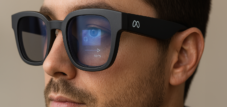
Not AR or VR, but “AI-First” – Meta’s radical change of course: Why “normal” glasses beat the expensive VR headset – Image: Xpert.Digital
From the lab to the nose: How Meta became the market leader with "invisible" technology
Conquering everyday life: Why Meta no longer relies on virtual worlds, but on the real nose
For years, the vision of the tech giants seemed set in stone: the future belonged to immersive headsets that would transport us to entirely new, digital realities. But while billions flowed into the development of VR glasses and metaverse concepts, the mass market remained skeptical. Too heavy, too conspicuous, too isolating – the technology often remained confined to the lab or the gaming room. But now Meta is making a remarkable strategic shift that is redefining the race for the "next smartphone.".
Instead of replacing reality with screens, Meta's latest smart glasses aim to subtly enhance everyday life. The partnership with EssilorLuxottica and the integration of powerful AI into the classic Ray-Ban design mark an economic and technological paradigm shift. It's no longer about the highest resolution or the deepest immersion, but about the longest wearing time and social acceptance.
The following analysis illuminates how Meta, by foregoing bulky hardware and focusing on "AI-first," is creating a new category of wearables. We examine why the form factor of ordinary sunglasses provides a crucial competitive advantage, how wireless mobility unlocks new data streams, and why the future of computer interaction may lie not on a display, but in an invisible neural band on the wrist. To understand how technology makes the leap from gadget to constant companion, one must understand Meta's strategy: winning the day, not the lab.
The race for everyday eyewear: Meta leaves the lab – From bulky headsets to wearable AI eyewear
For nearly two decades, the tech industry has been searching for the "next smartphone"—and in doing so, has repeatedly drifted back to labs and demo rooms. From immersive VR headsets to holographic workstations, much was promised, but few devices made the leap into everyday life. Meta broke this pattern by focusing not on the most impressive, but on the most practical form factor: the glasses you already wear. While many competitors continue to rely on full AR immersion with bulky headsets, Meta is pursuing a radically pragmatic premise: to win the day, you don't have to replace reality, but rather consistently augment everyday life.
The market demonstrates that this strategy is not only theoretically sound but also economically viable. Ray-Ban Meta smart glasses became significantly more successful than their predecessors within just a few months of launch and are now one of the fastest-growing consumer hard-glass segments. Sales figures, which now reach several million units, demonstrate a substantial channeling of investments from the VR and metaverse sectors into a new product family. Meta is thus shifting not only technological resources but also its market positioning: away from the niche of "gaming headsets" and towards becoming a mass-market platform for everyday AI interaction.
What Meta is really building: Glasses as everyday HCI
Meta is building less of a "hardware platform" and more of a new interface between humans and computers, based on everyday routine movements. The Ray-Ban Meta AI glasses (Gen 2) and the display model are technically distinct from classic VR headsets: They are lightweight, lack large Oculus-like displays, and instead rely on a combination of camera, microphones, speakers, and a small monocular heads-up display. The glasses weigh approximately 48–50 grams and are designed to feel like normal sunglasses – no headband, no neck strap, no bulky cables.
From an economic perspective, this decision is crucial because it reduces the barrier of usage duration. While VR headsets are typically used for minutes to a few hours per day, Meta aims for usage of several hours per day over many years. The hardware thus approaches a "clothing logic" rather than a "game console logic": it is intended to be as commonplace as a shirt or a bag. This shift in the usage curve has far-reaching consequences for data volume, usage intensity, and ultimately for the value chain surrounding AI services.
Why the everyday form factor is a competitive advantage
All smart glasses projects of the last decade have faced one constant problem: the devices looked like technology. Users felt watched, insecure, or "like guinea pigs." Meta has deliberately addressed this social hurdle by ensuring the glasses are visually closely tied to classic Ray-Ban designs. The frames are made of acetate or metal, and the colors range from classic black, gold, and silver to "Havana"—the technology is only visible inside the design.
The economic relevance of this design decision is twofold. First, it lowers adoption costs because users no longer wear "glasses with technology," but rather "glasses that happen to contain technology." Second, it opens access to EssilorLuxottica's existing brand assets. The partnership with Ray-Ban and Oakley allows Meta's product to quickly enter existing sales channels, including opticians and fashion retailers—a huge advantage over startups that have to build their own distribution networks. Combined with the well-known brand, this increases the likelihood that the glasses will be purchased not just as a "gadget," but as a regular visual product.
Wireless mobility versus wired laboratories
Technologically, Meta's glasses differ significantly from early prototypes in another key aspect: they are completely wireless. The connection is established via Bluetooth and Wi-Fi, allowing them to function independently of a laptop or nearby PC. Data is transmitted via smartphone or directly to the cloud, considerably increasing mobility.
In comparison, many early AR approaches were heavily reliant on workstations because they required high computing power and large datasets. This combination of heavy hardware and cables limited their use cases to labs, demo rooms, or specialized industrial environments. Meta's approach is diametrically opposed: The glasses are an "edge device" that processes only a small amount of data locally and offloads the majority of the AI processing load to the cloud. This frees up usage from being tied to a fixed location and allows it to be used in any everyday situation – from a walk to a meeting in a café.
Economically, this shift is crucial because it increases the potential usage phases per day. The multi-hour, continuous usage environment creates a new data basis for personalized AI models, which in turn are capable of delivering personalized services – from voice assistants to real-time translations or contextual reminders.
🎯🎯🎯 Benefit from Xpert.Digital's extensive, five-fold expertise in one comprehensive service package | BD, R&D, XR, PR & Digital Visibility Optimization


Benefit from Xpert.Digital's extensive, five-fold expertise in a comprehensive service package | R&D, XR, PR & Digital Visibility Optimization - Image: Xpert.Digital
Xpert.Digital possesses in-depth knowledge across various industries. This allows us to develop tailored strategies precisely aligned with the requirements and challenges of your specific market segment. By continuously analyzing market trends and monitoring industry developments, we can act proactively and offer innovative solutions. The combination of experience and expertise generates added value and provides our clients with a decisive competitive advantage.
More information here:
More than just glasses: The real added value lies in the invisible AI
AI-first instead of display-first: The shift in core competence
Meta also differs from many competitors in that the glasses are not primarily sold as a "display," but as an AI platform. The integration of multimodal AI systems—that is, speech, image, text, and telemetry—allows users to capture content hands-free, send messages, make calls, or retrieve real-time translations. The camera not only captures images but also provides contextual data that is then fed into AI models.
The economic logic behind this AI-first strategy is clear: the real value lies less in the hardware itself than in the services that run on it. Similar to smartphones, where the hardware is merely the entry point into an ecosystem, the glasses are intended to become the gateway to a continuously learning AI infrastructure. Meta's AI models are used not only to process content but also to refine user profiles – without users interacting in a traditional browser environment. This shift of data sources into everyday life has the potential to disrupt the entire value chain of search engines, social media platforms, and digital assistants.
Displays as a minor addition, not as a main feature
Nevertheless, Meta has also introduced a display model – a monocular heads-up display with a resolution of approximately 600×600 pixels and peak luminance of up to 5,000 nits. This technology is interesting because it enables a very high contrast ratio and high visibility in bright sunlight without adding weight to the glasses. The unit is designed so that the display function is perceived as only a "light touch": it does not add complete immersion, but rather supplements the view of the real world with a few, selected pieces of information.
The economic strategy behind this is subtle: Meta wants to position the product not just as a "camera with AI," but as a regular everyday pair of glasses with optional extended functions. While adding a display increases the price, it also reinforces the perception of it as a "premium product." Crucially, Meta communicates clearly that the glasses remain socially acceptable. Users aren't portrayed as "cyberwarriors" or "robots," but rather remain as discreet as possible in their daily lives. This combination of style and functionality is essential to ensuring that the glasses appeal not only to tech enthusiasts but also to a broader user base.
Gestures, neural bands, and the future of interaction
Meta is expanding interaction possibilities beyond voice and touch. The sEMG neural band on the forearm, which recognizes gestures, and the research into handwriting input via the band show that the company is aiming for a new form of "invisible" input. Users can trigger commands with minimal hand movements or arm gestures, without having to speak or type extensively.
This development is economically significant because it further lowers the barriers to use. Interaction becomes more subtle, natural, and less conspicuous. For users who frequently find themselves in situations where they prefer not to speak loudly (public transport, meetings, airplanes), this technology offers a new form of discretion. For companies, this means that usage time in sensitive environments increases—and with it, the amount of data collected. Combined with Meta's cloud infrastructure, this creates a model in which the glasses are not just the user, but part of a comprehensive AI ecosystem.
When glasses become a constant assistant, it's not the best display that wins – but the smoothest daily routine
Meta's approach: Expansion instead of replacement
Meta's strategy can be summed up in a simple formula: The glasses are not meant to replace reality, but to augment it. Users can capture content hands-free, receive AI assistance as needed, and have just enough screen real estate to be useful – without feeling overwhelmed or stigmatized. The glasses remain light enough to wear all day, blending visually into everyday culture while maintaining a technological presence.
Economically, this strategy is remarkable because it overcomes the adoption hurdles of the early AR era. Instead of convincing users to spend time in a virtual world, Meta convinces them that they can spend time in their real-world environment with enhanced support. The glasses are not sold as an "extra activity" but as an integrated part of daily life. This approach is comparable to the introduction of smartphones, which were initially perceived as "phones with cameras" and "audiobooks"—until they became a central part of everyday life.
Who will win the race?
The question of whether the race for smart glasses will be decided by the best AI, the best display, or the best everyday comfort can be answered clearly from an economic perspective: it will not be decided by a single factor, but by the combination of all three. The best AI models can only realize their full potential if they operate in a quiet, practical form factor. The best display is useless if the glasses are too heavy or too uncomfortable for everyday use. The best everyday comfort is irrelevant if the glasses offer no noteworthy functions.
Meta has chosen a clear priority within this triangle: It starts with everyday convenience, complements it with a powerful AI platform, and uses display functions as a supplementary—not central—component. This strategy is pragmatic because it ensures user loyalty for several years. The glasses are not perceived as a "toy," but as a useful everyday companion. With this approach, Meta is not only on its way to dominating the market, but also to setting a new standard for wearable AI interaction—not in a lab, but in everyday life.
Your global marketing and business development partner
☑️ Our business language is English or German
☑️ NEW: Correspondence in your native language!

Konrad Wolfenstein
I and my team are happy to be available to you as your personal advisor.
You can contact me by filling out the contact form here wolfenstein@xpert.digital:or simply call me at +49 7348 4088 965. My email address is
I'm looking forward to our joint project.