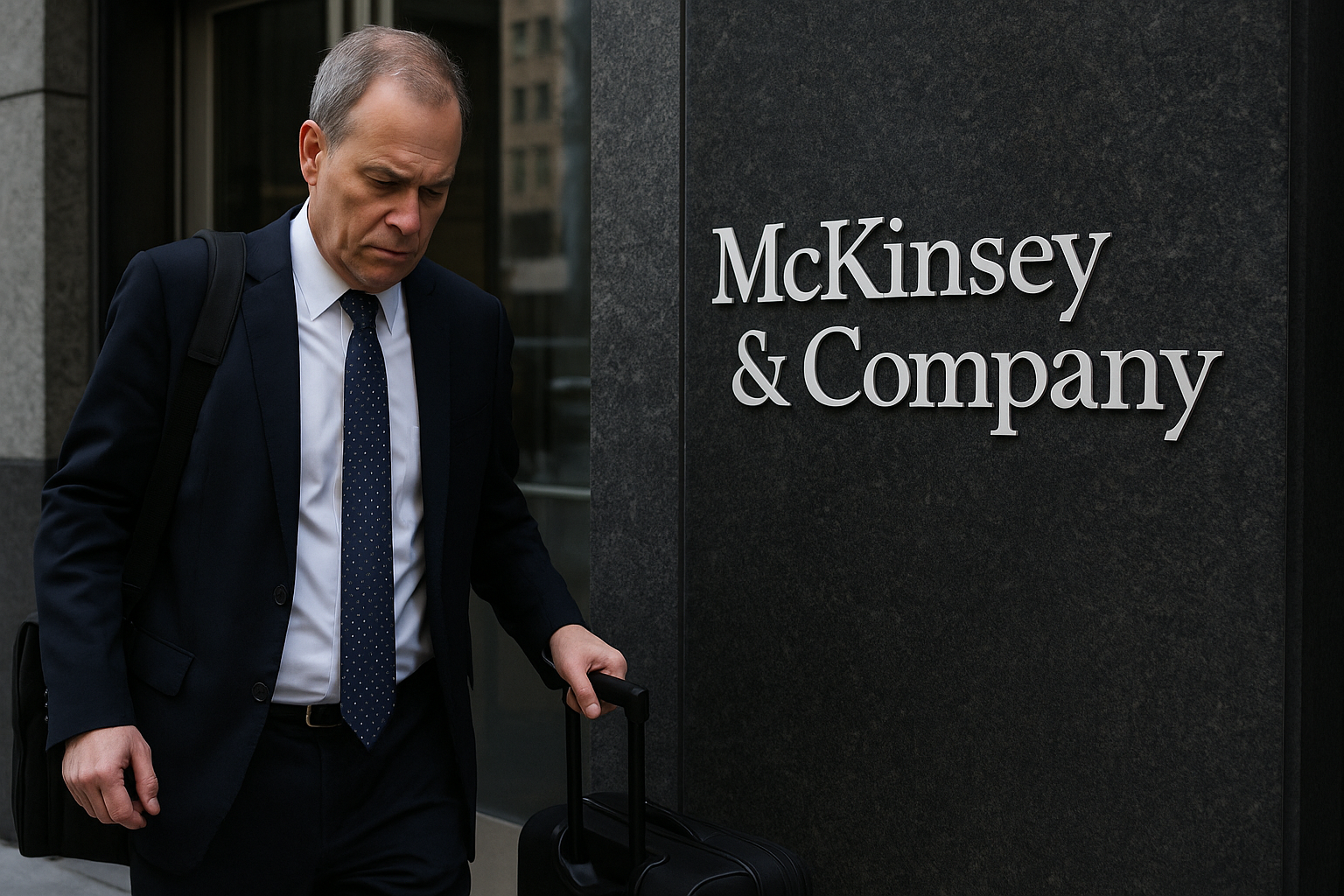
Project Magnolia: McKinsey's Staff Reduction – A Comprehensive Analysis of the Largest Wave of Layoffs in the Company's History – Creative Image: Xpert.Digital
From boom to crisis: McKinsey adapts to change
Restructuring at McKinsey: A turning point in the consulting industry
McKinsey & Company, the world's leading management consulting firm, has undertaken an unprecedented restructuring over the past 18 months, resulting in the reduction of more than 10 percent of its global workforce. This development marks a dramatic turning point for the company, which had experienced rapid growth during the COVID-19 pandemic. At the end of 2023, McKinsey employed approximately 45,000 people worldwide, while the current workforce has shrunk to around 40,000. This reduction of approximately 5,000 jobs represents the largest wave of layoffs in the firm's nearly 100-year history and reflects the changed market conditions in the consulting industry.
Related to this:


The “Project Magnolia”: Origin of the restructuring
Strategic realignment and first round of cutbacks
McKinsey's systematic workforce reduction began in 2023 with the internal restructuring program known as "Project Magnolia." This initiative initially aimed to eliminate approximately 2,000 positions, focusing first on support staff without direct client contact. The project's name, derived from the magnolia, a genus of flowering plants known for its elegance and resilience, was intended to symbolically underscore the company's adaptability and long-term vision.
McKinsey's consultant-to-non-consultant ratio was one to one, exceptionally high compared to other firms in the industry. While other members of the MBB trio (McKinsey, Boston Consulting Group, Bain) have a ratio of one to three, mid-sized consulting firms often manage with a ratio of one to ten. This structural peculiarity made McKinsey particularly vulnerable to efficiency improvements during economically challenging times.
Expansion of cuts to core areas
What began as a targeted reduction of back-office positions evolved into a more comprehensive restructuring. In addition to the originally planned 1,400 back-office jobs, approximately 400 specialists in data and software engineering were also laid off. The cuts no longer affected only administrative areas but also extended to the consulting level, where the pressure on less productive employees was noticeably increased.
McKinsey's management hoped that these measures would preserve the partners' compensation pool. This strategy reflects the firm's partnership structure, in which the more than 3,000 active partners act as owners and are directly affected by the firm's profitability.
Impact on partner structure and promotion policy
Drastic reduction in partner promotions
In parallel with the general reduction in staff, McKinsey has also drastically adjusted its promotion policy. The number of annual partner promotions has fallen from over 400 in 2021 to approximately 250 in 2023 and finally to only about 200 in 2024. This development represents a decline of 50 percent compared to the peak years and underscores the company's changed business strategy.
For many employees of large consulting firms, promotion to partner is considered the pinnacle of their career and a sign of excellence and dedication. Reducing these career advancement opportunities has far-reaching consequences for employee motivation and the long-term retention of talent. As partners, employees not only gain a say in the company's strategic direction, but, upon promotion to equity partner, also a direct share of the annual profit.
Leadership crisis and internal tensions
The restructuring measures have also led to internal tensions, which are reflected at the leadership level. McKinsey CEO Bob Sternfels failed to secure a second three-year term as global managing partner in the first round of voting, after more than half of the 750 senior partners voted for other candidates. This unusual development is directly linked to the controversial restructuring and the firm's slowing growth.
Related to this:

Market dynamics and industry-wide challenges
Decline in demand for consulting services
McKinsey's staff reductions come against the backdrop of a general slowdown in the consulting industry. After a pandemic-driven boom that led to a rapid increase in personnel, companies' willingness to pay for professional consulting services has declined significantly. This market shift is forcing not only McKinsey, but the entire industry to adapt.
McKinsey had increased its workforce by roughly two-thirds during the pandemic, from approximately 17,000 employees in 2012 to 28,000 in 2018, reaching a peak of 45,000 at the end of 2023. This aggressive expansion strategy proved unsustainable once market conditions normalized. The firm grew by only five percent in 2022, compared to significantly higher growth rates in previous years.
Comparison with competitors
While McKinsey is shrinking, other large consulting firms are pursuing different strategies. The Boston Consulting Group (BCG) continues its expansion, increasing its revenue by ten percent to $13.5 billion and expanding its workforce to 33,000 employees. This divergence in business strategies demonstrates that the challenges facing the industry can be addressed in different ways.
Other firms in the "Big Four" (KPMG, EY, Deloitte, PricewaterhouseCoopers) have also reduced staff, albeit on a smaller scale. KPMG was the first of the four largest auditing firms to cut its workforce in the US by two percent. Partner salaries at these firms have decreased across the board, for example, by five percent at EY in the UK.
Regional impact and German market position
Situation in Germany and Austria
In Germany and Austria, McKinsey maintains offices in Berlin, Düsseldorf, Frankfurt am Main, Hamburg, Cologne, Munich, Stuttgart, and Vienna. According to the Scientific Society for Management and Consulting, revenue in Germany exceeded one billion euros in 2021. Despite global staff reductions, the Swiss office remained optimistic, citing strong demand, particularly in the areas of growth and performance transformations as well as digital transformation.
According to the magazine "Bilanz," staff reductions in Switzerland affected around a dozen employees in 2023. This relatively small number suggests that the German-speaking markets were less affected by the cuts than other regions. McKinsey Germany, in particular, benefited from the increasing demand for AI-related consulting services.
Future personnel strategy
Despite the extensive staff reductions, McKinsey emphasizes that the company continues to grow and is doing "more and more impactful work than ever before." The company announced plans to welcome "thousands of new consultants" next year. This seemingly contradictory strategy suggests a qualitative realignment, in which inefficient structures are being dismantled while simultaneously investing strategically in high-growth areas.
Related to this:


Communication strategy and transparency
Restrained information policy
McKinsey is conspicuously reluctant to publish transparent figures regarding its current job cuts. The latest sustainability report omits both revenue and employee numbers for 2024 – information the company had previously communicated transparently. This lack of transparency contrasts sharply with the company's traditional openness and could indicate the sensitivity of the current restructuring.
The company's official communication is limited to general statements regarding the redesign of how teams without direct customer contact work. A company spokesperson explained: "We are redesigning the way our teams that do not have direct customer contact work for the first time in more than a decade, so that these teams can effectively support our company and grow with it.".
Structural changes in the consulting industry
The massive staff reduction at McKinsey signals a structural shift in the consulting industry. After years of continuous growth, companies must adapt to changing market conditions. Digitalization and the use of artificial intelligence make it possible to perform many traditional consulting tasks more efficiently, thus reducing the need for personnel in certain areas.
McKinsey's experiences could serve as a model for other consulting firms facing similar challenges. Focusing on core competencies and reducing overhead costs will likely become an industry-wide trend. At the same time, new business areas are emerging, particularly in digital transformation and sustainability, which require skilled professionals.
McKinsey and the consulting industry at a crossroads: Sustainable realignment?
The reduction of approximately 5,000 employees at McKinsey over the past 18 months marks a turning point in the history of the company and the entire consulting industry. "Project Magnolia" evolved from a targeted efficiency improvement into a comprehensive restructuring affecting all areas of the business. The drastic reduction in partner promotions and the internal leadership conflicts demonstrate that these changes are having a profound impact on the company culture.
While these measures may lead to uncertainty and criticism in the short term, McKinsey is positioning itself for a more sustainable future in a changing market environment. Focusing on profitable business areas and a willingness to dismantle inefficient structures could strengthen the company's competitiveness in the long run. Time will tell whether this radical realignment is successful and can serve as a model for the entire consulting industry.
Related to this:
Your global marketing and business development partner
☑️ Our business language is English or German
☑️ NEW: Correspondence in your native language!

Konrad Wolfenstein
I and my team are happy to be available to you as your personal advisor.
You can contact me by filling out the contact form here wolfenstein@xpert.digital:or simply call me at +49 7348 4088 965. My email address is
I'm looking forward to our joint project.