Putin's alternative to WhatsApp: Russia and the messenger Max from the technology company VK – Creative image: Xpert.Digital
Max combines chat, payment and government services in one platform
What is the Russian alternative to WhatsApp and how did it come about?
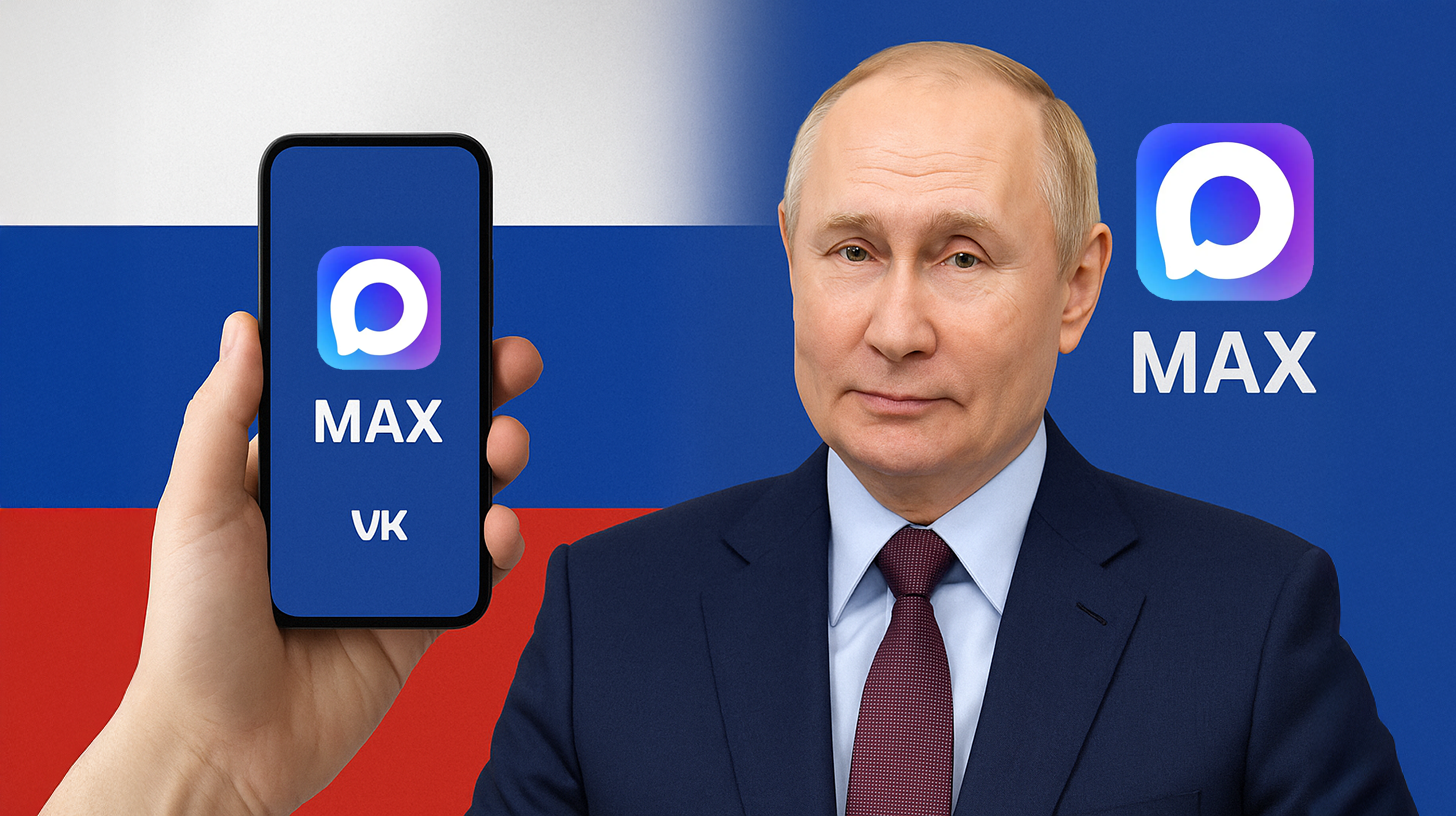
The Russian alternative to WhatsApp is called Max and was developed in 2025 by the technology company VK. Max is a so-called "super app" modeled after Chinese apps, offering not only messaging functions but also payment services, government services, and other digital services in a single application. Since September 2025, the app has been pre-installed on all newly sold smartphones and tablets in Russia and is mandatory according to a corresponding government decree.
The development of Max is directly linked to Russia's efforts toward digital sovereignty and its increasing control over its population's communications. At the same time, since August 2025, Russian authorities have been systematically restricting the functionality of WhatsApp and Telegram by blocking or severely disrupting voice and video calls via these services.
Why is Russia introducing its own messenger app?
Russia officially justifies the introduction of Max as a fight against terrorism and fraud. Authorities claim that foreign messaging services like WhatsApp and Telegram do not cooperate sufficiently with Russian security agencies and fail to share information about suspicious activities. Roskomnadzor, the Russian media regulator, stated that the phone services of foreign messaging services are being used to defraud Russian citizens or involve them in terrorist activities.
In reality, however, the Kremlin is pursuing more far-reaching goals of digital control. Max is intended to create a surveillance system that gives the Russian Federal Security Service (FSB) direct access to users' communications and data. IT expert Mikhail Klimarev explains: "Max is literally a spy, a personalized spy that tells you where you've been." The app not only records private messages, but also location data, contact lists, and biometric information.
What features does Max offer compared to WhatsApp?
Max is modeled after Chinese super-apps like WeChat and aims to go far beyond the functions of conventional messengers. The app includes the following main areas:
Communication functions
Personal and group chats, voice messages, audio and video calls, file transfer up to 4 gigabytes, stickers and emojis. These basic functions largely correspond to those of WhatsApp or Telegram.
Extended Services
Max integrates payment functions via the Fast Payment System, mini-apps for various business purposes, chatbots, and an AI chat called GigaChat. Users can transfer money between their accounts and access various digital services.
State integration
A key difference from Western messaging apps is the close integration with the Russian state portal Gozuzlugi. Russian citizens can already use this portal to digitally handle various government services, such as passport renewals, tax returns, and doctor's appointments. Max aims to integrate these government services directly into the messaging app.
How does Max differ technically from WhatsApp and Telegram?
The fundamental difference lies in the security architecture and encryption. WhatsApp uses end-to-end encryption by default, which prevents third parties from reading messages. Telegram offers this encryption as an option in secret chats.
Max, however, deliberately forgoes strong encryption. IT security experts who analyzed the app report: “Max is completely insecure. There is no cryptography. The app is intentionally designed to be insecure in order to serve its purpose: surveillance of people.” Instead, Max uses encryption approved by the Russian Federal Security Service (FSB), which grants the authorities access to all messages at any time.
The app was developed in various programming languages, including Node.js, Kotlin, Swift, Objective-C, TypeScript, C++, and Java, and runs on Windows, macOS, Android, and iOS. In addition to the mobile application, there is also a web version and desktop clients.
What role does VK play in the development of Max?
VK, originally known as VKontakte, is Russia's largest social network and the parent company of Max. The company was founded in 2006 by Pavel Durov, who later had to leave after conflicts with the Russian government. Today, VK is controlled by state-affiliated companies and is headed by Vladimir Kiriyenko, the son of Putin confidant Sergei Kiriyenko.
VK has developed a close cooperation with Russian security services over the years. IT expert Mikhail Klimarev explains: “95 percent of all criminal cases opened in Russia in connection with online statements are linked to VK. They not only pass on information, but are also actively involved in searching for critical statements and thus putting people in prison.”.
The Max Messenger is operated by Communication Platform LLC, a subsidiary of VK. This structure allows the Russian government to exert direct influence on the development and operation of the app.
How is Russia forcing the use of Max?
The Russian government is employing various methods to encourage the population to use Max. Since September 1, 2025, Max has been required to be pre-installed on all newly sold smartphones and tablets in Russia. This law is part of a broader strategy to promote Russian software on mobile devices.
At the same time, authorities are restricting the functionality of foreign messaging apps. Since August 2025, users of WhatsApp and Telegram have been unable to make voice and video calls, or can only do so with significant disruptions. Users report metallic noises, dropped connections, and other technical problems that make normal conversations impossible.
Government employees have been required to switch to Max for work purposes since September 2025. This gradual expansion of mandatory usage is intended to accelerate the transition to the government app and promote its acceptance among the population.
What surveillance capabilities does Max offer the Russian authorities?
Max is integrated into the existing Russian SORM surveillance system. SORM stands for "System of Technical Means for Ensuring the Functions of Operational and Search Activities" and is a comprehensive surveillance program of the Russian Federal Security Service (FSB). Since 2000, Russian internet service providers have been required to install SORM hardware, which allows direct access to communications data.
The current version, SORM-3, allows the collection and storage of all types of information, as well as the use of selectors for targeted data filtering. In conjunction with Max, this creates a system of total communications surveillance.
Max continuously collects extensive user data: IP addresses, location information, contact lists, call logs, and, according to independent reports, also biometric data. The app's privacy policy explicitly permits the transfer of this data to government agencies and third parties.
How is the population reacting to Max?
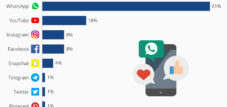
Despite massive government funding, Max's usage lags significantly behind established messaging apps. Max boasts approximately 16.4 million daily users, compared to 82 million for WhatsApp and nearly 68 million for Telegram in Russia. These figures indicate that the Russian population is skeptical of the new app.
Many Russians have expressed concerns about the surveillance capabilities of the app. Opposition journalist Okun described Max as a "central element of the digital gulag" that the authorities want to establish. Critics fear that the app represents a tool for total control over digital communication.
At the same time, many Russians continue to use VPN services to access blocked or restricted international services. This demonstrates the ongoing desire for uncensored communication and resistance to state digital control.
What technical weaknesses does Max have?
Security researchers have identified several problematic aspects of Max. A key criticism is that the software uses open-source code from countries that Russia officially classifies as "unfriendly." Additionally, some of the data traffic is routed to foreign servers, contradicting Russia's proclaimed digital sovereignty.
The deliberately weak encryption makes Max vulnerable to various types of surveillance and cyberattacks. Unlike WhatsApp or Signal, which use state-of-the-art encryption technologies, Max offers no effective protection against eavesdropping by third parties.
A valid Russian or Belarusian mobile phone number is required for registration with Max. Registration with virtual numbers is not possible, which further restricts user anonymity and allows for complete identification.
🎯🎯🎯 Benefit from Xpert.Digital's extensive, five-fold expertise in one comprehensive service package | BD, R&D, XR, PR & Digital Visibility Optimization


Benefit from Xpert.Digital's extensive, five-fold expertise in a comprehensive service package | R&D, XR, PR & Digital Visibility Optimization - Image: Xpert.Digital
Xpert.Digital possesses in-depth knowledge across various industries. This allows us to develop tailored strategies precisely aligned with the requirements and challenges of your specific market segment. By continuously analyzing market trends and monitoring industry developments, we can act proactively and offer innovative solutions. The combination of experience and expertise generates added value and provides our clients with a decisive competitive advantage.
More information here:
Max vs. WeChat: Russia's super app between service and control
How does Max compare to Chinese super-apps like WeChat?
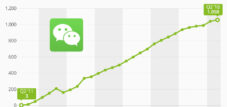
Max is explicitly modeled on the Chinese super-apps, especially WeChat. Since 2011, WeChat has evolved from a simple messaging app into a multifunctional platform with over 1.3 billion monthly active users. The app combines communication, payment services, e-commerce, social networking features, and mini-programs into a single application.
The key difference, however, lies in their origins and market penetration. WeChat was able to develop organically and was adopted voluntarily by users because it offered practical solutions for everyday digital life. Max, on the other hand, is being introduced through government coercion and is encountering considerable public resistance.
Both apps, however, enable extensive state surveillance. In China, the government uses WeChat for control and censorship, while Max was explicitly designed as a surveillance tool from the outset.
What impact does Max have on other messaging services?
The introduction of Max has a direct impact on the availability and functionality of other messaging services in Russia. WhatsApp and Telegram have been subject to significant technical issues since August 2025, severely limiting their usability.
Telegram, originally developed by Russian entrepreneur Pavel Durov, is under particular pressure. Russia attempted to block Telegram back in 2018 but later abandoned the blockade. Now, more subtle methods are being used to persuade users to switch.
The Russian government has announced that restrictions on foreign messaging apps could be lifted if they comply with Russian law. In practice, this means requiring data localization on Russian servers and the provision of decryption keys to the authorities.
How does Max integrate himself into the Russian state portal Gosuslugi?
The integration of Max into the Russian state portal Gosuslugi is a key component of the state's digital strategy. Gosuslugi was launched in 2009 as a central platform for electronic administrative services and now has over 126 million registered users.
Russian citizens can already handle various official matters digitally via Gosuslugi: passport renewals, tax returns, doctor's appointments, kindergarten registrations, and many other services. The portal is closely linked to the Russian identification and authentication system and has required two-factor authentication since 2023.
Max is intended to integrate these government services directly into the messenger app. Users will be able to store electronic copies of documents, sign documents with electronic signatures, and access educational services. This integration creates a comprehensive digital ecosystem that encompasses all aspects of citizens' lives.
What legal basis enables the introduction of Max?
The legal basis for the introduction of Max was provided by several laws and regulations. Since 2021, all smartphones and tablets in Russia have been required to be equipped with Russian software. Max was added to the list of mandatory pre-installed apps as a replacement for another VK messenger.
In June 2025, the Russian parliament passed a law to introduce a national instant messaging service. This law stipulates that the state messenger must be integrated into Russian government services and meet certain security standards.
In parallel, the legal means for internet control were expanded. Roskomnadzor, the Russian media regulator, has been able to block websites since 2012 and maintains a blacklist of prohibited content. The agency has evolved from an original telecommunications regulator into a comprehensive surveillance apparatus.
How does the Russian model differ from Western approaches?
The Russian model of the state-controlled super-app differs fundamentally from Western approaches to messenger development. In Western countries, messaging apps are created by private companies competing for users and must prevail through superior features or services.
Western messaging apps like WhatsApp, Signal, and Telegram place great emphasis on data protection and encryption. Their developers stress their independence from government control and resist surveillance demands from authorities.
In contrast, Max represents a model of direct state control over digital communication. The app is not promoted through market mechanisms, but enforced through legal regulations and technical sabotage of the competition.
These differing approaches reflect fundamental differences in the understanding of digital rights, privacy, and the role of the state in the digital sphere. While Western democracies tend to rely on regulation and competition, Russia is establishing a system of direct state control.
What long-term consequences could Max have for Russian society?
The introduction of Max could have far-reaching consequences for Russian society. IT experts warn of the emergence of a "digital gulag" in which the authorities gain complete control over digital communication and thus over large areas of social life.
Max's comprehensive data collection allows authorities to create detailed profiles of every citizen. This information can be used for political persecution, social control, or economic discrimination. Critics fear this will lead to a self-censoring society in which people restrict their freedom of expression for fear of surveillance.
At the same time, Max could exacerbate the digital divide in Russian society. While tech-savvy users continue to use VPN services and foreign apps, less tech-savvy citizens are becoming increasingly reliant on the state-controlled digital ecosystem.
Integrating all aspects of life into a state-controlled app also creates new dependencies. If government services, payment systems, and social communication have to be handled through Max, the state can revoke citizens' access to basic digital services for misconduct.
Max: Russia's super app between service and surveillance
Max represents an unprecedented attempt to establish a state-controlled alternative to WhatsApp and other international messaging services. The app combines messaging functions with government services and extensive surveillance capabilities, modeled on Chinese super-apps.
The Russian government is relying on a combination of legal coercion and technical sabotage of competitors to promote the acceptance of Max. Despite these measures, the app is encountering considerable resistance among the population, as evidenced by its low user numbers compared to established messaging apps.
Max exemplifies Russia's digital sovereignty strategy, which in reality aims for comprehensive control over citizens' digital communication. The app marks a further step towards an authoritarian digital system that undermines fundamental principles of privacy and freedom of expression.
The development of Max also demonstrates the growing importance of messaging apps as instruments of state power and social control. While Western societies debate the regulation of private platforms, Russia is establishing a model of direct state control over digital communication that could have far-reaching consequences for the future of digital society.
We are here for you - Consulting - Planning - Implementation - Project Management
☑️ SME support in strategy, consulting, planning and implementation
☑️ Creation or realignment of the digital strategy and digitization
☑️ Expansion and optimization of international sales processes
☑️ Global & Digital B2B trading platforms
☑️ Pioneer Business Development

Konrad Wolfenstein
I would be happy to serve as your personal advisor.
You can contact me by filling out the contact form below or simply call me on +49 7348 4088 965 .
I'm looking forward to our joint project.
Write to me


Xpert.Digital - Konrad Wolfenstein
Xpert.Digital is a hub for industry focusing on digitalization, mechanical engineering, logistics/intralogistics and photovoltaics.
With our 360° Business Development solution, we support renowned companies from new business to after-sales.
Market intelligence, smarketing, marketing automation, content development, PR, mail campaigns, personalized social media and lead nurturing are part of our digital tools.
You can find more information at: www.xpert.digital - www.xpert.solar - www.xpert.plus
Keep in touch