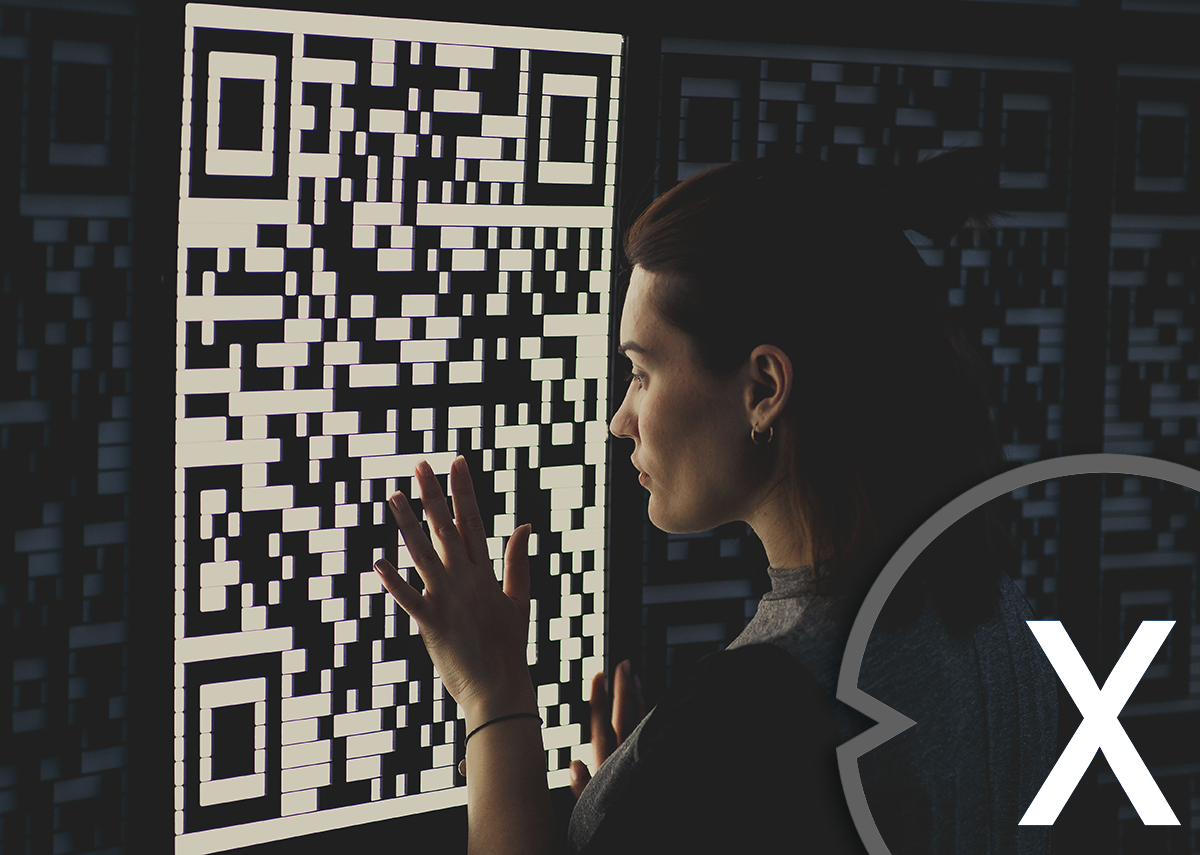
Upgrading to 2D matrix code: The conversion of sensors and scanners with parallel barcode support – Image: Xpert.Digital / Pavel Korsakov|Shutterstock.com
Upgrading sensors and scanners to 2D matrix codes: A smooth transition with parallel barcode support
Ongoing technological advancements will lead to the transition to 2D matrix codes by 2027, which offer significant advantages over traditional barcodes. However, this transition requires adapting sensors and scanners, which are widely used in various industries and applications. Here, we examine the challenges and opportunities of upgrading sensors and scanners to 2D matrix codes, taking into account a transition period during which both options will coexist.
The necessity of the 2D matrix code
The 2D matrix code offers higher data storage capacity and greater flexibility compared to the traditional barcode. It allows for the encoding of alphanumeric characters, symbols, images, and even small logos. Furthermore, the 2D matrix code can incorporate error correction mechanisms to repair damaged codes. These advantages make it ideal for complex applications such as logistics, inventory management, product tracking, and document management.
Challenges during the conversion
Converting sensors and scanners to the 2D matrix code presents some challenges, as the existing infrastructure and applications are designed for the conventional barcode.
Some of the challenges are:
a) Hardware compatibility
Sensors and scanners designed for capturing barcodes may not be able to automatically read 2D matrix codes. Hardware may need to be updated or replaced to meet the new requirements.
b) Software integration
The existing software, designed for processing barcode data, may need to be adapted to recognize and process 2D matrix codes. Interfaces will also need to be developed to exchange data between the sensors/scanners and the applications.
c) Training and acceptance
Users familiar with traditional barcodes may require training to properly scan and interpret the 2D matrix code. Adopting new technologies can be challenging and may require a phased rollout and user training.
Transition period and bilateral options
To ensure a smooth transition, a transition period is required during which both the traditional barcode and the 2D matrix code are supported. During this transition period, companies can use both options in parallel to ensure a seamless changeover
To ensure a transitional solution. This can be achieved by:
a) Compatibility
New sensors and scanners should be able to read both traditional barcodes and 2D matrix codes. This allows companies to continue using their existing applications and infrastructure while gradually transitioning to 2D matrix codes.
b) Training and awareness raising
Comprehensive user training is required to familiarize them with the new 2D matrix code. Companies should offer training programs to promote acceptance and understanding of the new technology.
c) Gradual implementation
Companies can plan a phased implementation of the 2D matrix code, starting with selected applications or areas. This allows for a gradual adaptation of the infrastructure and minimizes potential operational disruptions.
➡️ Upgrading sensors and scanners to 2D matrix codes opens up new possibilities and efficiency gains in various industries. However, a smooth transition requires careful planning, consideration of hardware and software requirements, and user training and awareness. Establishing a transition period that supports both traditional barcodes and 2D matrix codes enables companies to migrate seamlessly and implement the new technology gradually.
The introduction of the barcode in 1973 revolutionized global logistics
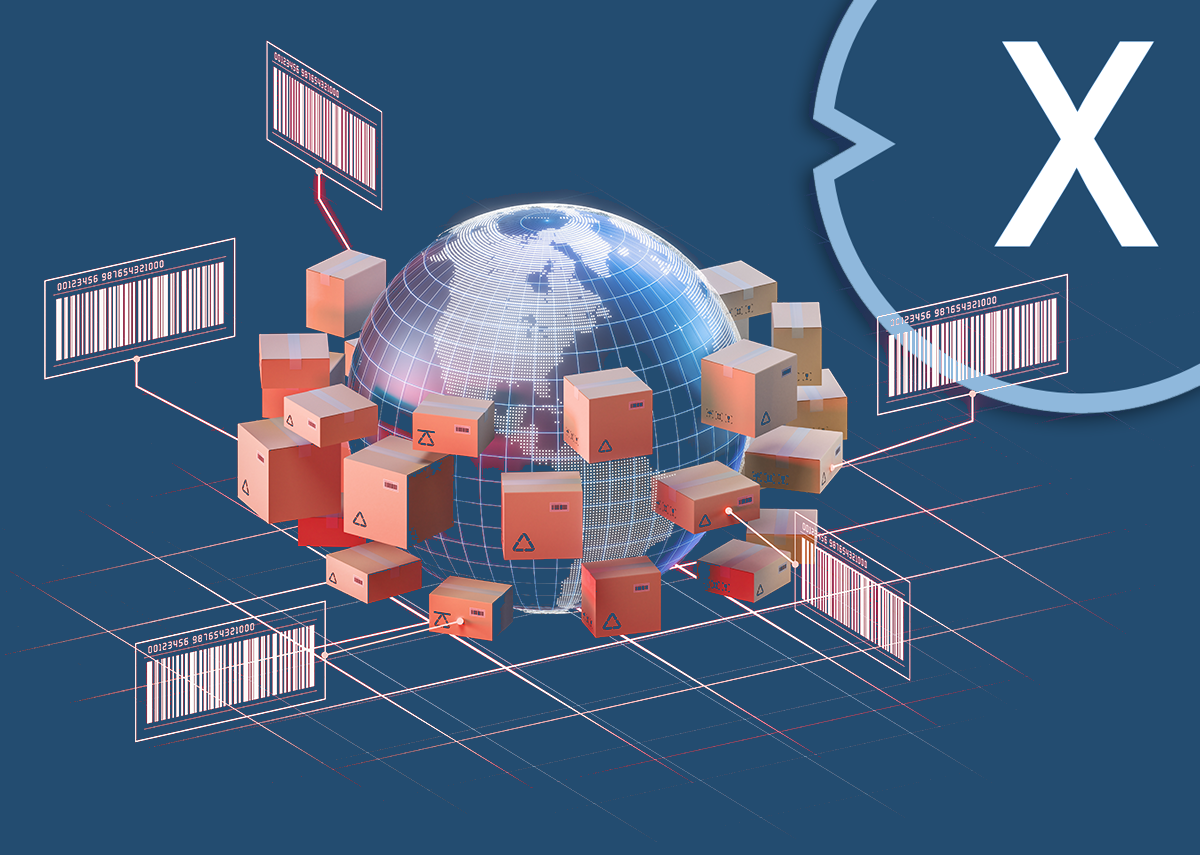
The 1D barcode revolutionized global logistics – Image: Xpert.Digital / Vink Fan|Shutterstock.com
The barcode has revolutionized global logistics in several ways:
Improved inventory management
By using barcodes, companies can manage their inventory more effectively. Each product is assigned a unique barcode that can be scanned to automatically update the inventory. This enables faster and more accurate inventory tracking and reduces the risk of overstocking or understocking.
More efficient goods distribution
Barcodes help speed up the flow of goods and reduce error rates. When each product is assigned a barcode, shipping labels can be printed quickly and easily, which speeds up order processing and reduces the risk of shipping errors.
Improved traceability
Barcodes enable companies to track the whereabouts of products in the supply chain, from manufacturing to sale. This is particularly important for tracing products in the event of recalls or product quality issues.
Automation of business processes
The use of barcodes has helped automate business processes by reducing manual data entry and enabling the use of automated scanners and readers. This has led to increased efficiency and productivity in the logistics industry.
Overall, barcodes have revolutionized the logistics industry by enabling faster, more efficient, and more precise processing of goods. The technology has helped to increase productivity and reduce costs, which in turn has led to greater customer satisfaction and improved competitiveness for companies.
Our Industrial Metaverse Configurator
Simply try out our universally applicable (B2B/Business/Industrial) Metaverse Configurator for all CAD / 3D demo options:

Xpert (B2B/Business/Industrial) Metaverse Configurator for all CAD / 3D data, usable on all end devices, one platform!
Related to this:
Conversion of sensors and scanners to the 2D matrix code
Upgrading sensors and scanners to 2D matrix codes requires careful planning to ensure a smooth transition. During the conversion process, it's crucial to provide parallel support for the traditional barcode to guarantee seamless integration and continuous operation. Here are some steps to consider during the transition:
Analysis and evaluation of requirements
- Examine the current sensors and scanners in your system and assess their compatibility with the 2D matrix code.
- Analyze your applications and processes to determine where 2D matrix code can offer advantages.
- Identify critical areas or applications where immediate retrofitting is required and plan appropriate measures.
Hardware upgrade or replacement
- Determine whether your existing sensors and scanners are suitable for capturing the 2D matrix code.
- If not, plan to upgrade or replace the hardware to ensure the required functionality.
- Also consider the possibility that some sensors or scanners can read both the 2D matrix code and the conventional barcode.
Software customizations
- Check your software solutions and make sure they support 2D matrix code.
- If necessary, make the required adjustments or integrations to enable the reading and processing of the 2D matrix code.
- Ensure that both code types can be supported during the transition phase to guarantee continuous functionality.
Training and user acceptance
- Plan training sessions for users to familiarize them with the new 2D matrix code.
- Raise awareness among staff about the benefits of the 2D matrix code and the need for a smooth transition.
- Ensure that sufficient support and assistance is available for users during the transition period.
Transition period and parallel operation
- Determine a transition period during which both the 2D matrix code and the traditional barcode are supported.
- Communicate this transition period both internally and externally to involve customers and partners.
- Establish clear guidelines specifying which code should be used in which applications or areas.
Monitoring and optimization
- Monitor the performance of the retrofitted sensors and scanners, as well as user acceptance.
- Analyze feedback and resolve any problems or bottlenecks that arise.
- Continuously optimize the systems and processes,
The error intensity of a 2D matrix code or QR code compared to a 1D barcode or barcode
How does the error intensity of a 2D matrix code or QR code compare to a 1D barcode or linear code?
The error rate of a 2D matrix code or QR code can be considered higher compared to a 1D barcode or linear code. This is mainly because 2D matrix codes have a larger data capacity and can encode complex information, while 1D barcodes are generally limited to numeric or alphanumeric characters.
Because 2D matrix codes can contain more information, errors can occur during their creation or printing. These errors can make the code difficult or even impossible for readers to read. For example, if a square in the QR code is damaged or dirty, this can impair decoding.
In contrast, 1D barcodes are generally less prone to errors because they have less complex structures. They consist of a series of parallel lines and spaces, making them easier to print and read. However, damage or contamination of a 1D barcode can also lead to readability problems.
To minimize the error rate of 2D matrix codes or QR codes, error correction mechanisms are typically used. These mechanisms enable the reader to recognize and reconstruct the code despite some damage or errors. The error correction functions vary depending on the QR code type and encoding level, offering different degrees of error detection and correction.
However, it is important to note that the error rate for both 1D barcodes and 2D matrix codes depends on various factors, such as print quality, reading technology, and environmental conditions. Careful creation, verification, and use of appropriate reading devices can help minimize the error rate for both code types.
Are barcode and barcode the same thing?
Yes, "barcode" and "strip code" are often used synonymously and generally refer to the same concept. They denote a graphical representation of data in the form of vertical lines and spaces, applied to products, labels, or packaging.
The term "Strichcode" (barcode) is frequently used in German-speaking countries, while "Barcode" is more common internationally. Both terms refer to the same principle: The lines and spaces represent a specific sequence of numbers or letters that can be captured and decoded by scanners or readers.
There are various types of barcodes, such as the EAN code (European Article Number), the UPC code (Universal Product Code), and the QR code (Quick Response Code). Each of these codes has specific characteristics and applications, but they are all based on the fundamental principle of the barcode system.
Is the well-known QR code a 2D variant?
Because we get asked this frequently: Yes, the QR code is a 2D version of a barcode. The term "QR" stands for "Quick Response," which refers to the code's rapid scanning and decoding. Unlike the traditional barcode, which uses only horizontal lines and spaces, a QR code consists of a matrix of black squares on a white background. This matrix allows for a greater data storage capacity compared to the one-dimensional barcode.
QR codes can encode various types of data, including text, URLs, contact information, Wi-Fi credentials, and more. Their two-dimensional structure allows them to store a larger amount of information and read data more quickly and accurately, even if the code is partially damaged or dirty. QR codes are now used in a wide variety of applications, including advertising, marketing, product tracking, mobile payments, and digital ticketing.
The Data Matrix code replaces the barcode

The Data Matrix code, or QR code, will replace the barcode in 2027 – Image: Xpert.Digital
More information here:
How 2D matrix codes will change global logistics
The 2D matrix code has the potential to change global logistics in many ways.
Efficiency improvement
The 2D matrix code enables the encoding of a larger amount of information, including article numbers, batch numbers, expiration dates, production locations, and much more. This more detailed coding allows logistics companies to improve information flow, reduce errors, and increase efficiency in the supply chain.
Real-time tracking and monitoring
The 2D matrix code allows for the unique identification and tracking of individual products or shipments. This enables improved supply chain monitoring, from production and transport to delivery to the end customer. Companies can track the location, condition, and progress of shipments in real time, leading to greater transparency and efficiency.
Inventory management and warehousing
The 2D matrix code facilitates more accurate and efficient inventory management. Companies can track stock levels more precisely, identify products faster, and optimize inventory levels. This leads to better warehousing, less waste, and more efficient use of warehouse space.
Traceability and product safety
The detailed coding in the 2D matrix code improves product traceability. In the event of recalls or quality issues, companies can quickly and accurately identify affected batches and take targeted action. This improves product safety and protects consumers from potentially dangerous or defective products.
Fraud detection and counterfeit protection
The 2D matrix code can serve as a security feature to verify product authenticity and detect counterfeits. Companies can implement authentication methods where the code is scanned and verified to ensure the product is genuine and not counterfeit. This helps combat product counterfeiting and protect trademark rights.
Integration of IoT and Big Data
The 2D matrix code can serve as a link to connect physical products to the Internet of Things (IoT). Scanning the code allows for the collection of information about the product's condition, environmental conditions, or other relevant data. This data can be used for analysis and process optimization to make informed business decisions.
➡️ The 2D matrix code significantly improves efficiency, transparency, traceability, and security in global logistics. It enables precise tracking of products throughout the entire supply chain, from manufacturing to delivery to the end consumer. By scanning the 2D matrix code, information such as production data, delivery data, inventory levels, and transport details can be captured and updated in real time.
The improved efficiency results from automated data collection and processing, which replaces time-consuming manual processes. This enables faster order processing, improved planning of transport routes, and better coordination of logistics activities. Companies can identify bottlenecks and take timely action to avoid delays and shorten delivery times.
Transparency along the supply chain is significantly improved by the 2D matrix code. All stakeholders, including manufacturers, suppliers, logistics companies, and consumers, can track the current location and status of products at any time. This enables better communication and collaboration between the various parties and reduces misunderstandings and information gaps.
Product traceability is also facilitated by the 2D matrix code. In the event of quality problems, recalls, or product safety concerns, companies can quickly and accurately identify the affected products and take appropriate action. This contributes to consumer safety and strengthens trust in the products and brands.
Furthermore, the 2D matrix code improves security in global logistics. By integrating security features and encryption technologies into the code, companies can more effectively combat counterfeiting, product piracy, and other illegal activities. The code enables rapid verification of product authenticity, thus protecting consumers from counterfeit or substandard goods.
The advantages of 2D matrix codes in global logistics benefit both businesses and consumers. Businesses can optimize their supply chains, reduce costs, and increase customer satisfaction. Consumers benefit from improved product transparency, enhanced product safety, and an improved shopping experience.
Overall, the 2D matrix code is a powerful tool that has the potential to revolutionize the logistics industry. With its broad applicability and numerous advantages, it will contribute to more efficient, transparent, and secure global logistics.
How logistics and end consumers can both use the 2D matrix code
The 2D matrix code offers a wide range of applications for both the logistics industry and end consumers. Here are some ways in which both logistics companies and end consumers can use the 2D matrix code:
For logistics companies
Product tracking and monitoring
Logistics companies can use the 2D matrix code to track shipments and products throughout the entire supply chain. By scanning the code, they can monitor the location, condition, and progress of shipments in real time.
Inventory management
The 2D matrix code enables more precise inventory management. Logistics companies can scan the code to quickly and accurately record stock levels, optimize inventory processes, and avoid shortages or overstocking.
Efficient traceability
In the event of recalls or quality issues, logistics companies can use the 2D matrix code to quickly identify affected batches and take targeted action. This facilitates product traceability and improves product safety.
Anti-counterfeiting protection and authentication
The 2D matrix code allows logistics companies to verify the authenticity of products and detect counterfeits. They can implement authentication methods where the code is scanned and verified to ensure that the product is genuine and not counterfeit.
For end consumers
Product information: End consumers can scan the 2D matrix code to access detailed product information, including origin, ingredients, instructions, expiration dates, and more. This enables them to make informed purchasing decisions and obtain additional information about the product.
Product authentication
The 2D matrix code can help end consumers verify the authenticity of products and identify counterfeits. By scanning the code, they can confirm that the product is original and not counterfeit, thus increasing consumer confidence.
Interactive content and offers
The 2D matrix code allows end users to access interactive content and special offers. Businesses can use the code to link to websites, videos, special promotions, or other digital content that provides added value to end users.
More information here:
Fast payments and transactions
The 2D matrix code can also be used for mobile payments. End users can scan the code to capture payment information and complete transactions quickly and conveniently.
➡️ By using the 2D matrix code, both logistics companies and end consumers can benefit from improved efficiency, transparency and security in the supply chain.
2D matrix code usable for WebAR or WebXR (3D product presentation in augmented reality)!
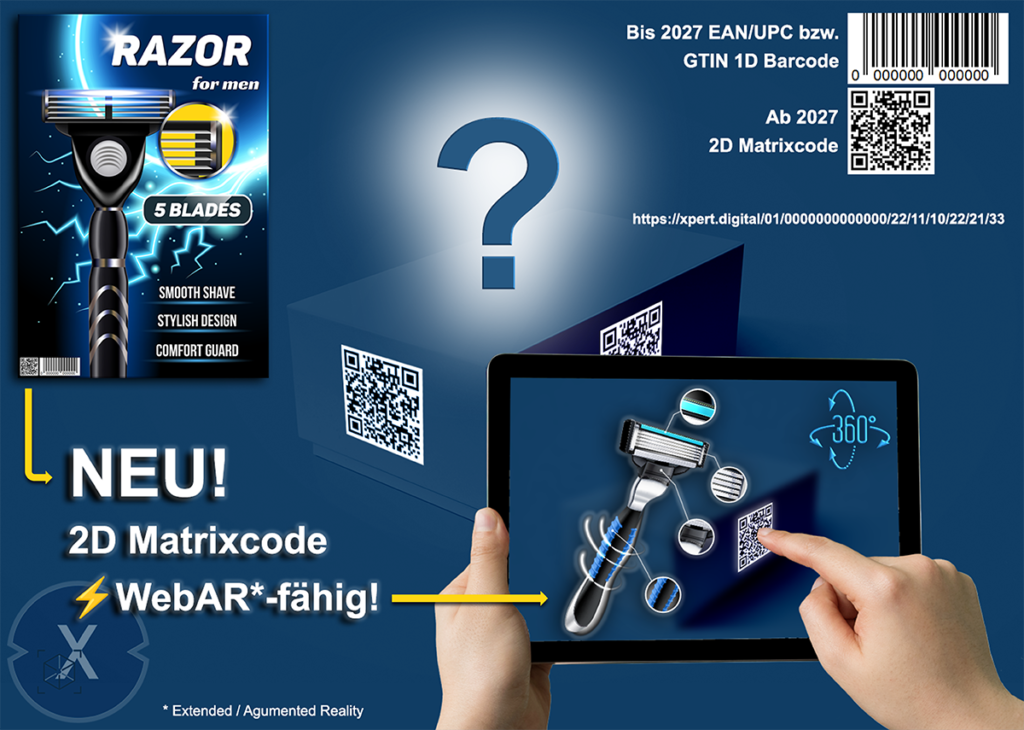
The 2D matrix code, the successor to the 1D barcode, is WebAR compatible and WebXR-enabled! – Image: Xpert.Digital
The 1D barcode successor, the 2D matrix code, is WebAR compatible or WebXR-enabled and therefore suitable for the e-commerce metaverse as well as for the business metaverse with XR technology from extended, augmented, mixed and virtual reality as well as virtual showrooms.
More information here:

Consulting, planning and implementation of 2D matrix codes with integrated augmented reality and WebAR
Xpert.Plus is a project by Xpert.Digital. We have many years of experience in supporting and consulting for (Extended) Augmented Reality and warehouse optimization, which we combine under Xpert.Plus in a large network.

Konrad Wolfenstein
I would be happy to serve as your personal advisor.
You can contact me by filling out the contact form below or simply call me on +49 7348 4088 965 (Munich) .
I'm looking forward to our joint project.
Write to me


Xpert.Digital – Konrad Wolfenstein
Xpert.Digital is a hub for industry focusing on digitalization, mechanical engineering, logistics/intralogistics and photovoltaics.
With our 360° Business Development solution, we support renowned companies from new business to after-sales.
Market intelligence, smarketing, marketing automation, content development, PR, mail campaigns, personalized social media and lead nurturing are part of our digital tools.
You can find more information at: www.xpert.digital – www.xpert.solar – www.xpert.plus
Keep in touch