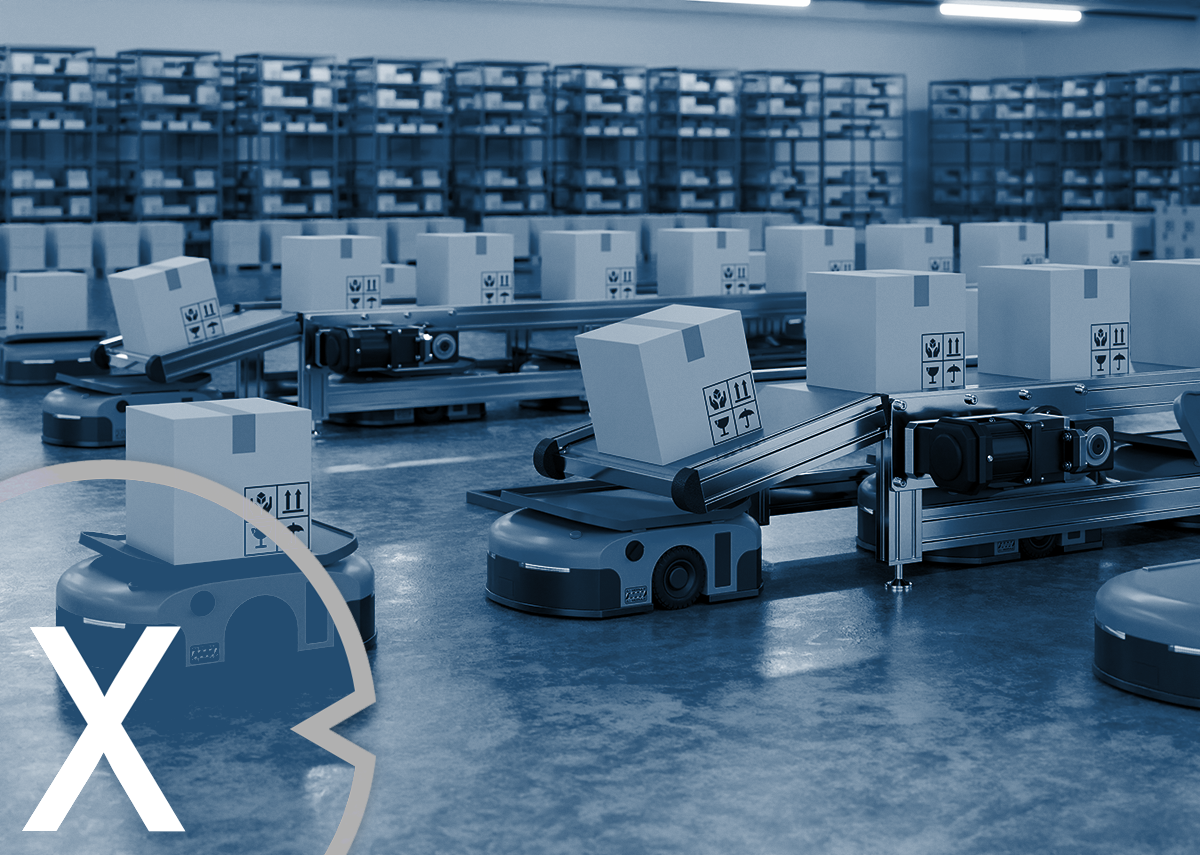
Automated guided vehicles (AGVs) are revolutionizing logistics: 2D matrix code and metaverse in focus – Image: Xpert.Digital
Efficient transport in transition: Driverless transport systems (AGVs) and 2D matrix codes are revolutionizing manufacturers and companies.
The transport industry is facing a revolutionary transformation due to the increasing prevalence of automated guided vehicles (AGVs) and the use of 2D matrix codes. These advanced technologies promise a more efficient and future-proof mode of transport.
Automated guided vehicles (AGVs) offer numerous advantages for manufacturers and businesses. The use of autonomous vehicles optimizes transport processes, as they operate continuously and minimize human error. These AGVs are equipped with advanced navigation systems, sensors, and artificial intelligence to detect obstacles and find the best route to the destination. They improve efficiency, reduce costs, and allow for more flexible use of available space.
The 2D matrix code complements AGV technology by enabling the unique identification and tracking of products and goods. Companies can use the 2D matrix code to store important information such as production data, storage locations, delivery details, and other relevant information. This increases supply chain transparency and improves inventory management efficiency.
The combination of automated guided vehicles (AGVs) and 2D matrix codes opens up new possibilities for manufacturers and companies. It enables seamless integration of production and logistics processes, improves the accuracy and efficiency of transport, and facilitates product traceability. Furthermore, companies can use these technologies to increase their operational performance, reduce costs, and enhance customer satisfaction.
The future of transportation lies in the integration of automated guided vehicles (AGVs) and 2D matrix codes. Manufacturers and companies should embrace these advanced solutions to remain competitive and capitalize on the opportunities of the evolving transportation industry. It is time to recognize the potential of these technologies and integrate their implementation into business strategies to optimize transportation processes and drive growth.

Xpert.Plus Warehouse Optimization - High-bay warehouses and pallet warehouses: Consulting and planning
2D matrix code (successor to the EAN/UPC or GTIN 1D barcode from 2027 onwards)

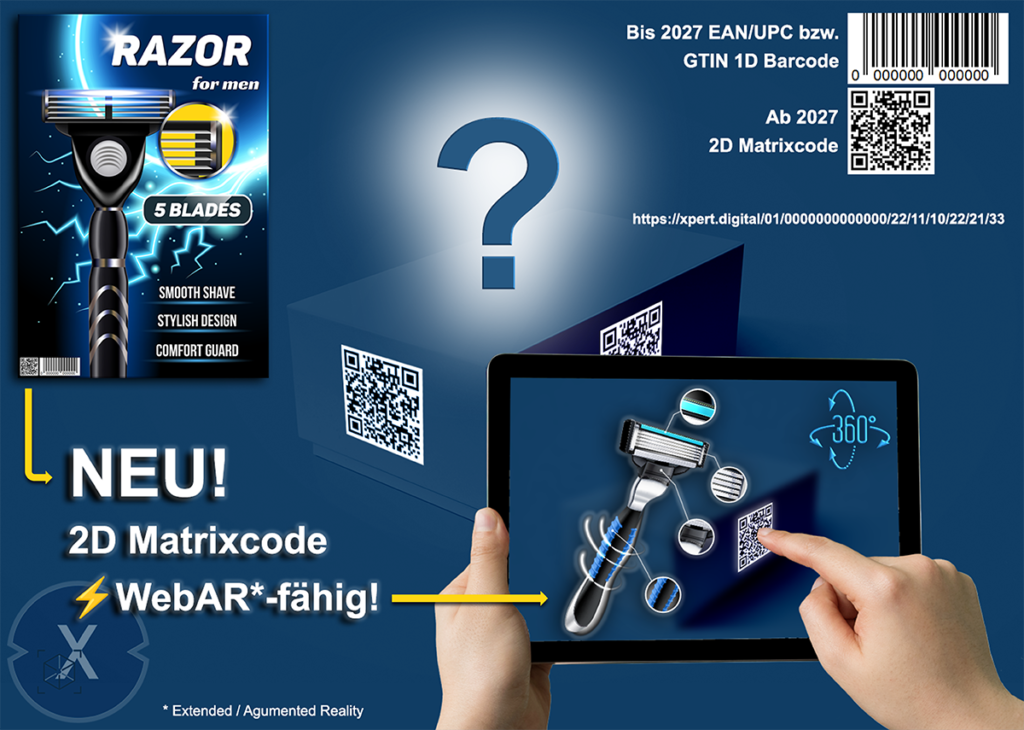
The 2D matrix code, the successor to the 1D barcode, is WebAR compatible and WebXR-enabled! – Image: Xpert.Digital
More information here:
Automated Guided Vehicles (AGVs) for manufacturers and companies
The future of transportation will be significantly shaped by automated guided vehicles (AGVs) for manufacturers and businesses. These innovative technologies promise a revolution in the way goods and products are transported within companies.
AGVs offer numerous advantages for manufacturers and companies. By using autonomous vehicles, they can optimize the transport process and ensure efficient resource utilization. Since AGVs operate without human drivers, the risks associated with human error and downtime are eliminated. This increases productivity and reduces throughput times.
Furthermore, AGVs offer a high degree of flexibility in adapting to different environments and tasks. They can be easily deployed in production halls, warehouses, or distribution centers and are capable of navigating confined spaces and efficiently managing complex routes. This allows manufacturers and companies to optimize their transport processes and minimize bottlenecks.
Another important aspect is safety. AGVs are equipped with advanced safety systems to prevent collisions with obstacles or other vehicles. This reduces the risk of accidents and protects both employees and assets.
Integrating AGVs into the transport processes of manufacturers and companies opens up a range of opportunities for increasing efficiency and optimizing costs. By using AGVs, personnel costs can be reduced, as no human drivers are required. Furthermore, AGVs can optimize the use of machinery and equipment by automatically interacting with them and improving material flow.
There are already numerous reputable manufacturers offering AGVs for manufacturers and businesses. Well-known providers include companies such as KUKA, Dematic, Swisslog, Daifuku Co., Ltd., and Aethon Inc. These companies offer customized solutions tailored to the specific requirements of their customers.
The future of transportation undoubtedly lies in the increased use of automated guided vehicles (AGVs) by manufacturers and companies. These technologies offer the opportunity to optimize transportation processes, increase productivity, and reduce costs. It is crucial that manufacturers and companies recognize the potential of these technologies and integrate their implementation into their business strategy to succeed in the competitive landscape and prepare for the future.
Our Industrial Metaverse Configurator
Simply try out our universally applicable (B2B/Business/Industrial) Metaverse Configurator for all CAD / 3D demo options:
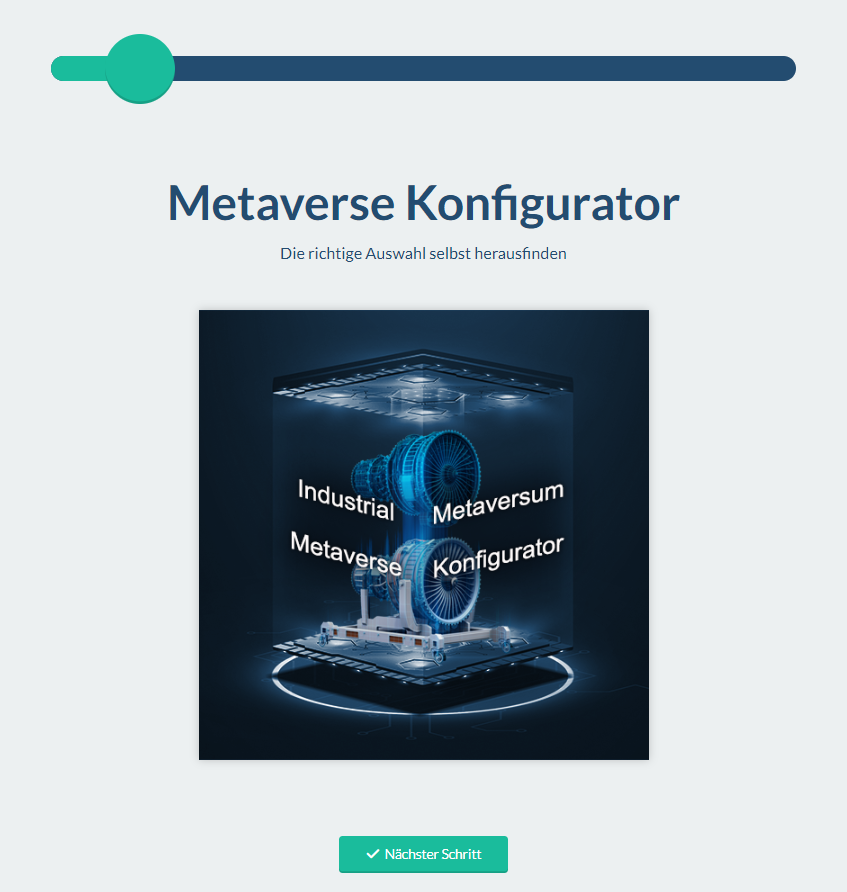

Xpert (B2B/Business/Industrial) Metaverse Configurator for all CAD / 3D data, usable on all end devices, one platform!
Related to this:
10 application examples for the use of driverless transport systems
Warehouse logistics
Driverless transport systems can be used in warehouses to transport goods and materials between shelves, picking stations and shipping areas.
Production lines
AGVs can ensure the smooth flow of materials in production facilities by transporting parts and components to the various production stations.
Hospital logistics
In hospitals, driverless transport systems can transport medical supplies such as medications, laboratory materials and sterile instruments to the various departments or patient rooms.
Airport logistics
Driverless transport systems can be used at airports to transport luggage between terminals, baggage handling systems and aircraft.
E-commerce and retail logistics
AGVs can be used in large warehouses and distribution centers to pick orders and prepare them for shipment.
automotive industry
In automotive production, driverless transport systems can transport components and parts to the assembly lines and support the flow of materials between different production areas.
agriculture
AGVs can be used in agricultural operations to transport crops, animal feed or other agricultural products.
Hospitals and nursing homes
In nursing homes and hospitals, driverless transport systems can take over the transport of meals, laundry, cleaning supplies and other essential goods.
Logistics centers
In large logistics centers and distribution centers, driverless transport systems can transport goods and merchandise between different areas such as receiving, storage and shipping.
Industrial assembly
Driverless transport systems can be used in industrial assembly to bring components to the assembly lines and to transport finished products to the packaging or shipping areas.
➡️ These application examples demonstrate the diverse ways in which driverless transport systems can be used in various industries and sectors. The flexibility and efficiency of these systems make them an attractive solution for modern transportation needs.
📦 Warehouse and logistics consulting for warehouse optimization and planning - for logistics managers and warehouse managers
Do you need expert support in implementing your requirements? Do you have questions about Smart Factory, Smart Logistics, or digitalization?
🏬 Warehouse optimization and automation for industry, production and trade
Automating warehouses and supply chains is a key element of warehouse optimization. We can help you with that.
🛒 E-commerce warehousing solutions for returns, fast shipping (same-day delivery), and error-free order picking
E-commerce has specific requirements, and competition is constantly intensifying. It's no coincidence that e-commerce is considered a driving force behind market changes. Our strength lies in our digital expertise, which enables us to deliver innovative solutions and implementations.
New sensor technology for automated guided vehicles (AGVs)
With the upcoming replacement of the old 1D barcode by the advanced 2D matrix code in 2027, changes are also occurring in the sensor technology for automated guided vehicles (AGVs). This change necessitates the replacement of existing sensor technology to meet the new requirements.
The existing 1D barcode has successfully contributed to the identification and tracking of products for many years. However, it is reaching its limits when it comes to storing large amounts of data and the more advanced information required in today's logistics industry.
The 2D matrix code offers an innovative solution to meet these challenges. With its two dimensions, it allows for the storage of extensive information in a compact form. The code consists of a matrix of squares or dots that can contain various data such as production data, serial numbers, expiration dates, and other relevant information.
The sensor technology for AGVs must be adapted accordingly to capture and process the new 2D matrix code. Modern camera sensors are required that are capable of capturing high-resolution images in real time and precisely scanning the code. Furthermore, advanced image processing algorithms are needed to extract the data from the 2D matrix code and make it usable for further processing within the AGV.
The upgraded sensor technology enables reliable detection and decoding of the 2D matrix code. This, in turn, improves the accuracy and efficiency of product identification by automated guided vehicles (AGVs). Furthermore, the 2D matrix code opens up new possibilities for traceability, supply chain optimization, and improved communication throughout the entire process.
The upcoming switch from 1D barcodes to 2D matrix codes and the corresponding adaptation of sensor technology in automated guided vehicles (AGVs) requires timely planning and implementation. Manufacturers and companies along the supply chain should take the necessary steps to ensure that their AGVs are equipped with the new sensors and can easily read the 2D matrix code.
The advancements in sensor technology for AGVs are a crucial step towards meeting the current demands of the logistics industry. The 2D matrix code offers enhanced data storage and processing capabilities, leading to increased efficiency and improved processes. Companies should actively monitor this development and adapt their automated guided vehicles (AGVs) to these new requirements in a timely manner to fully leverage the advantages of the 2D matrix code.
Metaverse and 2D matrix code, two innovations that offer new market opportunities in sales and marketing for manufacturers and companies of automated guided vehicles (AGVs).

Automated Guided Vehicles (AGVs): Experience the future of logistics at trade fairs, hybrid trade fairs and events in the Metaverse – Image: Xpert.Digital
The advent of the metaverse and the introduction of 2D matrix codes bring two exciting innovations to sales and marketing for manufacturers and companies of automated guided vehicles (AGVs). These developments open up new market opportunities and enable an innovative approach to sales and marketing.
The Metaverse, a virtual and augmented reality environment, offers an interactive platform where companies can showcase their AGVs and engage with potential customers. Through immersive experiences and virtual product presentations, manufacturers and businesses can demonstrate the full potential of their automated guided vehicles. Customers can see the AGVs in action, test features, and learn about their benefits without having to be physically present. The Metaverse facilitates effective communication and interaction between manufacturers, businesses, and customers, leading to improved sales performance and an enhanced customer experience.
The introduction of the 2D matrix code as a new marking technology offers further advantages for sales and marketing. With the 2D matrix code, manufacturers and companies can store comprehensive product information directly on the product itself. Customers can scan this information using smartphones or dedicated readers and access important details such as product specifications, instructions, proof of origin, and much more. The 2D matrix code enables improved communication and transparency along the entire value chain and strengthens customer trust in the product and the brand.
These two innovations open up numerous market opportunities for manufacturers and companies of automated guided vehicles (AGVs). By integrating the Metaverse into their sales strategy, they can expand their reach and address customers globally, regardless of geographic location. The Metaverse enables innovative presentation and interaction with the AGVs, leading to greater customer loyalty and improved purchasing decisions.
The use of the 2D matrix code offers companies the opportunity to provide their customers with additional information and added value. The detailed product information accessible via the code enables customers to make informed decisions and strengthens their confidence in the quality and safety of automated guided vehicles (AGVs).
To effectively leverage new market opportunities, manufacturers and companies should adapt their sales and marketing strategies to the changes. Integrating the metaverse into their online presence and developing virtual showrooms makes this possible.
10 manufacturers of automated guided vehicles (AGVs)
Please note that the market and the availability of manufacturers may change over time.
Daifuku Co., Ltd.
Daifuku is an international provider of logistics solutions, including AGVs. Their vehicles are capable of automatically transporting goods and offer a flexible and efficient solution for intralogistics.
Swisslog AG
Swisslog offers innovative AGV solutions for the logistics industry. Their vehicles are designed for use in various environments such as warehouses, production facilities, and hospitals.
KION Group AG
The KION Group is a leading global provider of AGVs. Its portfolio includes various vehicle types used in intralogistics, including forklifts, tractors, and stacker cranes.
Dematic GmbH
Dematic offers a wide range of AGV solutions for automating warehouse and logistics processes. Their vehicles are equipped with state-of-the-art sensor technology and navigation systems.
EK Automation GmbH
EK Automation develops customized AGV solutions for various industries. Their portfolio also includes intelligent software solutions for controlling and monitoring the vehicles.
AGVE Group AB
The AGVE Group is an experienced manufacturer of AGVs for material handling in the automotive industry, food production, and other sectors. Their vehicles are characterized by high precision and reliability.
JBT Corporation
JBT develops and produces innovative AGV solutions for use in various industries, including airports, food processing, and manufacturing. Their vehicles offer a reliable and precise transport solution.
Grenzebach Maschinenbau GmbH
Grenzebach specializes in automated transport systems, including AGVs. Their vehicles can be used in a wide variety of applications, from the automotive industry to glass processing.
KUKA AG
KUKA is a leading global provider of robotics and automation solutions. They also offer AGV solutions for the internal transport of goods and materials.
Oceaneering AGV Systems
Oceaneering develops AGVs for demanding environments such as offshore installations and industrial facilities. Their vehicles are robust, reliable, and equipped with state-of-the-art technology.
The future prospects for automated guided vehicles (AGVs)
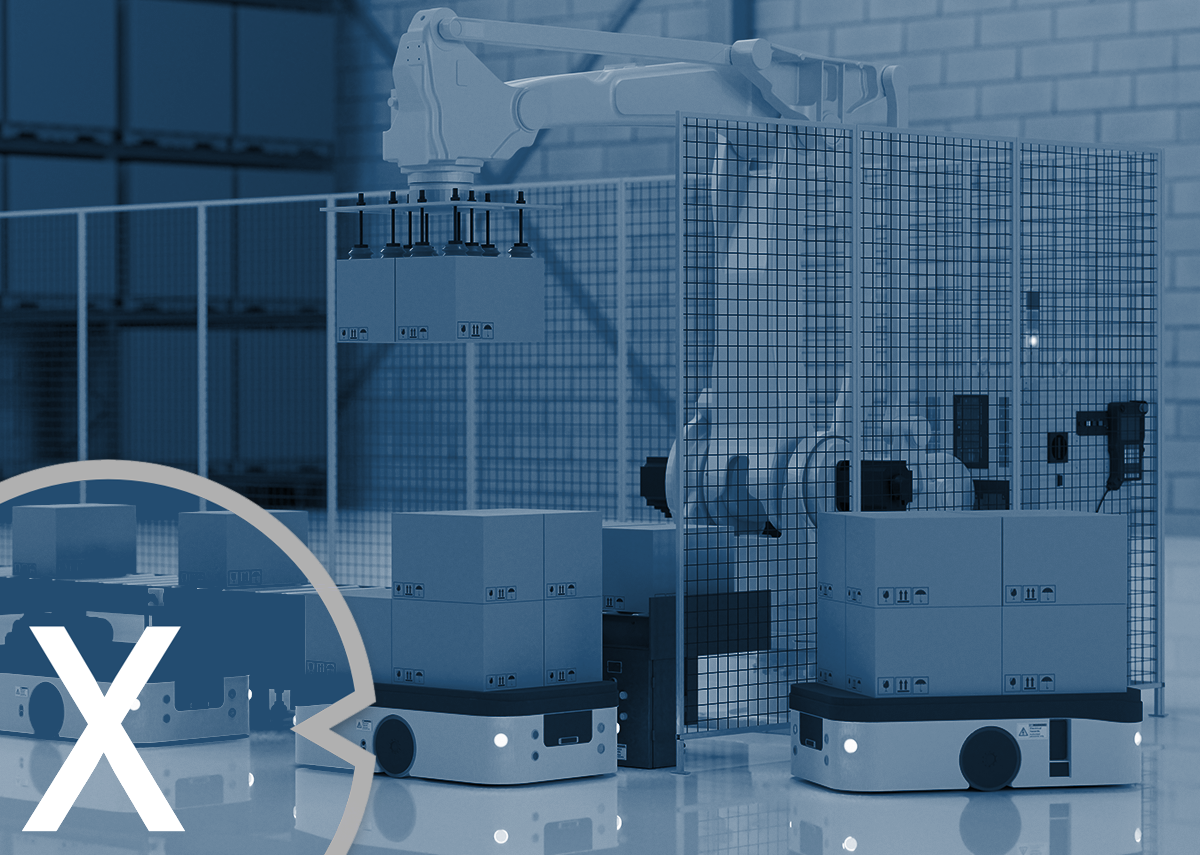
The future of logistics: Driverless transport systems (AGVs) are on the rise for optimized efficiency and productivity – Image: Xpert.Digital
The future prospects for automated guided vehicles (AGVs) are extremely promising. Technological advances in robotics, artificial intelligence, and automation have led to continuous improvements in AGV technology and expanded its range of applications. Here are some reasons why the future of AGVs is positive:
Efficiency improvement
AGVs enable automated and efficient execution of transport tasks. They can optimize material flow, reduce idle times, and increase productivity.
Cost savings
By using AGVs, companies can reduce their operating costs. The automated systems operate around the clock without human intervention, resulting in lower personnel costs.
Security
AGVs are equipped with advanced safety features to prevent accidents and injuries. They use sensors and cameras to avoid obstacles and interact safely with their environment.
flexibility
AGVs can be adapted to various work environments and requirements. They can be used both indoors, such as in warehouses, and outdoors, and are capable of transporting various types of loads.
Scalability
AGV systems are able to adapt to changing requirements and scale with company growth. Companies can expand their AGV fleet to handle increasing transport volumes.
Error reduction
By automating the transport process, AGVs minimize potential sources of human error. This leads to greater accuracy and reliability in the execution of transport tasks.
Integration with other technologies
AGVs can be seamlessly integrated with other technologies such as warehouse management systems, artificial intelligence, and the Internet of Things (IoT). This creates an intelligent and networked logistics environment.
sustainability
AGVs can help reduce a company's ecological footprint. Optimized route planning and the use of electric vehicles can reduce emissions and energy consumption.
➡️ Based on these factors, demand for AGVs is expected to continue rising across various industries, including logistics, manufacturing, retail, and healthcare. The ongoing development of AGV technology will lead to even more advanced and powerful systems, offering even greater efficiency and productivity.
That's why Xpert.Plus is the right choice for your warehouse and logistics consulting: Warehouse optimization for automated guided vehicles (AGVs) with Industry 4.0 – IoT technology
Xpert.Plus is a project by Xpert.Digital. We have many years of experience in supporting and consulting on warehouse solutions and in warehouse optimization, which we combine under Xpert.Plus in a large network.

Konrad Wolfenstein
I would be happy to serve as your personal advisor.
You can contact me by filling out the contact form below or simply call me on +49 7348 4088 965 (Munich) .
I'm looking forward to our joint project.
Write to me


Xpert.Digital – Konrad Wolfenstein
Xpert.Digital is a hub for industry focusing on digitalization, mechanical engineering, logistics/intralogistics and photovoltaics.
With our 360° Business Development solution, we support renowned companies from new business to after-sales.
Market intelligence, smarketing, marketing automation, content development, PR, mail campaigns, personalized social media and lead nurturing are part of our digital tools.
You can find more information at: www.xpert.digital – www.xpert.solar – www.xpert.plus
Keep in touch