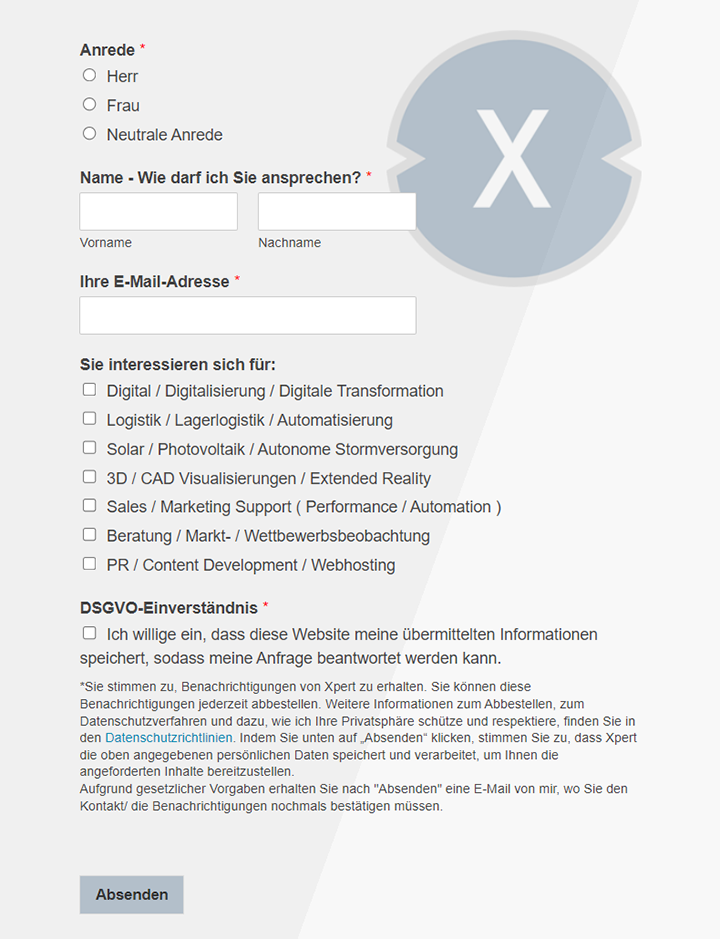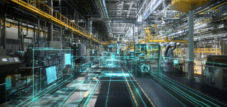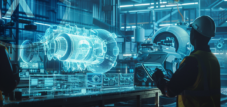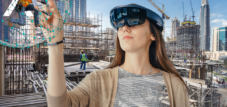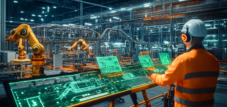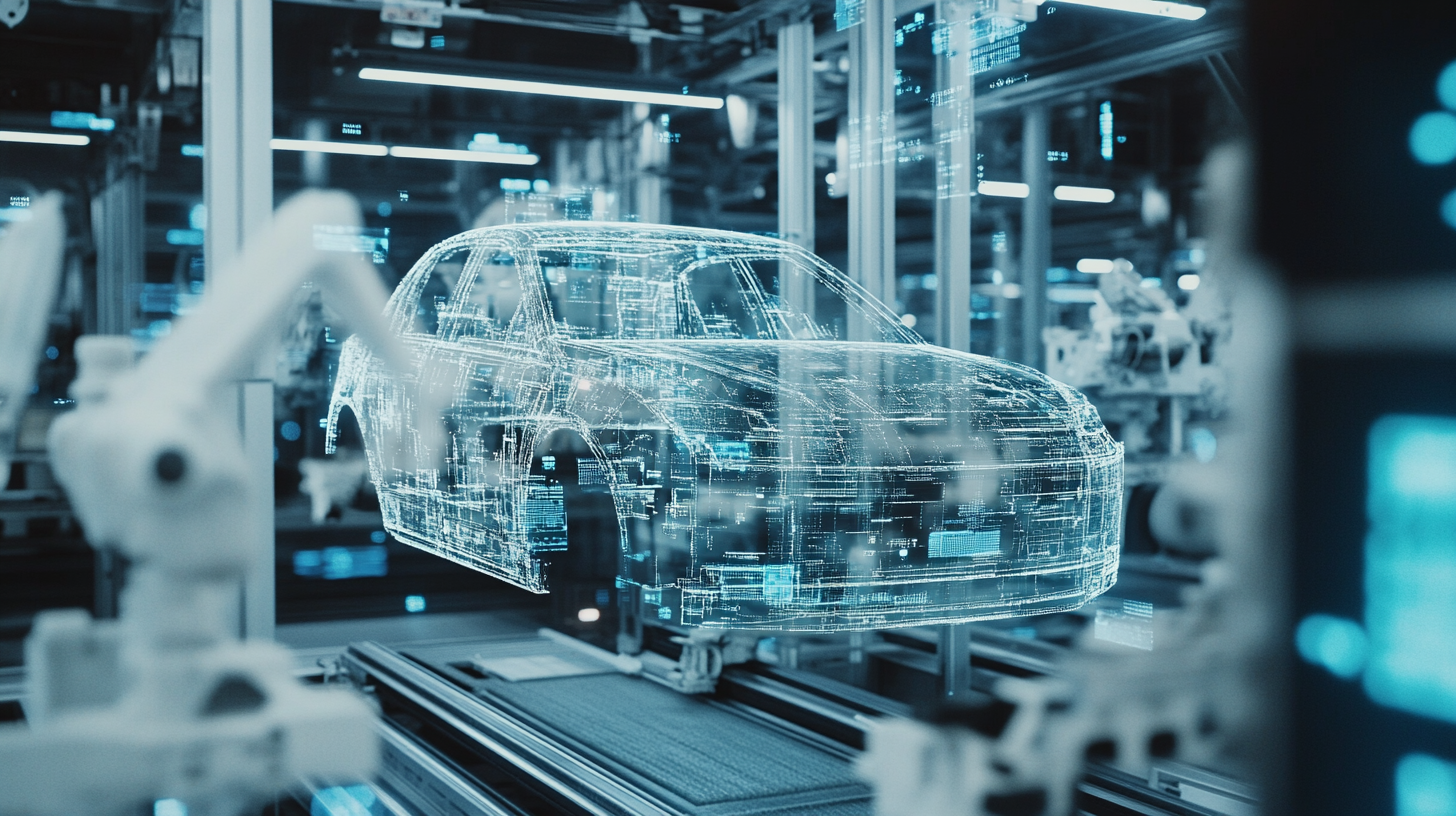
How the Industrial Metaverse is shaping the future of the manufacturing industry – Image: Xpert.Digital
Industry 4.0 meets the Metaverse: A turning point in production (Reading time: 40 min / No advertising / No paywall)
The Industrial Metaverse: A Transformation in the Manufacturing Industry
The manufacturing industry stands on the threshold of a new era, a time of profound change driven relentlessly by the fourth industrial revolution, also known as Industry 4.0. Amidst this era of intelligent networking and advancing automation, innovative technologies are emerging as driving forces with the potential to catapult efficiency, agility, and sustainability to unprecedented heights. These technologies are not merely tools for optimizing existing processes, but rather the architects of a fundamentally new production landscape that will redefine our understanding of manufacturing.
Among these groundbreaking innovations, the industrial metaverse stands out, a vision that holds the promise of revolutionizing the entire manufacturing value chain. It goes far beyond mere automation; it is a paradigm shift that will fundamentally change how products are conceived, developed, manufactured, operated, serviced, and ultimately distributed. Imagine a world where real-world industrial processes and complex production environments can be seamlessly mapped and simulated in an immersive, digital environment. This vision is no longer a distant vision of the future, but a tangible reality that opens entirely new horizons for manufacturing companies and provides them with tools previously unimaginable.
The industrial metaverse is not simply an evolution of existing technologies; it is a fascinating fusion of diverse disciplines and fields of innovation that together form a coherent and powerful system. It combines the immense power of real-time data, high-precision simulations, detailed virtual 3D models, and immersive technologies such as virtual and augmented reality to create a digital representation of the physical world specifically tailored to the complex needs and requirements of the manufacturing industry. This digital representation is not static or passive, but dynamic and interactive; it learns and evolves continuously by synchronizing with real-world processes in real time, thus creating a living, breathing ecosystem.
This report is dedicated to a comprehensive examination of how the industrial metaverse is already shaping the future of the manufacturing industry and the immense opportunities and multifaceted challenges this presents for companies. It argues that the industrial metaverse is not merely a passing trend or fad, but a fundamental and decisive factor for future competitiveness in the global manufacturing industry. Companies that adopt this transformative technology early, strategically integrate it into their business models, and fully exploit its potential will be able to secure a significant competitive advantage and redefine the rules of the game in the industry in the coming years and decades.
To ensure a deep and comprehensive understanding, this report will provide a detailed overview of the industrial metaverse within the specific context of the manufacturing industry. First, the underlying concept will be precisely defined, its essential core features explained in detail, and distinguished from related but different concepts. Subsequently, current, practical use cases in various key areas of manufacturing will be examined and illustrated with concrete examples and real-world scenarios. These use cases include product design and development, optimization of manufacturing processes and production lines, transformation of maintenance and repair, and innovative approaches to employee training and development.
Furthermore, the report will analyze how the industrial metaverse could fundamentally change future production processes. This includes a detailed examination of the vision of smart factories enabled by the metaverse, the seamless integration of collaborative robotics into production environments revolutionized by immersive interfaces, and the transformative use of real-time data analytics and predictive models for comprehensive process optimization and decision-making.
The report will also highlight the numerous potential benefits of the industrial metaverse for manufacturing companies, such as significantly increasing efficiency across all areas of production, sustainably reducing costs through optimized processes and resource utilization, improving collaboration and communication across geographical boundaries, and accelerating innovation cycles and shortening time-to-market for new products. At the same time, however, it will not ignore the inevitable challenges and potential obstacles to a widespread and successful adoption of the industrial metaverse. These include technological complexity and integration difficulties, critical security concerns and the protection of sensitive production data, the need for highly skilled personnel, and the necessity of substantial investments in training and infrastructure.
This report will place particular emphasis on how the industrial metaverse can transform and improve the way companies collaborate and communicate internally, and how it can revolutionize relationships and processes along the entire complex supply chain. The networking and data-sharing opportunities offered by the metaverse promise a new era of transparency and efficiency in global value networks.
Finally, the report will present concrete examples of companies that have already successfully integrated industrial metaverse technologies into their operations. These detailed case studies will analyze and present their practical experiences, the measurable results achieved, and the valuable insights gained. In addition, the well-founded opinions of recognized industry experts and experienced analysts on the future role and long-term disruptive potential of this technology will be compiled and critically evaluated to provide a sound outlook on the further development of the industrial metaverse in the manufacturing industry and to support companies in their strategic decision-making.
Related to this:

Fundamentals of the industrial metaverse: Definition and key features in detail
To fully understand the concept of the industrial metaverse, it is essential to first establish a precise definition and examine its key characteristics in detail. The industrial metaverse can be defined as a highly sophisticated digital environment specifically designed for the complex and multifaceted applications of the manufacturing industry. Its primary objective is to seamlessly merge the physical reality of production with the virtual world of digital possibilities, creating a hybrid ecosystem unparalleled in its power and flexibility.
At its core, the industrial metaverse leverages the advanced technologies and paradigms of Industry 4.0 to enable a carefully curated and highly integrated blend of real and digital manufacturing processes. In this hybrid space, real-time data from physical production, highly accurate simulations of complex processes, and detailed virtual 3D models of products, machines, and factories interact in a dynamic and reciprocal relationship. Essentially, it represents the realization of the concept of a persistent virtual world that accurately and in real time reflects and simulates not just individual machines or production lines, but entire factories, industrial plants, complex buildings, and even entire urban industrial areas, as well as extensive networks and critical infrastructure systems.
This digital representation is not ephemeral or temporary, but persistent, meaning it exists permanently and evolves continuously, parallel to the physical world. It enables the synchronous interaction of a virtually unlimited number of people—from engineers and designers to production staff and managers, as well as external partners and customers—and digital assets such as machines, robots, sensors, and data streams, all at once. This provides complete immersion in a physics-based, highly realistic, photorealistic, and, above all, real-time simulation. This immersion is not limited to the visual level but can also include haptic and auditory elements to create the most comprehensive, multisensory, and therefore realistic experience possible.
Key features of the industrial metaverse in the manufacturing industry include immersive 3D environments that enable intuitive and natural interaction with complex data, processes, and systems. Instead of struggling through cumbersome spreadsheets, complex diagrams, and abstract data visualizations, users in these immersive environments can visually capture data, manipulate it spatially, and understand it within its three-dimensional context. This not only fosters a deeper understanding of complex relationships but also accelerates decision-making and improves communication between different stakeholders.
The seamless integration and comprehensive analysis of real-time data from the physical world is another key and indispensable feature of the industrial metaverse. This data, captured in real time from a variety of sources—from IoT sensors on machines and equipment to production control systems and quality control systems—forms the basis for creating and continuously updating accurate digital twins. This enables companies to make informed decisions based not on historical data or assumptions, but on current and valid information from ongoing production operations.
The ability to simulate and test various scenarios, process changes, design variants, and even disruptive events in detail within a risk-free, virtual environment is of immense strategic importance for process optimization, risk minimization, and increased innovation. This allows companies to conduct "what-if" analyses, quantify the impact of potential changes in advance, identify bottlenecks and weaknesses, and develop validated optimization strategies before implementing costly and potentially risky changes in real-world production.
Furthermore, the industrial metaverse supports and promotes location-independent collaboration across geographical boundaries to an unprecedented degree. Teams from different departments, plants, and even continents can work simultaneously and collaboratively on projects in the same persistent virtual environment, sharing knowledge and expertise, solving complex problems together, and making decisions in real time, as if they were physically in the same room. This revolutionizes global collaboration in the manufacturing industry and enables companies to access a global pool of talent and resources.
The persistence of digital representations, which remain continuously connected to and synchronized with the physical world in real time, is another defining characteristic of the industrial metaverse. Changes and events in the real world, such as machine downtime, quality deviations, or changes in the supply chain, are reflected immediately and without delay in the digital twin, and vice versa. This bidirectional synchronization enables dynamic and adaptive control of production in real time and creates a basis for predictive and preventive measures.
In addition, the industrial metaverse offers the unique opportunity for the simultaneous interaction of a very large number of users and digital assets. This opens up entirely new possibilities for complex simulations, large-scale training scenarios, and collaborative problem-solving that would be difficult or impossible to achieve in traditional, isolated environments.
These core features demonstrate that the industrial metaverse is far more than just advanced visualization technology or a collection of individual applications. It is a comprehensive, integrated, and transformative platform for simulation, collaboration, decision-making, innovation, and operational excellence in the modern manufacturing industry. The ability to perform real-time simulation, risk-free scenario testing, and immersive collaboration points to a fundamental paradigm shift—from reactive, error-driven approaches in manufacturing to proactive, data-driven, and preventative strategies, particularly in critical areas such as maintenance, quality management, production planning, risk management, and product development. It enables companies not only to react to problems but also to anticipate and prevent them, and to continuously optimize their processes to thrive in an increasingly competitive global market.
The driving technologies: A complex interplay of innovations
The industrial metaverse is not a monolithic technology, but rather a complex and dynamic ecosystem based on a fascinating interplay of various advanced technologies and innovative concepts. At the heart of this technological framework are digital twins, which play a fundamental and indispensable role. A digital twin is essentially a dynamic, highly accurate, and virtual representation of a physical asset, process, system, or even an entire organization. This virtual replica is more than just a static 3D model; it is a living, breathing digital image that receives, processes, and analyzes data from the physical world in real time to accurately reflect the behavior, performance, and condition of its real-world counterpart.
This virtual representation enables companies to monitor the real-world counterpart in real time, test detailed scenarios, optimize complex processes, accurately predict future states, and make informed decisions based on valid data. Digital twins form the indispensable foundation for a multitude of applications within the industrial metaverse, as they provide the crucial, bidirectional bridge between the real and virtual worlds, enabling seamless integration. The quality, accuracy, and value of a digital twin depend significantly on the quality, timeliness, completeness, and relevance of the data collected and processed. The more precise, up-to-date, and comprehensive the data, the more realistic, meaningful, and valuable the digital twin is for analysis, simulation, and decision-making.
Augmented Reality (AR) and Virtual Reality (VR) are further key technologies that are significantly shaping the industrial metaverse and revolutionizing how people interact with digital information and virtual environments. AR overlays digital information, virtual elements, and interactive instructions onto the real world, providing context-aware, interactive, and intuitive support for a wide range of tasks and applications. In the manufacturing industry, for example, AR can be used to display detailed step-by-step instructions directly in the field of vision of maintenance technicians, to visualize and simplify assembly processes, to assist logistics staff with picking and locating parts, or to enable designers and engineers to visualize and evaluate virtual prototypes in the real production environment.
VR, on the other hand, creates fully immersive, computer-generated virtual environments that allow users to fully immerse themselves in digital worlds, interact with them, and move around within them as if they were physically present. VR technology is essential for areas such as comprehensive and realistic employee training in simulated production environments, effective remote support by experts who can virtually log into the production environment, the intuitive visualization and exploration of complex data and processes in 3D environments, and collaborative product development and design review in virtual meeting rooms. AR and VR offer different but complementary possibilities for interacting with the industrial metaverse and the real world. The ease of use, comfort, intuitive operation, and above all, the graphic quality and realism of AR/VR experiences are crucial for widespread acceptance and tangible, measurable benefits in demanding industrial applications.
The Internet of Things (IoT) plays a fundamental and pivotal role in the industrial metaverse by connecting physical devices, machines, systems, sensors, control systems, and IT systems, enabling the continuous, bidirectional collection, transmission, processing, and analysis of data in real time. IoT sensors, placed at various points in the production environment—from individual machine components and production lines to warehouses and logistics vehicles—provide the real-time data essential for creating, dynamically updating, and continuously improving digital twins, as well as for detailed analyses, predictive models, and automated control functions. IoT thus forms the sensory foundation, the nervous system, and the data pipeline of the industrial metaverse, delivering the necessary information that enables its functionality, intelligence, and value. The scalability, reliability, robustness, energy efficiency, data security, and, above all, the interoperability of IoT infrastructures are crucial for the successful, sustainable, and long-term deployment of IoT in the industrial metaverse within complex and critical production environments.
Artificial intelligence (AI) and machine learning (ML) are essential, transformative technologies for efficiently, intelligently, and in real time analyzing the immense and ever-increasing volumes of data generated, collected, and transmitted in the industrial metaverse, and transforming this data into valuable, actionable insights. AI and ML algorithms assist in the automatic and precise pattern recognition of complex and heterogeneous datasets, the performance of predictive maintenance through the early identification of anomalies, potential failures, and impending quality defects, the optimization of complex production processes through intelligent algorithms, the automation of decisions, and the personalization of user experiences in the metaverse. AI and ML refine the raw data from the industrial metaverse into intelligent information, enabling data-driven automation solutions that go far beyond traditional rule-based automation and opening up new possibilities for autonomous systems and self-optimizing production processes. The development, implementation, validation, continuous improvement and ethical application of AI and ML models requires specific expertise, a robust and high-quality data basis, careful model selection and training processes, and transparent and comprehensible decision-making to ensure reliable, accurate, fair and trustworthy results.
In addition to these core technologies, cloud computing, 5G connectivity, and blockchain also contribute significantly to the functionality, performance, scalability, security, and cost-effectiveness of the industrial metaverse. Cloud computing provides the necessary scalable, flexible, and cost-efficient computing power, storage capacity, data infrastructure, and platform services for the data-intensive applications, complex simulations, immersive environments, and global collaboration platforms within the metaverse. 5G mobile technology enables extremely fast, reliable, low-latency, and secure high-bandwidth wireless data transmission, which is essential for real-time applications, immersive experiences, mobile AR/VR applications, and the wireless networking of a wide variety of devices, sensors, and systems in industrial environments. Blockchain technology, originally developed for cryptocurrencies, can be used for the secure, transparent, tamper-proof and decentralized management of data, digital identities, virtual assets, transactions, contracts and intellectual property in the industrial metaverse, particularly with regard to data security, traceability, supply chain management, authentication, access control and the management of digital rights.
The successful interplay, seamless integration, interoperability, and standardization of these diverse, highly specialized technologies are crucial for realizing the comprehensive vision of the industrial metaverse and unleashing its full disruptive potential in the manufacturing industry. However, overcoming the technical, organizational, and economic challenges associated with integrating these complex technologies is a prerequisite for widespread adoption, sustainable development, and an open, accessible, and interoperable industrial metaverse ecosystem from which all stakeholders in the manufacturing industry can benefit.
🎯🎯🎯 Benefit from Xpert.Digital's extensive, five-fold expertise in one comprehensive service package | BD, R&D, XR, PR & Digital Visibility Optimization

Benefit from Xpert.Digital's extensive, five-fold expertise in a comprehensive service package | R&D, XR, PR & Digital Visibility Optimization - Image: Xpert.Digital
Xpert.Digital possesses in-depth knowledge across various industries. This allows us to develop tailored strategies precisely aligned with the requirements and challenges of your specific market segment. By continuously analyzing market trends and monitoring industry developments, we can act proactively and offer innovative solutions. The combination of experience and expertise generates added value and provides our clients with a decisive competitive advantage.
More information here:
Industrial Metaverse: How manufacturing benefits from virtual innovations
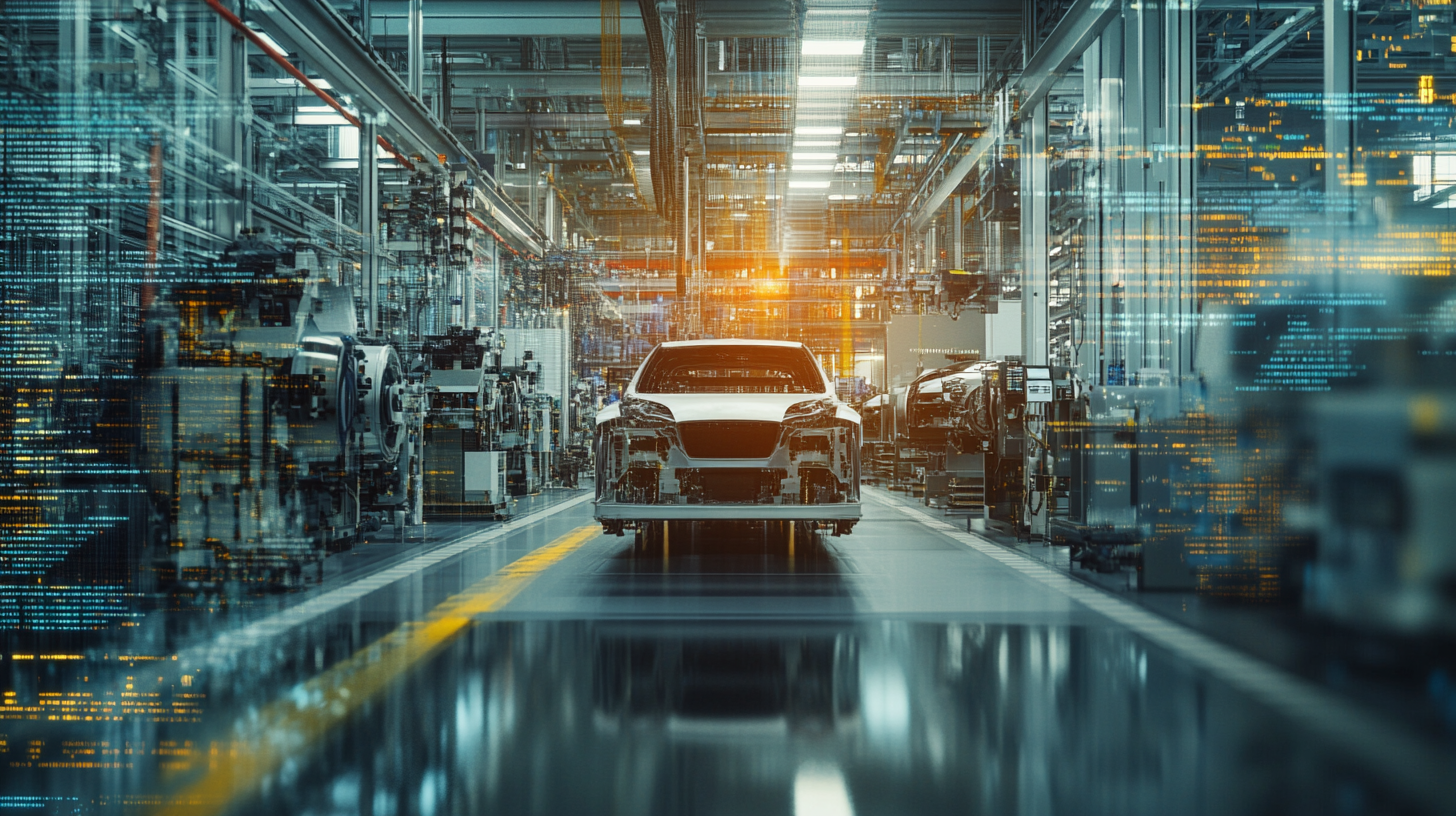
Current use cases of the industrial metaverse in manufacturing: Concrete examples and scenarios – Image: Xpert.Digital
Current use cases of the industrial metaverse in manufacturing: Concrete examples and scenarios
The industrial metaverse is no longer a distant vision of the future or a purely theoretical concept, but a tangible reality in many advanced areas of the manufacturing industry. A steadily growing number of practical applications are already being successfully implemented, are in the pilot phase, or are about to be launched. These real-world examples impressively demonstrate the enormous transformative potential of this technology and show how it is already solving concrete problems, optimizing processes, and opening up new opportunities for manufacturing companies.
Revolutionizing product design and prototype development: Virtual innovation and efficiency
The industrial metaverse is fundamentally and sustainably revolutionizing product design and prototype development in the manufacturing industry. It enables designers and engineers to create, visualize, simulate, and comprehensively test products in an immersive, collaborative, and highly realistic virtual environment, even before a single physical prototype exists. This virtual design and development environment often eliminates the need for physical prototypes or at least drastically reduces their number, complexity, and development time.
By creating and realistically testing virtual prototypes interactively in an immersive environment, companies can identify, analyze, and cost-effectively resolve design flaws, functional weaknesses, ergonomic problems, and potential production challenges early in the development process, before a physical prototype is even built or series production begins. This early error detection, the ability to quickly and iteratively test and compare different design variants, material options, production processes, and functional parameters, leads to a significant reduction in development time, associated costs, and the risk of costly rework or recalls later in the product lifecycle.
Furthermore, the industrial metaverse improves communication, collaboration, and understanding between different disciplines and departments in the product development process. The ability to experience, discuss, collaboratively edit, and view designs from various perspectives in a collaborative, virtual 3D environment fosters interdisciplinary collaboration between designers, engineers, production planners, marketing experts, sales staff, and even potential customers and end users. This improved communication and shared understanding lead to better design decisions, more innovative product concepts, and greater customer satisfaction.
Virtual prototyping in the industrial metaverse also promotes more sustainable practices and environmentally friendly product development processes, as fewer physical resources, raw materials, energy, and time are needed for the creation, transport, and disposal of physical prototypes. This reduces the ecological footprint of product development and contributes to a more resource-efficient and circular economy. Companies can use virtual material libraries to simulate different materials and their environmental impacts and conduct virtual life cycle analyses to optimize the sustainability of their products as early as the design phase.
Optimization of manufacturing processes and production lines: Increased efficiency through digital simulation
Another important and promising use case for the industrial metaverse is the comprehensive optimization of complex manufacturing processes, production lines, and entire factories. By creating highly accurate digital twins of production facilities, individual machines, complete factories, and entire production processes, companies can simulate, analyze, monitor, and optimize their operations in detail within an immersive, interactive, and dynamic virtual environment, without impacting or interrupting ongoing production.
These detailed simulations make it possible to identify, quantify, and visualize bottlenecks, inefficiencies, waste, potential vulnerabilities, security risks, and optimization potential in production processes. Companies can virtually test, validate, and compare various scenarios, process parameters, layout changes, automation strategies, and resource deployment plans before implementing costly and potentially disruptive changes in the real production environment. This leads to improved resource utilization, reduced scrap, rework, and waste, higher product quality, increased production speed, reduced lead times, and a significant increase in overall manufacturing efficiency and productivity.
The seamless integration of real-time data from physical production into digital twins enables continuous, data-driven monitoring and dynamic adjustment of processes in real time. Production managers and employees can visualize the current state of production in the virtual environment, track key performance indicators (KPIs) in real time, detect anomalies and deviations early, analyze their causes, and immediately initiate corrective actions. This real-time transparency and data-driven decision-making lead to proactive production control, faster response times to changes and disruptions, continuous process improvement, and a sustainable reduction in operating costs.
The industrial metaverse also enables the virtual commissioning and optimization of new production lines and factories. Companies can fully plan, design, simulate, and commission new production facilities virtually before the first sod is turned in the real world. This reduces planning times, minimizes the risk of planning errors and costly rework during the construction phase, and accelerates the commissioning and ramp-up phase of new production capacities. Through virtual training and workshops within the metaverse, employees can become familiar with the new facilities and processes even before physical commissioning, thus facilitating a smooth transition from virtual to real-world production.
Related to this:

Transformation of maintenance and repair through remote solutions and predictive analytics
The industrial metaverse is also transforming maintenance and repair in the manufacturing industry from a reactive, fault-fixing approach to a proactive, preventive, and data-driven model. Through the continuous collection, analysis, and interpretation of real-time data gathered by digital twins, IoT sensors, and condition monitoring systems, companies can develop, implement, and continuously improve predictive maintenance strategies. These predictive models enable the early forecasting of potential machine failures, impending component failures, and maintenance needs, long before unplanned downtime or costly production interruptions occur.
In the event of malfunctions, unexpected events, or complex technical problems, experienced maintenance experts and specialists can remotely access the digital twins of the affected machines, systems, or production lines. This allows them to perform detailed diagnoses, analyze the root causes of errors, develop repair strategies, and provide precise troubleshooting instructions to on-site technicians, all without needing to be physically present. Augmented Reality (AR) can be used to display visual support, interactive instructions, circuit diagrams, exploded views, and other important information directly in the field of vision of on-site technicians. This simplifies and accelerates repair processes, reduces the risk of operator error, and significantly increases the efficiency of maintenance work.
These remote maintenance solutions lead to a significant reduction in unplanned downtime, repair costs, travel expenses, and response times. They also contribute to increased plant availability, production continuity, workplace safety, and sustainability by reducing unnecessary travel costs and the associated carbon footprint. Predictive maintenance in the industrial metaverse enables companies to optimally plan maintenance work, use resources efficiently, procure spare parts in a timely manner, and extend the lifespan of machinery and equipment.
Advanced training and development programs for employees: Immersive learning experiences for the manufacturing of the future
The industrial metaverse also opens up advanced, innovative, and highly effective opportunities for the training, further education, and skills development of employees in the manufacturing industry. Immersive VR training in safe, realistic, and interactive simulated environments enables employees to learn complex tasks, understand critical production processes, practice using new technologies, and rehearse hazardous work scenarios without taking real risks, disrupting ongoing production, or damaging expensive equipment.
Training courses can be conducted on virtual replicas of real machines, systems, production lines, and factories, enabling an authentic, hands-on, and, above all, safe learning experience. VR training allows for repeated, interactive practice, immediate personalized feedback, individualized learning paths, and the simulation of rare but critical events and emergency situations. This leads to improved knowledge transfer, better knowledge retention, faster skills development, increased employee motivation, and more effective preparation for real-world work situations.
VR training in the industrial metaverse accelerates the onboarding of new employees, improves skills development across the entire company, and significantly contributes to increased workplace safety, reduced accidents, and improved production quality. It enables companies to standardize training content, improve the consistency of training quality, reduce the effort required to create and update training materials, and minimize the need for experienced on-site trainers, potentially leading to substantial cost savings and efficiency gains in employee training and development.
The future of production: The industrial metaverse as a pioneer for Industry 5.0 and more
The industrial metaverse is not just a collection of individual applications, but rather a transformative platform that has the potential to fundamentally change the entire manufacturing industry and pave the way for future production paradigms such as Industry 5.0 and beyond.
Smart factories and the integration of autonomous systems: The factory of the future in the metaverse
The industrial metaverse serves as a central, integrative, and dynamic platform for controlling, monitoring, optimizing, and advancing the smart factories of the future. It enables the seamless integration of IoT sensors, robotics, artificial intelligence, cloud computing, edge computing, and other advanced technologies within a shared, persistent, and interactive virtual environment. By creating comprehensive digital twins of the entire factory—from individual machines and production lines to logistics systems, power supply, and building technology—companies can simulate, analyze, optimize, and validate the complex interplay of autonomous systems, connected devices, and human workers in a virtual environment before deploying, implementing, or modifying them in the real world.
This enables a holistic, systemic view of the smart factory and optimizes the interaction of its individual components and subsystems. Virtual testing of new automation solutions, production processes, layout changes, and energy efficiency measures in this risk-free environment significantly reduces risks, costs, planning times, and implementation efforts during actual physical implementation. The industrial metaverse becomes the digital nerve center of the smart factory, collecting, analyzing, visualizing, and utilizing real-time data to intelligently control autonomous systems, continuously optimize production processes, manage resources efficiently, ensure quality, and increase production resilience against disruptions and unexpected events.
Related to this:
Collaborative robotics and human-robot interaction in new dimensions: symbiosis of humans and machines
The industrial metaverse opens up entirely new dimensions in human-robot collaboration in the manufacturing industry. Immersive, intuitive, and safe interfaces enabled by VR and AR are revolutionizing human-robot interaction (HRC) and making collaborative robotics more accessible, efficient, and versatile. Robots can be remotely controlled, programmed, monitored, and maintained in virtual space, increasing flexibility, efficiency, and safety in production. Production workers can interact with robots in the virtual environment, perform tasks together, precisely control robot movements, and intuitively program complex workflows without requiring specialized programming knowledge.
Furthermore, comprehensive safety training for the safe handling of collaborative robots and human-robot collaboration (HRC) systems can be conducted in immersive VR environments. In these virtual scenarios, employees can practice the safe operation of robots, simulate potential hazardous situations, train in emergency procedures, and optimally prepare for real-world collaboration with robots to prevent accidents, injuries, and production downtime. The industrial metaverse offers the ideal platform for developing, testing, optimizing, and safely and efficiently deploying new forms of human-robot collaboration in real-world production environments. It paves the way for a closer symbiosis between humans and machines in the manufacturing of the future, where robots act not only as isolated automation solutions but as intelligent, collaborative partners of humans.
Real-time data analysis and predictive insights for optimized processes: Data-driven decisions in real time
The industrial metaverse enables the intuitive and comprehensive visualization of real-time production data in immersive 3D environments. Complex data streams, production metrics, quality data, sensor data, logistics information, and machine status data are captured, processed, and presented in a visually appealing and easily understandable format within the metaverse. Production managers, engineers, and employees can capture, analyze, interpret, and utilize this data within its spatial and procedural context to make informed decisions in real time.
By using artificial intelligence (AI) and machine learning (ML), patterns, trends, anomalies, and correlations in these vast datasets can be automatically identified, and future events, such as machine failures, quality deviations, supply chain bottlenecks, or demand fluctuations, can be accurately predicted. This enables, for example, predictive maintenance of machinery and equipment, minimizing unplanned downtime, reducing maintenance costs, and maximizing equipment utilization. Supply chain optimization, inventory management, adapting production planning to current demand, and the early detection of quality defects also benefit significantly from the real-time transparency, predictive insights, and data-driven decision-making processes enabled by the industrial metaverse. The ability to perform predictive analytics and real-time decision-making empowers companies to proactively address potential problems and challenges, continuously improve their operations, strengthen their resilience, and sustainably secure their competitiveness in a dynamic and complex market environment.
Potential benefits of the industrial metaverse for the manufacturing industry: An overview
The introduction and consistent use of the industrial metaverse in the manufacturing industry holds immense potential for diverse and significant advantages that can give companies a decisive competitive edge.
Significant efficiency gains and productivity increases: More output with fewer resources
The industrial metaverse offers the potential for significant efficiency gains and productivity increases in virtually all areas of the manufacturing industry. By optimizing production processes, improving resource utilization, reducing waste, and minimizing downtime, companies can significantly increase their overall efficiency and achieve higher output with fewer resources. Reducing unplanned downtime through predictive maintenance, accelerating processes through virtual simulation and optimization, and more effective employee training and development all contribute significantly to higher production capacities, shorter lead times, lower unit costs, and overall increased productivity. The combination of optimized processes, predictive maintenance, skilled employees, and data-driven decision-making leads to holistic and sustainable productivity gains, giving companies a decisive advantage in a highly competitive market environment.
Sustainable cost reduction and resource optimization: Economic efficiency and environmental responsibility
The industrial metaverse offers significant opportunities for cost reduction in various areas of manufacturing while simultaneously contributing to resource optimization and environmental sustainability. Reducing the costs of developing physical prototypes through the increased use of virtual prototypes, saving on travel expenses through remote collaboration, remote maintenance, and virtual training, reducing downtime through predictive maintenance, optimizing energy consumption through virtual simulation, and reducing material waste through improved process control are just a few examples of the diverse cost-saving potential. Furthermore, the industrial metaverse enables the optimization of energy consumption in production processes, the reduction of material waste, the promotion of the circular economy, and the development of more sustainable products and production methods. The resource efficiency enabled by this technology is therefore a double win for companies: it reduces costs while simultaneously contributing to environmental sustainability and meeting increasing environmental regulations and customer expectations.
Improved collaboration and communication across geographical boundaries: Global teams, local expertise
The industrial metaverse transcends geographical barriers, enabling improved, more efficient, and more effective collaboration and communication across different locations, departments, companies, and continents. Virtual workspaces provide a shared, immersive platform for teams to collaborate on design, development, engineering, and production projects, regardless of their physical location. Experts in different locations can collaborate in real time, share their knowledge and expertise, solve complex problems together, make decisions faster, and jointly develop innovative ideas. Communication and coordination along the entire supply chain, with suppliers, partners, and customers, are also significantly enhanced through the increased transparency, improved information flow, and opportunities for virtual interaction and data exchange within the metaverse. The immersive, interactive, and collaborative nature of the industrial metaverse can significantly improve the quality of communication, mutual understanding, teamwork, and innovation in distributed, global teams, enabling companies to access a global pool of talent, resources, and expertise.
Accelerated innovation cycles and faster market launch of new products: Innovation at the speed of light
The industrial metaverse significantly accelerates the innovation process in the manufacturing industry, enabling faster innovation cycles and shorter time-to-market for new products and services. Faster cycles for product development, prototyping, and testing are facilitated by virtual design, simulation, and testing environments. Designs, production processes, and new technologies can be validated, optimized, and tested virtually before significant investments in physical implementation are required. The more efficient collaboration in innovation projects fostered by the industrial metaverse, along with faster information exchange, improved communication, and the ability to work simultaneously on complex projects virtually, also contribute to faster innovation cycles, shorter development times, and accelerated time-to-market for new products and services. The ability to virtually test, validate, and iterate new product ideas, innovative manufacturing methods, and disruptive business models reduces the risk of development failures, minimizes investment risks, and accelerates the entire innovation process. This allows companies to respond more quickly to market changes, meet new customer needs, and secure their competitiveness through continuous innovation.
Our recommendation: 🌍 Limitless reach 🔗 Connected 🌐 Multilingual 💪 Sales power: 💡 Authentic with strategy 🚀 Innovation meets 🧠 Intuition


From local to global: SMEs conquer the world market with a clever strategy - Image: Xpert.Digital
In an era where a company's digital presence determines its success, the challenge lies in creating an authentic, personalized, and far-reaching presence. Xpert.Digital offers an innovative solution that positions itself as the intersection of an industry hub, a blog, and a brand ambassador. It combines the advantages of communication and sales channels in a single platform and enables publication in 18 different languages. Cooperation with partner portals and the ability to publish articles on Google News and a press distribution list with approximately 8,000 journalists and readers maximize the reach and visibility of the content. This represents a crucial factor in external sales and marketing (SMarketing).
More information here:
Avoiding pitfalls: Difficulties in implementing the industrial metaverse
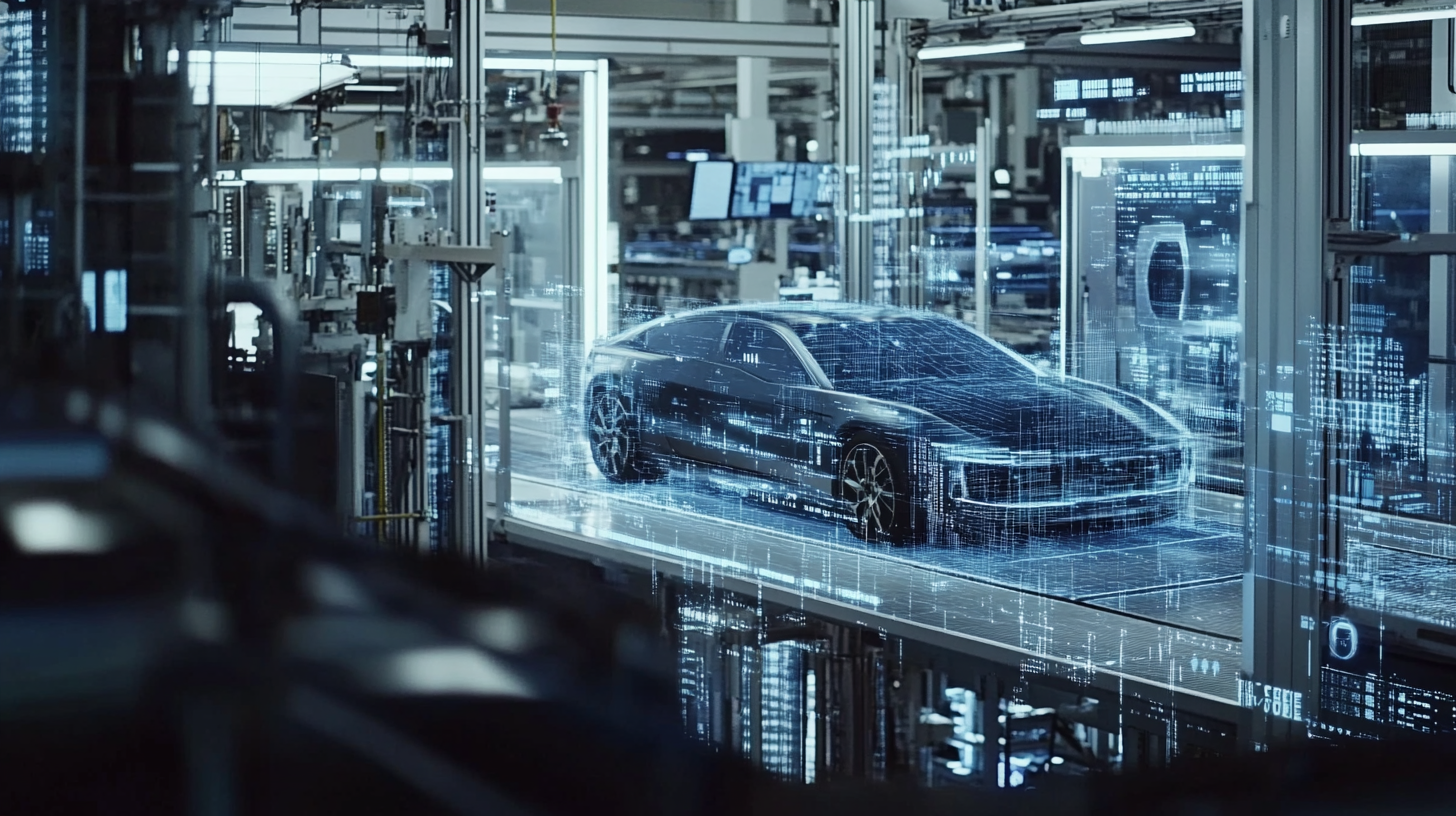
Avoiding pitfalls: Difficulties in implementing the industrial metaverse – Image: Xpert.Digital
Challenges and obstacles to widespread adoption: stumbling blocks on the road to the metaverse
Although the industrial metaverse holds enormous potential for the manufacturing industry, there are also significant challenges and obstacles that can hinder the widespread and successful implementation of this technology in practice, and which companies must carefully consider.
Technological limitations and the need for robust infrastructures: Creating the technological basis
The widespread adoption of the industrial metaverse in the manufacturing industry is associated with various technological challenges and limitations. These include the often high initial implementation costs for the necessary hardware, software, infrastructure, and expertise. The technical complexity of the industrial metaverse, the need to integrate various technologies (IoT, AI, AR/VR, cloud, 5G, etc.), and the difficulties in seamlessly integrating the metaverse into existing, potentially legacy IT systems and production environments also pose a significant hurdle for many companies. For the data-intensive applications, complex simulations, immersive experiences, and real-time applications of the industrial metaverse, a high-performance, reliable, and scalable computing infrastructure (cloud and edge computing) as well as robust, low-latency, and secure network connectivity (5G, fiber optics) are essential. Furthermore, interoperability issues often exist between different metaverse platforms, software solutions, data systems, and the underlying technologies. However, ensuring interoperability, standardization and open interfaces is crucial for widespread acceptance, seamless data exchange between different systems, avoiding vendor lock-in and creating an open and dynamic metaverse ecosystem.
Critical security concerns and the protection of sensitive data: Security comes first
Another key and urgent concern with the adoption of the industrial metaverse is the critical security implications and comprehensive protection of sensitive production data, trade secrets, and intellectual property. Virtual environments generate, store, process, and exchange highly sensitive production data, design information, process parameters, quality data, customer information, and other confidential data. This data must be comprehensively protected against unauthorized access, manipulation, theft, cyberattacks, and data loss. The interconnectedness of the physical and virtual worlds, the integration of external partners and service providers into the metaverse, and the increasing use of cloud-based metaverse platforms expand the attack surface for cybercriminals and increase potential security risks. To comprehensively protect their data, systems, and processes within the industrial metaverse, companies must implement robust security measures, comprehensive security architectures, strict access controls, encryption technologies, regular security audits, and continuous security updates. Companies must ensure their data is protected against unauthorized access, manipulation, industrial espionage, sabotage, and the diverse threats present in the digital realm. The development and implementation of robust security strategies, adherence to strict data protection guidelines, and continuous monitoring of the security posture are essential to strengthen trust in the industrial metaverse and ensure its secure use. Security concerns must not become a hindrance to innovation, but rather be considered and proactively addressed from the outset as an integral part of the metaverse strategy.
The need for qualified specialists and investments in further education: Skills for the Metaverse Era
The successful introduction, implementation, use, and further development of the industrial metaverse requires qualified professionals with specific and emerging skills in various fields. Currently, many companies are experiencing a shortage of experts with in-depth knowledge and practical experience in key technologies such as augmented and virtual reality, artificial intelligence, machine learning, the Internet of Things, cloud computing, 5G connectivity, data security, 3D modeling, simulation technology, software development for immersive environments, and metaverse platforms.
To address this skills gap and fully leverage the potential of the industrial metaverse, substantial investment in training and development programs for existing employees is essential. Companies must systematically prepare their workforce for the demands of the metaverse era by offering targeted training programs that impart technical, methodological, and social skills. These programs should not be limited to IT specialists and engineers but should also include production workers, maintenance technicians, designers, managers, and all other relevant employee groups. It is crucial to foster a corporate culture that embraces lifelong learning, technological innovation, and change, and that recognizes and actively supports the benefits of the industrial metaverse. Establishing internal metaverse centers of excellence, collaborating with external experts and educational institutions, promoting interdisciplinary teams, and facilitating knowledge sharing within the company are key steps to meet the long-term demand for skilled professionals and successfully integrate the industrial metaverse into the organization. The shortage of qualified professionals must not become a bottleneck for the metaverse transformation, but must be overcome through proactive personnel development and targeted investments in further training.
The industrial metaverse as a driver for collaboration and networked value chains: New dimensions of networking
The industrial metaverse is not only a technology for process optimization and efficiency improvement within individual companies, but also a powerful engine for improved collaboration, deeper networking and transformative changes in entire value chains and industrial ecosystems.
Improving internal communication and collaboration through virtual work environments: Working together in immersive worlds
The industrial metaverse creates entirely new possibilities for internal communication, collaboration, and knowledge sharing within manufacturing companies, regardless of geographical location, departmental structures, or hierarchical levels. Shared virtual workspaces, immersive meeting rooms, and collaborative 3D environments enable teams from different departments, plants, and locations to work together efficiently, interactively, and in real time, as if they were physically in the same room. By jointly visualizing data, 3D models, production processes, and project documents in immersive environments, decision-making is accelerated, a shared understanding of complex issues is improved, error rates are reduced, and innovation is boosted. The informal exchange of knowledge, spontaneous ideation, and personal contact between employees are fostered and facilitated by the interactive and collaborative capabilities of the industrial metaverse, even in distributed teams and remote work models. The immersive nature of virtual environments, the ability to use avatars, virtual presence, and spatial audio can significantly improve the sense of social presence, team cohesion, empathy, and the effectiveness of collaboration in distributed teams, overcoming the traditional barriers of geographical distance and digital communication. The industrial metaverse becomes the central hub for virtual collaboration, knowledge sharing, and internal communication within the company, which can sustainably increase efficiency, innovation, and employee satisfaction.
Related to this:
Supply chain transformation through increased transparency and optimized processes: The networked value chain in the metaverse
The industrial metaverse has the potential to fundamentally transform the entire supply chain in the manufacturing industry, turning it into a networked, transparent, resilient, and efficient value chain. By virtually mapping the entire supply chain within the metaverse, companies gain a comprehensive, end-to-end overview of all processes, stakeholders, material flows, inventory levels, production capacities, transportation routes, quality data, and risk factors along the entire chain, from raw material suppliers to the end customer. Real-time monitoring of material flows, production status, inventory levels, and transportation routes is enabled, leading to improved coordination, synchronization, and optimization of processes across the entire chain. This enhanced transparency and faster information exchange allow companies to respond more quickly to disruptions, bottlenecks, demand fluctuations, and unexpected events in the supply chain, manage risks more effectively, reduce inventory costs, shorten lead times, and increase delivery reliability.
The virtual representation of the supply chain in the Metaverse facilitates the identification of weaknesses, inefficiencies, redundancies, and optimization potential across the entire value chain. Companies can virtually simulate, analyze, and validate various scenarios, alternative supply chain configurations, new logistics concepts, and improved cooperation models with suppliers and partners before implementing physical changes in the real-world supply chain. The industrial Metaverse enables closer, more transparent, and more collaborative partnerships with suppliers, logistics providers, production partners, and customers along the entire value chain. Shared virtual platforms and data exchange formats within the Metaverse promote information sharing, joint planning, real-time communication, and transparent traceability of products and materials throughout the entire supply chain. The industrial Metaverse becomes the digital backbone of the connected value chain, capable of sustainably improving the efficiency, resilience, transparency, and sustainability of global supply chains in the manufacturing industry.
Best practices and case studies: Companies that successfully use the industrial metaverse: Learning from practice
The theory of the industrial metaverse is promising, but the true strength and transformative potential of this technology only become apparent in practical application. Numerous companies in various sectors of the manufacturing industry have already begun to successfully implement industrial metaverse technologies, gaining valuable experience and achieving measurable results. Analyzing these best practices and case studies provides valuable insights, inspiration, and practical guidance for other companies considering adopting the industrial metaverse.
Analysis of examples from various sectors of the manufacturing industry: diversity of applications
The applications of the industrial metaverse are diverse and extend across almost all areas of the manufacturing industry, from the automotive industry to aerospace, mechanical engineering, the chemical and pharmaceutical industries, the consumer goods industry, the energy sector, and plant engineering.
In the automotive industry, companies like BMW, Volkswagen, Mercedes-Benz, and numerous suppliers utilize the industrial metaverse for the virtual planning and optimization of new factories, digital product development, virtual prototyping, simulation of production processes, quality assurance, employee training in VR environments, remote maintenance of production facilities, and improved supply chain coordination. The ability to fully plan and simulate new factories and production lines virtually before ground is broken saves time and money and minimizes planning risks. Virtual prototypes accelerate product development and reduce the need for expensive physical prototypes. VR training enables employees to be prepared efficiently and safely for complex production processes and new technologies.
In the aerospace industry, where the highest quality standards and safety requirements apply, the industrial metaverse is used for the virtual design and simulation of complex aircraft components, virtual assembly planning, quality assurance through digital twins, aircraft maintenance and repair with AR support, and the training of pilots and maintenance personnel in VR simulators. The high precision and realism of the industrial metaverse make it possible to analyze, optimize, and validate complex systems and processes in detail before they are implemented in the real world.
In mechanical engineering, companies benefit from remote maintenance solutions enabled by AR and digital twins, the virtual commissioning of new machines and systems, the simulation of production processes, the optimization of machine tools and robots in the metaverse, and the training of machine operators and maintenance technicians in VR environments. The ability to remotely maintain and diagnose machines and systems significantly reduces downtime, travel costs, and response times.
In the chemical and pharmaceutical industries, where complex and safety-critical processes dominate, the industrial metaverse is used for virtual plant design, process simulation, risk analysis, operator training in VR environments, remote monitoring of production processes, and supply chain optimization. The ability to virtually simulate and analyze chemical reactions, production processes, and plant safety contributes to increased plant safety, reduced environmental risks, and optimized production efficiency.
In the consumer goods industry and plant engineering, there are also promising initial applications of the industrial metaverse, for example for virtual factory tours, virtual product presentations, interactive customer experiences, the virtual planning and construction of plants and buildings, the simulation of construction processes and the training of construction workers in VR safety instructions.
These examples demonstrate the diverse applications and cross-industry potential of the industrial metaverse in various industrial contexts. Each industry and company can identify specific use cases that promise the greatest added value and contribute to achieving strategic goals.
Experiences, results and lessons learned: What distinguishes successful companies
Companies successfully implementing the industrial metaverse report a wealth of positive experiences, measurable results, and valuable lessons learned. Siemens, a pioneer in industrial metaverse implementation, uses digital twins to plan and optimize its factories and reports productivity increases of up to 20% in some areas. The company is also developing smart cities as digital twins to further explore the possibilities of this technology and develop innovative solutions to urban challenges. Siemens' experience demonstrates that using digital twins in combination with the industrial metaverse can enable significant efficiency gains, cost savings, and innovation potential.
Vitesco Technologies, an automotive supplier, is using a Metaverse platform to improve efficiency and sustainability in production, shorten time to market for new products, and boost employee engagement. The company reports improved transparency in production processes, faster response to quality issues, and increased employee motivation through the use of immersive technologies.
By virtually simulating a new factory in the Metaverse, BMW was able to identify and resolve potential problems and bottlenecks early on, before physical production began. This resulted in accelerated commissioning, lower start-up costs, and higher production quality from the outset.
HD Hyundai is leveraging the industrial metaverse in conjunction with generative AI to develop new ship products and accelerate innovation cycles. The company benefits from faster prototype development, improved collaboration within distributed design teams, and the ability to virtually test and optimize complex ship designs.
These case studies demonstrate that the industrial metaverse delivers positive results in various application areas and can give companies a competitive advantage. Key lessons learned from these success stories include:
Strategic orientation
The introduction of the industrial metaverse must be strategically aligned and contribute to the achievement of clearly defined business objectives. Pilot projects and proof-of-concepts are important for gathering experience and gradually integrating the technology into processes.
Holistic approach
The industrial metaverse should not be viewed as an isolated, standalone solution, but rather as an integral component of a comprehensive digital transformation strategy. Integration with existing IT systems, production facilities, and data infrastructures is crucial for its success.
Employee-centricity
Employees are key to the success of the industrial metaverse. Investments in further education, training, and change management are essential to promote technology adoption, build skills, and actively involve employees in the transformation process.
Focus on interoperability and security
Interoperability between different metaverse platforms, data systems and technologies, as well as a comprehensive security approach, are crucial for widespread adoption, seamless data exchange and the protection of sensitive data.
Continuous development
The industrial metaverse is a dynamic and rapidly evolving field. Companies must be prepared to continuously learn, adapt, integrate new technologies, and continuously develop their metaverse strategy in order to benefit from the advantages of this technology in the long term.
Related to this:
Expert opinions and outlook on the future of the industrial metaverse: What the future holds
The assessments of industry experts, analysts, and futurologists regarding the further development of the industrial metaverse are predominantly positive and characterized by great optimism. There is widespread agreement that the industrial metaverse holds enormous disruptive potential for the manufacturing industry and will fundamentally change the way we produce, work, and collaborate.
The assessments of industry experts and analysts regarding future developments: Unanimous optimism
Industry experts and analysts unanimously see enormous growth potential and a far-reaching transformation of the manufacturing industry through the industrial metaverse in the coming years and decades. Studies and market forecasts indicate exponential growth of the metaverse market, particularly in the industrial sector. Analyst firms predict that the industrial metaverse market could reach a volume of several billion US dollars by 2030, with some estimates even reaching the hundreds of billions.
Experts emphasize the significant advantages of the industrial metaverse in terms of increased efficiency, cost reduction, improved collaboration, accelerated innovation, enhanced resilience, improved sustainability, and improved employee experiences. They view the industrial metaverse as a revolutionary technology that will improve collaboration within the industrial sector, increase factory productivity, and optimize design processes. They predict a far-reaching transformation of business processes, value chains, and business models in the manufacturing industry through the use of the metaverse.
Many experts are convinced that the industrial metaverse is not just a short-term fad, but a long-term, transformative technology that will fundamentally change the competitive landscape in the manufacturing industry. Companies that invest early in the industrial metaverse, strategically deploy the technology, and develop the necessary skills will secure a decisive competitive advantage and be able to actively shape the future of manufacturing. Those companies that ignore the potential of the metaverse or recognize it too late risk falling behind and being left behind in an increasingly digitalized and interconnected market environment.
Leading technology companies, consulting firms, and industry associations are investing heavily in the development of metaverse technologies, platforms, applications, and ecosystems for the manufacturing industry. They see the industrial metaverse as a key building block for the next phase of digital transformation, Industry 5.0, and the development of resilient, sustainable, and human-centered production systems. The continuous advancement of key technologies such as AI, AR/VR, 5G, cloud computing, and blockchain will further expand the possibilities of the industrial metaverse in the future and amplify its transformative power for the manufacturing industry.
Industry experts and analysts are overwhelmingly optimistic about the industrial metaverse. They see it not just as a passing technology, but as a fundamental transformation that will permanently change the manufacturing industry. For companies, this means they must recognize the potential of the industrial metaverse early on, leverage it strategically, and develop the necessary skills to succeed in this new competitive landscape. Those who act now will secure a decisive advantage and actively shape the future of manufacturing. The industrial metaverse is no longer a future scenario, but the present and future of manufacturing – a future brimming with opportunities.
We are here for you - Consulting - Planning - Implementation - Project Management
Xpert.Digital - Pioneer Business Development
Smart Glasses & AI - XR/AR/VR/MR industry expert
Consumer Metaverse or Metaverse in general
If you have any questions, require further information or advice, please feel free to contact me at any time.

Konrad Wolfenstein
I would be happy to serve as your personal advisor.
You can contact me by filling out the contact form below or simply call me on +49 7348 4088 965 .
I'm looking forward to our joint project.
Write to me


Xpert.Digital - Konrad Wolfenstein
Xpert.Digital is a hub for industry focusing on digitalization, mechanical engineering, logistics/intralogistics and photovoltaics.
With our 360° Business Development solution, we support renowned companies from new business to after-sales.
Market intelligence, smarketing, marketing automation, content development, PR, mail campaigns, personalized social media and lead nurturing are part of our digital tools.
You can find more information at: www.xpert.digital - www.xpert.solar - www.xpert.plus
Keep in touch