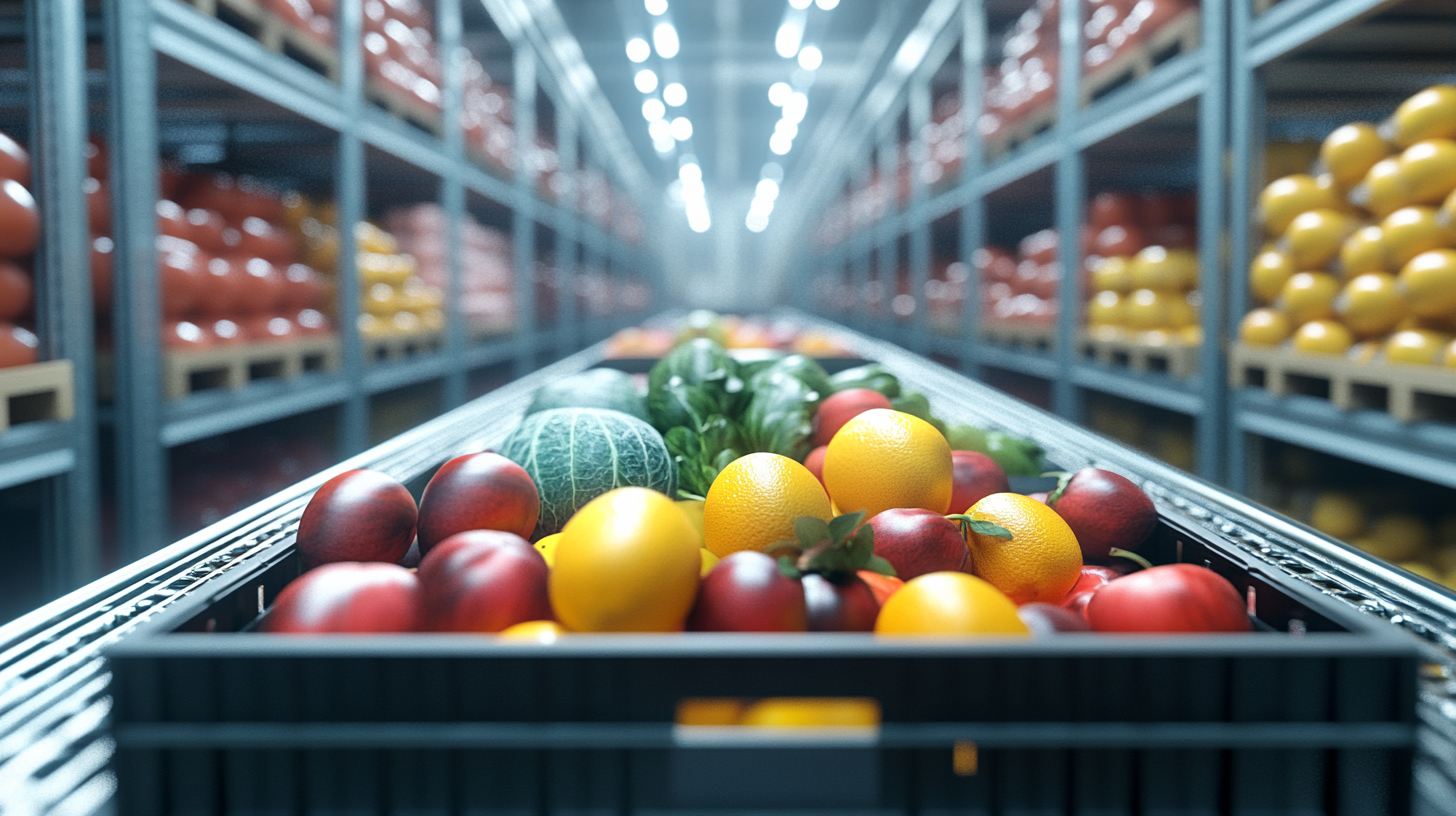
Poor or non-existent cold chain in refrigerated and fresh food logistics: Whether in Africa, Asia (China, India), Latin America or even Europe – Image: Xpert.Digital
🍎🌱🧊 Fresh food logistics and refrigerated logistics worldwide: Challenges and solutions in handling perishable goods
🧺 Fresh and refrigerated logistics play a central role in the global food supply chain. However, reality shows that inadequately functioning cold chains cause significant losses of perishable goods worldwide. According to United Nations estimates, approximately 14% of food is lost each year between harvest and retail due to poor cold chain management. This equates to roughly 526 million tons of food spoiled by inefficient temperature management in the global supply chain.
The loss of perishable goods not only has economic consequences, but also jeopardizes food security and exacerbates environmental problems. This is because these losses also mean that resources such as water, energy, and labor are wasted without the benefit reaching consumers.
❄️ The importance of functioning cold chains
A functioning cold chain is essential to guarantee the quality and safety of food. Particularly in developing countries, a lack of or inefficient cold chain infrastructure leads to significant losses that affect the entire value chain.
Investing in modern refrigeration technologies and optimized logistics systems could significantly reduce food waste. However, this requires not only financial resources, but also technical expertise, robust infrastructure, and close cooperation between governments, the private sector, and international organizations.
🌍 Challenges and impacts in different regions
🌾 Africa: A continent with enormous potential and major challenges
In Africa, up to 40% of perishable goods are lost before reaching the end consumer. Small producers, who often lack access to refrigeration, are particularly affected. These losses hinder economic development, not only reducing farmers' profits but also jeopardizing food supplies and food security.
One example is Nigeria, where immense quantities of food spoil every year. The causes are inadequate infrastructure, a lack of cold storage facilities, and insufficient technical expertise. Especially in a country heavily reliant on agriculture, this represents a major obstacle to economic development. Investments in mobile refrigerated containers and the expansion of the road network could remedy this situation.
More information here:
🌾 Asia: Enormous losses despite growing economic powers
Food losses due to inadequate cold chains are also widespread in Asia.
India
In India, one of the world's largest agricultural producers, between 20 and 50% of perishable goods are wasted. The lack of infrastructure and the inefficient distribution chain lead to significant economic losses. It is estimated that improved cold chain logistics could save billions annually while simultaneously stabilizing food supplies. The focus here is on the introduction of energy-efficient cold storage facilities and the training of skilled personnel.
China and Pakistan
While China is responsible for more than 50% of global losses of perishable goods, Pakistan contributes around 7%. Both countries face similar challenges, including outdated technologies, poor transport infrastructure, and limited availability of modern refrigeration equipment. However, China is making initial progress, particularly through the use of digital solutions such as IoT monitoring systems for the transport of perishable goods.
🌾 Latin America: Promising agricultural sector with weaknesses in logistics
Latin America is known for its fertile soil and abundant agricultural products, but inefficient cold chains also cause losses here:
Colombia
In Colombia, many food products spoil early in the supply chain, particularly during post-harvest and transportation. These losses are often due to a lack of standards, insufficient storage capacity, and poor handling practices. One way to improve this situation would be to expand cold chain cooperatives, giving small and medium-sized producers access to modern technology.
🌾 Europe: Advanced technology, yet avoidable losses
Compared to other regions, Europe has a well-developed cold chain infrastructure, yet significant losses still occur.
Food waste in the EU
Approximately 88 million tons of food are wasted annually in the European Union. This equates to an economic loss of around €143 billion. Around 13% of these losses occur in the supply chain before the products reach retailers. Temperature fluctuations during transport or storage are a frequent cause.
Technological solutions
The introduction of sensors that monitor temperature and humidity, as well as the use of modern cooling systems, could reduce these losses. Cooperation between producers, logistics companies, and retailers also plays a crucial role.
Related to this:
🔧 Technological innovations as a solution approach
One of the most promising developments in the field of cold chain logistics is the integration of modern technologies.
1. IoT and sensors
The use of IoT sensors allows for real-time monitoring of temperature and humidity. This enables precise control and rapid responses to deviations, thereby minimizing losses.
2. Blockchain technology
Blockchain solutions significantly improve product traceability throughout the entire supply chain. This increases transparency and makes it easier to identify weaknesses in the cold chain.
3. Energy-efficient cooling technologies
Modern cold storage facilities and transport solutions are increasingly relying on environmentally friendly and energy-efficient systems. Solar-powered refrigeration units could represent a sustainable alternative, particularly in developing countries.
4. Artificial Intelligence (AI)
AI-powered systems analyze large amounts of data to optimize logistics and predict potential losses. This can help avoid supply chain bottlenecks and reduce costs.
More information here:
🌎 Strategies for improving global cold chain logistics
Reducing losses of perishable goods requires a holistic approach:
- Investments in infrastructure: The expansion of cold storage facilities, warehouses and transport routes is particularly essential in developing countries.
- Education and training: Farmers, traders and logistics professionals need training to understand the importance of temperature controls and the proper handling of perishable goods.
- International cooperation: Governments, NGOs and private companies should jointly develop strategies to improve cold chain logistics and promote the financing of sustainable projects.
- Promoting local innovation: Especially in regions with limited resources, local solutions such as mobile cooling units or solar-powered technologies can make a big difference.
🌟 A global challenge with solvable solutions
The loss of perishable goods due to inadequate cold chains poses a global challenge affecting food security, the economy, and the environment. While developing countries are particularly hard hit by infrastructure gaps and a lack of expertise, there is also room for improvement in industrialized nations.
The introduction of modern technologies, infrastructure improvements, and stronger international cooperation are essential to reducing these losses. With the right approach, not only can millions of tons of food be saved, but a significant contribution can also be made to global food security and the sustainable use of resources.
📣 Similar topics
- 🌍 Global cold chain logistics: How we can reduce food waste
- ❄️ Cold chains worldwide: Technological solutions for the future
- 📦 Efficient fresh food logistics: The importance of modern infrastructure
- 🌱 Sustainability and cold chains: Minimizing food waste, conserving resources
- 📊 IoT, Blockchain and AI: Innovations in cold chain logistics
- 🚚 Transport of perishable goods: Challenges and steps for optimization
- 🌎 Developing countries in focus: How cold chains strengthen food security
- 🥶 Cold chains as the key to a secure global food supply
- 💡 Future trends in cold chain logistics: Energy efficiency and smart technologies
- 🌟 Regional differences in cold chain logistics: Solutions for Africa, Asia and Europe
#️⃣ Hashtags: #ColdLogistics #FoodLosses #Sustainability #Innovations #FoodSecurity

Expert partner in warehouse planning and construction



Xpert.Plus Warehouse Optimization - High-bay warehouses and pallet warehouses: Consulting and planning
We are here for you - Consulting - Planning - Implementation - Project Management
☑️ SME support in strategy, consulting, planning and implementation
☑️ Creation or realignment of the digital strategy and digitization
☑️ Expansion and optimization of international sales processes
☑️ Global & Digital B2B trading platforms
☑️ Pioneer Business Development

Konrad Wolfenstein
I would be happy to serve as your personal advisor.
You can contact me by filling out the contact form below or simply call me on +49 7348 4088 965 .
I'm looking forward to our joint project.
Write to me



Xpert.Digital - Konrad Wolfenstein
Xpert.Digital is a hub for industry focusing on digitalization, mechanical engineering, logistics/intralogistics and photovoltaics.
With our 360° Business Development solution, we support renowned companies from new business to after-sales.
Market intelligence, smarketing, marketing automation, content development, PR, mail campaigns, personalized social media and lead nurturing are part of our digital tools.
You can find more information at: www.xpert.digital - www.xpert.solar - www.xpert.plus
Keep in touch