
SpaceX makes billions in profit – but a look at its investments changes the picture
Xpert Pre-Release

Available in 27 languages 📢
Prefer Xpert.Digital on GoogleⓘPublished on: October 24, 2026 / Updated on: October 24, 2026 – Author: Konrad Wolfenstein
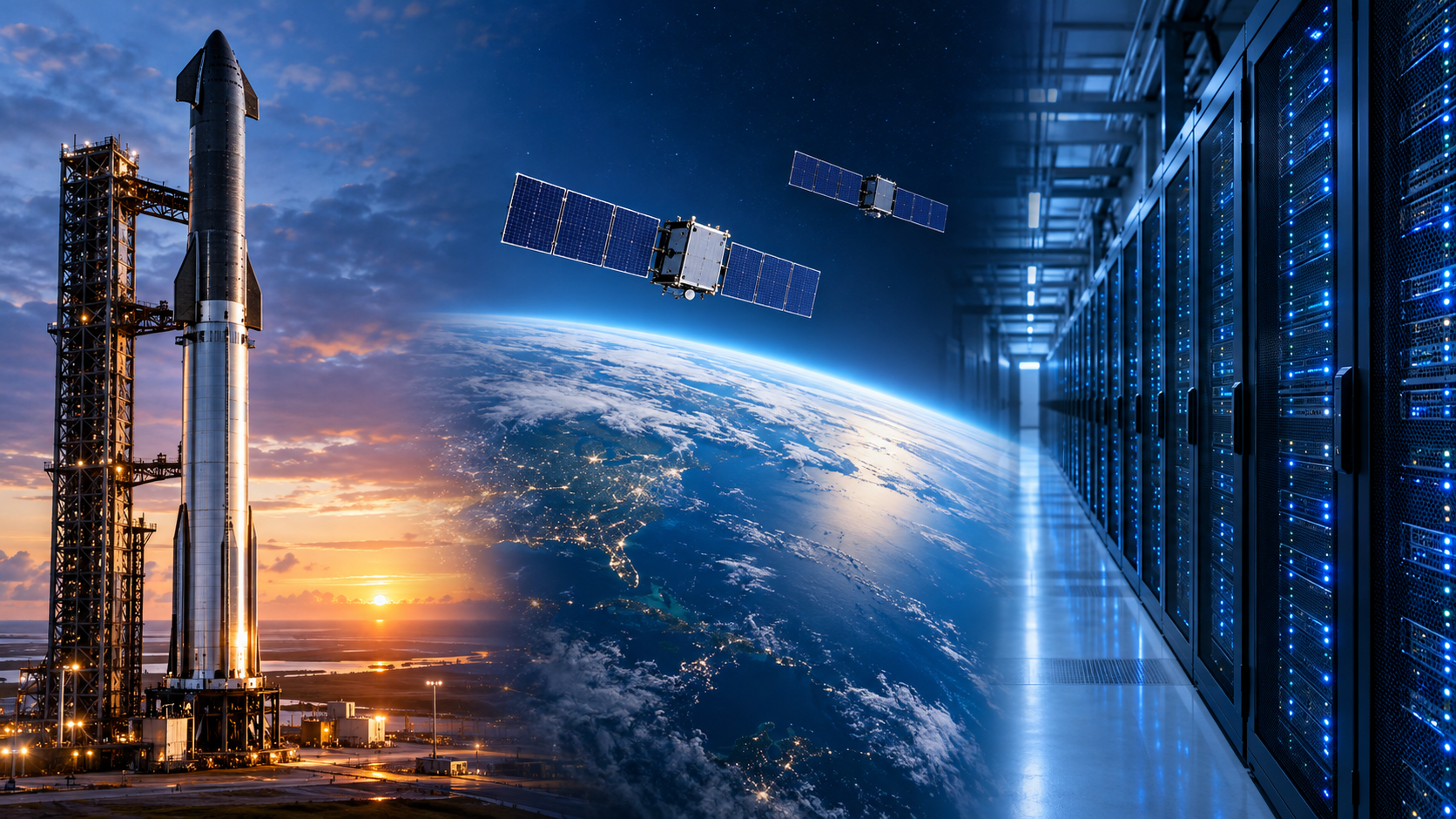
SpaceX makes billions in profit – but a closer look at its investments changes the picture – Creative image on the topic, with AI: Xpert.Digital
Starlink generates profit, AI drives growth: This is how SpaceX makes its money
SpaceX is becoming an AI and infrastructure company: What's behind the profit surge?
Record revenue, billions in investments: How solid is SpaceX's new profitability?
SpaceX made a remarkable leap in the third quarter of 2026: Revenue jumped from $5.6 billion to $14.6 billion compared to the same period last year, turning a net loss into a profit of $4.4 billion. But the company is far more than just a rocket manufacturer. Starlink generates the largest share of operating profit, while the AI division delivers the strongest revenue contribution and simultaneously consumes the majority of investments. At the same time, significantly more money is flowing into new facilities than the ongoing business generates. The figures therefore paint a complex picture: SpaceX is gaining profitability and growing rapidly – but still has to prove that this massive expansion will pay off in the long run.
SpaceX is becoming an infrastructure company: What's behind the billion-dollar profits
The rockets deliver the images – Starlink and AI deliver the business
SpaceX reached a significant economic turning point in the third quarter of 2026. Revenue increased from $5.576 billion to $14.575 billion compared to the same period of the previous year. A net loss of $1.054 billion turned into a net profit of $4.404 billion. This represents revenue growth of over 161 percent and an improvement in earnings of almost $5.46 billion. However, this leap is driven by more than just a successful phase in rocket development: SpaceX is evolving into a company whose economic weight is increasingly based on satellite communications, data centers, and AI applications.
The key finding, therefore, is not simply that space travel has suddenly become exceptionally profitable. Rather, three distinct business models are converging: a capital-intensive space business, an already highly profitable communications network, and a rapidly expanding but still investment-hungry AI division. Starlink contributes the largest share of operating profit. AI delivers the largest revenue contribution and accounts for the vast majority of investments. Space travel provides the technological foundation, though it is not currently the primary financial focus.
This very combination makes SpaceX both economically attractive and challenging to value. A company can report billions in profits while simultaneously investing significantly more money than its ongoing business generates. Both are true for SpaceX. Therefore, anyone wanting to understand the company must consistently differentiate between revenue, operating profitability, financing, and long-term return on equity.
Not just space travel anymore
The revenue distribution illustrates how far SpaceX has moved away from being a traditional launch service provider. The AI division generated $7.56 billion in revenue in the third quarter, accounting for nearly 52 percent of the company's total revenue. The communications segment, including Starlink, reached $5.248 billion, or approximately 36 percent. The space segment contributed $1.767 billion, or just over 12 percent. Therefore, the company's economic identity can no longer be derived solely from its rockets.
The shift is also clear when looking at additional revenue. Compared to the same quarter last year, group revenue increased by almost nine billion dollars. Of this, roughly three-quarters came from the AI segment, just under a quarter from the communications business, and only slightly more than one percent from the space division. This doesn't mean that rocket launches have become unimportant. It means that the most immediately visible growth momentum is now predominantly generated outside the traditional launch business.
To understand the historical development, the changed corporate structure is also important. SpaceX acquired xAI in February 2026; this group already included the X platform. Due to the joint control, the historical financial information was consolidated retrospectively. The prior-year figures reported therefore represent a correspondingly adjusted group comparison and not simply the former space company without its AI and platform activities. Additionally, the acquisition of Cursor in the third quarter changed the composition of current revenues.
This leads to a sober valuation rule: High growth can result from increased demand, newly activated infrastructure, and acquired businesses simultaneously. These effects are not economically equivalent. Organic growth demonstrates the strength of existing products and customer relationships; acquisitions expand the business but entail purchase prices, integration costs, and additional obligations.
Profit needs careful examination
The net profit of $4.404 billion is impressive, but significantly higher than the operating profit of $2.791 billion. This translates to a net margin of approximately 30 percent, while the operating margin is just over 19 percent. This difference is crucial for assessing the quality of the profit. Not every dollar of the reported surplus comes from rocket launches, internet connections, computing power, or software.
Below the operating result, interest income of $873 million was offset by interest expenses of $675 million. Other net income of $1.025 billion and a positive tax effect of $390 million were also included. Together, these items increased net income compared to operating income by $1.613 billion. This corresponds to just under 37 percent of the reported net income. This does not mean that this profit is inferior. However, it does mean that it cannot be interpreted entirely as a consistently repeatable operating result.
Interest income from high cash reserves is real, but it depends, among other things, on the interest rate level and the amount of uninvested capital. Tax relief and other income can fluctuate considerably. A reliable assessment should therefore first look at the operating profit development and then at the actual cash flows. The turnaround in earnings remains significant even under this stricter metric: In the same quarter of the previous year, the company reported an operating loss of $273 million.
The longer timeframe, however, still warrants caution. Over the first nine months of 2026, group revenue was $27.083 billion, operating income was $705 million, and the net result was still a loss of $413 million. The strong summer largely, but not yet completely, offset the weakness of the first half of the year. A profitable quarter is progress; it is not yet proof of sustained, stable annual profitability.
Starlink carries the profit
Starlink currently represents the strongest economic foundation within the group. Revenue in the communications segment increased by approximately 69 percent year-over-year to $5.248 billion. Operating income nearly doubled from $1.190 billion to $2.367 billion, resulting in an operating margin of approximately 45 percent. This segment accounted for roughly 85 percent of the group's total operating profit.
The crucial difference to a traditional launch business lies in the recurring nature of the revenue. A rocket launch is sold as a specific mission. An internet connection, on the other hand, can generate revenue over many months and years. Once network capacity, customer access, and operational processes are in place, additional connections can increase profitability. This is particularly attractive when revenues grow faster than the ongoing costs of the network and its marketing.
However, this scalability is not unlimited. A satellite network has limited capacity in certain regions and time slots. Additional customers are only economically valuable if they can utilize existing capacity without compromising service quality or triggering disproportionate new investments. Therefore, a connection in a previously underutilized area may be more economically viable than a connection in a region with already high demand.
Even the high quarterly margin requires a degree of normalization. In the communications business, the gross margin included a one-off positive effect of approximately three percentage points, primarily from customs refunds. This is not equivalent to three percentage points of additional operating group margin. However, it demonstrates that a portion of the exceptionally strong quarterly profitability should not simply be extrapolated. The crucial question is what margin level remains after such one-off effects.
Customer growth comes at a price
As of September 30, the reported number of Starlink customers reached 13.6 million, compared to 7.2 million a year earlier. This represents an increase of almost 89 percent. 1.6 million customers were added since the end of June alone. For interpretation, the definition is important: This figure includes private connections and certain standardized business customer tariffs. Individually managed large customers and government contracts, such as those in aviation and shipping, are not fully reflected in this number.
Customer growth shows strong market penetration, but this doesn't automatically translate into increased revenue per connection. Average monthly revenue per reported customer was $69. This was an improvement compared to the second quarter's $66. However, compared to the $83 of the same quarter last year, it represented a decline of nearly 17 percent. Customer growth was therefore significantly stronger than the growth in average revenue.
A declining average revenue can have various causes. It could indicate lower tariffs, a changed geographic customer mix, or increased targeting of price-sensitive markets. Without a complete breakdown, it's impossible to accurately determine the contribution of each factor. From a business perspective, the crucial factors are whether the cost per connection is decreasing faster than the achievable price and whether new customers generate sufficient long-term profit margins.
The common practice of simply multiplying the number of customers at the end of the quarter by the monthly average and three months' worth of data would be methodologically too crude here. The customer base fluctuates considerably during the quarter; moreover, segment revenue, device sales, and different customer groups are not synonymous with this single metric. For a reliable analysis, therefore, average customer numbers, contract structure, churn rates, and customer acquisition costs are more important than a spectacular projection.
Companies pay for availability
Starlink's expansion extends far beyond households in underserved areas. Revenue from businesses and government clients surged by approximately 91 percent in the third quarter to $2.127 billion. This growth was significantly faster than that of the residential customer segment, which saw revenue increase by roughly 57 percent to $3.121 billion. Businesses and government agencies already accounted for well over 40 percent of Starlink's communications revenue.
Aviation provides a particularly clear example. At the end of September, more than 3,800 aircraft were equipped with Starlink. The crucial distinction here is between installed technology, contractually agreed future installations, and actual ongoing revenue. A large announced fleet does not yet represent fully realized revenue. Every installation requires hardware, approvals, maintenance planning, and integration into the airline's operations.
For airlines, high-performance internet can still have a greater economic value than for the average household. It improves the travel experience, can attract business travelers, and enables additional digital services. The same applies to ships, remote industrial plants, construction sites, and logistics centers. There, it's not just bandwidth that's being purchased, but a connection designed to ensure operational reliability under challenging conditions.
From the customer's perspective, this creates a distinct investment benchmark. A satellite connection doesn't have to be cheaper than any terrestrial line to be economically viable. It can also pay off if it limits downtime or makes a location otherwise inaccessible usable. Conversely, an additional wireless connection doesn't replace a comprehensive security and operational concept. Reliability still requires independent communication channels, robust contracts, and clear accountability for disruptions.
AI is changing the order of magnitude
The strongest revenue growth was achieved by the AI division, now known as Super Intelligence. Its quarterly revenue jumped from $813 million to $7.56 billion, representing an increase of approximately 830 percent. At the same time, operating income improved from a loss of $1.722 billion to a profit of $431 million. However, the gap between revenue growth and profitability remains significant: the operating margin was only around 5.7 percent.
The term "AI division" should not be equated with a pure data center rental business. The segment encompasses infrastructure services, AI models, applications, and advertising revenue. In the third quarter, $7.022 billion was attributable to AI solutions and infrastructure, and $538 million to advertising. Because several business types are grouped together, the segment figure does not directly indicate the profitability of an individual data center or a specific AI product.
The basic principle of infrastructure monetization is nonetheless understandable. Large computing facilities can not only be used for internal models but also made available to external customers. The agreement with Anthropic regarding the use of Colossus 1's capacity illustrates this model concretely. This allows SpaceX to profit from the demand for AI computing power without being dependent on its own AI applications alone winning the market.
This dual role has advantages and conflicts. External contracts can improve capacity utilization and financing. At the same time, in-house pilot projects and paying third-party customers compete for the same limited resources. From an economic perspective, a decision must therefore be made as to which use promises the highest risk-adjusted return after considering electricity costs, depreciation, personnel expenses, and capital commitment. The existence of external demand does not necessarily prove that each additional expansion phase will generate the same return.
Acquisitions change the calculation
With the acquisition of Cursor in August 2026, SpaceX added another software business to its portfolio. From the closing of the acquisition on August 14th until the end of September, Cursor contributed $608 million to the company's revenue. This represents approximately eight percent of the AI segment's revenue for the quarter. While this acquisition does not account for the majority of the AI expansion, it remains relevant for comparability.
The economic scale of the transaction necessitates a careful separation of different figures. Cursor's implied equity value was $60 billion. The purchase price recognized under US accounting standards was $42.5 billion. Additionally, share-based compensation entitlements valued at $23.4 billion were reported, linked to post-acquisition performance and partly dependent on future conditions. These figures have different definitions and should not be treated as identical purchase price figures.
As early as the third quarter, acquisition-related stock compensation burdened the AI division's operating profit by approximately $1.2 billion. Such expenses do not equate to an immediate cash outflow. Nevertheless, they are not without economic cost. They serve to retain employees and managers and can dilute the equity of existing shareholders. Therefore, they must be considered in a long-term return calculation.
Strategically, the acquisition expands the company's position from a mere infrastructure provider to one focused on productive software applications. This can improve direct customer access and support the monetization of its existing business models. However, the trade-off is that greater integration also means greater responsibility: A corporation must then simultaneously manage data center utilization, further develop its business models, distribute software, and retain the acquired teams. Size alone is no substitute for successful integration.
Our US expertise in business development, sales and marketing

Our US expertise in business development, sales and marketing - Image: Xpert.Digital
Industry focus areas: B2B, digitalization (from AI to XR), mechanical engineering, logistics, renewable energies and industry
More information here:
A thematic hub offering insights and expertise:
- Knowledge platform covering global and regional economies, innovation and industry-specific trends
- A collection of analyses, insights, and background information from our key areas of focus
- A place for expertise and information on current developments in business and technology
- A hub for companies seeking information on markets, digitalization, and industry innovations
SpaceX's investment strategy in focus
EBITDA is not a cash balance
The group's adjusted EBITDA reached $8.809 billion in the third quarter. This metric represents earnings before interest, taxes, depreciation, and amortization, further adjusted for other items. It can help to illustrate developments in ongoing operations. However, it should not be confused with operating profit or free cash flow.
The difference is particularly striking in the AI division. There, an operating profit of $431 million contrasted sharply with an adjusted EBITDA of almost $4.953 billion. Key adjustments included depreciation of $2.473 billion, regular stock-based compensation of $821 million, and acquisition-related stock-based compensation of $1.217 billion. Additional minor adjustments were also made. The high EBITDA, therefore, does not simply result from a different terminology for the same profit, but rather from substantial accounting additions.
Depreciation is particularly important for data centers. Servers, accelerators, and network equipment lose value over time, while new generations set new standards for performance and efficiency. Whether the accounting useful life accurately reflects the actual need for upgrades significantly impacts long-term profitability. A business can appear highly profitable before depreciation but generate considerably less profit after regular equipment upgrades.
A fair valuation therefore considers several levels simultaneously. Adjusted EBITDA can explain short-term operational performance. Operating profit additionally shows the resource consumption on the balance sheet. Free cash flow reveals what remains after actual investment expenditures. No single metric can replace these three perspectives.
Investments exceed inflows
The most significant limitation of the earnings report lies in the capital statement. In the first nine months of 2026, SpaceX generated operating cash flow of $13.097 billion. This was offset by capital expenditures of $48.069 billion. Subtracting these investments from the operating cash flow results in a simplified negative free cash flow of approximately $34.972 billion. Other investment items are not yet included in this deliberately narrow calculation.
Operating cash flow thus covered only slightly more than 27 percent of capital expenditures. This is not proof of a failed business model. In a rapid expansion phase, such a shortfall can be deliberately accepted if the new facilities generate sufficiently high profits in the future. However, it does show that growth has not yet been fully financed from ongoing operations.
It is also worthwhile to examine the operating cash flow. In the first nine months, the increase in deferred customer revenue contributed $4.922 billion to the cash flow statement. Such advance payments can strengthen liquidity before the corresponding service is fully rendered. At the same time, they create future obligations. Therefore, a higher cash flow from customer advance payments should be assessed differently than an equivalent additional cash inflow from services that have already been fully rendered.
The investment distribution is clear. In the third quarter alone, $19.593 billion flowed into capital expenditures. Of this, $16.444 billion, or roughly 84 percent, went to the AI division. $1.606 billion was allocated to space exploration and $1.543 billion to the communications segment. The company's biggest financial bet at present, therefore, lies not in launching rockets itself, but in building up computing capacity.
Electricity determines growth
The installed nominal capacity of the AI infrastructure reached 1.7 gigawatts at the end of September, compared to 1.4 gigawatts at the end of June and 0.6 gigawatts a year earlier. This figure describes a technical order of magnitude. It is neither a measure of the actual computing power performed, nor of the utilization or measured electricity consumption. This distinction is particularly important for rapidly growing systems.
The economic bottleneck, therefore, lies not only in the availability of chips. Data centers require grid connections, electrical switchgear, transformers, cooling, a reliable power supply, and stable operation. In its updated outlook, the International Energy Agency expects global electricity demand from data centers to rise from approximately 485 terawatt-hours in 2025 to around 950 terawatt-hours in 2030. This is a projection for the overall market, not a confirmed demand forecast for SpaceX.
This creates competition for operators to be the first to become operational. A system that is available early can benefit from high prices in a tight market. Conversely, a delayed project may encounter additional competition, different chip generations, or changing customer expectations. Between the promised power connection, the completed building, and the actual usable computing power, there are several independent risks.
Furthermore, a distinction must be made between current gains from scarcity and lasting competitive advantages. High prices for computing capacity can arise from limited supply. If other providers catch up, these prices can fall. In the long term, therefore, not only the speed of expansion matters, but also whether energy procurement, technical efficiency, and customer utilization enable an attractive return on investment, even under normalized market conditions.
Rockets remain the foundation
The space division grew by approximately six percent in the third quarter, reaching $1.767 billion in revenue. Operating profit, at a loss of seven million dollars, was roughly at the break-even point, compared to a profit of 259 million dollars a year earlier. Research and development in this segment consumed $1.225 billion. Starship remains a key focus.
However, the immediate segment figures easily underestimate the strategic importance of in-house launch capacity. A company that develops, produces, and launches its own satellites can coordinate technical adjustments and expansion plans more closely. It is not as dependent on purchasing external launch sites at the right time and price. This advantage can be evident in the communications business, even if it is not fully reflected in external space revenue.
Conversely, internal launches should not be interpreted as additional external demand. In the third quarter, of a total of 35 launches, 12 were customer missions and 23 were internal missions. Such internal services are important for expanding the overall system, but at the corporate level, they do not automatically generate additional sales to external customers. The economic impact arises only from the services they enable.
This leads to an important limitation for the analysis: A low operating margin in the space division does not necessarily mean it is of minor importance to the group. Likewise, a high Starlink margin does not prove that all the necessary technical infrastructure is available without additional capital expenditure. What matters is the return on investment of the entire interconnected system, not just the isolated appeal of a single segment metric.
Starship must prove costs
Starship is intended to fundamentally reduce the cost of transporting large payloads. A key step was the first orbital deployment of 26 Starlink V3 satellites in the third quarter. The added downlink capacity was roughly ten times that of a Falcon 9 Starlink launch. This figure describes the capacity increase of the deployed satellites and does not equate to a proven tenfold increase in cost-effectiveness.
The decisive factor is not solely the payload per flight. It's the total cost per successfully deployed and actually sold capacity. This includes manufacturing, launch operations, fuel, repairs, ground facilities, insurance risks, and the frequency of successful reuse. A larger rocket only sustainably reduces costs if it can be used reliably, frequently enough, and with economically justifiable maintenance.
If successful, this will create significant leverage for Starlink. Larger and more powerful satellites could provide additional bandwidth and accelerate network expansion. This could lead to lower unit costs, improved services, or higher revenues. Which of these possibilities will prevail depends on demand, competition, regional capacity utilization, and pricing policies. Technical capacity only translates into economic success when customers can access it at affordable prices.
A single successful deployment therefore proves neither an industrially stable cycle time nor complete, rapid reusability. For now, Starship's value lies in a combination of proven progress and ongoing development steps. A dispassionate analysis acknowledges the technological advancements without yet treating the targeted final costs as a fait accompli.
Market capitalization demands more than growth
The IPO in June provided SpaceX with exceptionally large funding opportunities. The initial offering at $135 per share raised $75 billion, valuing the company at approximately $1.77 trillion. After the over-allotment option was fully exercised, the gross proceeds increased to around $86.25 billion. After issuance costs and commissions, the company was left with approximately $85.675 billion. These figures represent different stages of the same IPO and should not be confused.
The valuation can be assessed using a simple calculation, explicitly not intended as a forecast. If one were to multiply the third-quarter revenue by four, the resulting annual value would be $58.3 billion. The valuation of $1.77 trillion would correspond to roughly 30 times this extrapolated revenue. If the quarterly net profit were multiplied by four, the ratio would be approximately 100. These figures are not current valuation multiples, but rather a sensitivity analysis based on the company's market capitalization at the time and the most recent quarter.
Precisely because of the rapid expansion, such a projection is imperfect. It can underestimate future growth while simultaneously overestimating exceptional margins and one-off effects. Its usefulness lies in making the magnitude of expectations visible. A very high market capitalization presupposes not only further revenue but also consistently high and reliable profits after investments over an extended period.
The stock's performance demonstrates how sensitive expectations are. After its initial public offering, the stock briefly rose above $225 and later fell below the issue price. Following the release of the quarterly results, it gained a good five percent in early after-hours trading. Such reactions reflect changing expectations, not the final economic value. Even different points in the same after-hours trading session can yield significantly different percentage gains.
Lots of liquidity, lots of commitment
At the end of September, SpaceX had $51.294 billion in cash and cash equivalents and $38.561 billion in publicly traded securities, totaling nearly $89.9 billion. This was offset by debt and finance lease liabilities of approximately $38.8 billion. The simple difference was about $51 billion, without deducting other liabilities or future investment commitments.
This buffer is substantial, but not equivalent to unlimited freely available surplus. A corporation with large construction programs, hardware orders, and ongoing development projects requires significant working capital. Management projected investments of $35 billion to $40 billion for the fourth quarter. Together with the first nine months, this would theoretically result in approximately $83 billion to $88 billion for 2026. This is a conditional projection based on the announced investment framework, not an actual annual figure.
This also shifts the significance of the IPO. The placement was not merely a liquidity event for the capital market, but a central component of industrial financing. It enables the construction of facilities on a scale that would not be possible from existing operating profits alone. Long-term success therefore depends on whether the raised capital generates consistently high returns.
Rising financing costs or a weaker stock market valuation wouldn't automatically halt this model, but they would alter its scope. New shares could then dilute more significantly, additional debt could become more expensive, and rapid expansion could place higher demands on prioritization. Especially when high liquidity is available, the discipline with which the next investment decision is made is therefore crucial.
Integration also creates dependencies
The combination of rockets, satellites, connectivity, and AI can create real advantages. Development and operations can be more closely coordinated, technical expertise can be shared, and customers can be served across multiple levels. The strongest correlation exists between launch capacity and the satellite network. Here, the technical dependency is direct: without reliably available transport, the constellation cannot be expanded and modernized as planned.
The connection to terrestrial AI data centers is less inevitable. Industrial implementation expertise can be helpful, but a rocket and a data center are subject to different operational, safety, and market logics. Shared corporate affiliation alone does not prove superior economic efficiency. Any claimed synergy must be measured by whether it reduces costs, improves market access, or increases return on investment.
At the same time, new concentration risks arise for customers. Pooling communication, computing power, and key software functions within the same corporation can simplify procurement and integration. However, it can also create multiple operational dependencies. Switching providers becomes more difficult when data, applications, network access, and operational processes are tightly intertwined. Therefore, companies should not wait until a disruption occurs to examine interfaces, data portability, and backup options.
The corporate structure is also relevant for shareholders. Different voting rights and the founder's strong control limit the influence of ordinary shareholders. This can facilitate long-term development programs, but reduces the immediate ability to influence capital allocation and strategic direction. Economic participation and entrepreneurial control are not equally distributed here.
Regulation becomes a cost factor
A global satellite network relies on national market access, frequency rights, and technical operating licenses. Additionally, AI services raise data protection concerns, security requirements, and the legal framework for data processing. Growth, therefore, depends not only on technical capabilities and paying customers, but also on the actual legality of offering these services in their target markets.
The increasing use of low Earth orbit also brings with it shared risks. More satellites and space debris necessitate effective collision avoidance and the controlled removal of decommissioned systems. For economic viability, these are not merely peripheral environmental concerns. Evasive maneuvers, replacement needs, operational disruptions, and stricter requirements can impact costs and available capacity.
For data centers, regional energy and public acceptance issues come into play. Grid reinforcement, security of supply, and potential impacts on other electricity customers can all be decisive factors in determining whether a location is approved. Therefore, focusing solely on the price of individual accelerators underestimates the actual competition between locations. A facility is only economically viable when its entire supply chain is reliably operational and legally secured.
For public and industrial customers, the question of digital sovereignty is paramount. Additional high-performance infrastructure can close supply gaps and stimulate competition. However, excessive dependence on a single private provider can create its own risks. A sustainable approach lies neither in blanket rejection nor in uncritical commitment, but rather in verifiable performance commitments, competition, and robust alternatives.
Now, the return on capital is what counts
The coming quarters must primarily demonstrate whether the new scale translates into reliable economic substance. For Starlink, this involves the development of revenue per customer, capacity utilization, and margins after special items. In the AI division, the focus is on sustainable demand from external customers, the returns from proprietary applications, and the gap between adjusted key performance indicators and actual cash flow. For Starship, technological advancements must increasingly be complemented by reliable operations and demonstrable cost reductions.
The company's management has projected revenue of $33 billion to $37 billion for the first quarter of 2027. Such a figure would represent a further significant acceleration. However, it remains an expectation and should not be treated as a result already achieved. Even an annualized revenue rate of $100 billion projected based on December sales would not equate to annual revenue of that magnitude, nor would it automatically guarantee contractually secured recurring revenue.
The justified outlook for SpaceX is therefore both positive and challenging. Positive because Starlink is already generating substantial operating profits and its AI infrastructure has quickly tapped into a large paying market. Challenging because the company is financing an enormous investment cycle and its valuation relies on very significant successes. The quarterly profit demonstrates that existing activities can achieve considerably higher profitability. However, it does not yet prove that every new billion in investment capital will be of the same quality.
The real economic test therefore begins where the spectacular growth figures meet the lifespan of the facilities, the need for upgrades, and customers' willingness to pay. Rockets make the company visible. Starlink makes it operationally profitable. Whether AI will make it permanently more valuable ultimately depends on how much money remains after operation, upgrades, and financing.
🎯🎯🎯 Data-driven B2B industry hub as a quasi-in-house solution

The quasi-in-house solution: How Xpert.Digital closes operational gaps in B2B marketing and sales – Smart Content-Driven Business - Image: Xpert.Digital
Xpert.Digital is a data-driven B2B industry hub led by Konrad Wolfenstein . The company acts as an external, quasi-in-house solution for industrial partners, closing operational gaps in marketing, content, and sales – without requiring additional resources on the client side.
More information here:
Your global marketing and business development partner
☑️ Our business language is English or German
☑️ NEW: Correspondence in your native language!

Konrad Wolfenstein
I and my team are happy to be available to you as your personal advisor.
You can contact me by filling out the contact form here [email protected]:or simply call me at +49 7348 4088 965. My email address is
I'm looking forward to our joint project.










