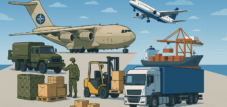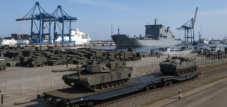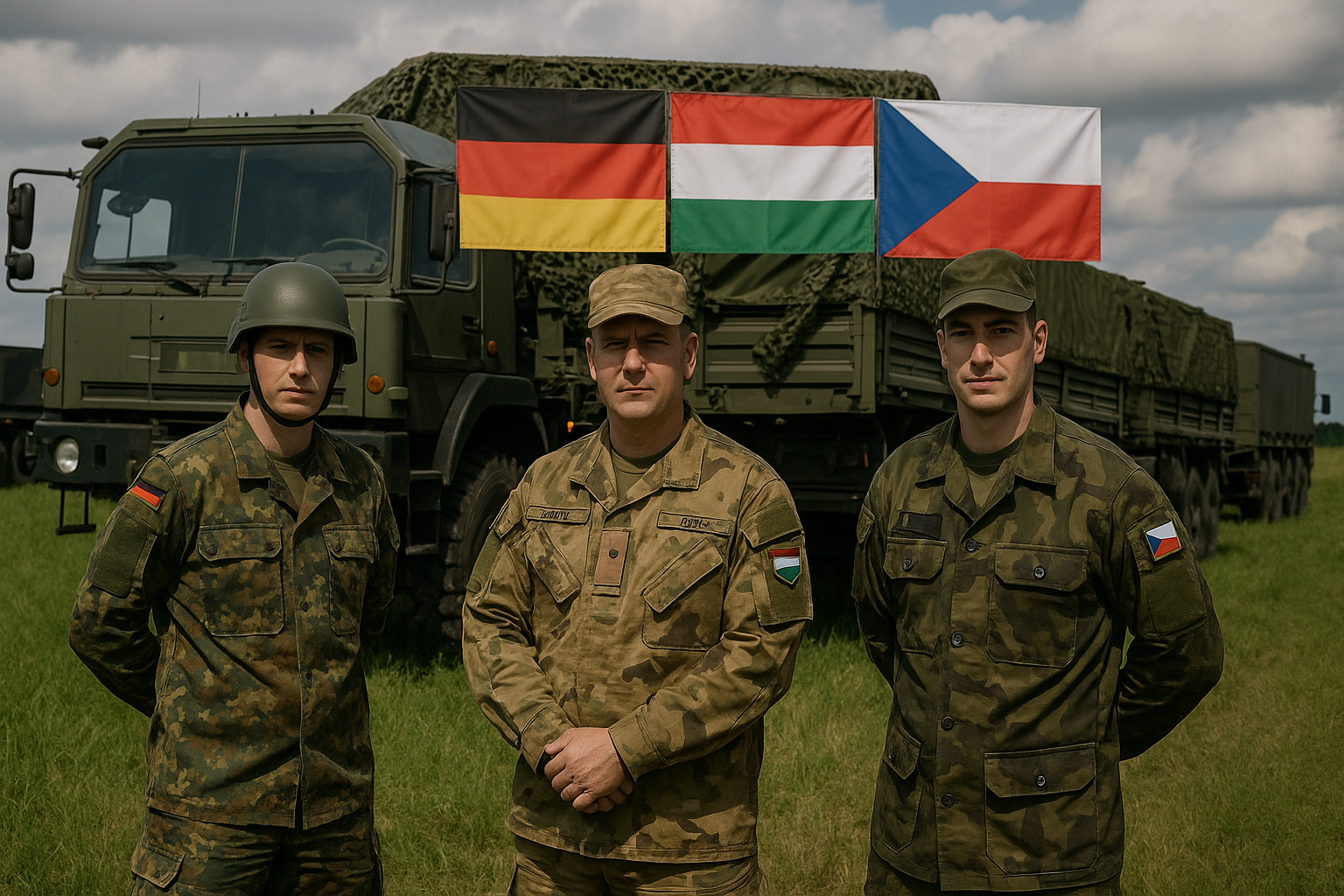
Dual Use? The Czech-German-Hungarian Logistics-Military Cooperation (SPiL) – Multinational Structured Partnership in Logistics – Image: Xpert.Digital
Behind the scenes at NATO: These 3 countries are securing Europe's future: Germany, Hungary and the Czech Republic
The silent SPiL power axis: The Czech-German-Hungarian logistics pact – The secret of effective military logistics in Central Europe
Today's "Multinational Structured Partnership in Logistics" (SPiL) originally began as the "Structured Partnership in Logistics" (SPiL) between Germany and Hungary. This bilateral initiative between Germany and Hungary embodied a pioneering approach to strengthening multinational military cooperation within NATO and made a significant contribution to security and stability in Europe.
Following the accession of the Czech Republic as a full member, the project was renamed “Multinational Structured Partnership in Logistics” to reflect the expanded multinational nature of the cooperation.
The acronym "SPiL" was retained even though the full project name was expanded from "Structured Partnership in Logistics" to "Multinational Structured Partnership in Logistics." This renaming reflects the strategic development from an originally bilateral German-Hungarian initiative to a multinational logistics cooperation, which today also includes the Czech Republic as a full member and Croatia and Slovakia as observers.
The emergence of a forward-looking cooperation
The roots of SPiL go back to 2016, when the then German Defense Minister Ursula von der Leyen presented the concept of "leadership from the center" at the Munich Security Conference. This concept emphasized the need to contribute and further develop resources and capabilities within alliances and partnerships, enabling partners with fewer resources to make their indispensable contributions on an equal footing.
The formal basis for SPiL was established in March 2016 through a target agreement between Germany and Hungary. These mid-term goals were signed by Brigadier General Baráth, then commander of the Hungarian Logistics Center, and Brigadier General Funke, then deputy commander of the German Logistics Command in Erfurt. The agreement laid the foundation for structured and long-term cooperation that would extend beyond simple bilateral exercises.
The SPiL (Specialized Logistics Project) evolved organically from a pre-existing multinational logistics project. Through continuous training exercises and research projects, the possibilities and limitations of multinational logistics in operational settings were explored, with the aim of unlocking synergies through multinational cooperation and making these usable for future missions.
SPiL's strategic goals and vision
The SPiL pursues several strategic objectives closely linked to the changing security policy challenges in Europe. Following the end of the Cold War, the armed forces of all European states shrank considerably, resulting in a loss of important capabilities in both breadth and depth. Multinational cooperation gained significant importance in this context, particularly within the framework of international crisis management.
A key objective of SPiL is to strengthen operational endurance for deployments and deployment-like commitments and to improve interoperability across the entire spectrum of the alliance's tasks. By developing plannable and readily available binational capabilities, the German Bundeswehr is to be established as a "dockable" force, enabling partners to jointly contribute their logistical resources and capabilities as an indispensable asset to the alliance.
SPiL aims at three different levels of standardization: operational, administrative, and material standardization. Operational standardization encompasses the harmonization of planning and management procedures, as well as the associated logistics management and information systems. Administrative standardization refers to the harmonization of training content and structures, while material standardization involves the use of the same technology, processes, and equipment.
The three pillars of the SPiL projects
SPiL is divided into three main projects, each addressing specific aspects of German-Hungarian logistics cooperation.
SAFETY FUEL – The Field Tank Farm Project
The first and most advanced project is SAFETY FUEL, which focuses on the development of a binational field fuel depot platoon. The origins of this project date back to 2011, when the first training courses for Hungarian soldiers took place at the field fuel depot within the Special Engineers Training and Education Center in Putlos.
The Hungarian decision to adopt and utilize the German field tank storage equipment formed the essential basis for this project. The transfer of mobile pipeline maintenance equipment and the specialized basic training of Hungarian personnel achieved the necessary material standardization for further cooperation.
With the establishment of the "SAFETY FUEL" exercise series in 2012, the joint development of capabilities for the shift-based and sustained construction, operation, and dismantling of a binational field fuel depot was systematically advanced. Integration into multinational NATO exercises such as "CAPABLE LOGISTICIAN" enabled important performance tests under realistic conditions.
A significant milestone was reached in November 2020 when both co-presidents confirmed the Initial Operational Capability (IOC) of the binational field fuel depot. Despite the challenges posed by the COVID-19 pandemic, Exercise SAFETY FUEL 2021 was successfully conducted in Hungary, with Croatian forces participating for the first time.
SAFETY TRANSPORT – The Transport Company Initiative
The second project, SAFETY TRANSPORT, focuses on the development of a German-Hungarian medium transport company. Initial discussions on this project began in February 2014, and the first SAFETY TRANSPORT exercise took place in Hungary in April 2015.
The goal of this cooperation is a German-Hungarian medium transport company, aligned with NATO standards, capable of transporting containers and other military goods using the MULTI swap body system. Developing this project proved particularly challenging, as transport forces must be able to handle not only stationary but also mobile operations.
Due to the complexity of the requirements, integration at the company level was chosen, with national transport platoons and a mixed company command. This structure takes into account the practical challenges of deployment in potentially dangerous environments, where communication in a foreign language could become problematic in extreme situations.
The establishment of a partnership between the German Logistics Battalion 472 and the Hungarian Logistics Regiment 64 in 2018 demonstrated the trusting cooperation between the two partners. Despite the restrictions imposed by the COVID-19 pandemic, significant progress was made, and Initial Operational Capability was achieved in 2021.
SAFETY DOCTRINE – Legal and conceptual foundations
The third project, SAFETY DOCTRINE, focuses on developing binational doctrine and framework documents. This project is crucial as it establishes the legal and conceptual foundations for operational cooperation. The development of common rules and regulations, as well as their harmonization with national and multinational exercise planning, are central to this initiative.
In April 2021, a "Conceptual Framework Paper" was adopted as a common working basis. This document answers key questions such as: Who contributes to joint capability development? Which national and multinational regulations must be considered? How should common logistics procedures be defined?
Is SPiL a type of dual-use logistics?
Yes, the German-Hungarian logistics-military cooperation SPiL can in some parts be considered a form of dual-use cooperation – however, not in the classic sense of civil-military dual use in the technical field, but rather in the broader sense of infrastructure and capability utilization.
Why SPiL can be considered partially dual-use
1. Civilian and military logistics infrastructure
Many logistics networks, such as the Metrans container network, are used for both civilian and military transport. SPiL integrates such civilian-usable structures into military planning.
2. Standardized technology and processes
Material standardization (e.g., in SAP S4/HANA) leads to overlaps with civilian logistics systems, particularly in areas such as transport management, warehouse logistics, or IT system integration.
3. Industrial cooperation and manufacturing
German-Hungarian cooperation in the defense sector (e.g. Rheinmetall plants) produces products that could also be used or repurposed in civilian areas, such as special vehicles or communication systems.
Why SPiL is not a classic dual-use application
- The primary objective is military – all projects serve to maintain capability and operational readiness within NATO.
- The legal basis, training standards and operational scenarios are clearly defined in military terms.
- There is a lack of direct, institutionalized integration with civilian actors at the operational level (such as in civil-military disaster relief).
SPiL is not a classic dual-use initiative, but it has numerous dual elements – especially in the areas of infrastructure, logistics processes and industrial cooperation.
Hub for Security and Defense - Advice and Information


Hub for Security and Defense - Image: Xpert.Digital
The Security and Defence Hub offers expert advice and up-to-date information to effectively support companies and organizations in strengthening their role in European security and defence policy. Working closely with the SME Connect Defence Working Group, it particularly promotes small and medium-sized enterprises (SMEs) that wish to further develop their innovative capacity and competitiveness in the defence sector. As a central point of contact, the Hub thus creates a crucial bridge between SMEs and European defence strategy.
Related to this:
Czech Republic's accession to the German-Hungarian military logistics alliance - Central Europe becomes a strategic axis
The role of Hungary's military modernization
SPiL is closely linked to the Hungarian modernization program "ZRÍNYI 2026". This comprehensive program aims to modernize the Hungarian armed forces and increase interoperability within the alliance. The procurement of German military equipment such as the Leopard 2 A7 main battle tank, the PzH 2000 self-propelled howitzer, and the LYNX infantry fighting vehicle creates important prerequisites for standardization.
The modernization encompasses not only the procurement of new equipment but also the adaptation of structures, procedures, and processes. The German Logistics Command supports this process through consultation and assistance in close coordination with other German commands. The parallel implementation of SAP S4/HANA in both armed forces enables improved interoperability of the logistics information systems.
German-Hungarian cooperation in the defense industry has developed into a remarkable success story. Hungary recognized the need for a clear strategy earlier than many other European states and created reliable framework conditions for investors in the defense industry. State participation in joint ventures is understood as a commitment to the industry, resulting in production in Hungary not only for the Hungarian army but for the entire European market.
International dimensions and NATO context
The SPiL is embedded in the broader concept of the NATO Framework Nations, which Germany has been promoting since 2013. The Framework Nations Concept (FNC) aims to create efficient structures and stable cooperative relationships between partner nations and to promote multinational capability development.
Germany, as the framework nation, plays a key role in European defense cooperation. Under the umbrella of the FNC, 16 NATO member states and 4 EU partner countries have agreed to build up larger multinational forces in various participation constellations. This harmonized capability development takes place according to common timelines and work plans in 16 multinational project areas.
The importance of multinational logistics cooperation is also underscored by initiatives such as the Multinational Logistics Coordination Centre (MLCC) in Prague. This multinational military organization works to build or improve logistics capabilities, reduce logistics deficits, and lower costs through multinational solutions. Fourteen NATO and partner countries have already joined the MLCC.
Current developments and the Czech accession
In recent years, the SPiL has gained further international attention, particularly due to the Czech Republic's interest in participating. Although concrete details regarding a formal accession of the Czech Republic to the SPiL are not explicitly documented in the available sources, the intensified relations between Germany, Hungary, and the Czech Republic in the field of defense logistics clearly indicate a trend in this direction.
The Czech Republic has a long tradition of military cooperation with Germany and other NATO partners. Since joining NATO in 1999, along with Poland and Hungary, the Czech Republic has established itself as a reliable partner in the alliance. The Czech armed forces possess modern equipment and have made significant investments in modernizing their capabilities in recent years.
An important indicator of increased cooperation is the participation of Czech companies in Hungarian defense projects. Czech firms such as VOP CZ, RayService, TATRA, Meopta, and Quittner & Schimek are already long-standing partners of Rheinmetall and produce specialized components for the Lynx combat vehicle program, which is relevant for both Hungary and potential Czech procurements.
The logistics infrastructure between Germany, the Czech Republic, and Hungary is already well-developed. The Metrans network, which has been operating container shuttle services between the Czech Republic and Hamburg since 1992, demonstrates the practical feasibility of cross-border logistics cooperation. This civilian infrastructure can also be used for military logistics purposes and supports the integration of the three countries.
When different armies work together: The complex realities of multinational defense strategies
SPiL faces several challenges characteristic of complex multinational military cooperation. A key challenge lies in harmonizing different national training systems and operational principles. Although all participating countries adhere to NATO standards, differences in tradition, leadership principles, and training methods exist, which can hinder close integration.
The language barrier presents another practical problem, particularly in stressful situations or during complex operations. While English is generally used for cooperation, integration at the platoon or company level requires a high level of language proficiency from all participating soldiers.
Material standardization brings with it long-term procurement challenges. German field tank storage equipment will reach the end of its service life in the medium term, necessitating coordinated planning for future procurement projects. Maintaining material standardization is the only way to ensure operational capability in the long term.
The political framework plays a crucial role in the success of SPiL. Long-term cooperation for joint capability development requires a stable political framework. Changes in security policy or in the priorities of the participating countries can impair the continuity of the cooperation.
Technological innovation and digitalization
A key aspect of SPiL lies in the modernization of logistics information systems. The parallel implementation of SAP S4/HANA in the German and Hungarian armed forces creates essential prerequisites for process-oriented logistics cooperation. This standardization enables seamless information exchange and significantly improves planning and coordination capabilities.
The digitalization of logistics processes also enables better integration with civilian logistics service providers, which is of great importance given the dependence of modern armed forces on civilian support. The German Armed Forces are already heavily reliant on civilian logistics providers, and this dependence will increase in the future.
Strategic importance for European security
The SPiL makes a significant contribution to strengthening European defense capabilities. At a time when security policy challenges in Europe are increasing, German-Hungarian cooperation demonstrates how structured partnerships can efficiently develop and maintain military capabilities.
The geographical location of the participating countries gives the SPiL (Sustainable Plan of Logistics) particular strategic importance. Germany serves as NATO's central logistical hub in Europe, while Hungary, due to its location, plays a crucial bridging role between Western and Eastern Europe. The potential inclusion of the Czech Republic would further strengthen this strategic axis and improve connections with NATO's eastern partners.
The SPiL also serves as a model for other bilateral and multilateral cooperation within NATO and the EU. The experiences and lessons learned from this partnership can be transferred to other countries and capability areas, thereby creating a network of integrated European defense capabilities.
Economic dimensions of cooperation
The SPiL also has significant economic implications that extend beyond the purely military sphere. Cooperation in the defense industry between Germany and Hungary has led to substantial investments and technology transfers. These collaborations create jobs, foster innovation, and strengthen the industrial base of both countries.
The defense industry is perceived as an attractive employer because it can offer a stable future. This is particularly important at a time when other industries are facing uncertainty. German-Hungarian cooperation demonstrates how defense partnerships can contribute to economic stability and development.
Integrating the Czech Republic into this cooperation would open up further economic opportunities. The Czech defense industry is particularly well-positioned in the areas of small arms, artillery equipment, ammunition, and radar systems. Cooperation could create synergies and strengthen the competitiveness of all participating countries.
The SPiL success story: Why multinational military cooperation works
The Structured Partnership in Logistics between Germany and Hungary represents a remarkable success story of European defense cooperation. Since its inception in 2016, the SPiL has developed into a comprehensive and multifaceted cooperation framework encompassing operational, administrative, and material aspects of military collaboration.
The three main projects SAFETY FUEL, SAFETY TRANSPORT, and SAFETY DOCTRINE demonstrate how military capabilities can be developed and maintained through systematic and long-term cooperation. The milestones achieved, particularly the Initial Operational Capability in both operational projects, show that structured partnerships can offer viable solutions to the challenges of modern defense.
The potential expansion of the SPiL to include the Czech Republic would further increase the strategic importance of this initiative. The geographical connection between Germany, the Czech Republic, and Hungary would create a vital logistics axis in Central Europe, contributing to the stability and security of the entire region.
The SPiL project exemplifies how successful multinational cooperation is based on shared goals, reliable collaboration, and a willingness to invest in long-term partnerships. The experience gained from this cooperation can serve as a model for further initiatives and contribute to the development of an integrated European defense system.
In a time of growing security policy challenges, the SPiL offers a practical approach to strengthening European defence capabilities. By combining operational excellence, technological innovation and political vision, this partnership makes a significant contribution to the security and stability of Europe and demonstrates how joint efforts can achieve more than any single country could accomplish alone.
Related to this:
- Germany as a military logistics hub: The NATO New Force Model: Massive troop movements as the new reality
- Defense logistics: Germany's key role in NATO strategy – How AI and robots can advance the Bundeswehr
Consulting - Planning - Implementation

Markus Becker
I would be happy to serve as your personal advisor.
Head of Business Development
Chairman SME Connect Defense Working Group
Your global marketing and business development partner
☑️ Our business language is English or German
☑️ NEW: Correspondence in your native language!
Konrad Wolfenstein
I and my team are happy to be available to you as your personal advisor.
You can contact me by filling out the contact form here wolfenstein@xpert.digital:or simply call me at +49 7348 4088 965. My email address is
I'm looking forward to our joint project.