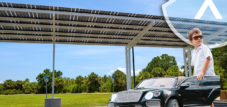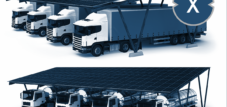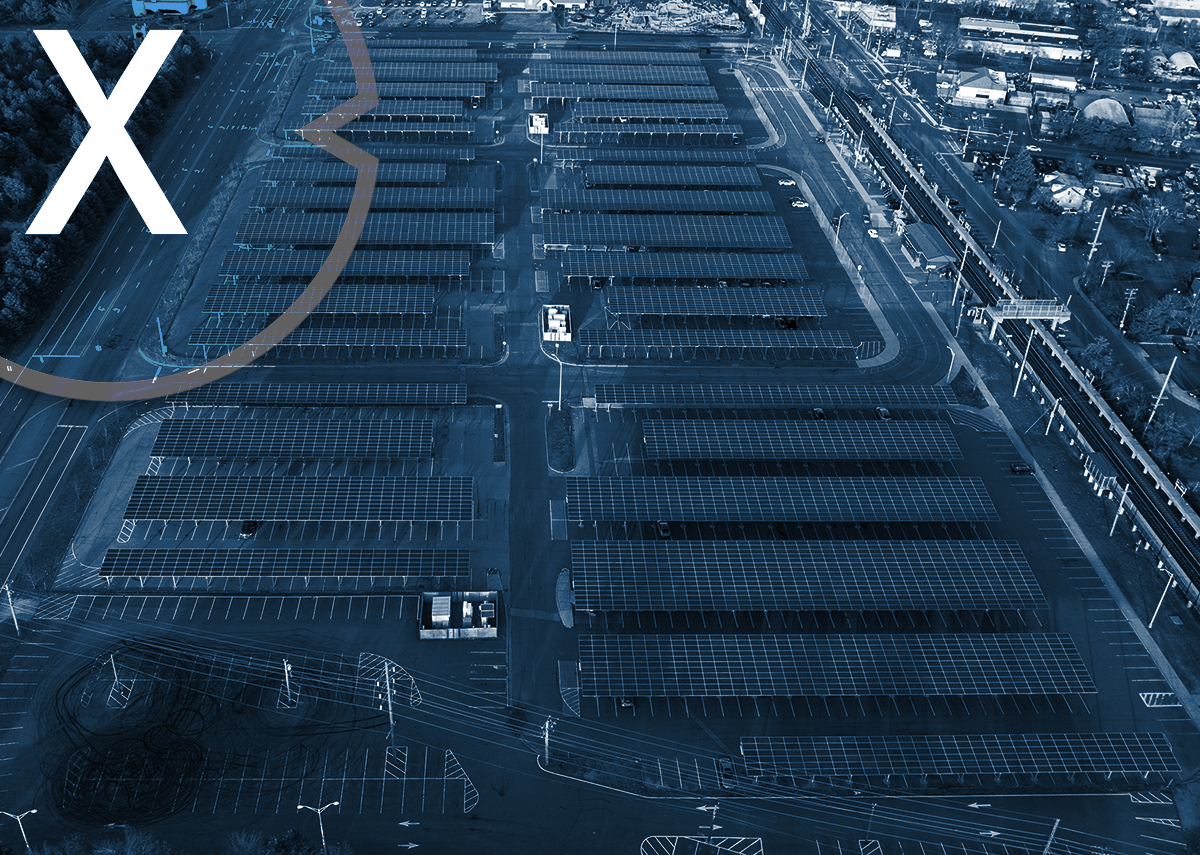
Special solar roofing systems for parking lot canopies, large carports, or parking lot canopies in general – Image: Audley C Bullock|Shutterstock.com
Efficient and sustainable: The future of parking lot roofing with special solar roofing systems
Special solar roofing systems, such as solar parking lot canopies or large-area carports, are playing an increasingly important role in the use of renewable energies and the promotion of sustainable energy solutions. These systems not only offer protection from the elements but also harness the power of the sun to generate clean and renewable energy.
Solar parking lot canopies are an innovative way to make optimal use of unused space in parking lots. By installing solar panels on the roofs of their parking areas, companies and organizations can both protect their vehicles and generate green energy. These canopies are typically designed to cover a large area while enabling efficient energy production.
Another interesting solar roofing system is the large-area carport. These are often used in commercial and industrial areas to cover large parking lots while simultaneously generating renewable energy. Large-area carports not only offer protection from the elements but also allow companies to meet their energy needs by utilizing solar power. Furthermore, they can serve as charging stations for electric vehicles, thus further promoting sustainable mobility.
Parking garage roofs powered by solar energy are extremely versatile and can be adapted to various locations. They can be installed in residential areas, shopping centers, hospitals, universities, and other public facilities. By installing solar panels on parking garage roofs, these locations can not only meet their energy needs but also feed surplus energy into the power grid.
A key advantage of such solar roofing systems is the reduction of CO2 emissions. By utilizing renewable energy sources like solar power, companies and organizations can reduce their environmental footprint and contribute to combating climate change. Furthermore, they can benefit from government incentives and funding programs that support the installation of solar energy systems.
There are also innovative technologies that can be integrated into solar roofing systems. For example, intelligent sensors and control systems can be used to optimize energy yield and monitor energy consumption. These systems can analyze sunlight exposure, track solar panels, and control energy flow to ensure maximum efficiency and performance.
Furthermore, solar roof systems can be combined with energy storage solutions to store the generated energy and use it when needed. This enables a continuous energy supply, even when the sun isn't shining, and contributes to stabilizing the power grid.
➡️ Solar roofing systems such as solar parking lot canopies, large-area carports, and parking lot roofs offer a sustainable and efficient way to generate renewable energy and make optimal use of unused space. With their versatile application potential and ecological advantages, these systems contribute to promoting a clean energy future and demonstrate how the integration of renewable energies into everyday life is becoming increasingly important.
The Xpert.Solar solar carport planner
Solar parking spaces are a promising way to generate renewable energy while simultaneously optimizing the limited space available in cities and urban areas. However, there are indeed some challenges that can hinder the implementation of such parking spaces.
One of the biggest hurdles is the high cost and planning effort associated with installing solar panels in parking lots. Not only must the cost of the solar panels themselves be considered, but also the cost of the infrastructure required to connect them to the power grid. Furthermore, the space required for the installation of the solar panels must be precisely planned and coordinated to ensure effective use of the available area.
Another obstacle is bureaucratic hurdles and permitting procedures, which can complicate the installation of solar panels in parking lots. Depending on the region or country, different regulations and rules may apply, further complicating the approval and implementation process.
Despite these challenges, there is high demand for solar parking spaces, as they represent an effective way to promote renewable energy while simultaneously optimizing space utilization in urban areas. With careful planning and collaboration between the stakeholders, the obstacles can be overcome to facilitate the implementation of such parking spaces.
➡️ We specialize in providing consulting and planning support for such solar carport projects and in advancing their implementation.
➡️ Our solar carport planner simplifies the process.
➡️ We are here for you for the next steps, thus minimizing costs and effort for you.

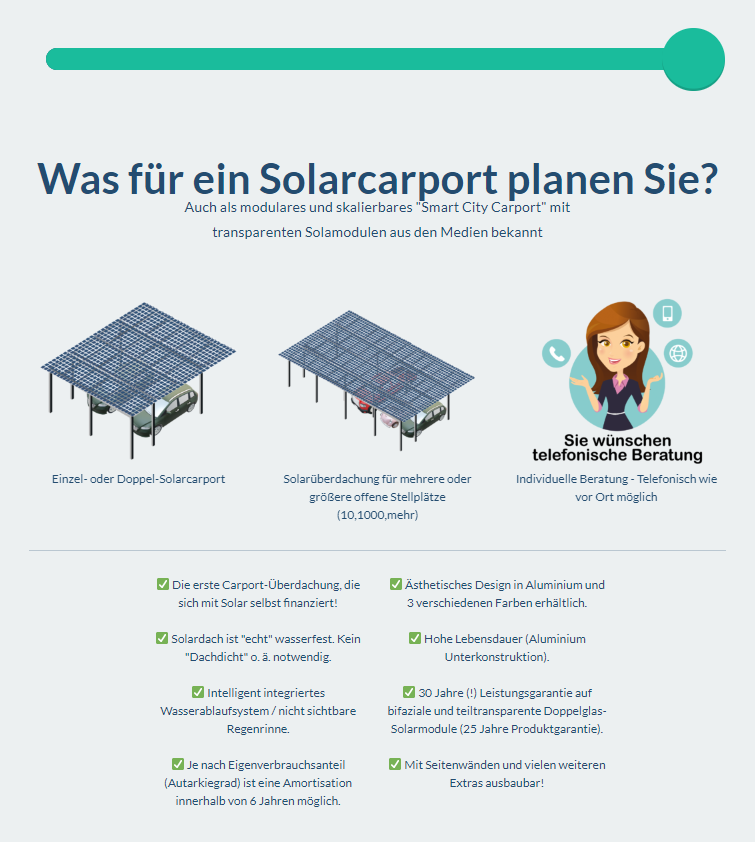
Xpert.Solar solar carport planner
More information here:
Our preferred city solar carport or solar carport module
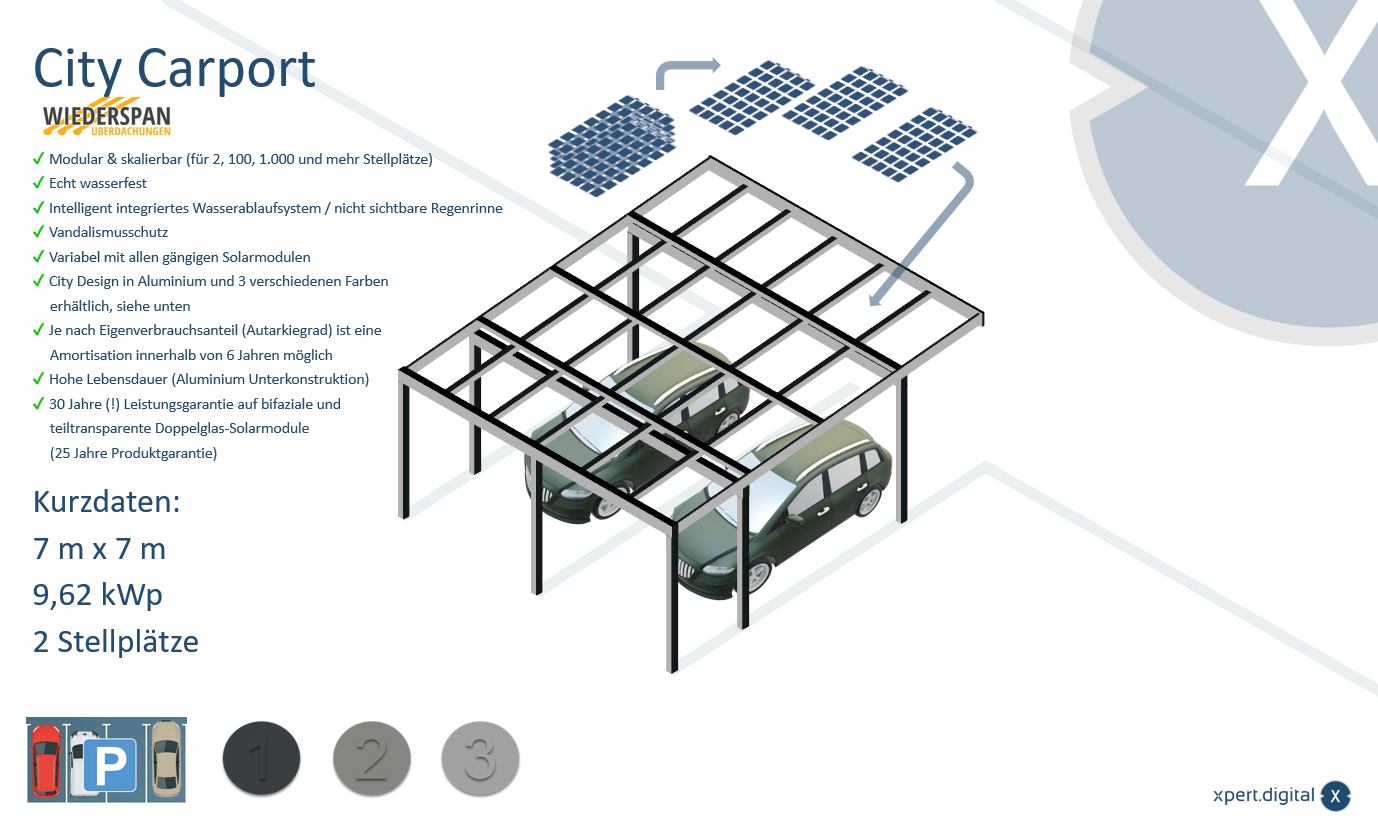
The City Solar Carport – with enhanced impact and vandalism protection – Image: Xpert.Digital
Advantages at a glance
- Support & Made in Germany
- Modular & scalable (for 2, 100, 1,000 and more parking spaces)
- Truly waterproof
- Integrated water drainage / concealed rain gutter
- Vandalism protection, optionally with integrated impact protection
- Compatible with all common solar modules
- City Design available in aluminium and 3 different colours
- Depending on the level of self-consumption (degree of self-sufficiency), amortization is possible within 6 years
- Long service life (aluminum substructure)
- 30-year (!) performance guarantee on bifacial and semi-transparent double-glass solar modules (25-year product guarantee)
- Reduction of urban heat islands
- Building-integrated photovoltaics
- Ideally suited for transparent and translucent double-glass solar modules with overhead mounting approval!
📣 Parking lot solar solutions for industry, retail and municipalities
Everything from a single source, specifically designed for solar solutions for large parking areas. Refinance or offset your future costs with your own electricity generation.
🎯 For solar installers, plumbers, electricians and roofers
Consultation and planning including a non-binding cost estimate. We connect you with strong partners in photovoltaics.
👨🏻 👩🏻 👴🏻 👵🏻 For private households
We have a regional presence throughout the German-speaking world. We have reliable partners who will advise you and implement your wishes.
Is there a difference between covered large-area carports (also called large-area parking facilities) and parking lot canopies?
Yes, there is a difference between covered large-scale parking facilities and parking garage roofs, even though both concepts serve similar functions. Here are some key details that clarify the difference between the two:
Size and coverage
Large covered parking facilities are generally larger than conventional parking garages. They extend over a greater area and can cover multiple rows of parking spaces. Parking garages, on the other hand, are usually smaller and typically cover only one or two rows of parking spaces.
Design and structure
Large covered parking facilities are specifically designed to shelter a large number of vehicles. They often have a robust and stable structure to withstand the elements while providing ample space for many cars. Parking lot canopies can vary in design depending on their location and purpose and may not be as extensive as large carports.
Additional features
Due to their size and structure, large parking facilities can often fulfill a variety of functions. For example, they can be equipped with charging stations for electric vehicles to promote environmentally friendly mobility. Furthermore, they can also serve as additional storage space or as shelters for bicycles. Parking garage roofs are generally less complex and focus primarily on protecting vehicles.
Location and areas of application
Large-scale parking facilities are frequently used in commercial and industrial areas to meet the energy needs of large businesses while providing sheltered parking for employees and customers. Parking garage roofs are found in a wider range of locations, including residential areas, shopping centers, hospitals, schools, and other public facilities.
➡️ It is important to note that the terms "large-scale parking facilities" and "parking lot roofs" can sometimes be used synonymously, as there is no uniform definition and the terms can be interpreted differently depending on the context. Ultimately, the choice between a large-scale carport and a parking lot roof depends on the specific requirements of the location and the operator's objectives.
Difference between parking lots and parking facilities
There is a clear difference between parking lots and parking facilities, with the focus being on the definition of parking facilities without reference to parking garages.
Parking spaces
Parking lots are designated areas or spaces specifically for parking vehicles. They can be located outdoors or in covered areas and are often found in various locations such as roadsides, shopping centers, company premises, or residential areas. Parking lots are generally less structured and can vary in size. They are often arranged in rows or grid patterns and provide space for individual vehicles.
Parking facilities
Parking facilities, on the other hand, are more comprehensive and structured areas consisting of a larger number of parking spaces. These facilities may be located in a central location and are designed to accommodate a large number of vehicles. They can include multiple rows of parking spaces and be laid out in various configurations, such as circular, square, or rectangular arrangements. Parking facilities may also offer additional features, such as traffic guidance systems, signage, or markings to help drivers find their way around.
Organization and administration
Parking lots are often independent and can be operated by different owners or organizations. Responsibility for maintenance and management often lies with the landowner or the relevant authority. Parking facilities, on the other hand, are typically planned, managed, and operated as a single unit. This means they have a unified structure and are organized by a single entity or company. Parking facilities may also offer specialized services such as parking monitoring, security, or access control.
Use and purpose
Parking lots primarily serve to provide temporary parking space for vehicles, whether for short or long periods. They are often used by individuals, visitors, or customers. Parking facilities, on the other hand, are generally designed for a larger number of vehicles and can be used by various groups or organizations. For example, they can be used by businesses, event venues, public facilities, or institutions to provide orderly and well-organized parking for their customers, employees, or visitors.
When covering parking lots and parking facilities – without reference to parking garages – various aspects must be taken into account.
Land use and design
Since parking lots and parking facilities can vary in size and configuration, the roof must be designed to make optimal use of the available space. The selection of suitable roofing systems and structures plays a crucial role in this. Care should be taken to ensure that the roof does not reduce the number of available parking spaces and that vehicles remain easily accessible.
Sunlight and orientation
To integrate solar energy or photovoltaic systems, it is important to consider the amount of sunlight. The roof should be designed to allow for optimal orientation of the solar modules in order to efficiently utilize solar energy. Depending on the geographical location and orientation of the parking spaces, this may mean that the roof needs to be tilted or adjustable to ensure the best possible alignment.
Safety and resilience
The safety of vehicles and users is a crucial factor when designing roofs for parking lots and parking facilities. The roof should be constructed to withstand the elements while providing sufficient stability and load-bearing capacity. The structures should meet the required standards and regulations to ensure safety.
Lighting and ventilation
The canopy should be designed to allow sufficient lighting and ventilation of the parking area. This is important to ensure user safety and create a pleasant parking environment. The integration of energy-efficient lighting systems can also be considered to further optimize energy consumption.
➡️ Covering parking lots and parking facilities offers a number of advantages, including protecting vehicles from the elements, creating more pleasant parking conditions for users, and enabling the generation and use of solar energy. This contributes to sustainability, as renewable energy sources can be used and dependence on fossil fuels can be reduced.
Building-integrated photovoltaics for solar roofs only with semi-transparent solar modules
With semi-transparent solar modules as a roof replacement, these specialized solar roofing systems become an integral part of building-integrated photovoltaics (BIPV). This approach makes it possible to integrate solar modules into building architecture, thus ensuring aesthetically pleasing and efficient use of solar energy. However, in Germany, there are specific requirements and certifications that must be met for the overhead mounting of semi-transparent solar modules.
To operate semi-transparent solar modules as part of building-integrated photovoltaics above parking lots or parking facilities in Germany, a special certificate for overhead mounting approval is required. This certificate confirms that the solar modules meet stringent safety standards and have been developed taking into account the specific requirements for overhead installation. It is important to ensure that semi-transparent solar modules are approved for overhead mounting when selecting them, as not every transparent double-glass module has this certification.
Building-integrated photovoltaics (BIPV) plays a crucial role in smart city and smart grid concepts. Integrating solar modules into building envelopes not only generates renewable energy but also makes buildings more energy-efficient. BIPV enables decentralized power generation and consumption, as well as the ability to feed surplus energy into the grid. This allows buildings to become active participants in energy management and contribute to grid stabilization.
The use of semi-transparent solar modules in solar roofing systems offers additional advantages. Firstly, they provide pleasant lighting under the roof, as they exhibit a certain degree of light transmission. This creates a harmonious balance between daylight utilization and energy generation. Secondly, they provide shade and protection from the elements, which in turn can lead to a longer vehicle lifespan. Furthermore, they contribute to reducing greenhouse gas emissions, thus promoting sustainability and environmental compatibility.
Building-integrated photovoltaics and the use of semi-transparent solar modules as roof replacements over parking lots and parking facilities are part of the holistic concept of the Smart City and the Smart Grid. These concepts aim to make cities smarter, more sustainable, and more efficient by utilizing renewable energies, promoting energy efficiency, and optimizing energy consumption. Integrating such solar roofing systems not only meets energy demand but also reduces environmental impact and represents an important step toward a future-proof and resource-conserving energy supply.
Construction of solar carports in cities
Building solar carports in cities is one way to utilize renewable energy while simultaneously solving space problems. Solar carports are covered parking spaces equipped with solar panels to generate solar energy. Here are some aspects to consider:
Energy generation
Solar carports can generate a significant amount of solar energy that can be used to power buildings, electric vehicles, or other electrical devices. This reduces the need for grid electricity and promotes the use of renewable energy.
Space optimization
In densely populated cities, available space is limited. Solar carports can utilize existing parking spaces, thus creating additional areas for solar energy generation without requiring extra space.
Dual use
Solar carports not only protect vehicles from weather conditions such as rain or sunlight, but also generate electricity. This enables the efficient dual use of space in urban areas.
Charging infrastructure for electric vehicles
Solar carports can be equipped with charging stations for electric vehicles. This enables the use of renewable energy to power electric vehicles and improves the charging infrastructure in cities.
Environmental benefits
The use of solar carports contributes to reducing greenhouse gas emissions and supports efforts to combat climate change. Utilizing solar energy as a clean energy source reduces dependence on fossil fuels and thus mitigates environmental impact.
Funding programs and incentives
In some countries and regions, there are subsidy programs and incentives for the construction of solar power systems, including solar carports. These can include financial support or tax benefits and make the construction of such projects more attractive in urban areas.
➡️ It is important to note that the construction of solar carports in cities can present various challenges depending on local conditions and regulations. For example, permits, grid connection options, and the stability of the existing parking structure may need to be considered.
➡️ It is therefore advisable to consult specialists such as Xpert.Solar to clarify the feasibility and specific requirements for the construction of solar carports in a particular city.
Construction of solar carports in shopping centers, at swimming pools or other large parking facilities
The construction of solar carports in shopping centers, at swimming pools, or other large parking areas offers an attractive way to utilize renewable energy while simultaneously using space efficiently. Here is some important information on this topic:
Energy generation
Solar carports can generate a significant amount of solar energy on large parking areas. This energy can be used to power shopping centers, swimming pools, or other facilities. It reduces the need for conventional grid electricity and contributes to minimizing environmental impact.
Protection for vehicles
Solar carports offer protection from weather conditions such as rain, hail, or sunlight. They protect vehicles and simultaneously contribute to energy generation.
Charging infrastructure for electric vehicles
Integrating charging stations for electric vehicles into solar carports is a sensible addition. It allows visitors to the shopping center or swimming pool to charge their electric vehicles while parked there. This promotes the use of electric vehicles and renewable energy.
Marketing advantages
Installing solar carports in shopping centers, swimming pools, or other public facilities can create a positive image. It demonstrates a commitment to sustainability and renewable energy, which is well-received by environmentally conscious customers and visitors.
Financial advantages
Depending on local laws and regulations, solar carports can offer various financial benefits. These can include the option of feeding excess energy into the grid, tax incentives, or subsidy programs. It is advisable to research the available options in your region.
➡️ When constructing solar carports in large parking areas such as shopping centers or swimming pools, several specific considerations must be taken into account. These include investigating the load-bearing capacity of the ground, integrating the carports into the existing infrastructure, considering safety requirements, and complying with local regulations and permits.
➡️ It is important to consult specialists like Xpert.Solar to assess the technical requirements and feasibility of the project.
Solar beyond the horizon: The bright future prospects for solar roofing systems in a sustainable energy world
The future prospects for solar roof systems are promising, especially given the growing awareness of renewable energies, climate change, and the need for a sustainable energy supply. Here are some aspects that point to the future prospects of such systems:
Promotion of renewable energies
Many countries and governments worldwide are increasingly relying on renewable energies to diversify their energy supply and reduce CO2 emissions. This is accompanied by financial incentives and funding programs for companies and individuals who invest in solar energy. Solar roof systems can play an important role here, as they not only generate clean energy but can also utilize existing infrastructure such as parking lots or carports to harness solar energy efficiently.
Smart City concepts
The development of smart cities offers great potential for solar roofing systems. Smart cities aim to use technology and data to make cities more efficient, sustainable, and livable. Solar roofing systems can play a vital role by not only providing renewable energy but also integrating other functions, such as charging stations for electric vehicles, lighting systems, or sensors for monitoring parking availability.
CO2 tax and sustainability efforts
The growing importance of climate protection and the reduction of greenhouse gas emissions has led to measures such as the introduction of carbon taxes. Companies are increasingly obligated to reduce their carbon footprint and implement sustainable business practices. Solar roofing systems offer companies the opportunity to generate clean energy and reduce their energy consumption, which can not only contribute to cost savings but also lead to a positive environmental impact and an improved image.
Technological advancement
The continuous development of solar technologies and materials contributes to improving the efficiency and performance of solar roofing systems. Advances in the development of transparent or semi-transparent solar modules make it possible to integrate solar energy into the building envelope without compromising aesthetics. Furthermore, advances in energy storage technology lead to improved utilization of the generated solar energy, even outside of daylight hours.
These developments and trends suggest that solar roofing systems will play a significant role in the future. They contribute to reducing CO2 emissions, offer businesses the opportunity to utilize sustainable energy sources, and fit well into smart city concepts. Given the growing awareness of climate change and the importance of renewable energies, solar roofing systems are expected to gain further importance and be increasingly used in cities and businesses.

- Planning photovoltaics on warehouses, commercial buildings and industrial buildings
- Industrial plant: Planning a photovoltaic open-field system or open-area system
- Planning solar power systems with photovoltaic solutions for freight forwarding companies and contract logistics
- B2B Solar Systems and Photovoltaic Solutions & Consulting
From simple solar carports to large-scale systems: Xpert.Solar offers individual solar carport consultation

Konrad Wolfenstein
I would be happy to serve as your personal advisor.
You can contact me by filling out the contact form below or simply call me on +49 7348 4088 965 .
I'm looking forward to our joint project.
Write to me


Xpert.Digital – Konrad Wolfenstein
Xpert.Digital is a hub for industry focusing on digitalization, mechanical engineering, logistics/intralogistics and photovoltaics.
With our 360° Business Development solution, we support renowned companies from new business to after-sales.
Market intelligence, smarketing, marketing automation, content development, PR, mail campaigns, personalized social media and lead nurturing are part of our digital tools.
You can find more information at: www.xpert.digital – www.xpert.solar – www.xpert.plus
Keep in touch