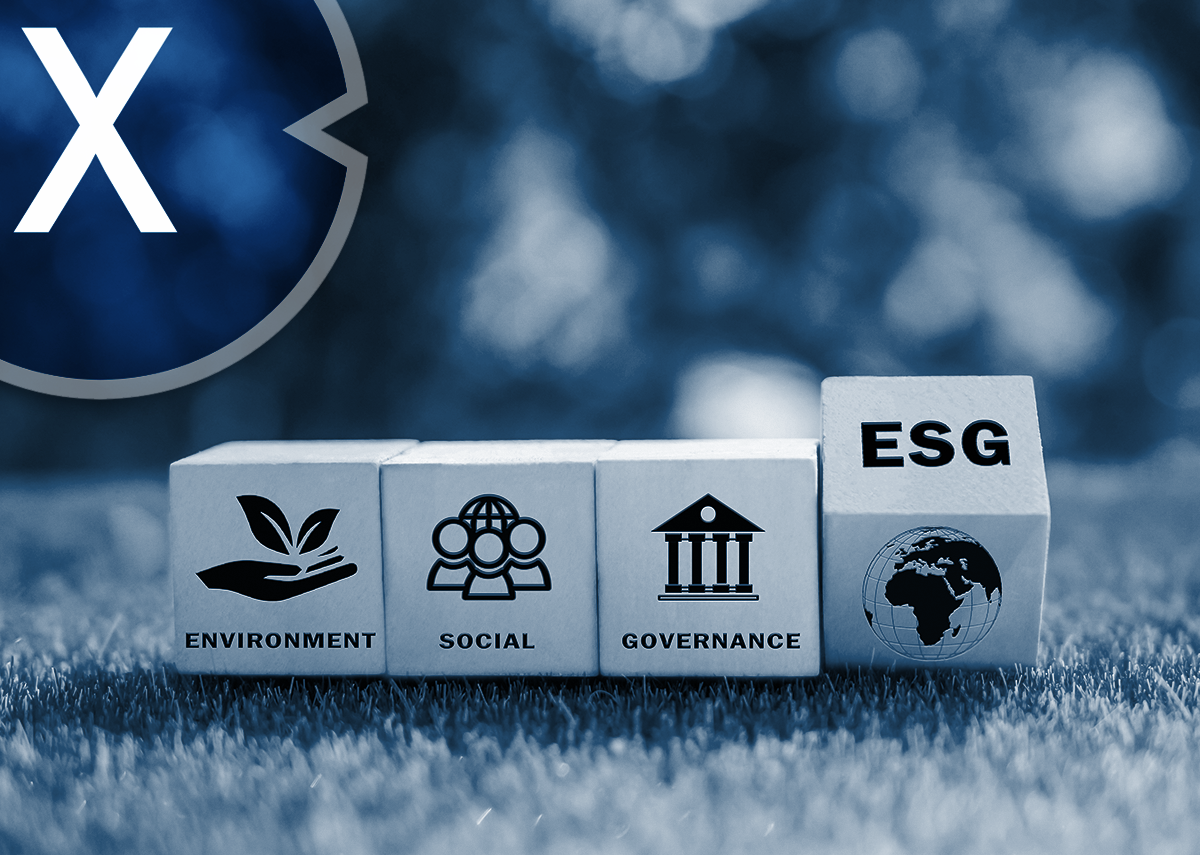
What is ESG (Environmental, Social and Governance), where does it come from, who introduced it and why? – Image: Xpert.Digital
🌏🌿🧑💼 ESG – Environmental, Social and Governance
ESG stands for "Environmental, Social, and Governance," which refers to criteria for assessing the sustainability and ethical impact of a company or business.
🌱 Environmental aspect (E)
The environmental aspect (E) of ESG refers to how a company fulfills its responsibility towards the environment. This includes the management of natural resources, the reduction of emissions, waste management, and the development of sustainability strategies.
🤝 Social aspect (S)
The social aspect (S) considers how a company manages its relationships with employees, suppliers, customers, and the communities in which it operates. This includes labor rights, health and safety in the workplace, and the impact on the local community and society.
⚖️ Governance aspect (G)
The governance aspect (G) refers to corporate management, i.e., how a company is managed and controlled. This includes topics such as business ethics, conflicts of interest, the composition and working methods of the board of directors, and the company's accountability.
🚀 Benefits of working with ESG criteria
Addressing ESG criteria is beneficial for companies for several reasons. First, it can improve risk management, as companies that consider ESG factors are better able to identify and respond to potential risks such as environmental disasters or social unrest. Furthermore, such practices can enhance brand image and reputation, which can positively impact customer relationships and sales.
Another advantage is access to new markets and sources of capital. Investors are increasingly interested in sustainable investments, and a good ESG rating can increase a company's attractiveness to these investor groups. This can also lead to better financing terms, as some lenders offer lower interest rates for projects with high ESG scores.
📈 Implementing an ESG strategy
To implement an ESG strategy, it is crucial that companies develop a clear policy and concrete goals. They should assess their current practices and identify areas where improvements are possible. This also includes training employees on ESG topics and involving all stakeholders in the sustainability process.
📊 Measuring and reporting on ESG performance
Measuring and reporting on ESG performance is also crucial. Companies should be transparent about their progress and seek independent audits of their ESG reports to increase credibility and stakeholder trust.
🔄 Continuous Improvement
Finally, continuous improvement is a key aspect. Companies should regularly review and adjust their ESG goals to ensure they remain relevant and that progress is being made.
✨ ESG as a holistic approach
ESG is a holistic approach that helps companies achieve long-term success and sustainability. It not only offers the opportunity to minimize risks and improve a company's image, but also fosters innovation and can contribute to positive societal change.
📣 Similar topics
- 🌿 ESG criteria and their importance for companies
- 🌟 From risk management to a positive image: The advantages of ESG
- 🏢 Sustainable corporate management through ESG strategies
- 🛠️ The importance of Environmental, Social & Governance in a business context
- 🌱 ESG: A guide for responsible companies
- 🔄 Continuous Improvement and ESG: Why it's Important
- 💼 How ESG strengthens a company's brand image
- 💡 ESG ratings: A key to investment and raising capital
- 🔍 Transparency and reporting: The role of ESG performance
- ✅ Development and implementation of an effective ESG policy
#️⃣ Hashtags: #ESG #Sustainability #CorporateGovernance #RiskManagement #StakeholderEngagement
🌱🏦 Sustainability Communication - Sustainability communication for companies - Corporate PR, marketing, communication & consulting


Sustainability Communication – Sustainability communication for companies – Image: Xpert.Digital
Sustainability communication refers to the communication of information, strategies, goals, and measures related to sustainability. Its aim is to create and promote a better understanding and awareness of sustainable practices and concepts. This form of communication can take place at various levels, for example, within organizations, between companies and their stakeholders, or with the general public.
More information here:
🌱🏦 The origins of the ESG concept 🌱🏦
📜 Historical roots of ESG
The origins of the ESG concept can be traced far back into the past, with the beginnings of investing according to ethical principles dating back centuries. Historically, the roots of modern ESG investing can be traced to religious codes that prohibited investments in slave labor. Specifically, in the 18th century, religious groups such as the Quakers and Methodists in the United States made value-based investment decisions that could resemble today's ESG criteria.
✊ Beginning of socially responsible investing
The practice of ESG investing as we know it today, however, began in the 1960s with so-called socially responsible investing. Investors excluded stocks or entire industries from their portfolios due to business activities such as tobacco production or involvement in the apartheid regime in South Africa. In the 1960s and 1970s, divestments from South Africa were increasingly demanded as a protest against the apartheid system there.
📈 The modern world of ESG investing
These historical decisions were driven by moral norms, cultural values, and often religious beliefs. However, the modern form of ESG investing, which explicitly considers these social, environmental, and governance factors, primarily emerged in the 1970s. It was during this time that organizations and investors began to incorporate criteria beyond pure financial returns into their investment decisions.
🌐 ESG in the business world
The introduction of the ESG concept was driven by a growing awareness of the importance of corporate sustainability and social responsibility. Investors and consumers alike began to evaluate companies based on their performance in these areas. This led companies to integrate ESG principles into their operational strategies and reporting to demonstrate their commitments to the environment, society, and their governance structures.
🔄 The development of ESG
The shift towards ESG also reflected a change in the understanding that long-term economic success depends not only on financial returns, but also on a company's ability to cultivate positive relationships with the environment, society, and within its own governance. Thus, ESG has evolved from a niche concept to a core component of modern business and investment practices. Today, it forms an important basis for evaluating companies and is a crucial criterion for many investors when deciding where to invest their money.
📣 Similar topics
- 🌱 The historical roots of ESG investing
- 🙏 Ethics and Investment: A Trail to the Past
- 🚫 Quakers and Methodists: Pioneers of value-based investing
- 💼 The rise of socially responsible investing
- ✊ Protests and divestments: The era of apartheid
- 🏭 The development of modern ESG criteria in the 1970s
- 🌐 From moral norms to global ESG standards
- 🏢 Integrating ESG into business strategies
- 💡 ESG: A revolution in company valuation
- 📈 ESG Investing: From Niche Concept to Mainstream
#️⃣ Hashtags: #ESGInvesting #Sustainability #SocialResponsibility #CorporateGovernance #ValueBasedInvesting
🌿🌟 ESG Practices: The New Era of Business Behavior 🌟🌿
🌱 Environmental aspect of ESG
Environmental, social, and governance (ESG) practices have become fundamental to the global business environment in recent decades. The roots of ESG can be traced back to various social and environmental movements that developed throughout the 20th century.
🤝 Social aspects
The environmental aspect of ESG focuses on addressing ecological challenges such as climate change, biodiversity loss, deforestation, and water scarcity. Social aspects relate to human rights, labor protection, and the common good. Corporate governance considers the management structures within companies, including management practices, compensation, corruption, and transparency.
🌐 Beginnings of ESG
However, the targeted bundling of these interests under the term ESG only occurred at the beginning of the 21st century. In 2004, the United Nations Environment Programme Finance Initiative (UNEP FI) published a report entitled “Who Cares Wins,” which called on investors to integrate environmental, social, and governance factors into their decision-making.
💼 Governance in Focus
In 2006, the United Nations launched the Principles for Responsible Investment (PRI) initiative, marking another important milestone for the ESG movement. These principles provide a framework for sustainable investments that takes environmental, social, and governance factors into account.
📈 ESG and Investments
ESG factors are now used by investors to assess the long-term risks and opportunities of companies, going beyond traditional financial criteria. Demand for sustainable investments has risen sharply in recent years, driven by growing awareness of social and environmental problems, but also by the realization that sustainable business practices make economic sense in the long run.
🌍 Urgency of the environmental component
The environmental component of ESG has intensified with the urgency of climate change and its consequences. The need to reduce greenhouse gas emissions and transition to a low-carbon economy has prompted companies to give greater consideration to their environmental impact. This includes measures such as reducing emissions, using renewable energy sources, improving resource efficiency, and implementing circular economy principles.
🧑🤝🧑 Social aspects of ESG
On a social level, ESG criteria address how companies interact with employees, suppliers, customers, and the general public. Topics such as diversity and inclusion, working conditions, human rights, and community engagement are gaining increasing importance.
✅ Governance practices
In terms of governance, transparent management, ethical business practices, effective board structures, and the avoidance of conflicts of interest are key. These aspects are essential for building trust with stakeholders and investors. Good corporate governance can lead to improved decision-making processes and has the potential to prevent corporate scandals and fraud.
🤝 ESG as a competitive factor
The integration of ESG has become a key competitive factor. Companies that meet high ESG standards often find it easier to raise capital, as they are perceived as less risky. They can also benefit from stronger customer loyalty and improved employee retention.
💹💰 ESG's impact on company valuations
ESG also has a significant impact on company valuation. Evidence suggests that companies with strong ESG performance often achieve better financial results and command higher market valuations. Investors and analysts are increasingly recognizing that companies performing well in terms of ESG are often better prepared for future challenges.
📊 Disclosure and ESG reporting
Disclosure and reporting on ESG (Environmental, Social, and Governance) factors are becoming increasingly important. Different countries and regions have different regulations and standards in this area. The European Union, for example, is a leader in developing ESG reporting standards and expects companies to disclose their ESG risks and practices in their annual reports.
🌐📏 Efforts to standardize ESG criteria
However, the challenge of standardizing and objectifying ESG criteria remains. Many organizations, such as the Sustainable Accounting Standards Board (SASB), the Global Reporting Initiative (GRI), and the International Integrated Reporting Council (IIRC), are working to develop frameworks that aim to create comparability and consistency in ESG reporting.
🔮✨ Outlook on the future of ESG
Looking ahead, ESG is expected to continue gaining in importance. Ongoing global challenges—be it climate change, social inequality, or the need for responsible corporate governance—underscore the significance of ESG in risk management and investment decisions. It is an ongoing process that is of central importance not only to businesses but also to society and the environment.
📣 Similar topics
- 🌱 ESG as a guide to sustainable business practices
- 🌍 Challenges of climate change from an ESG perspective
- 🤝 ESG and social responsibility in modern corporate management
- 💼 Corporate Governance as a cornerstone of ESG
- 📈 Promoting sustainable investments through ESG criteria
- 🔋 The role of renewable energies in ESG strategies
- 🌟 Diversity and inclusion as a social dimension of ESG
- 📘 Standardization and reporting in the ESG landscape
- 💡 ESG: Key indicator for risk management and investment decisions
- 🔍 Transparency and ethical business practices through ESG governance
#️⃣ Hashtags: #ESG #Sustainability #ClimateChange #CorporateGovernance #SocialResponsibility
Plan your solar system for the most common applications conveniently online with our solar system planner!
With our user-friendly solar system planner, you can design your individual solar system online. Whether you need a solar system for your home, your business, or for agricultural purposes, our planner allows you to consider your specific requirements and develop a customized solution.
The planning process is simple and intuitive. You simply enter the relevant information. Our planner takes this information into account and creates a customized solar system that meets your needs. You can try out different options and configurations to find the optimal solar system for your application.
Furthermore, you can save your plan to review it later or share it with others. Our customer service team is also available to answer any questions and provide support to ensure your solar system is optimally planned.
Use our solar system planner to design your individual solar system for the most common applications and accelerate the transition to clean energy. Get started now and take an important step towards sustainability and energy independence!

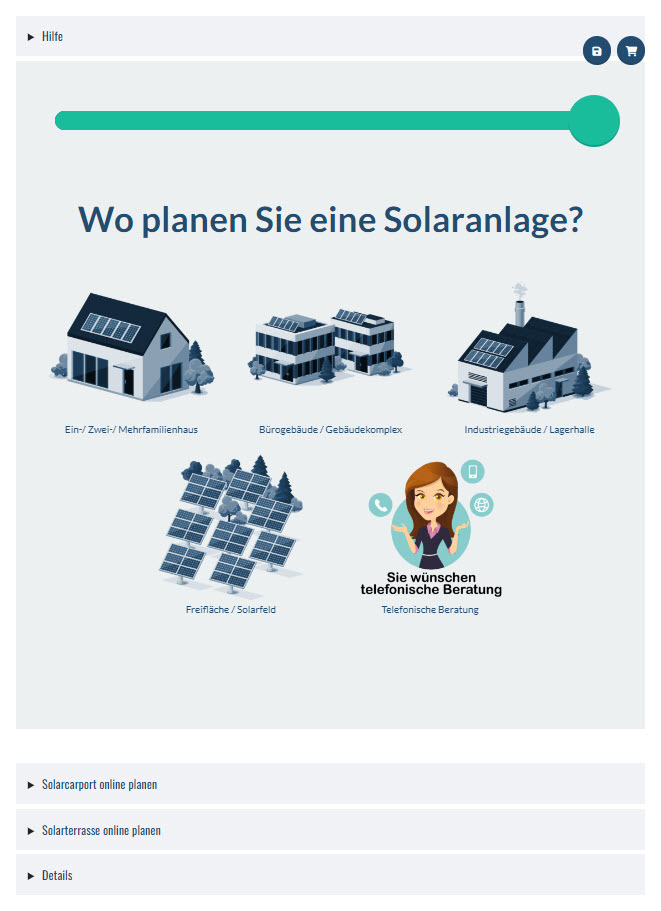
The solar system planner for the most common applications: Plan your solar system online here - Image: Xpert.Digital
More information here:
We are here for you - Consulting - Planning - Implementation - Project Management
☑️ Expert advice on energy-efficient renovation and new construction
☑️ with solar solutions and heat pumps/air conditioners

Konrad Wolfenstein
I would be happy to serve as your personal advisor.
You can contact me by filling out the contact form below or simply call me on +49 157 30 44 9 555 .
I'm looking forward to our joint project.
Write to me


Xpert.Digital - Konrad Wolfenstein
Xpert.Digital is a hub for industry focusing on digitalization, mechanical engineering, logistics/intralogistics and photovoltaics.
With our 360° Business Development solution, we support renowned companies from new business to after-sales.
Market intelligence, smarketing, marketing automation, content development, PR, mail campaigns, personalized social media and lead nurturing are part of our digital tools.
You can find more information at: www.xpert.digital - www.xpert.solar - www.xpert.plus
Keep in touch