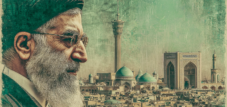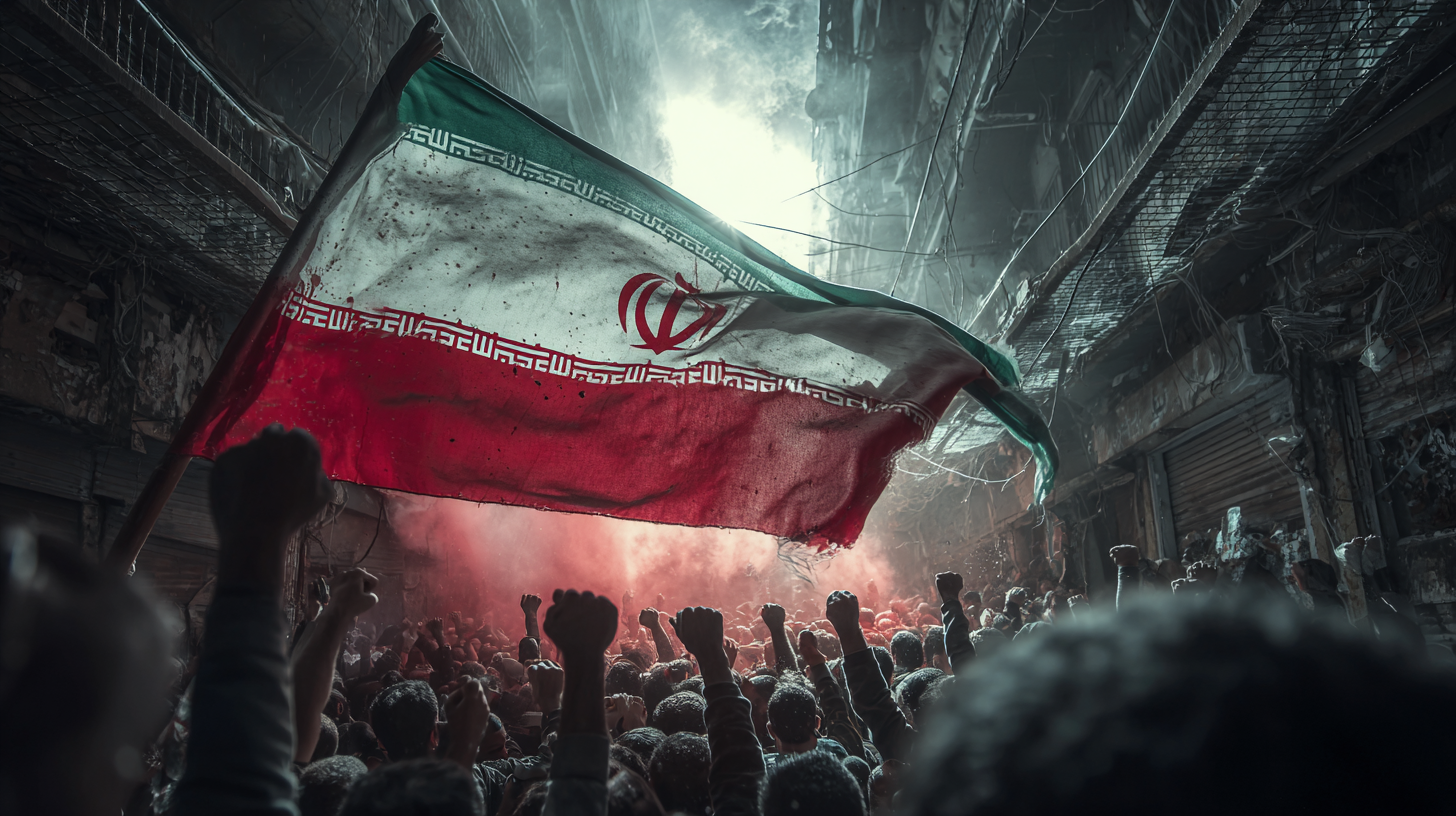
Revolution? Iran on the brink: A system in final decline or poised for a strategic resurrection? – Creative image: Xpert.Digital
How the economic collapse of the Islamic Republic is reshaping power politics in the Middle East
The political structure of a fading revolution
The Islamic Republic of Iran stands at perhaps the most crucial turning point since its founding in 1979. The political system, established by Ayatollah Ruhollah Khomeini and expanded by his successor Ali Khamenei, is under immense pressure from all sides: a succession crisis looms due to the 85-year-old Supreme Leader's failing health, the economy is in freefall, shattering public trust, and its regional position has been weakened by the loss of key allies. The state's response reveals a system increasingly relying on coercion rather than consent, yet appearing more fragile than ever before in its forty-year history.
The state structures, originally intended to balance various centers of power, have become instruments for power struggles and corruption. The Assembly of Experts, which, according to the constitution, elects the next Supreme Leader, consists of 88 mostly elderly clerics who meet behind closed doors. This lack of transparency fuels rumors that Khamenei's son Mojtaba could succeed him—a scenario that would transform the republic from a religious regime into a kind of dynastic dictatorship. The Islamic Revolutionary Guard Corps (IRGC) has risen to become the dominant power and, through a network of shell companies, controls an estimated 40% of the economy. As observers note, Iran today resembles a battleground of rival mafias led by the Guard, whose loyalty lies primarily in their own self-enrichment.
The crisis of confidence runs deeper than the maneuvering of the elite. The 2024 presidential election, which brought Masoud Pezeshkian to power with promises of reform, proved ineffective. His inability to control the security forces or end internet censorship demonstrated the powerlessness of the elected president. The Supreme Leader continues to dictate foreign policy, security, and the nuclear program, while the president must manage a broken economy without being allowed to address the root causes of the problems. This political stalemate has created a power vacuum in which protesters are now demanding not reforms, but a complete system change.
Related to this:

Economic bleeding: More than just sanctions
The economic decline is not solely due to sanctions, but reveals deep-seated problems stemming from decades of mismanagement, corruption, and ideological rigidity. The figures show an economy in grave danger. Inflation has remained consistently above 30% since 2018, officially reaching 32% in 2024, and experts predict it could climb above 40% by 2026. The currency has depreciated dramatically since the beginning of 2024; the dollar's black market value skyrocketed by the end of 2025. This currency collapse has destroyed purchasing power, driven the middle class into poverty, and eliminated any incentive for genuine investment.
The energy sector, once the backbone of the economy, exemplifies the chaos. In the summer of 2024, there was a 25% shortfall in electricity demand, followed by gas shortages in the fall. At times, 30% of gas demand could not be met, causing steel production to plummet by almost half. The problem is not a lack of raw materials—Iran has vast gas reserves—but rather a lack of investment, waste, and the attempt to keep gas cheap domestically while exporting oil. The government is resorting to desperate measures such as tax increases, which further stifle the economy and fuel public anger.
Economic growth has slowed dramatically. Gross domestic product (GDP) is expected to fall below $400 billion by March 2025. Even more alarming is the fact that hardly any money is flowing into new projects (capital formation). With inflation nearing 50%, production is barely profitable, and trust in the government has evaporated. The economy is shifting to the black market and smuggling networks controlled by the Revolutionary Guard. This creates a vicious cycle: economic hardship strengthens precisely those forces that obstruct reforms and profit from the chaos.
The approaching storm: Social unrest and instability
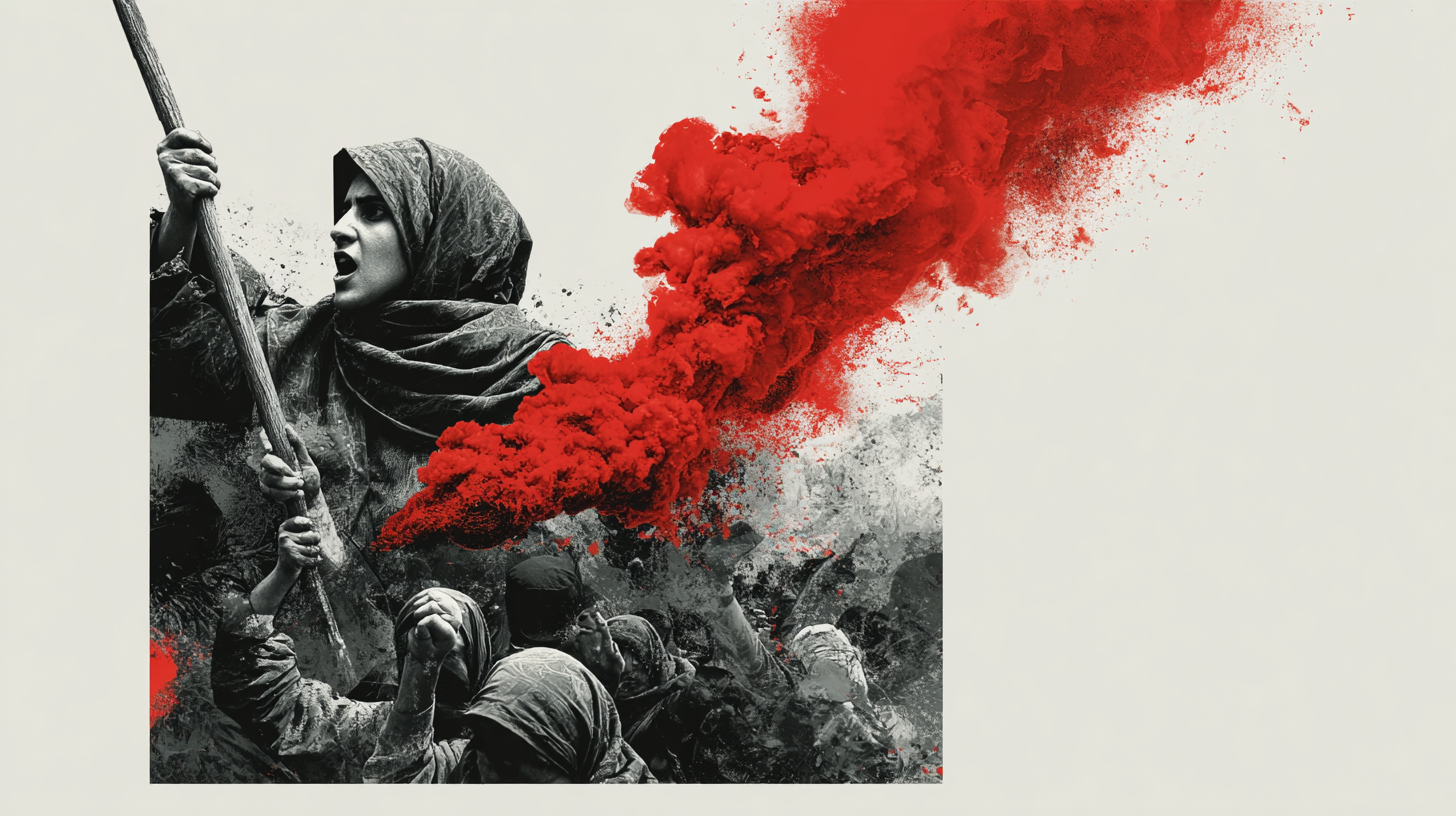
The approaching storm: Social unrest and instability – Image: Xpert.Digital
The economic crisis has escalated into a severe social crisis. At the end of December 2025, mass demonstrations erupted in many cities, initially against high prices, but soon with demands for the regime's overthrow. Slogans like "Death to the dictator" indicate that fear of the Supreme Leader is waning. The protest movement is broadly based – students, workers, women, minorities, and pensioners – suggesting a widespread rejection of the system that surpasses previous waves of protest.
The regime is responding with a mixture of minor concessions and harsh violence. President Pezeshkian promised dialogue, but security forces fired live ammunition at demonstrators and doubled the number of executions compared to the previous year. This contradiction reveals the leadership's disunity and the president's weakness. Khamenei also sent mixed signals: he called for listening to the citizens but simultaneously threatened "rioters" with harsh measures – a sign of strategic uncertainty.
The protests of 2025/2026 differ from the 2022 movement. While the latter focused primarily on women's rights, today the entire system is being challenged for its economic and political failures. Students declared that the system had "held their future hostage for 47 years." This sentiment reflects the frustration of a generation that sees no hope for improvement. As the middle class, formerly a pillar of the state, is impoverished by the crisis, the regime is losing its last buffer against mass anger, increasing the risk of collapse.
Our global industry and economic expertise in business development, sales and marketing

Our global industry and economic expertise in business development, sales and marketing - Image: Xpert.Digital
Industry focus areas: B2B, digitalization (from AI to XR), mechanical engineering, logistics, renewable energies and industry
More information here:
A thematic hub offering insights and expertise:
- Knowledge platform covering global and regional economies, innovation and industry-specific trends
- A collection of analyses, insights, and background information from our key areas of focus
- A place for expertise and information on current developments in business and technology
- A hub for companies seeking information on markets, digitalization, and industry innovations
Caught between all sides: Iran's desperate fight for economic survival
Washington's strategy: Maximum pressure and the art of the possible
The Trump administration's Iran policy in 2025 relies on a targeted escalation to force Tehran to abandon uranium enrichment without risking a major war. In February 2025, President Trump ordered a return to "maximum pressure" to completely halt Iran's oil exports and block its path to a nuclear bomb. The strategy combines economic warfare with diplomatic overtures: Iran must choose between its economic survival and its nuclear program.
The centerpiece was a letter from Trump to Khamenei in March 2025 containing an offer of negotiations, coupled with a warning of military consequences and a 60-day deadline. When the deadline passed, Israel attacked Iranian nuclear facilities in June 2025. The twelve-day conflict damaged three sites and exposed Iran's military weaknesses. The US subsequently warned that it would "immediately eliminate" the Iranian nuclear program should Iran attempt to rebuild it.
The US demands now go far beyond the 2015 nuclear agreement: they are demanding the complete dismantling of the enrichment facilities. Iran refused to release its enriched uranium abroad, while the US was unwilling to provide guarantees of long-term compliance with a new agreement. This deep mistrust has led to a dead end. Trump's team is threatening sanctions against anyone who buys Iranian oil, but is seeking talks through intermediaries to avoid escalation. The goal is to diminish the importance of the Middle East in US strategy while keeping Iran in check. The question remains whether this pressure will lead to negotiations or war, given that Tehran is now operating purely in "survival mode.".
Related to this:

Beijing's long game: Strategic partnership as a safeguard
China's strategy toward Iran in 2025 is characterized by caution: long-term interests take precedence over quick gains. The 25-year agreement of 2021 provides the framework for economic cooperation, but allows Beijing to precisely manage the risk posed by US sanctions. China sees Iran as an important partner for its "Belt and Road Initiative," as an energy supplier, and as a counterweight to the US. However, Chinese companies remain hesitant due to the threat of sanctions, which is why cooperation is growing more slowly than Tehran had hoped.
Trade reached a volume of $13.4 billion in 2024. China buys Iranian oil through intermediaries, securing revenue for Tehran and allowing Beijing to deny direct involvement. Investments flow into infrastructure such as railways and ports. These projects bind Iran economically to China and create vital transport routes to Europe. In doing so, China is creating facts on the ground that will make Iran dependent on Beijing in the long term.
Beijing's goal is regional stability for its trade. China supports Iran politically at the UN, but offers no security guarantees or modern weapons that could trigger a conflict with the US. It is a "limited partnership": enough support to keep Iran stable, but not so much that China itself becomes a target for the US. In Tehran, there is growing concern about becoming one-sidedly dependent – oil in exchange for goods. To prevent this, Iran is trying to attract more genuine investment and technology from China and establish itself as an indispensable part of Chinese supply chains.
Europe's dilemma: values, interests and the sanctions trap
European policy towards Iran in 2025 is a difficult balancing act between preventing nuclear weapons, economic interests, and providing humanitarian aid. In August 2025, Germany, France, and the United Kingdom triggered the so-called "snapback" mechanism. This step reinstated all previous UN sanctions within 30 days, as Iran had enriched uranium almost to weapons-grade levels and obstructed inspectors. Russia and China were unable to prevent this through their veto.
The reimposed sanctions include an arms embargo and strict bans on financial and technological transactions. All business deals must be completed by the beginning of 2026; after that, Iran will be largely isolated from the European financial system. The EU also maintained sanctions for human rights violations and support for Russia. This leaves Tehran facing a dense network of economic and diplomatic blockades.
European politicians face a dilemma: sanctions are intended to target the regime, but they primarily burden the population. High inflation and the currency crisis hit people hard, while European companies are withdrawing for fear of US penalties. The EU is trying to facilitate trade in food and medicine, but financial sanctions are making even this difficult. This is causing conflict in Europe between hardliners and those who fear the humanitarian consequences. The move towards a "snapback" mechanism also demonstrates Europe's attempt to act independently, even if its policy effectively resembles the US approach of "maximum pressure." Europe continues to offer talks, but mutual distrust currently makes diplomatic solutions almost impossible.
Your global marketing and business development partner
☑️ Our business language is English or German
☑️ NEW: Correspondence in your native language!

Konrad Wolfenstein
I and my team are happy to be available to you as your personal advisor.
You can contact me by filling out the contact form here wolfenstein@xpert.digital:or simply call me at +49 7348 4088 965. My email address is
I'm looking forward to our joint project.
☑️ SME support in strategy, consulting, planning and implementation
☑️ Creation or realignment of the digital strategy and digitization
☑️ Expansion and optimization of international sales processes
☑️ Global & Digital B2B trading platforms
☑️ Pioneer Business Development / Marketing / PR / Trade Fairs
🎯🎯🎯 Benefit from Xpert.Digital's extensive, five-fold expertise in one comprehensive service package | BD, R&D, XR, PR & Digital Visibility Optimization

Benefit from Xpert.Digital's extensive, five-fold expertise in a comprehensive service package | R&D, XR, PR & Digital Visibility Optimization - Image: Xpert.Digital
Xpert.Digital possesses in-depth knowledge across various industries. This allows us to develop tailored strategies precisely aligned with the requirements and challenges of your specific market segment. By continuously analyzing market trends and monitoring industry developments, we can act proactively and offer innovative solutions. The combination of experience and expertise generates added value and provides our clients with a decisive competitive advantage.
More information here: