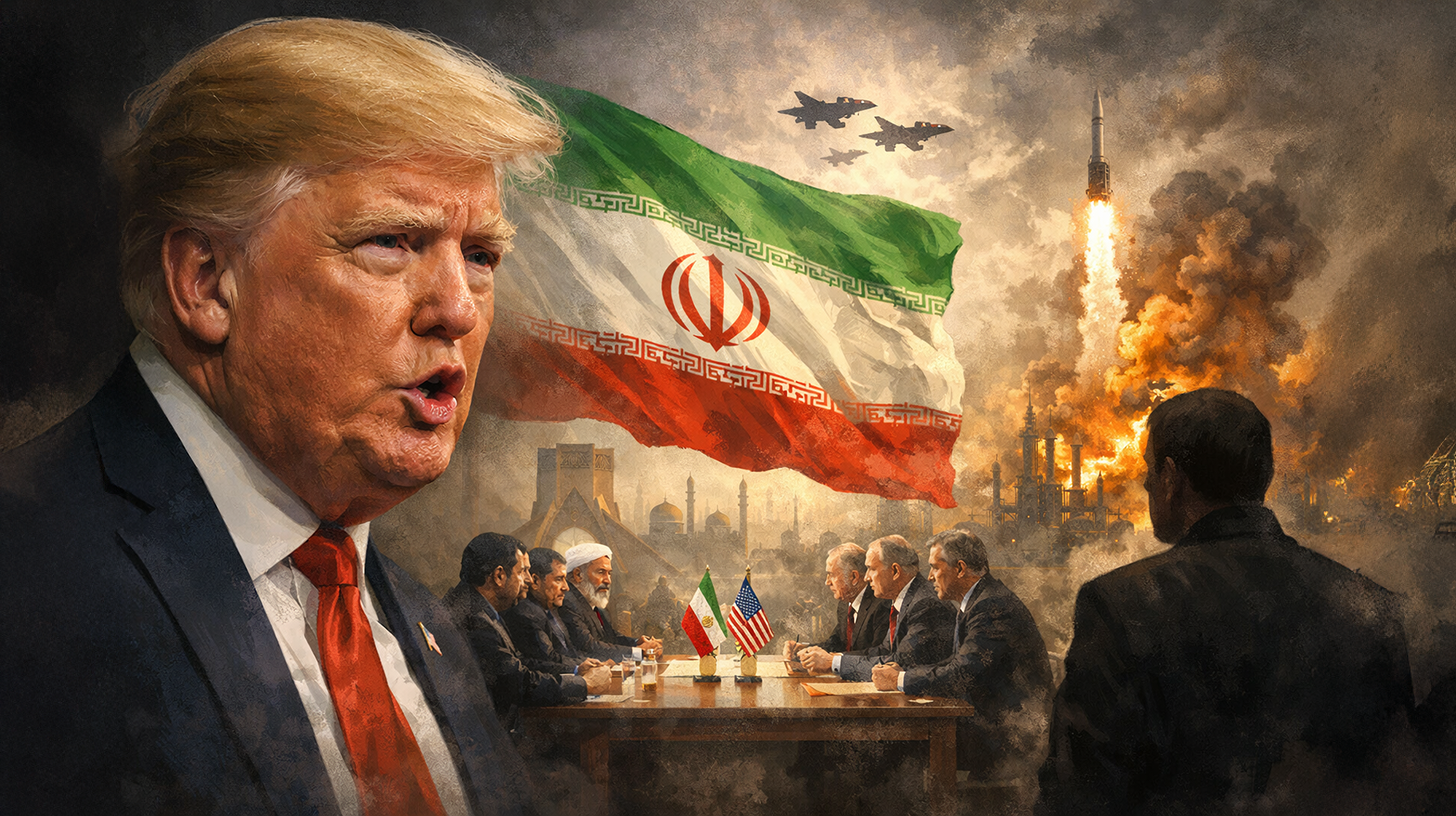
Why does Donald Trump claim that Iran wants to negotiate – and how realistic is this statement really? – Image: Xpert.Digital
Iran in crisis mode: Trump's claim of willingness to negotiate and the actual situation
Trump's Iran initiative: A brilliant bluff or the beginning of the end for the mullah regime?
On Sunday, January 11, 2026, aboard Air Force One, Donald Trump told reporters that "Iran wants to negotiate" and that he had allegedly received a message from the previous day. However, to date, there has been no official Iranian confirmation of this conversation or of any fundamental willingness to negotiate. The Iranian regime has publicly ignored or tacitly accepted Trump's claim without confirming or denying it.
There are currently more signs of escalation than any clearly confirmed new initiative from Tehran for comprehensive negotiations, for example with Israel or the USA. At present, there is talk of calls for talks and diplomatic soundings; however, the latest reports do not indicate a clear, publicly confirmed willingness on Tehran to negotiate the key conflicts.
This raises the question of whether Trump's statement reflects an actual change in Iran's position or whether Trump is constructing a political narrative to portray his administration as peacemaking while simultaneously exerting pressure on Iran. The strategy could be to put the Iranian leadership in a position where it must either publicly contradict him (which appears as a refusal to negotiate) or effectively enter into negotiations (thus validating Trump's narrative).
The fact that Trump simultaneously announces "very drastic options" for military intervention suggests a strategy of exerting pressure. Trump is signaling: Either you negotiate, or we will act militarily. This is classic diplomacy under pressure. The credibility of this threat is underscored by Trump's recent military action in Venezuela, where the administration did indeed intervene.
The Iranian regime is indeed under considerable pressure – but not primarily because of Trump's threats alone, but rather because of the internal political crisis. The nationwide mass protests since the end of December 2025, which have spread across 31 provinces and over 180 cities, pose an existential challenge. If the regime is now inclined toward negotiations, it is because the combination of internal destabilization and external pressure has placed it in a precarious position. The willingness to negotiate would then be a symptom of this weakness, not the result of a genuine attempt to reach an agreement.
Trump could also be trying to mobilize the protest movement with his statement. If the opposition believes that the US is about to intervene, they could be encouraged to intensify their protests. This would put additional pressure on the regime. Such a strategy—external threat combined with internal mobilization—is a classic tool of regime change politics.
Related to this:

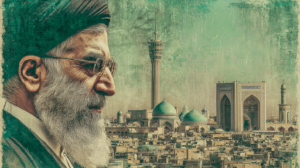
Secret signals from Tehran? What's really behind Trump's surprise announcement?
The discrepancy between Trump's confidence in victory and the reality in the Middle East could hardly be greater. While the White House spins a narrative of strength, the Iranian regime is fighting not primarily against external enemies, but for its own survival. The trigger is a historic economic shock: The rial's plunge to a record low of 1.48 million dollars has caused inflation to explode and unleashed a wave of protests fundamentally different from previous unrest. It is no longer just about reforms, but about the very existence of the system.
Against this backdrop, Trump's claim appears in a new light: Is the offered willingness to negotiate a genuine diplomatic turning point or a final symptom of the weakness of an isolated regime? And how seriously should Trump's simultaneous threats of "drastic military options" be taken, given that the US has already intervened in Venezuela?
This article sheds light on the background of this power struggle: from the catastrophic economic situation that unites bazaar merchants and students, to the Pentagon's concrete military scenarios, and the dilemma facing European diplomacy. Learn why China and Russia are no longer viable protecting powers and whether we are witnessing a new nuclear deal or the final collapse of the Islamic Republic.
What domestic political factors triggered the protests and how could the regime avert them?
The immediate trigger of the protests was an economic shock of enormous proportions. On December 28, 2025, the Iranian rial plummeted by over six percent in a single day on the open market. The exchange rate fell to a historic low of 1.48 million rials per US dollar, whereas just a year earlier the currency had traded at around 800,000 rials. By comparison, when the nuclear agreement was signed in 2015, the rial was trading at only 32,000 rials per dollar. This dramatic devaluation made it impossible for bazaar merchants to calculate their inventories or maintain their businesses. Hundreds of shopkeepers closed their businesses in Tehran's legendary bazaar.
At the same time, the inflation rate has jumped to record highs. The International Monetary Fund forecasts a consumer price increase of 42.4 percent for 2025, warning that it will not fall below 40 percent in 2026. In real terms, the prices of everyday goods have risen even more drastically: food prices increased by 72 percent within twelve months, while medicines became 50 percent more expensive. For a population whose real incomes are being eroded by inflation, this is a threat to their very existence.
The causes of this crisis are structural. The US unilaterally withdrew from the international nuclear agreement in 2018, whereupon Tehran also suspended compliance in 2024. In response, UN sanctions were reactivated in 2025. Iran's isolation from the global financial system is almost total. At the same time, experts report massive mismanagement and corruption: Former presidential advisor Laylaz reports that $40 to $50 billion disappears from the Iranian economy annually through capital flight and corruption. President Masoud Pezeshkian also reported that of $12 billion earmarked for food and medicine imports, approximately $8 billion was siphoned off.
The middle class, traditionally a buffer against radical upheavals, is eroding rapidly. People who once considered themselves wealthy are falling into poverty. This has psychological consequences: the hope of upward mobility disappears, and a sense of hopelessness grows. Young people, in particular, see no future in the country.
The regime initially attempted to respond with superficial personnel changes. Central bank governor Mohammad Farsin resigned, and the vice president lost his position. But such measures do nothing to address the structural crisis. The real problem—an isolated, sanctioned, and corruption-ridden economic system—cannot be solved with a few personnel changes.
The protests themselves differ fundamentally from previous uprisings. The "Woman, Life, Freedom" movement of 2022 was primarily politically motivated and directed against the oppression of women. The current protests began with economic concerns but quickly became politicized. Demonstrators are demanding not only wage increases but also the overthrow of the Islamic Republic. This demonstrates the depth of the delegitimization: when even the regime's economic foundation collapses, the population doesn't ask "How can the state cut spending?" but rather "Why should we support this state?"
Another factor is the symbolic role of Reza Pahlavi, the exiled son of the deposed Shah. His calls for demonstrations have been shared millions of times. This is significant because it shows that even people who oppose a monarchy see him as a potential unifying figure. This signals the extent to which the regime's legitimacy has eroded.
The regime could only avert this crisis by implementing radical economic reforms—that is, dismantling corruption networks, streamlining state subsidies, and halting the flow of capital. However, precisely these measures would harm the ruling elite, which is why they cannot be implemented. Therefore, a way out through de-escalation and negotiation with the West is not seen as abandoning reforms, but rather as a necessity for stabilizing the system, even if this can only be a temporary solution.
Our global industry and economic expertise in business development, sales and marketing


Our global industry and economic expertise in business development, sales and marketing - Image: Xpert.Digital
Industry focus areas: B2B, digitalization (from AI to XR), mechanical engineering, logistics, renewable energies and industry
More information here:
A thematic hub offering insights and expertise:
- Knowledge platform covering global and regional economies, innovation and industry-specific trends
- A collection of analyses, insights, and background information from our key areas of focus
- A place for expertise and information on current developments in business and technology
- A hub for companies seeking information on markets, digitalization, and industry innovations
Caught between two sides: How Trump's pressure and protests are tearing apart Iran's regime
How realistic are Trump's threats of military intervention, and what scenarios could there be?
Trump's military threats are not mere rhetoric, as recent events in Venezuela demonstrate. Trump authorized airstrikes on Venezuelan targets to capture dictator Maduro. This action was carried out while Trump simultaneously pledged support to Iran for protesters and considered military "options." This suggests a strategy of coordinating regime-change operations in multiple countries.
Media reports confirm that the US military is indeed planning concrete invasion scenarios. The Wall Street Journal, citing US officials, reported that options for "large-scale airstrikes on multiple military installations in Iran" are being discussed. The Pentagon is also considering cyberattacks and symbolic military operations such as deploying an aircraft carrier strike group.
However, there are also factors that argue against a large-scale invasion. First, there have been no troop movements or material preparations to date that would indicate an imminent attack. Second, a major war in Iran would lead to massive oil price shocks, as Iran exports over 1.5 million barrels per day. The global economy would suffer. Third, the costs of a longer-term commitment to Iran could be substantial for the Trump administration. Trump is known for avoiding costly military adventures.
More likely than a full-scale invasion are limited options. An airstrike on selected targets of the nuclear program or drone and cyber operations against critical infrastructure are conceivable. Israel could take the lead – Netanyahu and Foreign Minister Rubio discussed "possibilities of a US intervention" on Saturday. Israel already has experience with targeted attacks on Iranian nuclear facilities (June 2025, October 2024).
The Iranian leadership has already threatened retaliation. Parliament Speaker Mohammad Baqer Qalibaf declared that "US bases and ships, as well as occupied territories (in Israel), will become legitimate targets." Iran could use drones and naval operations against US destroyers in the Persian Gulf or conduct operations through allies in Iraq and Syria. However, Iran's military strength has been significantly weakened following Israeli airstrikes.
A realistic scenario would therefore be a tit-for-tat exchange: limited US airstrikes, Iranian retaliatory operations, then a pause for negotiations. Trump's focus appears to be on exerting pressure and forcing concessions on the nuclear program – not on a comprehensive regime-change operation, although this cannot be ruled out as a long-term goal.
Related to this:
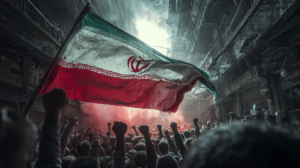
What do the domestic political turmoil mean for European and American decision-makers, both economically and strategically?
For European companies and policymakers, the events in Iran serve as a reminder of the reality of sanctions regimes. Since the US withdrew from the nuclear agreement in 2018, European trade relations with Iran have virtually ceased. The reactivation of UN sanctions in October 2025 further exacerbated this effect.
The strategic core of the issue is nuclear policy. Germany, France, and Great Britain have entered into nuclear talks with Iran, but these negotiations are in a precarious position. Europe holds the so-called snapback mechanism – a way to automatically reinstate all previous UN sanctions without Russia or China being able to veto them. The E3 countries have emphasized that the door to a diplomatic solution must remain open, but insist that Iran fulfills its obligations.
This reveals a strategic dilemma for Europe: If Iran, under internal and external pressure, were truly prepared to engage in serious negotiations, this could present an opportunity for genuine progress on its nuclear program. However, there is a risk that Trump will act unilaterally and isolate Europe. Trump could reach an agreement with Iran that disregards European security interests – for example, if the US relaxes its nuclear program but normalizes other aspects of its Iran policy.
For the US, the strategic advantage is currently significant. Iran's weakness, combined with Trump's willingness to use threats, gives Washington enormous leverage in negotiations. Iran could be forced to accept inspections, reduce uranium enrichment, and possibly even negotiate its missile program – something Europeans would like to achieve but have not yet managed.
The situation is unclear for arms and energy companies. The existing sanctions have effectively ended trade with Iran. While a normalization of relations would grant energy companies access to Iran's oil resources, the geopolitical risks would remain high. The Strait of Hormuz, through which approximately 30 percent of global ocean-going oil flows, could be jeopardized at any time by an escalating situation.
A major uncertainty for European strategists is the question of regime stability. If the Iranian regime were to collapse—whether through external intervention or internal implosion—this would entail massive geopolitical upheaval. China and Russia would see their positions in the Middle East threatened. A “new Iran” under pro-Western leadership would have entirely different foreign policy alliances. This could be advantageous for the West (more stable, less radical), but it could also create a vacuum that would quickly be filled with regional conflicts (Saudi Arabia vs. the UAE, Israel vs. Palestinian groups).
For European decision-makers, this means that the ability to maintain their own diplomatic channels with Iran and not be entirely dependent on Trump's dictates will be strategically crucial. The snapback mechanism is Europe's last real negotiating card. They should not squander it carelessly by allowing it to be completely absorbed into the US process.
How will Iranian civil society, and especially the business community, react to potential negotiations?
The bazaar community that initiated these protests will view any potential negotiations with skepticism. For merchants, the primary concern is not geopolitical positions, but the immediate stabilization of the currency and an end to inflation. A negotiated agreement between the US and Iran that includes sanctions relief could theoretically help – but the time until implementation is long, and the risks are significant.
The protest movement itself is heterogeneous. The original bazaar merchants represent a conservative element who would be willing to do business with the regime if the economic situation were to normalize. Alongside them are students, workers, and intellectuals who demand more fundamental change—or even regime change. These groups will view any potential negotiations with the West as a betrayal of their demands for freedom and genuine systemic change.
Ethnic minorities, particularly Kurds and Lurs living in the southwestern provinces, are likely to seek to overthrow the regime, regardless of foreign policy agreements. They suffer from chronic oppression and see the current protests as a historic opportunity for more fundamental change.
For European and American businesses, this means that a swift return to "normal" trade relations with Iran is unrealistic. Even if sanctions are eased, the investment climate remains uncertain as long as the political situation is not stabilized. European companies will remain cautious but must also strategically consider how to position themselves should the regime or its foreign policy actually undergo fundamental changes.
What role do external actors such as China, Russia, and the Israel-USA alliance play in this phase of the crisis?
China and Russia are at a significant disadvantage in this situation. Iran is a crucial geostrategic partner for both countries – China buys Iranian oil, and Russia coordinates with Iran in Syria and the Middle East. A weak Iran, or one forced to make concessions, is detrimental to both countries. Regime change in Iran would isolate China and Russia in the region.
However, neither China nor Russia can intervene effectively. China may be economically important to Iran, but it lacks the necessary military resources. Russia is fighting in Ukraine and cannot also provide military support to Iran. This explains why the Iranian regime may be forced to consider negotiations: its traditional protectors are unable to help.
Israel and the US, however, are acting in a coordinated manner. Netanyahu spoke with Foreign Minister Rubio about "possibilities for US intervention." Israel has a paramount interest: A strong, nuclear-armed Iran is an existential threat. A weak Iran, or one under new leadership, would be ideal from Netanyahu's perspective. Therefore, Israel and the US will likely continue to coordinate their efforts to exert pressure on Iran.
A major uncertainty lies in Trump's relationship with Saudi Arabia and the UAE. Both countries are rivals of Iran in the region and could encourage Trump to actually weaken Iran. However, Trump also has business interests in these countries, and a war in Iran would raise oil prices—which could hurt both countries during economically challenging times.
For European strategists, it is crucial to understand that the Middle East balance of power could shift. A weaker Iran could lead to greater influence for Saudi Arabia and Israel – which could have a destabilizing effect. A stable Iran, committed to making concessions and operating under the same leadership structures, could actually be safer than a regime that is overthrown from the outside, leaving a power vacuum.
Your global marketing and business development partner
☑️ Our business language is English or German
☑️ NEW: Correspondence in your native language!

Konrad Wolfenstein
I and my team are happy to be available to you as your personal advisor.
You can contact me by filling out the contact form here wolfenstein@xpert.digital:or simply call me at +49 7348 4088 965. My email address is
I'm looking forward to our joint project.
☑️ SME support in strategy, consulting, planning and implementation
☑️ Creation or realignment of the digital strategy and digitization
☑️ Expansion and optimization of international sales processes
☑️ Global & Digital B2B trading platforms
☑️ Pioneer Business Development / Marketing / PR / Trade Fairs
🎯🎯🎯 Benefit from Xpert.Digital's extensive, five-fold expertise in one comprehensive service package | BD, R&D, XR, PR & Digital Visibility Optimization

Benefit from Xpert.Digital's extensive, five-fold expertise in a comprehensive service package | R&D, XR, PR & Digital Visibility Optimization - Image: Xpert.Digital
Xpert.Digital possesses in-depth knowledge across various industries. This allows us to develop tailored strategies precisely aligned with the requirements and challenges of your specific market segment. By continuously analyzing market trends and monitoring industry developments, we can act proactively and offer innovative solutions. The combination of experience and expertise generates added value and provides our clients with a decisive competitive advantage.
More information here: