The Internet of Things opens up new perspectives for companies and investors – even if it is still uncertain how it will develop.

Internet of Things – Endless possibilities – Image: everything possible|Shutterstock.com
The Internet of Things has been capturing people's imaginations for quite some time now. And rightly so, because the Internet of Things (IoT) has the potential to impact the economy and our private lives as profoundly as the internet itself. In the IoT, devices and systems are interconnected, enabling them to communicate seamlessly and automatically, and to exchange data. Concepts such as artificial intelligence (AI), autonomous driving, connected shopping with mobile, cashless payment, and smart home applications for apartments and houses are all inconceivable without the IoT. This technology is not limited to electronic objects; for example, people could also be equipped with medical chips that digitally record blood pressure, pulse, or blood sugar levels and send them to external software for analysis.
This article was previously published in GLOBAL INVESTOR, the trade magazine for global economics, trends and investment funds: Internet of Things
The new 5G mobile communications standard is what makes the IoT possible in the first place. It promises data rates of up to 20 gigabits per second (Gbit/s) – LTE reaches a maximum of one Gbit/s – as well as higher frequency capacities and data throughput. Only in this way can IoT systems communicate seamlessly with each other and technologies such as autonomous driving be implemented safely. Another advantage of 5G over conventional LTE technology is its lower energy consumption, which makes the use of IoT systems at the nanoscale conceivable for the first time. 5G is thus paving the way for the IoT, which will help infrastructure providers such as telecommunications companies and other service providers achieve new growth.
More and more devices are already being networked together, whether in companies to intensify automated manufacturing or in private households in smart homes for the efficient control of electricity consumption, electrical systems, or even vacuum cleaners that clean when the residents are away. Thus, the IoT is already significantly impacting businesses and private users. Therefore, many expect this development to lead to a boom in new business models – and simultaneously a renaissance of older approaches.

Smart home technology interface on smartphone app screen with augmented reality (AR) – view of Internet of Things (IoT) connected objects inside the home – Image: NicoElNino|Shutterstock.com
AI is particularly important in this context; after all, only autonomously operating, self-learning structures enable the efficient processing of the enormous volume of data in the IoT. Human labor will no longer be sufficient to manage and organize the extremely complex and virtually immeasurable data network on which the IoT is based.
As with all activities, processes, and production procedures that rely on online services, security is crucial in the IoT for successful implementation in companies and public acceptance. Therefore, it is important that this topic is given high priority from the outset.
The IoT does not reduce the risk for companies of being hacked through vulnerabilities in their applications or purchased software, DDoS attacks, or the download of malware. On the contrary, the billions of connected devices also mean billions of potential security gaps for users. And there will be many, as estimates predict over 50 billion IoT devices by 2020. Furthermore, cloud-based storage and Software-as-a-Service (SaaS) solutions are becoming increasingly important for securing these large volumes of data. This technology unintentionally creates vulnerabilities for manipulation, so security engineers must place the utmost importance on securing this area.
Furthermore, information technology is currently developing at a breakneck pace, so security systems cannot keep up. This lack of standards creates vulnerabilities for unauthorized third parties. Experts both within and outside of companies have already recognized this risk. Numerous measures are being implemented to counter it and ensure a more secure IoT. These include components such as consistently encrypted, cryptographic authentication of IoT participants, and therefore tamper-proof authentication; up-to-date security systems; and ongoing analyses that uncover and eliminate weaknesses and security gaps in the IoT. Companies specializing in such services can expect steadily increasing demand in the coming years.
Regardless of future business models, traditional industries also benefit from the IoT. This development is not new and began with the increasing use of robots in manufacturing. In the course of reshoring – as opposed to offshoring – more and more companies have been relocating production capacity from low-wage countries like China since the 1990s. The idea behind this is that the more automated companies are, the lower their personnel costs and the less advantage they gain from cheap labor in other countries. This makes manufacturing in Germany attractive again for these companies, because in addition to reduced personnel costs, domestic production offers many advantages; some of these include direct contact, short distances, highly qualified personnel, and the absence of language barriers. For this reason, companies from diverse sectors such as electrical engineering, mechanical engineering, and the consumer goods industry have once again begun expanding their capacities or opening new locations in Germany. One example is Bosch's new one-billion-euro investment in a chip factory in Dresden.
In international comparison, Germany is very well positioned in robotics, ranking third worldwide with a density of 31 robots per 1,000 employees, behind South Korea with 63 and Singapore with 49. The USA, by contrast, only manages 19 robots per 1,000 employees. The reshoring trend will be further intensified by the spread of the IoT, as automation and the use of robots in smart factories go hand in hand with the networking of the physical and digital components of this system. Therefore, it is worthwhile for investors to look at domestic companies that are successful in this field. Their experience should prove useful in the future implementation of further IoT projects.
But even apart from robots and smart factories, the IoT is likely to revolutionize our entire lives. It is used to accelerate economic work processes and it is changing our private lives by making many things easier and more convenient. That's why the technology's applications are so diverse; they affect almost everything people do, both professionally and privately.
Which industries or companies ultimately benefit from the IoT depends on the extent to which they can use the technology to create added value for themselves. In principle, every company, regardless of its sector, must integrate at least some elements of the IoT to remain competitive in the future. Who exactly those will be is not yet foreseeable. However, it is clear that German companies need to act quickly if they don't want to fall behind their American or Asian competitors, for whom the IoT has long been a much higher priority.
Those looking to capitalize on the IoT trend now should focus less on analyzing the IoT innovation and adaptability of companies and industries, and instead consider the sectors that directly benefit from the technology. Similar to the famous example of gold prospectors and the traders who supplied them, who ultimately profited most from the boom, the focus should be on the key players who ensure the smooth operation of the IoT infrastructure. The following areas are particularly important: storage solution providers, service providers, software developers, security software, IoT hardware, payment systems, and service technicians and consultants.
The boom in online services, Industry 4.0, and networked systems is already leading to a gigantic volume of data being generated and transmitted daily. Currently, an estimated 2.5 billion gigabytes (GB) of data are produced every day. Approximately 80 percent of this is unorganized; it originates as images, log files, or chat transcripts that first need to be processed before they can be analyzed. The Internet of Things (IoT) is expected to multiply this data volume many times over. Therefore, high-performance storage solutions are in demand, where data can be stored securely and accessed quickly. Providers with sufficient capacity in Germany have an advantage here, especially in times of hacking and the growing fear of data theft. Short distances guarantee fast access and security against unauthorized external access by third parties or even foreign governments, a level of security not available with servers located abroad.
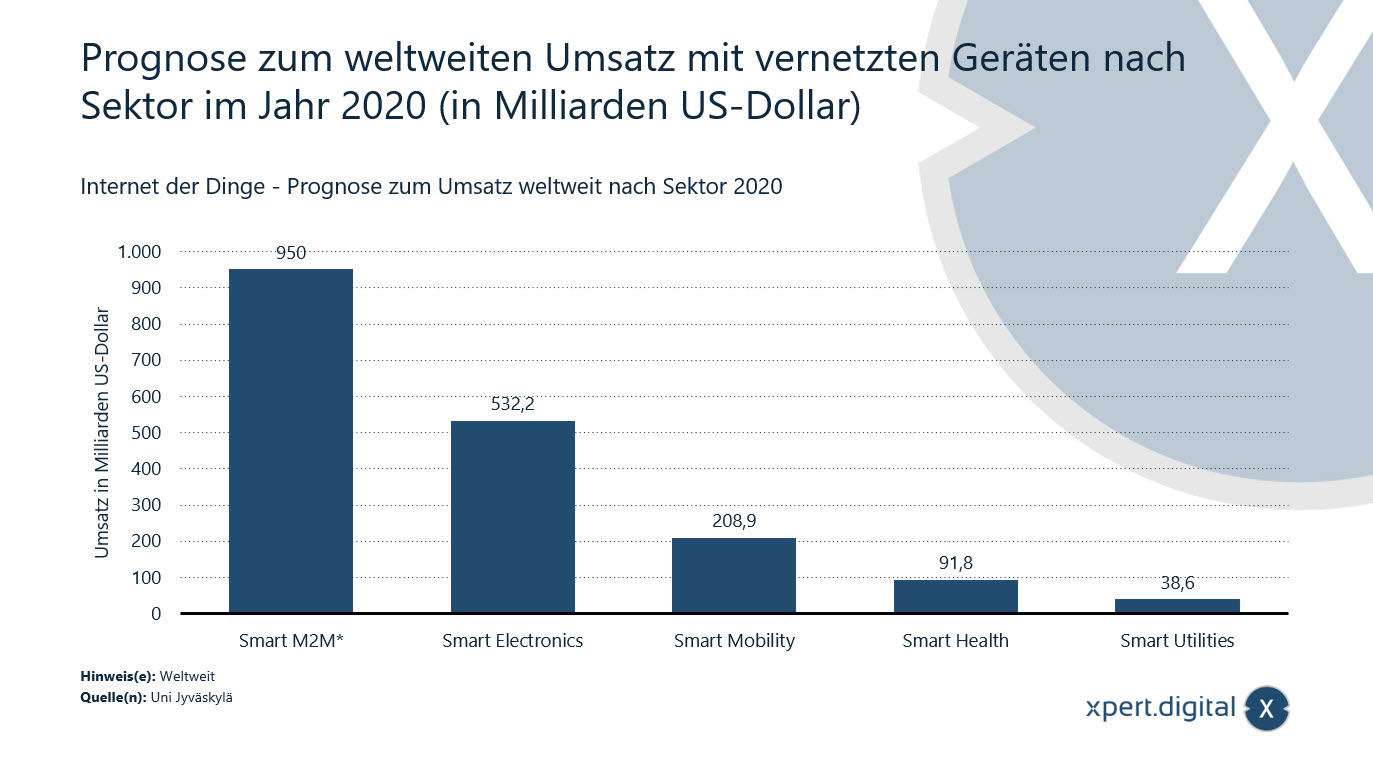
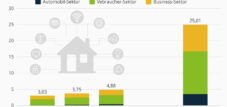
Forecast of global revenue from connected devices by sector in 2020 (in billion US dollars) – Image: Xpert.Digital
This statistic shows a forecast for global revenue from connected devices by sector in 2020. It was predicted that a revenue volume of approximately 532 billion US dollars could be achieved worldwide with smart electronic devices in 2020.
Regardless of their location, operators of cloud storage and SaaS solutions will benefit, as a defining characteristic of the IoT is its global reach. When systems access data for communication from anywhere, they can do so via a cloud system centrally populated with the necessary information. An e-commerce giant like Amazon recognized this long ago: the company's cloud solutions now contribute a growing share to its revenue. However, here too, providers must be able to guarantee comprehensive security to gain customer trust.
But the technology would have no chance without high-performance connections for transmission. The data rates required for the next generation of IoT can only be guaranteed by state-of-the-art mobile data lines like the new 5G technology. Compared to LTE, 5G is many times faster and ensures that communication between autonomous devices via the IoT can take place in real time. Telecommunications companies with the necessary infrastructure are therefore among the beneficiaries of this development, regardless of who or what ultimately prevails.
The vast array of IoT-based applications demands a large number of qualified programmers and software solution providers. Whether national or international, companies specializing in creating scalable solutions for these needs are likely to experience booming demand soon. Due to the numerous requirements, new providers are expected to establish themselves in the market. Proximity to customers and the potential to recruit qualified young talent are crucial. Therefore, specialists from Germany should also attract the attention of investors in countries like the USA, India, and China who want to invest capital in this sector. AI developers, too, can expect thriving business, as AI will ultimately be responsible for reading, processing, and translating the massive amounts of IoT data into the appropriate commands.
With increasing connectivity comes a greater risk of misuse and manipulation by unauthorized third parties. Even though providers of SaaS and cloud solutions, as well as data storage and transmission services, are doing a great deal to protect their customers and their data, the need for additional security measures will rise significantly. Because such solutions scale well, developers have a good chance of dominating the market in their respective segments. Potential investors need to identify the frontrunners early on.
There is a great need for digital infrastructure, but also for providers of the technology that can equip the communicating devices with their hardware. This includes, for example, RFID (radio-frequency identification) or other microsystems that enable the networking of devices. Assuming that even the smallest units in the nanoscale range will eventually become components of the IoT, specialists in the production of microscopically small data transmitters or radio chips will be in high demand. Since the demand for these products will reach into the billions, successful providers can expect high and secure sales growth.
The IoT is so effective primarily because the systems can autonomously contact, negotiate, and conclude contracts without human intervention. Blockchain-based systems like cryptocurrencies are well-suited for processing contracts and paying for services. It's not Bitcoin, with its largely payment-oriented application, but rather systems like Ethereum or Neo that, in addition to their basic payment function, enable market participants to independently conclude contracts with each other using so-called smart contracts, thus paving the way for the IoT. Therefore, the premature pronouncements of the end of cryptocurrencies after the boom at the end of 2017 and the subsequent crash were likely unfounded.
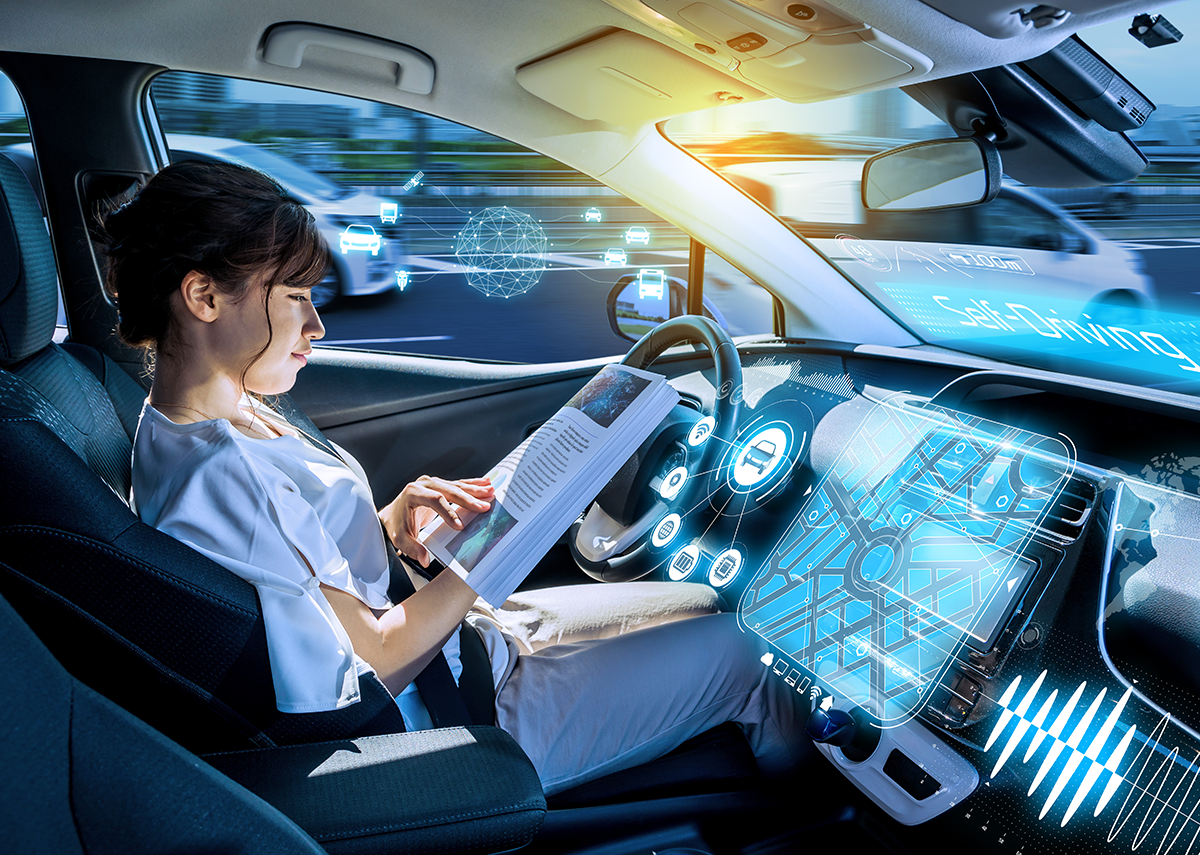
Safe autonomous driving thanks to IoT – Image: metamorworks|Shutterstock.com
The dominant characteristic of the IoT is the autonomy of the devices. However, even in the future, there will be people who control, maintain, and replace the systems, or who advise companies on which system solution is best suited to their needs. Therefore, the demand for providers specializing in these services is likely to increase.
Companies and investors have numerous opportunities to secure existing business models, develop new ones, and identify lucrative investment opportunities. While the future development of the IoT remains uncertain, it is already clear that it
will fundamentally change our understanding of work and production processes, as well as the way we live. Whether you are an entrepreneur, an individual, or an investor, it's time to explore the opportunities that lie ahead.
Why Xpert.Digital?
We have many years of experience in digitalization. Our Digital Innovation Hub was one of the first of its kind in logistics and photovoltaics. Smart grids and AI are not foreign concepts to us. We take a holistic approach and develop solutions and concepts based on this understanding. Our focus is on e-commerce, beauty, fashion, mechanical engineering, logistics, intralogistics, and photovoltaics.

Konrad Wolfenstein
I would be happy to serve as your personal advisor.
You can contact me by filling out the contact form below or simply call me on +49 7348 4088 965 (Munich) .
I'm looking forward to our joint project.
Write to me


Xpert.Digital – Konrad Wolfenstein
Xpert.Digital is a hub for industry focusing on digitalization, mechanical engineering, logistics/intralogistics and photovoltaics.
With our 360° Business Development solution, we support renowned companies from new business to after-sales.
Market intelligence, smarketing, marketing automation, content development, PR, mail campaigns, personalized social media and lead nurturing are part of our digital tools.
You can find more information at: www.xpert.digital – www.xpert.solar – www.xpert.plus
Keep in touch