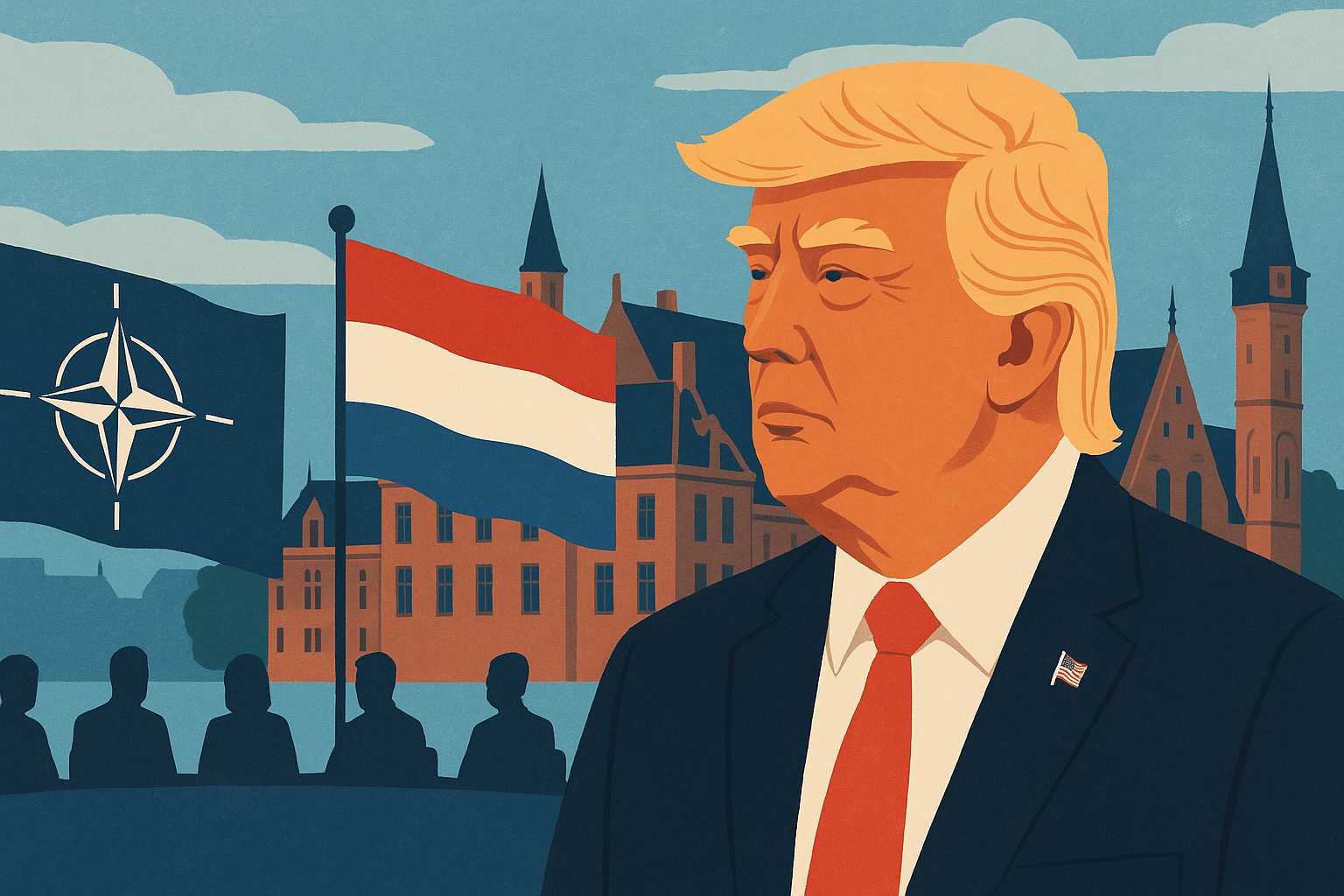
Interesting facts about the conclusion of the NATO summit in The Hague: A historic meeting to strengthen the Western defense alliance – Image: Xpert.Digital
Trump dominates NATO summit: European allies make far-reaching concessions
Superlatives and compromises: The Hague marks a costly new beginning for Western defense
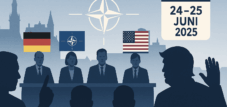
The NATO summit in The Hague on June 24 and 25, 2025, marked a turning point in the history of the North Atlantic Alliance. For the first time since NATO's founding in 1949, the Netherlands hosted a summit. The meeting took place at the World Forum in The Hague and brought together representatives of all 32 member states, including heads of state and government, as well as foreign and defense ministers.
Related to this:

Basis and preparation for the summit
Preparations for this summit had been underway since the decision at the 2023 NATO summit in Vilnius that the Netherlands would host the event. Mark Rutte, the new NATO Secretary General and former Dutch Prime Minister, led the alliance in his hometown. The Hague, known as the "City of Peace and Justice," provided a symbolically fitting setting for the alliance's important decisions.
The meeting was deliberately limited to a short working session of just two and a half hours – an unusually brief format for a NATO summit. This decision was strategic, intended to keep US President Donald Trump happy and minimize the likelihood of unwanted surprises.
The central role of Donald Trump
The summit was exceptionally tailored to the needs and desires of US President Donald Trump. Even beforehand, Trump received a royal welcome: King Willem-Alexander and Queen Máxima of the Netherlands hosted a gala dinner at the palace, and Trump was the only foreign head of state allowed to stay overnight. This special treatment reflected the understanding that Trump's support for NATO's mutual defense commitment was crucial for the alliance.
NATO Secretary General Rutte went remarkably far in his efforts to woo Trump. In a text message sent before the summit, Rutte effusively praised Trump's "decisive action on Iran" and even adopted Trump's characteristic all-caps writing style. Trump later published this private message in its entirety on his platform Truth Social, highlighting the unusual dynamic of the relationship.
The historic decision on defense spending
The centerpiece of the summit was the agreement on a drastic increase in defense spending. The 32 NATO member states committed to spending five percent of their gross domestic product annually on defense and security by 2035 at the latest. This represented more than double the previous target of two percent and meant the highest defense spending since the end of the Cold War.
The allocation followed a proposal by Secretary-General Rutte: at least 3.5 percent of GDP should be used for “hard defense” – i.e. weapons, troops and classic military spending – while 1.5 percent was earmarked for defense-related infrastructure such as tank-compatible bridges, militarily usable railway lines, expanded ports, cybersecurity and counter-terrorism.
For Germany, this commitment meant additional annual expenditures of 60 to 70 billion euros, which corresponds to about a quarter of the entire federal budget. Chancellor Friedrich Merz announced that Germany intended to reach the 3.5 percent target by 2029 and described the decision as "historic".
Spain's special status and internal tensions
Not all member states were equally enthusiastic about the new spending commitments. Spain, under Prime Minister Pedro Sánchez, negotiated an exemption: the country does not have to meet the five percent target as long as it can provide the required military capabilities with a smaller budget. This arrangement caused resentment, particularly from Trump, who criticized Spain's behavior as "unfair" to the other countries.
The Belgian leadership warned that such an interpretation could open the door for other countries to interpret the agreement as they saw fit. These tensions highlighted that, despite the official agreement, significant differences of opinion existed regarding the practical implementation of the decisions.
The question of mutual assistance obligations – Donald Trump: “We fully support them”
One of the most critical moments of the summit arose from Trump's ambiguous remarks regarding NATO's mutual defense commitment under Article 5. Already on the flight to The Hague, when asked whether the US stood by Article 5, Trump gave an evasive answer: "It depends on the definition. There are many interpretations of Article 5." This statement triggered considerable concern among European allies.
During the official summit session, Trump revised his position, declaring, "We fully support them." In the final declaration, the leaders reaffirmed their "unwavering commitment to collective defense, as set forth in Article 5 of the North Atlantic Treaty—an attack on one is an attack on all.".
However, this year's declaration omitted the phrase used in previous years that the alliance would defend "every inch of alliance territory at all times." This omission was interpreted as a compromise to address Trump's concerns.
Ukraine in the shadow of the negotiations
Unlike previous NATO summits, Ukraine played a significantly subordinate role this time. President Volodymyr Zelenskyy was not on the official agenda of the summit but was only invited for bilateral talks. His meeting with Trump lasted about 50 minutes and was described by Zelenskyy as "long and meaningful".
The final declaration mentioned Ukraine only vaguely: “The Allies reaffirm their enduring sovereign commitments to support Ukraine, whose security contributes to our own.” The word “sovereign” signaled that support for Ukraine was considered a matter for individual member states and not a NATO-wide obligation.
The role of Russia and regional threats
Russia was described in the final declaration as a direct threat to NATO, but received less attention than in previous summit declarations. Chancellor Merz issued a stark warning at his press conference: "Please, no one should dare to attack NATO, anywhere." He emphasized that while Russia was not strong enough to attack NATO as a whole, it was unknown whether Moscow might one day test the alliance's defense capabilities.
The heightened threat posed by Russia's war of aggression against Ukraine served as the primary justification for the drastic increase in defense spending. At the same time, other threats, such as Iran, China, and North Korea, were also identified as challenges to transatlantic security.
Middle East crisis as a background factor
The summit took place against the backdrop of an escalating crisis in the Middle East. Shortly before the meeting, a ceasefire brokered by Trump had been agreed between Israel and Iran after the US bombed Iranian nuclear facilities. However, this ceasefire proved fragile, and Trump publicly expressed frustration with the ongoing tensions between the two countries.
Chancellor Merz expressed "reasonable confidence" in the situation in the Middle East, but warned of a possible escalation should the strategically important Strait of Hormuz be blocked. The Middle East crisis highlighted the global dimensions of the security challenges facing NATO.
The leadership role of European heads of state
Besides Trump, the European heads of state and government also played important roles at the summit. Following the decision, Chancellor Merz saw Germany in a "certain leadership role" within NATO. He emphasized that without Germany's willingness, as the second-largest contributor, to suspend the debt brake, the agreement might not have been reached.
French President Emmanuel Macron emphasized the need for Europe to assume greater responsibility for its own security and to invest more heavily in common defense structures. This call for European self-reliance had also been a long-standing concern of the American side.
Related to this:

Operational challenges and security measures
The summit was one of the largest security operations in Dutch history. Codenamed "Orange Shield," it involved approximately 5,000 police officers—roughly half of the country's total police force—as well as more than 10,000 soldiers. A total of around 9,000 visitors were expected, including 2,000 journalists.
The tight schedule and high security requirements reflected the importance attached to the meeting. The summit not only had to deliver substantive results, but also demonstrate the unity and operational capability of the alliance.
Long-term impacts and assessment
NATO Secretary General Rutte assessed the summit's results as groundbreaking for the alliance's future. He described the decisions as a "quantum leap" and emphasized that they would make NATO a "fairer alliance" in which Europe and Canada would assume a greater share of responsibility for collective security.
At the same time, Rutte cautioned that the summit was just the beginning. "This is day one," he said, urging all allies to "roll up their sleeves to put this new plan into action." He added that implementing the ambitious spending targets would be the true test for the alliance in the coming years.
A summit of superlatives and compromises
The NATO summit in The Hague will go down in the annals of the alliance as a historic event. The doubling of defense spending to five percent of gross domestic product represented an unprecedented financial commitment, marking the end of the post-Cold War "peace dividend".
At the same time, the summit revealed the complex power dynamics within NATO. Trump's dominant role and the willingness of European allies to make far-reaching concessions to secure his support underscored the alliance's dependence on American leadership.
The successful agreement on spending targets initially prevented the NATO split many had feared following Trump's election victory. Whether this unity will last, however, depends on the practical implementation of the decisions and the further development of the international security situation. The Hague summit thus marked both a high point in transatlantic cooperation and the beginning of a new, costly phase in Western defense policy.
Related to this:
- NATO summit in The Hague | “Europe is going to pay”: Trump embarrasses NATO chief with private text message – What else could happen today?
- Diplomatic crisis at the NATO summit in The Hague? Asia's most important partners stay away
Consulting - Planning - Implementation

Markus Becker
I would be happy to serve as your personal advisor.
Head of Business Development
Chairman SME Connect Defense Working Group
Hub for Security and Defense - Advice and Information

Hub for Security and Defense - Image: Xpert.Digital
The Security and Defence Hub offers expert advice and up-to-date information to effectively support companies and organizations in strengthening their role in European security and defence policy. Working closely with the SME Connect Defence Working Group, it particularly promotes small and medium-sized enterprises (SMEs) that wish to further develop their innovative capacity and competitiveness in the defence sector. As a central point of contact, the Hub thus creates a crucial bridge between SMEs and European defence strategy.
Related to this: