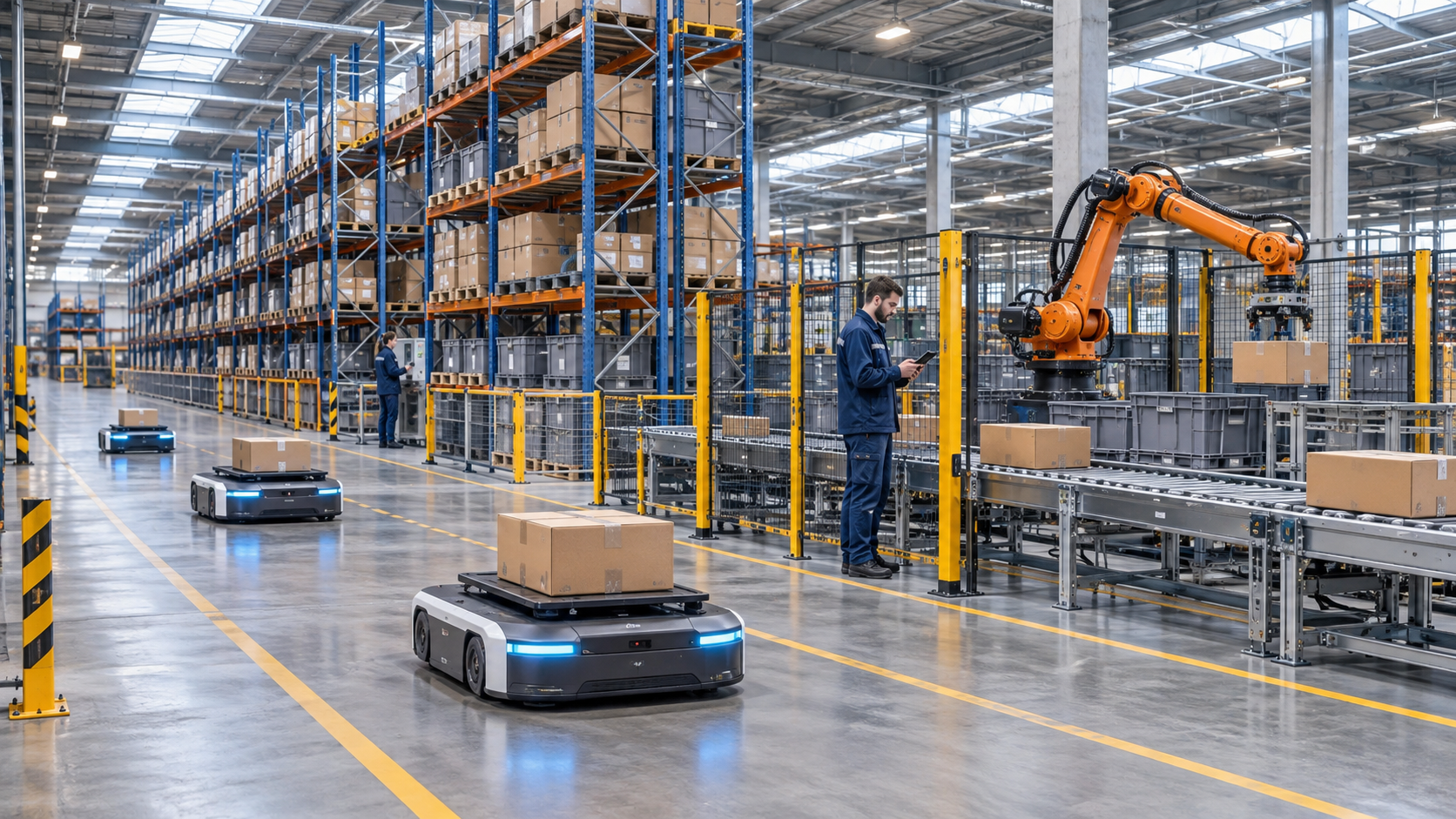
Intelligent warehousing: How automation is shifting the balance of power in logistics – Creative image on the topic, with AI: Xpert.Digital
More robots, more efficiency? What really matters in warehousing
Automating warehouses: Many companies overlook these costs and risks
The future of logistics: How intelligent warehouses are changing competitiveness
Robots, artificial intelligence, and automated warehouse systems promise faster processes and lower costs. But new technology alone doesn't make a warehouse more efficient: If processes are poorly organized or data is unreliable, automation can even exacerbate existing problems. The crucial factor is how well technology, material flows, and operational processes interact. This article shows which business models are shaping the market, how regional opportunities differ, and what companies should consider when investing – from total costs and software to maintenance and reliability.
Smart warehousing: Why good data can be more important than new robots
Buying only robots might just be automating your inefficiency
Intelligent warehousing is evolving from a technical modernization task to a strategic question of competitiveness. The primary goal is not to replace as many people as possible with machines. The crucial factor is aligning inventory levels, material flows, workflows, and customer requirements in such a way that a company operates more reliably, economically, and adaptably. A warehouse is intelligent when it can respond effectively to changes – not simply because robots are operating within it.
The central economic thesis is therefore this: The sustainable value of intelligent warehousing arises from the interplay of process design, data quality, automation, and operational control. Individual technologies can enable significant improvements. However, they can also tie up capital, increase technological dependencies, and mask existing organizational problems. There is a considerable difference between a convincing demonstration operation and a fully profitable system over many years.
The market clearly reflects this tension. On the one hand, the demand for high-performance intralogistics is increasing. On the other hand, investments remain dependent on the economic climate, financing costs, construction activity, and the financial situation of major customers. For 2025, the global market for warehouse automation projected an increase in order intake of around seven percent. However, this growth was not solely due to stronger actual demand. Higher steel and labor costs increased project costs; at the same time, individual large investment programs supported the overall market. Nominal growth, therefore, does not automatically equate to a corresponding increase in the number of automated warehouses.
A sound market analysis requires considering three levels separately: the industrial value chain, the different competitive models of suppliers, and the regional demand conditions. Only their combination explains which technologies are economically viable, which companies possess structural advantages, and where attractive investment opportunities are developing.
A large future market with blurred statistical boundaries
Even defining the market requires careful consideration. Intelligent warehousing, warehouse automation, intralogistics, and logistics automation are not synonymous terms. Some market analyses focus primarily on automated storage and conveying systems. Others include warehouse management software, sensors, mobile robots, services, or additional applications outside the actual warehouse.
One market forecast estimates the global smart warehousing market at US$31.21 billion for 2025 and expects it to rise to US$46.42 billion by 2030. This corresponds to an average annual growth rate of 8.3 percent. Another study on warehouse automation projects a market volume of approximately US$64 billion by 2032 and an annual growth rate of 12.3 percent between 2026 and 2032. These figures describe different research frameworks and should not be added together or treated as directly comparable measurements.
This methodological limitation is essential for economic decision-making. Mixing different market definitions can lead to an overestimation of the actual achievable demand. A manufacturer of gripping technology does not serve the same market as a general contractor for complete distribution centers. Similarly, the revenue potential of a software platform is not equivalent to the total investment volume of its customers.
Sales statistics also require clear interpretation. For 2024, approximately 102,900 professional service robots for transport and logistics applications were reported sold, an increase of 14 percent compared to the previous year. This means that more than half of the recorded professional service robots fell into this application category. However, this category does not exclusively include warehouse robots, but also other transport tasks. Furthermore, this is a sample of companies and not a complete record of all installations worldwide.
The reliable conclusion, therefore, is not that every sub-sector grows at the same pace. Rather, it is that automated goods movement is a significant commercial application of robotics, while the actual growth paths diverge considerably depending on the technology, region, and customer group.
Why the investment logic of the warehouse is changing
The demand for intelligent warehousing can be understood as a reaction to several simultaneous cost drivers. Companies must utilize scarce labor more productively, meet increasing demands for delivery capability, and cope with uncertain sales trends. Labor shortages and higher demands on order processing are therefore among the key drivers of automation.
The changing order profile is particularly important from an economic perspective. A warehouse with few large deliveries requires a different organizational structure than a location with many small orders, frequent returns, and varying product combinations. The amount of goods handled is not the only factor determining the effort involved. The number of order items, the variety of products, and the required processing steps can have a greater impact on costs than the pure shipping volume.
This leads to a fundamental difference between capacity and efficiency. Additional space initially only creates room. It does not eliminate search times, inventory errors, or bottlenecks at packing stations. Conversely, better storage location allocation can increase the efficiency of an existing building without immediately requiring a fully automated system.
Another driving factor is the economic importance of reliability. Inaccurate inventory can lead to incorrect purchases, unnecessary safety stock, delivery delays, and additional transport. Therefore, the warehouse not only affects its own personnel costs but also sales, purchasing, production, and liquidity.
The investment decision should therefore not be reduced to an isolated saving per warehouse employee. It concerns the question of how much operational uncertainty a company can manage at what cost. A solution can be economically sound even if it only results in limited personnel savings, but stabilizes a critical production process or avoids an expensive site expansion.
Industrial value creation begins long before the robot
The industrial chain of intelligent warehousing can be understood as a multi-layered system. At the beginning are materials and industrial components. These include steel structures, racks, drives, gears, rollers, conveyor modules, batteries, charging equipment, control systems, cameras, and security technology. At this level, delivery capability, quality, and standardization determine the competitiveness of downstream suppliers.
The second level consists of specialized machines and subsystems. Automated small parts warehouses, pallet warehouses, shuttle systems, sorting systems, mobile transport robots, and robotic handling stations each perform specific tasks. Their economic benefit depends heavily on how well they are suited to the respective product range and material flow.
Above this lies the control and software layer. It connects orders, inventory, resources, and technical systems. Only this connection transforms individual machines into a coordinated overall system. Therefore, the standard market approach to warehouse automation encompasses not only storage, conveying, sorting, and order picking, but also software, integration, and services.
Another value-added stage is system integration. Here, buildings, technology, fire protection, IT, and operational processes are coordinated. This task is often underestimated because the visible technical elements seem easier to assess than the quality of their integration.
The final step is operation throughout the entire lifecycle. Maintenance, spare parts, software updates, modernization, and expansion are not secondary, additional services. They directly impact whether the originally calculated performance remains available.
This structure leads to an important economic distinction: The sale of a machine generates a one-time revenue. A reliably maintained system, on the other hand, can generate recurring revenue over many years. For customers, this long-term relationship offers both security and potential dependency.
Why the management level decides on economic benefits
In a smart warehouse, several decision-making levels must work together. The warehouse management system, often referred to as a warehouse management system, organizes inventory, storage locations, and orders. Machine-level control systems execute movements technically. A higher-level execution or orchestration layer can prioritize tasks and coordinate resources.
The terms are not always used consistently in the market. Therefore, the specific allocation of responsibilities is more important from an economic perspective than the product name: Which system determines sequences? Where is inventory information reliably maintained? Which entity responds to disruptions? And who bears the responsibility if several subsystems function individually, but the overall performance is not achieved?
The growing importance of this control system is also reflected in the strategic direction of major suppliers. KION renamed its Supply Chain Solutions segment Intelligent Automation Solutions at the start of fiscal year 2026. At the same time, the Dematic brand is to be more strongly positioned in the area of comprehensive supply chain control. This reflects the expansion of its service offering from individual warehouse technology to the coordination of complex processes.
For operators, a high-performance software architecture can improve scalability. New robots or workstations can then potentially be integrated gradually. However, this requires suitable interfaces, unambiguous data models, and clearly defined responsibilities.
Openness alone does not guarantee low overall costs. An architecture heavily composed of different products can lead to additional integration and testing efforts. Conversely, a closed, integrated system may be easier to operate, but make switching vendors more difficult later on. Therefore, the best decision does not lie solely in one approach. It depends on complexity, internal capabilities, and long-term location strategy.
Artificial intelligence must be measured against operational data
Artificial intelligence expands the possibilities of warehousing, but it does not replace sound process organization. Relevant applications include the visual recognition of items, the improvement of robotic gripping processes, order prioritization, the prediction of technical malfunctions, and the dynamic coordination of mobile robots. Simulation-based planning and predictive resource allocation are also gaining in importance.
A distinction should be made between different technical tasks. A system that analyzes images solves a different problem than a route planning algorithm. Similarly, a voice-based assistance system is not automatically suitable for controlling safety-critical machine movements.
For economic evaluation, it doesn't matter whether a product is marketed as an AI solution. What matters is whether it offers measurable advantages compared to a suitable benchmark. If a rule-based control system reliably and cost-effectively performs a stable task, a more complex solution must justify its additional effort.
Key performance indicators (KPIs) under real-world operating conditions are therefore particularly meaningful. These include orders completed without errors, necessary human interventions, restart times after disruptions, and performance with unusual items. A high average detection rate may be of little economic significance if the remaining errors are particularly costly.
Data quality also limits its usefulness. Inaccurate product dimensions, inconsistent packaging data, or delayed inventory postings can systematically mislead intelligent control systems. Therefore, data maintenance is not a preparatory side project, but an ongoing component of the warehouse production system.
Four business models shape the competitive landscape
The competitive landscape is more meaningfully categorized by business models than by a single ranking. The first group comprises broadly positioned system providers and integrators. Key market players include Dematic, Daifuku, SSI Schäfer, KNAPP, Vanderlande, Swisslog, TGW, and Honeywell Intelligrated. They compete with various combinations of warehouse technology, material flow, software, integration, and service.
Their strength lies in handling complex projects and integrating numerous technical disciplines. The client receives a comprehensive solution and can more effectively consolidate responsibilities. At the same time, such projects are often capital-intensive and require precise planning.
The second group consists of more specialized technology and robotics providers. Companies like AutoStore, Geekplus, Locus Robotics, and Symbotic represent different technical and commercial approaches within warehouse automation. They are not entirely interchangeable competitors. Their solutions address different product structures, motion tasks, and levels of automation.
The third group consists of software vendors and platform companies. Their competitive advantage may lie in managing heterogeneous technologies, in optimization processes, or in integration with other enterprise software. A significant part of their business depends on how deeply their applications are integrated into the operational organization.
The fourth group comprises regional integrators, maintenance specialists, and industry-specific solution providers. They can be successful where customer proximity, rapid response, and knowledge of existing systems are more important than global size.
This structure explains why a company can be a leader in a submarket without dominating the overall market. A supplier of automated storage technology doesn't always compete directly with a supplier of mobile transport robots. Instead, partnerships, sales channels, and joint projects often emerge.
Size does not protect against project and economic risks
Large providers have references, international service organizations, and extensive development resources. Nevertheless, their business remains partly dependent on the timing of major investment projects.
This is evident in the figures for KION's Supply Chain Solutions segment for 2025. Order intake rose by 39.5 percent to approximately €3.599 billion, while segment revenue increased by 4.4 percent to approximately €3.071 billion. Both the project business and the service business grew.
The differing growth rates illustrate why order intake and revenue must be analyzed separately. New projects do not immediately translate into full revenue. Planning, manufacturing, installation, and ramp-up take time. Therefore, a strong order year may only have its full impact on revenue later.
Similarly, a large order backlog does not automatically guarantee high profits. Crucial factors are the calculated margins, technical risks, contract terms, and the ability to deliver on time. If costs rise or interface problems cause additional work, a large order can turn into a financial disappointment.
This results in a more nuanced picture for competitive analysis. Installed systems provide access to service and modernization business. New large-scale projects enable growth but also increase the demands on project management and liquidity. A balanced mix of new systems, software, maintenance, and expansions can therefore be more economically valuable than a particularly high volume of short-term orders.
Modular robotics is changing the barriers to entry
Mobile robots and modular systems are changing the possibilities for investment planning. Instead of restructuring the entire warehouse organization in one go, companies can automate selected transport or order picking tasks and expand the scope later. The demand for scalable and flexible solutions is therefore considered an important long-term market driver.
The main advantage lies in dealing with uncertainty. When future order volume is difficult to predict, the option of gradual expansion has its own economic value. A smaller initial investment can limit the risk of poor decisions and allow for practical experience.
However, modularity does not equate to unlimited scalability. Additional robots require traffic space, charging capacity, transfer points, and sufficiently powerful workstations. If these constraints are not addressed in the development process, a larger fleet can increasingly lead to waiting times.
This leads to an important planning rule: The performance limit of an additional robot is not necessarily constant. A system can initially grow almost proportionally and later fail at a different bottleneck.
For suppliers, this shifts the focus of competition from mere vehicle technology to overall operational control. Fleet management, fault management, safety, maintenance, and integration determine whether a flexible solution truly remains flexible in everyday use.
LTW Intralogistics Solutions

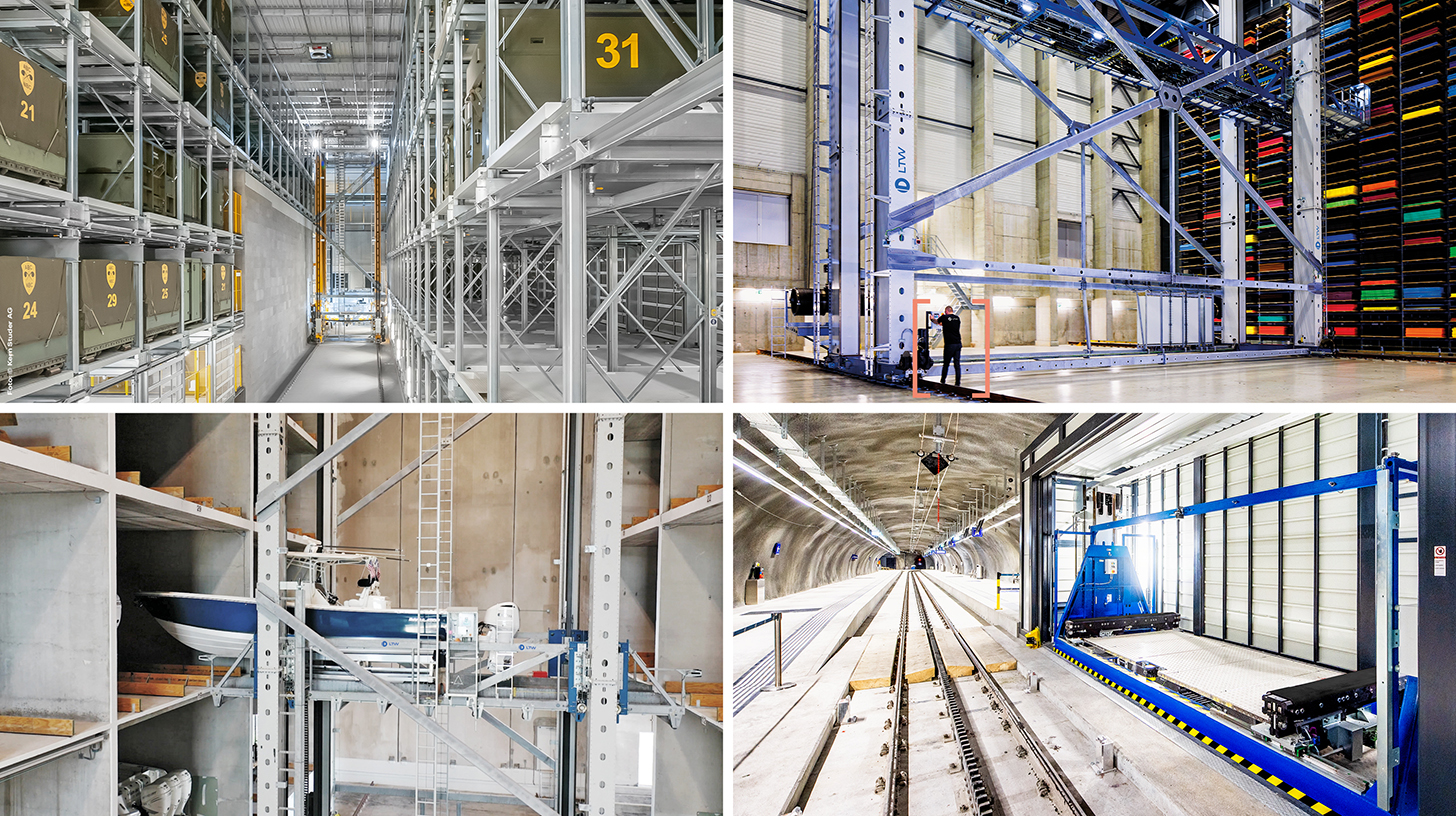
LTW Intralogistics – Engineers of Flow - Image: LTW Intralogistics GmbH
LTW offers its customers not individual components, but integrated complete solutions. Consulting, planning, mechanical and electrotechnical components, control and automation technology, as well as software and service – everything is networked and precisely coordinated.
In-house production of key components is particularly advantageous. This allows for optimal control of quality, supply chains, and interfaces.
LTW stands for reliability, transparency, and collaborative partnership. Loyalty and honesty are firmly anchored in the company's philosophy – a handshake still means something here.
Related to this:
Europe offers a large market for the renewal of existing bearings
Usage models redistribute costs and risks
Besides traditional equipment purchases, usage- and service-based business models are gaining traction. In robotics as a service, technical services are provided via recurring payments. In the transport and logistics robot sector, corresponding offerings saw a 42 percent growth in 2024, while traditional sales remained the most important marketing channel.
For customers, such a model can reduce the initial capital requirement. Furthermore, maintenance and technical support can sometimes be bundled into a single contract. This can facilitate entry, especially when internal technical resources are limited.
However, the economic assessment should not be limited to the lower initial payment. Contract duration, minimum purchase requirements, price changes, expansion costs, and termination options all influence the overall costs. A system that is intensively used over the long term may be more cost-effective to own, while a flexible contract offers advantages in times of uncertain demand.
The provider also assumes additional risks. They must finance the technology and ensure its performance over a longer period. This makes utilization, residual value, and customer creditworthiness more important.
Usage models do not eliminate investment costs. They simply redistribute financing, operational responsibility, and risk among the stakeholders. Their benefit depends on whether this distribution aligns with the customer's actual uncertainty.
Regional market potential requires more than a colorful world map
A reliable regional heatmap should distinguish at least three dimensions: current market size, expected growth, and the economic attractiveness of individual applications. A large market may grow slowly. A small market may exhibit high growth rates but generate only limited absolute revenue.
Regional cost and infrastructure factors also play a role. High labor costs generally increase the value of saved labor hours. High land costs can make denser storage more attractive. Conversely, unreliable technical infrastructure or a lack of maintenance capacity can hinder the same automation approach.
A recent industry forecast predicts average annual growth of approximately seven percent for Europe, the Middle East, and Africa between 2025 and 2030. Around six percent is projected for the American markets and about five percent for the Asia-Pacific region. Globally, this figure is approximately six percent.
This forecast is not a universally valid ranking of all robotics and software segments. Other studies with different definitions arrive at differing results. Precisely for this reason, a regional heatmap should not give the impression that a single growth figure adequately describes all technologies and countries.
Rather, the question to ask when making an investment decision is what specific combination of customer demand, cost structure, location quality and technical support is present.
Europe offers a large market for the renewal of existing bearings
Europe is not a homogeneous automation market. Current developments vary considerably between countries and industries. The Netherlands, Northern Europe, and the United Kingdom are experiencing more favorable demand conditions, while Germany is suffering in the short term from weaker investment activity among key customers.
This leads to a two-pronged perspective. On the one hand, economic weakness and reluctance to invest in industry can slow down new projects. On the other hand, established warehouse structures in particular have their own need for modernization, better software, and the elimination of individual bottlenecks.
Existing sites, however, present different requirements than new buildings. Available height, soil conditions, fire protection, column grid, and ongoing operations limit technical freedom. A solution must adapt to existing conditions, rather than presupposing a theoretically optimal building.
This creates opportunities for suppliers to modernize existing operations. The economic advantage lies not only in selling new technology, but also in implementing it with as few disruptions as possible. Production interruptions and supply chain failures can significantly erode the expected benefits.
In this respect, Germany remains a challenging market: Short-term weaker demand does not automatically mean a lack of long-term potential. However, it does increase the importance of convincing economic feasibility studies and low-risk implementation concepts.
Central and Southeastern Europe require a different approach to automation calculations
For locations in Central and Southeastern Europe, it makes little sense to simply adopt the investment logic of high-wage regions in Western Europe. Decisive factors are the local total costs, the availability of employees, the order profile, and the strategic role of the location.
Poland and the Czech Republic are mentioned as markets of growing importance in the context of the diversification and regionalization of supply chains. However, this does not automatically equate them with all other countries in the region.
For locations in places like Romania or Bulgaria, the analysis should therefore be based on concrete operational data. Lower labor costs can extend the amortization period through personnel savings alone. At the same time, inventory accuracy, traceability, space utilization, or the reliable supply of international customers can provide an economic justification for automation.
A plausible entry strategy is gradual digitalization. Reliable master data, mobile data capture, and clear process responsibility initially create transparency. Subsequently, individual transport routes or standardized processing steps can be automated.
This ranking is not a blanket recommendation against large-scale facilities. A high-volume site with stable goods flows can justify comprehensive automation even in a region with lower wages. The decisive factor is the specific use, not the country label.
North America combines investment power with dependence on large customers
American markets are heavily influenced by large-scale investment programs undertaken by major retail and logistics companies. Such programs can support demand for several years. At the same time, they can distort market data if a few particularly large projects generate a significant share of growth. For 2025, large-scale projects by leading retailers were among the key drivers of global new orders.
For suppliers, a major customer is attractive because they can offer repeatable solutions, high volumes, and international references. However, this same correlation increases the risk of market concentration. If a key customer postpones their investment plans, this can have a significant impact on order intake and capacity utilization.
Additionally, construction and material costs influence profitability. In the United States, a significant portion of the expected order growth in 2025 was attributed to higher project prices. This illustrates why rising revenues should not be directly interpreted as evidence of improved investment conditions.
In the long term, a distinction must also be made between different customer sectors. Food automation in America is expected to slow down towards the end of the decade as larger distribution center programs are completed. In contrast, the parcel delivery sector is expected to continue growing due to investments in last-mile delivery.
The regional perspective therefore remains fundamentally attractive, but selective. The decisive factors are which investment cycles a provider participates in and how heavily its business depends on individual programs.
Asia is both a center of demand and an industrial competition area
The Asia-Pacific region should not be viewed as a single growth bloc. China, Japan, India, and the Southeast Asian markets differ in terms of industrial structure, technological maturity, and investment conditions.
A projected revenue decline of eight percent was forecast for the Asia-Pacific warehouse automation market by 2025. Weaker domestic demand in China is considered a major contributing factor. However, some sub-markets performed well.
At the same time, the region combines diverse supplier profiles. Japanese and European companies compete there with Chinese and Indian robotics companies as well as regional integrators. Key players include Daifuku, Murata Machinery, Geekplus, GreyOrange, and SSI Schäfer.
This dual role is crucial for competitive analysis: Asia is both a sales market and the region of origin for important technologies. Therefore, weaker domestic demand does not necessarily translate into a correspondingly weaker international competitive position for manufacturers there.
India, however, presents a different picture. There, a transition from individual digitization and automation pilot projects to more comprehensive applications is described. Automated warehouse technology, conveyor systems, robotic order picking, and data-driven control are intended to enable higher performance without proportionally increasing staffing requirements.
Therefore, successful market development requires country-specific and application-oriented strategies. A standardized product can be internationally scalable; however, installation, service, and operational adaptation often remain locally determined.
The Middle East and other emerging markets offer selective opportunities
For India, the Middle East, and Africa, increasing applications of robotics, automated transport, sensors, and cloud-based warehouse management are described. This development is driven by cost pressures and rising expectations for the speed of order fulfillment.
From an economic perspective, a distinction must be made between individual modern logistics centers and nationwide market readiness. A technically demanding large-scale project demonstrates that a solution can be implemented at a single location. However, it does not prove that maintenance, spare parts supply, and qualified personnel are equally available throughout the entire region.
Such markets can be attractive for suppliers if they jointly develop technology and local operational support. Those who only sell equipment without securing its subsequent operation risk performance problems and reputational damage.
In Latin America, Brazil and Mexico are particularly mentioned in connection with the growing importance of regionalized supply chains. Here, too, the specific potential depends on which industries invest and which tasks are to be automated.
The meaningful regional heatmap is therefore not a simple ranking of winners and losers. It is a map of different business models: modernization of existing facilities, automation of new distribution centers, industrial production supply, or the gradual digitalization of warehouses that have previously been predominantly manual.
Customer benefits vary more depending on the application than on the buzzword
Not every warehouse problem requires the same technology. A spare parts warehouse with many rarely requested items needs a different solution than a food distribution center with high throughput and tight time windows.
For stable, standardized material flows, high-performance fixed systems can offer economic advantages. However, for fluctuating processes and uncertain capacity utilization, modular systems may be more attractive. Current technological developments therefore encompass both automated storage and retrieval systems and mobile robots, sorting systems, and increasingly, robotic single-part handling.
Even within a single location, different solutions can be beneficial. Fast-moving items, bulky goods, and infrequently moved spare parts don't necessarily require the same level of automation. Differentiated segmentation can be more economical than a uniform overall concept.
The distinction between average and peak demand is particularly important. A system designed solely for the highest short-term demand can remain underutilized for large parts of the year. Conversely, an undersized system can fail precisely during the most economically crucial weeks.
The optimal solution therefore considers a combination of baseline technical capacity, flexible work processes, and expansion options. The goal is not maximum theoretical machine performance, but a robust cost structure across different utilization states.
Profitability depends entirely on the correct comparative calculation
A sound investment analysis must compare the automated target state with a realistic alternative. The existing operation must neither be artificially underestimated nor treated as immutable. Often, significant improvements can be achieved simply through better organization, warehouse layout, or software.
On the cost side, in addition to the equipment itself, there are also planning, building modifications, IT integration, training, start-up, spare parts, and future upgrades. On the benefit side, there are avoided working hours, reduced error costs, additional usable capacity, and potentially avoided expansion.
A deliberately simplified example illustrates the logic. If the initial investment is four million euros and 1.2 million euros in realizable benefits are generated annually, while additional operating expenses of 300,000 euros are incurred, the net annual effect is 900,000 euros. The simple amortization period is therefore approximately four and a half years. This is an illustrative scenario, not an industry average.
Even small changes can significantly alter the outcome. If the benefits are lower due to reduced occupancy or if integration costs are higher, the amortization period is extended. Conversely, avoiding the need for new building construction can considerably improve profitability.
For long-term decisions, the simple amortization period is therefore insufficient. Payment dates, financing costs, residual values, and different risk scenarios should be considered. The crucial factor is not only when the invested capital is theoretically recouped, but whether the investment creates adequate added value compared to available alternatives.
Total costs and operational risks belong in the same calculation
The overall cost analysis must also consider the consequences of potential disruptions. A high degree of automation can stabilize operations, but at the same time create new technical dependencies. If a central transfer point fails, several otherwise efficient systems can come to a standstill.
Therefore, technical redundancy and organizational backup options should be planned together. Not every process requires a complete duplicate. However, for critical areas, limited manual backup operation can be economically viable.
Digital operational security is equally important. Networked warehouse technology connects machines, mobile devices, servers, and external service access points. This necessitates explicitly defining access rights, recovery procedures, and responsibilities.
Loyalty to a single supplier also has economic value. Data export, interface access, spare parts availability, and the possibility of future expansions all influence the customer's negotiating position. A low initial price can be offset by expensive modifications.
Professional evaluation therefore considers not only performance during trouble-free operation. It also examines how the system behaves in the event of failures, changes in product range, software updates, and increasing volumes. Robustness is not a secondary technical characteristic, but a component of profitability.
Productivity changes work, rather than simply eliminating it
The employment impact of intelligent warehousing is complex. Automation can reduce physically demanding transport and repetitive manual tasks. At the same time, the need for monitoring, maintenance, data management, and technical troubleshooting increases.
Current logistics trends therefore explicitly link the further development of AI and robotics with changes in work organization. Collaborative robotics, digital assistance, and remote support are described as tools that can jointly improve productivity and working conditions.
Whether this succeeds in a given company depends largely on the implementation. Employees not only have to learn new user interfaces, but also need clear responsibilities and practical procedures for exceptional cases.
This distinction is also important for cost-benefit analyses. Calculated savings in working hours do not automatically translate into lower payouts. If employees take on other tasks, the benefit may arise from increased workload or avoided new hires.
A sound analysis therefore distinguishes between immediate cost reduction, increased capacity, and reduced dependence on the labor market. All three effects can be valuable. However, they are not identical and should not be counted multiple times as benefits.
Energy efficiency is a matter of the entire warehouse concept
The environmental impact cannot be reduced to individual machines. Automation can enable denser storage and avoid unnecessary material movements. At the same time, drives, conveyor technology, charging infrastructure, and IT systems require additional energy. Energy efficiency is therefore a key competitive advantage of modern warehouse automation.
The system boundary is crucial. A more compact warehouse can require less building space for the same performance. Conversely, a faster system can cause unnecessary standby power consumption when utilization is low. The actual impact therefore depends on usage, building, and operating strategy.
Meaningful key performance indicators (KPIs) relate energy consumption to the service provided. Examples include kilowatt-hours per shipped order or per transported loading unit. However, for meaningful comparisons, similar order structures and performance requirements must be used as a basis.
Economically and ecologically sound planning therefore attempts to avoid unnecessary movements first, before automating them more quickly. The most efficient movement is often the one that doesn't occur in the first place through better inventory and process planning.
By 2030, competition will be decided by operational capability
Further developments are unlikely to be driven by a single technology or a uniform investment cycle. While the overall market is expected to continue growing, significant differences between regions, industries, and suppliers remain. Price increases, large-scale projects, and economic fluctuations will continue to complicate the interpretation of market data.
Structurally, there are many advantages to solutions that combine performance and adaptability. These include scalable automation, suitable software architectures, demonstrable economic viability, and robust service. The challenge lies in not only increasing technical complexity but also making it manageable.
For suppliers, the actual operational performance delivered is therefore becoming more important than the number of available product features. Those who install quickly, start up reliably, and allow for later expansions create a competitive advantage that is harder to copy than a company that primarily relies on spectacular demonstrations.
For operators, the crucial question is therefore not how modern a warehouse appears at first glance. What matters is how reliably it meets changing requirements at reasonable overall costs.
The well-founded perspective on the market is therefore neither euphoric nor skeptical, but selectively optimistic: Intelligent warehousing possesses considerable economic potential. However, this potential is not automatically realized by purchasing robots. It arises where companies understand their flow of goods, consistently maintain data, calculate investments objectively, and treat technology as an integral part of a sustainably efficient operating system.
Consulting - Planning - Implementation

Konrad Wolfenstein
I would be happy to serve as your personal advisor.
You can contact me at wolfenstein∂xpert.digital or
Just call me on +49 7348 4088 965 .
Your intralogistics experts

Consulting, planning and implementation of complete solutions for high-bay warehouses and automated storage systems - Image: Xpert.Digital
More information here: