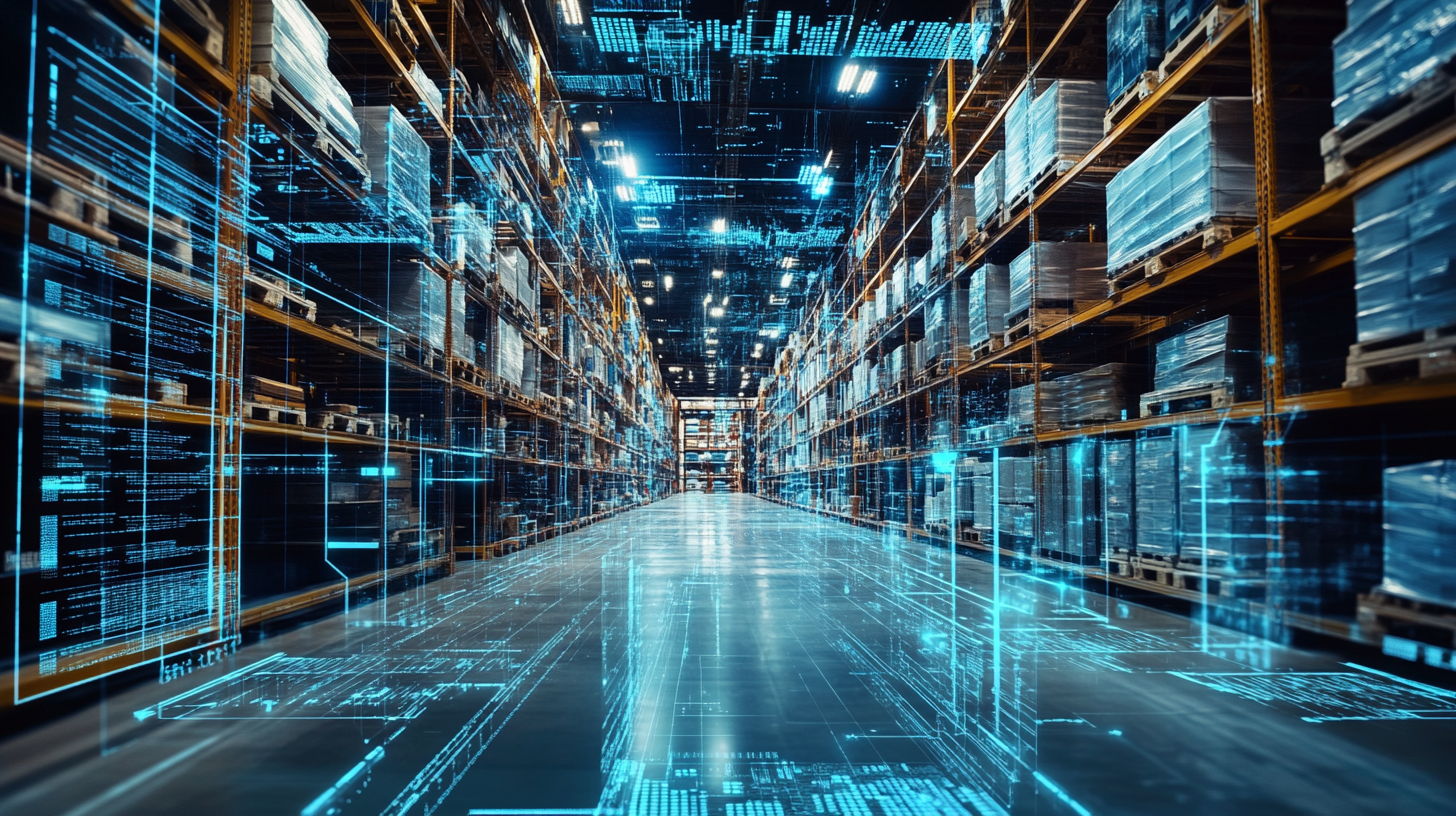
Integration of AI and machine learning in warehouse logistics – Global developments in Germany, EU, USA and Japan – Image: Xpert.Digital
Artificial intelligence is transforming warehouse logistics: Automated efficiency is the focus
The future of warehouse logistics: AI-driven processes for maximum productivity
Artificial intelligence (AI) refers to the ability of machines or software to perform tasks that normally require human intelligence—such as logical reasoning, learning, planning, or creative problem-solving. Essentially, it's about computer systems being able to draw conclusions from data and make decisions, rather than simply following strictly predefined rules. Machine learning (ML) is a subfield of AI in which algorithms independently recognize patterns by analyzing large amounts of data and adapt their behavior accordingly. Put simply, an ML system learns from experience: It is "trained" with historical data and can then make predictions or decisions based on new, unknown data. This allows AI to continuously improve its own predictions and performance without having to be explicitly programmed by humans for each individual case.
In logistics – and especially in warehouse logistics – AI and ML open up enormous possibilities. The logistics industry has extensive networks and generates vast amounts of data, making it an ideal application area for AI. Intelligent algorithms can, for example, predict future order volumes, calculate optimal routes, or control complex warehouse processes. Self-learning systems can make decisions faster and often more accurately than humans, especially when it comes to processing large amounts of data in real time. Therefore, AI technologies are used in various areas of modern warehouses – from inventory management and order picking to transport control within the warehouse.
In general, AI in the warehouse essentially mimics the "thinking" of a highly experienced warehouse manager, only with access to far more data. For example, AI systems can identify which items sell well and when, how to store goods most efficiently, or which routes a forklift should take to save time. These automated, data-driven decisions form the basis for the increasing integration of AI and machine learning into warehouse logistics.
Optimization of warehouse processes through AI
One of the biggest advantages of AI in warehouse logistics is the optimization of existing processes. Warehouses rely on a constant flow of information – for example, inventory data, order data, or location information of goods. Where humans are prone to error or have limited information processing capabilities, AI provides precision and speed. For instance, AI can provide and analyze data in real time, enabling faster detection and correction of errors before they cause problems. Routine tasks such as checking inventory levels or recording incoming goods can be automated, thus relieving the burden on employees.
AI systems can also recognize patterns in warehouse processes that might escape the human eye. Through this data analysis, the system gains a better understanding of the current situation in the warehouse, identifies bottlenecks or inefficiencies, and suggests improvements. A practical example is route optimization: Algorithms can analyze and optimize the walking routes of warehouse workers or material handling equipment (e.g., forklifts). For instance, picking lists are sorted so that employees take the shortest possible route through the warehouse. This reduces travel times and allows orders to be assembled more quickly. Similarly, AI functions can determine the best storage location for each product—based on its size, turnover rate, and other factors—to make storage and retrieval more efficient.
Another important aspect is reducing errors and improving quality. AI-powered image recognition systems can, for example, scan packages upon receipt and check their condition and dimensions. This allows for the immediate detection of damage or incorrectly labeled items. Such automated quality controls ensure that problems are resolved early in the process and don't propagate through the entire supply chain. Furthermore, the AI learns over time: While errors may occur initially, machine learning techniques continuously improve the image recognition, steadily reducing the error rate.
All these optimizations ultimately lead to increased productivity and lower costs in warehouse operations. Robots and AI systems can perform some tasks significantly faster and more accurately than humans, thus boosting productivity. At the same time, the algorithmic analysis of warehouse data enables better strategic decisions—for example, in personnel and resource planning—making overarching processes more efficient. AI solutions can continuously monitor operations, analyze risks, and act proactively (e.g., detect an impending bottleneck and take countermeasures). Overall, this improves transparency in the warehouse, and problems are often identified before they even arise. All of this contributes to cost reduction, as a more efficient warehouse generates less waste, lowers error costs, and makes optimal use of working time. According to expert forecasts, AI technologies could increase efficiency in the logistics industry by significant orders of magnitude in the coming years—Accenture, for example, estimates an efficiency increase of over 40% by 2035.
In summary, AI increases the speed, accuracy, and flexibility of warehouse processes. This ranges from faster product location and shipment, to minimizing inventory discrepancies, and better coordination with other areas of the supply chain. For companies, this means higher warehouse efficiency while simultaneously relieving employees of monotonous or complex tasks.
Related to this:

Demand forecasting and inventory management with ML
A key application of machine learning in warehouse logistics is demand forecasting. This refers to predicting future demand – in other words, the question: Which product will be needed, when, and in what quantity? Precisely answering this question is invaluable, as it enables optimal inventory management. Too much stock ties up capital and storage space unnecessarily, while too little stock leads to supply bottlenecks and dissatisfied customers. AI-based systems can mitigate this dilemma by making highly accurate predictions based on large datasets.
Modern machine learning models analyze historical sales figures, seasonal fluctuations, current orders, marketing campaigns, social media trends, and many other influencing factors. From this, they learn patterns and correlations. Such a system can, for example, recognize that sales of certain items increase as soon as a specific event is imminent (for instance, demand for barbecue charcoal rises before summer weekends). Based on such patterns, the AI automatically predicts which quantities of goods should be delivered to which location and at what time. These predictions help companies adjust their inventory levels to meet demand. Specifically, this means that if it is foreseeable that demand for a product will increase soon, the AI ensures that supplies are ordered and available in the warehouse in a timely manner. Conversely, it issues a warning if demand for a product is expected to decrease, thus preventing overstocking and overproduction.
A practical example is the German online retailer OTTO. Since 2019, the company has been using a proprietary, AI-powered sales forecasting system. This system essentially looks into the future of sales and supports all relevant processes – from purchasing and warehousing to delivery. The AI forecasts show OTTO precisely which items will arrive in the warehouse and when, as well as the expected sales volume at any given time. Based on this information, OTTO decides whether and in what quantity an item should be purchased and how it should be distributed. For example, the AI determines whether a product should be kept in stock or shipped directly from the manufacturer to the customer when needed. The forecast thus has a direct impact on purchasing, warehousing, and distribution. The result: Only the goods that are actually needed are kept in stock, reducing costly overstocking and subsequent sales at discounts. At the same time, the forecasts ensure that items are available as soon as demand picks up, so that sales opportunities are not missed. Thanks to this AI, OTTO now automatically reorders 35% of its product range without requiring manual order placement by a human – proof of how well the predictions work.
Other companies are also using AI-powered inventory optimization. DHL, for example, reports that AI systems can compare demand and stock levels in real time and automatically initiate reorders. They are even able to predict peak demand to prevent both out-of-stock and overstocking. This ensures prompt delivery to customers because there is always enough stock on hand, while also eliminating unnecessary buffer stocks that would incur costs.
Demand forecasting via machine learning not only impacts a company's own inventory but also its entire supply chain. Accurate forecasts allow, for example, goods to be sent to regional distribution centers in advance, even before orders are received. OTTO, for instance, creates regional forecasts to predict which products will be ordered where and in what quantities. These items are then proactively delivered to a nearby depot. This shortens delivery times and reduces transport distances, which also lowers CO₂ emissions.
In summary, AI-powered demand planning leads to more efficient inventory management: always having the right product in the right quantity at the right time. This allows companies to avoid supply bottlenecks, increase customer satisfaction, and simultaneously reduce storage costs. For warehouse logistics, this means fewer "firefighting" operations to resolve sudden shortages, because AI is highly likely to detect and manage such situations early on. In times of increasingly volatile customer behavior (think e-commerce boom, seasonal peaks due to online promotions, etc.), this proactive management is becoming a crucial competitive advantage.
Automation and robotics in the warehouse
One particularly striking area of AI integration is automation through robotics in warehouses. Modern warehouses increasingly rely on smart machines that can move, lift, sort, or pack goods – often controlled or supported by AI. These warehouse robots relieve human employees, especially of physically demanding, monotonous, or time-critical tasks.
One example is autonomous vehicles in warehouses, also known as AGVs (Automated Guided Vehicles) or AMRs (Autonomous Mobile Robots). These vehicles—ranging from small, flat transport robots to automated forklifts—can transport pallets, boxes, or individual items from point A to point B completely independently. This is made possible by sensors, cameras, and navigation systems, combined with AI algorithms for route planning. The robots "see" their surroundings, detect obstacles, and find the best route to their destination. AI enables these vehicles to react to changes in real time—for example, to navigate around an obstacle suddenly appearing in the aisle—while still maintaining the optimal route. In many warehouses, such autonomous load carriers are already a reality: They transport goods between storage locations, replenish stock on shelves, collect items for customer orders (automated order picking), or transport completed orders to the shipping station. This relieves human employees of long walking distances and transport tasks, allowing them to focus on more demanding activities.
Another application of robotics is AI-controlled picking robots. These are stationary or mobile robots with gripper arms that can retrieve items from shelves. Using image processing (cameras and AI software), such a robot identifies the correct item and picks the required quantity. Systems already exist where robots pick individual parts: The robot receives an order from the warehouse management system, for example, to pick 5 units of item X. It navigates (if mobile) to the corresponding compartment, visually identifies the item, and picks it precisely. Weight sensors verify that the correct quantity has been picked, and the AI confirms the item's identity again via image recognition. Such systems often operate in separate areas or at night to prepare orders around the clock. More complex automation systems, such as automated picking systems (automated warehouses), are also used – here, various items are stored in containers or chutes, and upon request, the system automatically transports the desired item to a dispensing container.
Amazon has become famous in this context: The company has been relying heavily on warehouse robots for about a decade. In Amazon warehouses, thousands of small orange robots (formerly from Kiva Systems) transport entire shelving modules across the warehouse directly to human order pickers. Intelligent AI control coordinates these robotic shelves so efficiently that employee travel distances are minimized. An internal Amazon study has shown that this AI-optimized coordination leads to enormous savings – Amazon saves around half a billion US dollars per year because the robots deliver goods to employees faster and more efficiently. The AI constantly calculates which shelving modules need to be delivered next to which employee to optimally process orders. The result: faster fulfillment of customer orders at a lower cost.
Sorting and packing robots are also becoming commonplace. In some DHL parcel centers, for example, robots already take packages from the conveyor belt and sort them into compartments for the respective delivery routes. These so-called DHLBots are AI-powered and flexible – equipped with 3D cameras, they recognize the size and shape of shipments, scan barcodes, and autonomously decide which compartment a package belongs in. They are therefore far more than rigid industrial robots; they can handle a wide variety of package sizes and adapt to changing processes. In practice, this means that packages are pre-sorted faster and more accurately, which speeds up last-mile delivery.
Internationally, there are numerous exciting examples. At the logistics center of the Chinese e-commerce giant Alibaba (more precisely, its logistics subsidiary Cainiao), a highly automated warehouse has been set up where robots perform around 70% of the work. Approximately 60 mobile robots – locally known as "Zhu Que" – transport goods to the packing stations in a 3,000 m² warehouse, thus tripling productivity. A human warehouse worker typically picks around 1,500 items per shift – with the support of the robots, this figure rises to 3,000 items, with significantly less walking distance. AI ensures that the robots work together efficiently, avoid getting in each other's way, and always deliver the next item to the picking station at precisely the right moment. This Alibaba warehouse demonstrates what is technically possible when warehouse logistics are almost completely automated: employees hardly have to walk through the aisles anymore because the robots bring the shelves or goods directly to them, and throughput increases dramatically.
Smart warehouses often integrate multiple technologies: autonomous vehicles, robotic arms, automated conveyor belts, IoT sensors for monitoring environmental conditions and inventory, and AI systems as the "brain" that controls everything. The goal is a highly automated warehouse that operates efficiently, safely, and transparently. Human employees in these environments frequently work hand in hand with collaborative robots (cobots) that assist them with heavy lifting or deliver goods. While the introduction of this robotics leads to a changed job profile for employees, it increases the overall efficiency of the warehouse.
Many warehouses are still at the beginning of this development – according to estimates, only around 20% of warehouses in Germany and the USA are automated, with the rest still being operated predominantly manually. But major players like Amazon, Alibaba, and DHL are leading the way, gradually equipping their warehouses with AI technologies and robots. In the coming years, it is expected that more and more warehouse processes will be automated – whether through driverless transport systems, automated sorting systems, or intelligent assistance systems for employees.
Related to this:
AI in supply chain and enterprise software (SCM, DCM, ERP)
Not only individual robots, but also the underlying software plays a crucial role in AI integration in warehouse logistics. Modern supply chain management (SCM) systems and enterprise resource planning (ERP) solutions are increasingly being equipped with AI functions to improve planning, control, and management along the supply chain. The term demand chain management (DCM) also appears in this context – here, the focus is specifically on customer demand and the supply chain aligned with it. AI can serve as a kind of intelligent layer in all these systems, significantly enhancing the traditional functions.
A key example is the warehouse management system (WMS) – the software that manages all warehouse operations (from goods receipt and putaway to order picking and goods issue). In the past, WMSs operated according to pre-programmed rules. Now, however, manufacturers are integrating AI modules that make the WMS "smarter." For example, the Polish fashion retailer LPP implemented an AI solution (PSIwms AI) in its warehouse management system that uses machine learning mechanisms to optimize processes. The result was significantly shorter picking routes and overall greater warehouse efficiency. This demonstrates that AI can complement existing logistics software by enabling it to learn from its own operational data and independently improve processes. An AI-supported WMS can, for example, recognize which items are frequently ordered together and move their storage locations closer together accordingly (automated layout optimization). Or it can dynamically prioritize orders based on available resources, traffic conditions, or shipping deadlines.
Supply chain management systems
Supply chain management systems with AI support go a step further by looking beyond the individual warehouse to the entire supply chain. They use AI to perform end-to-end optimizations: for example, balancing inventory across multiple warehouse locations, optimizing transport capacity, and responding flexibly to disruptions. AI-powered SCM tools can aggregate large volumes of data from various sources—such as weather data, traffic information, and supplier information—and thus adjust delivery schedules in real time. Oracle describes how companies use AI to balance inventory levels and find fuel-efficient delivery routes far more efficiently than would be possible with conventional software. Such a system could, for example, automatically calculate an alternative route for subsequent trucks if a road is suddenly closed and reschedule the affected deliveries. Or it could detect quality problems at a specific supplier and provide timely warnings before defective parts reach the warehouse.
Demand Chain Management (DCM)
Demand chain management (DCM), which focuses on the demand side, also benefits greatly from AI. The goal here is to optimally meet customer needs – essentially, integrating marketing/sales with the supply chain. In DCM, AI can, for example, analyze customer orders and improve forecasts to align production and inventory even more precisely with actual demand. In practice, supply chain management (SCM) and DCM often overlap, but both aim to use AI to balance supply and demand as efficiently as possible.
Major ERP providers like SAP and Oracle have already integrated AI functionalities into their products. SAP refers to this as "Business AI" within its ERP modules, which are designed to optimize processes such as warehousing, order processing, and transportation using AI-powered insights. Oracle emphasizes that AI systems can recognize patterns in supply chains that remain hidden to humans, enabling more accurate predictions of customer demand and thus more cost-effective inventory management. Microsoft and specialized logistics software providers also offer AI modules that integrate seamlessly into existing processes. Standard interfaces to ERP systems are often provided, allowing AI models (for example, for forecasting) to work with company data relatively quickly. For instance, an AI model for sales forecasting can be directly integrated into ERP order processing: The system then automatically generates purchase order suggestions based on the machine learning predictions.
One easily understood application of AI software is the use of chatbots in logistics. These digital assistants can be integrated into warehouse management systems or transportation management systems and help employees and external partners quickly access information. In a warehouse context, chatbots could, for example, answer questions like "Where is item XY located?" or "What is the current stock level of product Z?" – and do so in seconds, around the clock. They can accept order requests or predict delivery times. Internally, such assistants relieve staff of time-consuming research tasks; externally, they improve customer service (e.g., providing information on the stock status of an order).
In summary, AI is permeating the logistics software landscape at all levels. From WMS and SCM/DCM to ERP, traditional systems are being augmented by AI to enable automated decision-making. Integration is crucial: AI solutions must fit seamlessly into existing processes. Thanks to cloud technology and standardized interfaces, this is becoming increasingly easy. Companies can often add AI functionalities as an extension to their existing systems. Nevertheless, successful implementation remains a task requiring expertise – the right data must be available, the models trained, and continuously monitored. Once this is mastered, AI-supported software systems offer significant added value: transparency, speed, and proactive control become the new normal in warehouse logistics.

Expert partner in warehouse planning and construction

Challenges of AI Implementation: How Companies Overcome Investments and IT Hurdles

Challenges of AI implementation: How companies overcome investments and IT hurdles – Image: Xpert.Digital
Practical examples from companies
Many companies worldwide are already successfully using AI in their warehousing and logistics processes. Here are some practical examples that demonstrate the diverse range of applications:
Amazon (USA)
As a pioneer, Amazon utilizes AI and robotics on a large scale. In the e-commerce giant's fulfillment centers, tens of thousands of robots move shelves of goods to employees. AI continuously optimizes the process – determining which shelf goes to which employee to retrieve an item. This intelligent picking control has dramatically increased Amazon's efficiency. Studies estimate the savings from Amazon's AI-powered picking optimization at approximately €470 million per year. Furthermore, Amazon employs AI in many other areas, such as route planning for delivery vehicles, dynamic workforce scheduling based on order volume, and predictive maintenance of its warehouse equipment.
Alibaba (China)
Alibaba, through its logistics subsidiary Cainiao, operates highly automated warehouses where robots handle the majority of physical labor. In a well-known warehouse in Guangdong, smart transport robots perform 70% of warehouse tasks, tripling productivity. Controlled by AI, the robots deliver goods to human colleagues, who primarily focus on packaging. Thanks to AI coordination, a single employee with robot assistance can sort up to 3,000 packages per shift, compared to approximately 1,500 without support. Alibaba also utilizes AI for delivery drones and autonomous delivery vehicles in local transport and uses machine learning to optimize inventory allocation across its numerous distribution centers. The result is lightning-fast deliveries (sometimes same-day or within a few hours) despite massive order volumes – made possible by AI-optimized processes.
Deutsche Post DHL (Germany)
As a global logistics provider, DHL is investing in AI across various business areas. In parcel delivery, DHL is testing autonomous delivery drones and street robots, and AI solutions are also being used in the warehouse itself. In some DHL warehouses and parcel centers, AI-powered robots automatically sort parcels according to their destination region. These robotic arms use 3D cameras and AI to recognize each shipment, grasp it, and place it in the correct shipping compartment – significantly faster than a human could. DHL also uses AI tools for route optimization of its truck fleets, predictive maintenance of its conveyor systems, and inventory management for contract customers. For example, in contract logistics (warehouse logistics for industrial customers), DHL uses AI to monitor customer inventory and trigger automatic replenishment orders before a shortage occurs. This allows DHL to increase delivery reliability and strengthen customer relationships.
OTTO (Germany)
As mentioned above, OTTO successfully uses AI for sales forecasting and inventory management. The system automatically reorders stock and optimizes inventory levels. This has enabled OTTO to reduce excess inventory while simultaneously improving delivery performance. OTTO is an example of how a German company can develop and productively deploy AI internally to remain competitive in a highly competitive market (e-commerce).
Hitachi (Japan)
In Japan, where many processes are traditionally still manual, the widespread integration of AI in warehouse logistics is now beginning. One example is Hitachi, which is researching AI to improve order picking in its distribution centers. The company aims to support its aging workforce with image recognition and robotic grippers. Other Japanese companies—for example, in the automotive supply industry—are also increasingly relying on automated warehouse systems with AI. The Japanese government promotes such projects within the framework of "Society 5.0" and special programs to mitigate the shortage of skilled workers in the logistics sector. Robotics generally enjoys high acceptance in Japan, and new strategies are now focusing on further automating warehouses and supply chains.
Walmart (USA)
The world's largest retail chain is also investing in AI for its supply chain. Walmart uses AI analytics to track inventory levels in real time at its distribution centers and predict when stores will need restocking. Walmart has also tested inventory robots in some stores that navigate aisles and use AI to identify which products need to be replenished. Automated sorting systems are used in the company's large e-commerce logistics centers, and AI optimizes the allocation of packages to truck routes. Together with companies like Walmart, these US retail giants are driving the adoption of AI in logistics.
The examples mentioned demonstrate that both technology companies and traditional logistics providers are productively using AI in their warehouses. Amazon and Alibaba, in particular, are setting standards that others are following. But AI projects are also emerging successfully in Germany and elsewhere – some developed in-house (as at OTTO), some in cooperation with technology partners, and others through the acquisition of startups. It is crucial that these successes catch on: Many small and medium-sized logistics companies are closely observing what the larger players are doing and are now also beginning to pilot AI solutions in specific areas.
Economic impact of AI in warehousing
The introduction of AI and ML in warehouse logistics is not only a technical but also an economic decision. Companies expect tangible business advantages, but must also invest and consider potential side effects.
First, let's look at the positive economic effects
As previously explained, AI significantly increases warehouse efficiency – processes run faster and with fewer errors. This directly impacts costs. For example, AI-optimized route planning for warehouse workers or robots can drastically reduce order picking time, allowing more orders to be processed per shift (higher throughput). Personnel costs can be saved or better utilized because automation frees up employees, allowing them to be deployed more productively elsewhere. AI-supported inventory management reduces inventory costs, as less capital is tied up in excess stock and write-offs due to spoilage or obsolete products decrease. A survey revealed that many logistics companies see AI as an opportunity to significantly increase quality and productivity – over half of the companies even consider logistics a pioneering sector in digitalization. This means the industry expects AI to make a major contribution to value creation.
Concrete figures underpin the savings potential
Accenture analyses predict that the use of AI could increase logistics efficiency by over 40% by 2035. This would translate into enormous cost reductions, as increased efficiency generally means achieving more output (order fulfillment) with the same or less input (time, personnel, space). Even today, concrete projects often demonstrate a relatively quick return on investment (ROI). AI systems that optimize transport or truck loading, for example, can save on fuel costs and avoid empty runs, allowing the investment in the software to pay for itself within just a few years. AI also contributes to cost savings by preventing downtime (disruptions that lead to delivery delays), such as when predictive maintenance systems prevent costly machine shutdowns in the warehouse.
Pilot projects and business cases: When AI pays off in warehouse logistics
However, these opportunities are countered by investment costs and challenges. Acquiring warehouse robots, sensors, and AI software is initially expensive. Not every company has Amazon's financial resources to invest hundreds of millions in automation. Many logistics decision-makers hesitate due to the high investment costs or a lack of IT infrastructure. Smaller and medium-sized warehouses, in particular, often lack the necessary digital foundations (e.g., end-to-end data capture) to fully leverage AI. Furthermore, implementation requires expertise: AI and data analysis experts are in demand, but scarce and expensive. Initially, AI projects can increase complexity, necessitating employee training and change management.
In the short term, cost shifts are also possible. For example, increased IT usage raises the costs for data security and system maintenance. Budgets must be allocated for regular software updates, model retraining (in the case of machine learning), and backup systems. Integration costs—that is, integrating AI solutions into existing system landscapes—should not be underestimated either. Oracle, for instance, emphasizes that implementation can often be difficult and expensive, especially when custom machine learning models need to be trained on proprietary data.
In the long run, however, most experts expect the potential savings to outweigh the investment. Once a company has overcome the initial hurdles, an AI-supported warehouse typically operates much more economically. There are also soft factors: A modern, automated warehouse can scale more effectively to growth (handling more orders without having to increase staff linearly). It increases competitiveness – companies remain competitive in terms of delivery times and costs, or can even differentiate themselves through particularly fast service. Furthermore, AI-optimized processes help to shorten delivery times, which in turn can increase customer loyalty and revenue (satisfied customers are more likely to order again).
One interesting aspect is sustainability, which is also becoming economically relevant. AI contributes to operating warehouses in a more environmentally friendly way (e.g., through optimal utilization of truck capacity, which saves on journeys, or by avoiding excess inventory, which reduces overproduction). Since sustainability is now also valued by investors and customers, this can indirectly bring financial advantages (keyword: "Green Logistics" as a selling point).
In summary, AI impacts inventory costs in many ways: personnel costs, inventory costs, error costs, and downtime costs – all of these can be reduced through AI. However, this must be weighed against the investment and operating costs of AI systems. Companies need to consider when and where AI makes financial sense for them. In practice, we often see pilot projects launched first to obtain concrete data. These usually clearly demonstrate whether scaling is worthwhile. As the technology becomes increasingly accessible and affordable (cloud services, standard solutions), the barrier to entry is decreasing.
In summary, AI is a competitive factor in logistics. Those who invest early and strategically can achieve cost leadership or a service advantage. Companies that wait, on the other hand, risk becoming less efficient in the long run and losing market share. Nevertheless, implementation is not trivial – it requires a compelling business case, sound planning, and often the support of management, as it involves strategic decisions.
Related to this:
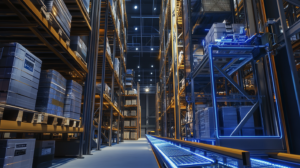
Regional differences: Germany, EU, USA and Japan
The development and adoption of AI in warehouse logistics varies regionally, influenced by economic conditions, technological leaders, and political frameworks. A look at key regions:
Germany and the EU
In Germany, the logistics sector has traditionally held a prominent position and is considered comparatively innovative. Studies show that 22% of German logistics companies already use AI, and another 26% have concrete plans to do so. German companies see AI as particularly helpful in the areas of demand forecasting, sales planning, and transport optimization. Nevertheless, only around 20% of warehouses in Germany are currently largely automated. This means that the majority still operate with predominantly manual processes. The challenges often lie in system complexity and the shortage of skilled workers, which hinders the implementation of new technologies. Despite this, German companies are investing heavily in AI to optimize processes and remain competitive.
Both Germany and the European Union are providing substantial political support for AI technologies. Germany has launched an AI strategy and allocated billions of euros to research. Institutions such as the Fraunhofer Institutes (e.g., IML in Dortmund) are specifically working on AI solutions for logistics. Concepts like Industry 4.0 and Logistics 4.0 frame the vision in which AI plays a key role. The EU, in turn, plans to advance AI and robotics in industry through programs like Horizon Europe and specific funding projects. At the same time, Europe is paying close attention to ethical guidelines and regulation – the European Commission and the European AI regulatory initiative (AI Act) being key examples. This aims to ensure that AI is used in a trustworthy and secure manner, which is also crucial in logistics (e.g., data protection for employee data, safety standards for autonomous systems).
USA
The United States has long been a leader in automation and AI research and is home to tech giants like Google, Amazon, IBM, and Microsoft, which are driving AI development. However, in practice, the US is not significantly more automated than Europe when it comes to warehouse logistics. Estimates suggest that only about 20% of US warehouses are highly automated. Nevertheless, high labor costs and increasing labor shortages in the US are now driving significant investment in automation. Large companies like Amazon, Walmart, and UPS are implementing AI-based systems and are acting as pioneers. The US recognizes that AI technology is essential to avoid falling behind in global competition (especially with Asia).
Politically, the US has somewhat different priorities – private investment and initiatives dominate. Government funding is less centrally controlled than in the EU or China, but there are programs from the Department of Defense and the Department of Energy that indirectly support AI research (e.g., for autonomous vehicles, which also benefits logistics). More recently, AI strategies have also been discussed nationally, particularly to strengthen the industrial base. Overall, it can be said that American companies are pragmatically advancing AI in logistics, while policymakers are slowly trying to create a framework to catch up internationally.
Japan
Japan is a pioneer in robotics and automation – in industry (e.g., automotive production), Japan boasts a robot density of 399 robots per 10,000 workers, placing it among the world leaders. However, Japan has been more hesitant in warehouse logistics. Traditional work methods and a high value placed on human labor have long resulted in comparatively limited warehouse automation. But this is now changing rapidly, as Japan faces acute demographic challenges: the young workforce is shrinking, and legal restrictions on working hours are forcing companies to implement automation solutions to maintain productivity. Consequently, a growing number of Japanese firms are turning to modern AI-powered warehouse solutions. The government is actively promoting this – the "New Robot Strategy" specifically encourages the use of robots in service sectors such as logistics.
Furthermore, Japan is promoting the concept of Society 5.0, a super-connected society in which AI is ubiquitous, aiming to address social challenges (such as an aging population). Within this framework, work is underway on automated delivery trucks, robot-assisted loading and unloading systems, and AI-optimized supply chains. We are already seeing Japanese logistics centers equipped with driverless forklifts and AI-controlled conveyor systems. While Japan may have started somewhat later, automation in warehouses and the use of AI are likely to increase dramatically there in the coming years. Culturally, the acceptance of robots is very high, which facilitates this transformation.
China and South Korea (for comparison)
Although not explicitly requested in the question, a brief look is worthwhile: China is investing aggressively in robotics and AI and is now the world's largest market for industrial robots. Over 50% of all new robots worldwide are installed in China. The Chinese government heavily subsidizes this development to modernize its supply chains. Particularly due to the e-commerce boom (Alibaba, JD.com, etc.), China has experienced a major boost in automated warehouse solutions. South Korea, in turn, is considered a hidden leader in warehouse automation: Over 40% of its warehouses are already automated, thanks to a high affinity for technology and companies like Coupang, which rely heavily on AI. Such countries serve as benchmarks for what is possible when technology is consistently implemented.
Europe (EU) as a whole
With a few exceptions, Europe is roughly on par with the US in this area. Within Europe, countries like Germany, the Netherlands, and those in Scandinavia are well-positioned in terms of logistics IT, while others have some catching up to do. The EU is attempting to drive progress uniformly through joint projects (e.g., GAIA-X for data infrastructure) and funding programs. Furthermore, there are EU-wide research projects in the field of AI for transport and logistics (e.g., on autonomous truck platoons, regulation of delivery drones, etc.), which naturally also have an impact on warehouses, as everything is interconnected.
In summary: Germany/EU and the USA are still relatively evenly matched in the practical use of AI in warehouses – significant potential is recognized, but large parts of the industry still lack AI. Asia presents a heterogeneous picture: China and South Korea are very far ahead due to their aggressive implementation, while Japan is catching up. Regional policy and funding programs play a major role: While China and parts of Europe are strongly pushing through government initiatives, the private sector is driving progress in the USA. Ultimately, everyone is observing each other: Good solutions are adopted internationally. Therefore, a certain degree of convergence can be expected – warehouse logistics is global, and successful AI concepts (whether the "Amazon Way" or the Alibaba robots) will spread worldwide.
Automated warehouses 2050: A vision becomes reality
Looking ahead to the future of warehouse logistics with AI and machine learning promises further exciting developments. One term that keeps coming up is the "smart warehouse"—that is, the almost completely digitized and intelligent warehouse. In such future scenarios, all systems and machines communicate with each other (keyword: Internet of Things, IoT). AI acts as the brain that controls these networked devices. One can imagine a warehouse in 2050 where almost all routine tasks are automated: autonomous vehicles transport goods, robots pick orders, drones perform inventory checks (e.g., detecting gaps on shelves via camera flight), and AI systems monitor everything in real time.
Related to this:
Potential developments
We are only at the beginning of what AI can achieve in logistics. In the future, self-learning algorithms could optimize entire warehouse complexes in real time – dynamically adapting to product mix, order volume, or even unforeseen events (such as a sudden border closure or raw material shortage). Generative AI (known from ChatGPT and similar applications) could assist in planning processes, for example, by designing alternative scenarios for supply chain disruptions. Robotics will likely become even more versatile: Today we have specialized robots for specific tasks; in the future, humanoid robots or extremely flexible robotic systems could work in warehouses, performing a wide variety of tasks (grasping, carrying, driving). Initial approaches to this (bipedal robots as warehouse assistants) are already being tested.
Human-machine collaboration is also being further refined. Cobots could work closely with humans without protective cages, and AI could serve as a personal assistant for every warehouse worker – for example, through augmented reality smart glasses that display all relevant information to the employee in real time (storage location, next step, warnings). AI-powered wearables could also monitor safety (e.g., a wristband vibrates when a forklift is nearby). All of this aims to improve working conditions and further reduce errors or accidents.
Of course, there are also challenges and ethical questions along the way. A frequently discussed concern is the issue of jobs: If more and more processes in the warehouse are automated, what will happen to warehouse worker jobs? In the short term, certain tasks may disappear – for example, fewer manual pickers are needed if robots take over these tasks. Studies predict a decline in human jobs, especially for simple, repetitive tasks. But at the same time, new roles are emerging: AI is also creating new jobs – just different ones. In the future, there will be an increasing need for specialists in robotics maintenance, data analysis, or AI system support. So, while routine physical labor decreases, the demands on the workforce's technical expertise increase. Companies are required to retrain and further educate their employees so that they can contribute effectively in the AI-supported environment. Interestingly, some companies even report that automation has enabled them to expand and hire more staff because their business has grown. The machine doesn't necessarily take away the job entirely, but often only the monotonous and stressful parts of it – allowing humans to take on more skilled tasks.
Man versus machine? Why hybrid solutions will dominate in warehousing
Ethical considerations also include data protection and transparency. AI in warehouses collects a great deal of data, such as on employee performance (picking rates, movement patterns) or on monitoring the environment. Here, personal data must be handled carefully to protect privacy and keep workplace surveillance within reasonable limits. Decisions made by AI should be comprehensible – for example, if an algorithm dictates how much an employee should produce, transparent criteria are needed to ensure fairness. In this context, the EU emphasizes Trustworthy AI – algorithms that are explainable, fair, and reliable.
Another important issue is safety: Autonomous robots and AI systems must be designed in such a way that they pose no danger to people. This requires technical standards and testing (for example, a self-driving forklift must stop reliably 100% of the time if a person is in its path). Cybersecurity is also becoming increasingly important: A networked warehouse could be the target of hacker attacks, so AI systems must be protected against manipulation.
In a future vision, one could even imagine completely autonomous warehouses operating without lights at night, powered solely by machines. Humans would primarily handle monitoring functions. However, for the foreseeable future, humans will remain a crucial component – if only to ensure flexibility and problem-solving capabilities in unforeseen situations. The hybrid solution (human + AI) is therefore likely to be the way forward for the next few decades.
The future of warehouse logistics: Why AI is now becoming indispensable
Further challenges lie in practical implementation: Many companies are faced with the question of how to introduce AI. Standards are lacking, there is a jungle of providers, and success depends on good data quality. Those with poor or incomplete data will not get good results with AI ("garbage in, garbage out"). Interoperability between different systems (e.g., the AI in the warehouse and the AI in transport management) must be ensured to create a truly seamless, intelligent supply chain.
Nevertheless, the trend is clear: AI is becoming increasingly important in warehouse logistics. In ten years, much of what is currently a pilot project will be commonplace. Companies that start today gain valuable experience and can scale their solutions. Policymakers in many countries are promoting this development because they recognize that logistics is a key sector for the overall economy – and AI is the lever to make this crucial industry more efficient and resilient.
The integration of AI and machine learning in warehouse logistics has already begun, with visible successes in efficiency and speed. It requires investment and transformation, but offers enormous opportunities – from cost savings and improved customer service to new business models. Regional differences will diminish over time as best practices are adopted globally. The future promises even smarter, largely automated warehouse logistics where humans and machines work closely together. At the same time, we must manage these changes responsibly – engaging employees, ensuring technology safety, and adhering to ethical guidelines. If we succeed, we can expect a logistics world that is far more efficient, flexible, and resilient than anything we have known in the past.

Xpert.Plus Warehouse Optimization - High-bay warehouses and pallet warehouses: Consulting and planning
We are here for you - Consulting - Planning - Implementation - Project Management
☑️ SME support in strategy, consulting, planning and implementation
☑️ Creation or realignment of the digital strategy and digitization
☑️ Expansion and optimization of international sales processes
☑️ Global & Digital B2B trading platforms
☑️ Pioneer Business Development

Konrad Wolfenstein
I would be happy to serve as your personal advisor.
You can contact me by filling out the contact form below or simply call me on +49 7348 4088 965 .
I'm looking forward to our joint project.
Write to me


Xpert.Digital - Konrad Wolfenstein
Xpert.Digital is a hub for industry focusing on digitalization, mechanical engineering, logistics/intralogistics and photovoltaics.
With our 360° Business Development solution, we support renowned companies from new business to after-sales.
Market intelligence, smarketing, marketing automation, content development, PR, mail campaigns, personalized social media and lead nurturing are part of our digital tools.
You can find more information at: www.xpert.digital - www.xpert.solar - www.xpert.plus
Keep in touch