Website icon Xpert.Digital

Innovation driver automation: How modern technologies drive the key industries of the automotive industry, electrical/electronic industry and medical technology

How modern technologies are driving the key industries of automotive, electrical/electronics and medical technology forward

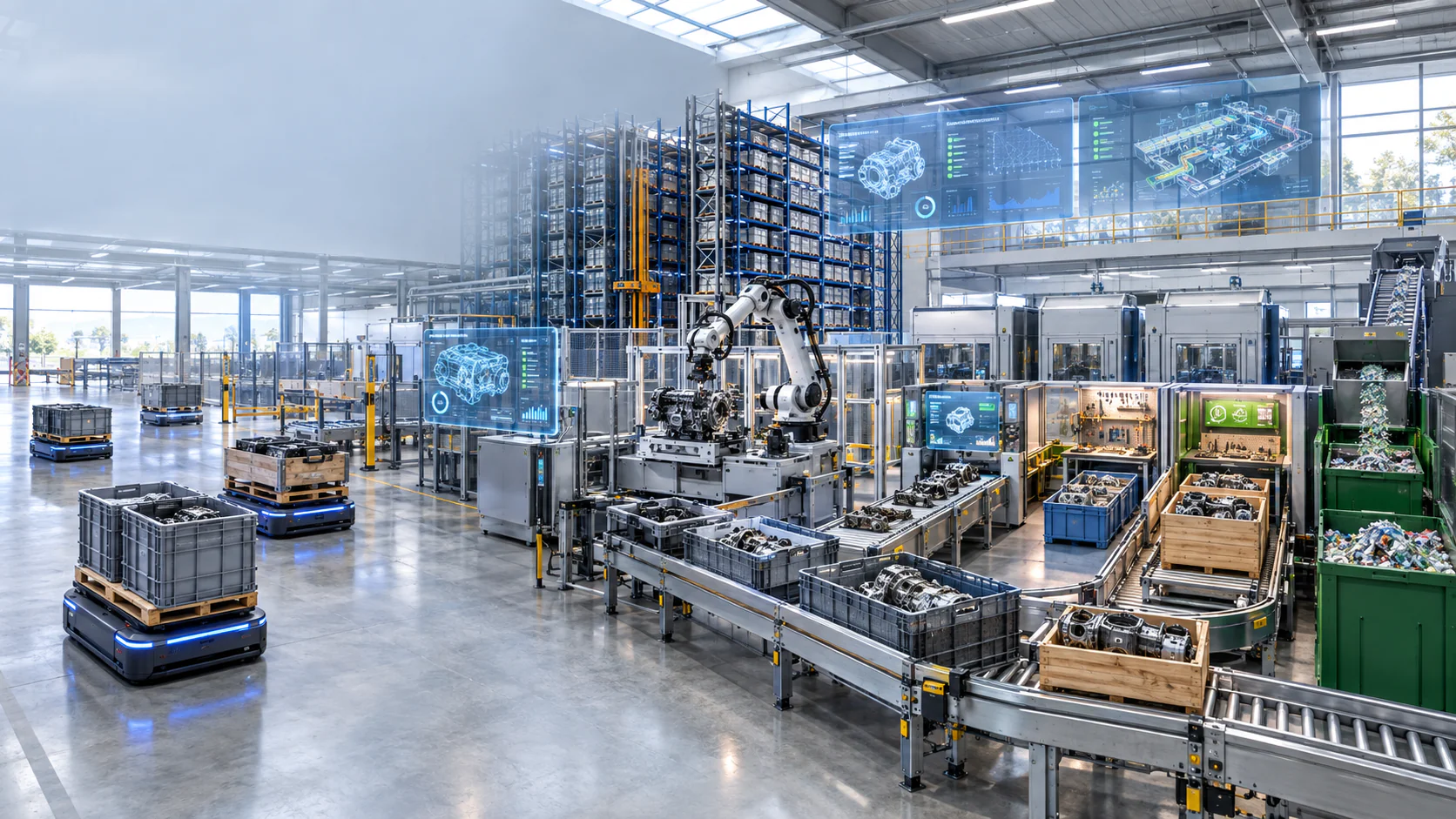
How modern technologies are driving the key industries of automotive, electrical/electronics, and medical technology forward – Image: Xpert.Digital

Technological advancement: Automotive, electrical and medical technology undergoing transformation through stamping, bending, welding and assembly technology

The automotive, electrical/electronics, and medical technology sectors have experienced impressive growth in recent years, particularly in the areas of stamping, bending, welding, and assembly technology. These industries are characterized by the increasing integration of modern technologies and automation solutions. This integration is crucial not only for competitiveness and efficiency but also for meeting ever-stricter quality requirements and regulatory standards.

The automotive, electronics and medical technology industries face specific challenges and opportunities, which are described in detail below.

Automotive industry: Transformation and efficiency improvement

The automotive industry is undergoing a comprehensive transformation. The transition to electrified powertrains, strict emissions regulations, and increasing international competition, particularly from Asia, are intensifying the pressure on established manufacturers. In this environment, stamping, bending, welding, and assembly technologies are gaining in importance, as they make significant contributions to increasing efficiency and reducing production costs.

Automated stamping and bending processes and advanced welding technologies enable the production of lightweight yet highly stable body and structural components. This is particularly important for the manufacture of electric vehicles (EVs), as vehicle weight significantly impacts range. Furthermore, modern assembly techniques are increasingly being used, optimizing the manufacturing process with the help of robotics and AI-supported systems. These systems enable real-time monitoring and quality assurance, reducing the error rate and increasing product quality. This results in a robust and scalable production process that offers both flexibility and precision.

In addition, the automotive industry is driving the integration of Industry 4.0 concepts to digitize and network the entire value chain. These concepts include, among other things, connecting machines and systems via the Internet of Things (IoT), enabling data-driven decision-making. This leads to increased process transparency, faster adaptation to market changes, and proactive maintenance of production facilities.

Electrical and electronics industry: Precision and miniaturization

The electrical and electronics industry is characterized by the continuous miniaturization and increasing complexity of components. This trend demands precise and advanced manufacturing technologies, particularly in the areas of stamping, bending, and laser cutting. The production of micro sheet metal parts, which are essential for the electronics industry, places high demands on machinery and equipment, as even the slightest deviations can lead to malfunctions.

Thanks to modern stamping and laser cutting technologies, companies can manufacture components with extremely tight tolerances. The ability to produce precise and reproducible components is crucial for meeting the demands of miniaturization. In addition, advanced bending and welding techniques support the production of complex assemblies. These assemblies are used in numerous applications across the electronics industry, from mobile devices to high-end computers and industrial equipment.

Besides precision, efficiency is also a critical factor in manufacturing. The electrical and electronics industry is therefore increasingly using automation solutions and digitally networked systems that optimize material flow and production planning. Traceability also plays a central role here, ensuring compliance with quality standards and the rapid identification of any production errors. The use of AI-controlled image processing systems in quality control enables reliable and cost-effective monitoring. These systems detect even microscopic defects, thus ensuring consistent product quality.

Another aspect is the increasing importance of sustainability and recycling in the electrical and electronics industry. The stamping and welding technologies used are constantly evolving to reduce material consumption and optimize energy use. The concept of a circular economy, in which materials are reused at the end of their life cycle, is becoming increasingly established in the industry.

Medical technology: Highest precision and reliability

Medical technology is an industry with particularly stringent requirements for precision, reliability, and quality. The manufacture of medical devices and components necessitates the use of state-of-the-art stamping, bending, welding, and assembly technologies that meet the highest quality standards. This is essential to ensure patient safety and product functionality.

Laser and welding technologies play a central role in the manufacturing of high-precision medical instruments, implants, and devices. Laser cutting enables the production of complex geometries with minimal tolerances, which are essential for medical applications. For implants, for example, millimeter-precise manufacturing is crucial, as otherwise they could not function correctly in the patient's body or could cause complications.

In addition to manufacturing complex components, the medical technology sector is increasingly focusing on customized solutions. The ability to produce tailor-made medical devices and components represents a significant competitive advantage. In particular, the combination of 3D printing and traditional stamping and assembly techniques allows manufacturers to implement specific requirements quickly and cost-effectively. This enables a flexible response to the growing demand for personalized medical products.

The stringent regulatory requirements of the medical technology industry make process documentation and quality control particularly important. Automated production facilities with integrated quality assurance enable seamless traceability and increase product reliability. Industry 4.0 technologies are also being used in this area to improve data quality and transparency in the manufacturing process.

Another essential aspect is the biocompatible processing of the materials used. Stainless steel and special alloys, which exhibit high corrosion resistance and biocompatible properties, are frequently used in the manufacture of medical products. The stamping, bending, and welding techniques employed must be appropriate for the material properties to prevent deformation and other adverse effects.

Future trends and developments

The trend toward automation and digitalization in production is unmistakable in all three industries. The increasing importance of Industry 4.0 and the Internet of Things has led companies to comprehensively digitalize their production processes. This not only enables improved product quality but also a significant increase in efficiency through the continuous optimization of machines and processes. In the automotive and electronics industries, a strong trend toward "smart factories" is already evident, where machines communicate with each other and can make autonomous decisions. Based on real-time data, these networked systems can, for example, independently initiate maintenance processes and thus minimize downtime.

Another development is the increased use of artificial intelligence in manufacturing. AI-supported algorithms analyze production data to detect quality deviations early and improve manufacturing processes. These algorithms are self-learning and continuously adapt to production conditions, leading to a constant increase in efficiency.

Furthermore, sustainability is gaining in importance. In all three industries, increasing attention is being paid to the use of more environmentally friendly materials and resource-conserving production methods. This includes both lower energy consumption of machinery and the reduction of material waste. Companies are supporting the pursuit of a circular economy through the use of recyclable materials and the development of efficient recycling processes.

Precision in manufacturing technology and automated and robot-assisted assembly solutions

The integration of modern technologies in stamping, bending, welding, and assembly is a key factor in the further development of the automotive, electronics, and medical technology sectors. The automotive industry is increasingly relying on automated and robot-assisted assembly solutions to meet the challenges of electromobility and international competition. The electronics industry benefits from precision manufacturing techniques that support the miniaturization and increasing complexity of products. Finally, the medical technology sector utilizes customized production solutions to meet high standards of precision and reliability.

What these industries have in common is a strong focus on automation and digitalization, supported by Industry 4.0 technologies. These trends create the foundation for future-proof production that meets the demands for efficiency, flexibility, and sustainability.

Suitable for:


Exit the mobile version