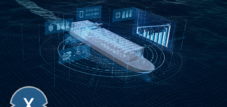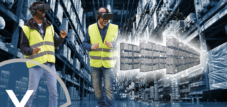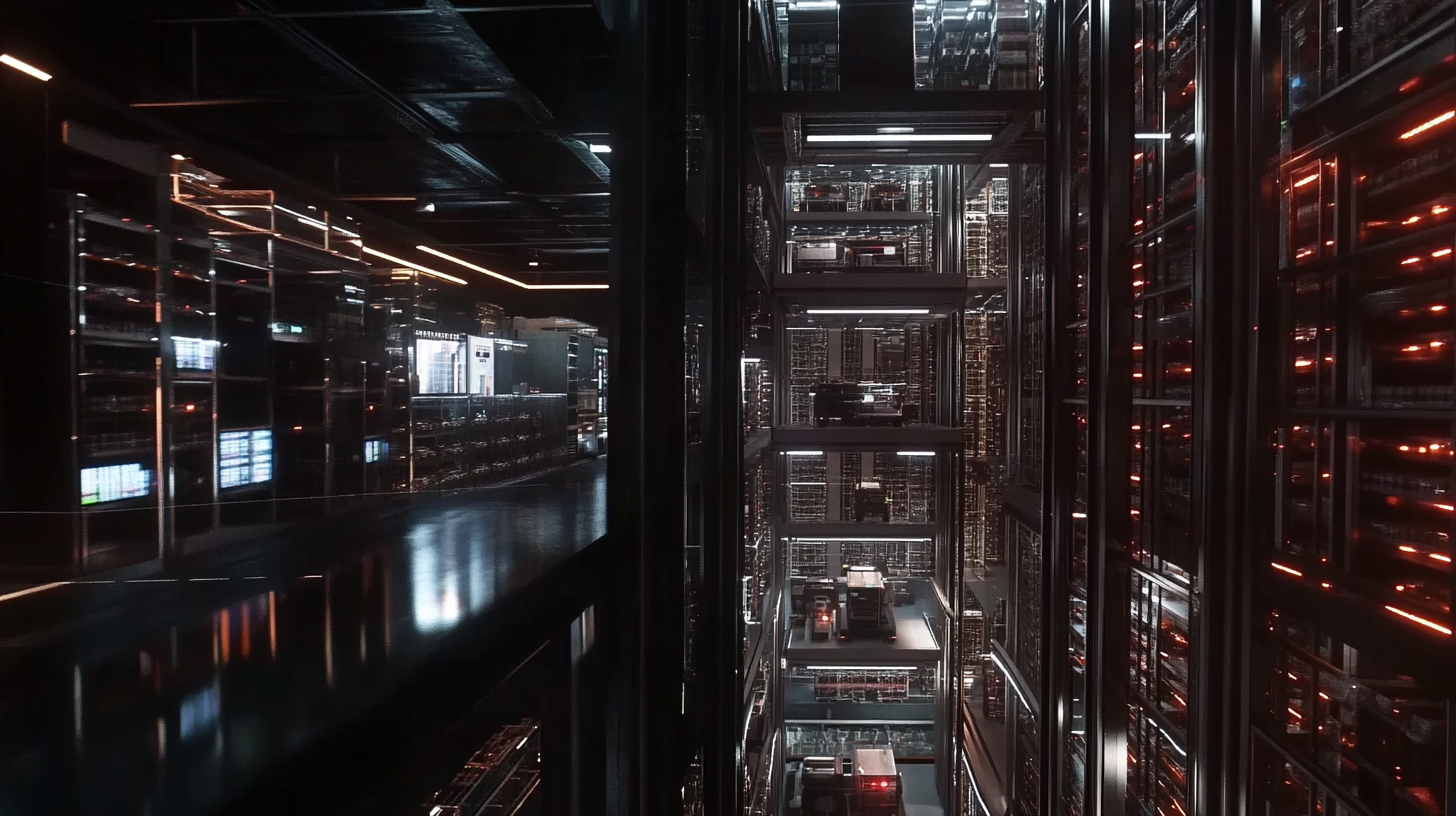
Innovative warehouse logistics with digital twins and AI – Image: Xpert.Digital
📦🔍 Simulating a digital twin in the warehouse: Optimizing logistics processes
📦 Simulating a digital twin in the warehouse offers innovative opportunities for optimizing logistics processes and improving efficiency and accuracy in warehousing. A warehouse's digital twin is essentially an exact virtual representation of the physical warehouse environment, fed by continuous data updates from the real world. This data flows from various sources such as sensors, cameras, and other smart devices to ensure a detailed and up-to-date depiction of the warehouse environment. This virtual model not only enables comprehensive real-time monitoring but also the ability to test future scenarios through simulations and make informed decisions. The following sections describe in detail the functionality, benefits, and role of artificial intelligence, as well as the importance of sensors and data quality in the context of the digital twin in warehouse logistics.
🔧🖥️ How does the simulation of a digital twin work in the warehouse?
The simulation of a digital twin in a warehouse is based on the integration of physical and virtual data sources that communicate with each other in real time. Initially, a detailed model of the warehouse is created, mapping all relevant physical features – such as shelves, storage areas, transport routes, and stored goods. Data continuously flows into this model, collected via various sensors, including, for example, the positions of goods, temperature and humidity levels, and the movement patterns of forklifts and other machinery.
A key technology in simulation is the ability to analyze data in real time. Once the sensors and machines are networked, they can transmit their data to a central platform, where this data is processed and integrated into the virtual model. Using specialized software solutions, warehouse operators can then simulate how changes in the warehouse environment—such as restructuring the racking layout or adjusting warehouse processes—would affect efficiency. This simulation allows potential bottlenecks or inefficiencies to be identified and resolved in advance.
📈📊 Advantages of real-time visualization of a digital twin in the warehouse
Real-time digital twin monitoring in the warehouse offers numerous advantages that extend far beyond simple inventory tracking. One of the most significant benefits is increased transparency. Warehouse operators can obtain a complete overview of current inventory levels and their locations anytime, anywhere. This not only simplifies inventory management but also enables precise planning and coordination of goods movements.
Another advantage is the ability to detect problems early. Continuous monitoring allows anomalies, such as unusual movement patterns or temperature changes, to be quickly identified and analyzed. This helps prevent damage to stored goods and reduce machine downtime. Furthermore, real-time visualization enables proactive responses to changes in demand, as bottlenecks or overstocks are identified more quickly.
An additional advantage lies in optimized resource planning. Precise knowledge of inventory levels and movements enables operators to deploy personnel and machinery more efficiently. This minimizes long waiting times and unnecessary transport routes. Real-time visualization also offers potential in terms of sustainability: by minimizing storage space, optimizing transport routes, and reducing waste, the digital twin contributes to more sustainable warehouse management overall.
🤖✨ How can AI improve the predictive capabilities of a digital twin?
Integrating artificial intelligence (AI) into the digital twin elevates its benefits to a new level. AI enables the analysis of historical and real-time data, allowing for the generation of predictions. A typical example is forecasting demand trends for specific products. By recognizing patterns in past orders, AI can predict future demand for certain goods. This helps manage inventory more efficiently and prevent stockouts.
Another application of AI in digital twins is the optimization of warehouse processes. Using machine learning, the digital twin can independently suggest ways to optimize warehouse operations. These optimizations are based on the specific conditions and historical data of the warehouse. For example, AI could recognize patterns in the movement of warehouse personnel and machines and, based on this, provide recommendations for more efficient routing.
Furthermore, AI can help improve the maintenance of machinery in warehouses. By monitoring and analyzing operational data, AI can predict maintenance needs and thus minimize downtime. This so-called predictive maintenance not only reduces the costs of unplanned repairs but also extends the lifespan of the machines.
🛰️📡 The role of sensors in creating a digital twin
Sensors play a central role in creating and updating the digital twin. They are the primary data sources, providing the necessary information about the physical warehouse environment in real time. Different types of sensors collect different data: Position sensors, for example, monitor the movements of stored goods and machines, while environmental sensors monitor temperatures and humidity.
These sensors must operate precisely and deliver reliable data so that the digital twin accurately reflects reality. Sensors on warehouse robots and autonomous vehicles also contribute to increasing the safety and efficiency of processes. In warehouses storing perishable goods, sensors are frequently used to continuously monitor temperature and humidity levels. This ensures that storage conditions meet specifications and prevents quality losses.
In addition to physical sensors, camera and image processing systems are increasingly being used, enabling the integration of visual information into the digital twin. The combination of these different sensors creates a comprehensive picture of the warehouse environment, capturing not only static information but also dynamic processes such as movements and changes in condition.
🏆📥 Improving data quality in the warehouse through digital twins
High data quality is essential for the efficiency and precision of the digital twin. The more accurate and up-to-date the data, the more reliable the analyses and predictions provided by the digital twin. One advantage of the digital twin is its continuous data collection and updates, ensuring that the information is always current. This significantly contributes to improving decision-making quality in the warehouse.
A key aspect of data quality is the consistency and integrity of the information. By using technologies such as RFID and barcode scanning, inventory data can be captured automatically and accurately. This minimizes input errors that often occur during manual inventories. Furthermore, the digital twin can be supported by data cleansing algorithms that automatically detect and correct erroneous or incomplete data.
In addition, the digital twin improves data availability. Employees and managers have access to all relevant information at any time, which increases the transparency and traceability of decisions. Because all information is centralized and digitally available, collaboration between different departments and locations is facilitated.
🚀🔑 The digital twin as a key technology in warehouse logistics
The digital twin has the potential to fundamentally transform warehouse logistics. From real-time monitoring and process optimization to predictive maintenance and improved decision-making, it offers a multitude of advantages. The combination of sensors, AI, and real-time data processing opens up new possibilities for increasing efficiency and reducing costs in warehouse operations.
Continuous data updates and the ability to simulate future scenarios make the digital twin a valuable tool for strategic warehouse planning. Companies investing in this technology can not only optimize their warehouse processes but also adapt better to changing market conditions and thus become more competitive. The digital twin therefore represents a future-oriented technology that will significantly shape warehouse logistics.
📣 Similar topics
- 🚀 Digital Twins: The Future of Warehouse Logistics
- 🔍 Optimization through real-time data analysis
- 🌐 Virtual models and their application
- 🤖 AI in the digital twin: Seizing the opportunities
- 🛡️ Safety and efficiency through sensor technology
- 📈 Data quality is the focus of warehouse processes
- 🗺️ Transparency and planning through digital insights
- 🕒 From real-time monitoring to predictive maintenance
- 📊 Simulations as a basis for strategic decisions
- ♻️ Sustainable warehouse management through digital twins
#️⃣ Hashtags: #DigitalTwins #WarehouseLogistics #RealTimeMonitoring #ArtificialIntelligence #DataQuality
Expert partner in warehouse planning and construction

🌀 Insights into Digital Twins: Simulation and Optimization for Modern Warehouses
🎯 A digital twin is a digital representation of a physical system or object, in this case, a warehouse. By integrating data, sensors, and modern analytics tools, the digital twin can create an exact copy of the warehouse and its operations, providing valuable insights into current and future warehouse processes. These virtual representations enable precise simulation and analysis of the processes taking place within a warehouse, opening up numerous opportunities for predicting and optimizing these processes.
🤔📦 What is a digital twin in a warehouse and how does it work?
A digital twin in the warehouse combines data from various sources – from inventory data and sensors on devices and machines to real-time information on employee movements and activities. This collected data creates a dynamic representation of the warehouse that continuously updates and always reflects its current state. This allows companies to precisely track which goods are located where, how long processes take, and where potential bottlenecks or delays might occur.
This digital twin works by integrating sensors and other IoT (Internet of Things) devices that continuously collect data on the condition and location of goods, equipment, and vehicles within the warehouse. This data is then analyzed using advanced software solutions and stored in a central system, enabling real-time visualization of warehouse processes.
🔄🧐 Optimization potential through the digital twin
The main advantages of a digital twin lie in its ability to streamline processes and identify bottlenecks early on. Warehouses are often complex and dynamic environments where many factors interact – from inventory control and warehouse management to employee coordination and machine utilization. The digital twin helps to coordinate and align all these factors.
One example of optimization is the reduction of throughput times. A digital twin can track the exact location of goods and materials in the warehouse and analyze how these goods can be transported most efficiently from one point to another. By optimizing movement sequences and minimizing unnecessary routes, the digital twin can help warehouse processes run more smoothly and quickly. This leads to improved productivity and lower operating costs.
🔮📊 Using Predictive Analytics for More Accurate Forecasts
One of the most powerful features of the digital twin is its use of predictive analytics, which involves forecasting future events based on historical data and advanced analytical algorithms. Using the collected data, the system can, for example, calculate when certain inventory levels need to be replenished or when machine maintenance is required. By predicting bottlenecks or machine failures, the digital twin can proactively initiate measures and thus prevent costly downtime.
Predictive analytics goes a step further, however: it enables the simulation of "what-if" scenarios. Companies can play through various situations, such as the impact of a sudden surge in demand or increased workload during the holidays. The digital twin can analyze how these scenarios affect warehouse processes and what measures would be necessary to manage the increased demand. This allows companies to be better prepared and react more flexibly to market changes.
⚙️🏭 Increased efficiency and cost reduction through process automation
Another advantage of the digital twin lies in the possibility of automating certain warehouse processes. Instead of manually deciding which products should be moved or restocked and when, the digital twin can automatically control such tasks. This is done using algorithms that continuously analyze the collected data and calculate optimal instructions.
An automated process could, for example, involve the system automatically generating replenishment orders as soon as a critical threshold is reached. Automating these processes minimizes manual errors and ensures that inventory levels remain optimal. This leads to significant cost reductions by reducing excess inventory and stockouts while simultaneously increasing workflow efficiency.
👷♂️🔒 Improving employee productivity and safety
The digital twin can also optimize the work of warehouse employees and increase their safety. By precisely tracking employee movements and activities, the system can identify potential hazards in the warehouse and suggest targeted measures to improve safety. For example, the digital twin can indicate that certain areas in the warehouse are considered risk zones due to frequent movements or excessively high traffic volumes.
In addition, the digital twin can plan the optimal deployment of employees and organize work processes in such a way that unnecessary travel and waiting times are minimized. In this way, the digital twin not only contributes to increased efficiency but also to relieving the burden on employees, which in the long term increases their satisfaction and productivity.
🌱♻️ Sustainability and ecological benefits
A frequently overlooked yet significant aspect of digital twins in the warehouse is their potential to promote sustainability. By optimizing processes, energy consumption in the warehouse can be reduced. For example, a digital twin can analyze which machines in the warehouse are particularly energy-intensive and how their use can be made more efficient to reduce energy consumption. It can also help to design material flow in such a way that transport routes are minimized, which in turn reduces CO₂ emissions.
Reducing waste is also an important aspect. Targeted inventory management and precise stock planning can prevent excess inventory, leading to a reduction in outdated or damaged goods. This has not only environmental benefits but also financial ones, as less capital is tied up in unused stock.
🔗🔧 Digital Twin Integration and Interoperability
For a digital twin to reach its full potential, seamless integration into the company's existing IT infrastructure is crucial. This often requires interoperability with other systems such as ERP (Enterprise Resource Planning) and WMS (Warehouse Management System). Through this integration, the digital twin can not only optimize warehouse processes but also make the entire supply chain more efficient.
Synchronization with other systems allows all relevant information, from procurement and production to delivery, to flow into the digital twin. This creates a comprehensive picture of the entire value chain, helping management to make informed decisions and better implement strategic plans.
🤖🧠 Future prospects: Artificial intelligence and machine learning
The future of digital twins in warehouses will be significantly shaped by artificial intelligence (AI) and machine learning. These technologies enable increasingly complex and accurate predictions. While digital twins currently rely primarily on data analysis and simulations, future systems will incorporate self-learning algorithms that can independently recognize patterns in the data and develop optimization suggestions based on them.
Imagine, for example, that the system learns from the mistakes and successes of past processes and thereby continuously becomes more efficient. This type of AI-powered digital twin would be able not only to provide recommendations for specific scenarios but also to actively implement them and adapt itself. In the future, the digital twin could thus function not just as a passive simulation but as an active, intelligent system that continuously works to improve warehouse processes.
🎯🚀 An indispensable tool for modern warehouse logistics
The digital twin is revolutionizing warehouse management by enabling companies to simulate, predict, and continuously optimize processes. By using predictive analytics, process automation, and integration with existing IT infrastructure, companies can make their warehouse processes more efficient and better prepared for changes in demand. Furthermore, the digital twin contributes to employee safety and productivity and promotes more sustainable working practices by optimizing resource consumption.
In the long term, the digital twin will become an indispensable tool in modern warehouse logistics. Companies that implement this technology will not only save costs and increase their efficiency, but also secure a decisive competitive advantage. In a world where flexibility, speed, and resource efficiency are becoming increasingly important, the digital twin offers the perfect answer to the challenges of tomorrow's warehouse logistics.
📣 Similar topics
- 📦 Digital twin in the warehouse: A revolution in logistics
- 🚀 Optimizing warehouse processes using digital twins
- 🔍 Precise analyses and predictions with digital twins
- 🛠️ Warehouse Automation: The Impact of Digital Twins
- 🌿 Optimize sustainability through digital twins in the warehouse
- 🔗 Interoperability: Integration of digital twins into existing systems
- 🤖 Artificial intelligence and the future of warehouse logistics
- ⚙️ Reducing lead times through digital twins
- 👥 Increase employee productivity and safety with digital twins
- 🌐 Predictive Analytics: The Power Behind Digital Twins
#️⃣ Hashtags: #DigitalTwin #WarehouseOptimization #PredictiveAnalytics #ProcessAutomation #SustainableLogistics

Xpert.Plus Warehouse Optimization - High-bay warehouses and pallet warehouses: Consulting and planning
We are here for you - Consulting - Planning - Implementation - Project Management
☑️ SME support in strategy, consulting, planning and implementation
☑️ Creation or realignment of the digital strategy and digitization
☑️ Expansion and optimization of international sales processes
☑️ Global & Digital B2B trading platforms
☑️ Pioneer Business Development

Konrad Wolfenstein
I would be happy to serve as your personal advisor.
You can contact me by filling out the contact form below or simply call me on +49 7348 4088 965 .
I'm looking forward to our joint project.
Write to me


Xpert.Digital - Konrad Wolfenstein
Xpert.Digital is a hub for industry focusing on digitalization, mechanical engineering, logistics/intralogistics and photovoltaics.
With our 360° Business Development solution, we support renowned companies from new business to after-sales.
Market intelligence, smarketing, marketing automation, content development, PR, mail campaigns, personalized social media and lead nurturing are part of our digital tools.
You can find more information at: www.xpert.digital - www.xpert.solar - www.xpert.plus
Keep in touch