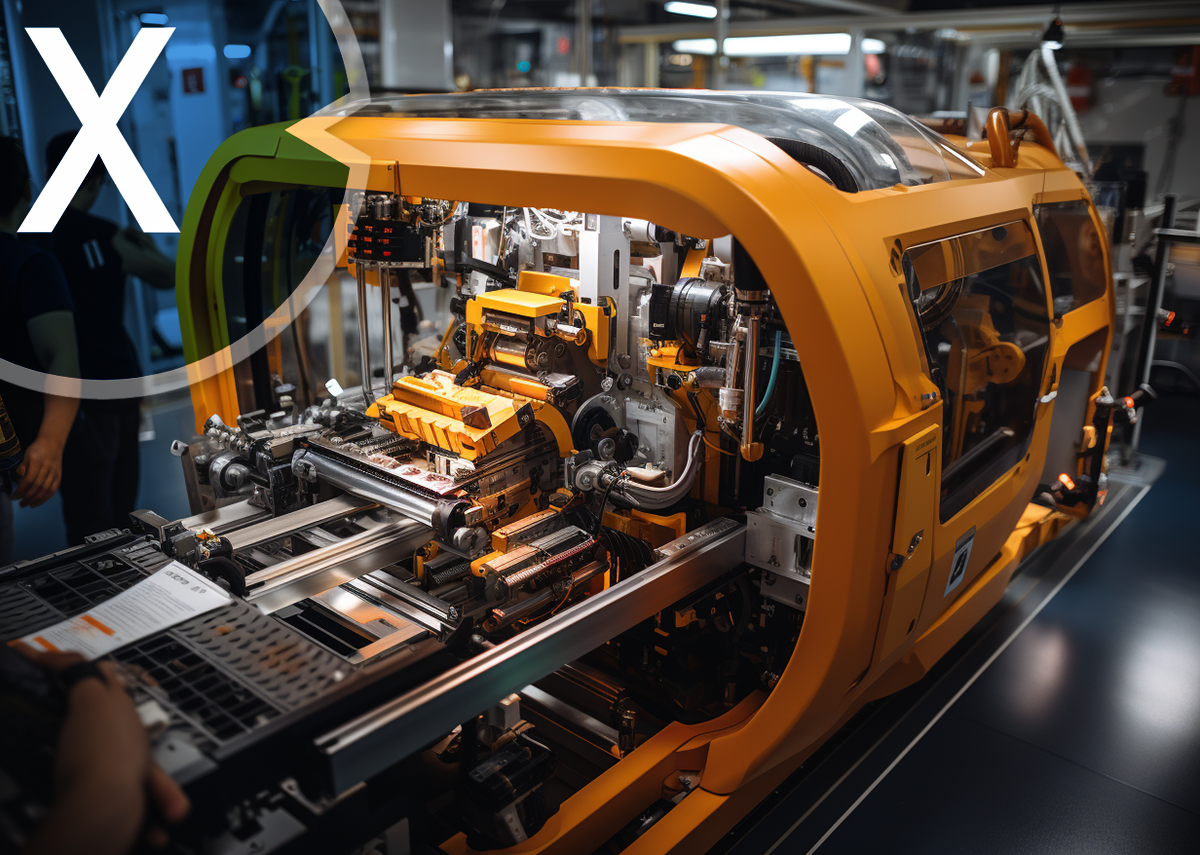
Adapting injection molding machines for complex component geometries – Image: Xpert.Digital
🌿✨ Energy efficiency in injection molding: Future-oriented production
😎 Injection molding is an essential process in the manufacturing industry, widely used in various sectors such as automotive, medical technology, electronics, and packaging. With the increasing importance of energy efficiency and sustainability, injection molding machine manufacturers face the challenge of continuously optimizing their systems. The following presents various tips and innovations that can help achieve these goals.
First, it is important to clarify the concept of energy efficiency in the context of injection molding. Energy efficiency means keeping the energy consumption required to produce an injection-molded part as low as possible. This is not only for cost reasons, but also to reduce environmental impact. Sustainability in this context encompasses using resources in a way that meets the needs of the present without compromising the ability of future generations to meet their own needs.
🤖 Process optimization through precise control
More advanced control systems and real-time monitoring allow injection molding processes to be optimized for energy savings. Modern machines enable precise control over all phases of the injection molding cycle, including injection speed, pressure, and cooling time, which improves product quality while reducing reject rates.
💪 Use of servo motors
Replacing hydraulic pump systems with servo motors can result in significant energy savings. Servo motors only consume energy when movement is actually taking place, thus significantly reducing energy consumption. These efficient motors can reduce energy costs by up to 70% compared to conventional hydraulic systems.
🥶 Heat recovery
Injection molding generates a significant amount of heat, which typically goes unused. Innovative heat recovery systems utilize this otherwise wasted energy to heat other parts of the production facility or even convert it back into energy that is fed back into the process. This improves the overall energy efficiency of the production plant.
🌱 Use of bio-based and recyclable plastics
Sustainability is also promoted through the use of bio-based plastics or recycled materials. These materials reduce dependence on fossil fuels and the emissions generated during production. Furthermore, they increase the acceptance of the final products among environmentally conscious consumers.
🧰 Tool and mold making optimization
Optimized tool and mold designs save material and shorten cycle times. Improved cooling systems also contribute to reducing cycle times and thus increasing energy efficiency. Additive manufacturing processes can also be used to produce complex shapes that would be difficult or impossible to manufacture using traditional methods.
🏋️♂️ Lightweight construction and material reduction
Innovations in lightweight construction offer the possibility of reducing material consumption without negatively impacting the stability or functionality of the product. This leads to less resource consumption and lower emissions throughout the product life cycle.
🤖 Integration of Industry 4.0 concepts
The integration of Industry 4.0 technologies, such as the Internet of Things (IoT), enables networked production in which machines, systems, and products communicate intelligently with each other. This improves process monitoring and control and allows for proactive maintenance, thereby reducing downtime and energy losses.
🎓 Training and further education
An often underestimated component is the knowledge and skills of the operating personnel. Training can help strengthen employees' awareness and competence regarding energy-efficient work practices. Well-trained employees can significantly contribute to energy efficiency through proper machine operation and optimized workflows.
⚡ Alternative injection molding processes
New injection molding processes, such as gas-assisted injection molding or water injection molding, enable the production of components with hollow structures. These processes not only contribute to material savings but also allow for the manufacture of lighter and simultaneously more stable components.
🏞️ Energy efficiency and sustainability
Energy efficiency and sustainability in injection molding can be significantly improved through both technical innovations and organizational measures. From precise control systems and the use of servo motors to the application of bio-based materials and the integration of Industry 4.0 concepts – the possibilities for increasing sustainability are diverse. The goal must be to create a more environmentally friendly production process that consumes less energy and thus reduces companies' ecological footprints. Through continuous innovation, investment in modern technologies, and a commitment to a green future, injection molding companies play a central role in creating a more sustainable industry.
📣 Similar topics
- 🔋 Improving energy efficiency in injection molding technology
- 🌿 Sustainable materials in injection molding: Bioplastics and recycling
- ⚙️ Optimizing injection molding processes for a better environmental footprint
- 🔧 Advances in tool and mold making technology
- 🤖 Integration of Industry 4.0 in the injection molding industry
- 🔍 Precise control systems for process optimization
- 💡 Heat recovery techniques in injection molding production
- 🏭 Modernization through servo motors: Saving energy in manufacturing
- 🛠 New injection molding methods for material efficiency
- ✅ Further training as the key to energy-efficient working
#️⃣ Hashtags: #InjectionMoldingTechnology #EnergyEfficiency #SustainableProduction #Optimization #Industry40
🎯🎯🎯 Benefit from Xpert.Digital's extensive, five-fold expertise in one comprehensive service package | BD, R&D, XR, PR & Digital Visibility Optimization

Benefit from Xpert.Digital's extensive, five-fold expertise in a comprehensive service package | R&D, XR, PR & Digital Visibility Optimization - Image: Xpert.Digital
Xpert.Digital possesses in-depth knowledge across various industries. This allows us to develop tailored strategies precisely aligned with the requirements and challenges of your specific market segment. By continuously analyzing market trends and monitoring industry developments, we can act proactively and offer innovative solutions. The combination of experience and expertise generates added value and provides our clients with a decisive competitive advantage.
More information here:
🔝🔟 Top Ten in the injection molding industry 🏭🔩 for injection molding technology and injection molding machines
1. Klöckner DESMA Elastomertechnik GmbH
- An der Baera, 78567 Fridingen, Germany
- Market share: 21.2%
2. YIZUMI Germany GmbH
- Konrad-Zuse-Str. 41, D 52477 Alsdorf, Germany
- Market share: 20%
3. ARBURG GmbH + Co KG
- Arthur-Hehl-Straße, 72290 Loßburg, Germany
- Market share: 11.5%
4. igus® GmbH
- Spicher Str. 1a, D-51147 Cologne, Germany
- Market share: 9.7%
5. KOMOS GmbH
- Bahnhofstr. 2, D-07616 Bürgel, Germany
- Market share: 9.1%
6. Dr. Boy GmbH & Co. KG
- Neschener Straße 6, 53577 Neustadt-Fernthal, Germany
7. ENGEL AUSTRIA GmbH
- Ludwig-Engel-Straße 1, A-4311 Schwertberg, Austria
8. Valder Kunststoffprocessing GmbH
- Üdinger Weg 44 – 48, 52372 Kreuzau, Germany
9. Giebeler GmbH
- Dietzhölzstrasse 21-24, 35713 Eschenburg, Germany
10. TR Plast GmbH
- Karl-Spitta-Straße 2, 92318 Neumarkt idOPf., Germany
11. Hekuma GmbH
12. Haitian Europe GmbH
13. Fischer GmbH & Co. KG
14. Ferromatik Milacron GmbH
15. FANUC Deutschland GmbH
16. Christmann Kunststofftechnik GmbH
17. CeraCon GmbH
🔄🔗 Chain reaction of improvements: How injection molding optimizations increase efficiency
🤖 In practice, changes to the injection molding process often lead to a chain reaction of further improvements. For example, a reduced cycle time through better cooling techniques can not only save energy but also increase the throughput rate, contributing to improved cost-effectiveness.
🚀 Optimizing machine utilization
Optimized machine utilization ensures that each injection molding machine is used efficiently. This includes avoiding downtime and ensuring that the machines always operate close to their optimal capacity. Modern software can assist with planning and, for example, distribute orders across machines in a way that minimizes energy consumption and material waste.
⏰ Reduction of travel losses
Start-up losses occur when machines have to be restarted after periods of inactivity. These losses can be minimized through intelligent planning and continuous operation. More consistent utilization not only prevents energy waste but also contributes to the longevity of the machines.
🧩 Use of multi-component processes
Multi-component injection molding, in which different materials are processed in a single cycle, can increase production speed and reduce material waste. By avoiding additional assembly steps, energy and resources are saved.
⚙ Adaptive Process Control
Modern injection molding machines are equipped with sensors that monitor the process and provide real-time data. Adaptive process control can use this data to automatically adjust machine settings, resulting in consistently high product quality with minimal energy consumption.
📈 Life Cycle Assessment (LCA)
Life cycle assessments for products and processes are becoming increasingly important. A life cycle assessment helps to capture and evaluate all environmental impacts of a product throughout its entire life cycle. Based on this premise, injection molding processes can be made more environmentally friendly by identifying and implementing effective measures to reduce energy consumption and emissions.
📊 Energy Management Systems (EMS)
An energy management system helps businesses analyze, control, and optimize their energy consumption. Continuous monitoring and adjustment of energy flows allow for the identification and utilization of potential savings.
🌎 Energy efficiency and sustainability
Energy efficiency and sustainability in the injection molding industry are not only important from an ecological perspective, but also a necessity from a business perspective. By implementing innovative technologies and optimizing production processes, companies can significantly reduce their costs and increase their competitiveness. The path to more sustainable production requires companies to commit, be willing to invest in modern equipment and technologies, and provide continuous training for their employees. Only in this way can the challenge of environmentally friendly production be met and a contribution made to protecting our global resources.
📣 Similar topics
- 🌟 Optimization potential in the injection molding process
- 🛠️ Applications and advantages of multi-component processes
- 🔄 Reduction of start-up losses through continuous production
- 🤖 Adaptive process control for efficient manufacturing
- 🍃 Sustainable injection molding techniques and life cycle assessment
- ⚙️ Maximizing machine utilization
- 💡 Energy management systems in practice
- 🌱 Energy efficiency as the key to profitability
- 🔍 Intelligent software solutions for the injection molding industry
- 🌿 Sustainability and competitiveness in production
#️⃣ Hashtags: #EnergyEfficiency #InjectionMoldingProcess #MachineUtilization #Sustainability #EnergyManagementSystems
Our Industrial Metaverse Configurator
Simply try out our universally applicable (B2B/Business/Industrial) Metaverse Configurator for all CAD / 3D demo options:
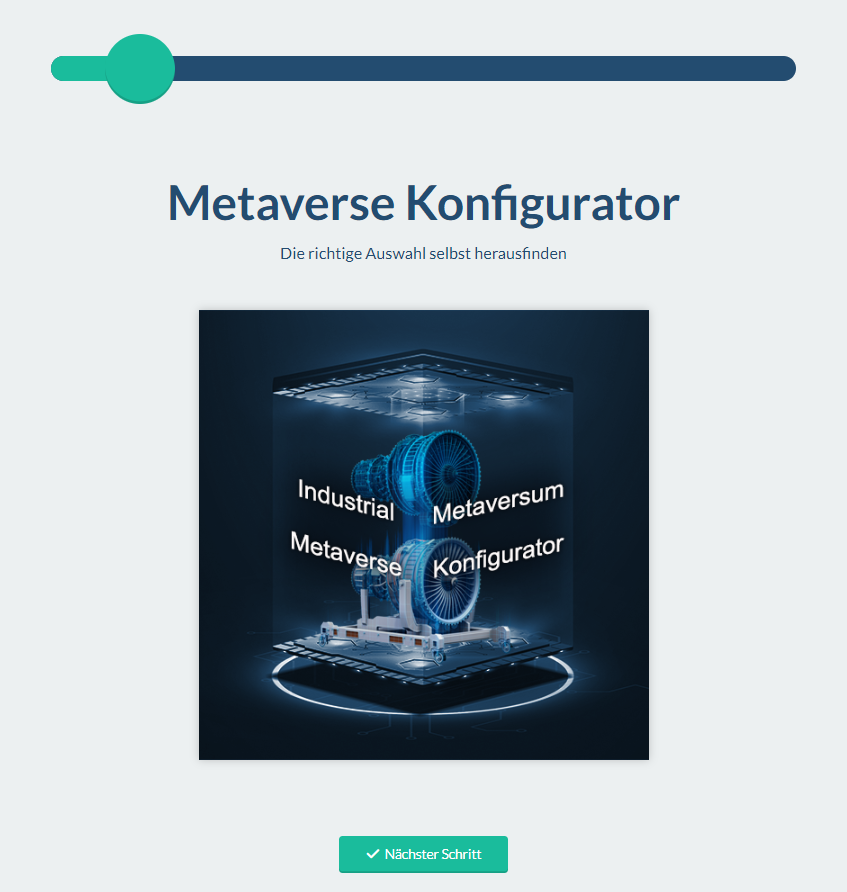

Xpert (B2B/Business/Industrial) Metaverse Configurator for all CAD / 3D data, usable on all end devices, one platform!
Related to this:
📊💻 Digital Green Wave: Data analysis and AI in the service of environmentally friendly injection molding
🤖 Integrating Lean Management principles can further reduce inefficiencies and increase sustainability. Applying methods like 5S (Sort, Set in order, Clean, Standardize, Sustain) not only makes the workplace more efficient but also reduces waste and saves energy.
📰 Promoting the circular economy
A central pillar of sustainability is the circular economy. In the field of injection molding, this means optimizing the product life cycle through concepts such as "design for recycling." Products are developed so that at the end of their life cycle they can be easily recycled or disassembled and their materials reused. This closes the loop and ensures the responsible use of resources.
💻 Digitization and data analysis
Digital data analysis tools allow for the collection and evaluation of large amounts of production data. Artificial intelligence and machine learning can be used to identify patterns and correlations that can be leveraged to increase efficiency and conserve resources.
❄️ Improved cooling techniques
The cooling phase in the injection molding process has a significant impact on cycle time and energy efficiency. Advances in cooling technology, such as conformal cooling and dynamic temperature control methods, can shorten the cooling time and thus increase productivity.
🌎 Use of CO2-neutral energy
The use of renewable energy sources such as solar or wind power to supply injection molding machines directly contributes to CO2 neutrality in production. This is becoming increasingly important to comply with legal regulations and increase social acceptance in the market.
📈 Resource-efficient production
In a world where sustainability and energy efficiency are becoming increasingly important, companies in the injection molding industry must take a proactive approach. The innovations and methods described here demonstrate that efficient and resource-conserving production can go hand in hand. The future of injection molding technology will be determined not only by advances in machine technology, but also by a holistic view of the product lifecycle and the intelligent use of data for continuous process improvement.
The key to sustainable success lies in striking a balance between economic interests and environmental responsibility. This will only be possible if the entire industry works together – from machine manufacturers and plastics suppliers to end users. By prioritizing energy efficiency and sustainability in our efforts, we can leave behind a greener planet while ensuring the growth and progress of the injection molding industry.
📣 Similar topics
- 🌱 Increased efficiency and sustainability: Lean management principles in injection molding technology
- ♻️ Waste reduction and resource conservation: The importance of the circular economy
- 🔍 Data analysis for sustainable production: The potential of digitalization
- 🌡️ Innovative cooling technologies: Increased efficiency in the injection molding process
- ☀️ CO2-neutral production: Use of renewable energies in the injection molding industry
- 🌍 Sustainable injection molding technology: Combining economic efficiency and ecological responsibility
- 🔄 Life cycle optimization: Design concepts for recyclable products
- 📊 Potential for improvement through data analysis in the injection molding industry
- ❄️ Energy-efficient cooling methods: Future trends in the injection molding process
- 🤝 Collaboration for sustainability: The role of all stakeholders in the injection molding industry
#️⃣ Hashtags: #Efficiency Improvement #Resource Conservation #Cooling Technology #Circular Economy #CO2 Neutrality

Plan your solar system for the most common applications conveniently online with our solar system planner!
With our user-friendly solar system planner, you can design your individual solar system online. Whether you need a solar system for your home, your business, or for agricultural purposes, our planner allows you to consider your specific requirements and develop a customized solution.
The planning process is simple and intuitive. You simply enter the relevant information. Our planner takes this information into account and creates a customized solar system that meets your needs. You can try out different options and configurations to find the optimal solar system for your application.
Furthermore, you can save your plan to review it later or share it with others. Our customer service team is also available to answer any questions and provide support to ensure your solar system is optimally planned.
Use our solar system planner to design your individual solar system for the most common applications and accelerate the transition to clean energy. Get started now and take an important step towards sustainability and energy independence!

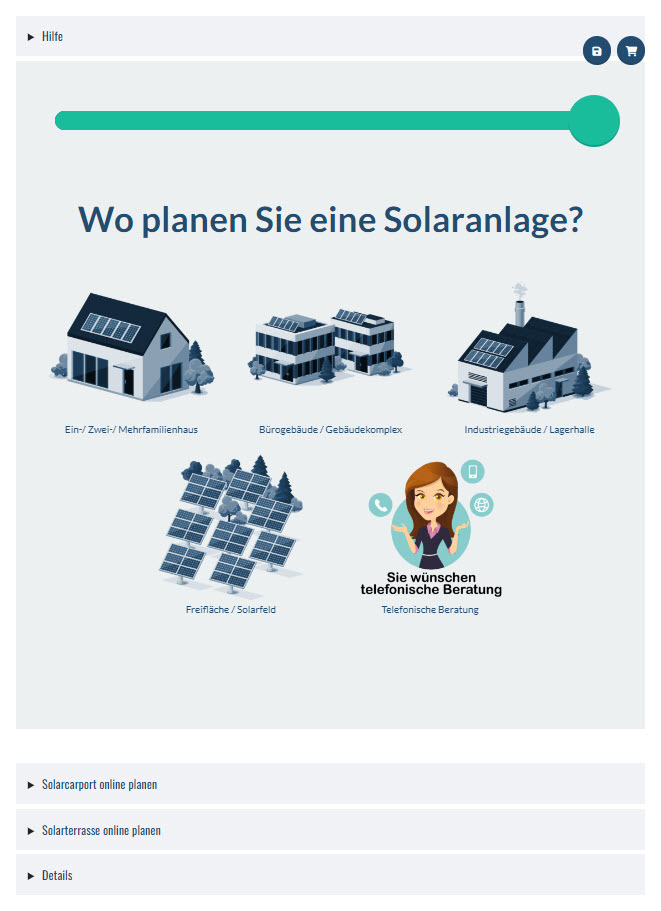
The solar system planner for the most common applications: Plan your solar system online here - Image: Xpert.Digital
More information here:
We are here for you - Consulting - Planning - Implementation - Project Management
☑️ Smart City & Factory: Industry expert for energy-efficient 5G buildings and halls, as well as consulting and installation of solar systems
☑️ Xpert.Plus - Logistics consulting and logistics optimization
☑️ Industry expert, here with his own Xpert.Digital industry hub with over 1,500 specialist articles

Konrad Wolfenstein
I would be happy to serve as your personal advisor.
You can contact me by filling out the contact form below or simply call me on +49 7348 4088 965 .
I'm looking forward to our joint project.
Write to me


Xpert.Digital - Konrad Wolfenstein
Xpert.Digital is a hub for industry focusing on digitalization, mechanical engineering, logistics/intralogistics and photovoltaics.
With our 360° Business Development solution, we support renowned companies from new business to after-sales.
Market intelligence, smarketing, marketing automation, content development, PR, mail campaigns, personalized social media and lead nurturing are part of our digital tools.
You can find more information at: www.xpert.digital - www.xpert.solar - www.xpert.plus
Keep in touch