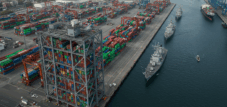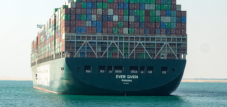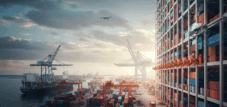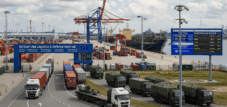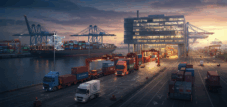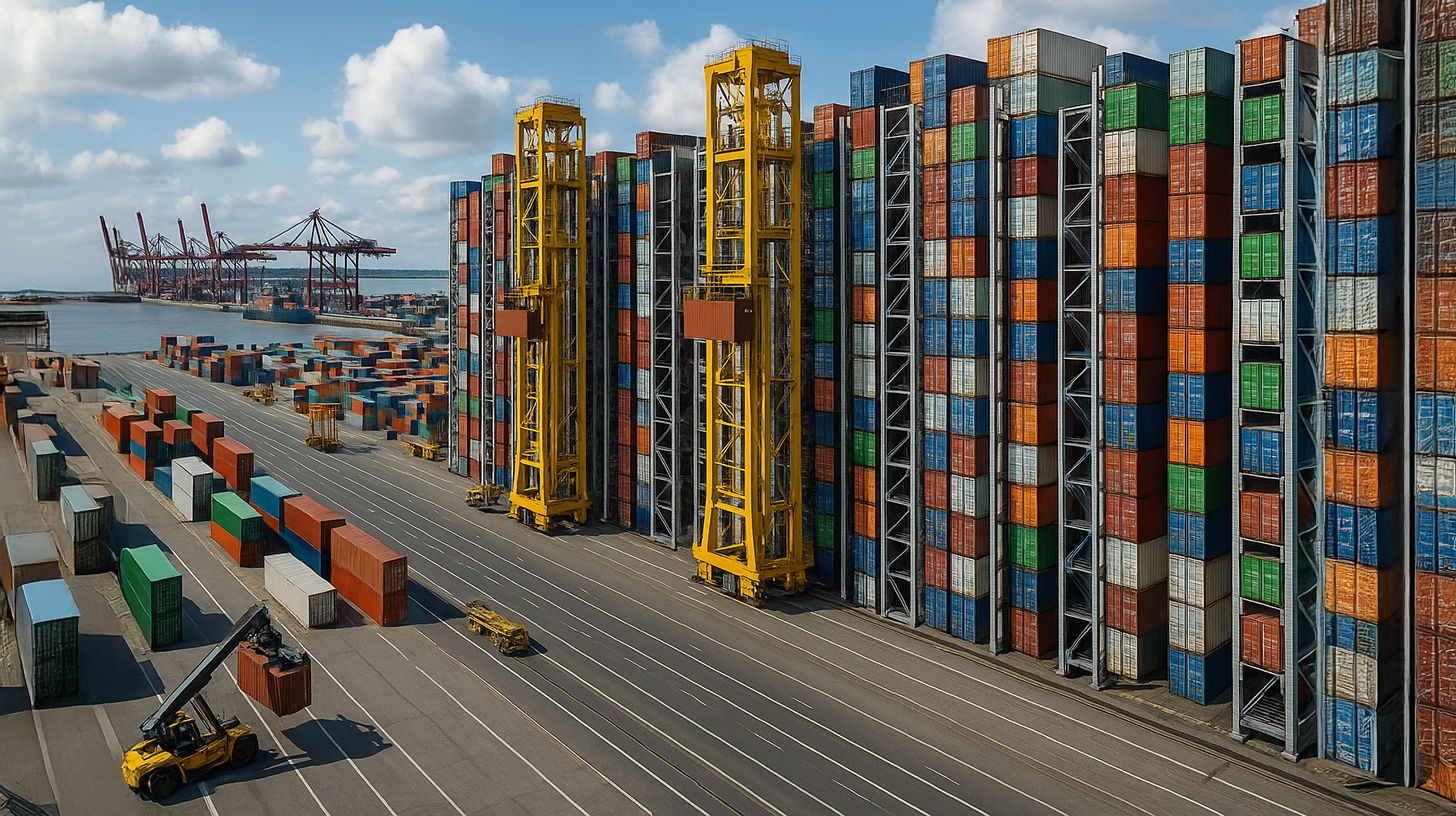
No space, but more containers: How an ingenious high-bay racking technology is saving Europe's ports – Creative image: Xpert.Digital
Race of the giants: Rotterdam, Antwerp, Hamburg – who will become Europe's super port?
Modern port and terminal development in Europe
The port and terminal industry is currently undergoing an unprecedented transformation, characterized by massive investments in infrastructure, automation, and digitalization. From the major container ports on the North Sea to smaller, specialized terminals, pioneering solutions are emerging that aim to make global trade more efficient and sustainable.
Comprehensive modernization measures in German ports
Hamburg as a pioneer in automation
The Port of Hamburg, Germany's largest seaport, is setting new standards in the modernization of its terminal facilities. Hamburger Hafen und Logistik AG (HHLA) continuously invests in the further development of its container terminals, with the Container Terminal Altenwerder (CTA) having been considered one of the world's most modern and efficient seaport terminals since its commissioning in 2002. The facility is characterized by an exceptionally high degree of automation and utilizes innovative technologies such as automated guided vehicles (AGVs), gates with optical character recognition, and software-controlled gantry crane systems.
A significant milestone was reached at the end of 2024 when the first remotely controlled container cranes were transported to the Port of Hamburg. These highly automated cranes mark a major step in the further modernization of the port and demonstrate HHLA's commitment to technological advancement. In parallel, Germany's largest container terminal, Burchardkai, is also being fully automated. The already established Altenwerder terminal serves as a model for this automation, with new block storage areas featuring automated gantry cranes capable of stacking containers six high.
Digitalization plays a crucial role in Hamburg's port strategy. Within the framework of the SANTANA project, funded by the Federal Ministry for Digital Affairs and Transport, a digital testbed is being created that links various public transport and infrastructure management networks with those of the private logistics sector. This initiative establishes a marketplace for digital port logistics services and provides port customers with easy access to a range of digital services.
Bremerhaven and the future of container handling
Bremerhaven, Germany's second-largest container port, is benefiting significantly from the new alliance between shipping companies Maersk and Hapag-Lloyd, the so-called "Gemini Cooperation." This strategic partnership promises the port substantial increases in volume, as Bremerhaven has been designated as a hub terminal within the alliance's overall network. Terminal operator Eurogate anticipates a significant boost in container throughput and is already hiring additional staff.
Automation is progressing in Bremerhaven as well. The SAMS (Ship Mooring Measurement System) project has been successfully completed, laying important foundations for future autonomous mooring processes. The system digitally supports mooring maneuvers at the river quay and contributes to reducing wear and tear and damage. Additionally, the AuDiPort project has been implemented, establishing a digital testbed for trialing port innovations and covering various areas such as automated inventory monitoring and assisted mooring and undocking maneuvers.
Wilhelmshaven as a strategic hub
The JadeWeserPort in Wilhelmshaven has developed into an important strategic port, benefiting particularly from its location as Germany's only deep-water port. Eurogate invested over €150 million in automating the container terminal, with the first automated berth scheduled to be operational by 2024. The investments include raising existing container cranes, paving unpaved areas, and installing new container cranes.
One particularly innovative project is the proof-of-concept for autonomous terminal trucks, which will start in early 2025. In collaboration with Embotech, MAFI, and ICT Group, Eurogate is testing autonomous tractor units with Level 4 automation, intended for use in both land-based and water-based container handling. The system enables navigation through complex environments with a positioning accuracy of five centimeters and operates in all weather conditions.
The “Gemini Cooperation” between Maersk and Hapag-Lloyd brings significant advantages to Wilhelmshaven, as the port will function as one of three North European hubs with particularly high cargo volumes. In addition, a new direct connection between Wilhelmshaven and Ningbo in China strengthens the port's position as a key logistics hub.
Emerging inland ports: the example of Riesa
Even smaller ports like Riesa on the Elbe River are experiencing a significant expansion of their capacities. In 2024, Sächsische Binnenhäfen Oberelbe GmbH (Saxon Inland Ports Upper Elbe Ltd.) received approval for the construction of a new combined transport terminal (CT terminal) with a capacity of 100,000 TEU per year. The new terminal will include six loading tracks for rail traffic, modern road connections, and two gantry cranes for container handling. This investment is particularly noteworthy because the existing terminal had already reached its capacity limits and was in urgent need of modernization.
Revolutionary developments in neighboring European countries
Rotterdam as Europe's largest port in transition
The Port of Rotterdam, Europe's largest port, continues to set standards in automation and sustainability. From 2027, a fleet of 30 autonomous, electrically powered terminal trucks will begin operating at the APM container terminal Maasvlakte II. These vehicles utilize Embotech's "Level 4 AV Kit" and can guarantee fully autonomous operation even in complex traffic situations. Localization accuracy is less than five centimeters, enabling precise positioning of the container chassis under the cranes.
Rotterdam is investing heavily in the energy transition and digital infrastructure. The Porthos CO2 transport and storage project has begun, with the construction of a compressor station that, starting in 2026, will transport captured CO2 under pressure to a depleted natural gas field beneath the North Sea floor. Simultaneously, new hydrogen pipelines and facilities are being built, while contracts for the use of shore power with container terminals are being finalized.
Digitalization is being driven forward by the introduction of "Secure Chain," a public-private partnership that makes logistics chains more digitally resilient against crime and theft. Since its launch, over 630,000 import containers have already been processed using this new, secure method.
Antwerp's ambitious expansion plans
The Port of Antwerp-Bruges, Europe's second-largest container port, is investing €660 million over the next six years in a new container terminal with an initial capacity of 5.1 million TEU. A 1,400-meter-long quay facility is being built in the Saeftinghe development area, with the first phase scheduled for completion by 2021.
Particularly impressive is the modernization of the Europa Terminal by PSA Antwerp. The work will take nine years and cost around €335 million. The aim is to equip the terminal for ships up to 400 meters long and with a capacity of 24,000 containers. The new quay wall will be 1.2 kilometers long and have a draft of 16 meters, increasing the handling capacity from the current 1.7 million to 2.4 million containers per year.
Another important step is the automation of the DP World Antwerp Gateway Terminal. The conventional terminal will be transformed into an automated handling facility equipped with straddle carriers, four additional cranes, and automated storage and handling (ASC) cranes. This modernization is expected to increase capacity from 2.5 million containers per year to 3.4 million by 2025.
Poland's ambitious Swinemünde project
Poland is realizing one of the most ambitious port projects in Central Europe with the container port in Świnoujście. The terminal is being designed for ships up to 400 meters long and will have a new 65-kilometer-long shipping channel with a depth of 17 meters. The construction costs for the terminal itself amount to 580 million euros, while an additional 2.3 billion euros are being invested in the maritime infrastructure.
The project is part of Poland's strategy to increase container throughput nationwide from the current 3.3 million TEU to 10 million TEU by 2030. The first construction phase is scheduled for completion by 2029, with construction of a technical access road having already begun in 2024.
Your container high-bay warehouse and container terminal experts
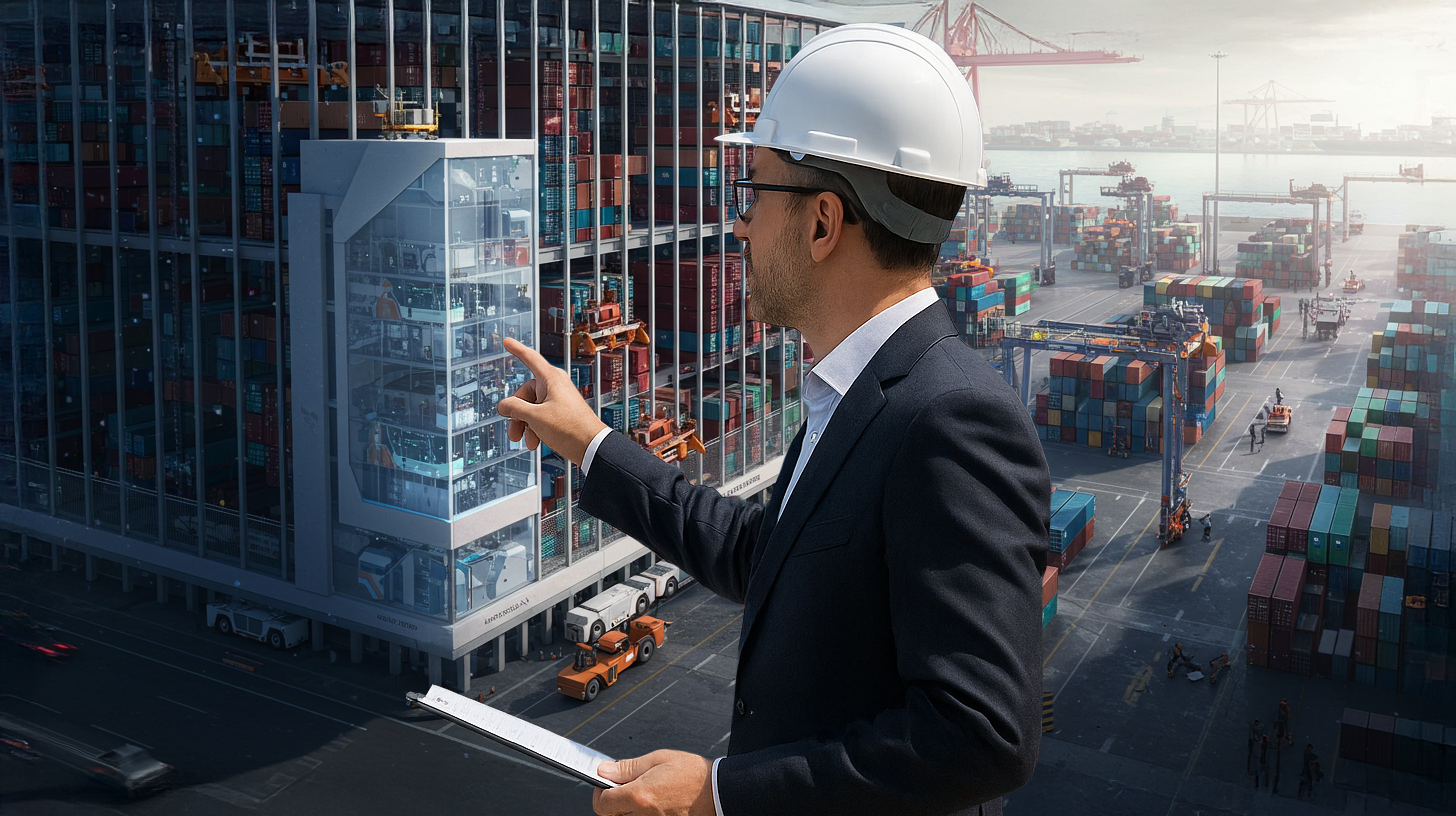
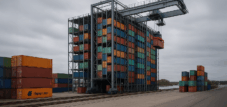
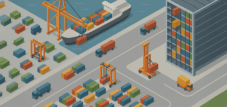
Container high-bay warehouses and container terminals: The logistical interplay – expert advice and solutions - Creative image: Xpert.Digital
This innovative technology promises to fundamentally change container logistics. Instead of stacking containers horizontally as before, they will be stored vertically in multi-story steel racking structures. This not only allows for a drastic increase in storage capacity within the same area, but also revolutionizes all processes at the container terminal.
More information here:
European ports in competition: High-tech facilities as the key to globalization
Innovative technologies and automation solutions
High-bay warehouse technology for containers
Automated high-bay warehouses for containers represent a revolutionary development in port technology. AMOVA, part of the SMS Group, was the first company worldwide to successfully implement high-bay warehouse technology for heavy loads at container terminals. The system enables the storage of containers on 11 storage levels and offers more than three times the storage capacity on the same footprint compared to conventional solutions.
The first large-scale high-bay warehouse system is currently being built by BOXBAY, a joint venture between DP World and SMS Group, at Jebel Ali Terminal 4 in Dubai. Following a two-year trial with 200,000 container movements, the first large-scale facility is now being constructed in Busan, South Korea. This technology makes it possible to stack containers up to 60 meters high and triple the throughput rate.
Digital testbeds and 5G technology
The digitalization of port infrastructure is being promoted by the "Digital Test Fields in Ports" (DigiTest) funding program of the Federal Ministry for Digital Affairs and Transport. The overarching goal is the development of digital infrastructure in the form of test fields that enable the testing of Logistics 4.0 innovations under real-world conditions.
A key component is the introduction of 5G campus networks in ports. Eurogate has commissioned Deutsche Telekom to implement three 5G campus networks in Hamburg, Bremerhaven, and Wilhelmshaven. These networks offer exclusive bandwidth, high availability, and enable the further digitalization of handling processes as well as closer integration of handling equipment with control and process control systems.
Cybersecurity and container theft protection
Increasing digitalization also necessitates enhanced security measures. A new IT system is set to be implemented in the North German ports of Bremerhaven, Wilhelmshaven, and Hamburg from October 2025 onwards to make container theft and drug smuggling more difficult. The system is based on the principle that only one entity at a time is authorized to move a container, thus ensuring greater security in the transport chain.
In parallel, a national cybersecurity platform for Dutch seaports was established, as cyber threats to ports are increasing daily and cyber incidents affect the entire supply chain.
Sustainable developments and environmental technologies
Shore power and environmentally friendly energy solutions
Ports are increasingly investing in environmentally friendly technologies. Rotterdam has completed a shore power facility for its cruise terminal, which will be commissioned after a test phase in spring 2025. Antwerp is going even further, installing Belgium's first shore power connection for seagoing vessels at its Euroterminal, scheduled to go into operation in 2026.
Hydrogen and CO2 management
The energy transition in ports also includes innovative hydrogen and CO2 management systems. In December, Antwerp commissioned the world's first harbor tug, "Hydrotug 1," whose engines are powered by a mixture of conventional marine diesel and hydrogen. In addition, the port is developing an infrastructure for exporting carbon dioxide, which is intended to become part of a nationwide network for CO2 transport and export.
The future of ports: Capacity expansion despite lack of space
Capacity expansion under space constraints
Many European ports face the problem of limited expansion possibilities. Hamburg is an example where expansion into the hinterland is hardly possible anymore and competition for the few available spaces is fierce. The solution increasingly lies in vertical solutions such as high-bay warehouses and the optimization of existing space through automation.
Skills shortage and automation
The port industry is struggling to balance necessary automation with job preservation. Eurogate and the ver.di union signed a "Collective Bargaining Agreement for the Future" at the end of 2018 to ensure that the consequences of automation for employees are socially responsible and involve employee participation. Automation is understood not as a replacement for people, but as support for complex decision-making processes.
International competitiveness
German and European ports face intense competition from highly automated facilities in Asia. The port of Qingdao in China already operates fully automatically, with container cranes, stacking cranes, and electric trucks controlled by computers and a small team of specialists. European ports must therefore intensify their modernization efforts to remain competitive.
The future of the European port landscape will be shaped by intelligent, networked, and sustainable solutions. Massive investments in automation, digitalization, and environmentally friendly technologies demonstrate that the industry is ready to meet the challenges of the 21st century and maintain its position as a key pillar of global logistics.
Your container high-bay warehouse and container terminal experts
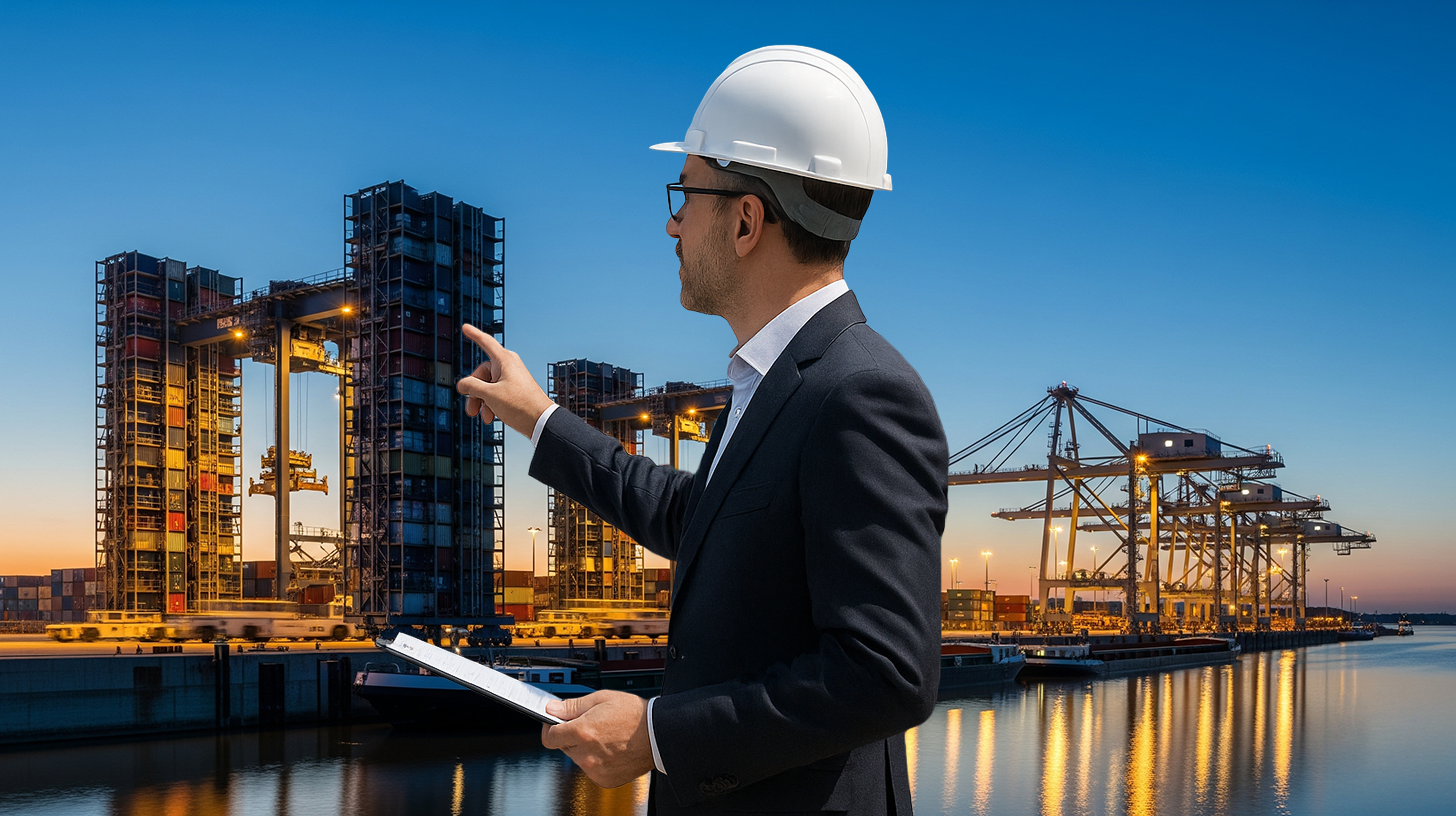
Container terminal systems for road, rail and sea transport in the dual-use logistics concept of heavy-lift logistics - Creative image: Xpert.Digital
In a world marked by geopolitical upheavals, fragile supply chains, and a new awareness of the vulnerability of critical infrastructure, the concept of national security is undergoing a fundamental reassessment. A state's ability to guarantee its economic prosperity, the provision of essential goods and services to its population, and its military capability increasingly depends on the resilience of its logistical networks. In this context, the concept of "dual-use" is evolving from a niche category of export control to a broader strategic doctrine. This shift is not merely a technical adjustment but a necessary response to the "paradigm shift" that demands a profound integration of civilian and military capabilities.
Related to this:
Consulting - Planning - Implementation

Markus Becker
I would be happy to serve as your personal advisor.
Head of Business Development
Consulting - Planning - Implementation
Konrad Wolfenstein
I would be happy to serve as your personal advisor.
You can contact me at wolfenstein∂xpert.digital or
Just call me on +49 7348 4088 965 .