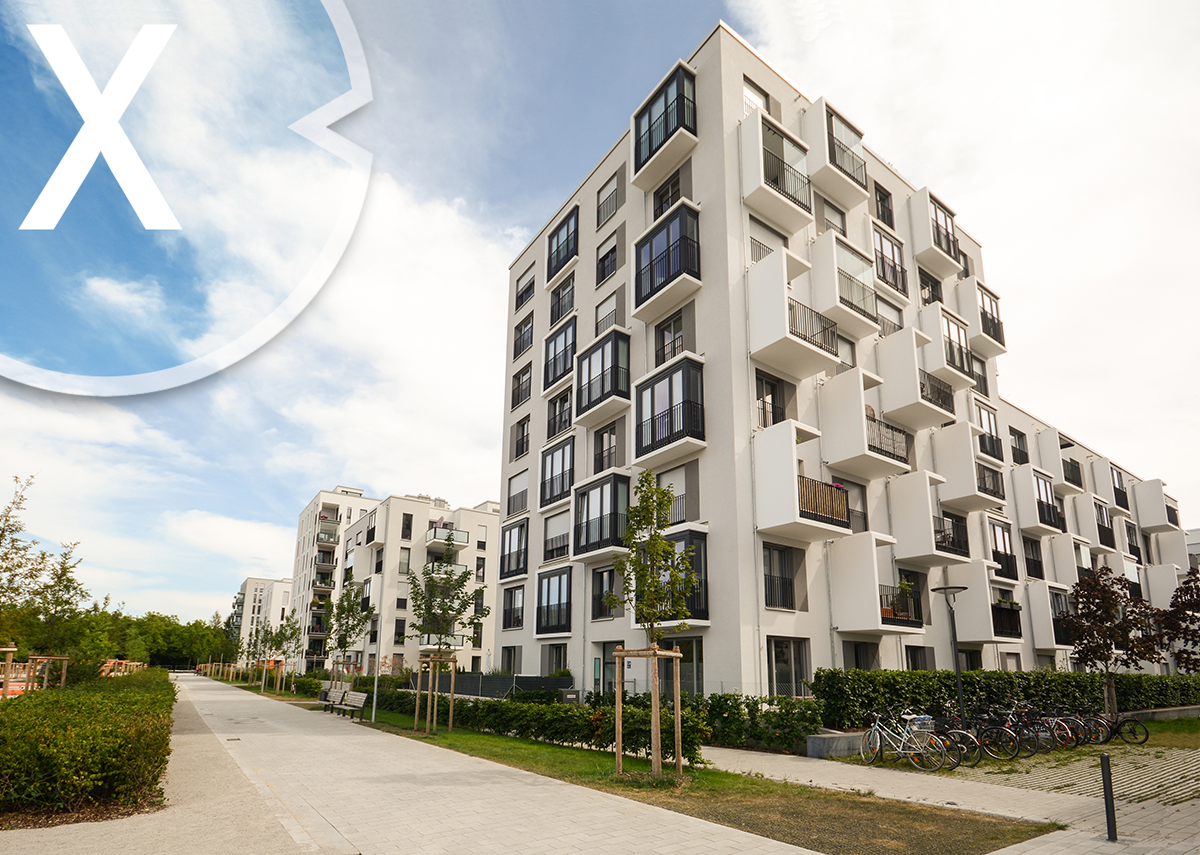
Infrared heaters are increasingly being used in residential construction – Image: Xpert.Digital / PIXEL to the PEOPLE|Shutterstock.com
Infrared heating in residential construction
Infrared heaters are increasingly being used in residential construction and offer several advantages. Here is some information on the use of infrared heaters in residential construction:
Efficient heat dissipation
Infrared heaters don't heat the air, but directly the surfaces and objects in the room. This allows for more efficient and targeted heat distribution. Compared to conventional heating systems, this can lead to energy savings, as less energy is needed to heat the entire air mass in the room.
Flexibility during installation
Infrared heaters offer flexible installation options, as they can be mounted on walls, ceilings, or used as freestanding units. They require no pipes or radiators, thus enabling easy integration into existing living spaces or new construction.
Individual room control
Infrared heaters can be individually controlled, either through integrated thermostats or via central control systems. This allows for precise temperature regulation in each room and adaptation to the individual needs of the occupants.
Reduced heat losses
Because infrared heaters directly heat the objects in the room, heat loss through windows or poor insulation is less affected. This minimizes potential heat loss, resulting in more efficient heating operation.
Additional benefits
Infrared heaters also offer other advantages such as a fast response time (the heat is immediately noticeable), low maintenance costs (no moving parts) and a pleasant sensation of warmth, as the heat is perceived similarly to solar radiation.
➡️ However, it is important to note that the use of infrared heaters in residential construction depends on various factors, including size.
The purchase costs of infrared heaters
The purchase price of infrared heaters can vary depending on the manufacturer, model, size, and additional features. There are different types of infrared heaters, including wall heaters, ceiling heaters, and freestanding heaters, each with its own price range.
Generally, the purchase price of infrared heaters is comparable to that of conventional heating systems such as gas or oil heaters. However, the exact cost depends on several factors. Here are some cost aspects to consider when purchasing infrared heaters:
Equipment costs
The cost of the infrared heater itself depends on its size, power output, and quality. Smaller models for individual rooms can start at a few hundred euros, while larger or more powerful models can cost several thousand euros.
Installation costs
Installation costs vary depending on the type of infrared heater and its desired location. Wall and ceiling heaters generally require professional installation, while freestanding units are easy to install. Additional costs may apply for electrical work, wall mounting, or other specific requirements.
Operating costs
When considering the purchase price, operating costs should also be taken into account. Infrared heaters run on electricity, so the ongoing electricity costs should be factored in. However, they are generally more efficient than conventional heating systems because they distribute heat more precisely and therefore may have lower operating costs.
Heating systems - comparison of acquisition costs in Germany
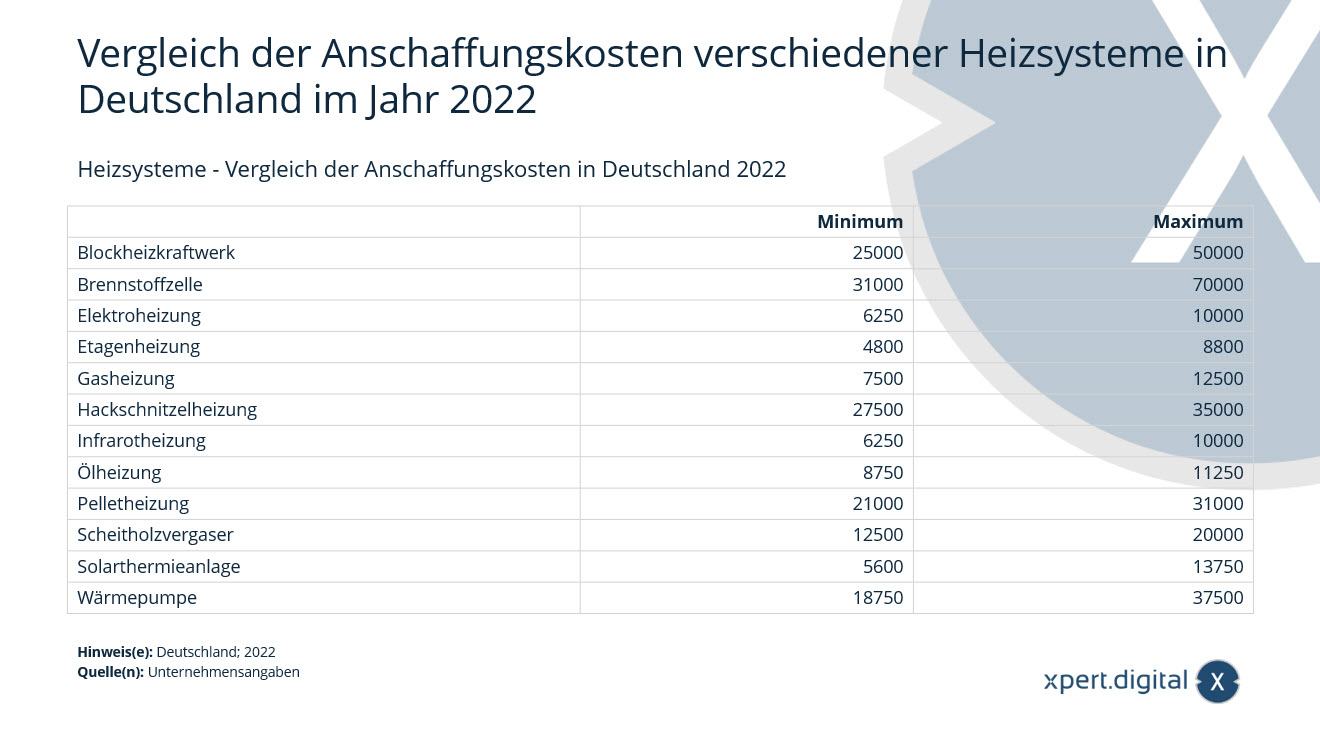
Heating systems – comparison of purchase costs in Germany – Image: Xpert.Digital
These are company details
The information provided is for guidance only and includes installation. Additionally, the various heating systems must be adapted to the specific site conditions, which may result in further individual costs.
This statistic compares the purchase costs of various heating systems in Germany in 2022. The investment costs for a heat pump typically range between €18,750 and €37,500. An air-to-water heat pump is the most affordable option. This information is intended only as a preliminary guide.
Comparison of the acquisition costs of different heating systems in Germany in 2022
- Individual floor heating €4,800 – €8,800
- Solar thermal system €5,600 – €13,750
- Electric heating €6,250 – €10,000
- Infrared heating €6,250 – €10,000
- Gas heating €7,500 – €12,500
- Oil heating €8,750 – €11,250
- Wood gasifier €12,500 – €20,000
- Heat pump €18,750 – €37,500
- Pellet heating system €21,000 – €31,000
- Combined heat and power plant €25,000 – €50,000
- Wood chip heating system €27,500 – €35,000
- Fuel cell €31,000 – €70,000
Our experience: Heating systems - comparison of acquisition costs
Here is a rough comparison of the purchase costs of some common heating systems in Germany. Please note that the costs depend heavily on various factors and the amounts given are only intended as general guidelines:
Gas heating
The purchase price of a gas heating system varies depending on the type (condensing boiler, low-temperature boiler, combi boiler, etc.) and the size of the system. Costs can range from €3,000 to €10,000 or more, depending on whether a boiler, radiators, and additional installations are required.
Oil heating
Similar to gas heating systems, the purchase costs for oil heating systems vary depending on the size, type, and features of the system. Costs can range from €5,000 to €15,000 or more, depending on the complexity of the installation.
heat pump
The purchase price of a heat pump varies depending on the type (air-to-water, geothermal, water-to-water) and its performance. An air-to-water heat pump can cost between €8,000 and €15,000, while geothermal or water-to-water heat pumps are generally more expensive, costing between €15,000 and €30,000 or more.
Infrared heating
The purchase price of infrared heaters varies depending on the model, size, and power output. Smaller models for individual rooms can start at a few hundred euros, while larger or more powerful models can cost several thousand euros.
It is important to note that these are only rough estimates and the actual costs will depend on various factors, including the size of the area to be heated, the building's energy requirements, the installation, and individual preferences. It is recommended to obtain quotes from several suppliers and consult with professionals to determine the exact costs for your specific project.
What are the top 4 heating systems of the future?
There are various approaches and technologies for the heating systems of the future that offer high efficiency, sustainability, and comfort. Here are four promising heating systems that can be considered "heating systems of the future":
Infrared heaters
Infrared heaters have gained popularity in recent years and could play a role in certain applications in the future. They generate heat by emitting electromagnetic radiation in the infrared range, which is directly absorbed by surfaces in the room. Infrared heaters can deliver heat precisely where it is needed, providing a pleasant and rapid warmth. Furthermore, they can be powered by renewable electricity, making them a more environmentally friendly solution.
However, it is important to note that infrared heaters may not achieve the same overall energy efficiency and energy consumption as heat pumps or fuel cell heating systems. Efficiency and energy savings depend on various factors such as the building's thermal insulation, room size and usage, and individual preference.
➡️ Infrared heaters can be combined with other heating systems such as heat pumps or storage tanks to ensure a reliable and sustainable heat supply.
More information here:
Heat pumps
Heat pumps are considered one of the most promising heating solutions of the future. They utilize renewable energy sources such as air, water, or geothermal energy and convert it into heat. Heat pumps are extremely efficient and can generate several units of heat energy from one unit of electrical energy. They can be used for both heating and cooling a building and offer high energy efficiency and low CO2 emissions.
Fuel cell heating appliances
Fuel cell heating systems combine heat generation with electricity generation using hydrogen or natural gas. This technology converts the fuel into hydrogen, simultaneously generating heat and electrical energy. Fuel cell heating systems are characterized by high efficiency and can increase on-site electricity consumption within a building, thus reducing the need for external electricity purchases.
Solar heating systems
Solar heating systems use solar energy to generate heat and are considered a future-oriented technology. Solar thermal collectors capture solar energy and convert it into heat that can be used for space heating or hot water preparation.
➡️ Solar heating systems can be combined with other heating systems such as heat pumps or storage tanks to ensure a reliable and sustainable heat supply.
Heating systems of the future
These four heating systems offer advantages such as high efficiency, the use of renewable energy sources, and low CO2 emissions. They help to reduce energy consumption and environmental impact compared to conventional heating systems. It is important to note that the selection of the appropriate heating system depends on various factors, such as building location, size, individual needs, and local regulations. Therefore, professional advice from experts is recommended to determine the best heating system for a specific situation.
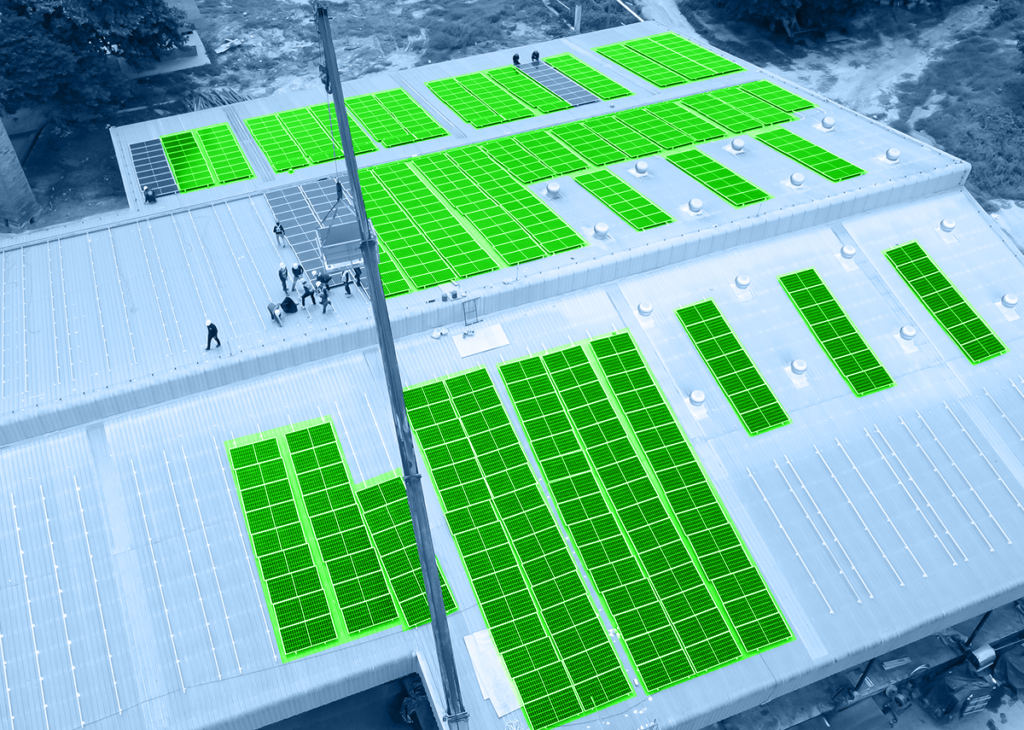
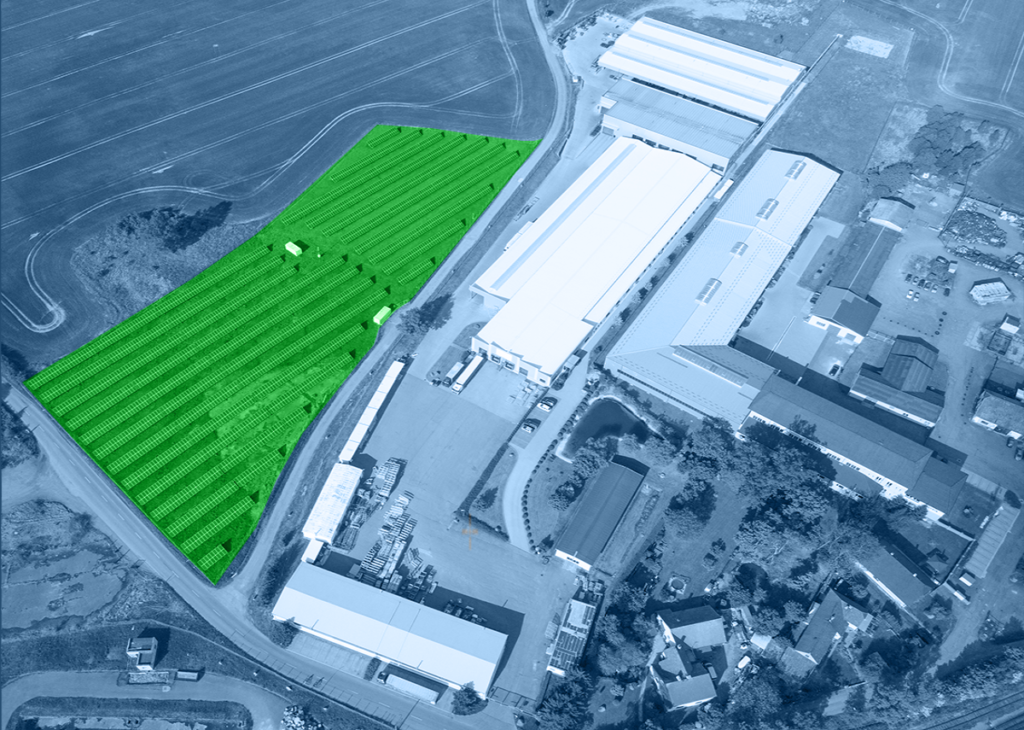

- Planning photovoltaics on warehouses, commercial buildings and industrial buildings
- Industrial plant: Planning a photovoltaic open-field system or open-area system
- Planning solar power systems with photovoltaic solutions for freight forwarding companies and contract logistics
- B2B Solar Systems and Photovoltaic Solutions & Consulting
Expert advice for heating systems from Xpert

Konrad Wolfenstein
I would be happy to serve as your personal advisor.
You can contact me by filling out the contact form below or simply call me on +49 7348 4088 965 .
I'm looking forward to our joint project.
Write to me


Xpert.Digital – Konrad Wolfenstein
Xpert.Digital is a hub for industry focusing on digitalization, mechanical engineering, logistics/intralogistics and photovoltaics.
With our 360° Business Development solution, we support renowned companies from new business to after-sales.
Market intelligence, smarketing, marketing automation, content development, PR, mail campaigns, personalized social media and lead nurturing are part of our digital tools.
You can find more information at: www.xpert.digital – www.xpert.solar – www.xpert.plus
Keep in touch