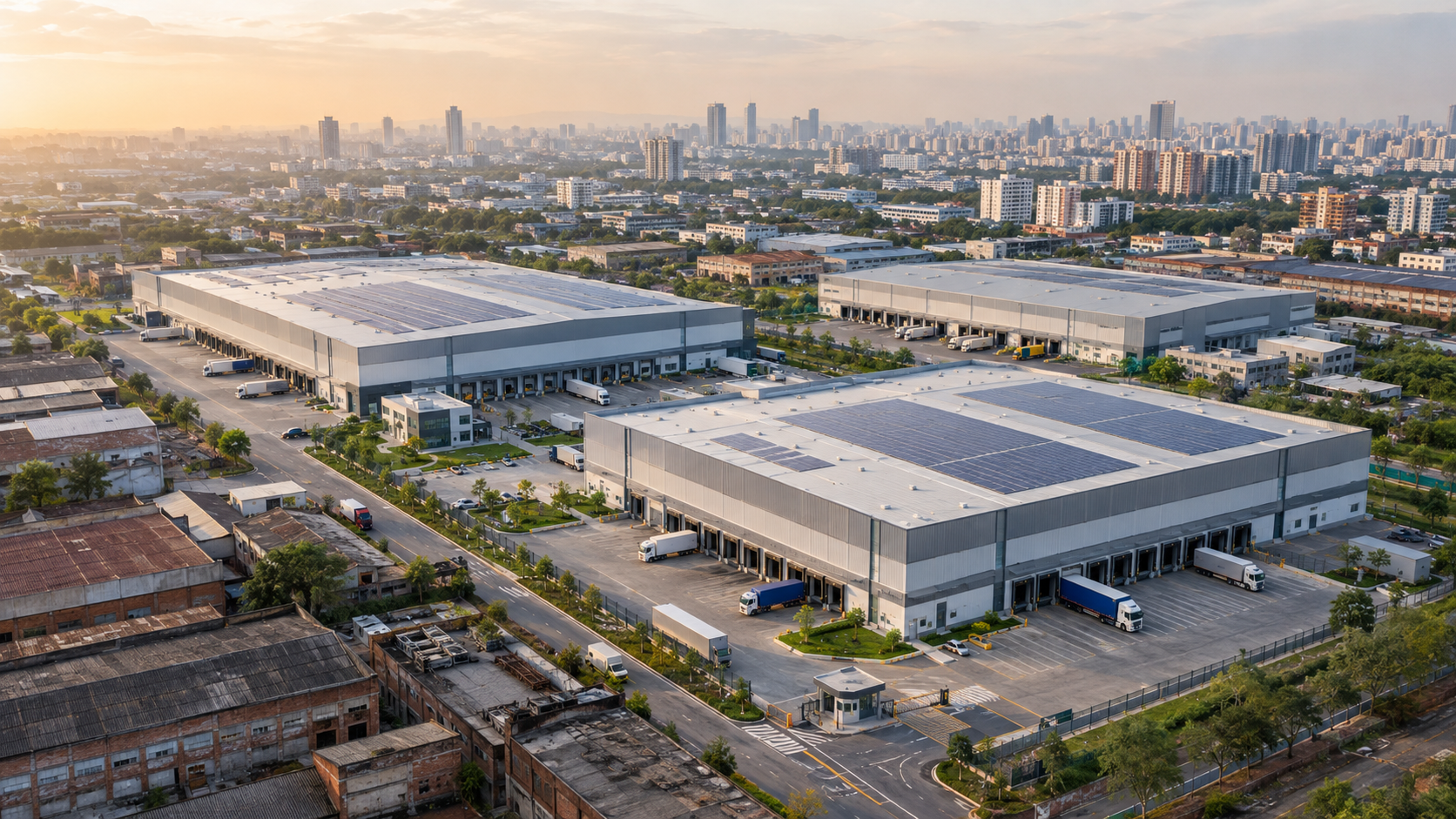
India's logistics market is growing: Why Vantrock is focusing on prime locations instead of ever-larger warehouses – Creative image on the topic, created with AI: Xpert.Digital
Cheap far out or more expensive near customers? Vantrock's new strategy for India's logistics real estate
Old warehouses, new opportunities: How Vantrock plans to upgrade India's logistics real estate
Proximity instead of space: Vantrock's plan for modern logistics sites in India
India's logistics market doesn't simply need more warehouses, but rather modern facilities in the right locations. Vantrock Real Assets is targeting precisely this gap with an investment program of approximately 3,100 crore. Within four years, the Mumbai-based company plans to develop a total of 11.5 million square feet of industrial, logistics, and warehouse space. The first projects are scheduled to begin in 2027 in Delhi-NCR, Bengaluru, and Pune. In addition to new construction, Vantrock is focusing on modernizing older warehouses in established economic corridors and on remaining land in sought-after locations.
The strategy is based on a simple but economically crucial consideration: A cheap warehouse on the outskirts of a metropolitan area can end up being more expensive for companies if longer transport routes, additional vehicles, and unreliable delivery times offset the low rent. Conversely, a more conveniently located property can be worthwhile if it makes the flow of goods more efficient and facilitates the supply of customers or production facilities. Whether this calculation works out, however, depends on the specific location, construction and renovation costs, and actual demand.
Vantrock's project is therefore more than just a large-scale development program. It's a test of whether infill development and the upgrading of older buildings can be combined into a scalable business model. The targeted gross asset value of 4,200 crore rupees is a target figure – not a guaranteed profit or a realized sales figure. The crucial factor will be whether Vantrock completes the projects at sustainable costs, attracts suitable tenants, and creates sustainably successful locations.
India's logistics real estate is undergoing a transformation: Why Vantrock focuses on proximity rather than ever greater distances
The cheapest warehouse location can be the most expensive decision
India's economic development needs more than just additional warehouses. It needs the right space in the right place. This is precisely where Vantrock Real Assets comes in with an investment program that combines the development of industrial, logistics, and warehouse parks with the strategic upgrading of existing sites. The Mumbai-based company plans to invest approximately 3,100 crore Indian Rupees within four years, developing a total area of 11.5 million square feet. Upon completion, the portfolio is expected to reach a gross asset value of 4,200 crore. The first projects, totaling three million square feet, are scheduled to begin construction in 2027 in Delhi-NCR, Bengaluru, and Pune. Expansion into the Mumbai metropolitan area is planned to follow.
The economic significance of this project lies less in the sheer amount of investment than in the location decision. Vantrock does not intend to create modern logistics facilities exclusively where land is still relatively readily available. The company is focusing on remaining sites within established industrial and logistics corridors, as well as on modernizing outdated existing properties in prime locations.
The underlying premise is quite plausible: a cheap warehouse located far outside economic centers can ultimately be more expensive for its users than a more expensive property with better connections to customers, production facilities, and the workforce. Therefore, the decisive factor is not solely the rental price per square meter, but the efficiency of the entire logistics system.
The investment figures show the scale, but not yet a return on investment
To put this into economic perspective, the Indian units of measurement must first be translated. One crore equals ten million. The planned investment volume of approximately 3,100 crore rupees thus amounts to about 31 billion rupees. The targeted gross asset value of 4,200 crore corresponds to 42 billion rupees.
The planned development area of 11.5 million square feet comprises approximately 1.07 million square meters. The first project phase, encompassing three million square feet, corresponds to roughly 279,000 square meters, representing just over 26 percent of the total target area. Vantrock is therefore beginning with a substantial first construction phase, without intending to implement the entire program simultaneously.
Purely mathematically, based on the total figures, this results in investments of approximately 2,696 rupees per square foot, or about 29,000 rupees per square meter. The targeted gross asset value corresponds to approximately 3,652 rupees per square foot, or around 39,300 rupees per square meter.
These figures are merely calculated averages for the announced program. They do not replace a construction cost estimate or an evaluation of individual sites. Different land models, development standards, and project structures can significantly alter the actual figures.
Equally important is the distinction between asset value and profit. The difference between the targeted gross asset value of 42 billion rupees and the planned investment volume of 31 billion rupees amounts to eleven billion rupees. A reliable developer margin cannot be derived from this. For that, the scope and comparability of costs, ownership shares, financing terms, taxes, and valuation assumptions would need to be known.
Not every additional hall closes the actual supply gap
The starting point of the strategy is a qualitative gap in supply. Companies in third-party logistics, e-commerce, and light industry don't simply need any covered space. They need buildings whose technical and operational characteristics are suited to modern goods flows.
An older warehouse may appear sufficiently large, but its economic viability may be limited by unsuitable access routes, low floor load-bearing capacity, inadequate fire protection, or an unfavorable layout of loading areas. Conversely, a smaller, well-organized property can enable high goods throughput and thus generate greater operational benefits.
Therefore, a lack of space and a lack of quality must be distinguished. A region may have numerous warehouses and yet offer too few spaces that are actually suitable for demanding users. A nominally available supply does not automatically equate to a functionally suitable supply.
The assessment of a tight supply of high-quality space in key urban corridors should be understood as a market evaluation, not as proof of full occupancy at all Indian logistics sites. Without regional data on inventory, vacancy rates, and occupancy, such a generalization would be too sweeping. For Vantrock's business model, however, a more narrowly defined scarcity is sufficient: what matters are those submarkets where solvent demand meets a limited number of suitable properties.
The location determines the cost of the rent
The economic viability of a logistics property arises from the interplay between building costs and transport performance. Low rent can be negated by longer driving distances, additional vehicles, higher personnel costs, and unreliable arrival times.
A simplified calculation illustrates this relationship. If a more conveniently located warehouse of 20,000 square meters costs an additional 100 rupees per square meter per month, this results in an extra monthly expense of two million rupees. For the better location to be worthwhile solely through transportation savings, the monthly savings in transportation operations would have to be at least this magnitude.
Whether this is successful depends, among other things, on the number of trips, the average distance, vehicle costs, and the timing of deliveries. For a few large-volume deliveries, the more cost-effective external location may remain superior. However, for many daily deliveries and tight time windows, a closer property can offer significant advantages.
There are also effects that are harder to measure. More reliable travel times can simplify planning, reduce waiting times, and improve compliance with customer agreements. However, such advantages do not justify every rental surcharge. The real question, therefore, is not whether proximity is inherently better, but rather how much proximity is economically valuable within the respective business model.
Vantrock's core idea is a return to proven economic regions
By focusing on so-called infill sites, Vantrock is turning its attention to remaining plots of land within already established development areas. These are not necessarily inner-city vacant lots. The focus is primarily on areas in proven industrial and logistics corridors that are already integrated into existing economic networks.
The difference is significant. A location can be outside the city proper and yet be closer to relevant customers, production facilities, or distribution networks than a new park on the outer edge of the metropolitan area. What matters is functional proximity, not just distance to the city center.
Such properties can possess strategic value because important site prerequisites are already in place. These include transport links, industrial proximity, and a generally proven catchment area. At the same time, their development can be more complicated than building on a large, contiguous area outside established corridors.
Smaller plots, differing ownership interests, and existing uses can complicate implementation. Vantrock's approach thus trades some of the perceived simplicity of large-scale development for the prospect of a better market position. Whether this trade-off proves economically viable depends largely on how well the company can structure properties and implement projects technically and legally.
The first project phase is a stress test for the business model
The planned three million square feet in Delhi-NCR, Bengaluru, and Pune serve a dual purpose. They represent the first major contribution to the site development and will simultaneously demonstrate whether Vantrock can successfully implement its site concept in different regional markets.
For the developer, it's about more than just timely completion. The first phase must demonstrate that the planned buildings meet the users' requirements, that the overall budgets can be adhered to, and that the achievable rents justify the investment.
Distributing projects across multiple economic regions can mitigate regional risks. However, it also increases organizational demands. Permitting requirements, construction partners, user needs, and local market conditions must be assessed separately at each location.
Furthermore, the aforementioned metropolitan regions are not homogeneous submarkets. Within the same region, property quality, transport connections, and demand can differ considerably. Therefore, the name of an economically strong city is not a sufficient argument for investment.
The fact that the Mumbai metropolitan area is slated to follow later creates room for a phased expansion. However, this does not yet allow for a firm timetable for this market entry. The crucial factor remains whether suitable projects become available at viable conditions.
Access to land becomes more important than unrestricted ownership
A particularly relevant component of the strategy is the planned access to high-quality infill land through long-term leases or usage agreements, joint ventures, and collaborative project developments. Outright land purchase should not be the sole standard model for these areas.
The economic rationale behind this is clear: If a developer doesn't have to acquire the entire property, they can, under certain conditions, tie up less capital at the outset. This leaves funds available for construction, technical equipment, and further projects.
Such a structure, however, does not make land free. Recurring payments, profit shares, or other contractual obligations replace the direct purchase price. Therefore, profitability depends on the total cost over the land's useful life.
The question of control also arises. Long contract terms, clearly defined usage rights, transferability, and robust regulations for financing and exploitation are particularly important for institutional investors. A location can be operationally outstanding and yet lose its appeal if its legal structure hinders future transactions.
The economic quality of a project therefore depends not only on the building and its location. The contractual framework is also a component of the asset. Especially during rapid expansion, this connection must not be obscured by the visible construction progress.
Outdated warehouses are to be transformed into competitive business locations
In addition to new construction, Vantrock plans to upgrade existing warehouse properties. To this end, older Grade B buildings in good locations will be acquired directly or through joint ventures and held in its own portfolio.
This approach differs from development on undeveloped land. The economic starting point is an existing building whose location may be better than its structural quality. The task is to improve the building to such an extent that it meets current user requirements.
The designations Grade A and Grade B should be understood as market classifications, not as universally identical technical standards. Therefore, investment decisions must specifically examine which properties are lacking and how much effort it would take to produce them.
Modernization can encompass various aspects, including loading facilities, building technology, fire protection, roof, flooring, and operational traffic management. However, it's crucial to understand that a purely cosmetic upgrade alone does not create a high-quality logistics property.
For users, what matters is the actual available operational capacity. A freshly painted building remains functionally limited if vehicles have difficulty maneuvering or if the building structure cannot support the desired storage technology. Successful revitalization therefore begins with a technical and operational assessment, not with cosmetic improvements.
The existing stock is an opportunity, but not an automatic bargain
Modernizing older properties can offer advantages over constructing a completely new building. Existing building components and already developed sites can potentially be reused. At the same time, hidden defects can significantly reduce the available financial resources.
Particularly critical are damages or limitations that only become fully apparent after acquisition. These can include inadequate load-bearing structures, problematic soil conditions, outdated utilities, or significant fire safety upgrades. Depending on previous use, potential environmental contamination should also be investigated.
Geometric limitations cannot be arbitrarily corrected. Insufficient ceiling height or an unfavorable column arrangement can hinder the use of modern warehouse technology. Similarly, improved building technology cannot compensate for a lack of open space for maneuvering.
A revitalization project is therefore only economically viable if acquisition, conversion, potential losses in use, and risk reserves are considered together. The decisive factor is a comparison with sustainably achievable returns and realistic alternatives.
Especially in prime locations, there's a risk of fully pricing in the location's advantages at the time of purchase. Even with successful modernization, little additional value remains for the developer. Therefore, purchasing expertise and technical due diligence are just as crucial as the subsequent construction.
Three user groups, three different requirements for the same space
The program's demand base includes, in particular, third-party logistics, e-commerce, and light industry. These groups overlap in their space requirements, but are not synonymous.
Third-party logistics providers offer logistics services for other companies. For them, flexible usage options, efficient goods movements, and seamless integration into their clients' networks are crucial. Depending on the contract structure, it can also be important that a property can continue to be used after a change of client without disproportionate effort.
In e-commerce, high order processing speeds, the handling of numerous individual orders, and proximity to sales regions can be particularly important. However, not every function requires the same location. A supra-regional warehouse follows different location criteria than a regional distribution center.
Light industry, in turn, may have additional requirements regarding power supply, production processes, personnel space, and technical permits. Therefore, a hall suitable for standardized storage is not automatically suitable for every industrial user.
This presents Vantrock with an important development challenge: buildings must remain sufficiently flexible while simultaneously meeting specific user requirements. Excessive specialization can complicate subsequent re-letting. Conversely, an overly general standard can result in the property not being adequately suited to demanding tenants.
LTW Intralogistics Solutions

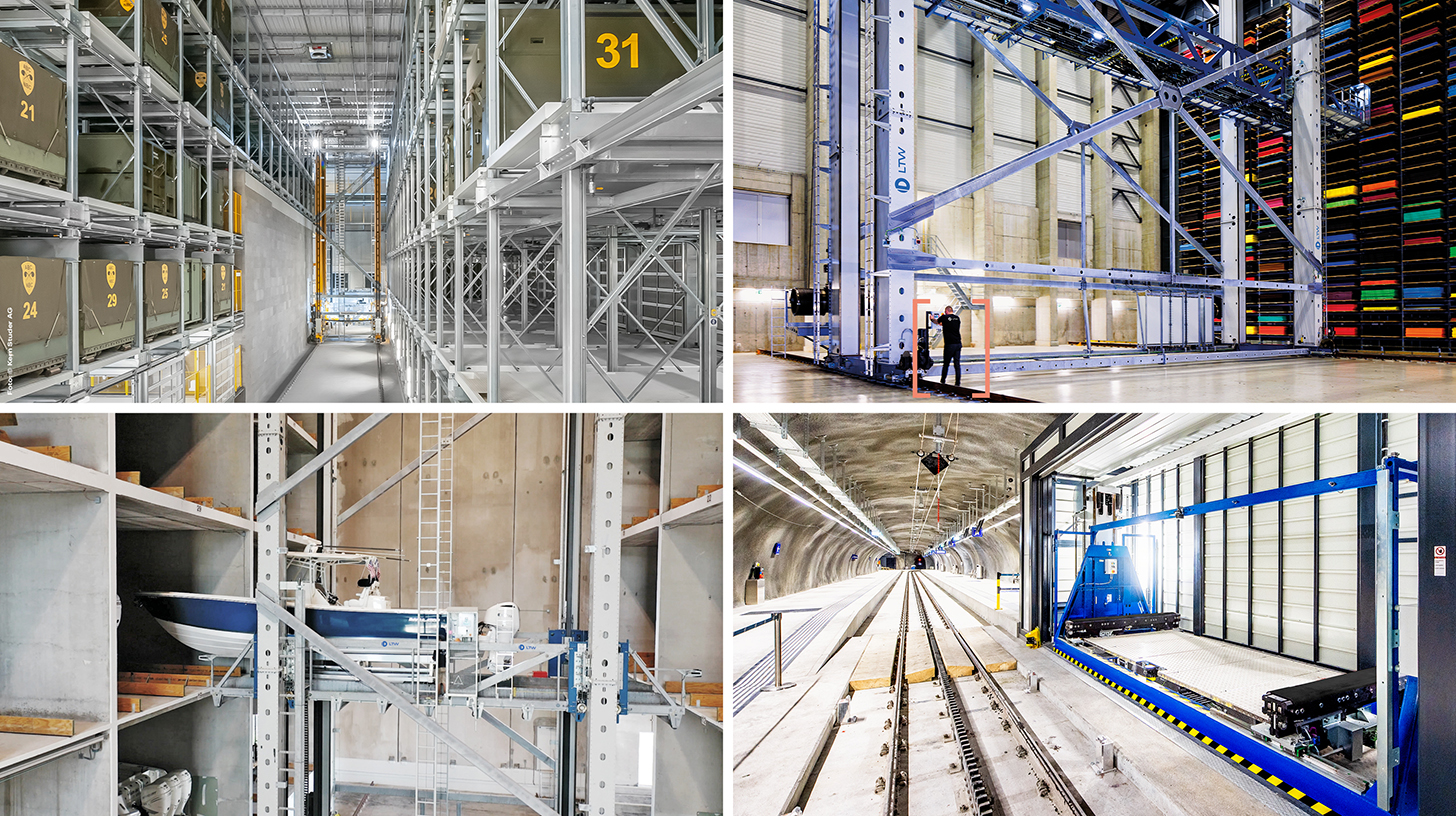
LTW Intralogistics – Engineers of Flow - Image: LTW Intralogistics GmbH
LTW offers its customers not individual components, but integrated complete solutions. Consulting, planning, mechanical and electrotechnical components, control and automation technology, as well as software and service – everything is networked and precisely coordinated.
In-house production of key components is particularly advantageous. This allows for optimal control of quality, supply chains, and interfaces.
LTW stands for reliability, transparency, and collaborative partnership. Loyalty and honesty are firmly anchored in the company's philosophy – a handshake still means something here.
Related to this:
Strategic location selection in logistics: The importance of nearby locations
Customer proximity is more than a promise for the last mile
The strategic importance of locations near cities is often explained by the "last mile," referring to the final leg of transport to the recipient. While this connection is important for Vantrock's approach, it is not the whole story.
Industrial supply and inter-company exchange can also benefit from shorter or more reliable routes. For example, a property in an established corridor can be attractive for regionally supplying several production sites, even if there is no direct delivery to private households.
At the same time, geographical proximity should not be confused with good accessibility. A short distance as the crow flies is of little use if access roads are congested, vehicle movement is restricted, or the location is poorly connected to the main road network.
A reliable site analysis must therefore examine actual travel times and operational time windows. The reliability of these travel times is also relevant. An average short but highly fluctuating transport time may necessitate additional buffers.
The potential added value of infill sites therefore lies not only in saved kilometers. It can also arise from better-planned processes and a higher number of productive trips per vehicle. However, these advantages must be demonstrated separately for each project.
The financing combines construction capital with future returns
Vantrock plans to finance the program through equity, construction loans, and forward funding. This combination distributes the capital provision across different sources and project phases.
Equity capital typically assumes the initial risk. It enables the preparation and development of projects before all the prerequisites for substantial debt financing are met. Construction loans can then cover a portion of the ongoing capital requirements.
In forward funding, an investor provides capital during the development phase, according to contractually agreed terms. This allows the developer to secure a portion of their financing needs early on. At the same time, this creates obligations regarding quality, schedule, costs, and handover.
None of these financing methods eliminates the economic risk. Rather, they change its distribution. The crucial factor is which party bears the burden of delays, cost overruns, or lower occupancy rates.
For overall economic viability, nominal interest rates are therefore not the only relevant factor. Disbursement conditions, collateral, equity requirements, and contractual recourse rights are equally important. A seemingly inexpensive capital component can significantly restrict operational flexibility under restrictive conditions.
Without more detailed information on the capital structure, the expected return on equity for the program cannot be reliably calculated. The announced investments and assets merely provide a framework for this.
A targeted asset is not yet a realized sale price
The projected gross asset value of 4,200 crore rupees represents a target figure upon completion. It is neither equivalent to available cash nor to the company's equity value.
The value of a rented property depends significantly on its sustainable net income and the return requirements of potential buyers. If the required returns increase, the property value can come under pressure even if current rental income remains unchanged.
A simplified example illustrates the magnitude of this effect. A property with an annual net income of 100 million rupees would have a calculated value of approximately 1.43 billion rupees, assuming a capitalization rate of seven percent. At eight percent, it would be only 1.25 billion rupees.
This example calculation is not a forecast for Vantrock's portfolio. It merely illustrates why successful construction alone does not guarantee the future value of the asset.
Therefore, several levels must be considered separately for the assessment: the completion of the area, its leasing, the generation of stable net returns, and finally its valuation on the capital market. Significant differences can arise between these levels. A fully developed portfolio is not automatically an economically stable portfolio.
Four years of growth require precise control of the sequence
The target area of 11.5 million square feet within four years equates to an average of 2.875 million square feet per year. In reality, however, a development program is rarely implemented evenly.
Securing land, obtaining permits, construction, technical inspections, and leasing all require different timeframes. Individual projects may start earlier, others may be completed later. Therefore, the average year is only a guideline, not a strict construction calendar.
The first phase comprises roughly a quarter of the total target area. Further projects for the remaining portion must be prepared in a timely manner. This requires a sufficiently robust development pipeline, without tying up too many projects simultaneously and requiring significant management capacity.
Implementing the project too cautiously could jeopardize the land area target. Conversely, expanding too quickly could lead to insufficient scrutiny of locations, construction partners, or financing conditions.
The sensible growth strategy lies between these extremes. Projects should not be started simply because they contribute to the announced total area. Each one must be economically viable on its own. For a developer, controlled growth is therefore often more challenging than having as many construction sites as possible running simultaneously.
Rental quality is more important than an impressive occupancy rate
High occupancy rates are often considered the most important success indicator for logistics properties. While relevant, they are not sufficient for an economic evaluation.
The terms of the lease are also crucial. Long rent-free periods, substantial development subsidies, or high user-specific investments can significantly reduce the effective returns below the stated contractual rent.
Equally important are the creditworthiness of the tenants, the duration of the leases, and the distribution of income among different users. A single large tenant can simplify the leasing process, but at the same time create a significant risk of market concentration.
Pre-leasing can secure development and facilitate financing. However, it can also lead to the building being more tailored to a specific tenant. If that tenant later moves out, additional renovation costs may arise.
For Vantrock, a rental strategy that combines short-term occupancy with long-term reusability would therefore be compelling. A well-let building should not only be profitable during the first lease. Its location and structure should remain attractive even after a change of tenant.
Only this interplay transforms a successfully leased project development into a permanently resilient real estate portfolio.
Institutional quality arises within the organization, not in the sales brochure
Vantrock will not only develop real estate, but also operate and manage it. This puts long-term operational quality at the forefront.
An institutionally investable property requires more than a modern facade and a well-known tenant. It also includes verifiable ownership and usage rights, reliable permits, documented technical standards, and professional management.
During operation, maintenance, drainage, fire protection, traffic safety, and upkeep determine whether a site maintains its performance. Neglected facilities can lead to disruptions for users and unexpected costs for the owner.
Chairman Shailesh V Haribhakti's emphasis on ensuring quality standards even during rapid expansion therefore touches upon a key economic point. Growth and quality are not necessarily contradictory. However, they must be linked through appropriate processes.
For founder and CEO Anshul Singhal, the entrepreneurial task is therefore not just about identifying attractive projects. It also involves building an organization that consistently manages technical review, financing, construction, and operation across multiple regions.
The long-term return depends significantly on whether this organizational performance keeps pace with the growth in floor space.
Land recycling can conserve resources, but the costs must be calculated
Upgrading existing buildings can offer an ecological advantage if significant parts of the existing structure are preserved. Under suitable conditions, this can limit the need for new building materials and additional space.
However, a positive overall balance is not automatically guaranteed. Extensive interventions, contaminated building components, or persistently inefficient building operation can diminish potential benefits. The crucial question for comparison is what environmental impacts arise from modernization, replacement construction, and alternative site development.
Shorter transport routes can also improve the overall balance. This requires a reduction in actual mileage. Simply relocating to a closer site is insufficient if it simultaneously results in more partial journeys or less efficient traffic flow.
From an economic perspective, combining existing infrastructure use with efficient logistics can still be attractive. Lower operating consumption, better space utilization, and fewer unnecessary transports can reduce both costs and resource requirements.
However, this does not lead to a general assessment of the announced program's sustainability. Project-specific information is lacking for that. Rather, the approach offers the possibility of pursuing ecological and economic improvements together, provided they are technically proven and actually achieved in practice.
Modern halls create the conditions for more productive processes
The importance of high-quality logistics properties extends beyond the real estate market. Suitable buildings can enable companies to improve their internal processes and implement more efficient warehouse technology.
For this to happen, structural and technical requirements must be compatible. Soil quality, load-bearing capacity, power supply, data connectivity, and fire protection can determine which systems can be operated economically and safely.
However, a modern warehouse does not automatically lead to high productivity. Only the interplay with appropriate organization, software, staff qualifications, and sufficient goods volume generates operational benefits.
For older existing buildings, it is therefore particularly important to determine which technical improvements are realistically possible. Not every building needs to achieve the same level of automation. A building can be economically successful if it reliably meets the requirements of its target users.
The challenge for the developer lies in providing technical reserves without installing unnecessarily expensive equipment. Insufficient standards limit rentability. Conversely, over-engineered standards can tie up capital that is not adequately recouped through achievable rents.
Therefore, an economically convincing project development does not optimize the maximum technical equipment, but rather the relationship between investment costs, user needs and long-term adaptability.
Vantrock's strategy is not a counter-argument to the greenfield approach
The focus on infill development and the modernization of existing buildings does not mean that large-scale new construction outside established centers becomes unnecessary. Different functions require different locations.
Large distribution centers with a supra-regional catchment area can benefit from contiguous areas, expansion possibilities, and suitable connections to long-distance transport routes. Such requirements may be difficult to meet in already densely populated corridors.
In contrast, properties closer to the city can have advantages where frequent regional transport, short response times and proximity to existing customer relationships are crucial.
A high-performance logistics network can therefore require both types of locations. The economic question is not which model is fundamentally superior, but rather which function is best fulfilled at which location.
Vantrock's approach complements the available options. It focuses on an area where good locations may exist, but modern buildings are lacking. This means the company is not necessarily in direct competition with every large-scale external site.
The real market change could consist of investors placing greater emphasis on the quality of existing economic areas and no longer solely considering the land potential of new development areas.
Success can trigger new competition for the same prime locations
If the combination of infill development and portfolio enhancement enables attractive returns, it should also become interesting for other market participants. This creates a potential tension.
More capital can accelerate modernization and create additional high-quality space. At the same time, prices for suitable plots of land and existing buildings can rise. Part of the expected added value would then flow to the current owners upon acquisition.
This makes it more important for developers to be able to recognize opportunities early and build economically viable partnerships. A good concept alone does not protect against excessively high initial costs.
Owners of older warehouses could also react to a changing market environment. They could demand higher selling prices, modernize their facilities themselves, or favor development partnerships. This would expand market opportunities but make simple takeover strategies more difficult.
Vantrock's long-term competitive advantage would therefore have to extend beyond the basic concept. It could lie in project acquisition, technical implementation, financing, and user relationships. Whether such an advantage actually materializes can only be assessed based on completed projects and reliable operational results.
The most significant risks lie between the location promise and its implementation
The announced program has a sound economic logic, but is fraught with several interconnected risks.
The primary risk is development risk. Delays in land agreements, permits, or construction work can postpone completion and trigger additional financing costs.
In addition, there is the cost risk. Especially with modernizations of existing buildings, the actual costs can exceed the original plan. An insufficient risk reserve would then either negatively impact the return on investment or necessitate adjustments to the project.
The leasing risk relates to both the speed of occupancy and the achievable effective rents. A generally positive market assessment does not replace a demand analysis for the specific building.
In addition, there are financing and valuation risks. Changes in loan terms can increase capital requirements. Higher return demands from investors can limit the future value of the asset.
Finally, there is a scaling risk. A single successful project does not prove that the same approach can be reproduced in multiple regions simultaneously.
These risks do not invalidate the strategy. Rather, they demonstrate the criteria by which its quality must be measured: prudent calculation, clear risk allocation, and the ability to identify problems early on, before they negatively impact the entire development program.
Which key performance indicators will determine actual performance?
The originally announced investment sum is insufficient for a later evaluation of success. The actually completed and operational areas, as well as the total costs incurred, are significantly more meaningful.
Equally important are the occupancy rate, effective rents, lease terms, and the quality of the tenants. Only these factors reveal whether the buildings are economically viable.
When modernizing, it's also important to consider how much operational performance has improved compared to the initial state. A higher rating alone says little about whether users are actually able to work more efficiently.
At the financing level, debt, interest burden, liquidity reserves, and the terms of the various capital components would be relevant. The targeted gross asset value must clearly indicate the net income and valuation assumptions on which it is based.
Furthermore, it would be particularly insightful to differentiate between newly developed areas and revitalized existing buildings. Both strategies have different cost and risk profiles. If they are simply combined into a single total, important performance differences remain hidden.
Transparent reporting would not only help investors. It could also show whether the underlying location thesis actually works in practice.
The compelling perspective: Proximity is valuable when it measurably increases productivity
Vantrock's project can be understood as a targeted response to a spatial and qualitative mismatch in the logistics real estate market. Economically active regions have established trade flows and long-standing business relationships. At the same time, suitable modern spaces can be scarce precisely in these areas.
The combination of remaining infill sites, existing building modernization, and different site access models addresses this problem on several levels. It can create new areas, enhance existing sites, and make capital commitments more flexible.
This approach is particularly compelling when the superior location demonstrably reduces transportation costs, stabilizes processes, and lowers overall user costs. It would be less convincing where high initial costs or technical compromises negate the location advantage.
The crucial achievement will therefore not consist of labeling as many square meters as possible as high-quality. It will lie in transforming good locations into consistently efficient and economically viable business sites.
If successful, Vantrock's program could send an important signal beyond its own projects: The next stage of development for Indian logistics real estate doesn't necessarily have to lead exclusively outwards. It can also consist of using existing economic spaces more intelligently, densely, and productively.
Consulting - Planning - Implementation

Konrad Wolfenstein
I would be happy to serve as your personal advisor.
You can contact me at wolfenstein∂xpert.digital or
Just call me on +49 7348 4088 965 .
Your container high-bay warehouse and container terminal experts

Container terminal systems for road, rail and sea transport in the dual-use logistics concept of heavy-lift logistics - Creative image: Xpert.Digital
In a world marked by geopolitical upheavals, fragile supply chains, and a new awareness of the vulnerability of critical infrastructure, the concept of national security is undergoing a fundamental reassessment. A state's ability to guarantee its economic prosperity, the provision of essential goods and services to its population, and its military capability increasingly depends on the resilience of its logistical networks. In this context, the concept of "dual-use" is evolving from a niche category of export control to a broader strategic doctrine. This shift is not merely a technical adjustment but a necessary response to the "paradigm shift" that demands a profound integration of civilian and military capabilities.
Related to this: