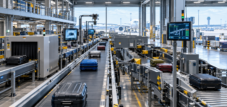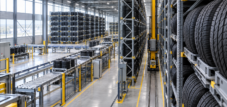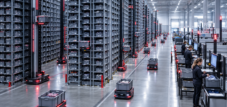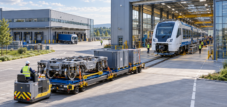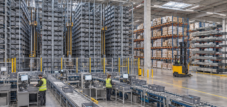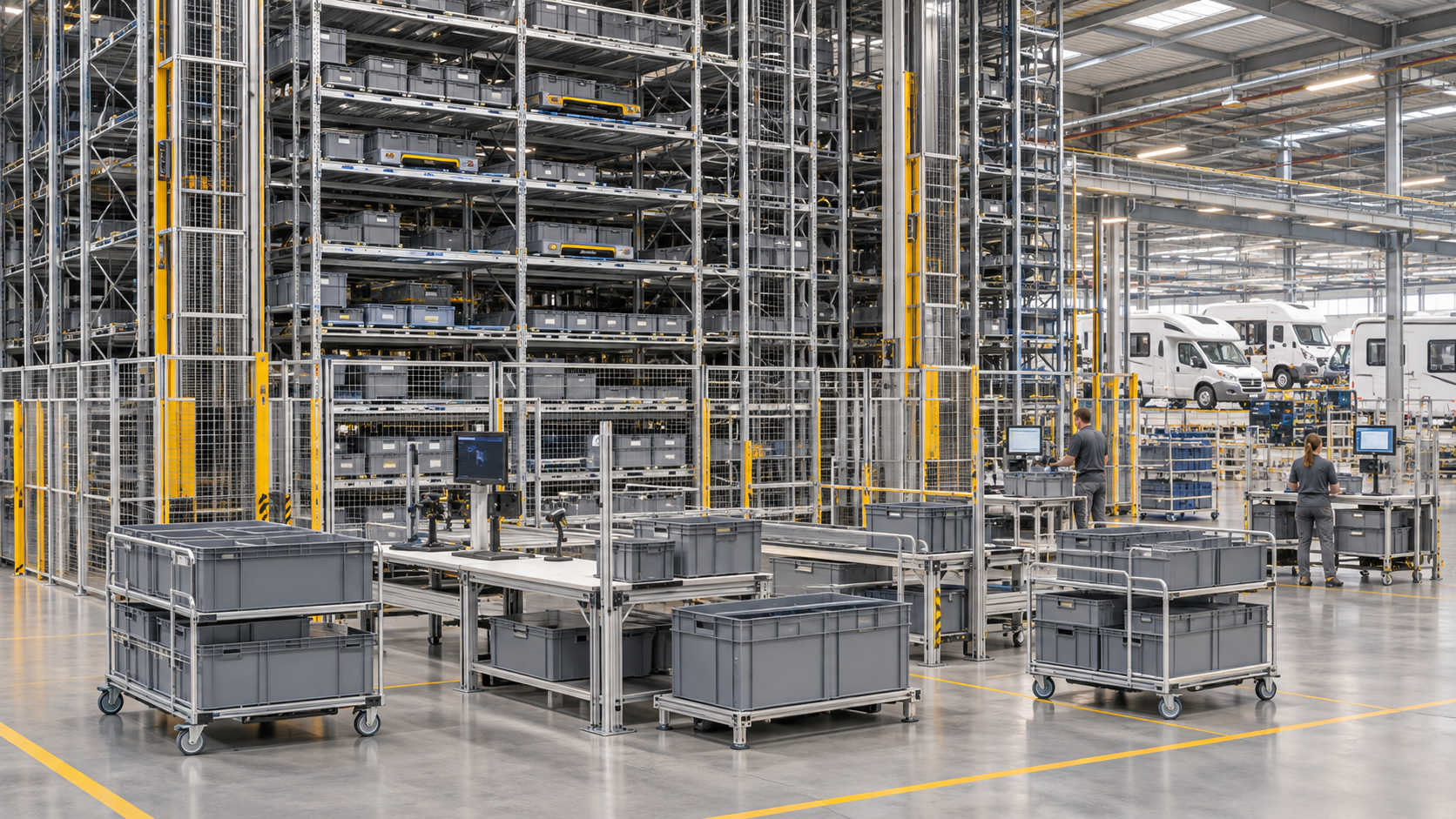
Dethleffs is building a new shuttle warehouse – why 70 robots are important for production – creative image on the topic, with AI: Xpert.Digital
30,000 storage spaces, 70 shuttles: What Dethleffs aims to achieve with the new facility
When a small part stops assembly: Dethleffs relies on an automated warehouse
More than automation: How Dethleffs plans to secure its material supply
A single missing small part can bring an entire assembly process to a standstill. That's why Dethleffs is building an automated four-way shuttle warehouse at its main plant in Isny im Allgäu, with 30,000 storage locations, 70 shuttle vehicles, and 16 order picking workstations. It's the recreational vehicle manufacturer's first fully automated warehouse system. But the system's economic value isn't solely measured by its size or the number of containers it moves.
The crucial factor is whether the warehouse reliably provides materials at the right time and allows production to continue as much as possible, even in the event of disruptions. To achieve this, Dethleffs relies on redundant shuttle vehicles and container lifts, as well as alternative transport options. This reserve capacity is intended to prevent the failure of a single piece of equipment from interrupting the entire material flow – even if it doesn't necessarily guarantee full performance under all circumstances.
The project thus highlights a key question for industry: How much additional technology is necessary to avoid production interruptions? A reliable answer depends not only on the number of shuttles. The organization of material supply, data quality, software control, maintenance, and the processes at the picking stations also determine whether the system fulfills its purpose.
The planned key performance indicators (KPIs) provide insight into the scale of the project. However, they do not, in themselves, demonstrate increased vehicle production, specific cost savings, or a particular payback period. Dethleffs' investment can strengthen value creation at the plant – provided the overall system reliably delivers more in everyday use than it costs over its entire life cycle.
The most expensive machine is the one that is out of service because of a missing small part
A warehouse doesn't generate revenue simply by considering its occupied storage spaces. Its true economic value lies in ensuring timely material arrivals, stable assembly processes, and reliable customer delivery of vehicles and spare parts. Dethleffs is focusing precisely on this intersection with its planned automated four-way shuttle warehouse at its main plant in Isny im Allgäu. The project will integrate 30,000 storage locations, 70 shuttle vehicles, and 16 order picking workstations into a single infrastructure for production and spare parts supply. It is the recreational vehicle manufacturer's first fully automated warehouse system.
The real economic significance, however, lies not solely in the automation of existing warehouse movements. Dethleffs is investing in the ability to maintain material flows even when individual components fail, maintenance work is required, or demand increases at short notice. Redundant technology and alternative transport options are designed to prevent a local disruption from becoming a problem for the entire assembly process.
This project thus represents a fundamental business consideration: How much additional technology is economically justified to reduce the probability and consequences of a production interruption? The answer depends less on the number of robots installed than on the interplay of material structure, production organization, inventory, software, and maintenance.
The clearly justified perspective is therefore: The shuttle warehouse can offer Dethleffs significant strategic benefits. However, these benefits do not automatically arise from high storage density or modern vehicles. The crucial factor is whether the overall system reliably delivers more under real operating conditions than it costs over its entire life cycle.
From warehouse project to securing industrial value creation
Dethleffs develops and produces motorhomes, caravans, campervans, and urban vehicles under the Dethleffs and Crosscamp brands in Isny. Such a diverse product range means that different components must be available at the appropriate times for material supply. The planned container warehouse will serve as a central organizational and technical hub for this purpose.
The economic challenge lies in the fact that material value and production relevance can diverge significantly. A relatively inexpensive component can interrupt an assembly process just as effectively as an expensive assembly if it is essential for the next step. An inventory strategy focused solely on purchase price would underestimate this interdependence.
Therefore, a production warehouse should not be viewed merely as a storage location. It fulfills a coordinating function between procurement, internal supply, assembly, and, if applicable, spare parts management. Its efficiency influences how much time employees have to spend searching, waiting, making inquiries, or reorganizing at short notice.
For Dethleffs, this represents a potential additional return on investment: A more stable supply of materials can improve the productivity of existing assembly capacities without requiring the immediate construction of new production lines. However, whether this effect actually materializes must be demonstrated using operational data. Simply installing an automated warehouse does not automatically translate into increased vehicle production.
What the dimensioning reveals and what it leaves open
With 30,000 storage spaces, the project takes on a considerable logistical scale. This figure initially describes the planned storage capacity. However, it indicates neither how many different items will be stored nor the financial value of the inventory. Several containers can hold the same item; conversely, suitable containers can be subdivided for organizational purposes.
The number of 70 four-way shuttles, without additional performance data, does not equate to a specific throughput. Theoretically, this equates to approximately 429 storage spaces per shuttle. This ratio describes the equipment, but not a reliable performance indicator. Transport distances, travel speeds, transfer times, lift occupancy, and order structure all influence how many containers can actually be provided per hour.
The 16 picking workstations each offer space for four trolleys. This results in a total of 64 designated trolley positions. These allow for the organizational grouping or separation of orders. However, they do not automatically equate to 64 simultaneously completed material requisitions or assembly orders.
A complete economic analysis is missing, in particular, information on investment sum, operating times, staffing requirements, energy consumption, planned throughput, and current process costs. Likewise, no measured availability values or actual savings achieved are provided. A sound evaluation must therefore distinguish between proven design and effects that still need to be demonstrated.
Why two container formats are economically relevant
The system is designed for containers with base dimensions of 450 × 650 millimeters and 900 × 650 millimeters. The larger format has twice the base area for the same width. This allows for a wider range of suitable components than with a single container type.
The advantage lies in a more differentiated allocation between item and load carrier. If small parts are stored exclusively in large containers, a significant amount of space may remain unused. If larger components are crammed into containers that are too small, handling problems or additional packaging requirements increase. Two formats can mitigate this conflict of objectives.
All shuttle vehicles should be able to transport both container formats. This avoids dividing the vehicle fleet into two separate technical groups. This shared usability fundamentally simplifies the distribution of transport orders and prevents a rigid assignment of specific vehicles to specific containers.
Nevertheless, no concrete space savings can be derived from this. This would require, among other things, information on container heights, compartment geometries, load weights, and actual item dimensions. Likewise, it is not documented what proportion of all Dethleffs materials are suitable for the container storage. Large or particularly bulky vehicle components are certainly not automatically covered by the aforementioned basic dimensions. The storage area should therefore be considered part of the material supply system and not as a complete replacement for all existing storage areas.
Four-way technology creates flexibility, but not unlimited performance
The economic appeal of a four-way shuttle system lies in its flexible movement and deployment structure. At Dethleffs, the vehicles are designed to be able to move between storage aisles and different levels. These level changes require corresponding technical transitions; the term "four-way shuttle" does not mean that a vehicle can travel vertically without additional infrastructure.
Flexible distribution can help balance fluctuating loads within the warehouse. If more material is needed in one area at short notice, available vehicles can generally be deployed accordingly. This is particularly valuable when material requests are not evenly distributed across all warehouse areas.
However, flexibility also creates a need for coordination. Vehicles require clear paths, transfer points, and lifts that are available in a timely manner. Additional vehicles can only generate more capacity if the other system components can handle this increased traffic.
This leads to a key management task: the fleet must not be optimized in isolation. The crucial factor is the entire value chain, from the storage location through transport and handover to error-free order picking. A faster shuttle is of little use if the corresponding container then has to wait in front of a fully utilized lift or an overloaded workstation. Appropriate sizing therefore requires considering the entire material flow.
Redundancy is an investment in limited consequences of disruption
Dethleffs relies on redundantly designed shuttle vehicles and container lifts. If one unit fails or is undergoing maintenance, other units are designed to take over its tasks. The layout of the storage aisles is also designed to maintain operation of the order picking workstations in the event of malfunctions in parts of the conveyor system.
Economically, this represents a deliberate maintenance of operational capability. Part of the technical equipment is installed not only to handle normal operations, but also to ensure continued operation even during periods of limited availability. This reserve incurs costs before it proves beneficial in the event of a disruption.
It is important to distinguish between continued operation and unchanged full capacity. If one lift or several vehicles fail, the system can still function, albeit at a reduced material output per hour. Redundancy does not necessarily eliminate every performance loss. Its primary purpose is to prevent a single defect from disrupting the entire material flow.
The economically sensible goal, therefore, is not to guarantee the same maximum output under all circumstances. What is crucial is a sufficiently high residual output to continue meeting critical assembly needs. The required residual output depends on the production rhythm, material buffers, and permissible downtime.
Why additional technology is sometimes cheaper than maximum capacity utilization
From a purely static cost perspective, unused capacity initially appears inefficient. An additional shuttle, another lift, or an alternative transport route incurs investment, maintenance, and potentially energy costs. As long as everything functions smoothly, this reserve can seem excessive.
However, this perspective falls short when the consequential costs of an interruption are high. The economic assessment must consider the probability of a disruption, its duration, and its operational impact.
A purely hypothetical example illustrates the logic: If a supply interruption cost €15,000 per hour and 20 such hours could be avoided annually, the calculated benefit would be €300,000 per year. These figures are not specific to Dethleffs but serve solely to explain the valuation approach.
Even such a calculation requires differentiation. Not every hour of downtime leads to permanently lost revenue. Production can sometimes be made up for. This might primarily result in overtime costs, additional transport, or schedule changes. In other cases, customer orders could actually be at risk. The decisive factor is therefore the avoidable economic damage, not a fixed revenue figure.
High availability only arises from the interplay of all levels
A system is not automatically fail-safe simply because it contains several identical devices. Shared dependencies can limit the effectiveness of redundancy. These include, for example, central control functions, power supplies, communication networks, and shared interfaces.
If multiple vehicles require the same essential connection, a large number of vehicles offers only limited help if that connection fails. The same applies to software functions without which transport orders cannot be processed.
For Dethleffs, the crucial question is therefore which error patterns the overall concept actually manages. The relevant question is not just whether a single shuttle can be replaced. It is also whether prioritized materials remain accessible despite limited conveyor technology and whether employees can recognize what supplies are still available.
This results in requirements for fault testing and operational organization. Clearly defined scenarios for the failure of a lift, multiple vehicles, individual conveyor lines, or communication links are advisable. For each scenario, it should be determined what capacity remains, which orders take priority, and what personnel measures are required. Only this precise definition transforms technical redundancy into robust operational security.
Production supply and the spare parts business require different priorities
The new warehouse is intended to serve both production and spare parts supply. A shared infrastructure can make inventory more transparent and better utilize existing technology. At the same time, two different demand logics are converging.
In assembly, material requests are closely linked to the production process. For spare parts, individual customer requirements, repair needs, or promised delivery dates can be decisive factors. A part that is rarely needed for current vehicle production may be particularly urgent for the repair of a vehicle that has already been used.
These requirements cannot be met solely by the principle of first-come, first-served orders. Priority rules are needed that take into account urgency and operational consequences. Otherwise, there is a risk that one party will consume available resources at the expense of the other.
Shared warehousing should not be confused with unrestricted, jointly available inventory. Reservations may still be necessary to secure production schedules or specific service commitments. The economic opportunity lies in the coordinated use of shared resources. However, this requires that conflicting objectives are explicitly addressed and not resolved under time pressure during ongoing operations.
Order picking remains the transition between technology and responsibility
At the 16 workstations, employees will assemble the required components onto trolleys. This ensures that humans remain a central part of the system. Container provision is automated; however, the quality of the subsequent material assembly still depends on work organization, identification, and clear process specifications.
Four trolley positions per workstation can open up various organizational possibilities. Separate material setups for multiple needs or a clearly structured order processing sequence are conceivable. However, Dethleffs does not specify the exact configuration it envisions.
More parallel tasks do not necessarily mean higher productivity. If employees frequently switch between carts or have to assign similar parts to different destinations, the potential for errors can increase. The benefit of additional positions only arises with clear management and unambiguous task allocation.
Therefore, not only the number of parts withdrawn per hour is economically relevant, but also error rates and rework costs. An incorrectly picked part can initially go unnoticed and only trigger additional work during assembly. The appropriate key performance indicator is therefore the correctly and promptly provided material position. This combines speed with the quality that the subsequent processes actually require.
Your intralogistics experts

Consulting, planning and implementation of complete solutions for high-bay warehouses and automated storage systems - Image: Xpert.Digital
More information here:
Increased efficiency through automated warehouse technology
Software determines whether movements translate into productivity
Logunion develops and implements the software for controlling the entire plant. This role is essential for economic performance because the available technical resources must be coordinated.
An efficient control system must distribute transport orders in such a way that vehicles, lifts, conveyor technology, and workstations work together as effectively as possible. This can lead to conflicting objectives. A particularly short transport route is not always the best choice if it places an additional burden on a heavily used transfer point.
The system must also be able to reflect priorities. Urgent production needs should not be delayed simply because less critical orders were initiated beforehand. Conversely, consistently prioritizing short-term requests can lead to disruption in the rest of the operation.
The planned software control system does not, however, indicate the use of artificial intelligence. There is no corresponding information. The decisive factor is not the name of the technology, but its demonstrable effectiveness. Transparent rules, reliable interfaces, and traceable error handling can be more valuable operationally than additional algorithmic complexity, the decisions of which are difficult to understand in the event of a malfunction.
Master data is the invisible foundation of investment
An automated warehouse requires reliable information about which items are available, their properties, and how they may be handled. Errors in this data do not disappear through automation; rather, they can propagate more quickly to subsequent processes.
For the intended use, correct item assignments, container allocations, units of measure, and inventory entries are relevant, for example. Permissible dimensions and weights must also correspond to the technical specifications.
Incorrectly managed inventory can lead to a material requisition appearing to be fulfilled on paper, even though the required quantity is actually missing. Different units of measure can cause similar problems if, for example, packaging units and individual items are not clearly separated.
The economic consequence is clear: data management is not a mere administrative side issue. It is an integral part of the productive infrastructure. For Dethleffs, the long-term benefit of the warehouse will therefore also depend on who assumes data responsibility, how deviations are handled, and whether regular checks are carried out. A technically efficient system can only operate with the quality that is provided to it organizationally.
Less search effort does not automatically mean less capital tied up
A common argument for automated warehouses is the prospect of lower inventory levels. This expectation needs to be carefully considered. Automation initially changes how materials are stored, located, and retrieved. It does not automatically shorten delivery times from external suppliers or eliminate demand uncertainty.
Lower inventory levels will only be possible when improved transparency and more reliable processes actually lead to certain reserves no longer being needed. For this to happen, procurement, planning, and production must adjust their planning rules accordingly.
Another hypothetical example illustrates the connection: If the average inventory could be reduced by one million euros, this would initially correspond to a release of tied-up capital. Assuming an annual capital and inventory cost rate of ten percent, this would result in a calculated ongoing effect of 100,000 euros. These figures also do not describe the Dethleffs project.
It is important to clearly separate the effects. The million euros saved and the annually avoided costs are different quantities. They should not be added together in an investment calculation without proper temporal and methodological context. Furthermore, excessive reduction in inventory can weaken the desired security of supply.
The right buffer is not necessarily located in the largest storage area
The shuttle warehouse is intended to safeguard production supplies against internal disruptions. However, the question remains how much material should be readily available at the assembly line. There is a conflict of objectives between the central warehouse and the point of consumption.
Large, decentralized buffers can bridge short-term interruptions, but they require space and tie up inventory. Very small buffers reduce this burden, but make assembly more dependent on timely deliveries.
An economically sound solution therefore differentiates according to material. Particularly critical parts with a high potential for downtime may require different supply rules than components that are easily replaceable or only used occasionally. Similarly, the appropriate buffer can differ according to consumption rate and replenishment time.
Crucially, the reliability of the warehouse and the material buffers must be designed together. If all reserves are reduced across the board after automation, some of the gained safety benefits can be lost. Conversely, if all existing buffers are maintained unchanged, potential economic benefits may remain untapped. The best solution is neither maximum nor minimum inventory, but rather a demonstrably justified safety level.
Regional maintenance can be more valuable than another performance record
Heber Fördertechnik is implementing the conveyor technology and, due to its geographical proximity, will be responsible for servicing the storage system in the future. HWA Robotics is training the regional partner for this purpose.
The economic advantage of short distances lies primarily in the potentially faster restoration of operational capability. For the operator, a malfunction is not resolved simply by informing a service technician. The crucial factor is when the system is once again providing sufficient material.
Several conditions must be met for this to happen: accessible personnel, appropriate qualifications, available spare parts, access to the control system, and clearly defined responsibilities. Geographical proximity helps, but does not replace these prerequisites.
Therefore, concrete operational questions are more important than general promises when evaluating the service concept. Which components can be replaced on-site? Which spare parts are readily available? Which interventions require additional specialists? How is the service handled outside of normal business hours?
A well-organized maintenance network can enhance the benefits of redundancy. While backup capacity maintains operations, the failed component can be selectively repaired. In this way, technical reserves and organizational responsiveness complement each other, rather than replacing one another.
Having multiple specialists increases expertise and reduces the need for coordination
The project combines different specialist roles. HWA Robotics assumes overall responsibility for the plant realization. P4 Consultants supports the planning, implementation, and commissioning. Heber Fördertechnik is responsible for the conveyor technology and subsequent service. Logunion contributes its software expertise.
This division of labor can be advantageous because mechanical systems, material flow planning, control, and maintenance require different expertise. Not every supplier needs to cover all tasks to the same degree.
At the same time, interface risks arise. A delayed container can be due to a mechanical malfunction, a control decision, faulty input data, or a blocked transfer point. For the operator, what matters is not which department the problem is formally assigned to, but how quickly it is resolved.
Therefore, such a network requires clear overall coordination. Joint error analyses, harmonized documentation, and clearly defined escalation procedures are economically relevant. Without them, technically competent individual solutions can fall short of expectations when combined. The quality of integration thus becomes an independent achievement that must be taken just as seriously as the quality of the individual system components.
The ramp-up process determines the actual investment success
For Dethleffs, this system marks their entry into fully automated warehouse technology. This not only changes the technical equipment but also the daily workflow. Material movements, inventory management, and troubleshooting must now operate according to more formalized rules.
The ramp-up phase will reveal whether these rules are viable under real-world conditions. Products must be correctly received, employees trained, and new processes aligned with assembly requirements. At the same time, the ongoing supply chain must not be unnecessarily jeopardized.
A realistic assessment of peak loads is particularly important. A system might perform convincingly with evenly distributed test orders, but still exhibit bottlenecks under actual demand patterns. Handling exceptions is also crucial: damaged containers, incorrect quantities, or short-notice changes in demand.
From an economic perspective, the ramp-up phase should therefore not be seen as a bothersome transitional phase that should be quickly forgotten. It is the period in which the planned performance capacity is transformed into reliable routine. Insufficient time for training and testing can later result in significantly higher costs than careful stabilization at the outset.
Modularity creates options instead of automatically generating cheap growth
The system can be expanded with additional shuttles and container lifts to meet increasing demands. This option offers economic value: Dethleffs is not obligated to fully install every conceivable future peak capacity right from the start.
A later expansion can conserve capital if demand trends are uncertain. It generally allows for the creation of additional capacity closer to actual demand.
However, a modular system is not infinitely scalable. More vehicles require sufficient unobstructed transport routes. Additional lifts must be integrated both technically and spatially. Picking stations and downstream transport can also become limiting factors.
Therefore, expandability should be understood concretely. The crucial factor is not just whether additional devices can be added, but how much additional overall performance this results in and what accompanying adjustments are required. An additional shuttle only makes economic sense if its contribution is not lost elsewhere.
The strength of modular technology therefore lies in better timing between investment and demand. However, it does not replace long-term spatial planning or a careful analysis of future bottlenecks.
A sound investment calculation requires more than just personnel savings
The economic evaluation should encompass all significant payment and performance effects. On the cost side, this includes not only storage technology and installation, but also software, integration, training, maintenance, spare parts, energy, and future modifications.
Benefits include reduced search and transport costs, fewer picking errors, improved space utilization, and avoided interruptions. More stable delivery dates and better utilization of existing production capacities are also potential outcomes.
These effects should not be counted twice. If fewer errors are already reflected in increased productive working time, the same benefit should not be fully allocated again as a separate reduction in personnel costs. Similarly, avoided downtime and additional production volumes are only independent to the extent that they actually describe different economic effects.
Without the investment amount and reliable operating data, it's impossible to calculate a reliable payback period for Dethleffs. It would be advisable to consider several scenarios: conservative, expected, and favorable. In particular, utilization, breakdown frequency, maintenance costs, and start-up time should be varied. A sound investment is not only convincing under optimal assumptions but also remains economically viable even with limited deviations.
Employees will not become redundant, their tasks will change
The planned order picking workstations show that Dethleffs is relying on a combination of automated provisioning and human processing. This does not imply either a specific reduction or increase in the number of employees.
A shift in activities is more plausible. Less manual search and transport work can be accompanied by more tasks in monitoring, quality control, troubleshooting, and data maintenance.
Whether this leads to improved working conditions depends on the design. Shorter distances can reduce strain. Conversely, a consistently high work rate, awkward reach heights, or unclear displays can create new problems. Ergonomics and productivity are therefore not separate issues.
Training is also becoming increasingly important. Employees must be able to recognize whether a deviation is caused by materials, accounting, or technology, and when support is needed. This process knowledge is an economic asset, even if it doesn't appear as a machine on the balance sheet. An automated warehouse remains dependent on people who understand its limitations and can act appropriately in exceptional cases.
Digitalization creates new dependencies that need to be secured
With increasingly networked warehouse technology, the importance of digital operational capability grows. A mechanically sound system can only fulfill its purpose if its control, communication, and data processing systems function correctly.
This results in requirements for access rights, data backup, restart procedures, and secure maintenance access. This does not mean that there are any known security vulnerabilities in the specific project. It is a fundamental consequence of the planned automation.
Recoverability is particularly important. Backups are only helpful if their use has been tested and it's clear which systems need to be restarted and in what order. Similarly, remote access must be organized in such a way that support remains possible without introducing unnecessary risks.
From an economic perspective, these measures follow the same logic as redundant elevators. Both are intended to prevent individual malfunctions from disproportionately impacting material supply. A resilience strategy that only considers mechanical failures would therefore overlook a significant part of the new risk profile.
Ecological benefits must be measured, not assumed
An automated container storage system can utilize space efficiently and reduce unnecessary material handling. However, whether this results in a better environmental footprint in a specific case cannot be determined solely from the described equipment.
The potentially lower space or transport requirements are offset by electricity consumption, manufacturing costs for the technology, and spare parts requirements. Actual capacity utilization also influences how these expenses are distributed across the processed material items.
A proper evaluation would therefore require measurable metrics. These include, for example, energy consumption per correctly provided item, avoided internal transport routes, or changes in space requirements. Similarly, fewer incorrect picking and re-transportation can contribute to a positive outcome.
The economic and environmental perspectives can complement each other, but they don't necessarily have to in every respect. A permanently maintained redundancy system may require additional resources while simultaneously avoiding significant operational risks. A sound analysis identifies this conflict of objectives, rather than categorically classifying automation as either sustainable or resource-intensive.
Which key performance indicators (KPIs) actually make success visible?
For later evaluation, Dethleffs needs a key performance indicator (KPI) system that combines technology and production. The number of available shuttles alone is insufficient, as is the total volume of containers moved.
Particularly informative are the on-time delivery of materials, the frequency of material-related assembly interruptions, and the time between order placement and actual availability at the designated handover point. Additionally, picking errors, inventory discrepancies, and recovery times should be recorded.
Clear definitions are crucial. A warehouse can be technically available even though important orders arrive late. Conversely, a single component might fail, while production remains fully supplied thanks to redundancy.
Average values can also be misleading. A good average delivery time says little about rare but serious delays. Therefore, particularly critical supply cases should be considered separately.
The most meaningful overall picture emerges when costs, service quality, and risk impact are assessed together. Only then does it become clear whether the warehouse not only handles a high volume of transactions but actually generates the desired economic stability.
The strategic lesson: Not maximum automation, but controlled dependency
The project in Isny is particularly interesting because it combines automation with explicitly planned redundancy. This highlights a conflict of objectives that extends beyond this single company: the more centralized and technologically streamlined material flows become, the more crucial it is to manage potential failures.
Dethleffs can improve transparency, delivery quality, and internal responsiveness with the new system. At the same time, it increases its dependence on an integrated technical infrastructure. The project will only be economically viable if the productivity gains outweigh the additional operating and dependency costs.
The planned 30,000 storage spaces, 70 shuttles, and 16 order picking workstations provide a concrete technical basis. However, they are neither a guarantee of success nor sufficient proof of profitability. Ultimately, the decisive factors are data quality, sensible prioritization, reliable maintenance, trained employees, and a demonstrably functioning system for handling disruptions.
The most compelling aspect of this investment, therefore, is not the vision of a warehouse with as few people as possible. It is the vision of a production process whose material supply requires less improvisation. If this is achieved, automated warehousing technology will become a tool for securing industrial value creation: not spectacular in individual transport operations, but crucial for the reliable functioning of the entire plant.
Your global marketing and business development partner
☑️ Our business language is English or German
☑️ NEW: Correspondence in your native language!

Konrad Wolfenstein
I and my team are happy to be available to you as your personal advisor.
You can contact me by filling out the contact form here wolfenstein@xpert.digital:or simply call me at +49 7348 4088 965. My email address is
I'm looking forward to our joint project.