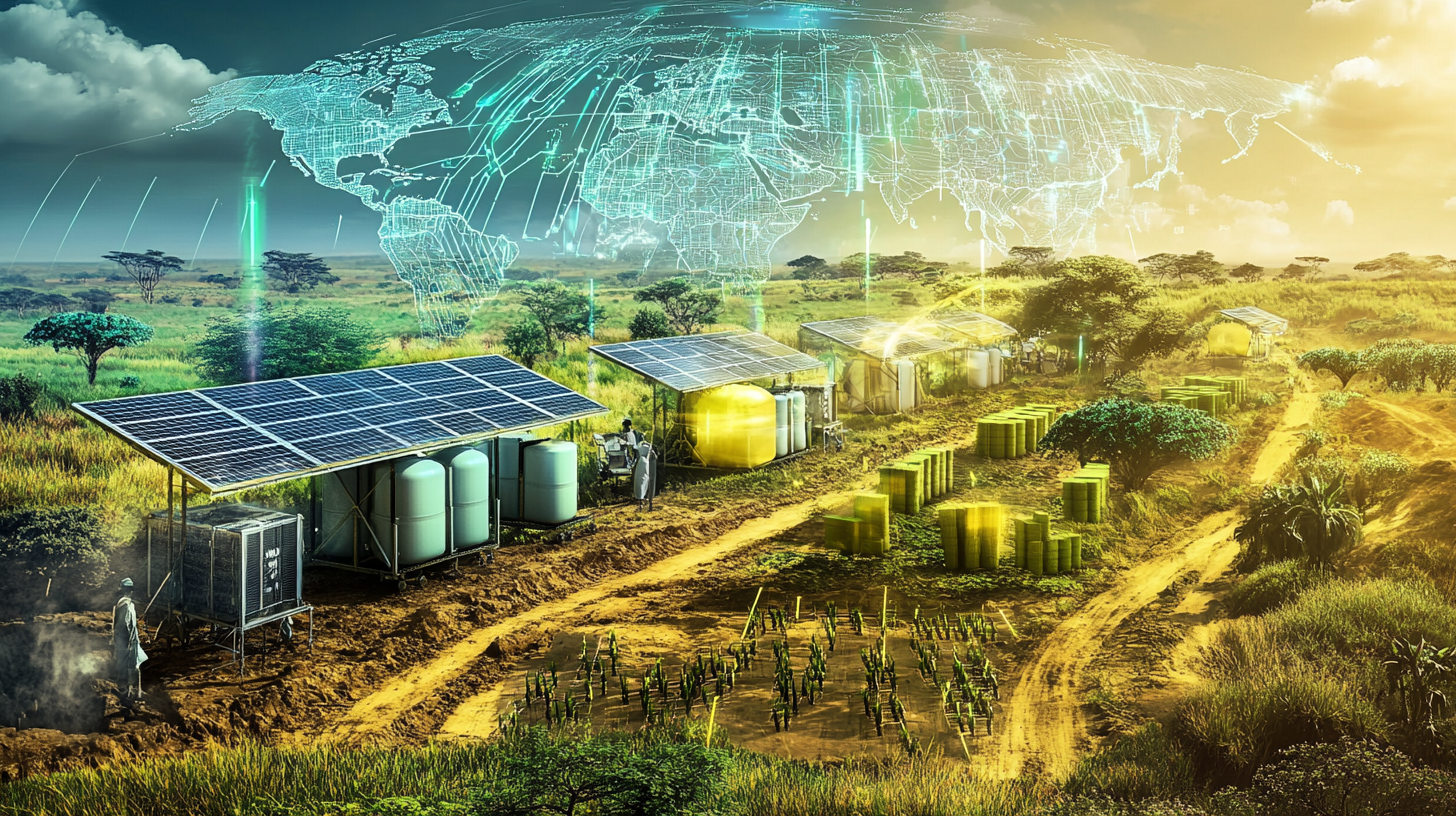
The importance of efficient cold chains for food security, economic growth and sustainable development, using Africa as an example – Image: Xpert.Digital
🔍🌿 The importance of the cold chain for Africa
📦❄️ Fresh and refrigerated logistics in Africa is considered a crucial factor for food security, healthcare, and the stability of regional economies. Nevertheless, in many countries on the continent, up to 40% of perishable goods are still lost due to inadequate and inefficient cold chains. This not only affects the food supply for millions of people but also directly impacts the income prospects of farmers, cooperatives, intermediaries, and exporters. At the same time, this problem affects the entire value chain – from harvesting and storage to transport, processing, and consumption. Despite the existing challenges, there are also numerous opportunities: technological innovations, sustainable energy approaches, improved education and training programs, and regional cooperation projects have the potential to transform the sector in the long term.
Related to this:
🍅🚛 Challenges of Africa's cold chain infrastructure
“We lose a significant portion of our harvest every month simply because we can’t keep our tomatoes and mangoes sufficiently chilled before they reach the market,” says a farmer from East Africa. This statement illustrates how immediate and tangible the challenges are that agriculture faces in many parts of the continent. While cold storage facilities are somewhat more readily available in urban centers, basic infrastructure is often lacking in rural areas. Furthermore, poor roads and a lack of rail connections hinder the rapid and safe transport of temperature-sensitive food over long distances.
Inadequate transport infrastructure is a core problem. Large regions of Africa have insufficiently developed road networks, leading to long transport times. These delays increase the likelihood that fruit, vegetables, meat, or dairy products will spoil before reaching their destination. Adding to the problem is the unreliable energy supply. Power outages or highly fluctuating grid capacities make it difficult to operate refrigeration systems continuously. High energy costs also negatively impact the profitability of cold chains. In many rural areas, diesel-powered generators are still used, increasing operating costs and causing environmental pollution. The resulting shortages lead to significant losses in the quality and quantity of available food.
💼🏗️ Investments and economic obstacles
Another problem is the high capital intensity of building and expanding refrigeration infrastructure. Cold storage facilities, temperature-controlled warehouses, insulated transport containers, and appropriate vehicles require substantial investments. These costs are often prohibitive, especially for smaller businesses. National and international investors are hesitant to invest in regions with inadequate infrastructure due to the perceived high financial risk. This situation is hindering the development of the entire cold chain sector.
👩🏾🔧📚 Skilled worker shortage and regulatory hurdles
The shortage of skilled workers is also a hindrance. Qualified personnel are needed to efficiently manage cooling processes, monitor inventory levels, and comply with quality assurance measures. However, many logistics companies face the problem of a scarcity of trained specialists with expertise in temperature-controlled supply chains. Training courses, continuing education programs, and the establishment of specialized training centers are necessary to build long-term expertise that meets market demands. “We need to train our employees intensively so they understand why a consistent cold chain is so important and how to quickly identify and correct even minor temperature deviations,” explains an entrepreneur from West Africa.
Added to this is the challenge of differing regulatory requirements. Since African countries are still largely unharmonized with regard to standards, regulations, and customs procedures, additional hurdles arise for cross-border shipments of temperature-sensitive goods. Differing hygiene and quality standards lead to delays at borders, increased costs, and sometimes even the rejection of entire shipments. This presents a significant opportunity for regional alliances and international trade agreements to reduce trade barriers and establish uniform regulations.
🍎💰 Deficiencies in cold chains and their effects
All these factors combined have serious consequences for food supply and therefore also for food security. Especially for sensitive foods like fish, meat, milk, and fresh fruit, functioning cold chains are crucial to minimizing losses. When nearly half of the potentially available products are lost due to inadequate storage and transport conditions, this has a direct impact on prices. Consumers pay higher prices for scarce goods, which in turn makes food supply and access to healthy products more difficult. Furthermore, income opportunities for farmers and small businesses involved in the value chain decrease. Thus, not only consumers suffer from these losses, but also the producers at the beginning of the supply chain.
🌞⚙️ Innovative solutions and technology as a source of hope
Despite these significant challenges, promising solutions are emerging. Technological innovations play a key role in this. Mobile refrigeration technologies, such as those powered by solar energy and independent of the power grid, offer farmers in remote regions of Africa new opportunities. They can store their produce locally until suitable transport is available. Digital applications and the Internet of Things (IoT) now enable logistics companies to monitor temperature, humidity, and other relevant parameters in real time. These advanced systems not only allow for better quality assurance but also help to identify potential problems early and take swift countermeasures. “Thanks to digital temperature control, we now know exactly when we need to act to prevent losses,” explains a logistics manager from southern Africa.
♻️🌞 Sustainable energy solutions for the cold chain
In addition to technological advancements, sustainable solutions are needed. The use of renewable energies, especially solar power, can aid in cooling while simultaneously reducing dependence on unreliable power grids and fossil fuels. Solar-powered cooling systems ensure a stable cold chain, lower operating costs, and protect the environment. They also contribute to climate protection by significantly reducing CO₂ emissions compared to conventional cooling methods. Furthermore, the use of environmentally friendly technologies creates a positive image among international trading partners and consumers, who increasingly value sustainable supply chains.
🤝🌍 Regional and international cooperation
Regional initiatives and international collaborations play another key role. Economic and customs alliances, such as various African economic communities, are working on programs to improve food logistics and expand cold chains. Local and international companies, governments, aid organizations, and development banks are involved in joint projects. Establishing training centers to educate specialists in refrigeration technologies is an important step in anchoring expertise locally. Similarly, common standards and certifications create the basis for smoother trade, improve quality controls, and reduce bureaucratic hurdles.
🌐📦 Economic integration and free trade
Economic integration can significantly advance the entire cold chain sector. The African Continental Free Trade Area, which promotes closer cooperation between African states, creates incentives for standardizing processes and improving transport corridors. In the longer term, this development will further stimulate trade in food products, as well as other temperature-sensitive goods such as pharmaceuticals. This not only strengthens the competitiveness of African producers on the global market but also contributes to the diversification of export structures. Higher added value and more secure deliveries are just two of the many advantages.
🥗🚜 Food security and local production
The transformation of cold chain logistics is closely linked to issues of food sovereignty. Reducing losses of perishable goods helps stabilize local markets and lower food prices. This not only increases the availability of healthy food but also promotes a more diverse diet. A stronger focus on local value creation also boosts farmers' incomes. They become less dependent on fluctuating global market prices, can invest in their own farms, and gradually improve the quality of their produce. "If we can reliably keep our products cold and deliver them on time, we build trust. That's the foundation for long-term business relationships and stable incomes," says an exporter from North Africa.
🩺💊 Cold chains for healthcare
Furthermore, the expansion of efficient cold chains also offers opportunities for other sectors, such as healthcare. Vaccines and medications are often temperature-sensitive and require controlled refrigeration to maintain their effectiveness. Improved cold chains thus benefit not only the food supply but also medical infrastructure. A reliable supply of refrigeration capacity in remote regions of the continent helps to expand healthcare services and ensure the population's access to essential medicines.
🚧🛤️ Progress and challenges
Despite the necessary groundwork, the continent is already on a path of transformation. Successful pilot projects in individual countries, government funding programs for modernizing transport routes, and cooperation with international partners are paving the way to a future with more stable cold chains. Furthermore, there is a growing awareness that such commitment has long-term, positive effects. Investments in education and training, the creation of reliable regulatory frameworks, and the targeted promotion of renewable energies in the refrigeration sector are key components. All of these efforts aim to unlock the full potential of African agriculture, fisheries, and livestock farming and to sustainably strengthen the continent's own food supply.
🌾🌍 Cold chain logistics as a key to growth
The modernization of cold chain logistics in Africa is not an isolated phenomenon, but rather part of a comprehensive development process that extends from energy policy and infrastructure planning to healthcare and environmental management. Investing in one area strengthens the others. In the long term, an efficient cold chain also means less food waste, reduced environmental impact, more resilient regional markets, and a better competitive position for Africa in global trade. This makes it clear that cold chain logistics goes far beyond technical issues and is a key factor for the economic success, social stability, and sustainable future of the continent.
“We have learned a great deal in recent years,” summarizes a development consultant. “It is clear that efficient cold chains are not a luxury, but a necessity for improving the quality of life for millions of people.” This realization is driving governments, businesses, organizations, and farmers forward together. They are all united by the goal of reducing losses, increasing yields, expanding markets, and laying the foundation for a strong, self-reliant Africa. By combining modern technologies, reliable infrastructure, and comprehensive cooperation, cold chain logistics will no longer be a bottleneck, but a key pillar for food security, economic progress, and sustainable growth.
📣 Similar topics
- 📦 The role of cold chain logistics for Africa's economy and food security
- ❄️ Sustainable cold chains: Innovations and challenges in Africa
- 🌍 How efficient cold chains can transform the continent
- 🚛 Logistics revolution: Improved transport infrastructure in African countries
- 💡 Solar energy meets cooling technology: A turning point for rural areas
- 📊 Cold chains as a key to reducing food losses in Africa
- 🌱 Food security and climate protection: The double opportunity of cold chains
- 🌟 Success stories: How pilot projects are driving forward cold chain logistics
- 🤝 Cooperation and skills development: The path to more stable cold chains
- 🏠 Local strength and global opportunities: Africa's future with modern cold chain logistics
#️⃣ Hashtags: #SustainableLogistics #FoodSecurity #ColdChainAfrica #EnergyInnovations #EconomicGrowth

Expert partner in warehouse planning and construction



Xpert.Plus Warehouse Optimization - High-bay warehouses and pallet warehouses: Consulting and planning
We are here for you - Consulting - Planning - Implementation - Project Management
☑️ SME support in strategy, consulting, planning and implementation
☑️ Creation or realignment of the digital strategy and digitization
☑️ Expansion and optimization of international sales processes
☑️ Global & Digital B2B trading platforms
☑️ Pioneer Business Development

Konrad Wolfenstein
I would be happy to serve as your personal advisor.
You can contact me by filling out the contact form below or simply call me on +49 7348 4088 965 .
I'm looking forward to our joint project.
Write to me



Xpert.Digital - Konrad Wolfenstein
Xpert.Digital is a hub for industry focusing on digitalization, mechanical engineering, logistics/intralogistics and photovoltaics.
With our 360° Business Development solution, we support renowned companies from new business to after-sales.
Market intelligence, smarketing, marketing automation, content development, PR, mail campaigns, personalized social media and lead nurturing are part of our digital tools.
You can find more information at: www.xpert.digital - www.xpert.solar - www.xpert.plus
Keep in touch