Anyone buying a humanoid today might be financing its scrapping tomorrow
Xpert Pre-Release

Available in 27 languages 📢
Prefer Xpert.Digital on GoogleⓘPublished on: October 12, 2026 / Updated on: October 12, 2026 – Author: Konrad Wolfenstein
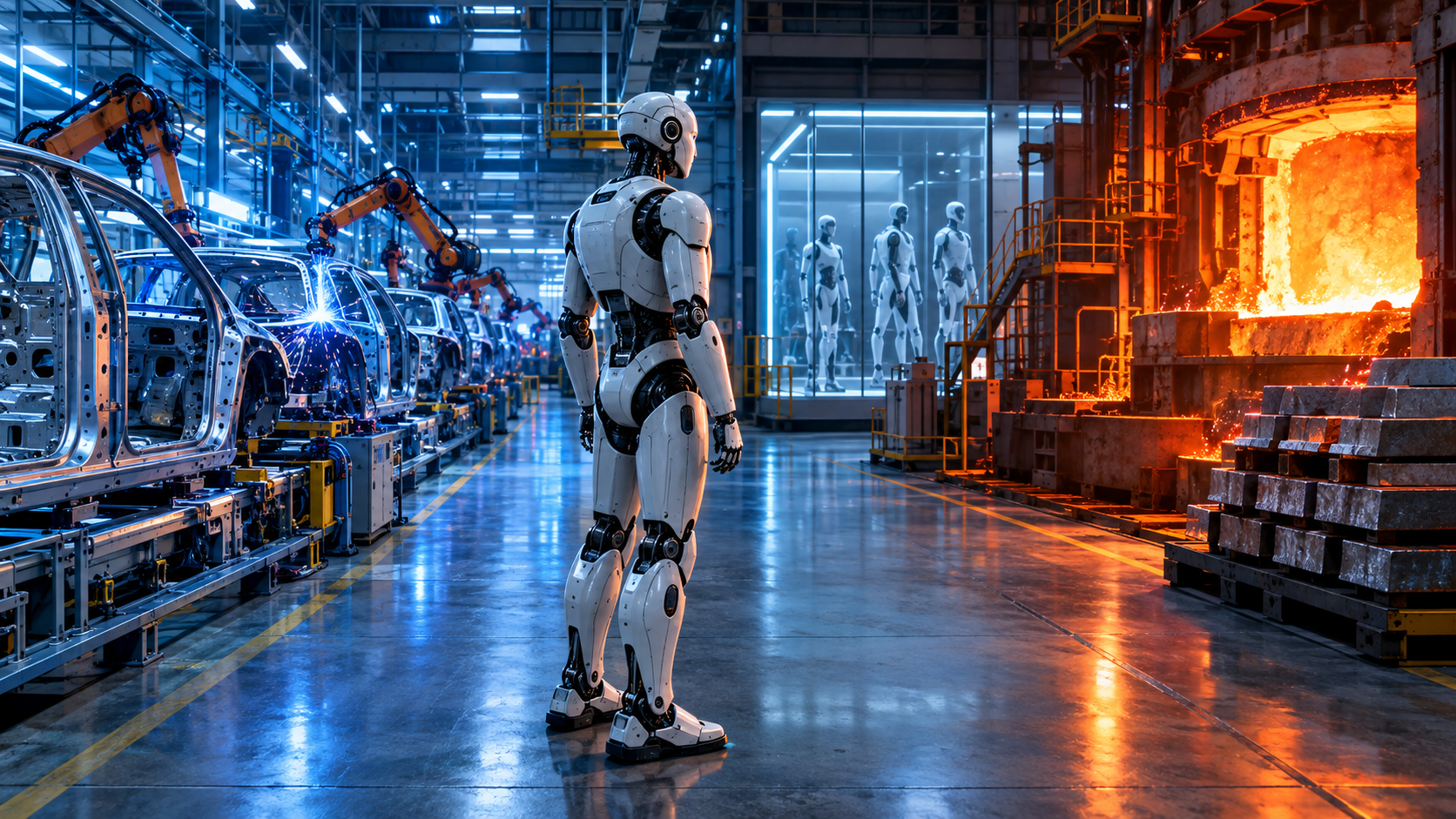
Anyone buying a humanoid today might be financing its scrapping tomorrow – creative image on the topic, with AI: Xpert.Digital
Humanoid robots in use: An expensive experiment or a vision of the future?
Future challenges of humanoid robotics: depreciation and obsolescence
From innovation to disposal: The economic pitfalls of humanoid robots
The rapid development of humanoid robots raises significant economic questions that extend beyond mere technological progress. A recent example vividly illustrates this: the spectacular decommissioning of a fleet of humanoid robots by melting them down in a Finnish arc furnace. This decision is not only a dramatic staging of the end of a product cycle, but it also highlights the pressing economic problem of how companies should assess and depreciate the value and useful life of these state-of-the-art machines. In a world where technological innovations outpace the physical lifespan of a device, companies face the challenge of justifying their investments in humanoid robots. Are these machines a promising automation solution or merely an expensive cycle of perpetual renewal? These questions are crucial for the future economic viability and strategic direction of industrial robotics.
The battle for profitability: Humanoid robots and their depreciation trap
The spectacular decommissioning of a fleet of humanoid robots by melting them down in a Finnish arc furnace is more than just an effectively staged farewell scene. Behind the image of a robot that, according to the company, jumped into the furnace using a specially trained movement model, lies a significant economic question: How should an industrial company value, finance, and depreciate a machine whose technological development is outpacing its potential physical lifespan? This very question will determine whether humanoid robotics becomes a productive new class of automation or an expensive cycle of perpetual renewal.
The decommissioned Figure 02 was by no means a non-functional prototype. Two systems operated for approximately eleven months at the BMW plant in Spartanburg, South Carolina. They worked ten-hour shifts from Monday to Friday, accumulating a combined total of about 1,250 operating hours, handling more than 90,000 sheet metal parts, and supporting the production of over 30,000 BMW X3s. Their task was to pick up sheet metal parts and place them with high precision into a fixture where a conventional industrial robot then took over the welding process. The humanoid robot thus did not perform a futuristic, universal task, but rather a clearly defined, physically demanding, and cycle-dependent work step.
Despite this actual production deployment, most of the fleet was not continued in operation, sold, or systematically dismantled. The robots were melted down in Imatra at the end of September 2026. The company justified this by stating that maintaining the older generation alongside the growing Figure 03 fleet was no longer practical, that manual dismantling would tie up scarce technician time, and that it would delay the development of the successor, the Figure 04. At the same time, they wanted to prevent customer-specific actuators and other proprietary technical knowledge from falling into the hands of competitors. The 75-ton electric arc furnace completed six melting cycles within 24 hours; other foundries in the United States and Mexico had declined to accept the robots because of the lithium-ion batteries. The recovered metal is to be used to create commemorative items. As a PR event, it's effective. As an economic signal, it's alarming.
The BMW deployment was more than just a demonstration
The significance of the deployment in Spartanburg lies in the fact that Figure 02 wasn't just operating at a trade fair or in a shielded test lab. The system had to adapt to cycle times, accuracy requirements, material variations, safety regulations, and the existing production architecture of an automotive plant. Target parameters included part delivery within 37 seconds, a complete work cycle of 84 seconds, and very high placement accuracy. Furthermore, the goal was to minimize human intervention, downtime, and restarts.
The publicly available key performance indicators (KPIs) demonstrate significant learning progress, but do not yet allow for a complete profitability calculation. The number of supported vehicles says little about what proportion of the added value was actually generated by the humanoid robot. Similarly, 1,250 operating hours over eleven months does not represent high utilization for two machines in an industrial environment. Crucial factors would be the number of parts produced per productive hour, actual availability, the number and duration of manual interventions, scrap, rework, safety interruptions, charging times, software downtime, and the costs of technical support. This information is rarely fully disclosed in early robotics projects.
Nevertheless, the effort was valuable. Figure 02 yielded real-world stress data and revealed weaknesses that were incorporated into the next generation. The forearm proved particularly challenging due to limited installation space, high degrees of freedom, thermal requirements, and complex wiring. Figure 03 subsequently received a newly designed electronics architecture in the wrist. This illustrates the true economic benefit of such a pilot project: not primarily in saved labor hours, but in data, design expertise, process understanding, and a faster learning curve for the manufacturer.
Even a successful pilot project can still be expensive for the customer
In early-stage markets, the interests of manufacturers and users are not automatically aligned. For the robot manufacturer, an eleven-month deployment can be highly profitable in a strategic sense, even if the individual machine does not generate a positive operating contribution margin. The manufacturer gains production data, identifies weaknesses, improves its AI models, optimizes components, and can market the deployment as a reference. The industrial customer, on the other hand, only receives a sustainable economic benefit if productivity, ergonomics, flexibility, or supply reliability outweigh the total deployment costs.
This asymmetry is often underestimated. A factory can become a real-world testing ground for a system whose greatest added value accrues to the supplier. This isn't inherently problematic, provided the compensation is adequate. Favorable pilot conditions, preferential access to the next generation, contractually guaranteed upgrades, shared rights to process knowledge, or participation in productivity gains are all conceivable. The problem arises when the customer bears the integration costs, operational downtime, and internal personnel hours, while the usable data and improvements remain entirely with the supplier.
With humanoid robotics, it is therefore essential to clarify the economic problem it aims to solve even before the pilot project begins. A technically impressive demonstration does not constitute a viable business model. The meaningful comparison is not human versus robot, but rather humanoid robot versus all realistic alternatives. These include a classic six-axis robot, a collaborative robot, a mobile manipulator, an automated guided vehicle (AGV), a customized device, a process modification, ergonomic assistance, or improved workforce planning. Only if the humanoid robot offers a demonstrable advantage in the specific application over the entire contract period will it achieve sustainable economic viability.
Generations turn faster than the balance sheet
Figure 02 was unveiled in August 2024. Figure 03 followed in October 2025 and was also deployed at BMW in 2026. Figure 04 is already under development. Only about 14 months passed between the two generations. This pace is more reminiscent of AI accelerators and consumer electronics than traditional industrial equipment.
An established industrial robot can technically remain in operational use for 12 to 15 years. Tax depreciation periods are often significantly shorter, depending on the country and application, but in practice, the physical and economic lifespan often extends well beyond a single model generation. Spare parts, standardized controls, documented interfaces, retrofit options, and a used equipment market stabilize the residual value. Many of these features are still lacking or only weakly developed in early humanoid robots.
This leads to a key distinction. Physical lifespan describes how long a machine could theoretically function. Technical lifespan ends when components, computing platforms, or security architectures are no longer adequately supported. Economic lifespan ends when a successor performs the same task so much more cheaply, reliably, or productively that continued use of the older system is no longer reasonable. In Figure 02, it appears that economic and strategic obsolescence, rather than mechanical wear, was the decisive factor.
This is precisely where the depreciation trap arises. A company can depreciate a machine on its balance sheet over five or six years, while its economic useful life is only two or three years. The book value then no longer reflects the realistic benefit. If the system has to be replaced prematurely or written off due to unscheduled depreciation, profitability subsequently deteriorates. The faster the model cycles and the lower the resale value, the riskier a direct purchase becomes.
Depreciation is not a formality, but an investment assumption
In accounting, the acquisition or production costs of a depreciable asset are distributed over its expected useful life. This useful life is not a fixed constant of nature. It must reflect the expected operational benefits and take into account technical and economic obsolescence. For a humanoid, therefore, not only joint wear, battery aging, and mechanical stress must be considered, but also software support, computing power, safety clearances, spare parts availability, and the manufacturer's innovation pace.
With straight-line depreciation over five years, 20 percent of the depreciable value is recorded as an expense each year. However, if the useful life ends after two years and no significant residual value exists, the economic depreciation has been reflected too slowly. A three-year useful life already increases the annual depreciation expense to around one-third of the acquisition costs. At two years, half is incurred annually. This can significantly increase a seemingly low robot hourly rate.
An example illustrates the scale of the costs. If a fully operational system, including integration, costs €180,000 and achieves 2,000 accepted productive hours per year over three years, the capital expenditure alone amounts to €30 per productive hour, assuming no residual value is factored in. With only 1,000 productive hours per year, this figure doubles to €60. Maintenance, software, financing, energy, insurance, spare parts, remote support, internal support, and downtime risks are not included in this calculation.
The crucial factor is therefore not the theoretical operating time, but the productive task time accepted by the customer. A robot can be switched on without generating any economic output. Charging, waiting for materials, teleoperation, troubleshooting, software updates, safety shutdowns, and rework must not be counted as productive hours. Dividing capital expenditure by nominal availability artificially inflates the profitability.
The robot is only the visible half of the investment
In traditional automation, hardware often represents only a portion of the total costs. Tools, grippers, sensors, safety devices, system modifications, control integration, programming, simulation, commissioning, training, and ongoing service can significantly exceed the initial purchase price. While humanoid robots are marketed with the promise of enabling the use of human-designed workplaces without major modifications, in practice, the integration effort doesn't disappear; it simply shifts.
A bipedal robot requires safe pathways, defined floor conditions, reliable wireless coverage, charging infrastructure, digital order data, and coordinated handover points. In Spartanburg, the experience led, among other things, to revised safety concepts with additional barriers and partitions, as well as improvements to 5G coverage within the hall. Standardized integration into the existing robotics ecosystem was also a crucial part of the project. The humanoid robot didn't simply enter the hall and begin working without preparation.
In addition, there is the process redesign. Containers, part positioning, tolerances, and material flow must be designed to ensure stable perception and gripping. Employees need clear procedures for malfunctions and restarts. Maintenance must be able to differentiate between mechanical faults, sensor problems, network malfunctions, and model failures. IT must manage access rights, updates, data transmission, and cyber risks. Occupational safety and the works council must be involved early on.
This shifts the economic evaluation from the unit price to the fully deployable solution. A low-cost robot with high integration requirements can be more expensive than a higher-priced system with sophisticated software, reliable service, and standardized interfaces. Conversely, a flexible platform can replace several specialized machines in the long run. However, this option is only valuable if task changes actually work and don't trigger a new integration project each time.
Physical AI makes hardware more easily replaceable
Humanoid robotics differs from traditional automation primarily through the growing importance of physical AI. This refers to adaptive systems that combine visual perception, language understanding, planning, and movement in the real world. Figure describes its architecture as a vision-language-action system. The software processes camera data and instructions and translates them into hand, arm, torso, and leg movements. As a result, the robot does not exclusively follow a rigid, pre-programmed sequence of movements.
Economically, this changes the distribution of value. With a traditional machine, a large part of the benefit is permanently tied to mechanics, controls, and established process knowledge. With an AI-controlled humanoid, a growing share shifts into models, training data, fleet management, and software updates. The hardware becomes the physical execution platform. Its attractiveness depends on whether it can run new software generations and whether the manufacturer continues to support them.
This opens up opportunities. A robot could learn new tasks through software without requiring mechanical modifications. Fleet data can accelerate improvements. Errors detected at one location can theoretically be corrected for many systems. At the same time, dependence on the vendor increases. If cloud services, interfaces, or models are discontinued, functioning hardware loses some of its value. Changes to licensing terms can increase operating costs. New models may require computing power, cameras, or sensors that older generations lack.
This creates an industrial platform risk, familiar from information technology, but with more significant consequences in mechanical engineering. A smartphone can be replaced relatively easily. A robot, however, is integrated into occupational safety, material flow, and production control. Every generational change can trigger new validation and approval processes. The faster software advances, the more crucial backward-compatible architectures, guaranteed support periods, and a clear migration path become.
Figure 03 shows why old hardware loses value so quickly
The transition from Figure 02 to Figure 03 was not a cosmetic update. The new generation was designed for higher production volumes, improved perception, and lower manufacturing costs. The camera architecture operates with a higher frame rate, lower latency, and a wider field of view. Additional cameras in the palms are intended to improve close-range gripping. More sensitive finger sensors enhance feedback when handling lightweight and thin-walled parts.
The battery has also been extensively redesigned. According to the manufacturer, it offers 2.3 kilowatt-hours of capacity for up to five hours of runtime at high performance. Compared to Figure 02, the battery cost is said to have decreased by 78 percent, while energy density, safety architecture, cooling, and fast-charging capability have been improved. Inductive charging via the feet and wireless data transmission are intended to simplify fleet operations.
Even more important is the manufacturing logic. Figure 02 relied more heavily on time-consuming CNC-machined parts. Figure 03 more frequently uses die casting, injection molding, stamping, and other tool-dependent mass production processes. The company has redesigned and partially vertically integrated key components such as actuators, batteries, sensors, structural parts, and electronics. Its own BotQ manufacturing facility is designed for an initial capacity of up to 12,000 robots per year. In spring 2026, Figure reported more than 350 systems produced and an increase in the production rate from one robot per day to one per hour.
For buyers of older systems, such a learning curve means a double loss in value. The successor can be more powerful and, at the same time, cheaper to produce. This not only reduces the relative utility of the older device but also its potential resale value. Those who buy in an early market phase therefore bear a large part of the industrial learning curve risk.
From pick-and-place to flexible logistics
Figure 03 takes on a more demanding logistics task at BMW than its predecessor. Delivered parts are initially unsorted in larger containers. The robot is tasked with recognizing and picking them up, then placing them in the correct order into a supply cart. The cart must then be moved to a defined transfer point. The system combines precise gripping of thin-walled components with powerful whole-body movement.
The economic appeal lies in their versatility. A conventional robot arm is usually faster, cheaper, and more reliable for high production volumes, fixed positions, and repeatable processes. Humanoid robots become interesting where tasks involve changing object positions, human-designed workstations, short product cycles, or travel distances between stations. Their human form is not an end in itself, but rather a potential solution for factories built for human reach, gripping height, and movement spaces.
However, this does not automatically imply superiority. Two legs are technically more complex and less energy-efficient than wheels. More than 40 joints increase mobility, but also the probability of failure, control complexity, and maintenance requirements. Where a mobile robot with wheels and a single arm performs the same task, it can be more economical. Where the process can be fully standardized, fixed automation often remains the best solution.
The useful role of the humanoid robot therefore lies primarily in filling automation gaps: tasks that are burdensome or unattractive for humans, but remain too variable or too small-scale for a permanently installed, specialized machine. The market will not be decided by how human-like a robot looks, but by how many accepted tasks it performs per euro, square meter, and hour of care.
Buying means taking on the obsolescence risk
When purchasing directly, the user bears the ownership risk. This includes residual value, spare parts availability, model changes, technical obsolescence, and the possibility that the manufacturer may change its strategy. The advantage lies in full availability, potentially lower costs over a long period of use, and greater freedom in integration and data management. This model is suitable for mature machines with a stable lifespan and a functioning secondary market.
For early humanoids, these very conditions are uncertain. Model cycles are short, market prices fall, components change, and suppliers can fail. A system purchased today could be mechanically intact in two years, but obsolete in terms of software, security, or economics. Selling it to a third party can be hampered by intellectual property rights, security regulations, or a lack of manufacturer support. The residual value then tends toward zero.
A purchase can still be worthwhile if the price is low enough, the task remains stable in the long term, and the user possesses strong robotics expertise. Strategic reasons can also be decisive. A company might consciously accept learning costs to gain early process knowledge, data expertise, and influence on product development. In that case, however, the investment should not be justified solely on the grounds of short-term labor cost savings. It is partly about research, training, and building future automation capabilities.
For accounting purposes, a conservative perspective is recommended at this stage. Short economic useful life, low residual value, and the possibility of an upgrade during the contract term should be factored into scenarios. Anyone calculating with a five-year useful life must simultaneously demonstrate that software, spare parts, security clearances, and manufacturer support are secured for this period.
🎯🎯🎯 Data-driven B2B industry hub as a quasi-in-house solution

The quasi-in-house solution: How Xpert.Digital closes operational gaps in B2B marketing and sales – Smart Content-Driven Business - Image: Xpert.Digital
Xpert.Digital is a data-driven B2B industry hub led by Konrad Wolfenstein . The company acts as an external, quasi-in-house solution for industrial partners, closing operational gaps in marketing, content, and sales – without requiring additional resources on the client side.
More information here:
Maintenance and service: New challenges for manufacturers
Renting shifts risk, but does not eliminate it
Robot-as-a-Service and similar rental models appear attractive in a fast-paced market. Users don't primarily pay for machine ownership, but rather for available robot capacity, productive hours, or completed tasks. Hardware, maintenance, software, fleet management, and technical support can be bundled into a single ongoing fee. If the provider has the right to replace older systems with newer ones, the obsolescence risk remains more heavily with the supplier.
Schaeffler is pursuing precisely this approach in part of its humanoid strategy. The company plans to deploy a four-figure number of leased systems by 2032, combining this with service, fleet management, software updates, and technical support. At the same time, Schaeffler supplies actuators for the robots, thus positioning itself simultaneously as a user, supplier, integrator, and lifecycle partner. This structure demonstrates that humanoids are understood not merely as machines, but as an industrial ecosystem business.
For the customer, however, renting is not automatically balance sheet neutral or risk-free. The contract structure is crucial. If a specific robot is identified and the customer controls its use, then a lease agreement may exist from an economic perspective. If, on the other hand, the provider has a substantial right of replacement and owes a service result, the model more closely resembles a service contract. This distinction affects accounting, liabilities, and key performance indicators.
Operational risks also remain. Long-term minimum purchase requirements, high basic fees, proprietary interfaces, and expensive data migration can tie customers to their accounts. A single vendor can take on the hardware problem and simultaneously create a platform monopoly. Therefore, the contractual framework should not be limited to the replacement of individual machines. It must also address data access, interoperability, price changes, support, cyber incidents, and an orderly exit strategy.
The decisive factor is the price per accepted task
Robot hours are a convenient but incomplete metric. Two systems can each run for an hour and still generate very different results. One robot might move 100 accepted parts without intervention, while the other moves 40 parts with several interruptions. Therefore, an economic evaluation must be based on the actual output achieved.
For material handling, the price per correctly moved part is suitable. For sequencing, the flawlessly loaded supply cart is what counts. For machine loading, good parts, cycle time, and system availability are crucial. For inspections, the price per reliably inspected object can be relevant. The unit must incorporate quality requirements, safety limits, and human intervention.
The costs include all payments for hardware or service, integration, tools, software, network, energy, maintenance, spare parts, insurance, and financing. Equally important are internal costs for project management, robotics engineers, IT security, occupational safety, training, and troubleshooting. Teleoperation is not a free component of artificial intelligence. If a human intervention is required regularly, their working time and organizational availability must be factored in.
The benefits extend beyond just saving on wages. Relevant factors include avoided injuries, lower employee turnover, more stable night shifts, higher process quality, less waste, and the ability to maintain production despite staff shortages. Especially in high-wage countries, security of supply can be more important than mere cost reduction. A robot can be economical, even if its hourly rate isn't lower than that of a human employee, if it eliminates bottlenecks or takes over dangerous tasks. Conversely, a low calculated hourly rate doesn't justify an investment if utilization, quality, or reliability are lacking.
Maintenance is evolving from spare parts business to software operation
Traditional maintenance focuses on lubrication, gears, motors, cables, bearings, calibration, and control components. Humanoids, however, incorporate highly integrated hands, numerous actuators, cameras, force sensors, battery management, wireless connections, and AI models. This increases the number of potential sources of error and, at the same time, the difficulty of distinguishing between mechanical, electronic, and algorithmic causes.
The F.02 deployment demonstrates that real-world operating data is directly incorporated into the design of its successor. While this is technologically beneficial, it complicates the long-term support of older generations. When each new model series fundamentally alters the electronics, wiring, and component architecture, the manufacturer must maintain multiple spare parts systems in parallel. This is costly for small fleets. Therefore, from a manufacturer's perspective, the decision to decommission older systems early can be rational, even if it comes as a surprise to customers.
For industrial users, service metrics are therefore just as important as performance data. Contracts should define response times, spare parts availability, maximum repair duration, guaranteed availability, and how to handle recurring malfunctions. Furthermore, rules are needed for critical software updates. An update can introduce new capabilities but also alter validated processes. Production customers require controlled release processes, fallback options, and documented versions.
In the long term, a large part of the added value will not lie in the sale of the robot itself, but in fleet management, task libraries, condition monitoring, remote support, spare parts, and continuous optimization. This creates an ongoing operational expenditure (Opex) block for the operator. While this can be more predictable than unforeseen repairs, it increases dependence on the service provider.
The data contract is as important as the sales contract
Every humanoid used in production generates valuable data about parts, movements, malfunctions, people, spaces, and processes. This data improves perception, grasping strategies, and error handling. It can also contain trade secrets. Cameras may capture manufacturing details, cycle times, new products, or employees. Motion data can provide insights into productivity and work organization.
A company therefore needs to know which data is processed locally, which data leaves the factory, and what it may be used for. A blanket agreement to improve the model can mean that the customer indirectly finances capabilities that will later also be available to competitors. On the other hand, they benefit from a model that learns from a large fleet. The economic challenge lies in consciously managing this exchange.
Clear rights to raw data, derived data, process parameters, and trained skills are essential. Equally important are storage location, deletion periods, access controls, and the separation of customer-specific information. At the end of the contract, it must be defined whether the customer can export task models, configurations, and performance data. Without portability, there is a risk of vendor lock-in, making switching providers virtually impossible.
The decommissioning also deserves attention. The scrapping of the F.02 fleet was justified by the need to protect proprietary actuators and technical details. Conversely, users face the question of how their own data will be protected during return transport, repairs, or at the end of the aircraft's service life. Secure data erasure, documented dismantling, and traceable recycling are therefore essential components of a comprehensive lifecycle management concept.
Security and regulation are becoming economic variables
A humanoid robot moves considerable mass and forces in an environment where humans work. Perceptual errors, unstable gait, unforeseen movements, or communication failures can have immediate physical consequences. Safety concepts must therefore consider not only normal movement patterns but also model uncertainty, network disturbances, battery events, and software changes.
For use in Europe, machinery law, occupational safety, cybersecurity, product liability, and AI regulation all converge. AI systems that function as safety-relevant parts of a machine may be subject to increased requirements for risk management, documentation, monitoring, and conformity assessment. Furthermore, when used in the workplace, employees and employee representatives must be appropriately informed and involved. For companies, this is not merely a matter of compliance, but also a significant cost and time factor.
Every significant software change can raise the question of whether the original risk assessment is still valid. A learning system must not be allowed to change its behavior on the production floor in an uncontrolled manner. Manufacturers and operators therefore need clear boundaries within which models may be updated. Responsibilities for release, monitoring, and incident response must be clearly defined contractually and organizationally.
The most economically successful providers will not only build high-performance robots. They will deliver verifiable safety architectures, traceable updates, robust documentation, and rapid recommissioning. Safety is not an add-on module, but an integral part of productivity. A machine that frequently stops as a precaution or requires extensive retesting after every update can be uneconomical, despite good laboratory performance.
The end of the lifespan begins at the time the contract is signed
The journey of the F.02 robots to a Finnish arc furnace highlights how unprepared the industry still is, in some cases, for the end-of-life of its products. Lithium-ion batteries complicate transport and the melting process. Highly integrated assemblies contain various metals, plastics, electronics, and potentially difficult-to-separate composite materials. At the same time, the manufacturer wants to protect its intellectual property. This combination can hinder reuse and recycling.
Economically, a machine with a guaranteed take-back and recycling concept is more valuable than a system whose disposal remains unclear. Manufacturers should consider modular battery replacement, secure data erasure, refurbishable actuators, and minimally destructive disassembly as early as the design stage. A buyback program can stabilize residual values and reintegrate used components into the company's own cycle. This reduces material costs and mitigates the risk of proprietary technology being resold uncontrollably.
While melting down entire robots protects technical details, it destroys a significant portion of the manufacturing effort invested in their components. Even if metal is recovered, the high-value functional units—assembled actuators, sensors, electronics, and battery modules—are lost. From a circular economy perspective, controlled remanufacturing would often be more sensible. The fact that disassembly would have consumed too much highly skilled technician time points to a design flaw: the products were apparently designed for rapid development rather than efficient disassembly.
Future contracts should regulate take-back, transport, battery handling, data erasure, recycling, and cost sharing from the outset. End of life is not a matter of disposal after the fact. It influences residual value, balance sheet risk, and sustainability assessment from the very day the investment decision is made.
The used goods market is still missing
Established industrial machines retain some of their value because dealers, integrators, and specialized maintenance providers refurbish them and adapt them for new applications. Such a market hardly exists for humanoids yet. There are technical and strategic reasons for this. Production volumes are low, platforms change rapidly, software licenses are often not freely transferable, and security-related updates depend on the manufacturer.
Furthermore, early systems contain a particularly large amount of proprietary knowledge. A manufacturer may want to prevent competitors from analyzing actuators, hands, batteries, and electronics. The physical machine is therefore not just a means of production, but also a repository of intellectual property. Its resale carries risks that are lower with a conventional robot arm.
This poses a problem for buyers. Without a secondary market, a reliable residual value cannot be calculated. The conservative approach is therefore to expect a residual value close to zero for early generations. Any buyback guarantee from the manufacturer improves profitability, but is only as reliable as the manufacturer's financial stability. A young robotics company could be the market leader, acquired, or insolvent in five years.
A functioning used market will likely only emerge when hardware generations are more stable, safety certifications are transferable, and software access is standardized. Certified refurbishment programs are conceivable, where manufacturers inspect used robots, replace batteries, update sensitive components, and offer a limited warranty. Until then, ownership of early humanoid robots will remain a speculative asset.
Employees are not a replaceable cost block
The economic debate surrounding humanoid robots is often reduced to a comparison between robot hours and human hours. This is too simplistic. Humans make quality judgments, improvise in the face of disruptions, communicate, prioritize, and adapt to new situations. A robot, therefore, rarely replaces an entire job. It usually automates individual tasks within a workplace while simultaneously creating new responsibilities for monitoring, material handling, maintenance, and process design.
The greatest short-term benefits lie in physically demanding, monotonous, or dangerous tasks. Inserting sheet metal parts can strain the back, shoulders, and wrists. If a robot reliably takes over such tasks, advantages arise from reduced strain, fewer absences, and more attractive jobs. These effects are economically real, even if they are not fully reflected in a simple wage cost calculation.
At the same time, employees may perceive the introduction of new systems as a threat. Communication focused solely on staff reduction hinders acceptance and knowledge transfer. Successful projects involve experienced employees because they are familiar with process deviations and informal solutions that are not documented. Their knowledge is essential for defining appropriate tasks and testing realistic disruption scenarios.
Companies should therefore create training pathways early on. Operators can become robotics support specialists, maintenance personnel can become mechatronics and diagnostics specialists, and process planners can become designers of hybrid work systems. The productivity gains do not come from the robot alone, but from an organization that combines human judgment with machine repeatability.
The market is large, but the forecasts are larger
Forecasts for humanoid robotics range from a double-digit billion-dollar market in the early 2030s to several trillion dollars in long-term scenarios. This range reflects not so much certainty as significant uncertainty. Despite high growth rates, the market is still in its early stages. Millions of conventional industrial robots are already in operation worldwide, while industrial and professional humanoids represent only a very small fraction of the total.
Automotive production and logistics are nevertheless plausible starting markets. They offer structured environments, repeatable tasks, high labor costs, and experienced automation teams. Cycle time, quality, interventions, and availability can be precisely measured there. At the same time, the requirements are high. A minor reliability issue can cause significant consequential costs in a tightly controlled production line.
The optimistic scenarios assume that manufacturing costs will fall significantly, reliability will increase, and tasks can be transferred more quickly. Figure 3 shows that mass production and design simplification are already enabling considerable progress. However, production capacity does not equal market demand. A factory capable of producing thousands of robots requires just as many economically viable applications, integrators, service technicians, and customer budgets.
The bottleneck could therefore shift from hardware to operational capability. Scalability will depend not on the robot's construction, but on its secure and cost-effective integration into numerous diverse processes. Suppliers with robust fleet services, standardized interfaces, and verifiable performance data could prove more valuable in the long run than manufacturers with spectacular demonstrations but weak operational organization.
Medium-sized businesses should not finance the learning curve of others
Large automotive manufacturers can bear the risks associated with pilot projects. They have robotics experts, testing facilities, IT infrastructure, and negotiating power. For medium-sized companies, a failure or a failed investment is harder to absorb. They should therefore enter the field later and more strategically, without ignoring the technology altogether.
The ideal starting point is a narrowly defined use case with a measurable bottleneck. Tasks that occur frequently, have low variant complexity, are ergonomically challenging, and do not pose an immediate hazard in the event of a stoppage are ideal. Parallel operation alongside the existing process reduces production risk. Only when the robot delivers stable results over a sufficiently long period should it become a critical part of the material flow.
Contracts should allow for short pilot phases, clear acceptance criteria, and a straightforward exit process. The provider should be responsible for hardware replacement, software maintenance, and defined availability. Performance-based compensation per accepted task creates better incentives than a simple monthly fee, because the supplier is paid for results, not just for being present. At the same time, the customer must provide realistic process conditions and sufficient capacity utilization.
It's also important to compare it to conventional automation. If a cobot with a camera and adapted gripper performs the same task more cost-effectively and reliably, there's no economic reason to use a humanoid robot. Its added value lies in its flexibility and versatility. If this flexibility can't be utilized in practice, the customer is paying for capabilities that don't generate any revenue.
Controlling needs a new logic
Controlling should not treat humanoid robots like ordinary machines with a fixed purchase price and stable service life. Multiple scenarios are needed for model changes, utilization, residual value, service costs, and human support. A baseline scenario could assume a three-year economic lifespan, an optimistic one five, and a stress scenario only 18 to 24 months. The residual value should be conservatively estimated.
Besides the return on investment, the cost per accepted task, technical availability, and intervention rate are crucial. Charging time, update time, planned maintenance, and downtime should also be recorded separately. High overall uptime can mask low productivity. The human support rate is particularly important. If ten robots require a specialist who is always available, their full cost share must be allocated to each system.
Identical performance indicators are required for both purchasing and RaaS (Random Access as a Service). A monthly payment appears predictable, but can be more expensive than ownership if usage is low. Purchasing seems advantageous if a long usage period is anticipated, but can result in high special depreciation charges if the model is changed frequently. Therefore, controlling should compare not only the payment method but also the risk profile.
Options also have value. A contract with guaranteed upgrades, buyback, or replacement options may be more expensive but still offer greater economic benefits. Conversely, a low purchase price can become worthless if software support and spare parts are uncertain. Therefore, the investment decision must treat hardware, software, service, and exit strategy as a cohesive package.
The correct procurement question is not whether to buy or rent
The central question is who is best able to manage which risk. The manufacturer has a better understanding of model cycles, spare parts, and software development and should therefore bear obsolescence and technology risks. The operator has a better understanding of processes, utilization, and material flow and should be responsible for ensuring suitable operating conditions. A good contract assigns risks to the party that can actually influence them.
This results in a performance-based model. The customer pays for defined, reliably delivered tasks within agreed-upon quality and cycle time limits. The provider supplies suitable hardware and may replace it with newer generations, as long as interfaces and performance remain unchanged. Maintenance, updates, and spare parts are the responsibility of the provider. Integration, data rights, cybersecurity, and process changes are transparently regulated. In case of non-compliance, credits, rectification, or a special right of termination applies.
Such a model is more akin to a managed automation service than a machine rental. It shifts the focus from ownership to the outcome. At the same time, it forces the provider to realistically price its own technology. If the provider cannot calculate availability and lifecycle costs, the customer should not assume the risk either.
For strategically important core processes, a hybrid model can be beneficial. The customer retains certain integration and data expertise in-house, while hardware and fleet operation are procured as a service. This fosters learning capabilities without tying up a full amount of capital. Crucially, the operator must not become a passive recipient of a closed platform.
The oven is a warning signal, not a death sentence
The phasing out of the Figure 02 fleet doesn't prove that humanoid robots are uneconomical. Rather, it demonstrates that the industry is still in a phase where technological generations change faster than industrial depreciation schedules. Figure 02 fulfilled a real-world production role, generated valuable data, and paved the way for more powerful systems. Its early retirement may have been rational from the manufacturer's perspective.
For potential buyers, however, the lesson is clear: A humanoid is currently less comparable to a durable machine tool than to a software-defined platform in a rapidly falling cost and increasing performance cycle. Those who acquire ownership take on not only the mechanics, but also the risk of obsolete sensors, computing power, security architecture, and manufacturer support.
The economically sound approach is neither euphoria nor rejection. Companies should demand real-world usage data, anticipate short economic lifespans, conservatively estimate residual values, and link compensation to productive results. RaaS can effectively shift risks if exchange, availability, data access, and exit procedures are clearly defined. A purchase is justifiable if the task, support, and lifespan are robust, or if the strategic learning gains outweigh the additional risks.
The decisive competition is not about which humanoid walks, speaks, or jumps most impressively. The winning system is the one that reliably delivers productive work across multiple model generations, without requiring the customer to write off their investment with every technological leap. Only when hardware replacement, software advancements, and a circular economy converge in a viable lifecycle model will this fascinating machine become a robust industrial asset.
📈🚀 From visibility to trust 👀🤝 Your scalable path with Xpert.Digital

From visibility to trust: Your scalable path with Xpert.Digital - Image: Xpert.Digital
In industrial B2B, sustainable business relationships rarely emerge overnight. They develop step by step – through visibility, professional relevance, recurring touchpoints, and growing trust. Xpert.Digital's 4-stage model addresses precisely this: It offers a structured path that begins with a manageable entry point and can evolve into deeper collaboration in business development if needed.
Instead of relying on loud marketing promises, this model puts the relationship at the forefront. Companies start with clearly defined, easily calculable measures and then decide, based on their own experience, how far they want to expand the collaboration. A key factor for this undisturbed trust-building process: The platform completely avoids annoying advertising ads, so the editorial focus remains solely on the companies' expertise.
More information here:
Your global marketing and business development partner
☑️ Our business language is English or German
☑️ NEW: Correspondence in your native language!

Konrad Wolfenstein
I and my team are happy to be available to you as your personal advisor.
You can contact me by filling out the contact form here [email protected]:or simply call me at +49 7348 4088 965. My email address is
I'm looking forward to our joint project.