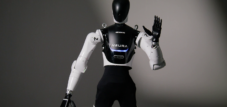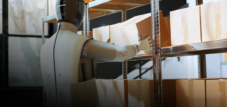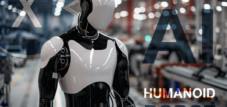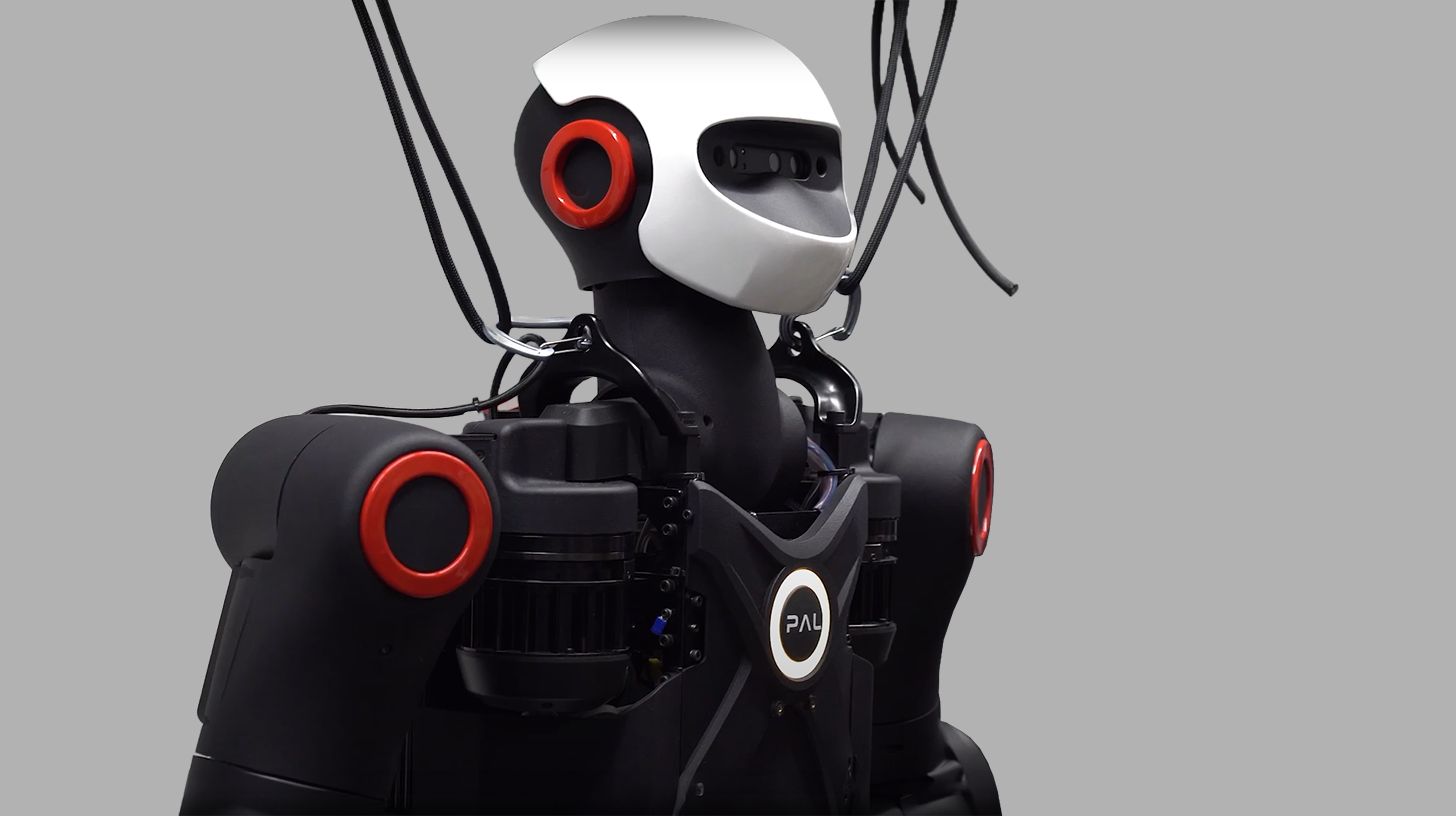
Hainer with AI – Humanoid robot “Hainer” at TU Darmstadt – Germany’s most advanced research robot – Image: TU Darmstadt / Video screenshot
Hainer – Germany's most advanced robot takes off in Darmstadt
Artificial intelligence meets innovation: A new face in robotics
At the end of February 2025, the Technical University of Darmstadt unveiled an extraordinary new employee: a state-of-the-art humanoid robot, considered unique in Germany and attracting worldwide attention. The 1.75-meter-tall and 95-kilogram robot, officially from the "Talos series," was christened "Hainer" in Darmstadt – a play on words combining the typical Darmstadt nickname "Heiner" and "AI" for artificial intelligence. With the introduction of this robot, TU Darmstadt simultaneously launched its new Laboratory for Humanoid Robotics, positioning itself at the forefront of research into humanoid autonomous systems in Germany.
Related to this:

Technical features and capabilities of the robot
The robot known as "Hainer" (short for "Humanoid AI Nexus For Experimental Research") boasts a number of impressive technical features that clearly distinguish it from conventional robots. With its 32 joints, seven strategically placed cameras (one on its head, two on each hand, and one on each foot), and interchangeable grippers, it can perform complex movements and interact with its environment. Its impressive computing power is further enhanced by an integrated AI accelerator, enabling it to plan and execute even complex sequences.
Hainer's key distinguishing feature, however, is its torque control. Unlike conventional robots, which can only assume pre-programmed positions, this technology allows the robot to precisely control its forces and thus perform smoother, more human-like movements. Professor Jan Peters, head of the Intelligent Autonomous Systems department at TU Darmstadt, emphasizes this crucial difference: "With its 32 joints, it can act in a torque-controlled manner and is therefore much more flexible.".
The robot's capabilities are remarkable. It can lift six kilograms per extended arm, climb stairs, walk on uneven terrain, and manipulate various objects with its gripping hands. At the official unveiling, Hainer demonstrated some of its abilities, including the fluid movement of its arms in different directions, walking to a table, grasping and passing small objects, and balancing on a wobble board.
The new laboratory for humanoid robotics
With the acquisition of the robot, TU Darmstadt has simultaneously established a new interdisciplinary research laboratory for humanoid robotics. This laboratory provides a platform for investigating the complex interplay between motor skills, cognitive perception, and human-robot interaction. The establishment of this laboratory underscores TU Darmstadt's strategic focus on conducting cutting-edge research in the fields of artificial intelligence and robotics.
The interdisciplinary nature of the laboratory is reflected in the participation of various disciplines. In addition to Professor Jan Peters' research group for Intelligent Autonomous Systems, the group includes, among others, the fields of Simulation, System Optimization and Robotics (Professor Oskar von Stryk), Interactive Robot Perception & Learning (Professor Georgia Chalvatzaki), the Artificial Intelligence and Machine Learning Lab (Professor Kristian Kersting), as well as disciplines from electrical engineering and the humanities. This broad collaboration enables a multifaceted approach to the research questions and brings together diverse expertise.
The laboratory is headed by Dr. Oleg Arenz, who, with his team, intends to use the robot for fundamental research into learning problems at various levels. The acquisition costs for the robot, future expansion components for greater agility and dynamics, and the laboratory equipment amount to approximately 1.8 million euros and are being shared equally by TU Darmstadt and the German Research Foundation (DFG).
Research priorities and visions
The research team led by Dr. Arenz and Professor Peters is pursuing ambitious goals in the field of learning robotics with Hainer. A key research interest lies in the interplay between hardware-level motor control and abstract thinking through artificial intelligence. The robot offers unique prerequisites for this, as it can handle a particularly diverse range of tasks – it can not only walk, but also manipulate heavy objects and tools, which distinguishes it from other humanoid robots.
An important aspect of the research is learning by imitation. Professor Peters explained that the robot initially learns through this method – it has already learned to play table tennis and juggle five balls. The next goal, as Dr. Arenz announced, is for Hainer to learn to play the drums. Peters is confident that the robot will soon also be able to read a book and retell its contents.
However, the researchers' vision extends far beyond these immediate goals. Professor Peters predicts that humanoid robots like Hainer could be capable of working independently within five to ten years, for example in dangerous workplaces or in caregiving. This assessment underscores the enormous potential that scientists see in the development of such robotic systems.
Professor Georgia Chalvatzaki, also involved in the lab, is researching the principles underlying the complex interaction between robots and their environments as part of the ERC-funded project "SIREN." The project proposes a new systemic perspective on how robots can learn: a holistic representation of the robot and its environment as an integrated system. The results should enable humanoid mobile manipulators to navigate independently in unstructured, human-like environments and perform demanding tasks.
International competitive situation and challenges
The acquisition of the Hainer robot positions TU Darmstadt in a highly competitive international environment. Currently, there are only five other research institutions worldwide with such a robot, underscoring the exclusivity and significance of this investment. In Germany, the Darmstadt Hainer is the only one of its kind.
Professor Peters, however, points to growing international competition, particularly from China and the USA. He reports that 100 to 200 companies in China are already researching similar technologies and expects significant investment in this field in the USA in the near future. This global competitive landscape underscores the strategic importance of research into humanoid robots.
Peters identifies three key obstacles to further development and commercial production in Germany: the shortage of computer scientists ("we would need a hundred times the current number"), the complicated bureaucracy ("in Germany, you have to fill out forms for a year, whereas in the US, a single sheet of paper suffices"), and difficulties in raising capital. These challenges must be overcome to remain competitive internationally.
Despite these hurdles, researchers at TU Darmstadt are already working with the spin-off company "telekinesis.ai" on robots that could be used by medium-sized businesses. While the conventional generation of industrial robots can only perform specific tasks, the new generation is intended to incorporate artificial intelligence and be able to perform a wide variety of different activities.
Demographic change and the role of AI-powered robots
The development of humanoid robots like Hainer raises questions about their future role in our society. Professor Peters is convinced: "We will see robots become part of everyday life." He describes a future in which robots, for example, can watch a YouTube tutorial video and then immediately perform the task – a potential that could encompass "everything imaginable.".
TU Darmstadt President Tanja Brühl emphasizes the societal benefits of this research: "We want to make the world a little better through science." She sees the next generation of scientists as having a responsibility to advance robotics. This statement underscores the long-term perspective that TU Darmstadt pursues with its research.
Given demographic changes and shrinking populations in many countries, robots could become increasingly important as a workforce. This societal relevance gives research on humanoid robots an additional dimension beyond purely scientific interest.
Professor Peters also points to the ethical aspects of this development: "Robots need to be given ethics." This statement underscores the researchers' awareness of the responsibility that comes with the development of autonomous systems.
Related to this:
Next-generation robotics: Hainer and the solution to global challenges
With the acquisition of the humanoid robot Hainer and the establishment of the Laboratory for Humanoid Robotics, TU Darmstadt has taken a significant step in the research of human-like autonomous systems. The robot's technical capabilities, especially its torque control, open up new possibilities for fundamental research in the fields of machine learning robotics and human-robot interaction.
The interdisciplinary collaboration across various fields and the international integration of research activities illustrate the holistic approach pursued by TU Darmstadt. The scientists' vision that humanoid robots could be capable of working independently in the foreseeable future demonstrates the potential of this technology.
The challenges associated with the further development of humanoid robots in Germany—skills shortages, bureaucracy, and funding issues—illustrate that obstacles still stand in the way of widespread application of such systems. Nevertheless, the determination of the scientists involved and the strategic focus of TU Darmstadt suggest that research on humanoid robots like Hainer will make a significant contribution to technological development in this field.
As Professor Peters summarizes: "We will see robots become part of everyday life." With projects like the humanoid robot Hainer, TU Darmstadt is contributing to making this vision of the future a reality step by step.
Related to this:
Your global marketing and business development partner
☑️ Our business language is English or German
☑️ NEW: Correspondence in your native language!

Konrad Wolfenstein
I and my team are happy to be available to you as your personal advisor.
You can contact me by filling out the contact form here wolfenstein@xpert.digital:or simply call me at +49 7348 4088 965. My email address is
I'm looking forward to our joint project.