

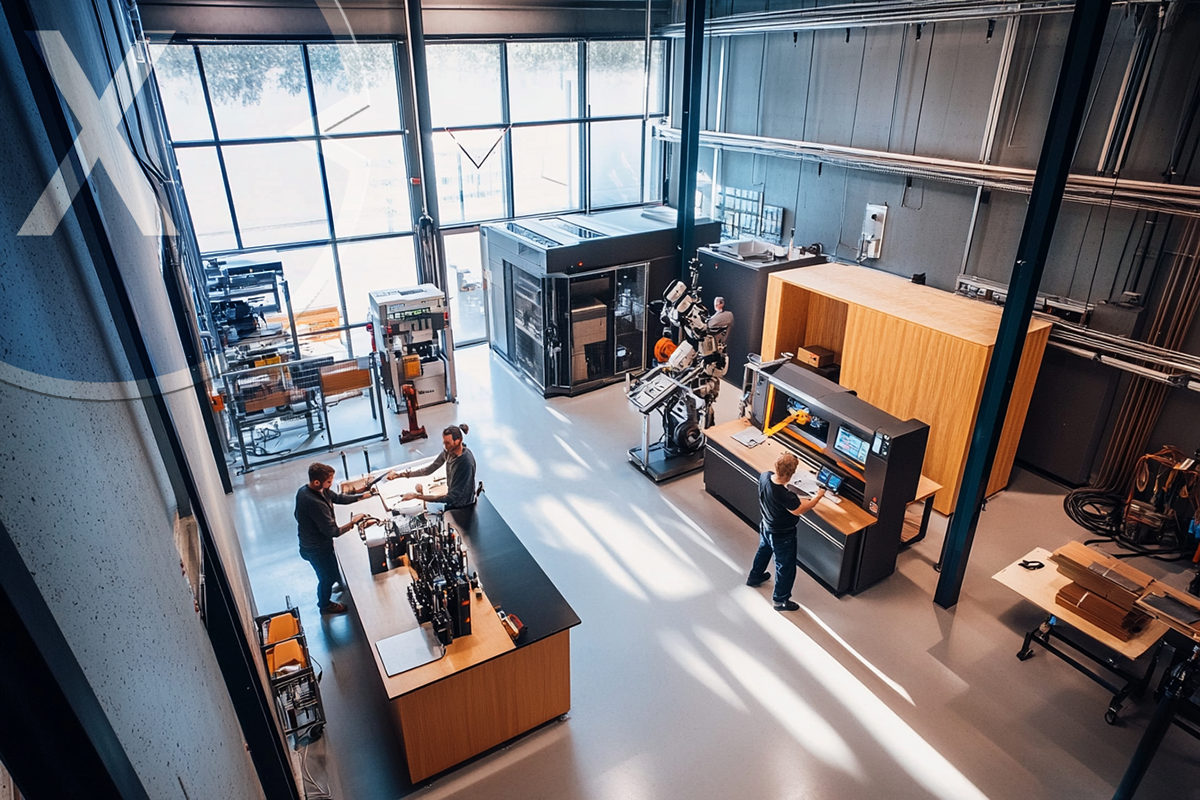
Human-machine collaboration in Industry 5.0: How symbiotic cooperation creates attractive jobs in SMEs – Image: Xpert.Digital
Human-machine collaboration in Industry 5.0: Creating attractive jobs in SMEs through symbiosis
The world of industrial production is entering a new era, often referred to as Industry 5.0. Building on the advancements of Industry 4.0, this era focuses more strongly on symbiotic collaboration between humans and machines, where people are at the center and technology provides support. Industry 5.0 offers particular opportunities for medium-sized businesses, as it can not only increase efficiency but also enhance the attractiveness of jobs by making work processes more human-centered and reducing the burden on employees.
Industry 5.0: A value-oriented continuation of Industry 4.0
The fourth industrial revolution has driven the digitalization and automation of production in recent decades. However, many medium-sized businesses remain skeptical of the comprehensive digitalization promoted by Industry 4.0. Standard solutions often appear too complex and expensive, and moreover, they frequently seem to exploit the available technical possibilities rather than addressing the specific needs of smaller companies. In such scenarios, employees often feel overwhelmed rather than supported.
Industry 5.0 addresses this by not focusing solely on technological efficiency, but rather by bringing humans and machines into a synergistic relationship. Humans are seen as shapers of the production process, and their cognitive and physical abilities should be optimally supported. The goal is not to replace human labor with machines, but to enhance human capabilities and reduce repetitive, physically demanding, or monotonous tasks.
A practical example: Hybrid assembly of bicycle garages at Mitras Composites Systems GmbH and the Fraunhofer Institute for Machine Tools and Forming Technology (IWU)
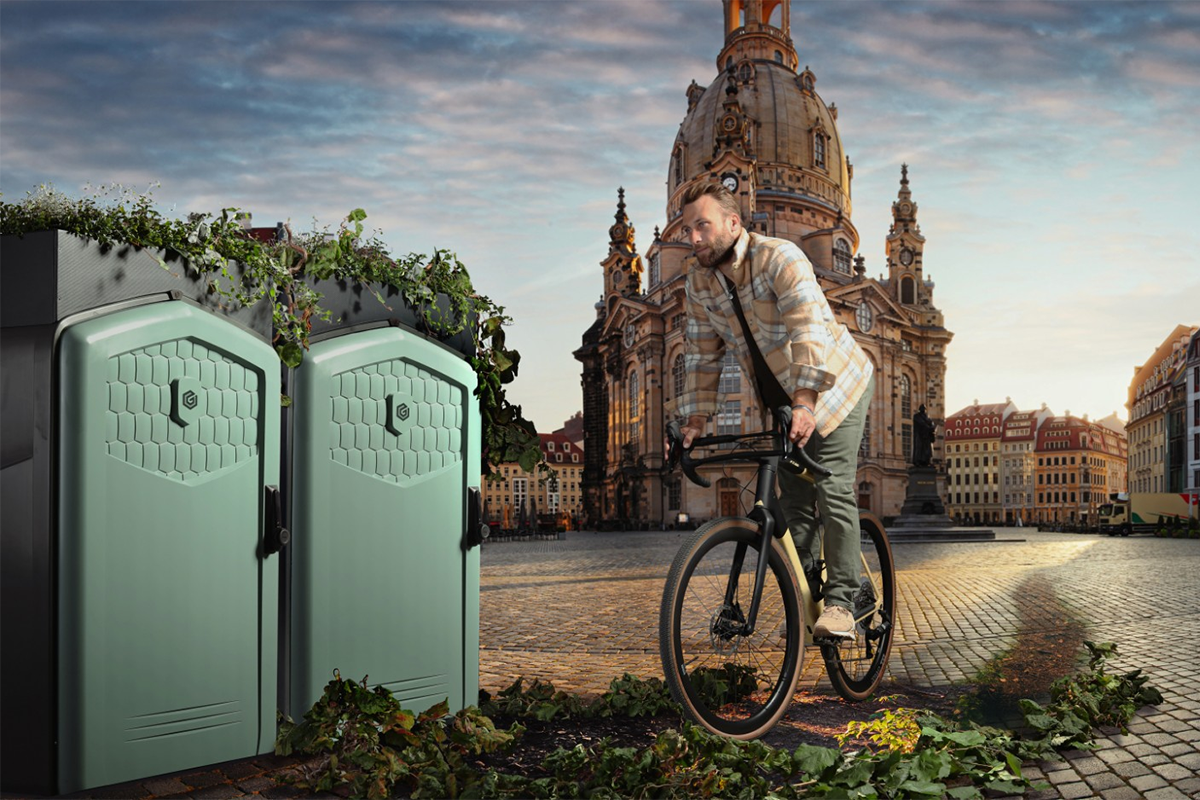
The assembly of space-saving, modular bicycle garages can be intelligently automated, as demonstrated by a project between the Fraunhofer IWU and the manufacturer Mitras Composite Systems GmbH. In particular, the reengineering enables larger production volumes while maintaining a high degree of product variety and leads to a more ergonomic workplace design. Employees were able to contribute extensively to the redesign process. – Image: Mitras Composite Systems GmbH. An example of the successful implementation of Industry 5.0 principles is the collaborative project between the Fraunhofer Institute for Machine Tools and Forming Technology (IWU) and Mitras Composite Systems GmbH. The project aimed to optimize the assembly processes for bicycle garages through hybrid automation. By introducing automation elements, employees were relieved of heavy physical tasks, allowing them to focus their energy and concentration on more value-adding activities.
As part of the project, a thorough needs and requirements analysis was conducted to identify the actual needs of the employees and the specific requirements of the production process. The focus was on developing a solution that simplifies daily work without overburdening employees. By using robotics to support heavy lifting and handling tasks, employees of all ages and genders can now be deployed. This type of human-machine collaboration increases flexibility and fosters an inclusive work environment where diversity is welcomed.
Human-centered automation through cognitive task analysis
Human-centered automation requires a careful analysis of workflows and close collaboration with employees. In the case of the Fraunhofer IWU and Mitras Composites project, a cognitive task analysis was conducted to understand the specific requirements of the assembly activities. This enabled a tailored automation solution that provides support precisely where it is needed. According to Dr. Isabel Kreißig from Fraunhofer IWU, it was particularly important to incorporate the perspectives of the employees into the development of the automation solution. Only through this dialogue-oriented approach could customized solutions be developed that truly benefit the employees.
Industry 5.0 thus lays the foundation for a new kind of collaboration, in which automation solutions do not replace humans, but complement them. The role of humans is thereby enhanced, as their skills and knowledge are actively incorporated into process design. This not only contributes to increased efficiency, but also improves workplace quality, as employees experience the technology as supportive and value-adding.
Focus on sustainability, resilience and value creation
Another important characteristic of Industry 5.0 is its value orientation: the technology is aligned with the values of sustainability, resilience, and human-centeredness. This offers a particularly attractive perspective for medium-sized enterprises, as they are often more affected by external market fluctuations and resource shortages than large corporations. Human-centered and resilient automation enables these companies to react more flexibly to changes and maintain production even in the event of disruptions.
The Fraunhofer IWU in Chemnitz is working intensively on developing solutions that are not only technologically innovative but also human-centered. Dr. Franziska Bocklisch and her team are pursuing a research-oriented approach that focuses on the needs and abilities of employees. This leads to more robust and sustainable production that is less prone to disruptions and ensures long-term value creation.
Know-how and knowledge management: A sustainable advantage
Another key aspect of human-machine collaboration is the safeguarding and transfer of knowledge. In many medium-sized companies, the know-how of employees is a valuable asset that is often passed on informally. By systematically collecting and documenting this knowledge, companies can ensure its long-term preservation. This type of knowledge management is supported by Industry 5.0, as certain aspects of knowledge can be digitized and made accessible in the form of assistance systems.
Such systems not only help with the onboarding of new employees, but also with continuous support and training in daily work. Digital knowledge systems offer significant advantages, particularly in areas like quality assurance and fault diagnosis, as they enable fast and precise problem-solving. This type of knowledge transfer boosts employee motivation, as they feel valued for their expertise and can actively contribute to the company's development.
Related to this:
Cognitive abilities as the key to human-machine integration
In addition to physical relief, the cognitive abilities of employees are also crucial. In modern production environments, skills such as problem-solving, decision-making, and flexibility are required to respond to unexpected challenges. Human-centered automation solutions support these skills by taking over simple, repetitive tasks and freeing up employees for more demanding activities.
A good example of this is predictive maintenance, where automation solutions support employees in detecting and diagnosing machine problems. Such systems collect data and analyze patterns, enabling employees to be alerted to potential issues early and resolve them before production downtime occurs. This demonstrates that Industry 5.0 focuses not only on efficiency but also on prevention and stability.
Industry 5.0 as an opportunity for SMEs
Industry 5.0 offers medium-sized companies the opportunity to hold their own in increasingly global competition by combining technological innovations with human skills. Here, people are at the heart of production and are supported by intelligent machines that improve their working conditions and boost their performance.
For companies, the introduction of human-machine collaboration offers long-term advantages: Employees feel valued, remain loyal to the company, and are more motivated. Production becomes more robust and flexible, and can continue to run stably even in times of crisis. Thus, collaboration between humans and machines not only opens up technological advancements but also a new work culture based on cooperation, trust, and mutual respect.
Industry 5.0 demonstrates that automation and digitalization are not ends in themselves, but rather tools that can be used to place people at the heart of production processes and to make work more humane, sustainable, and fulfilling. The future of production lies in the symbiosis of humans and machines – a partnership that offers opportunities for small and medium-sized enterprises (SMEs) and contributes to a fairer and more value-creating economy in the long term.
Related to this: