Quelle: Shutterstock
Im Zuge einer digitalisierten Industrie 4.0 setzt auch die Automobilbranche verstärkt auf Augmented Reality-Techniken. Der Grund dafür ist offensichtlich, denn die deutsche Automobilindustrie gehört hierzulande in Punkto Digitalisierung zu den fortschrittlichsten Wirtschaftsbereichen. Wie in vielen Branchen auch wird Augmented Reality dort zur Zeit hauptsächlich für Marketing- und Vertriebszwecke eingesetzt. Besonders in der Markenkommunikation bietet sich für AR ein großes Einsatzfeld, da mit Hilfe der interaktiven Erlebniswelten Inhalte äußerst anschaulich präsentiert werden können, um bei den potentiellen Kunden Emotionen zu schaffen. Der Einsatz beginnt bei der virtuellen 3D-Darstellung des gewünschten Fahrzeugs per AR-Brille und endet bei einer simulierten Testfahrt. Darüber hinaus wird der Nutzer durch die Interaktion direkt in das Konzept mit eingebunden. Bei Produktvorstellungen können die Anbieter deshalb völlig neue virtuelle Autowelten und Fahrerlebnisse schaffen. Doch auch über das Marketing hinaus bietet sich AR für die Hersteller für vielfältige Einsätze im industriellen Bereich an.
Produktentwicklung
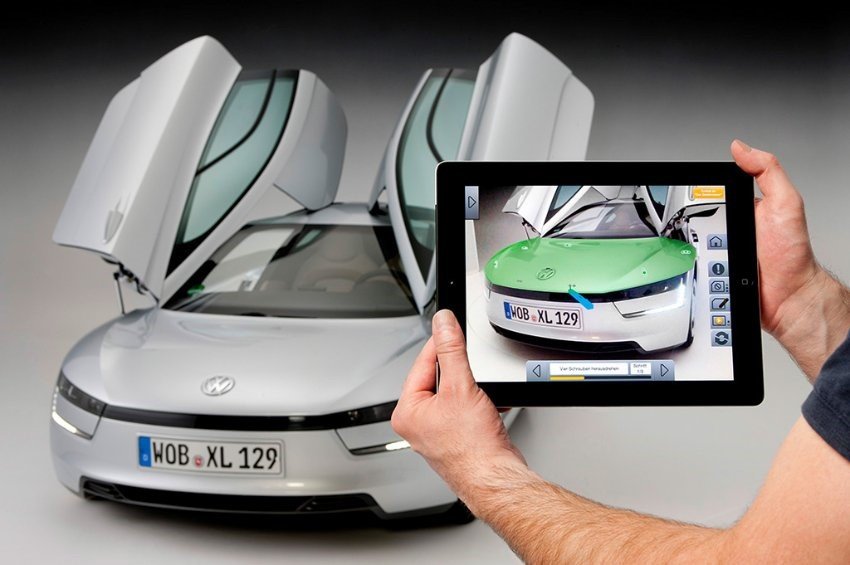
Digitaler Modellbau (Quelle: Volkswagen)
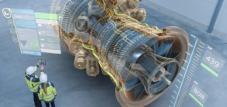
Bei Designentwurf, Modellerstellung und Wahl der Materialien bieten sich durch AR vielschichtige Möglichkeiten: Formen, Designs oder Farben können in beliebiger Anzahl anschaulich dargestellt und verändert werden, ohne dass jeweils ein neues Modell von Hand gefertigt werden muss. Bei Mercedes Benz werden Ingenieure dadurch in der Visualisierung ihrer Entwicklungen unterstützt, indem sie beispielsweise unterschiedliche Motorvarianten virtuell in ein vorhandenen Chassis „einbauen“ können. Auf diese Weise simulieren sie, wie ein geplantes Aggregat in den Motorraum des Autos passt. Die Konstrukteure sparen so Forschungs- sowie Entwicklungskosten und reduzieren dabei den Zeitbedarf.
Produktion
Auch in der Produktion arbeitet die Automobilindustrie mit Verfahren, die per Augmented Reality unterstützt werden. Seit letztem Jahr setzt beispielsweise BMW die Technik zum Bolzenschweißen an Versuchsfahrzeugen ein. Bis dahin wurde dies manuell erledigt, was mehrere Tage pro Wagen dauerte. Nun werden den mit Datenhelm und Kamera ausgestatteten Beschäftigten per AR-Visualisierung die jeweiligen Schweißpunkte an den Fahrzeugen gezeigt, was den Zeitbedarf halbiert. Eine Herausforderung für den breiteren Einsatz ist das markerlose Tracking, da die Autos bisher noch mit Markierungen versehen werden müssen, um für die AR-Systeme auswertbar zu sein. Was bei Versuchsautos machbar ist, scheint für die Serien-Produktion noch unrealistisch.
Kolbus, ein Hersteller maßgeschneiderter Industrieprodukte unter anderem für die PKW-Branche, setzt Augmented Reality ebenfalls im Zuge eines Pilotprojekts in der manuellen Fertigung ein. Dort werden dem Mitarbeiter mittels millimetergenau positionierter Einblendungen seine nächsten Arbeitsschritte gezeigt. Fehlerhafte Fertigungsschritte werden dabei erkannt und so teurer Ausschuss vermieden.
Neben der Produktion unterstützt Augmented Reality die Anlagenplanung in der Automobilindustrie, denn per AR lassen sich Maschinen oder Gebäude virtuell in reale Umgebungen einblenden oder Materialflüsse simulieren. All das funktioniert zumindest in der Planungsphase ortsunabhängig, weshalb bei der Errichtung eines neuen Werks in Brasilien oder China teure Personal- und Reisekosten eingespart werden.
Qualitätssicherung
Ein weiteres Einsatzgebiet in der Praxis ist die Qualitätssicherung, denn mit AR-Mitteln lassen sich Fertigungsabläufe analysieren und fehlerhafte Produktionsprozesse frühzeitig identifizieren. Auch die Problemlösung kann mit AR-Hilfe geschehen, indem die zur Verbesserung benötigten Arbeitsschritte in Form von AR-Tutorials virtuell verdeutlicht werden. Der vereinfachte Lösungsweg funktioniert schnell und kommt ohne Hinzuziehung eines Experten aus, was besonders bei den global aufgestellten Autokonzernen mit ihren weltweit verteilten Fabriken sehr nützlich ist.
Per AR kann die Qualitätskontrolle zudem auf Wareneingangs- oder Lieferantenstandorte ausgeweitet werden. Vorprodukte oder fremdproduzierte Teile lassen sich anschaulich in Echtzeit begutachten, ohne dass ein Expertenteam vor Ort sein muss. Dies ist besonders relevant, da sich rund zwei Drittel der aus Qualitätsmängeln resultierenden Kosten auf Lieferantenfehler zurückführen lassen. Der Vor-Ort-Check hilft somit bei der frühzeitigen Erkennung von Fehlern. Die virtuellen Checks senken in der Automobilindustrie somit Kosten, zeigen Probleme früher auf und beschleunigen Reparaturarbeiten.
Fahrzeugservice
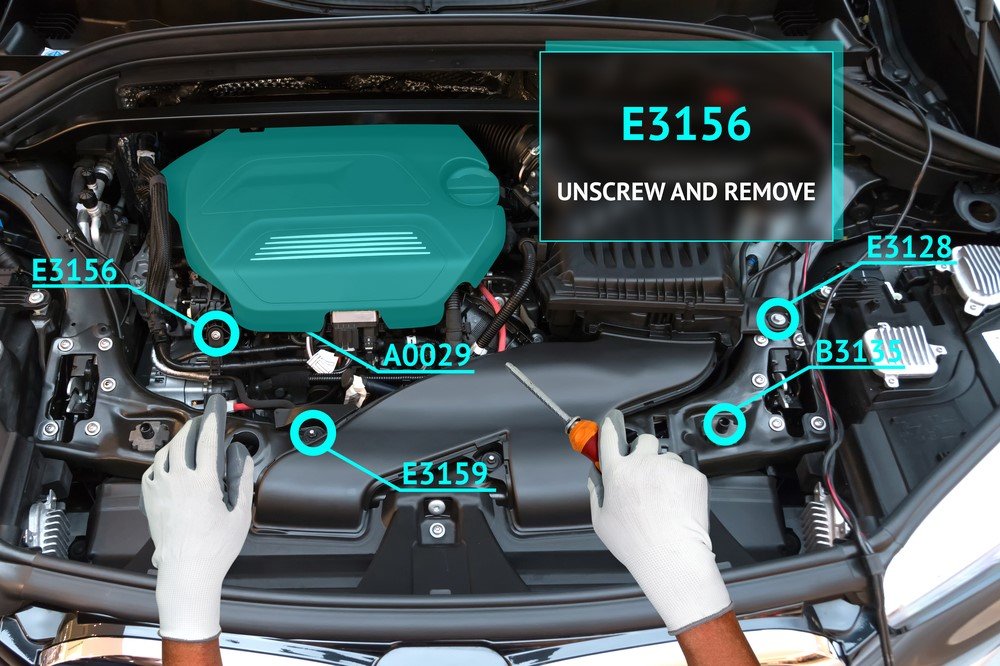
AR-Unterstützung bei der Wartung (Quelle: Shutterstock)
Die regelmäßige Wartung von Autos besteht größtenteils aus Routineschritten. Durch AR können interaktive Anleitungen erstellt werden, die dem Servicetechniker die anstehenden Arbeitsschritte darstellen und erläutern. So hat er jederzeit alle relevanten Informationen parat. Der Elektrokonzern Bosch entwickelte mit „CAP Automotive“ genau für die PKW-Wartung ein System: In der Werkstatt richtet der Mechaniker eine AR-Kamera auf den Motor des betreffenden Fahrzeugs, sodann werden ihm auf einem Monitor die defekten Teile farblich markiert sowie mit Bestellnummer und Installationshinweisen angezeigt. All das beschleunigt und präzisiert die Fahrzeugwartung und senkt damit Kosten für Unternehmen und Kunden.
Ausblick
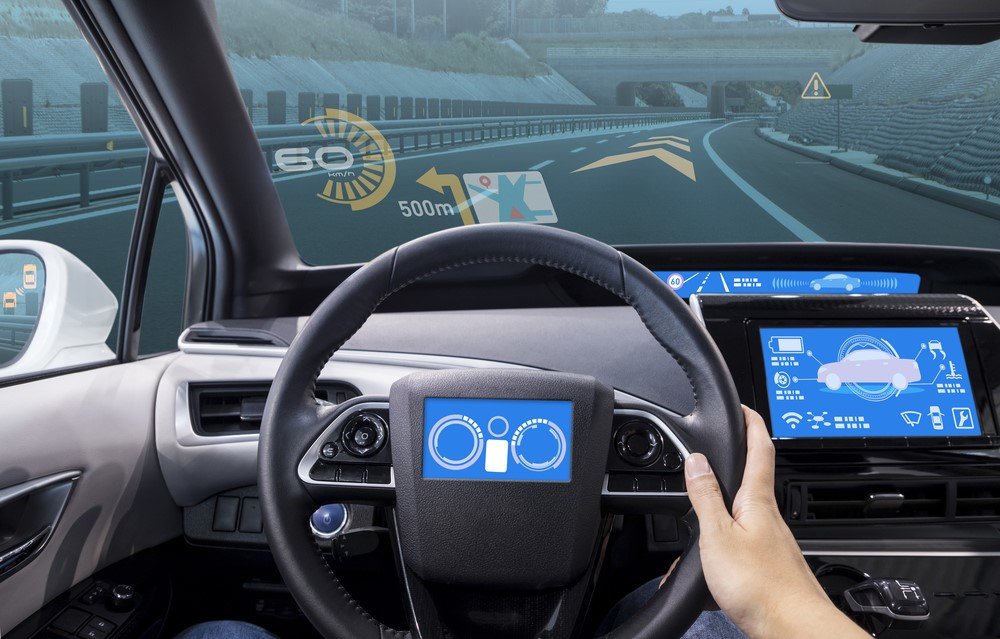
Neben der Anwendung von Augmented Reality für die Betriebsprozesse der Automobilhersteller werden AR-Funktionen in naher Zukunft auch den Kunden direkt zugute kommen, etwa in Form von virtuellen Cockpits. So treiben viele Hersteller die Entwicklung „smarter“ Frontscheiben voran, über die der Fahrer ganz nach seiner individuellen Präferenz mit Informationen versorgt wird. Dazu gehören Daten zur Geschwindigkeit, wie sie bereits schon jetzt häufiger in Fahrzeugen anzutreffen sind. Doch auch Navigationsfunktionen, Warnhinweise und Einstellungen zu Radio oder Telefon können auf dem „virtual Windscreen“ dargestellt werden. Großer Vorteil: Die Informationen werden direkt in das Sichtfeld des Fahrers integriert, wodurch er stets die Straße im Blick behält. Die Ablenkung vom Autofahren durch nicht optimal platzierte Anzeigen gehört damit der Vergangenheit an. Zukünftig könnte ein smarter Fahrassistent die Ideallinie des Autos erkennen und den Fahrer durch Einblendungen darauf hinweisen, oder durch ein Kamerasystem Gefahren identifizieren und warnen, noch bevor der Fahrer sie sieht.
In Kontakt bleiben