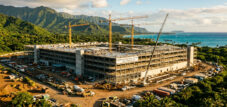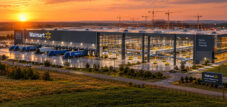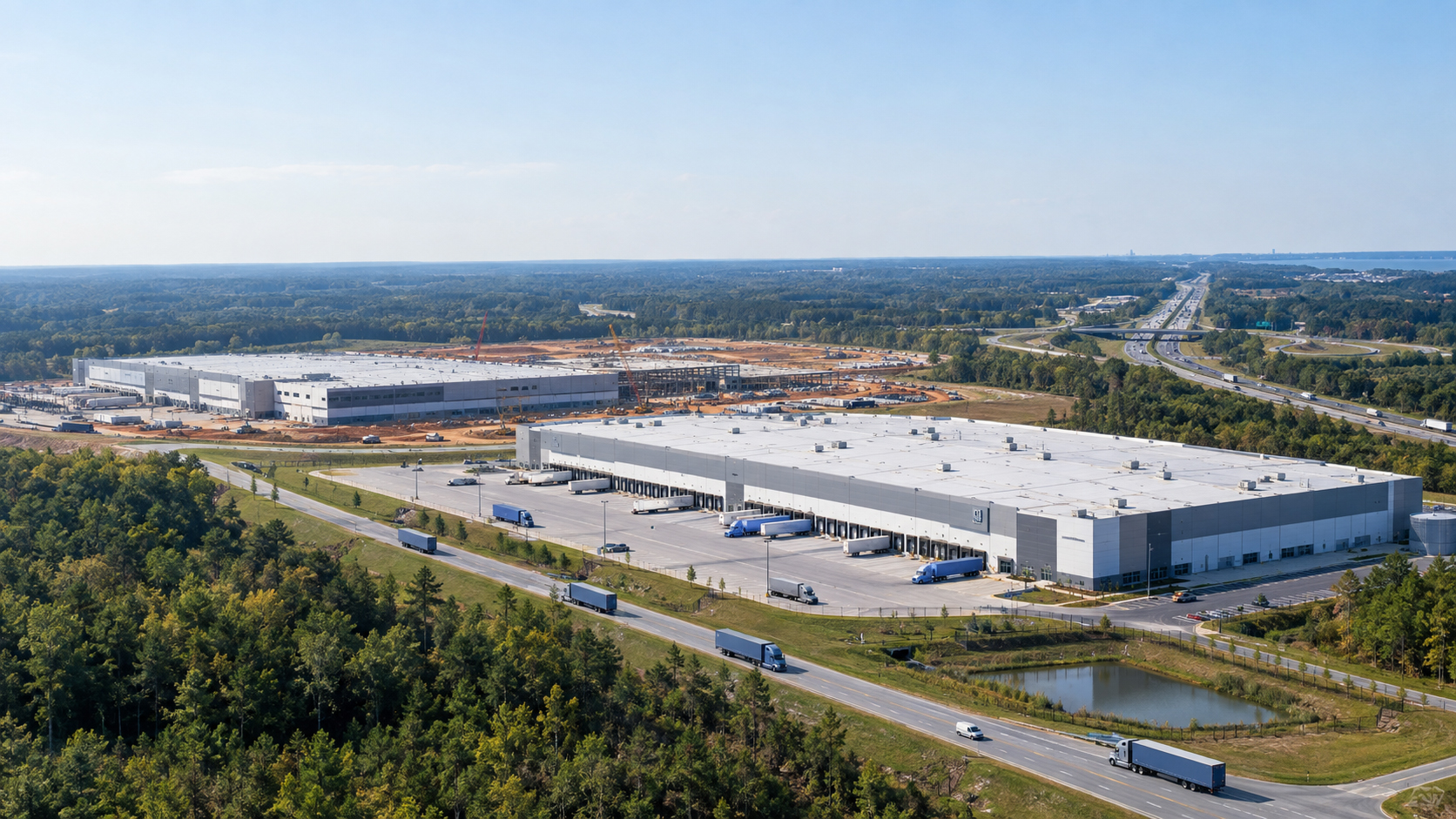
In New Kent County, Virginia: Over 90,000 square meters – How Amazon's new logistics giant is transforming an entire region – Creative image on the topic, with AI: Xpert.Digital
Robots instead of thousands of jobs? The truth about Amazon's new giant warehouse in New Kent
A declaration of war on the competition: This is how Amazon is reorganizing its US supply chains with a new mega-center
In New Kent County, Virginia, Amazon is planning a gigantic logistics center spanning over one million square feet. But anyone who thinks of this project as just another ordinary distribution center is underestimating its strategic dimension. The facility, located at Interstate 64 Interchange 211, is much more than that; it's a physical computing hub and a highly automated industrial platform designed to reorganize Amazon's supply chains on the US East Coast and its connection to the Port of Virginia.
While this development promises economic growth, a broadened tax base, and greater integration into global trade, it also presents significant challenges. Open questions regarding the actual number of jobs in the age of advanced robotics, the noticeable increase in heavy goods traffic, and environmental impacts demand a sober economic assessment. The following analysis examines in detail why the planned mega-center is far more than just a piece of real estate – and why the municipality must now actively manage this immense growth to benefit from it in the long term.
One million square feet is not a warehouse, but a declaration of war on time, costs, and competition
The project is current, but not yet fully transparent
The announced Amazon project in New Kent County remains underway as of September 2026, according to publicly available information. The county administration announced on June 16, 2026, that Amazon intends to construct a distribution center with more than one million square feet of floor space at Interstate 64 Interchange 211. This equates to at least approximately 92,900 square meters, a size far exceeding that of a typical regional warehouse. Construction was scheduled to begin in June 2026, with completion tentatively projected for the end of 2027. Later reports from August 2026 also continue to list the Amazon project as a planned development in the growing logistics hub of New Kent.
This does not invalidate or refute the original announcement. However, a distinction must be made between an official project announcement, a commenced construction project, and an operationally secured location. Amazon's intention, the scale of the project, the location at New Kent City Center, the land acquisition from Matan Companies, its planned function as a distribution center for other Amazon fulfillment centers, and the targeted completion date have all been publicly confirmed. The investment amount, the number of permanent jobs, the technical equipment, the construction costs, the funding opportunities, the long-term capacity, and the exact commissioning date have not yet been publicly specified. Similarly, based on the available information, it is not clearly documented which construction activities will actually be completed or visibly commenced by September 2026.
The economically sound assessment is therefore: The project has a high probability of being realized because Amazon has acquired the land, the local municipality has officially announced the project, and a concrete timeline has been provided. Nevertheless, it would be premature to treat the announced effects as a done deal. Especially with very large logistics projects, permits, groundworks, infrastructure connections, material costs, automation decisions, and economic fluctuations can all delay the timeline. The statement that Amazon will build a new multi-million-dollar warehouse in New Kent is current. However, statements about specific employment, tax, or growth effects remain, for the time being, just scenarios.
A headline becomes a strategic infrastructure project
The crucial information lies not solely in the building's size, but in its intended role. According to the municipality, the center is meant to serve other Amazon fulfillment centers. This suggests a more upstream or network-internal distribution function than a traditional warehouse exclusively focused on end customers. At such a hub, goods flows are consolidated, inventories are redistributed, transport is streamlined, and regional fulfillment locations are supplied. The economic value thus arises not only from storage space, but from improved management of the entire network.
This distinction is important. A customer-facing fulfillment center typically processes a large number of individual orders, picks items, and hands over packages to sorting or delivery facilities. A network-oriented distribution center can move larger batches of goods and ensure that products are already located where demand is expected to arise. This reduces delivery distances, relocations, stockouts, and expensive individual shipments. The more accurately Amazon forecasts regional demand and distributes inventory, the less the company has to sacrifice speed for costly express delivery.
The building should therefore be understood as a physical computing operation. Algorithms decide which goods are needed when and where; the warehouse translates these decisions into actual goods movements. The site, racking, conveyor technology, robotics, loading ramps, and traffic routes together form an industrial platform. Its performance is not primarily measured by the maximum number of products that can be stored, but by how quickly, precisely, and cost-effectively goods flow through the network.
The location connects Richmond with the Atlantic Ocean
New Kent County lies between the Richmond and Hampton Roads metropolitan areas, which also include Virginia's major port cities. The project site at Interstate 64 Junction 211 is therefore logistically attractive. I-64 connects the inland center of Richmond with the coastal region and also provides access to other important north-south routes. For an operator like Amazon, this location means access to consumer markets, existing fulfillment capacities, port infrastructure, and a broad regional transportation network.
The Port of Virginia also plays a strategic role. As one of the major container hubs on the US East Coast, the port continues to expand its capacity. For imported consumer goods, the connection between the port, distribution center, and regional fulfillment sites is particularly important. The shorter and more predictable the route between unloading, intermediate distribution, and end-customer service, the lower the safety stocks, downtime, and disruption risks. New Kent is therefore not just a random point on the map, but a link between maritime import chains and the domestic market.
The Richmond Marine Terminal also expands the logistical perspective. Containers can be moved between the deep-water terminals in Hampton Roads and Richmond via the inland waterway connection on the James River. This solution does not replace road transport, but it creates an additional option and can consolidate certain traffic. It is not confirmed that this connection will be used directly for the Amazon project. Nevertheless, it enhances the overall location quality, as a high-performing logistics hub benefits from multiple modes of transport and alternative routes.
New Kent also benefits from its location outside the most expensive urban centers. Large plots of land are more readily available there than in densely populated metropolitan areas. At the same time, the distance to Richmond, the airport, motorway junctions, and the coastal region remains manageable. This combination of land availability, transport links, and market proximity is typical for new logistics clusters on the outskirts of growing metropolitan areas.
The million square feet change the cost calculation
A building area of more than one million square feet offers economies of scale but also incurs significant fixed costs. On the positive side, large quantities of goods can be consolidated, technical systems can be utilized across high volumes, and various process stages can be combined at a single location. A large facility can accommodate more loading docks, automation technology, and buffer areas. It can better handle seasonal peaks and stabilize the supply to multiple downstream centers.
On the downside, the capital commitment increases. Even without a published investment figure, it's clear that land development, infrastructure, warehouse construction, power supply, fire protection, conveyor technology, information technology, and automation can reach a high three-figure million-euro sum if the facility is equipped with sophisticated technology. A concrete estimate would be irresponsible without plans. The crucial point is that with such an investment, Amazon is assuming long-term demand for physical distribution capacity.
Profitability depends on several factors: throughput, capacity utilization, avoided transport kilometers, reduction of manual work steps, inventory accuracy, and the ability to handle peak loads without disproportionate additional costs. Even small savings per unit can have a significant economic impact with very high package and goods volumes. Conversely, an oversized location becomes expensive if volume is lacking or if goods flows shift structurally.
Amazon's decision is therefore also a bet on the density of its own network. The more locations in Virginia and the surrounding markets it serves, the greater the benefit of a central distribution hub. The New Kent project complements an already extensive network of fulfillment centers, sorting facilities, delivery stations, and upstream supply infrastructure. The warehouse is not economically viable in isolation; its value derives from its connections to the other hubs.
Amazon isn't simply reinvesting like before
The announcement should be viewed in the context of Amazon's previous capacity cycle. During the pandemic, the company expanded its logistics network exceptionally quickly. This was followed by consolidations, site reviews, and a greater emphasis on productivity. The current expansion, therefore, does not represent an uncontrolled return to maximizing available space. Rather, it is part of a more selective phase in which new capacity is being built strategically along key corridors and integrated with modern automation.
Amazon is simultaneously working to position inventory closer to regional demand, shorten shipping routes, reduce the number of handling touches per package, and better consolidate shipments. The company has announced plans to significantly expand its use of new robotics and upgrade existing facilities in 2026. New large-scale facilities are therefore likely to be designed from the outset for more automated material flows than many older logistics properties.
This leads to an important perspective for New Kent: The size of the warehouse alone is increasingly less indicative of employment intensity. Modern distribution centers can process enormous quantities of goods without creating proportionally as many jobs as previous generations of warehouses. At the same time, other job profiles are emerging, for example in maintenance, control, security, data analysis, and process management. The location can therefore be economically significant even if the final number of employees falls short of traditional expectations for a multi-million-euro warehouse.
The employment effect remains the biggest open variable
As of September 2026, no reliable number of permanent jobs had been published for the Amazon project in New Kent. Therefore, the claim that the facility will automatically create thousands of jobs would be unreliable. Comparable Amazon projects in Virginia show a wide range. Robotic fulfillment centers can employ more than a thousand people, while network-integrated distribution or cross-dock facilities may require significantly fewer staff with a similar footprint. Building type, number of floors, product range, level of automation, and shift schedule are more crucial than the sheer square footage.
For New Kent, the job market is a critical issue. The county has grown rapidly but remains relatively small in terms of population. The local workforce alone is unlikely to be sufficient to easily staff several large logistics centers being built simultaneously. In addition to Amazon, other logistics businesses are developing at the same highway interchange. AutoZone already operates a large distribution center there, Target is planning a large-scale project, and FedEx announced plans for a roughly 300,000-square-foot facility with approximately 340 full- and part-time jobs in 2026.
This concentration creates agglomeration advantages but intensifies competition for drivers, warehouse staff, technicians, and shift supervisors. Companies can access a growing regional workforce between Richmond and Hampton Roads, but must consider longer commutes, shift times, and traffic congestion. The average commute for New Kent residents was already over half an hour. New local jobs can partially reverse commuter flows, but many employees will still have to commute from outside the area.
Economically, this isn't just a recruitment problem. A tight labor market can raise wages, promote further education, and offer more local opportunities to residents who currently commute. However, it can also push companies toward greater automation and put smaller employers under pressure. The task for the municipality is to work with educational institutions and businesses to develop skills, rather than relying solely on a large number of low-skilled warehouse jobs.
A logistics cluster does not emerge without side effects
The A211 motorway junction is developing into an independent commercial and logistics cluster. AutoZone, Target, Amazon, and FedEx together create a critical mass that can attract other service providers. These include transport companies, maintenance firms, packaging suppliers, temporary employment agencies, security services, restaurants, petrol stations, and technical equipment suppliers. A cluster can reduce costs because specialized providers, labor, and infrastructure are geographically concentrated.
At the same time, this concentration increases dependence on the transport and logistics sector. When several large facilities pursue similar business models, they react collectively to consumption cycles, trade conflicts, fuel costs, and technological changes. While New Kent gains a broader tax base, it allocates a growing share of its land and infrastructure to a capital-intensive industry with comparatively low land productivity per employee.
The opportunity costs are considerable. A large-scale distribution center ties up land for decades, alters the landscape, and generates traffic. The same location is then no longer available for other industrial, commercial, or mixed-use purposes. The crucial question for local economics is therefore not whether Amazon creates economic activity. The company undoubtedly does. The decisive factor is whether, in the long run, tax revenues, employment, and subsequent investments outweigh the infrastructure, environmental, and land costs.
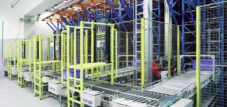
Your intralogistics experts

Consulting, planning and implementation of complete solutions for high-bay warehouses and automated storage systems - Image: Xpert.Digital
More information here:
Amazon logistics center in New Kent: Economic opportunities and structural risks under scrutiny
The real estate market is sending conflicting but healthy signals
The industrial market in the greater Richmond area showed generally robust indicators in mid-2026, but market reports differ considerably due to varying definitions. Some analyses put the vacancy rate at around 3.8 to 5.5 percent. Others, using a narrower selection of larger, leasable industrial properties, arrived at significantly higher figures of more than ten percent. This discrepancy is not a minor error, but rather illustrates how strongly the result depends on whether owner-occupied buildings, new constructions, data centers, smaller warehouses, and sublet spaces are included.
The picture that emerges is one of a strong new construction boom. In the first half of 2026, significantly more new industrial space came onto the market in the Richmond area than in the same period of the previous year. At the same time, net absorption remained positive, and asking rents continued to rise. Depending on the survey, average asking rents for industrial and warehouse space were approximately eight to nine dollars per square foot per year. Since 2020, rents have increased very sharply in parts of the market.
For Amazon, this rental data is only of limited direct relevance, because the company purchased the land and is developing a specifically tailored site. However, it does show that modern logistics space remains in high demand in the region. At the same time, the large construction pipeline warrants caution. If many projects are completed simultaneously, vacancy rates and price pressure can initially increase. An owner-occupier like Amazon reduces this leasing risk because the space doesn't have to find a tenant on the open market.
The location also strengthens New Kent's perception as an institutionally recognized logistics market. For developers and investors, an Amazon project sends a strong signal because it lends credibility to infrastructure quality and long-term demand. This boost in reputation can increase land prices and investment. However, it can also trigger speculative developments that do not necessarily achieve the same economic success.
The local tax base could grow structurally
For New Kent County, the project offers an opportunity to broaden the municipal revenue base. A large commercial development can generate revenue through property taxes, business asset levies, and indirect economic activity. The precise impact depends on Virginia's tax laws, the assessed property value, potential agreements, and the technical infrastructure. Since neither the investment amount nor the funding package has been disclosed, the net effect cannot currently be reliably calculated.
The starting point is nonetheless remarkable. New Kent has experienced very strong population growth since 2020 and has an above-average median household income. Growth increases the need for schools, roads, emergency services, water infrastructure, and administration. A broader business tax base can help finance these burdens without shifting them entirely to private households.
However, these revenues don't come without a price. Access roads, intersections, water and wastewater infrastructure, firefighting equipment, and traffic monitoring systems must be designed to accommodate large industrial facilities. A building exceeding 90,000 square meters, in particular, places high demands on fire safety and emergency planning. If the public sector provides upfront financing or grants tax breaks, it can take years for the project to become financially viable.
A transparent impact assessment should therefore not only list the announced investment. It would have to compare additional tax revenues, municipal expenditures, subsidies, infrastructure costs, number of employees, wage levels, and expected useful life. Only then can it be assessed whether the project represents a fiscal benefit for the county even after deducting all costs.
Increased truck traffic is not a side note
A distribution center of this size will noticeably increase commercial traffic around Junction 211. Since the facility is intended to supply other fulfillment centers, a high volume of heavy truck traffic is to be expected. Without published throughput and operational data, an exact number of daily trips would be speculative. However, it is certain that shift changes, deliveries, and departures could generate additional peaks in traffic.
The concentration of several large businesses amplifies the effect. Not only Amazon, but also AutoZone, Target, and FedEx consume road capacity. Added to this are commuter traffic and service providers. The advantage of the location directly on I-64 is that long-distance traffic has to pass through residential areas as little as possible. Nevertheless, traffic jams can occur at ramps, intersections, and gas stations if the local infrastructure is not developed in sync with the industrial park.
The I-64 has been considered a crucial development axis in this corridor for years. While its expansion improves accessibility and safety, it can also trigger further development, thereby reducing the capacity gained. Therefore, public planning must consider more than just the highway's capacity. Safe truck parking facilities, robust secondary roads, intelligent traffic light control, accident management, and the separation of incompatible traffic flows are also essential.
The external cost factor must not be ignored. Noise, air pollution, CO₂ emissions, road wear and tear, and land sealing are not borne entirely by the operator. Electric delivery vehicles can reduce local emissions, but they do not solve the land requirements, wear and tear, congestion, or burden caused by heavy long-haul vehicles. Therefore, an economically sound infrastructure policy is one that enables growth while simultaneously demanding contributions based on the polluter-pays principle.
Automation determines productivity and employment
Amazon will continue to modernize its fulfillment network in 2026. The company plans to deploy more robotics, shorten goods movements, and retrofit existing facilities with new technology. A high degree of automation is therefore likely for a center planned for late 2027, although no details about the specific equipment in New Kent are yet available.
Automation is transforming efficiency on multiple levels. Robots can take over standardized movements, shorten distances, and utilize systems for extended operating times. Sensors and software increase inventory accuracy. Automated sorting and palletizing reduce physically demanding tasks. At the same time, the demands on power supply, maintenance, cybersecurity, and technical expertise are rising.
The labor market presents a mixed picture. Certain simple tasks become less labor-intensive, while others persist due to the diversity of real-world products and potential disruptions. Additionally, technical functions are expanding. The net effect depends on whether higher throughput more than compensates for the decreasing labor intensity per unit. A large warehouse can therefore create many jobs while simultaneously requiring significantly fewer personnel per unit of goods moved than older facilities.
For New Kent, it would be short-sighted to measure success solely by the number of hires. Equally important are wage levels, job stability, full-time employment rates, training opportunities, workplace safety, and career advancement prospects. An automated site is economically valuable if it combines high productivity with skilled employment. Conversely, a model where high public infrastructure costs coincide with a small number of unstable jobs would be problematic.
Security of supply is the underestimated benefit
Since the pandemic, port disruptions, geopolitical conflicts, and trade tensions, companies no longer evaluate supply chains solely based on minimum costs. Resilience, regional inventories, and alternative transportation routes have gained importance. An additional distribution hub in Virginia increases Amazon's ability to redirect the flow of goods and absorb regional demand peaks.
The goal isn't necessarily to maintain permanently larger inventories. The key is smarter distribution. When goods are located closer to expected consumption, dependence on individual, distant centers decreases. If a location fails or a transport route is disrupted, a denser network can react more quickly. The multi-million-dollar warehouse in New Kent therefore also serves as insurance against operational uncertainty.
This resilience comes at a price. More nodes, safety stocks, and technical redundancy increase capital requirements and complexity. Amazon must therefore weigh the value of faster and more reliable deliveries against construction, operating, and inventory costs. The fact that the company is planning another very large facility in Virginia, despite its already extensive presence, suggests that it sees a functional gap or an economically attractive optimization point within its regional network.
The port makes New Kent an import corridor
The Port of Virginia is expanding its maritime and land-based capacity. Its importance lies not only in its current container throughput but also in its predictable connection to the major consumer markets of the East Coast. Deep waterways, modern terminals, rail connections, inland waterway links, and highway access form a system that encourages distribution investments in the hinterland.
For Amazon, port imports via Virginia can be particularly attractive if goods are destined for the Mid-Atlantic or adjacent regions. A location between the port and Richmond allows for the management of container flows to distribution points, the regionalization of inventory, and the integration of shipments into existing networks. Whether New Kent will be used directly as an import-oriented distribution center is unconfirmed. However, its location makes this function plausible.
At the same time, the model remains vulnerable to trade policy. Tariffs, changes in sourcing regions, or weaker consumer demand can shift port volumes. A modern hub must therefore be flexible enough to handle different types of goods and transport sources. The best logistics property is not the largest, but the one whose processes can adapt to changing supply chains.
Amazon's presence in Virginia is reaching a new density
Amazon is far more than just an online retailer with a few warehouses in Virginia. The company operates or is developing business locations, cloud and data center infrastructure, fulfillment centers, sorting facilities, and delivery stations there. According to company figures, Amazon employed more than 45,000 people in the state in 2026 and has invested very large sums in infrastructure and compensation since 2010. These figures come from the company and should be considered self-reported information, but they illustrate the scale of its strategic commitment.
For New Kent, this density means two things. On the one hand, the project risk decreases because Amazon can draw on existing regional management, transportation, and technology structures. On the other hand, Virginia's dependence on the investment decisions of a single corporation increases. Amazon can shift the flow of goods between its own locations, thereby creating regional winners and losers.
From a competition policy perspective, another large network hub strengthens Amazon's delivery speed and cost advantages. While smaller retailers can use Amazon's marketplace and logistics services, they also face a company that controls trading, warehousing, data, and delivery on an exceptionally broad scale. The local investment is therefore economically positive, but not neutral from a competition policy perspective.
The benefits for smaller companies are real, but unevenly distributed
Large-scale projects generate demand for construction companies, suppliers, maintenance providers, and local service providers. During the construction phase, earthworks, building technology, security, cleaning, and utilities are likely to generate additional orders. After commissioning, long-term business relationships will develop around vehicle fleets, building operations, personnel, and technical systems.
However, these effects do not automatically extend to small local businesses. Large corporations often work with supra-regional general contractors and standardized procurement systems. Local companies benefit primarily when they possess certifications, capacity, and processes that meet the requirements of a major client. Economic development agencies can act as intermediaries, qualify suppliers, and make procurement processes transparent.
Local retailers can also benefit from additional employment and increased commuter traffic. At the same time, Amazon, as an e-commerce platform, intensifies competitive pressure on brick-and-mortar stores. The net effect is therefore ambivalent: the logistics facility generates income and demand, but simultaneously supports a business model that shifts purchasing power away from traditional sales channels.
Environmental costs belong in the economic balance sheet
The project is planned for a currently undeveloped and partially wooded site. A building of this size, along with parking lots, maneuvering areas, and access roads, will result in significant soil sealing. This will alter water runoff, soil functions, habitats, and the local microclimate. These effects are not merely an ecological side issue but have economic consequences, such as drainage costs, flood risks, compensatory measures, and long-term land scarcity.
Large, flat roof surfaces offer potential for photovoltaics. Combined with battery storage, charging infrastructure, and efficient energy management, the system could cover part of its electricity needs locally and smooth out peak loads. It is unknown whether such systems are planned in New Kent. However, given the likely automation and potential expansion of electric vehicles, forward-looking energy planning would make economic sense.
Building efficiency, rainwater management, and the design of truck loading areas also influence long-term costs. Cheap construction may save on short-term investments, but later lead to higher energy, maintenance, and climate adaptation costs. Therefore, for a center expected to be used for decades, the life cycle, and not just the construction price, should determine the planning.
The biggest risk is not a lack of demand, but incorrect sizing
Online retail remains structurally significant, but its growth rates fluctuate. Consumers react to inflation, interest rates, and job market uncertainty. At the same time, Amazon, Walmart, Target, specialty retailers, and platform providers compete aggressively for delivery speed and price. The New Kent Center must therefore not only withstand a general risk to demand but also maintain its long-term relevance within Amazon's own network.
A multi-million-euro warehouse generates high sunk costs. Once built and technically specialized, it cannot easily be converted for any other use. The risk decreases if the building is flexibly divisible, can handle different goods flows, and has standard ceiling heights, loading ramps, and land reserves. Sufficient publicly available information on these details is currently lacking.
Another risk lies in construction cost inflation. Steel, concrete, electrical components, and automation technology could become more expensive. Skilled workers and grid connections are regionally scarce. Delays would not only increase construction costs but also postpone the expected benefits of the network. The provisional completion date of the end of 2027 should therefore be understood as a target, not a guarantee.
New Kent must actively manage growth
The municipality has good reason to consider the project a success. It strengthens the local business community, increases the visibility of the location, and accelerates the development of the B211 motorway connection. However, economic development doesn't end with the sale of land or a press release. Now, the quality of the implementation will determine whether the new business will result in a sustainable structural gain.
Transparent information is needed regarding investment volume, employment, wage structure, funding conditions, and infrastructure impacts. Equally important is ongoing traffic planning that considers Amazon not in isolation, but in conjunction with all major tenants already announced. With several million square feet of logistics space, it is insufficient to evaluate each permit individually. A cumulative analysis of truck traffic, shift patterns, drainage, energy requirements, and emergency response capabilities is necessary.
In parallel, New Kent should diversify the cluster. Logistics alone does not create broad industrial value creation. Complementary companies in automation, repair, packaging, lightweight manufacturing, the circular economy, and vocational training would be attractive. The more knowledge- and technology-intensive functions are established in the region, the higher the local value creation per hectare and the less dependent it becomes on pure transshipment activities.
The sober perspective behind the spectacular size
The Amazon project is economically significant because it combines several developments: the expansion of the e-commerce network, the regionalization of inventory, Virginia's rise as a logistics corridor, its proximity to the Port of Virginia, and the increasing automation of large distribution facilities. The announced area of more than one million square feet is spectacular, but it is not the most important metric. Crucial factors will be throughput, productivity, network impact, job quality, and the fiscal balance for New Kent.
As of September 2026, the evidence strongly suggests the project will be realized. The land acquisition, the official announcement, and its integration into an already growing logistics cluster lend the project substance. At the same time, essential data required for a conclusive economic evaluation are still missing. This includes confirmed construction progress, investment volume, the number and type of jobs, subsidies, traffic forecasts, energy requirements, and technical equipment.
The reasoned outlook is therefore positive, but not euphoric. For Amazon, New Kent is likely a valuable network hub between the port, Richmond, and other fulfillment centers. For the region, the facility could generate new revenue, jobs, and follow-up investments. However, the benefits do not automatically outweigh the costs. This depends on whether the municipality develops infrastructure in a timely manner, factors in environmental and traffic impacts, provides training for employees, and develops the new cluster beyond mere warehouse space.
The real provocation of the project, therefore, lies not in its size. It lies in the question of whether New Kent will merely house the multi-million-dollar warehouse or economically control it. If active management succeeds, the site can become a high-performing hub connecting global trade and regional supply. If it fails, the main consequences will be sealed-off land, increased heavy traffic, and a strong dependence on the decisions of a single corporation.
Your global marketing and business development partner
☑️ Our business language is English or German
☑️ NEW: Correspondence in your native language!

Konrad Wolfenstein
I and my team are happy to be available to you as your personal advisor.
You can contact me by filling out the contact form here wolfenstein@xpert.digital:or simply call me at +49 7348 4088 965. My email address is
I'm looking forward to our joint project.