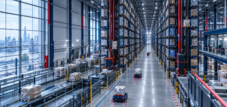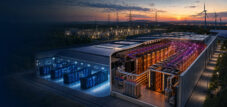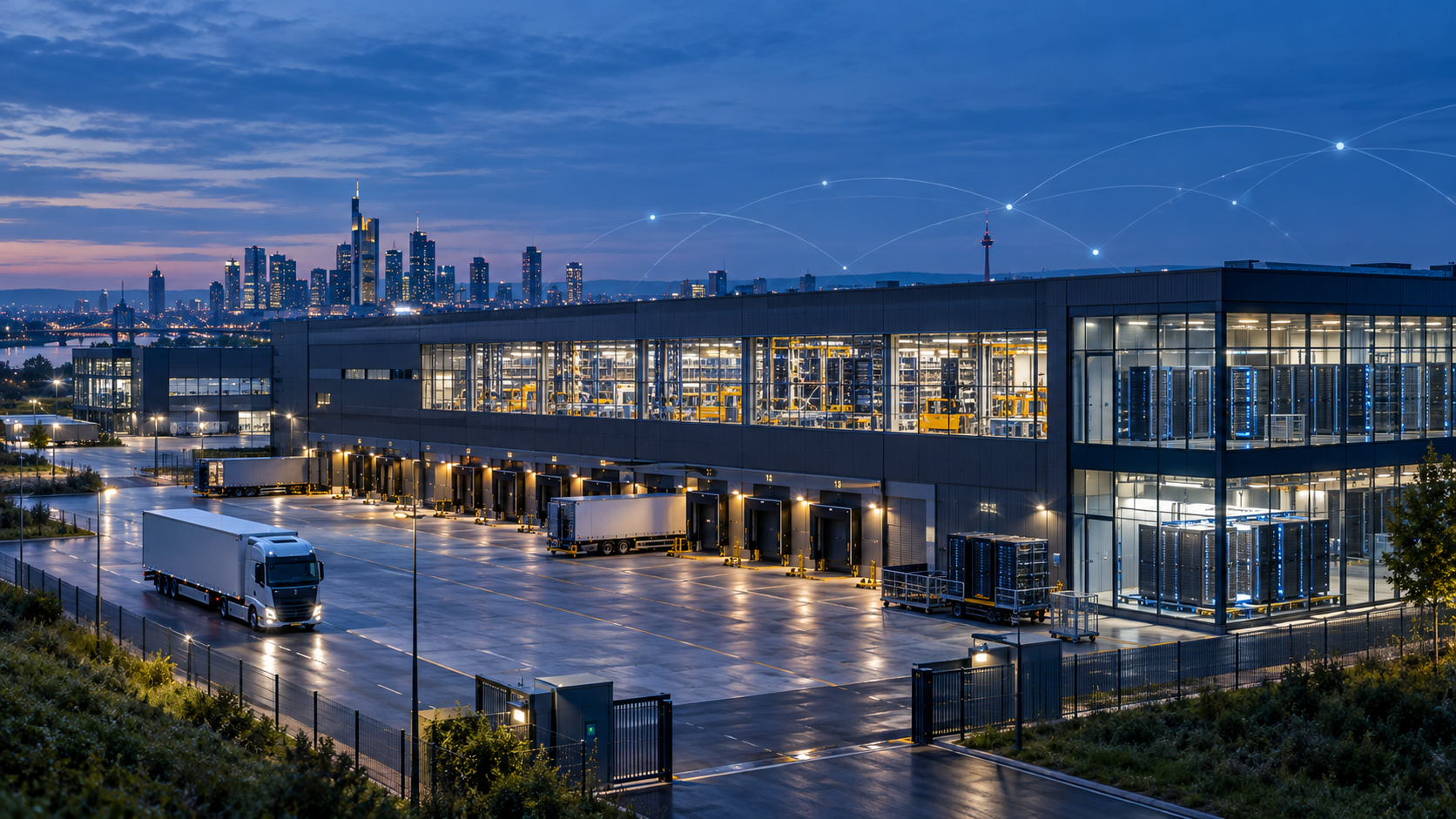
High-tech logistics in Frankfurt: More than a warehouse – Arvato's new base for servers, spare parts and data centers – Creative image on the topic, with AI: Xpert.Digital
Server outages cost millions: Why Arvato relies on high-tech logistics in Frankfurt
AI boom and cloud expansion: Why fast spare parts logistics is becoming increasingly important
Frankfurt is becoming a hub for data centers – and Arvato wants to profit from this
Data centers are the backbone of the digital economy – but their performance depends on more than just servers, power, and fast data connections. If a crucial component is missing, projects can be delayed or operations severely disrupted. This is precisely where Arvato's new, approximately 10,000-square-meter high-tech logistics center in the Frankfurt am Main region comes in. The facility will securely store, configure, and quickly deliver sensitive IT hardware to wherever it is needed.
Frankfurt is strategically well-positioned for this: The region is one of Europe's most important data center locations and combines digital infrastructure with international air freight, highways, and a high customer density. Arvato intends to expand this beyond a traditional warehousing business. Together with the specialized transport and technical services of the acquired company ATC, the aim is to create a comprehensive offering – from goods receipt and component preparation to delivery and on-site support.
The economic value of this model isn't solely measured by storage space or shipment volume. Crucially, it depends on how quickly and reliably critical hardware is available – and what costs can be avoided as a result. However, the business also presents challenges: high location costs, a shortage of skilled workers, stringent security requirements, and dependence on the continued expansion of data centers. Arvato's Frankfurt center thus becomes a strategic test: Can the company develop a scalable offering for the digital infrastructure of the future from warehousing, transport, and technical services?
Arvato's Frankfurt high-tech hub: Logistics for the age of data centers
Where server downtime is more expensive than storage space
With a new high-tech logistics center in the Frankfurt am Main region, Arvato is pushing the boundaries of traditional contract logistics. The approximately 10,000-square-meter facility is not primarily intended as an ordinary warehouse, but rather as an operational link between global manufacturers, hyperscalers, data center operators, cloud providers, and technical service teams. Sensitive components of the digital infrastructure are stored, managed, configured, and deployed at short notice. These include servers, network components, storage systems, spare parts, and other high-value IT hardware, the availability of which can directly determine the stable operation of digital services.
Economically, the project is therefore more interesting than its relatively small size might initially suggest. In conventional logistics, the size of a site is often considered a visible measure of capacity and market importance. In high-tech and data center logistics, however, value density, security levels, response speed, technical processing capabilities, and failure risks are more crucial. A relatively compact facility can move enormous amounts of goods and prevent significant follow-up costs. The site thus represents a structural shift: logistics is evolving from a physical transport business to a knowledge-, data-, and service-intensive infrastructure service. This is precisely where the strategic significance of the Frankfurt investment lies.
From warehouse to digital deployment base
The center performs functions that extend far beyond storage and shipping. Its services include inventory management, short-term hardware provisioning, controlled handling, staging, configuration, and the preparation of technical components for their later deployment. In this context, staging means pre-configuring, testing, and assembling hardware so that it can be installed or commissioned at the destination without unnecessary delay. This shifts a portion of the technical value creation from the data center to an upstream, controlled logistics environment.
This shift offers clear economic benefits. Activities within an active data center are complex and time-consuming due to security regulations, limited workspace, and strict access controls. By handling testing, configuration, documentation, and assembly in the logistics center, on-site deployment times are reduced. Simultaneously, errors can be detected earlier, and standardized processes can be monitored more effectively. The warehouse thus becomes a technical base of operations, seamlessly integrating material flow, data flow, and service coordination.
The rapid supply of critical spare parts is particularly important. With digital infrastructure, the damage caused by a failure depends not only on the price of the defective component. More crucial are lost revenue, breached service agreements, potential contractual penalties, reputational damage, and consequential disruptions for customers. The economic value of logistics therefore arises primarily from avoided downtime. The more critical a system is, the more important a regional spare parts warehouse becomes compared to a centralized but geographically distant European supply solution.
Frankfurt is not a random location
The selection of the Rhine-Main region reflects an unusually strong concentration of logistical and digital location advantages. Frankfurt combines one of Europe's most important internet hubs with a high density of data centers, international air freight, a high-performance motorway network, and a central location within the European single market. In addition, it boasts a financial sector, corporate headquarters, industrial customers, and a large number of specialized service providers. Few regions in Europe combine physical and digital connectivity to a comparable degree.
Frankfurt has become one of the two largest data center markets in Europe. The regional colocation market exceeded one gigawatt of installed capacity in 2025. In the same year, Hesse reported over 1,100 megawatts of data center capacity, meaning that more than a third of Germany's total capacity was concentrated in the greater Frankfurt area. Nationwide, the capacity of data centers and smaller IT installations rose to 2,980 megawatts in 2025. This growth is primarily driven by cloud services, data-intensive applications, and artificial intelligence.
This concentration creates a self-sustaining market for suppliers and services. Wherever data centers are built, expanded, modernized, and operated, there is a continuous demand for servers, network technology, cooling components, power supply systems, tools, packaging, spare parts, and specialized transport. The logistics center therefore benefits not only from Frankfurt's excellent transport connections but also from its proximity to a constantly growing installed technical infrastructure. This infrastructure must be supplied throughout its entire lifecycle.
The real commodity is availability
In traditional warehousing, the focus is on costs per pallet, storage space, or shipment. This perspective falls short in data center logistics. What matters is the guaranteed availability of a service within a defined timeframe. Customers are not just buying storage space, but the ability to deliver a specific component safely, with full documentation, and at the right time to the correct technical handover point.
Service-level agreements (SLAs) give this service a measurable economic value. They define, for example, the timeframe within which a spare part must be available, transport must begin, or technical support must be provided. Failure to meet such commitments can result in significant costs for both the service provider and the customer. A regional high-tech logistics center shortens transport routes and creates buffer stocks close to the point of use. This reduces not only transport time but also uncertainty.
Proximity is particularly important because data center projects rarely proceed entirely according to plan. Construction schedules change, components arrive late, installation windows are postponed, and additional hardware is needed at short notice. A flexible location can temporarily store materials, regroup shipments, configure components, and respond to altered timelines. A warehouse becomes an operational insurance policy against disruptions. The price of this insurance is not solely based on the square meter rent, but on the potential damage avoided.
Arvato expands its value chain depth
For Arvato, the center is part of a broader strategic development. The company is increasingly moving away from traditional supply chain services and into specialized, higher-margin, and technologically more sophisticated service areas. With the acquisition of ATC Computer Transport & Logistics, completed in early 2025, a specialist in high-security transport, white-glove deliveries, and technical services for data centers was added. ATC already had a presence in key European data center locations, including Frankfurt, Amsterdam, London, and Paris.
The combination makes industrial sense. Arvato contributes large warehouse infrastructure, global customer relationships, supply chain IT, customs expertise, and standardized operational processes. ATC complements this with specialized transport, technical installation, secure last-mile delivery, and experience in commissioning, modernizing, and decommissioning data centers. Together, the group can control a larger portion of the value chain, from goods receipt through storage and configuration to delivery to the designated installation site and on-site technical support.
This vertical integration improves the economic position compared to pure warehouse operators or transport companies. The more process steps are handled by a single provider, the higher the switching costs and customer loyalty. At the same time, the number of interfaces where information can be lost or responsibilities can become unclear decreases. However, operational complexity also increases. Arvato has to reconcile different corporate cultures, IT systems, quality standards, and liability profiles. The strategic advantage only materializes if the integration actually works in daily operations.
Small area, high value density
At approximately 10,000 square meters, the new location is rather compact compared to large e-commerce centers. Modern consumer goods logistics often operates with areas of tens of thousands of square meters and high volumes. High-tech logistics follows a different economic logic. The stored hardware has a high value per square meter, while every single process must be more intensively monitored, documented, and secured.
This shifts the cost structure. While space costs remain significant, security technology, qualified personnel, insurance, IT systems, specialized packaging, controlled handovers, and additional technical services become more important. Error costs are also considerably higher. An incorrectly picked consumer goods shipment is annoying; a misassigned or damaged server component can delay an installation project and cause substantial consequential costs.
For the service provider, this structure offers the opportunity for higher revenue per square meter. However, this is contingent on the center not being marketed as a generic, interchangeable warehouse. Profitability arises from integrated services, contractually guaranteed response times, and technical expertise. A price war based solely on parking space costs would therefore be strategically unwise. Arvato must quantify the economic value of risk reduction, process reliability, and rapid operational readiness and translate this into long-term customer contracts.
The Rhine-Main market is becoming a cost factor
Frankfurt's prime location comes at a price. The regional industrial and logistics real estate market in 2025 was characterized by very low vacancy rates and rising rents. Depending on the market definition, the total take-up ranged from approximately 435,000 to 486,000 square meters. Prime rents for modern logistics space rose to around €8.50 to €8.70 per square meter per month. The vacancy rate for large-scale logistics facilities fell to approximately 0.9 percent, resulting in virtually full occupancy in the sought-after submarkets.
For specialized high-tech spaces, the standard top rent is just a starting point. Additional requirements for security, energy supply, fire protection, IT connectivity, access control, and technical workspaces increase the overall costs. At the same time, logistics companies, industry, trade, and data center suppliers are competing for suitable land and existing properties. The situation is particularly tight in the southern Rhine-Main region, where highway access, proximity to the airport, and available commercial space converge.
Nevertheless, the expensive location can still be economically advantageous. For time-critical, high-priced components, proximity is more valuable than low rent in a distant region. The crucial calculation is not how much storage costs per square meter could be saved, but rather how much transport times, security risks, and failure probabilities would increase. For non-critical inventory, a more cost-effective hinterland strategy can be sensible. Critical spare parts and components requiring technical processing, on the other hand, belong near the customers. In the long term, this will likely result in a tiered network of regional high-performance locations and more cost-effective supplementary facilities.
A cluster is growing beyond Frankfurt
The spatial development of the data center market shows that Frankfurt is increasingly reaching its limits within the city limits. Power connections, land, and permits are becoming scarce. Larger projects are therefore expanding to surrounding municipalities and neighboring regions. Hanau, Offenbach, Dreieich, Egelsbach, as well as locations towards Mainz, Aschaffenburg, and southern Hesse, are gaining in importance. The digital cluster is expanding along existing power, fiber optic, and transportation infrastructures.
Arvato's regional expansion aligns with this development. In 2026, another facility of approximately 10,000 square meters for the storage, configuration, and further processing of high-tech components was added in Dreieich. Together with the existing facilities, this increased the regional capacity to more than 25,000 square meters. This creates not just a single warehouse, but a distributed site system capable of accommodating diverse customers, processes, and security requirements.
Such a network offers redundancy. If a location fails or reaches its capacity limit, defined processes can be transferred to another facility. At the same time, inventory can be distributed according to criticality and turnover rate. The challenge lies in avoiding additional transport between locations. A regional network is only efficient if inventory data, order management, and capacity planning are fully integrated. Otherwise, the gained flexibility is negated by increased internal movement and growing complexity.
Artificial intelligence is driving the demand for hardware
The expansion of generative artificial intelligence is significantly changing the technical infrastructure. AI systems require powerful computing accelerators, dense server configurations, high-speed networks, and new cooling concepts. The demand is not limited to building new facilities. Existing data centers must be upgraded, expanded, and their technical density increased. This results in additional material flows and more complex installation projects.
This increases both the value and the vulnerability of individual shipments for logistics. High-performance processors and complete server racks can represent significant value. At the same time, deliveries must be precisely coordinated with available power, cooling, and installation capacities. An early delivery blocks secure areas, while a late delivery jeopardizes project deadlines. Timing coordination thus becomes just as crucial as physical transport.
Arvato's center can benefit from this growth, but the connection isn't automatic. The AI boom also creates uncertainties. Hardware generations change rapidly, investment cycles can fluctuate, and customers are trying to gain greater control over their supply chains. Furthermore, manufacturers and hyperscalers might provide certain services themselves or outsource them to a few global specialists. Arvato must therefore prove that its platform is scalable, vendor-neutral, and functions consistently across all countries. Only then will regional demand translate into a sustainable business.
LTW Intralogistics Solutions

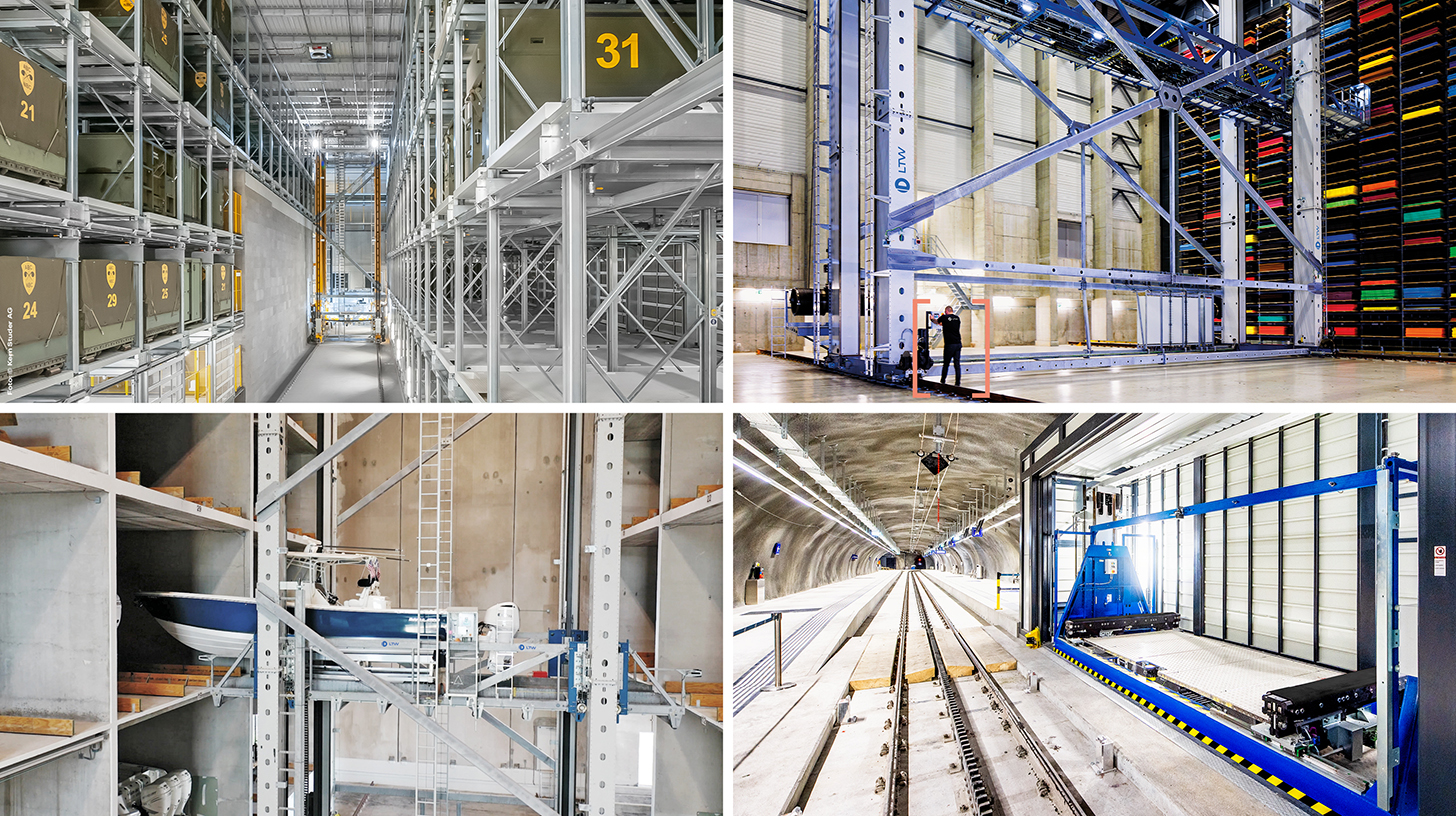
LTW Intralogistics – Engineers of Flow - Image: LTW Intralogistics GmbH
LTW offers its customers not individual components, but integrated complete solutions. Consulting, planning, mechanical and electrotechnical components, control and automation technology, as well as software and service – everything is networked and precisely coordinated.
In-house production of key components is particularly advantageous. This allows for optimal control of quality, supply chains, and interfaces.
LTW stands for reliability, transparency, and collaborative partnership. Loyalty and honesty are firmly anchored in the company's philosophy – a handshake still means something here.
Related to this:
Security as the key to competitiveness
Safety becomes a selling point
Data center logistics is security logistics. It involves high-value goods, sensitive serial numbers, confidential project information, and components whose loss or tampering can have critical consequences. The supply chain must therefore be secured both physically and digitally. Access controls, video surveillance, seamless shipment tracking, documented handovers, and clearly defined responsibilities are core components.
Furthermore, there is the cybersecurity of warehouse and transport data. Inventory information can reveal insights into a customer's capacity expansion, locations, and technical architectures. If such data is compromised, it's not just logistics that are affected. The center must therefore protect its warehouse management systems, interfaces, and mobile devices just as much as the stored hardware. Physical security and information security must not be considered separately from an organizational perspective.
Economically, a high level of security creates barriers to entry. Certifications, trained personnel, insurable processes, and reliable references cannot be established overnight. This protects specialized providers from purely price-driven competition. At the same time, every security incident leads to disproportionate reputational damage. The business model therefore demands consistent standardization and a culture in which deviations are reported early. Growth must not lead to a dilution of quality and control.
White Glove is more than just careful transport
The term "white glove service" describes a delivery where the service provider remains responsible far beyond the curb. Components are transported under controlled conditions, brought into sensitive areas, moved to their designated location, unpacked, and, if necessary, prepared for installation. In data centers, this requires precise planning, suitable vehicles, specialized equipment, and teams familiar with security and access control procedures.
The economic advantage lies in the reduction of interfaces. If a carrier only delivers to the gate, operators have to coordinate other service providers. Every handover increases waiting time, liability risk, and information loss. An integrated model consolidates responsibility and enables seamless documentation. This is particularly attractive for customers when many locations are to be rolled out according to the same standards.
This gives Arvato access to higher value creation levels. The margin on specialized technical deployment is generally more attractive than that of standardized transport. However, this increases training costs, liability, and dependence on qualified personnel. The company must develop its teams not only logistically but also technically. "White Glove" should not be used as a marketing term but must be substantiated by repeatable, auditable processes.
Skilled workers are becoming a bottleneck
Growth opportunities are colliding with a tight labor market. In 2025, more than half of German logistics companies reported difficulties in finding qualified employees. Warehouse specialists, professional drivers, technical specialists, and IT personnel are particularly in short supply. In Hesse, despite the weak economy, many companies continued to consider the shortage of skilled workers a significant business risk.
High-tech logistics exacerbates the problem because it requires hybrid skill sets. Employees must move goods safely, operate digital systems, process serial numbers and documentation flawlessly, and understand technical requirements. Installation and preparation work also requires knowledge of server racks, cabling, packaging, electrostatic discharge, and safety regulations. Such skills are not readily available.
Automation can reduce physical strain and routine tasks, but it doesn't replace responsibility in critical processes. Intelligent warehouse management, driverless transport systems, and robotic assistance can move inventory and collect data. However, the decision as to whether a sensitive component has been correctly prepared and safely handed over often remains a skilled human task. The competitive advantage, therefore, arises from combining technology with personnel development. Training programs, clear career paths, and the integration of international specialists are becoming integral parts of the location strategy.
Automation needs a sound business case
Arvato pursues a group-wide automation strategy and employs various robotics solutions. However, not every technology familiar from e-commerce logistics is suitable for the Frankfurt high-tech environment. High product variety, small batch sizes, varying dimensions, and sensitive components limit the possibilities of complete automation. A robot that moves thousands of identical packages is easier to utilize than a system for rare, heavy, and custom-packaged hardware.
The greatest leverage lies initially in data automation. Real-time inventory, digital twins of shipments, automated plausibility checks, predictive capacity planning, and end-to-end serial number tracking increase quality and speed. Artificial intelligence can support demand forecasting and detect deviations. However, it should not make uncontrolled decisions regarding critical inventory or delivery priorities.
Physical automation makes sense where processes are stable and repeatable. This includes internal transport, standardized storage, inventory, and ergonomic assistance. The business case must consider not only personnel costs but also error prevention, occupational safety, and scalability. Over-automation would be risky because it reduces flexibility and ties up capital. Therefore, the center requires a modular technology architecture that can grow with the customer portfolio.
Sustainability is evolving from an image factor to a requirement for admission
Digital infrastructure is under increasing scrutiny due to its high energy consumption. German data centers and smaller IT installations required approximately 21.3 billion kilowatt-hours of electricity in 2025. This demand is likely to rise further with the expansion of cloud computing and artificial intelligence. At the same time, the Energy Efficiency Act and European regulations are tightening requirements for efficiency, renewable energy, transparency, and waste heat recovery.
While the logistics center itself is not a data center, it will contribute to its customers' sustainability efforts. Energy-efficient building technology, intelligent warehouse management, lower-emission transport, and high capacity utilization can all reduce its environmental footprint. Even more important is avoiding unnecessary journeys, damaged hardware, and premature replacements. Well-managed spare parts logistics extend service life and support repair and reuse.
The additional location in Dreieich relies on a fully electric vehicle fleet for last-mile delivery. This model is plausible for regional operations because predictable routes and returns to the depot facilitate charging. However, for heavy long-haul and special transport, range, charging infrastructure, and payload remain challenges. Sustainability should therefore not be equated with a single drive system. The entire process chain, from packaging and capacity utilization to the return of removed components, is crucial.
Circular economy as a second revenue model
Data center hardware is regularly upgraded. Components are replaced even though they may still be technically usable. This creates a growing market for take-back, testing, refurbishment, resale, parts recovery, and certified data destruction. A logistics provider that manages the outbound transport of the hardware is well-positioned to organize the return transport as well.
For Arvato, the circular economy could become an important addition. Dismantled equipment can be safely collected, inventoried, and classified according to its condition. Functional components can be redirected to other markets or applications. Defective equipment can be dismantled, repaired, or recycled. Secure erasure and traceable destruction are essential for data storage media.
The revenue potential is attractive because reverse logistics is more complex and less standardized than the delivery of new goods. At the same time, it creates liability and data protection risks. The service provider must clearly document ownership, data status, and environmental regulations. If this is successful, the center transforms from a one-way street for new hardware into a lifecycle hub. This would allow Arvato to profit not only from the expansion but also from the modernization and dismantling of digital infrastructure.
Resilience beats maximum centralization
Global supply chains for semiconductors and IT hardware remain vulnerable. Geopolitical tensions, export controls, production outages, transportation bottlenecks, and natural disasters can all alter availability at short notice. Based on the experiences of recent years, many companies are taking a more cautious view of pure cost efficiency. Safety buffers and regional inventories are once again gaining importance.
The Frankfurt center supports a strategy of controlled decentralization. Critical components are kept closer to their European deployment locations, while non-critical stocks can remain centralized. This increases tied-up working capital, but improves delivery capability. The optimal stock level depends on the probability of failure, procurement time, and potential damage. For a rarely needed but operationally crucial component, a regional safety stock can be economical despite low turnover.
Arvato can combine consulting services with operational implementation here. Data from multiple customer projects allows patterns in consumption, failure, and delivery time to be identified. However, customer data must be strictly separated, and conflicts of interest must be avoided. Furthermore, resilience must not lead to uncontrolled overstocking. Good spare parts logistics does not mean having as much inventory as possible, but rather the right inventory in the right place with clear lifecycle planning.
The competition takes place between ecosystems
Arvato doesn't just compete with traditional contract logistics providers. Its competitive landscape includes global freight forwarders, specialized data center logistics companies, technical installation firms, real estate operators, and the internal logistics organizations of large hyperscalers. Some competitors possess stronger transport networks, others deeper technical specialization, or closer relationships with specific hardware manufacturers.
Arvato's decisive advantage lies in the potential combination of global reach, regional warehousing infrastructure, supply chain IT, and ATC's specialized capabilities. This combination is difficult to replicate when functioning as a unified platform. Customers with international expansion programs demand comparable quality in Frankfurt, London, Paris, Dubai, and the United States. A provider that implements standards across borders can reduce complexity.
At the same time, there is a risk of falling between two positions. For standardized logistics, Arvato might be more expensive than high-volume generalists; for highly specialized technical tasks, niche providers might be perceived as more competent. The strategic answer must be a clear end-to-end positioning. The company must not merely offer numerous individual services, but must measurably improve their interaction.
Growth without transparency remains difficult to assess
In 2025, the Arvato Group generated revenue of approximately €4.4 billion and adjusted operating profit before interest, taxes, depreciation, and amortization (EBITDA) of €720 million. Revenue increased by 13.1 percent, while adjusted operating profit rose by 12.3 percent. Logistics businesses were a key growth driver. These figures demonstrate financial strength but do not allow for an isolated assessment of the Frankfurt center.
Neither the investment volume nor the site's capacity utilization, number of customers, or expected revenue have been disclosed in detail. Therefore, a precise profitability calculation is not possible from the outside. The economic evaluation must be based on strategic plausibility, market growth, site quality, and the discernible performance model. These factors support the project but do not replace a site analysis.
Several key performance indicators (KPIs) are crucial for internal management: occupancy of the secured area, revenue per square meter, share of additional services, response times, error rate, damage rate, employee productivity, and customer contract duration. The question of whether Arvato is selling additional services or simply relocating existing customer portfolios is particularly important. Only a high proportion of technical and time-critical services justifies the cost structure of a premium location.
The greatest risks lie outside the camp
The project is closely linked to the growth of the data center market. This very fact creates a risk of market concentration. If new data centers are delayed due to a lack of grid connections, permits, or public resistance, the demand for logistics services may also increase more slowly. In the Rhine-Main region, waiting times for large power connections can sometimes reach many years. Land scarcity and regulatory requirements further limit growth.
Another risk is dependence on a few large customers. Hyperscalers possess considerable negotiating power and demand high performance standards. A lost contract can significantly impact the utilization of a specialized location. Long-term agreements offer stability, but can become unattractive with rising labor, energy, and rental costs if price adjustment clauses are lacking.
Technological risks also come into play. Hardware architectures are changing, liquid cooling is gaining importance, and pre-assembled modules could shift certain activities. The site must therefore remain flexible. Its strengths must not be tied to specific device types or customer processes. A scalable building concept and adaptable warehouse technology are more important than maximum specialization based on the current state.
The regional benefits are broader than the number of jobs
A 10,000-square-meter logistics center will not fundamentally alter Frankfurt's employment structure. Its regional economic benefit stems less from mass job creation than from the quality of the integrated functions. Technical logistics combines warehousing, IT, transportation, security, maintenance, and project management. This results in more skilled jobs than in a purely manual transshipment warehouse.
The location also strengthens the data center cluster. Digital infrastructure doesn't become competitive solely through buildings, electricity, and fiber optics. Operators need a dense network of suppliers, technicians, transporters, and spare parts services. The more complete this ecosystem, the more attractive the region becomes for further investment. Arvato's center therefore acts as complementary infrastructure.
At the same time, growth incurs external costs. Additional traffic, land use, and competition for workers burden the region. From an economic policy perspective, therefore, not every business development is automatically positive. Crucial factors are value creation per unit area, quality of employment, energy efficiency, and the transportation concept. High-tech logistics performs better than many land-intensive standard uses in terms of value density and skills potential, but it still needs to limit its traffic and environmental impacts.
Frankfurt needs a common infrastructure policy
The development of data centers and their logistics cannot be planned in isolation. Power grids, commercial areas, roads, rail connections, charging infrastructure, fiber optics, and district heating networks are all interconnected. If municipalities approve projects individually without considering the overall regional impact, bottlenecks and perverse incentives arise. The market then shifts to neighboring municipalities, while the burdens remain within the same metropolitan region.
A coordinated infrastructure policy should develop locations based on network availability, transport connections, and potential for waste heat utilization. For logistics centers, night-time operation, noise protection, and suitable truck routes are also relevant. Electric fleets require high-performance depot connections that can compete with the already demanding requirements of data centers. Planning certainty thus becomes a key location factor.
Arvato's expansion demonstrates that the cluster is already shifting to the surrounding area. This development can relieve pressure on the city center if managed effectively. Without coordination, however, urban sprawl and longer commutes are likely. The economically sound solution is a polycentric network of well-connected locations, not a haphazard distribution of individual warehouses.
A project becomes a strategic test
The Frankfurt high-tech logistics center is a test for Arvato to determine whether the acquisition of ATC can be translated into a scalable business model. The strategic logic is compelling: A growing data center market meets high demands for security, speed, and technical services. Frankfurt offers an exceptional customer density, while Arvato can combine warehousing and IT expertise with specialized transport and on-site service.
However, success does not depend on the size of the facility. Crucial factors are occupancy rates from long-term customers, the proportion of high-margin ancillary services, the quality of integration, and the ability to roll out identical standards internationally. Equally important is consistent risk management for security, skilled personnel, cost increases, and technological changes.
If this implementation succeeds, the site will become far more than a regional warehouse. It can serve as a blueprint for an international network of lifecycle hubs, supporting data centers from the construction phase through operation and modernization to decommissioning. If the integration fails, an expensive specialized property will remain in a tight market. The economic gamble is therefore clear: Arvato is betting that in the digital economy, not the hardware itself, but its reliable availability at all times will become the most valuable logistics product.
Consulting - Planning - Implementation

Konrad Wolfenstein
I would be happy to serve as your personal advisor.
You can contact me at wolfenstein∂xpert.digital or
Just call me on +49 7348 4088 965 .
Your intralogistics experts

Consulting, planning and implementation of complete solutions for high-bay warehouses and automated storage systems - Image: Xpert.Digital
More information here: