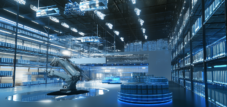
German industry is experiencing a veritable boom: High-bay warehouses are transforming logistics sustainably and digitally – Image: Xpert.Digital
Transformation on the shelves: How high-bay warehouses are conquering German industry
Digitalization and sustainability: The rise of high-bay warehouses
Forget dusty warehouses and inefficient logistics – a quiet revolution has taken place in German industry! High-bay warehouses are no longer just a niche topic for specialized sectors. From supermarket giants to car manufacturers, from chemical companies to medium-sized businesses – more and more companies are relying on the vertical power of high-bay warehouses to take their logistics processes to a new level.
This trend goes far beyond mere capacity expansion. Automation and digitalization are the driving forces behind this development. Robot-controlled systems, intelligent software, and a strong focus on sustainability are making high-bay warehouses key components of modern, efficient, and future-proof supply chains.
Discover in this article how industry giants like Kaufland, Porsche, and Beiersdorf are investing in impressive high-bay warehouses and the groundbreaking advantages this technology offers companies of all sizes. Learn how space optimization, cost reduction, and sustainability go hand in hand and why high-bay warehouses will significantly shape the future of industrial logistics in Germany. Immerse yourself in the fascinating world of vertical storage and be inspired by the innovative solutions and impressive examples!
High-bay warehouses: The vertical revolution in German industry
In the complex world of modern industry, where speed, efficiency, and precision determine competitiveness, one technology has established itself as an indispensable pillar: the high-bay warehouse. What once began as a specialized solution for a few industries is now a cross-industry phenomenon and a key component in the logistics strategies of numerous companies in Germany. An in-depth analysis of current developments shows that German companies from a wide range of sectors are investing heavily in fully automated high-bay warehouses. These investments are no coincidence, but rather a strategic response to growing market demands, increasing competitive pressure, and the need to be prepared for future challenges.
A threefold trend is particularly noteworthy: automation, digitalization, and a growing awareness of sustainability. Modern high-bay warehouses are no longer merely storage facilities; they are highly complex, digitally networked systems seamlessly integrated into overarching production and logistics processes. At the same time, energy efficiency and environmental compatibility are increasingly coming into focus, as companies strive to minimize their ecological footprints and conserve resources.
The following discussion provides a comprehensive insight into the fascinating world of high-bay warehouses and highlights their diverse applications in various German industries. We will examine how this technology optimizes logistics processes, its defining technical characteristics, and the economic advantages it offers companies. Furthermore, we will explore future trends and development prospects that will further expand the potential of high-bay warehouse technology.
Related to this:

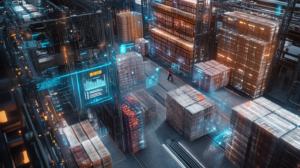
Cross-industry distribution: From supermarkets to car factories
The prevalence of high-bay warehouses in Germany is impressive, spanning virtually all manufacturing sectors. What once began in a few specialized industries has evolved into a widespread trend. Continuous technological advancements, decreasing costs, and a growing awareness of the economic and environmental benefits of these systems have led to high-bay warehouses becoming increasingly common in various sectors. It is no exaggeration to say that they have transformed from a niche solution into an industry standard.
Food industry and trade: Freshness and efficiency are the focus
In the food industry and retail sector, high-bay warehouses have long since become an integral part of modern logistics centers. Especially in this sector, where freshness, speed, and the highest hygiene standards are crucial, high-bay warehouses fully demonstrate their strengths.
Kaufland, a giant in the German retail sector, recognized this and undertook a comprehensive transformation of its logistics center in Geisenfeld. Since September 2024, a large part of the operation has been fully automated. The centerpiece of this modernization is a newly commissioned high-bay warehouse, which enables a significant increase in capacity without requiring additional land. This is a tremendous advantage in densely populated areas and expensive industrial parks. The increased storage capacity directly contributes to delivery reliability, as larger quantities of goods can be stockpiled to better absorb fluctuations in demand and supply bottlenecks.
Impressive volumes are handled daily at the Kaufland logistics center: Up to 185,000 packages are picked fully automatically, with stacker cranes precisely and efficiently storing and retrieving the pallets. A particular highlight is the automated picking system for fruits and vegetables, which can process up to 50,000 packages per day. This specialized system exemplifies the high flexibility of modern high-bay warehouses, which can be adapted to the specific requirements of a wide variety of product groups. Automation in this area not only reduces personnel costs but also minimizes the risk of damage and spoilage of the delicate goods.
The family-owned company Seeberger, known for its high-quality natural snacks such as nuts, dried fruit, and coffee, is also relying on high-bay warehouses. At its Ulm site, Seeberger is investing in an additional, impressive high-bay warehouse. Measuring 90 meters long, 21 meters wide, and 45 meters high, this warehouse will offer approximately 20,000 pallet spaces and is expected to go into operation in spring 2026. Particularly noteworthy is the consistent focus on sustainability. An innovative facade cladding system is designed to ensure a stable temperature range inside the warehouse, both in summer and winter, without the need for active cooling. This passive climate control is an important step toward reducing energy consumption and operating costs.
The Alpenhain dairy in Upper Bavaria has also invested in a new high-bay warehouse to optimize its logistics processes and reduce warehousing costs. The 80 x 20 x 22 meter warehouse is designed as a deep-freeze facility, allowing for a flexible response to fluctuations in demand for chilled and frozen products. Maintaining the cold chain is of paramount importance in the food industry, particularly for dairy products. A high-bay deep-freeze warehouse offers ideal conditions for this, as it enables precise temperature control and efficient use of space. The flexible design of the deep-freeze warehouse allows Alpenhain to adjust the ratio of chilled to frozen storage space depending on market conditions and demand.
A similar development can be observed at Hochland, another major dairy company. At their Schongau site, a high-bay warehouse with approximately 10,000 pallet spaces on nine levels and a height of around 25 meters has been built. This warehouse serves the efficient storage of cheese and other dairy products and helps to ensure Hochland's high quality standards and fast delivery capabilities.
Automotive industry: Precision and just-in-time for complex manufacturing
The automotive industry, traditionally a pioneer in innovation and efficiency, makes extensive use of high-bay warehouses to optimize its complex production and logistics processes. In this sector, where just-in-time deliveries and high-precision manufacturing processes are crucial, high-bay warehouses play a key role.
Porsche, an icon of German automotive engineering, is investing heavily in modernization and expansion measures at its main plant in Stuttgart-Zuffenhausen to modernize and expand its sports car production and logistics facilities, ensuring it is well-prepared for the future. Key elements of this investment include a so-called "Flexiline" for two-door sports cars and two new high-bay warehouses. The "Flexiline" represents a flexible and state-of-the-art production line that can quickly adapt to changing production requirements. Upon planned completion in 2025, the new high-bay warehouses will supply the Taycan and sports car body shops with vehicle parts across two floors. This direct connection to production is a typical feature of high-bay warehouses in the automotive industry, where they often serve as a buffer between production and assembly.
BMW has built an architecturally impressive high-bay warehouse for car bodies at its main plant in Munich. At 41 meters tall, it is the tallest building in the plant and offers storage space for 800 vehicles. The particular challenge of this project was integrating the high-bay warehouse into the existing plant site and taking into account the limited space available. The high-bay warehouse stands on a massive reinforced concrete platform above the main logistics road, representing an innovative solution to the space constraints. The approximately 30-meter-high reinforced concrete exterior walls are braced by shear walls between the storage racks. Due to the dense surrounding buildings and the stringent requirements for the stability and deformation of the racking system, the structure was founded on a 2-meter-high reinforced concrete foundation slab supported by 16-meter-long bored piles with a diameter of one meter. This example demonstrates how complex and demanding the construction of high-bay warehouses can be, especially in urban industrial environments.
Daimler, another automotive giant, has also invested in expanding its global logistics center in Germersheim. A high-bay warehouse with over 80,000 square meters of storage space, equipped with state-of-the-art conveyor and storage technology, was built on an open area on the factory premises by the end of 2018. Daimler AG invested around €100 million in the construction. This logistics center serves as a central hub for Daimler's global spare parts logistics and demonstrates the importance of high-bay warehouses for global supply chains in the automotive industry.
Plastics and construction industries: Efficient storage of bulky goods
Significant investments in high-bay warehouses are also being made in the plastics and construction industries, sectors that often deal with bulky and voluminous goods. The aim here is to store large quantities of products in a space-saving and efficient manner in order to free up production space and optimize logistics processes.
The plastic bucket manufacturer groku Kunststoffe is planning to expand its headquarters in Schloss Holte-Stukenbrock by constructing a second high-bay warehouse. The 40-meter-high building, with a footprint of 2,150 square meters, will provide space for 12,500 plastic buckets of all types manufactured by the company. Once the new warehouse is operational, the existing one will be decommissioned, and the freed-up space will be used to expand production. This is a typical example of how high-bay warehouses can help consolidate production sites and create valuable production space.
GEALAN Fenster-Systeme, a leading manufacturer of PVC profiles for windows and doors, is building a fully automated high-bay warehouse at its Tanna site. At a cost of approximately €14 million, this is one of the largest single investments in the company's history. The high-bay warehouse is designed as an automated long-goods storage facility, making optimal use of the available space. Its height allows for the storage of large volumes on a minimal footprint. Long-goods storage facilities are specialized high-bay warehouses optimized for storing long, bulky goods such as profiles, pipes, or rods.
In the building materials industry, the roof tile manufacturer ERLUS has erected a pioneering high-bay warehouse at its Neufahrn site. ERLUS is the world's first roof tile manufacturer to automate the logistics of its roofing tiles and accessories. The automated high-bay warehouse is constructed using a silo system, stands approximately 30 meters tall, and offers space for around 8,400 pallets. With this new logistics center, ERLUS sees itself as a pioneer in the industry and is one of the first to implement automated storage and order picking technology for roofing tiles. The silo construction, in which the racking system simultaneously forms the building's load-bearing structure, is a particularly space-saving and cost-efficient design for high-bay warehouses.
Consumer goods and pharmaceutical industries: High turnover rate and sensitive products
High-bay warehouses also play an important role in the consumer goods and pharmaceutical industries, which are characterized by high turnover rates, short product life cycles and often sensitive products.
Beiersdorf, the consumer goods company behind brands like Nivea and Hansaplast, is investing over €200 million in a new hub for its Central European supply chain network in northern Leipzig. A planned 25-meter-high high-bay warehouse with approximately 125,000 fully automated pallet spaces will be Beiersdorf's largest and most efficient warehouse worldwide. This warehouse will play a central role in Beiersdorf's European logistics, ensuring the supply of products to markets in Central Europe.
Beiersdorf had previously constructed a high-bay warehouse for hazardous materials, consolidating two previously separate storage facilities. In addition to economic considerations, safety was paramount in the planning and construction, as a new major accident ordinance imposed stricter safety requirements for the storage of products containing flammable ingredients. Hazardous materials warehouses are specialized high-bay warehouses equipped with additional safety measures to minimize the risks associated with storing hazardous substances.
Related to this:
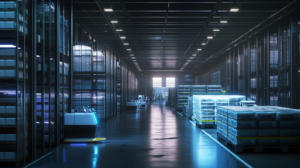
Expert partner in warehouse planning and construction

Efficiency and cost reduction: The success factors of modern high-bay warehouses
Technical features and advantages of modern high-bay warehouses: More than just high shelves
High-bay warehouses are far more than just "tall shelves." They are characterized by specific technical features that make them so attractive to a wide variety of industries. These features contribute significantly to increased efficiency, cost reduction, and optimization of logistics processes.
Space optimization and capacity increase: Vertical storage as the key to efficiency
A high-bay warehouse is defined as a warehouse with racks reaching a height of 12 meters or more, typically offering several thousand pallet storage spaces. Its key advantage lies in the optimal use of available space. The vertical design allows for maximum storage volume on a minimal footprint. In times of rising land prices and limited space, this represents a decisive competitive advantage.
The example of the Kaufland logistics center in Donnersdorf, where the expanded and fully automated high-bay warehouse rises 37 meters high and offers space for 24,800 additional pallets, impressively illustrates this. 160 pallets can be stored and retrieved there every hour. This high throughput is another significant advantage of modern high-bay warehouses, contributing to the acceleration of logistics processes.
Seeberger will also achieve a significant increase in storage capacity with its new high-bay warehouse, which will reach a height of 45 meters. The vertical design allows for a space-saving storage solution and the realization of large storage capacities in a small footprint. The situation is similar at Beiersdorf, where the planned high-bay warehouse in Leipzig will offer approximately 125,000 fully automated pallet storage locations.
Level of automation and technology: Robots take over
Another characteristic feature of modern high-bay warehouses is their high degree of automation. The days of manual warehouse work are largely over in modern high-bay warehouses. Instead, complex, computer-controlled systems and robots take over the warehouse processes.
At Kaufland in Geisenfeld, after delivery, pallets are automatically stored in the high-bay warehouse by automated storage and retrieval systems and kept there until needed. Depalletizing, i.e., unloading the pallets, is also largely automated. Twelve robotic grippers then assemble the pallets according to the specific requirements of each store and arrange the goods so that employees can immediately put them away in the correct order. This intelligent order picking system optimizes not only the warehouse process but also the workflows in the stores.
The pallets, packed both autonomously and manually, are then automatically wrapped and shrink-wrapped before being transported in the correct sequence to the shipping area via autonomous guided vehicles (AGVs). These transport robots are equipped with state-of-the-art sensors, cameras, and motor technologies that help them follow the optimal route and navigate safely around people and objects. These driverless transport systems are a key element of automation in modern high-bay warehouses and contribute to the efficiency and flexibility of internal logistics.
Seeberger is developing a state-of-the-art high-bay warehouse solution for its new facility, featuring a dedicated "hot zone" buffer designed for 500 pallets. This "hot zone" serves as an intermediate buffer for goods that are needed particularly quickly. The complete solution includes Vectura stacker cranes, ProMove conveyor systems, vertical lifts, and SynQ WCS software. Vectura stacker cranes are high-performance machines specifically designed for use in high-bay warehouses. ProMove conveyor systems ensure a smooth flow of materials within the warehouse. Vertical lifts enable the fast and efficient transport of goods between different storage levels. And the SynQ WCS software (Warehouse Control System) is the brain of the warehouse, controlling and optimizing all processes. This technological complexity illustrates just how sophisticated modern high-bay warehouses are.
Related to this:
Energy efficiency and sustainability: Green logistics in focus
Modern high-bay warehouses are increasingly being designed with sustainability aspects in mind. The trend is clearly moving towards "green logistics," where energy efficiency and environmental compatibility are paramount.
Seeberger's new high-bay warehouse features an innovative facade cladding system that ensures a stable temperature range inside the warehouse, both in summer and winter. This eliminates the need for active cooling, significantly reducing energy consumption. As part of its sustainability strategy, the new building also incorporates photovoltaic modules, adding approximately 1 megawatt (peak) of power to the existing photovoltaic arrays on the existing buildings. The use of renewable energy and the reduction of energy consumption are key elements of sustainable warehouse logistics.
Swisslog, a leading provider of warehouse automation solutions, developed a photovoltaic solution for Seeberger in the form of a PV system installed on the roof and facades. The facade concept increases the production of green energy via the building's side walls, thereby reducing the thermal energy input into the high-bay warehouse. This eliminates the need for active cooling of the building to maintain a temperature range of five to 25 degrees Celsius. This example demonstrates how innovative building technology and renewable energies can go hand in hand to make high-bay warehouses more sustainable.
Kaufland's expansion of its high-bay warehouse in Donnersdorf will result in annual savings of approximately 446,000 kilometers of driving distance and a reduction in CO₂ emissions of 3.3 tons. These impressive figures underscore the environmental benefits that can be achieved through the optimization of logistics processes and the use of high-bay warehouses. More efficient storage and order picking shorten transport routes and eliminate empty runs, leading to significant savings in fuel consumption and emissions.
Economic aspects and investment volume: High costs, high benefits
The construction of high-bay warehouses is undoubtedly a significant investment. The costs for planning, construction, technology, and automation can be considerable. However, these investments are generally justified by long-term efficiency gains, cost savings, and competitive advantages.
Investment volume across all sectors: Millions invested in the logistics of the future
Investment volumes for high-bay warehouses vary considerably depending on the industry, size, level of automation, and technological equipment. However, the examples in the article show that these are typically multi-million-euro investments.
Daimler invested around €100 million in the construction of its high-bay warehouse in Germersheim. GEALAN estimates the cost of its fully automated high-bay warehouse at its Tanna site at around €14 million. ERLUS' investment in its new logistics center is in the low tens of millions of euros. Beiersdorf is investing over €200 million in a new hub for its Central European supply chain network in northern Leipzig, with the high-bay warehouse representing a significant portion of this investment. Porsche is investing around €250 million in its construction projects, which also include two new high-bay warehouses.
These examples illustrate that investments in high-bay warehouses are substantial across all industries. The exact amount depends on the specific requirements and scope of each project. Size, level of automation, technical complexity, and structural features significantly influence the costs.
Economic advantages and increased efficiency: Long-term returns through optimized logistics
Despite the high initial investment, the economic advantages of high-bay warehouses often justify these expenditures. The long-term efficiency gains and cost savings can significantly outweigh the initial investment over the warehouse's service life.
At Beiersdorf, internal logistics between two adjacent warehouse areas resulted in significant additional costs, as the two warehouses previously belonged to two independent business units and were therefore designed for separate operation. This not only caused additional internal traffic but also a lack of inventory and warehouse transparency. These problems were resolved by consolidating the two warehouses into a new high-bay warehouse for hazardous materials. The improved warehouse transparency and the reduction in internal traffic lead to direct cost savings and more efficient logistics.
At Kaufland in Donnersdorf, the expansion of the high-bay warehouse also led to a significant increase in efficiency. The improved logistics have resulted in a saving of approximately 446,000 kilometers of driving distance annually, which, in addition to reducing CO₂ emissions, also leads to considerable cost savings. Fewer transport kilometers mean lower fuel costs, less maintenance for transport vehicles, and a reduced environmental impact.
At ERLUS, the new high-bay warehouse improves working conditions for employees, optimizes the loading process, ensures accurate inventory tracking, and reduces noise emissions. The principle of "goods coming to people, not the other way around" leads to a significant increase in efficiency in the logistics process. More ergonomic workstations, optimized processes, precise inventory management, and reduced noise levels contribute to higher employee satisfaction, lower error rates, and overall more efficient warehouse logistics.
Related to this:

Future trends and development prospects: A look at the logistics of tomorrow
The development of high-bay warehouses is closely linked to overarching trends in the logistics and automation industry. Several forward-looking aspects are already emerging and will significantly shape the development of high-bay warehouses in the coming years.
Integration into digitized supply chains: The warehouse as part of the digital ecosystem
Modern high-bay warehouses are increasingly being integrated into fully digitized supply chains. They are no longer isolated, stand-alone solutions, but are becoming integral components of a comprehensive digital ecosystem.
At Alpenhain, the flow of goods is fully automated and integrated into the ERP (Enterprise Resource Planning) system. Finished goods arriving fresh from production are received via a central receiving point and then stored according to requirements. The seamless integration with the ERP system enables real-time inventory management, optimized order processing, and improved warehouse capacity planning.
At Kaufland in Geisenfeld, integration into digitized processes is also a key aspect. Fully automated order picking and transport via autonomous vehicles are closely linked to the overarching logistics and ERP systems. This digital networking enables a transparent flow of goods, efficient control of warehouse processes, and optimal utilization of storage capacity.
Flexibility and adaptability: Bearings that can adapt
A key trend is the increasing flexibility and adaptability of modern high-bay warehouses. In a rapidly changing world where markets and demand fluctuate, logistics systems must also be flexible and responsive.
At Alpenhain, the entire high-bay warehouse is designed as a deep-freeze storage facility. This allows the company to react flexibly to fluctuations in demand – regardless of whether chilled or frozen products are in higher demand. The number of freezer storage spaces can be increased or decreased without significant effort. This flexibility is a major advantage in the food industry, where seasonal fluctuations and short-term changes in demand are common.
With its "Flexiline" for two-door sports cars, Porsche is relying on a variable production method in which driverless transport vehicles replace the traditional assembly line. This development is closely linked to the logistical processes, which are supported by the new high-bay warehouses. Flexible production also requires flexible logistics systems that can quickly adapt to changing production plans.
Sustainability as a key factor: Green logistics is becoming the standard
Sustainability is becoming increasingly important in the planning and operation of high-bay warehouses. What was once a "nice-to-have" is increasingly becoming a "must-have." Companies are recognizing that sustainable logistics is not only ecologically sound but also economically advantageous.
Seeberger is consistently focusing on energy-efficient construction for its new high-bay warehouse, incorporating photovoltaic modules and a special facade cladding that eliminates the need for active cooling. This development demonstrates that ecological aspects are increasingly coming to the fore and that innovative technologies are being used to make high-bay warehouses more sustainable.
Kaufland has achieved a significant reduction in CO₂ emissions through the optimization of its logistics processes with the expanded high-bay warehouse. This demonstrates that sustainability aspects are being considered across industries when planning high-bay warehouses and that companies are actively working to minimize their environmental footprints.
High-bay warehouses as a key technology for the future
The cross-industry analysis of the use of high-bay warehouses in German industry clearly shows that this technology plays a central role in modern logistics concepts in almost all sectors. From the food industry and the automotive sector to the plastics, construction, and consumer goods industries, companies utilize the diverse advantages of vertical storage to make their logistics processes more efficient, reduce costs, and strengthen their competitiveness.
The technological development of high-bay warehouses is characterized by continuous progress in automation, digitalization, and sustainability. The degree of automation will continue to increase, integration into digitized supply chains will become even closer, and sustainability will move even more into focus. Energy-efficient construction methods, the integration of renewable energies, intelligent control systems, and resource-conserving operational processes will define the standard for modern high-bay warehouses in the future.
The flexibility and adaptability of high-bay warehouses will be further improved to meet the constantly changing demands of the market and the individual needs of companies. Modular designs, flexible automation solutions, and intelligent software will make it possible to adapt high-bay warehouses even better to specific requirements and to react quickly to changes.
The cross-industry use of high-bay warehouses underscores the universal applicability of this technology and leaves no doubt that it will continue to play a key role in industrial logistics. Companies investing in this technology not only improve their logistics processes and reduce their costs, but also strengthen their competitiveness in an increasingly digitalized, globalized, and environmentally conscious market environment. High-bay warehouses are therefore not just a tool for increasing efficiency, but also a strategic investment in the future of German industry.

Xpert.Plus Warehouse Optimization - High-bay warehouses and pallet warehouses: Consulting and planning
We are here for you - Consulting - Planning - Implementation - Project Management
☑️ Xpert.Plus - Logistics consulting and logistics optimization
☑️ Industry expert, here with his own Xpert.Digital industry hub with over 1,500 specialist articles

Konrad Wolfenstein
I would be happy to serve as your personal advisor.
You can contact me by filling out the contact form below or simply call me on +49 7348 4088 965 .
I'm looking forward to our joint project.
Write to me


Xpert.Digital - Konrad Wolfenstein
Xpert.Digital is a hub for industry focusing on digitalization, mechanical engineering, logistics/intralogistics and photovoltaics.
With our 360° Business Development solution, we support renowned companies from new business to after-sales.
Market intelligence, smarketing, marketing automation, content development, PR, mail campaigns, personalized social media and lead nurturing are part of our digital tools.
You can find more information at: www.xpert.digital - www.xpert.solar - www.xpert.plus
Keep in touch