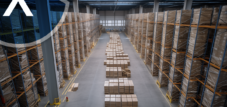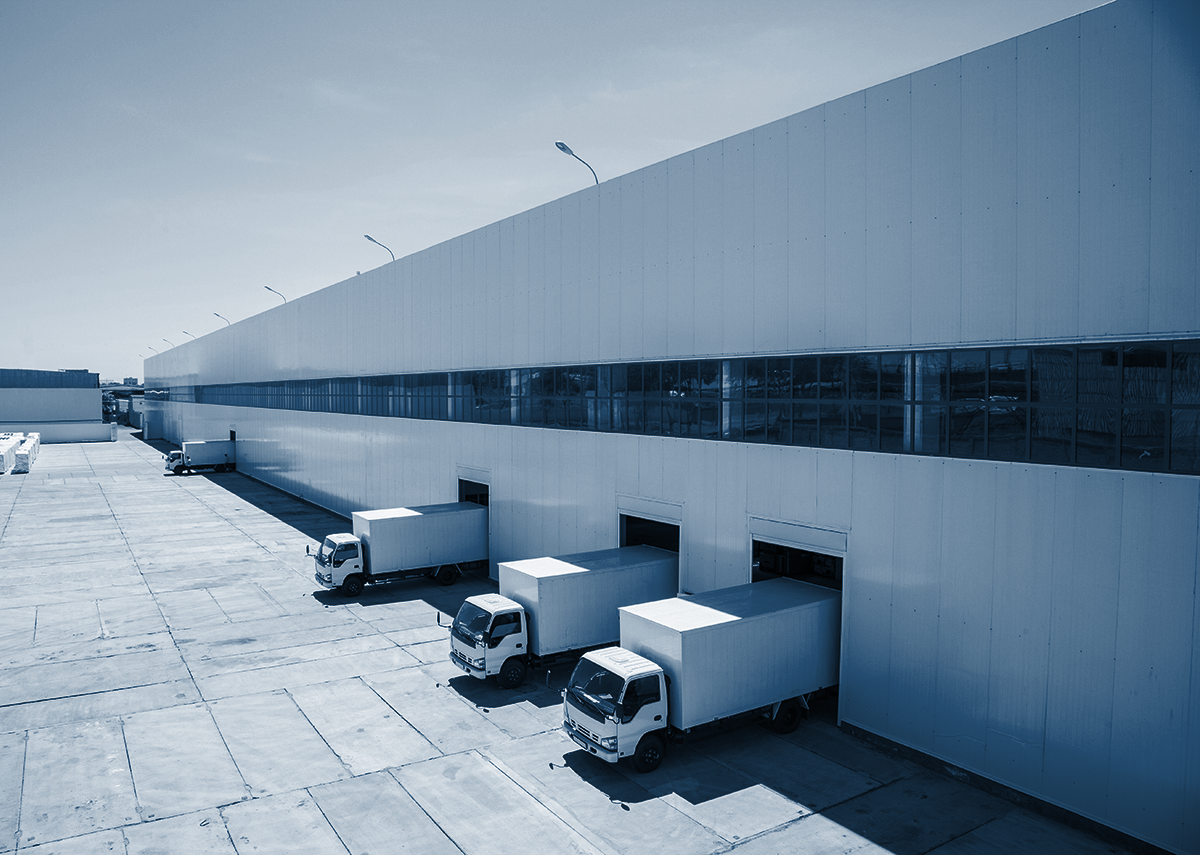
Symbolic image: Retrofit in a high-bay warehouse – Targeted upgrades pay off – Image: Xpert.Digital
🏭 Retrofit in high-bay warehouses: Targeted upgrades pay off
A solidly constructed high-bay warehouse can meet the operator's performance requirements virtually without limitations even after 20 years of intensive use. Provided all components are regularly maintained and serviced, the service life of storage and retrieval machines or pallet conveyor systems can be extended even further through targeted retrofitting. With LogBer's support, costly new investments can be avoided in a comparatively simple way.
💼 Success story: Longevity through retrofitting
“Renewing aging system components and modernizing outdated control and drive technology is still economically viable and worthwhile for a high-bay warehouse, even after more than 30 years of operation,” says Gerhard Keller, Managing Director of LogBer GmbH. “While such an investment is typically depreciated over 15 to 20 years, in practice even high-bay warehouses operating 24/7 with high performance requirements often function well beyond this period.” As an example, Gerhard Keller cites a system built in 1980 that underwent a targeted retrofit 15 years ago based on a concept developed by LogBer and is still operating unchanged after more than four decades.
📊 Logistics planner with relevant experience
For a successful retrofit in a high-bay warehouse, extensive preparatory work and experienced logistics planners who know how to handle the uncertainties of such a project are essential. In this specific case, LogBer oversaw the renewal of the entire control technology for both the stacker cranes and the pallet conveyor system. All drives for the stacker cranes were replaced with energy-efficient, easy-start drives. Unevenly worn guide rails had to be ground down, and one stacker crane damaged by high dynamic forces had to be completely replaced because significant weld cracks had formed in the carriage and mast.
🛠️ Challenges and Solutions
Beforehand, however, several hurdles had to be overcome, reports LogBer Managing Director Gerhard Keller: “The manufacturer and installer of the high-bay racking system no longer existed. Nevertheless, we found three companies in the logistics market specializing in retrofitting third-party systems for an initial inspection and assessment of the potential costs.” Finally, the systems were modernized aisle by aisle while remaining in operation: Control systems (PLC, sensors, etc.) were brought up to the state of the art, the drive technology was replaced with more energy-efficient and easy-starting systems, travel and guide rails were readjusted, travel rails were ground, wheels were renewed, and finally, the warehouse management and material flow control were adapted to contemporary logistics requirements.
📝 Careful planning and a step-by-step approach
Nevertheless, Gerhard Keller notes: “The preparation, planning, and execution of a retrofit/reengineering project is very complex overall, and the necessary measures are difficult to calculate in advance.” In order to estimate the effort as precisely as possible, LogBer divides the process into four phases: The analysis of the current situation and the operational requirements is followed by the development of the retrofit concept, then by detailed planning and tendering of the necessary work, and finally by implementation, testing, and commissioning.
💰 Is it worth the effort?
“While the overall effort is quite substantial, it is definitely worth it,” Gerhard Keller summarizes. The retrofit of the facility, built in 1980 and carried out with the support of LogBer, ultimately made the construction of a new high-bay warehouse unnecessary – and reduced the costs to just 20 percent of the otherwise required new investment.
In today's world, where sustainability and resource conservation are becoming increasingly important, the story of the high-bay warehouse retrofit demonstrates how existing systems can be used reliably and efficiently for many more years through skillful modernization and maintenance. It exemplifies how technological innovation and logistics planning can go hand in hand to increase operational efficiency while simultaneously reducing environmental impact.
💼 LogBer GmbH
LogBer GmbH has been planning solutions and optimizing processes for efficient logistics for more than 25 years. As independent partners, planners, and project managers, LogBer provides comprehensive support for projects from analysis and planning to tendering and implementation – across all industries, from manual and fully automated warehouses to complete sites.
📣 Similar topics
- 🏭 High-bay warehouse retrofit: Maximizing lifespan
- 🌟 Sustainable warehouse logistics: The value of retrofitting
- 💼 Successful modernization of high-bay warehouses
- 🔄 Old becomes new: High-bay warehouse retrofit projects
- 📈 Increased efficiency through high-bay warehouse retrofit
- 🔧 Expert tips for warehouse modernization
- 🏗️ High-bay warehouse: Maintenance and retrofit in focus
- 🏢 Logistical sustainability: High-bay warehouse optimization
- 💹 Cost efficiency through high-bay warehouse retrofit
- 🏆 Success stories: High-bay warehouse revitalization
#️⃣ Hashtags: #HighBayWarehouse #Retrofit #WarehouseLogistics #Modernization #EfficiencyImprovement
🏢🌿 Logistical sustainability: High-bay warehouse optimization
Logistical sustainability is playing an increasingly important role in today's business world. Companies are recognizing that they must not only focus on economic efficiency, but also on environmental and social responsibility. An important component in this context is the optimization of high-bay warehouses, as these can have a significant impact on a company's environmental footprint and operating costs.
High-bay warehouses are widespread in many industries and serve to store large quantities of goods in a small space. They are often highly automated and offer many advantages, such as better space utilization and faster product picking. Nevertheless, there are some important aspects that should be considered when optimizing these warehouses to improve their logistical sustainability.
1. 🌍 Energy efficiency and resource use
The energy efficiency of a high-bay warehouse is crucial for its sustainability. It is essential to ensure that the lighting, air conditioning, and warehouse automation systems operate as efficiently as possible. This can be achieved through the use of LED lighting, intelligent control technology, and regular maintenance.
Furthermore, resource utilization should be optimized. This includes minimizing packaging materials and avoiding waste during the storage and transport of goods. An intelligent shelving system can help reduce space requirements and make product storage more efficient.
2. ♻️ Sustainable materials and construction
When planning and constructing a high-bay warehouse, sustainable materials and construction methods should be given preference. This can include the use of recycled building materials, energy-efficient insulation materials, and environmentally friendly roof and facade systems. A well-insulated warehouse can reduce energy consumption for air conditioning and maintain a stable temperature in the storage areas.
3. 🤖 Automation and Robotics
Automation technology and robotics play a crucial role in optimizing high-bay warehouses. Robots can work more efficiently than humans and can help accelerate the storage and transport of products. This can not only reduce operating costs but also energy consumption, as robots require less energy than human workers.
However, it is important to ensure that the robots and automation systems used are energy-efficient and easy to maintain. This can be achieved through the use of intelligent control systems and regular training for operating personnel.
4. 🌐 Sustainable sourcing and supply chain
Logistical sustainability doesn't end at the warehouse; it extends to the entire supply chain. Companies should strive to develop sustainable procurement practices and select suppliers who use environmentally friendly materials and processes. This can help reduce the ecological footprint of the entire supply chain.
Furthermore, supply chain logistics planning should be designed to optimize transport routes and minimize emissions. This can be achieved, for example, by using environmentally friendly means of transport and consolidating deliveries.
5. 📊 Data analysis and optimization
Continuous data analysis is crucial for optimizing a high-bay warehouse. Modern technologies like the Internet of Things (IoT) make it possible to collect and analyze a wide range of data from the warehouse. This can help identify and eliminate bottlenecks and inefficient processes.
By using data, inventory levels can be optimized, product picking improved, and storage capacity maximized. This leads not only to better operational efficiency but also to a reduction in energy consumption and environmental impact.
6. 👩🔧 Employee engagement and training
Employees play a crucial role in ensuring the logistical sustainability of a high-bay warehouse. It is important to raise their awareness and train them in sustainable practices. This can help them adopt energy-efficient behaviors and minimize waste.
Furthermore, employees should be involved in the optimization process. They can provide valuable insights and ideas for improving warehouse processes and reducing environmental impact.
🏢📦 Optimization of high-bay warehouses
Optimizing high-bay warehouses for logistical sustainability is a complex task encompassing various aspects of warehousing and the supply chain. Companies that opt for sustainable practices can not only reduce their environmental impact but also lower costs in the long term and strengthen their image as environmentally conscious businesses.
The measures mentioned above, such as improving energy efficiency, using sustainable materials and technologies, automation and robotics, optimizing the supply chain, data analysis, and employee engagement, are crucial for success in this area. Companies should be aware that logistical sustainability is not only a commitment to the environment but can also offer economic advantages.
📣 Similar topics
- 🌿 Sustainable Logistics: Paths to Ecological Efficiency
- 🏗️ Green building: Sustainable materials for high-bay warehouses
- 🤖 Warehouse automation: Robots and their role in sustainability
- 🚚 Environmentally friendly supply chains: Sustainable procurement and transport
- 📊 Data analysis for sustainability: Optimizing warehouse processes
- 👩🏭 Employee engagement for the environment: training and participation
- 💡 Logistics of the future: Sustainability as a competitive advantage
- 🌍 Environmental responsibility in the business world
- 💰 Reduce costs through sustainability in warehousing
- 🔍 Sustainable high-bay warehouses: A holistic view
#️⃣ Hashtags: #Sustainability #Logistics #HighBayWarehouse #EnvironmentalProtection #Efficiency

Xpert.Plus Warehouse Optimization - High-bay warehouses and pallet warehouses: Consulting and planning
Plan your solar system for the most common applications conveniently online with our solar system planner!
With our user-friendly solar system planner, you can design your individual solar system online. Whether you need a solar system for your home, your business, or for agricultural purposes, our planner allows you to consider your specific requirements and develop a customized solution.
The planning process is simple and intuitive. You simply enter the relevant information. Our planner takes this information into account and creates a customized solar system that meets your needs. You can try out different options and configurations to find the optimal solar system for your application.
Furthermore, you can save your plan to review it later or share it with others. Our customer service team is also available to answer any questions and provide support to ensure your solar system is optimally planned.
Use our solar system planner to design your individual solar system for the most common applications and accelerate the transition to clean energy. Get started now and take an important step towards sustainability and energy independence!

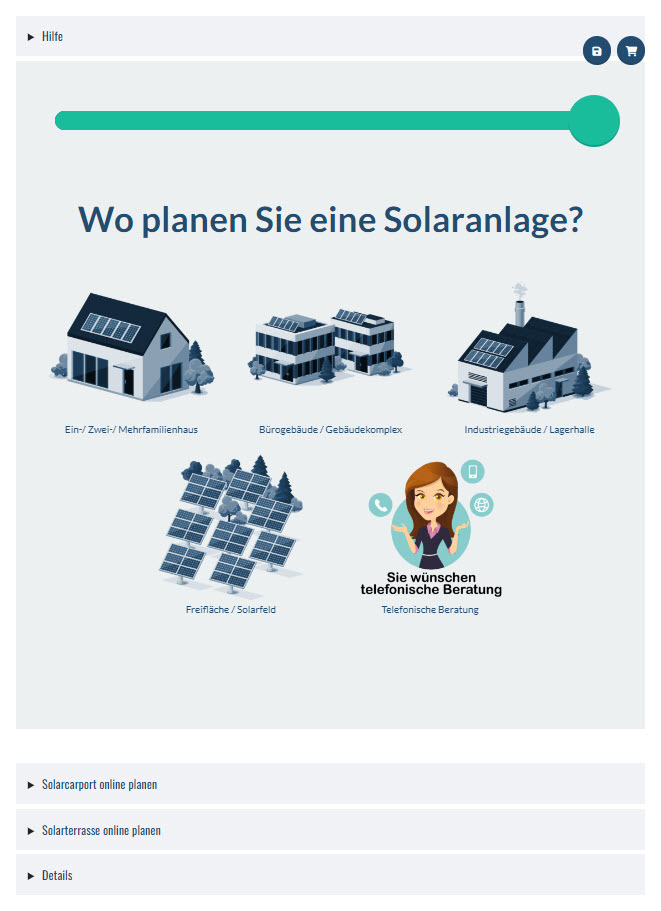
The solar system planner for the most common applications: Plan your solar system online here - Image: Xpert.Digital
More information here:
We are here for you - Consulting - Planning - Implementation - Project Management
☑️ Smart City & Factory: Industry expert for energy-efficient 5G buildings and halls, as well as consulting and installation of solar systems
☑️ Xpert.Plus - Logistics consulting and logistics optimization
☑️ Industry expert, here with his own Xpert.Digital industry hub with over 2,500 specialist articles

Konrad Wolfenstein
I would be happy to serve as your personal advisor.
You can contact me by filling out the contact form below or simply call me on +49 7348 4088 965 .
I'm looking forward to our joint project.
Write to me


Xpert.Digital - Konrad Wolfenstein
Xpert.Digital is a hub for industry focusing on digitalization, mechanical engineering, logistics/intralogistics and photovoltaics.
With our 360° Business Development solution, we support renowned companies from new business to after-sales.
Market intelligence, smarketing, marketing automation, content development, PR, mail campaigns, personalized social media and lead nurturing are part of our digital tools.
You can find more information at: www.xpert.digital - www.xpert.solar - www.xpert.plus
Keep in touch