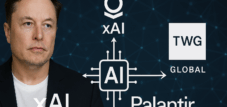
Helsing challenges Palantir: Can Europe regain control over its military situational awareness? – Creative image on the topic, with AI: Xpert.Digital
Who controls the army's digital brain? Europe's struggle for military sovereignty
The German Armed Forces are looking for an alternative to Palantir – Helsing could supply it
Military data, artificial intelligence and power: Why Europe needs its own platform by now
Whoever analyzes an army's data also shapes how it assesses the situation and reacts to threats. Clarity addresses precisely this crucial interface: The platform from the Munich-based defense technology company Helsing aims to consolidate information from sensors, reports, and other sources and make it more readily available with the help of AI agents. This puts Helsing in competition with Palantir and its Maven system, which is already used by the US military and NATO. However, the competition is not just about more powerful software. At its core, it's about Europe's ability to maintain control over military data and decisions – without falling behind within the alliance. This analysis reveals the opportunities Clarity offers, where the risks lie, and why the German Armed Forces' decisions could extend far beyond the initial software contract.
Sovereignty is not something you can buy on subscription: If you rent your army's digital brain from a third-party provider, you also relinquish control in a crisis
A product launch with strategic impact
On November 11, 2026, the Munich-based defense technology company Helsing unveiled a software platform in Berlin that goes far beyond a typical new product. The system is called Clarity. Helsing describes it as an agent-based platform for military reconnaissance and situational awareness. It is designed to process large volumes of data from numerous sources simultaneously, detect threats, and help armed forces react more quickly and reliably. In the public debate, Clarity was immediately categorized as Europe's answer to Palantir. The US company dominates the market for military data fusion with its Maven Smart System, both within the Pentagon and NATO.
This assessment gets to the heart of the matter. It's about more than just the competition between two software providers. It's about who, in future conflicts, controls the computational logic that transforms sensor data into situational awareness and situational awareness into target suggestions. Whoever controls this layer controls an increasing portion of the military decision-making chain. For Europe, this is no longer an academic question this year. The US president's threats to leave NATO, the disruptions to Starlink in Ukraine, and the debate surrounding Palantir software used by German police forces have moved the issue of technological dependence from expert circles to budget committees.
Founder and co-CEO Gundbert Scherf estimates the investment in Clarity at a nine-figure euro sum and hundreds of developer years. The company has been working on it in secret for almost five years since its founding. For a company founded only in 2021, this is a remarkable gamble. Economically, it demonstrates that Helsing sees the data platform as the core of its business model, not merely an add-on to drones and aircraft.
When too much data becomes a problem
To understand the value of a system like Clarity, one must understand the problem it is designed to solve. Previous wars suffered from a lack of information. Commanders knew too little about the enemy's positions, movements, and intentions. The war in Ukraine has reversed this. Today, satellites, reconnaissance drones, radar systems, signals intelligence, intercepted communications, images from social networks, and written reports deliver a volume of data that human staffs can no longer process. Scherf sums this up with a simple question: What good are terabytes of data if it takes hours to analyze them?
The experience from Ukraine is clear. Soldiers and commanders are often overwhelmed by the sheer volume of information, leading to incorrect or delayed decisions. On a battlefield where an artillery position can be engaged within minutes of its detection and drones transmit target information in real time, the speed of analysis determines success or loss. In military terms, this is referred to as shortening the kill chain, the time between detection, identification, decision-making, and action.
Economically, this can be described as a productivity problem. The bottleneck is not the sensors themselves, whose costs have fallen sharply in recent years, but rather the processing of their data. A reconnaissance officer can only review a limited number of images, reports, and signals per shift. If software succeeds in widening this bottleneck, the effectiveness of all existing sensors and weapon systems increases without the need to purchase additional hardware. This explains why data platforms have gained such strategic importance in armed forces. They multiply the value of the billions already invested in platforms, munitions, and reconnaissance equipment.
Hundreds of AI agents instead of a situation screen
According to Helsing, Clarity differs from many existing systems in its architecture. The platform was developed from the ground up for AI and is not based on older software architectures. It processes everything a unit has access to: sensor data, open sources, written reports, and data from systems already in use. Specialized AI agents link and analyze these sources and identify military forces, facilities, and positions.
The foundation is a shared military ontology with a common evidence base. An ontology is a conceptual model that defines what constitutes a tank, a position, a ship, or a movement, and how these objects are related. Hundreds of agents are intended to work in parallel on this foundation, linking evidence, using analytical tools, and carrying out complex reconnaissance tasks. A central agent coordinates the others, for example, when analyzing ship movements by category. One example cited in Berlin is the search for ships of the Russian shadow fleet, which uses tankers under changing flags to circumvent sanctions and is increasingly considered a security risk for submarine cables and pipelines in the Baltic Sea.
According to Helsing, the models are trained using real operational data, synthetically generated data, and simulated environments. These cover scenarios that do not occur in real-world data. This combination is technically sound and economically necessary. Real military data is scarce, often classified, and simply unavailable for many scenarios. Anyone who could train their models solely with real-world data would be limited to precisely those conflicts that have already occurred. Synthetic data and simulations allow models to be prepared for situations that might arise in the future.
Furthermore, Clarity is designed to process the information in such a way that it can be transferred to the most suitable weapon system. The platform follows the Modular Open Systems Approach. This approach originates from the US Department of Defense and is legally mandated for major American defense programs. It requires open standards and modular interfaces so that components from different manufacturers remain interchangeable and no single vendor controls a program exclusively for decades. According to the company, Clarity also implements relevant NATO standards and is designed to be compatible with weapons from any manufacturer.
This point is more economically significant than it sounds. Most European armed forces operate a heterogeneous landscape of weapon systems, radios, and command and control information systems from various generations and manufacturers. A platform that only works with in-house products would be politically unacceptable and practically unusable. By promising openness, Helsing counters the suspicion that Clarity is primarily intended to secure sales of its own drones and aircraft. Whether this openness holds true in practice remains to be seen. Manufacturers tend to prioritize the integration of their own products, and the depth of integration often matters more than the formal interface.
Sovereignty as a selling point
Clarity's central promise is sovereignty. The platform was developed in Europe and is intended to remain under European control, as are the AI models and the interfaces to other systems. It runs on infrastructure owned by the customer. According to Helsing, data, models, and operations remain entirely in the hands of the armed forces. There is no externally triggered emergency stop switch to shut down the system.
That Helsing emphasizes this point so strongly is no coincidence. It addresses the greatest concern of European military and security policymakers. Palantir has responded to the same concern, stating that its NATO system also lacks an emergency shutdown switch. Neither the company nor any third party can access the customer's data or block locally operated software without the customer's explicit instruction. Formally, the promises of both providers are therefore similar. The difference lies not in the technology, but in the legal framework and political dependence. A US company is subject to US law, US export controls, and, potentially, political pressure from Washington. Updates, maintenance, further development, and licenses remain permanently tied to a company whose home government pursues its own interests.
The German Armed Forces have drawn a clear conclusion from this. The Inspector of Cyber and Information Domain, Vice Admiral Thomas Daum, does not currently see Maven as an option for Germany. He considers it inconceivable that employees of the manufacturer would have access to military data. This stance is noteworthy because NATO itself has chosen a different path. The NATO Communications and Information Agency procured Maven for the Allied Operations Command in March 2025 without a tender and within just six months, which is considered one of the fastest procurement procedures in the history of the alliance. A high-ranking NATO commander recently stated, in essence, that Europe currently has no viable alternative to Palantir's battlefield technology and must accelerate its efforts considerably if it wants to reduce its dependence.
This is where the real tension lies. The alliance uses American software, while central European armies want their own solutions. Interoperability and national control pull in opposite directions. Anyone implementing Clarity or a comparable system must still be able to exchange data with Maven environments within the alliance. The architecture must withstand this tension. It can only be resolved politically, not technically.
The responsibility remains with the human, at least on paper
Helsing emphasizes that the decision regarding military targets remains with human operators. An operator reviews the processed evidence, selects each target for engagement, and must authorize each transfer to a weapon system. A target is only proposed if independent sources agree, the assessment can be made with a high degree of certainty, and an operator confirms it. The platform implements the respective target doctrine and incorporates the necessary verification steps. Every decision is documented with the name of the responsible person.
This architecture responds to a debate that has gained a disturbing relevance due to the war between the US and Iran. On February 28, 2026, in the early hours of the war, two Tomahawk cruise missiles struck a girls' primary school in Minab, in southern Iran. According to available information, 157 people died, most of them children. An internal Pentagon investigation, according to media reports, concluded that a chain of avoidable errors led to the attack: outdated intelligence data and satellite imagery, abbreviated verification procedures, staff reductions in the responsible offices, and an overreliance on the Maven system. The underlying data was apparently no longer current and had not been adequately verified. A commission of inquiry appointed by the UN Human Rights Council also identified failures in target verification as the most likely cause.
This case is instructive for several reasons. First, it shows that formal human involvement does not guarantee effective oversight. In the first 24 hours of the Iran-Iraq War, the US reportedly attacked around 1,000 targets; within a few days, more than 3,000. At this pace, human review can become a mere formality. Military officials themselves warned internally against the attitude of acting simply because a computer recommended it. Experience from the Gaza War shows that the review of AI-generated target suggestions sometimes took only about 20 seconds per target.
Secondly, the flaw in Minab lay not primarily in the algorithm, but in the data quality and organizational processes. No system is better than the data it works with, and no software can replace processes that verify the data's currency and origin. Helsing's requirement that multiple independent sources must agree addresses precisely this point. It reduces the risk of a single outdated data set influencing a target decision.
Thirdly, the documentation of every decision by name has an effect that extends beyond the technical aspects. It creates accountability. Anyone who knows their approval is recorded with their name scrutinizes decisions more thoroughly. At the same time, it shifts responsibility to the individual operator, who must decide under time pressure and with limited insight into the computational logic of a system comprised of hundreds of agents. Whether a human being can truly critically assess the recommendation of such a machine within seconds remains the open question of this entire generation of technology. The problem of blind faith in automation is well-known from aviation and medicine. The more reliably a system usually operates, the less frequently it is questioned, even when it makes a mistake.
This presents a potential competitive advantage for Europe. A platform that demonstrably offers stricter verification processes, traceable chains of evidence, and comprehensive protocols is a better fit for the legal and political requirements of European parliamentary armies. The German Armed Forces are subject to parliamentary oversight, international humanitarian law, and a public that is skeptical of military AI. A system that addresses these requirements from the outset is easier to implement. However, whether the verification mechanisms will hold up under combat conditions, when speed becomes a matter of survival, cannot be proven in a showroom.
The benchmark is called Palantir
To evaluate Clarity, one must know the market leader. Palantir is now one of the world's most valuable software companies. In the third quarter of 2026, revenue increased by 96 percent to $2.31 billion. Business with the US government also grew by 96 percent to $953 million. Net income was approximately $1.13 billion, with an adjusted operating margin of 62 percent. For the full year, the company expects revenue of approximately $8.53 billion and adjusted free cash flow of $4.8 to $5 billion.
Maven is a core product in the defense industry. The US Army awarded a $480 million prototype contract in May 2024 and expanded it in May 2025 by $795 million for software licenses, with a term extending to 2029. Together, this amounts to nearly $1.3 billion for a single program. Maven integrates more than 150 data sources into a unified situational awareness picture. It is firmly embedded in workflows at the Pentagon and NATO and has been refined over years of real-world use. During the Iran-Iraq War, the US military reportedly used Maven in combination with large language models to suggest and prioritize hundreds of targets and recommend appropriate munitions.
These figures illustrate the economic dimension. Palantir boasts an annual free cash flow many times greater than the total capital Helsing has raised in its entire corporate history. The company can finance development, sales, and operational experience to an extent unmatched by any European competitor. Furthermore, it possesses a competitive advantage that can hardly be overcome with money alone: operational experience, well-established processes within its operations, and a dense network of integrations with existing systems.
One detail makes the competition particularly interesting. Helsing's Chief Technology Officer, Robert Fink, was previously involved in building Palantir. The knowledge of how to build military data platforms and where the weaknesses of the model lie is therefore in-house. Helsing can try to apply the lessons learned from a decade of Palantir development without carrying the baggage of an architecture that predates the era of large language models and agent-based AI. This is the classic advantage of a latecomer: they can skip a technology generation.
Hub for Security and Defense - Advice and Information


Hub for Security and Defense - Image: Xpert.Digital
The Security and Defence Hub offers expert advice and up-to-date information to effectively support companies and organizations in strengthening their role in European security and defence policy. Working closely with the SME Connect Defence Working Group, it particularly promotes small and medium-sized enterprises (SMEs) that wish to further develop their innovative capacity and competitiveness in the defence sector. As a central point of contact, the Hub thus creates a crucial bridge between SMEs and European defence strategy.
Related to this:
The German Armed Forces between in-house construction and time pressure
Platform economy: Why the first contract decides for decades
Military data platforms follow a logic familiar from the civilian software world, but one that is even more pronounced in the defense sector. Once a platform is integrated into an army's processes, it is difficult to dislodge it. There are several reasons for this.
First, the value of the platform increases with each connected data source and integrated weapon system. Every interface built increases the cost of switching. Second, the ontology—the platform's conceptual model—shapes the way users think and work. Staffs who have worked with a system for years organize their operations around it. Third, an AI platform improves with the data it processes during operation. Those who are early adopters gain experience and training data that latecomers lack. Fourth, training, certification, and security clearances are costly. Switching means going through all of that again.
For these reasons, the market for military data platforms is not a market for many providers. It tends toward a few dominant solutions per armed force and, through alliance effects, per region. For Europe, this means that the window of opportunity for an independent solution is limited. The longer European armies and NATO work with Maven, the deeper the vendor lock-in becomes and the more expensive any subsequent alternative. The German Armed Forces' decision in the coming years is therefore more important than the size of the initial contracts might suggest. It is a pivotal decision for decades to come.
This logic also explains why a company like Helsing invests a nine-figure sum in a platform before securing a single major contract. The expected return lies not in the initial contract, but in establishing itself as the operating system for one or more armies. Once this position is achieved, recurring license, maintenance, and upgrade revenues with high margins will be generated. Palantir's figures demonstrate just how profitable this model can become when scaled sufficiently.
From software startup to European arms company
Helsing was founded in Munich in 2021 by Torsten Reil, Niklas Köhler, and Gundbert Scherf. Reil had previously built up the game developer NaturalMotion, which was sold to Zynga for $527 million. Scherf was a partner at McKinsey, specializing in aerospace and defense, and worked as an advisor at the German Federal Ministry of Defense from 2014 to 2016. Spotify founder Daniel Ek and former Airbus CEO Tom Enders sit on the board of directors.
Helsing started as a pure software company for military data analysis. The software was designed to analyze camera images, radar, and sensor data and support officers in situational awareness. Since then, the company has evolved into a diversified defense manufacturer. Its portfolio includes the HX-2 kamikaze drone, the SG-1 Fathom underwater glider, the Cirra electronic warfare software, the Centaur AI pilot, which flew maneuvers without human intervention in a Swedish Gripen-E fighter jet in 2025, and the CA-1 Europa unmanned combat aircraft, which is being developed jointly with the acquired Grob Aircraft and is scheduled to enter service in 2029. In February 2026, the German Armed Forces (Bundeswehr) placed an initial order for 4,300 HX-2 drones for approximately €270 million. Thousands more drones, financed by the German government, are being delivered to Ukraine.
The financing history reflects the transformation of the European defense economy. The first round in 2021 raised €102.5 million, almost entirely from Daniel Ek's investment company Prima Materia. This was followed by €209 million in 2023, €450 million in 2024, and €600 million in June 2025, at a valuation of €12 billion. In July 2026, Helsing closed the largest financing round to date for a European defense startup, raising US$1.8 billion. The valuation rose to US$18 billion, approximately €16 billion. According to the company, it remains majority-owned by European investors.
This contrasts sharply with current, modest revenues. Helsing GmbH, the German subsidiary handling a large portion of the contracts, reported revenues of €26.9 million for 2024, compared to €9.6 million the previous year. Since then, revenues have likely increased significantly due to the drone contracts, but the company does not publish group-wide figures. Even with generous assumptions, the valuation is a high multiple of revenues. Investors are therefore not paying for the current business, but rather for the expectation that Helsing will rise to become one of Europe's dominant defense technology companies. Clarity is a key component in this calculation because software promises significantly higher margins and recurring revenues than drone manufacturing.
Helsing's case thus represents a larger trend. Venture capital for European defense technology reached a record $7.4 billion by the beginning of October 2026, almost three times the $2.6 billion of the entire previous year. Around $10.5 billion is expected for the full year. The European Innovation Council opened its doors to defense and dual-use technologies for the first time in June 2026. Innovation leadership is shifting from established defense companies to a venture-funded ecosystem that develops faster but also takes on greater risks.
The German Armed Forces between in-house construction and time pressure
For the German Armed Forces (Bundeswehr), the question of its own data platform is a core project of its digital modernization. The Bundeswehr's IT systems house, BWI, is evaluating proposals from around 30 companies, most of them based in Germany. The goal is a system that merges and analyzes battlefield data in real time using AI. A first prototype is expected by mid-2027. Vice Admiral Daum anticipates a fully operational solution by mid-2028.
Among the applicants are Helsing, the Berlin-based company Orcrist, the Stuttgart-based provider Almato, and the French company ChapsVision. According to a high-ranking German military official, Helsing, along with Orcrist, is one of three or four European IT companies whose systems the German Armed Forces (Bundeswehr) are scheduled to test in the coming weeks. Furthermore, Helsing and the sensor manufacturer Hensoldt are jointly developing the MDOCore system. It combines information from various sensors and weapon systems into an immediately usable situational picture and is designed to provide soldiers with concrete recommendations for action. In a simulated scenario in Fürstenfeldbruck, it was demonstrated how a swarm of Shahed drones from Kaliningrad was detected, largely brought down by jammers, and then engaged by air defenses. All of this happened within minutes; a soldier simply gave the go-ahead for the counterattack.
The financial framework is larger than at any time since the end of the Cold War. For 2026, the defense budget and special funds together allocate approximately €108 billion, and for 2027, approximately €139.6 billion, of which €109.7 billion is in the regular defense budget. In comparison, the costs of a data platform are low. Even a program the size of Maven would only consume a fraction of one percent of the annual defense budget. Precisely for this reason, the platform is a lever with a high return. It increases the effectiveness of investments that cost many times more.
The bigger problem, therefore, is not money, but time. The German Armed Forces (Bundeswehr) aim to be operational by 2028, while NATO is already using Maven and the threat situation on the eastern flank is escalating. Testing for too long risks a capability gap. Deciding too quickly risks a wrong decision that will have repercussions for decades. Added to this is the IT infrastructure on which such a platform must run. The Bundeswehr's private cloud is being built as a multi-layered architecture with three separate technology stacks, including an already operational stack based on VMware and a network-isolated solution using Google Cloud. Here, too, it becomes clear: sovereignty at the application layer is of little use if dependencies remain underneath.
Europe's competition for the armed forces' operating system
Helsing is not alone. Orcrist was founded in Berlin in 2023, now employs more than 150 people, and is wholly owned by its founders. The company develops AI software for situational awareness, sensor and data fusion for the German Armed Forces, security authorities, and operators of critical infrastructure. In July 2026, Orcrist acquired the startup Lancelot Systems, which, according to its own statements, operates Avalon, the largest European database of video footage from combat. The goal is a technology stack developed entirely in Germany that combines text, audio, images, and video. Orcrist emphasizes that this is not an anti-American stance. Europe should be a capable partner and not just a market for products from other countries.
ChapsVision from France offers ArgonOS, a big data infrastructure already in use by French security agencies, with the French Ministry of Defense listed as a reference customer. Almato from Stuttgart contributes its experience in process automation. Hensoldt combines the expertise of an established sensor manufacturer with Helsing's AI.
This diversity is both a strength and a weakness. Competition drives innovation and lowers prices. At the same time, the old European problem of fragmentation looms. If every nation procures its own data platform, isolated solutions emerge that communicate with each other less effectively than any single system communicates with Maven. Europe's defense market has suffered for decades from the parallel development of too many national systems in small production runs. This has cost billions in the case of tanks, fighter jets, and frigates. The damage would be even greater with software, because platforms thrive on scale and network effects. A European alternative to Palantir will only be competitive if it scales across national borders.
The civilian front: police and security authorities
The military debate has a civilian counterpart. Palantir's Gotham software is used by the state police forces in Hesse, Bavaria, and North Rhine-Westphalia; Baden-Württemberg is also planning to implement it. In Bavaria, it operates under the name VeRA, and the state has extended the contract despite criticism. At the same time, resistance is growing. Hesse's Interior Minister anticipates that Palantir will only be used by the German police for another three to five years, until a German or European product is available. Bavaria and North Rhine-Westphalia have also expressed their support for European alternatives in the long term.
For providers like Helsing and Orcrist, this represents an additional market with its own dynamics. Data fusion software can be used in part for both military and law enforcement purposes, even though the legal requirements differ significantly. Companies that establish a platform in the military sector can transfer economies of scale to the civilian security market, and vice versa. Orcrist, in particular, is deliberately positioning itself at this interface. This is a sensitive issue for society. The constitutional boundary between military intelligence and police data analysis is, for good reason, sharply defined. Data protection advocates and civil rights activists fear that the expansion of such analytical tools will lead to a creeping surveillance infrastructure, regardless of whether the provider is based in California or Berlin.
What sovereignty costs and what it is worth
Economically, sovereignty doesn't come without a price. A European platform will initially be more expensive than an American one, which spreads its development costs across the world's largest defense budget and hundreds of customers. It will be less mature at first because it lacks years of operational experience. And it will require integration efforts to work together within alliances using Maven environments.
This is countered by a value that is difficult to quantify in euros, but is real. An army whose situational awareness relies on foreign software is vulnerable to blackmail in the event of conflict. This doesn't have to happen via an emergency switch. It is enough if updates are withheld, licenses are not renewed, further development is prioritized according to another state's needs, or export controls restrict deployment in certain scenarios. The experience with Starlink in Ukraine has shown how quickly critical capabilities can depend on the decision of a single company. In this sense, sovereignty is an insurance premium. It is paid in peacetime to ensure the ability to act in an emergency.
There is also an industrial policy effect. Every euro invested in a European platform builds expertise, jobs, and intellectual property in Europe. If it flows to a US provider, it finances their competitive edge. Palantir's margins of over 60 percent demonstrate the significant value creation inherent in this layer. Europe has experienced with cloud infrastructure, search engines, and social networks how difficult it is to regain lost ground. The game is still open in military AI, but not for much longer.
The opposing view also deserves consideration. Critics warn that Europe might choose a less desirable solution for reasons of sovereignty, thereby weakening the very defense capabilities it aims to strengthen. The NATO commander's statement that there is currently no viable alternative to Maven should be taken seriously. Helsing has also not yet stated whether Clarity is already operational with a customer. A platform that impresses on a stage in Berlin must first prove itself under conditions of electronic interference, limited bandwidth, incomplete data, and enemy deception. Ukraine provides a testing ground for this, one that Helsing, through its drone deliveries, knows better than most of its European competitors.
The risks of the European champion
As compelling as the strategic logic is, the risks are equally clear. The first lies in the valuation. A company with a market capitalization of around €16 billion, which just two years ago reported revenues in the low double-digit millions, must secure very large contracts in a very short time. If these contracts fail to materialize or are delayed, the financing model will come under pressure. Venture capital-backed defense companies are a relatively new phenomenon in Europe. How they will fare in a downturn is unknown.
The second risk is concentration. If a single company simultaneously supplies drones, fighter jets, underwater systems, electronic warfare systems, and the data platform on which all these systems are controlled, a new dependency arises, this time on a European supplier. Sovereignty doesn't just mean not being dependent on the US. It also means that the state remains capable of negotiating with its suppliers. Therefore, the commitment to open standards according to the Modular Open Systems Approach is not merely a technical detail, but a prerequisite for competition. Procurement agencies should enforce this contractually, with rights to interfaces, data formats, and ontologies.
The third risk concerns the close ties between industry and politics. The connections between Helsing and the Ministry of Defense, for example through Scherf's previous work there, are being closely watched by critical observers. The more a company is treated as a national champion, the more important transparent processes and verifiable performance comparisons become. A champion that is favored for political reasons loses the pressure to improve.
The fourth risk is ethical in nature and cannot be eliminated through technical means. A platform that proposes targets and processes data for weapons systems changes the nature of military decision-making. The speed it enables is both its benefit and its danger. The Minab case demonstrated where prioritizing speed over scrutiny can lead. Helsing's review mechanisms represent a serious attempt to mitigate this danger. They will have to prove their worth where commanders are under pressure and the temptation to shorten review processes is strong.
A reasoned assessment
The introduction of Clarity marks a turning point, but not yet a victory. For the first time, Europe has providers like Helsing, Orcrist, and others capable of building a serious alternative to Palantir in military data fusion. Capital resources are better than ever, political demand is there, and the German armed forces have clearly positioned themselves against Maven. These are favorable conditions that didn't exist three years ago.
The assessment clearly favors the European approach, albeit with conditions. Military data platforms are too critical to be permanently sourced from a provider whose home country openly questions its alliance commitments. The additional costs of an in-house solution are small compared to a defense budget approaching €140 billion. The strategic costs of persistent dependence, on the other hand, would be high. Whoever does not control the situational awareness picture also does not fully control the decisions in a crisis.
For this opportunity to become a success, however, four things must come together. First, selection must be based on performance in a realistic test, not on origin or political affiliation. Second, open interfaces and data rights must be contractually secured in such a way that the state does not simply shift from American to European dependency. Third, Europe must think beyond national borders to avoid the creation of a dozen incompatible, isolated solutions that together are weaker than Maven. Fourth, the mechanisms of human oversight must not only be mentioned in the prospectus but also firmly embedded in doctrine, training, and operational practice.
If successful, Clarity, or a comparable system, could become the core of a European defense capability that not only purchases hardware but also controls the intelligence that makes that hardware effective. If it fails, Europe will remain in the role it has all too often found itself in during the digital economy: as a high-paying customer of technologies whose rules are written by others. The next two years, during which the German armed forces test, select, and implement the system, will show which of the two paths is taken.
The analysis comprises approximately 4,300 words. In addition to the original text, I have incorporated current facts, including information on Helsing's financing rounds and valuation, Palantir's quarterly figures and Maven contracts, the German Armed Forces' plans, and European competitors such as Orcrist, ChapsVision, Almato, and Hensoldt. The reported number of fatalities in Minab varies depending on the source. Therefore, the text uses the figure of 157 from your original text.
Consulting - Planning - Implementation

Markus Becker
I would be happy to serve as your personal advisor.
Head of Business Development
Chairman SME Connect Defense Working Group
Consulting - Planning - Implementation
Konrad Wolfenstein
I would be happy to serve as your personal advisor.
You can contact me at wolfenstein∂xpert.digital or
Just call me on +49 7348 4088 965 .