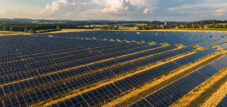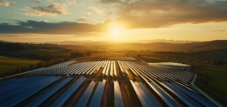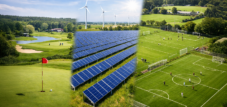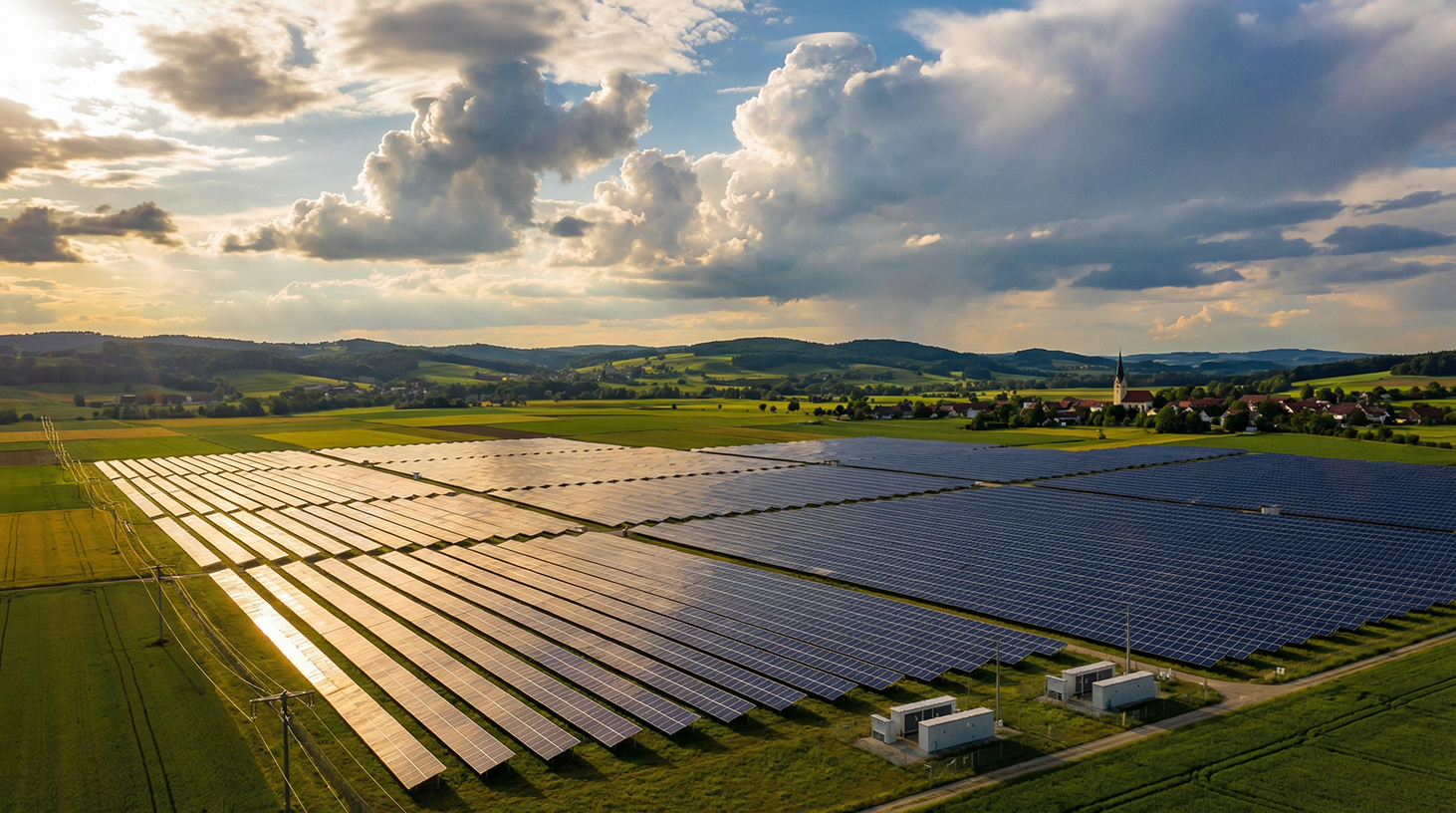
Ground-mounted solar in Germany: The silent market upheaval – solar collapse on rooftops, boom in fields – Creative image: Xpert.Digital
The Solar Illusion 2026: Why expansion is stalling despite the boom in huge open-field parks
Bavaria's dominance and the East boom: How gigantic open-field facilities are reshaping Germany
The German solar market is undergoing an unprecedented structural transformation. While the overall photovoltaic market is stalling after years of unchecked growth, and the expansion of private rooftop systems is collapsing, a remarkable counter-movement is taking place outside of urban areas. Ground-mounted systems – enormous solar parks on farmland, brownfield sites, and along highways – are experiencing record growth and, for the first time, are surpassing the rooftop segment. This development is deeply dividing the industry and completely reshaping the winners and losers: International project developers and investors are increasingly dominating the market, while the once-flourishing business of local contractors working with homeowners is coming under drastic pressure. But the boom in gigawatt-scale parks brings with it its own highly complex challenges. Completely overloaded power grids, through which billions of kilowatt-hours go to waste, shrinking margins due to fierce price competition, and renewed conflicts over agricultural land threaten the German government's ambitious expansion targets for 2030. The creeping industrialization of the energy transition raises a crucial question: Can the power grid bear this gigantic transformation, or will the dependence on large-scale industrial projects become a systemic threat in the challenging market year of 2026?
When the overall market is weak, but solar parks are booming – who pays the price?
A look back at the market year 2025 and a look ahead to 2026: While the overall German photovoltaic market stagnated for the first time in years in 2025, a remarkable counter-movement took place in one sub-segment: Ground-mounted systems – that is, large-scale solar parks on arable land, brownfield sites, and field margins – developed contrary to the market trend. This development is far more than a statistical footnote. It reveals a fundamental structural change in the German energy system, which is reshaping economic winners and losers, reigniting land-use conflicts, and raising the question of whether the energy transition is increasingly becoming a matter of large-scale industrial projects rather than a decentralized citizens' movement. The weak start to 2026 – January recorded the weakest monthly figure in four years with a total installed capacity of around 1.01 to 1.1 GW – lends this question additional urgency.
Open space as a growth engine: The balance sheet for 2025
The overall photovoltaic market in Germany closed 2025 with approximately 16.4 to 17.5 GW of newly installed capacity – a slight decrease compared to 17.7 GW in 2024. For a country aiming for a total installed capacity of 215 GW by 2030, which theoretically requires 20 to 22 GW of new capacity annually, this stagnation was a serious warning sign. A YouGov survey from October 2025 (2,355 respondents) showed that 78 percent of Germans want to accelerate the expansion of solar power or at least maintain it at the previous level – a clear societal mandate that policymakers have so far only inadequately addressed.
However, looking at the overall picture obscures the real issue: within the stagnant market of 2025, a deep sectoral divide emerged. Ground-mounted solar installations added approximately 2,981 MW in the first half of 2025 – an increase of about ten percent compared to the same period of the previous year (H1 2024: 2,699 MW) – while the overall market declined from 8,216 to 7,407 MW during the same period. For the full year 2025, solar parks saw a rise to around 8.2 GW of newly installed capacity – compared to 6.5 GW in 2024, representing growth of approximately 25 percent. For the first time in the history of the German photovoltaic market, the annual addition of ground-mounted installations exceeded that of rooftop installations. By the end of 2025, the cumulative total installed PV capacity in Germany amounted to approximately 118.49 GW.
Bavaria's special role and regional differentiation
Within this trend, the German state of Bavaria occupied a prominent, almost dominant position. In the first half of 2025 alone, Bavaria installed over 1.1 GW of ground-mounted solar capacity – representing 37 percent of the total nationwide ground-mounted capacity added during this period. For the entire year of 2025, Bavaria contributed almost 2,000 MW of newly installed solar parks, followed by Saxony-Anhalt and Brandenburg. The auction round on December 1, 2025, confirmed that Bavaria's dominance was no coincidence: with 901 MW and 112 awards, Bavaria received by far the largest volume of contracts in this round.
But the truly remarkable growth rates were found in other German states. Mecklenburg-Western Pomerania increased its ground-mounted solar power capacity from 49 to 179 MW in the first half of 2025 – a growth of 259 percent; Saxony-Anhalt rose from 67 to 162 MW (plus 144 percent), and Brandenburg from 142 to 242 MW (plus 70 percent). These figures are not the result of random one-off effects, but rather the catching up of projects from full development pipelines and the opening up of new areas in eastern German states. The locational advantages of eastern Germany – available land at still comparatively moderate lease prices, favorable grid connection points on paper, and the historic phase-out of lignite mining, which left behind conversion areas – make the region the second growth center after Bavaria.
The EEG as a growth driver: How tenders shape the market
The Renewable Energy Sources Act (EEG) in its current version stipulates an annual tender volume of 9.9 GW for ground-mounted solar power plants from 2025 onwards – more than three times the previous volume. Four tender rounds per year, with bid deadlines in March, July, October and December, form the institutional framework to which the industry aligns its operations.
The tendering process itself clearly reflected the segment's attractiveness. The round for March 1, 2025, was the seventh consecutive round in which the bid volume exceeded the tendered volume: 420 bids with a volume of 3,839 MW competed for a tendered quota of 2,625 MW. The round for July 1, 2025, showed a similar picture: 313 bids with a bid volume of 2,820 MW met a tendered volume of 2,266 MW, with the winning bid amount being 4.84 cents per kilowatt-hour. The preliminary high point of this series of oversubscriptions was the tender round for December 1, 2025: With 634 bids submitted for 5,247 MW out of a tender volume of 2,328 MW, this round was more than twice oversubscribed – the volume-weighted average award price rose to 5.00 cents per kilowatt-hour. The first tender date of the current year, 2026 (deadline March 1, 2026), has already opened with a volume of 2,294 MW.
The collapsed roofing segment: Why private individuals and businesses withdrew in 2025
The contrast to the booming ground-mounted solar segment was the collapsing rooftop segment – and this contrast was highly revealing from both a political and economic perspective. In the first half of 2025, total new installations fell significantly compared to the same period of the previous year, with the decline occurring almost exclusively on residential and commercial rooftops. Demand in the residential segment (private rooftop installations on single-family homes) plummeted by more than 30 percent in the first half of 2025. In the third quarter of 2025, new installations in the residential segment reached a maximum of 1.15 GW – 22 percent below the previous year and far from the 1.81 GW achieved in the third quarter of 2023. Installations on commercial buildings also fell by 12 percent compared to the same period of the previous year.
The reasons were complex. First, the post-pandemic economic boom was coming to an end: Between 2021 and 2023, an energy price shock and government subsidy programs fueled an extraordinary surge in demand, which then subsided. Second, the so-called Solar Peak Act, which has reduced feed-in tariffs for small-scale installations during periods of negative electricity prices since February 2025, significantly impacted the profitability calculations. Third, the announced reform of the Renewable Energy Sources Act (EEG) created uncertainty: A draft bill leaked as early as 2026 proposed the complete abolition of EEG subsidies for installations up to 25 kilowatts peak. This announcement temporarily dampened the pull-forward effect, as many potential buyers initially waited. Fourth, the generally difficult economic situation of many private households dampened their willingness to invest. The weak start to 2026 – with only around 930 MW in February 2026 and around 1.01 GW in January – signals that a sustainable recovery of the roof segment is still pending.
New: Patent from the USA – install solar parks up to 30% cheaper and 40% faster and easier – with explanatory videos!

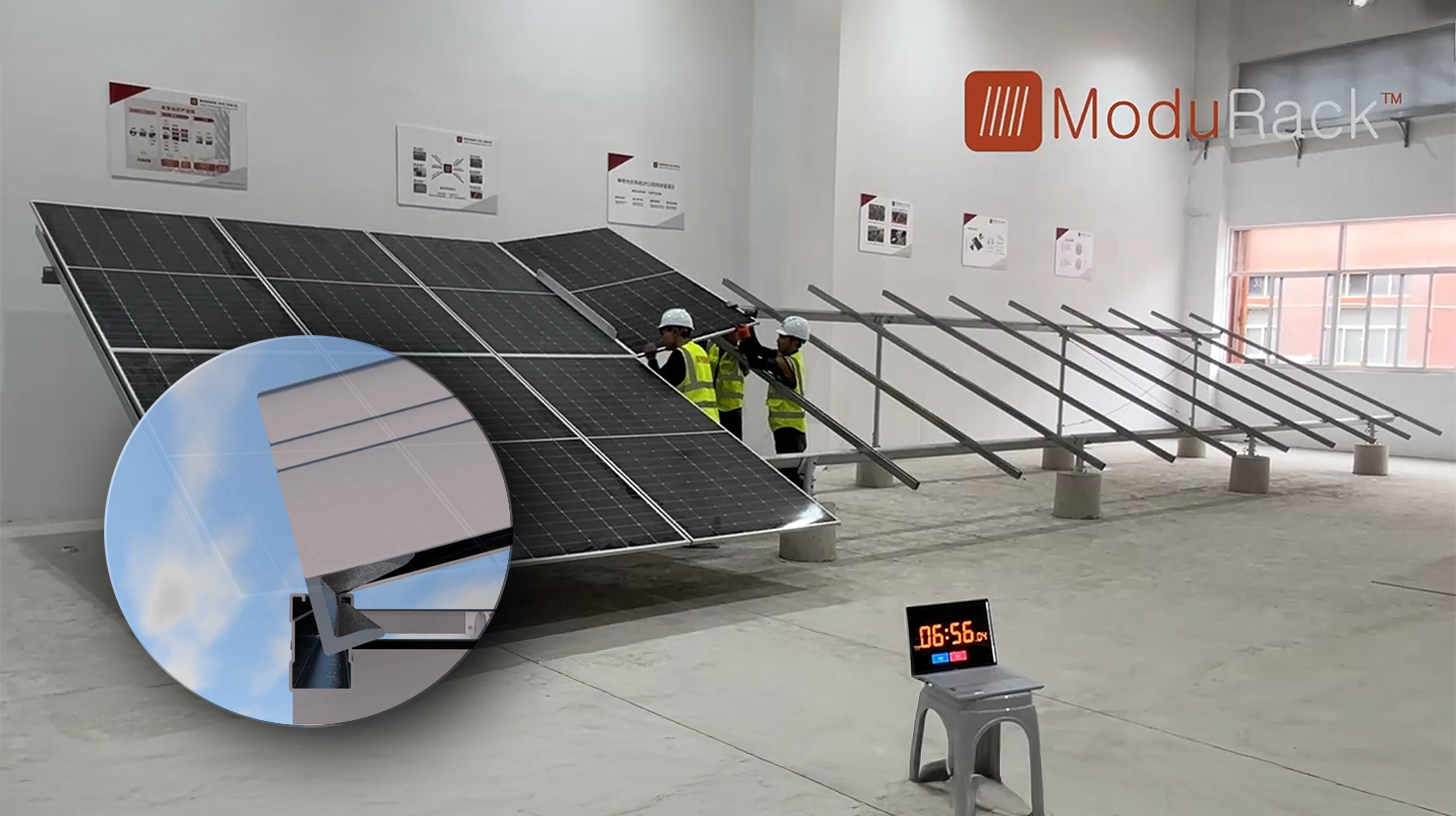
New: Patent from the USA – Install solar parks up to 30% cheaper and 40% faster and easier – with explanatory videos! - Image: Xpert.Digital
The core of this technological advancement is the deliberate departure from conventional clamp mounting, which has been the standard for decades. The new, more time- and cost-effective mounting system addresses this with a fundamentally different, more intelligent concept. Instead of clamping the modules at specific points, they are inserted into a continuous, specially shaped support rail and held securely in place. This design ensures that all forces – whether static loads from snow or dynamic loads from wind – are distributed evenly across the entire length of the module frame.
More information here:
Booming market, shrinking margins: How project developers can survive in 2026
Project developers under pressure: The business model is changing
Project developers and builders of ground-mounted solar power plants experienced a peculiar situation in 2025, which can be described as a "booming market with shrinking margins." The first structural pressure factor is the intensive tender design itself: Since ground-mounted tenders have been oversubscribed for more than eight consecutive rounds – with December 2025 being the record so far – competition among bidders has intensified considerably. The winning bids in 2025 ranged between 4.66 and 5.00 cents per kilowatt-hour; with increased financing costs, this left individual project developers with lower margins than before.
The second pressure factor is the increasing complexity of electricity marketing. Projects outside the scope of the German Renewable Energy Sources Act (EEG) must market their electricity via Power Purchase Agreements (PPAs) or on the spot market. The PPA market exhibited a peculiar weakness in 2025: The number of newly concluded PPAs fell from over 230 deals in the previous year to around 115 contracts – a decline of almost 50 percent. In response, the combination of a solar park and stationary battery storage – the so-called hybrid PPA model – is developing into the new leading model for direct marketing, as stored electricity can be fed into the grid specifically during periods of high prices. Looking ahead to 2026, market observers expect that successful project developers will increasingly have to rely on vertically integrated business models – from project development and construction to long-term operation with their own storage and direct industrial customers.
The internet as an invisible brake
Behind the positive installation figures for 2025 lay a growing infrastructure problem that significantly clouded further expansion prospects. By the end of September 2025, more than 2.5 billion kilowatt-hours of solar power had already been lost due to insufficient or overloaded grid capacity – compared to just under 1.4 billion kilowatt-hours in the entire previous year. This means that the so-called redispatch requirement for photovoltaic systems had almost doubled in less than a year.
Particularly alarming is the shift in the location of the bottleneck: Around a third of redispatch measures for renewable energies in 2025 were triggered by bottlenecks in the distribution grid – compared to around a quarter the previous year. The transmission system operator 50Hertz had stated that its grid connection capacities for project launches between 2025 and 2029 were exhausted; as of June 2025, it had received a further 235 applications for projects with a nominal capacity exceeding 110 GW. For the current year, 2026, the following applies: To comply with the applicable expansion trajectory, Germany would have to reach 128 GW of cumulative PV capacity by the end of the year – this would require 845 MW of net new capacity added per month, a figure that was still exceeded in January 2026 with 1.01 GW, but already missed in February 2026 with around 930 MW.
Land and ecology: Between conflict and synergy
With the increasing development of open-space solar installations in 2025, a debate that is becoming increasingly politically charged in rural areas has intensified. At the end of 2024, around 45,000 hectares in Germany were occupied by open-space solar installations – of which approximately 15,200 hectares were on arable land and 12,200 hectares on so-called conversion areas such as former military sites or landfills. This figure could rise to as much as 109,000 hectares by 2030 and to as much as 195,000 hectares by 2040.
These figures sound dramatic at first glance – but they are relative when compared to the entire road network. The crucial question is how the land is used. A nationwide field study commissioned by the German Association for New Energy Industries (bne), which examined 30 solar parks on former agricultural land, documented over 400 plant species and more than 200 animal species – including 30 grasshopper species, 36 butterfly species, and numerous bird species such as the skylark. However, the Competence Center for Nature Conservation and Energy Transition (KNE) raised methodological objections and emphasized that ecological added value does not arise automatically, but depends on location, construction method, module density, and maintenance. The Federal Agency for Nature Conservation recommends that the coverage of the area with modules should not exceed 40 percent.
Agri-PV and bifacial modules: The next technological stage of development
A key approach to mitigating land-use conflicts is agri-photovoltaics (agri-PV): solar installations designed so that the land beneath or adjacent to them remains usable for agriculture. In the December 2025 tender round, 30 contracts totaling 204 MW, or approximately nine percent of the total contract volume, were awarded to special solar installations – i.e., agri-PV systems. Bifacial modules, which convert sunlight on both sides and can deliver up to 30 percent more energy yield per unit area than conventional single-sided modules, are gaining particular importance. The Fraunhofer Institute for Solar Energy Systems (ISE) estimates the theoretical agri-PV potential in Germany by 2030 at up to 500 GW – more than double the total EEG expansion target.
However, the economic reality remains sobering: Agri-PV systems are significantly more expensive to invest in than conventional ground-mounted solar parks, planning is more complex, and a targeted feed-in tariff for agri-PV, as demanded by industry associations, is politically difficult to implement in the current budgetary debate. Nevertheless, the growing share of agri-PV in the tender awards signals a maturing process for this segment – 2026 will show whether this trend continues.
The structural balance sheet: winners, losers and open questions
Analysis of the German ground-mounted solar market suggests a finding that goes beyond mere growth figures for 2025: a profound restructuring of the German solar industry is underway. Among the winners are internationally established project developers and builders of large solar parks, institutional investors, as well as farmers and landowners in regions with high project activity. The feed-in tariff of approximately 4.66 to 5.00 cents per kilowatt-hour may seem low at first glance; however, with virtually free fuel, moderate operating costs, and a government-guaranteed purchase agreement for 20 years, it remains attractive for large, efficiently designed plants.
Among the losers are primarily German solar companies in the craft and small and medium-sized enterprise (SME) sectors, whose business models are geared towards installing private rooftop systems. The weak start to 2026 is exacerbating their situation. Industry experts anticipate a "normal" year for 2026 – which, after the record years of 2022 to 2024, structurally means that many growth-oriented companies will have to adjust their staffing levels.
The real risk is systemic: if new installations are increasingly dominated by a few large projects, the political vulnerability of the entire sector increases. Individual regulatory interventions—a change in tender volume, altered land use restrictions, a change in maximum output—can halt the entire investment pipeline in a short time. In contrast, diversification across millions of small rooftop installations offered a natural resilience that the market now lacks in some areas.
Between ambition and reality
The expansion target of 215 GW of installed PV capacity by 2030 requires an average annual addition of around 20 to 22 GW. With a cumulative total of approximately 118.5 GW at the end of January 2026 and new installations in the first quarter of 2026 falling far short of the necessary levels, a significant gap remains. KPMG analysts do anticipate a recovery, however: annual capacity additions are expected to rise to over 22 GW from 2026 onwards, driven by a period of sustained growth with an annual growth rate of around eight percent. This forecast appears optimistic in light of the current monthly figures.
For the ground-mounted solar segment, the short-term outlook remains positive: The full tender pipeline, the increased EEG volume of 9.9 GW per year, and the continued investor demand for predictable infrastructure returns will keep the market moving. In the medium and long term, however, success depends on key decisions that are currently anything but certain: rapid expansion of the distribution grid, stable EEG follow-up subsidies after 2027, politically acceptable land-use planning, and governance that systematically promotes, rather than hinders, technological innovations such as agri-PV and hybrid storage. The figures for 2025 impressively demonstrate what the German solar market can achieve when the framework conditions are right. The first months of 2026 just as impressively demonstrate what happens when they are not.
Your partner for business development in the fields of photovoltaics and construction
From industrial rooftop PV to solar parks and larger solar parking lots
☑️ Our business language is English or German
☑️ NEW: Correspondence in your native language!

Konrad Wolfenstein
I and my team are happy to be available to you as your personal advisor.
You can contact me by filling out the contact form here wolfenstein@xpert.digital:or simply call me at +49 7348 4088 965. My email address is
I'm looking forward to our joint project.
☑️ EPC services (Engineering, Procurement and Construction)
☑️ Turnkey project development: Development of solar energy projects from start to finish
☑️ Site analysis, system design, installation, commissioning, maintenance and support
☑️ Project financier or intermediary of capital providers
Innovative photovoltaic solution for cost reduction (up to 30%) and time savings (up to 40%)
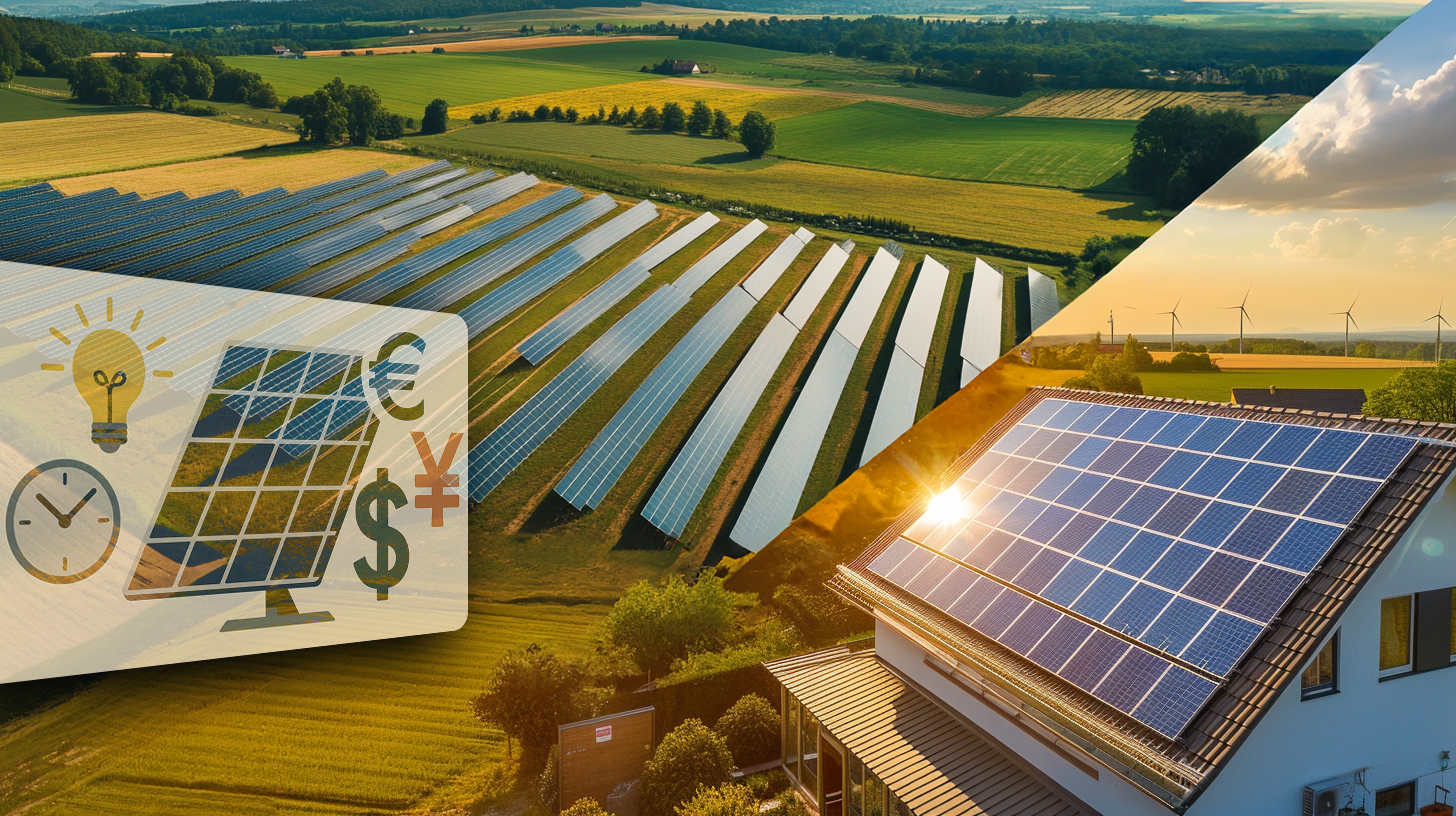
Innovative photovoltaic solution for cost reduction and time savings - Image: Xpert.Digital
More information here: