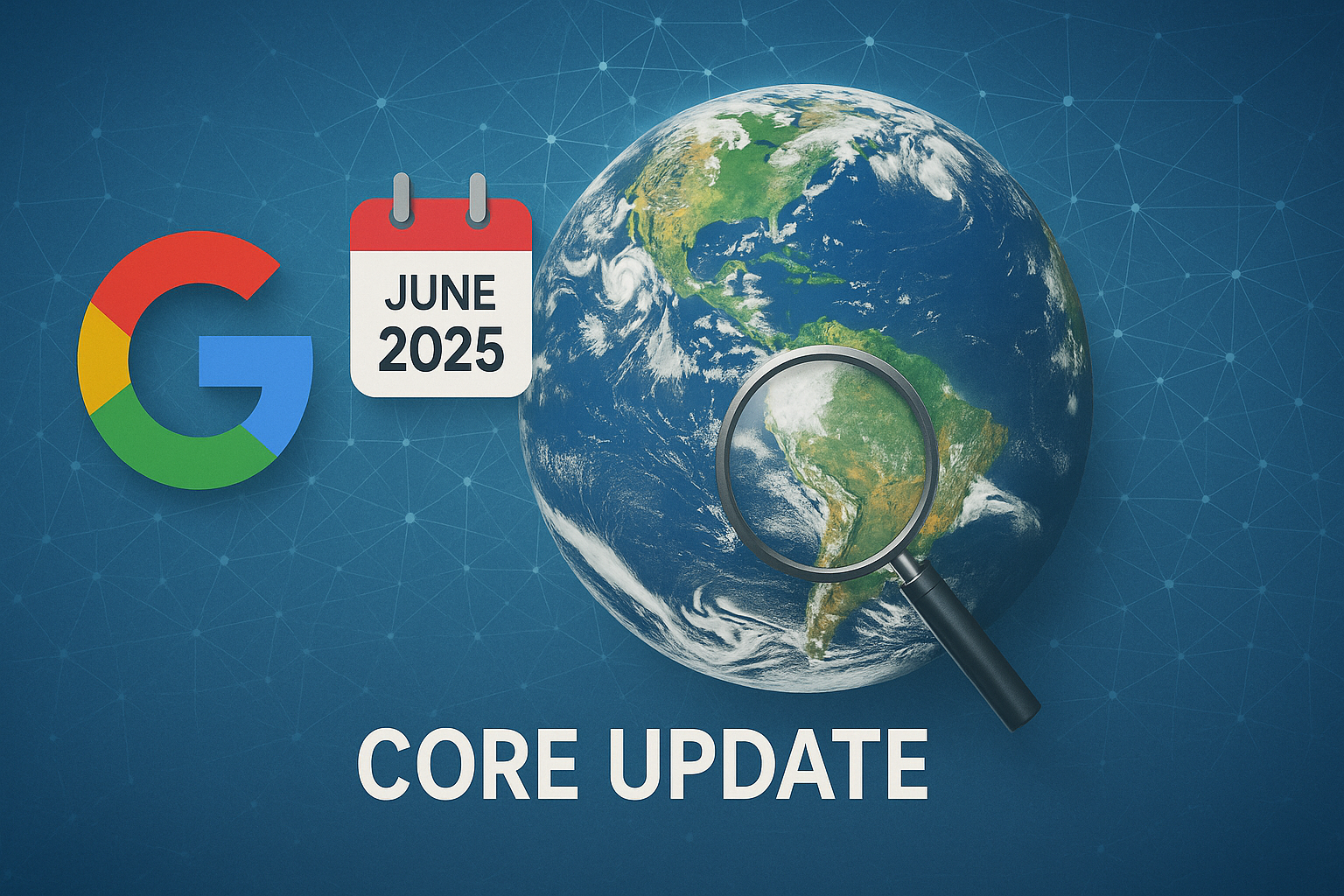
Google is rolling out the comprehensive June 2025 Core Update: What is a Core Update really? A reassessment of the entire internet – Image: Xpert.Digital
Google June 2025 Core Update launches: Three-week rollout phase announced
Longest Google Core Update rollout in years: What website operators need to know now – hope for small niche websites against brand dominance
The digital marketing and SEO community is holding its breath once again. After weeks of speculation and anticipation, it's now official: Google has begun rolling out the June 2025 Core Update. This announcement marks a potentially pivotal moment for countless website owners, content creators, and businesses worldwide. The impact of such updates can range from minor ranking adjustments to dramatic shifts in visibility that can determine the success or failure of digital business models.
Rumors have been swirling for weeks. After all, the last major core update was three months ago – a remarkably long time in the fast-paced world of search engine optimization, during which the digital landscape has continued to evolve. Many experts were wondering when Google would take the next big step to further refine its search results.
So, the time has come. Google has announced the rollout of the update via its official channels, describing it, as usual, as a regular, global update. The goal, according to the official statement, is to improve the search engine's ability to identify relevant, helpful, and high-quality content and prioritize it in search results. But behind this straightforward description lies immense complexity.
One of the first notable features revealed by the Google Search Status Dashboard is the estimated duration of the rollout. Google predicts that the update could take up to three weeks to be fully implemented on all servers and in all regions worldwide. This is significantly longer than most previous core updates, which typically lasted a maximum of two weeks. This extended rollout phase could indicate that this is a particularly comprehensive and multifaceted update, the impact of which Google intends to monitor carefully and deploy gradually.
As with every core update, Google remains silent regarding the specific ranking factors that have been adjusted. There's no checklist to follow, no magic formula to emerge victorious from this update. Instead, the company points to its long-standing, fundamental guidelines for creating high-quality content. It remains to be seen which types of content and websites will benefit this time around. One of the most intriguing questions in the industry is whether, with this update, Google has finally found a way to better position smaller, highly specialized, and authentic niche websites against the large, established brand domains. Many smaller publishers are hoping that genuine expertise and passion will once again be rewarded more effectively.
However, to understand the nature of this update and its potential consequences, we need to take a step back and understand what a core update actually is and what philosophy Google pursues with it.
Related to this:


What is a core update, really? A re-evaluation of the entire internet
Contrary to a widespread misconception, a core update is not a punishment or "penalty" for specific websites. A website that loses visibility after a core update hasn't necessarily done anything "wrong." Instead, a core update should be thought of as a fundamental realignment of Google's ranking systems.
Google itself uses a helpful analogy to explain this process: Imagine you create a list of the 100 best films of all time in 2021. This list is compiled to the best of your knowledge and belief. Four years later, in 2025, you decide to update the list. In the meantime, new, outstanding films have been released. Your own taste and understanding of what makes a great film may also have evolved. When you create the new list, some films that were in the top 10 in 2021 may drop out—not because they have suddenly become bad, but because newer or different films are now considered even better. A film that falls from number 8 to number 15 is still an excellent film, but its relative rating has changed.
This is precisely what happens during a core update. Google adjusts its algorithms to reassess the quality of websites. Pages that lose rankings are not penalized. Rather, Google may have found better pages for a specific search query, or the criteria for what constitutes "helpful" and "relevant" for the user may have been refined. This is a crucial difference, as it shifts the focus from reactive error correction ("What did I do wrong?") to proactive quality improvement ("How can my page become even more valuable compared to others?").
The philosophy behind the updates: A relentless focus on the user
Google doesn't offer specific advice for every single update because its fundamental mission never changes: to deliver the best possible result to the user's search query. All changes, however complex they may be under the hood, aim to better achieve this one goal. Therefore, the advice Google provides isn't short-term in nature, but rather forms a sustainable strategy for success on the web.
Instead of getting bogged down in the technical details of the June 2025 update, website operators should use this opportunity to fundamentally re-evaluate their own content strategy. The key is to ask the same questions that Google's algorithms (and ultimately, human quality reviewers) ask.
The EEAT framework: Google's mantra for quality and trust
For years, the concept of EAT (Expertise, Authoritativeness, Trustworthiness) has been the foundation of Google's quality ranking. Recently, it was expanded with another "E" for "Experience," becoming EEAT. This framework isn't a direct ranking factor, but rather an overarching concept that informs countless algorithmic signals. Those who understand and implement the principles of EEAT are ideally prepared for every core update.
Related to this:


Experience
This criterion asks whether the content creator has direct, lived experience with the topic. Is someone writing a product review because they've actually used the product for weeks, or are they simply summarizing technical data from other sites? Is a travel blogger reporting on a place they've personally visited, using their own photos and personal anecdotes? Or is it generic text that could have been written by AI? Experience creates authenticity and provides unique insights that go beyond the obvious. For the June 2025 Update, this could mean that content demonstrating personal, verifiable experience will have an advantage.
Expertise (professional competence)
This is about the proven expertise of the author or organization. While experience can be subjective, expertise is often objectively measurable. An article about tax deductions should ideally be written by a tax advisor or a financial journalist. A medical guide should be written by a doctor or a recognized medical institution. Google checks here whether the content comes from someone who truly knows what they're talking about. This is especially important for so-called "Your Money or Your Life" (YMYL) topics—that is, content that can affect people's happiness, health, financial stability, or safety.
Authoritativeness (Authority)
Authority refers to a website's or author's reputation as a leading source in a particular subject area. Is your website cited and linked to by other respected sites in your industry? Are you mentioned as an expert in trade publications? Have you received awards or are you a sought-after speaker at conferences? Authority is built up over years and signals to Google that your content is not only accurate but also widely recognized as a reference.
Trustworthiness
Trust is the foundation of everything. Is your website secure (HTTPS)? Is there a clear legal notice and easily accessible contact information? Who is responsible for the content? Are there clear author biographies that demonstrate expertise and experience? Are sources cited for claims? Is the content free of factual errors? A trustworthy website is transparent and makes it easy for users to understand who is behind the information and why they should believe it.
🎯🎯🎯 Benefit from Xpert.Digital's extensive, five-fold expertise in one comprehensive service package | BD, R&D, XR, PR & Digital Visibility Optimization


Benefit from Xpert.Digital's extensive, five-fold expertise in a comprehensive service package | R&D, XR, PR & Digital Visibility Optimization - Image: Xpert.Digital
Xpert.Digital possesses in-depth knowledge across various industries. This allows us to develop tailored strategies precisely aligned with the requirements and challenges of your specific market segment. By continuously analyzing market trends and monitoring industry developments, we can act proactively and offer innovative solutions. The combination of experience and expertise generates added value and provides our clients with a decisive competitive advantage.
More information here:
The June 2025 Core Update will almost certainly further refine Google's ability to evaluate these four pillars
Concrete recommendations for action: An honest self-diagnosis for your website
Instead of panicking, now is the perfect time for a thorough and honest assessment. Google itself provides a comprehensive questionnaire to help website owners see their content through the search engine's eyes. Let's turn these questions into actionable steps for analysis.
Related to this:


1. Questions about content and quality: Do you create real added value?
Originality and depth: Does your content offer original information, independent research, in-depth analysis, or interesting reports that aren't already available on dozens of other sites? Avoid simply repackaging existing content or offering superficial summaries. Go a step further than the competition.
completeness
Does your content address the topic comprehensively and holistically? Or does it only scratch the surface, forcing the user to search for further information? A page should fully deliver on the promise it makes in its title.
Unique insights
Do you offer a perspective or analysis that goes beyond the obvious? Do you bring your own experience (the first "E" of EEAT) to give the content a personal and unique touch?
Titles and headings
Is the page title or headline helpful and informative? Does it accurately describe the content, or is it exaggerated, shocking, or even misleading (clickbait)? A good headline sparks interest while also being honest.
User intent
As a user, would you bookmark this page, share it with friends, or recommend it? If you yourself would hesitate, why should someone else?
2. Questions about expertise, trust, and authority: Why should you be believed?
Transparency of sources
Does your content clearly state its sources? Are experts quoted, or are there links to further, trustworthy information?
Author information
Is there an author biography or an "About Us" page that shows who is behind the content? Can the user understand the authors' expertise and experience?
Website reputation
When you look at the reputation of your website or your authors, what do you find? Do you find predominantly positive mentions, reviews, and recommendations from independent sources?
Factual accuracy
Is the content free of easily verifiable factual errors? Especially with YMYL topics, a single error can permanently damage trust.
3. Questions regarding presentation and user-friendliness (User Experience): Is using your website a pleasure?
Readability and structure
Is the content well-written and easy to understand? Or is it full of spelling, style, or grammatical errors? A clean, professional presentation is a sign of diligence and quality.
Visual design
Is the content presented in an appealing way? Do you use paragraphs, headings, images, and other visual elements to break up the text and highlight the key messages? A huge wall of text puts most users off.
Advertising and distraction
Are there an excessive number of ads on the page that disrupt or overshadow the main content? A poor user experience due to intrusive advertising is a strong negative signal.
Mobile optimization
Does the website function flawlessly on mobile devices? Since most searches are now conducted on mobile devices, excellent mobile display is no longer optional, but a basic requirement. Loading times, font sizes, and the usability of buttons are crucial here.
4. The comparative perspective: Are you really better?
Competitive analysis
Research your most important keywords and analyze the pages currently ranking at the top. Does your content offer substantial added value in direct comparison? Be brutally honest with yourself.
Meeting user expectations
Does your content meet the expectations of a user searching for this topic? If someone searches for "best hiking boots for the Alps," they expect detailed tests, comparisons, and recommendations based on experience—not a generic list of products.
Related to this:

What to do if the rankings drop during the June 2025 update?
Should you notice negative changes in your rankings over the next three weeks, the first and most important rule is: Don't panic!
Wait
Don't make any hasty, drastic decisions. Search results are extremely volatile during the rollout. Rankings can fluctuate significantly from day to day. Wait until Google officially announces the completion of the update to get a clear picture of the situation.
Analyze, don't react
Once the update is complete, begin your analysis. Use the questionnaires mentioned above as a guide for an in-depth content audit. Identify the most affected pages and objectively compare them to the new top-performing pages in the search results.
Focus on long-term quality
There is no "quick fix" after a core update. The solution almost always lies in a sustainable improvement of content quality, user experience, and demonstrating EEAT (Emergency Eat-In). Plan these improvements as a long-term project.
have patience
Even if you significantly improve your content, the positive effects may not be fully apparent until the next core update. Google doesn't re-evaluate the web in real time; instead, it uses these major updates to integrate the revised quality scores into live search results.
Related to this:

A look at the future of search
The June 2025 Core Update, like its predecessors, is not an isolated event, but rather another logical step in the evolution of Google Search. The trend is unmistakable: away from algorithmic tricks and keyword stuffing, and towards authentic, user-centric content driven by genuine expertise.
For website operators, this sends a clear message: the most sustainable path to success in Google Search is to become the best and most helpful resource on a given topic. It's about building a brand and a reputation based on trust and genuine added value. Those who consistently align their strategy with meeting the needs of their human users will not only survive the June 2025 Core Update but will also be ideally positioned for all future developments in search. The work is demanding, but it's the only one that truly pays off in the long run.
XPaper AIS - R&D for Business Development, Marketing, PR and Content Hub
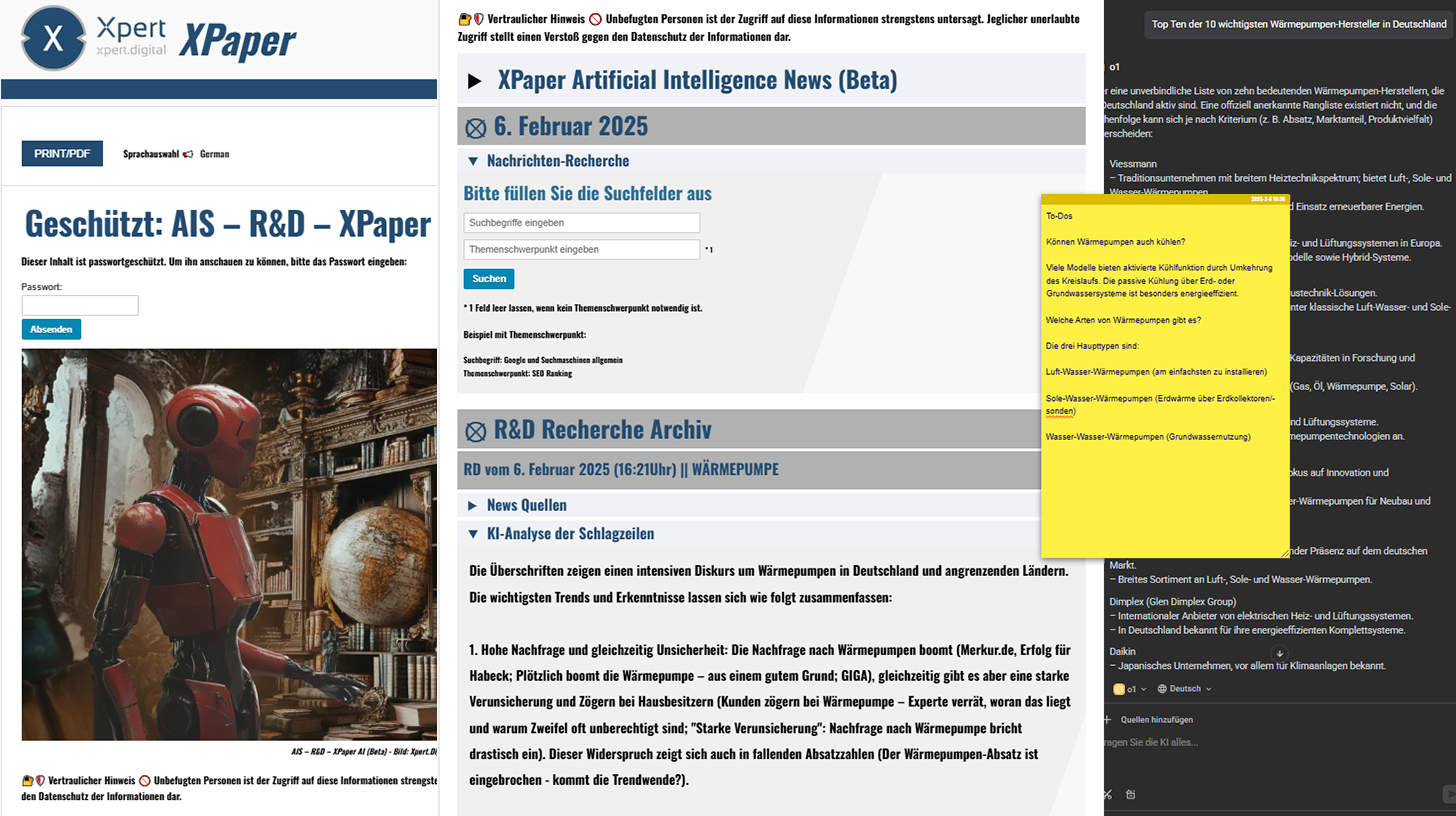
XPaper AIS application possibilities for business development, marketing, PR and our industry hub (content) - Image: Xpert.Digital
This article was handwritten. I used my self-developed R&D research tool, 'XPaper,' which I primarily use for global business development in a total of 23 languages. Stylistic and grammatical refinements were made to make the text clearer and more fluid. Topic selection, drafting, and the collection of sources and materials are all handled by an editorial team.
XPaper News is based on AIS (Artificial Intelligence Search) and differs fundamentally from SEO technology. However, both approaches share the goal of making relevant information accessible to users – AIS on the search technology side and SEO on the content side.
Every night, XPaper sifts through the latest news from around the world with continuous, round-the-clock updates. Instead of investing thousands of euros monthly in cumbersome and generic tools, I've created my own tool to stay up-to-date in my work in Business Development (BD). The XPaper system is similar to tools used in the financial sector, which collect and analyze tens of millions of data points every hour. At the same time, XPaper isn't just for business development; it's also used in marketing and PR – whether as a source of inspiration for the content factory or for article research. The tool allows you to evaluate and analyze all sources worldwide. No matter what language the data source speaks, it's no problem for the AI. Various AI models are available for this purpose. The AI analysis quickly and clearly generates summaries that show what's currently happening and where the latest trends lie – and XPaper offers this in 18 languages. XPaper allows for the analysis of independent subject areas – from general to specific niche topics, in which data can be compared and analyzed with past periods, among other things.
We are here for you - Consulting - Planning - Implementation - Project Management
☑️ SME support in strategy, consulting, planning and implementation
☑️ Creation or realignment of the AI strategy
☑️ Pioneer Business Development

Konrad Wolfenstein
I would be happy to serve as your personal advisor.
You can contact me by filling out the contact form below or simply call me on +49 7348 4088 965 .
I'm looking forward to our joint project.
Write to me


Xpert.Digital - Konrad Wolfenstein
Xpert.Digital is a hub for industry focusing on digitalization, mechanical engineering, logistics/intralogistics and photovoltaics.
With our 360° Business Development solution, we support renowned companies from new business to after-sales.
Market intelligence, smarketing, marketing automation, content development, PR, mail campaigns, personalized social media and lead nurturing are part of our digital tools.
You can find more information at: www.xpert.digital - www.xpert.solar - www.xpert.plus
Keep in touch