Website icon Xpert.Digital

The Strait of Hormuz as a global logistical bottleneck: A blockade would stop 20% of the world's oil – Is an escalation imminent?

The Strait of Hormuz as a global logistical bottleneck: A blockade would stop 20% of the world's oil – Is an escalation imminent?

The Strait of Hormuz as a global logistical bottleneck: A blockade would halt 20% of the world's oil – Is escalation imminent? – Creative image: Xpert.Digital

Ceasefire between Israel and Iran: Why oil prices could still rise

Strait of Hormuz as leverage: Iran threatens 20 percent of global oil trade

Geopolitical tensions between the US, Iran, and Israel have reached a new, threatening dimension following the twelve-day Iran-Iraq War (June 13-24, 2025). While a ceasefire brokered by US President Donald Trump between Israel and Iran has been officially in effect since June 24, 2025, the conflict continues to simmer beneath the surface and could escalate again at any time.

The threat to the strategic strait is intensifying

In direct response to the Israeli and American attacks on Iranian nuclear facilities, the Iranian parliament has already approved a measure to close the Strait of Hormuz. This threat is by no means empty – it would strike at one of the most critical points in the global economy. Approximately 21 million barrels of oil flow through this narrow strait, only 33 kilometers wide, between Iran and the United Arab Emirates every day, representing about 20 percent of global oil trade. In addition, roughly one-third of the world's traded liquefied natural gas (LNG) passes through this strategic route.

Recent developments are exacerbating the situation

Despite the ceasefire, the situation remains explosive. Iran is making a resumption of nuclear negotiations with the US contingent on Washington ruling out further attacks. At the same time, Tehran is indirectly threatening US President Trump with death and demanding clear commitments for the commencement of diplomatic talks. The US, however, insists on a complete halt to Iranian uranium enrichment – ​​a position Iran considers a “red line”.

Economic impacts already noticeable

The mere threat of a blockade has already led to noticeable price increases. The price of Brent crude oil has risen from $67 to over $77 per barrel since the beginning of June. Experts warn of more drastic developments: In the event of an actual blockade, the price of oil could quickly rise to $120 per barrel, and in the case of a longer-term blockade, even to $150. Such a development would severely impact the German and European economies – inflation could rise by about one percentage point and halt the current economic recovery.

Global interdependence as a risk factor

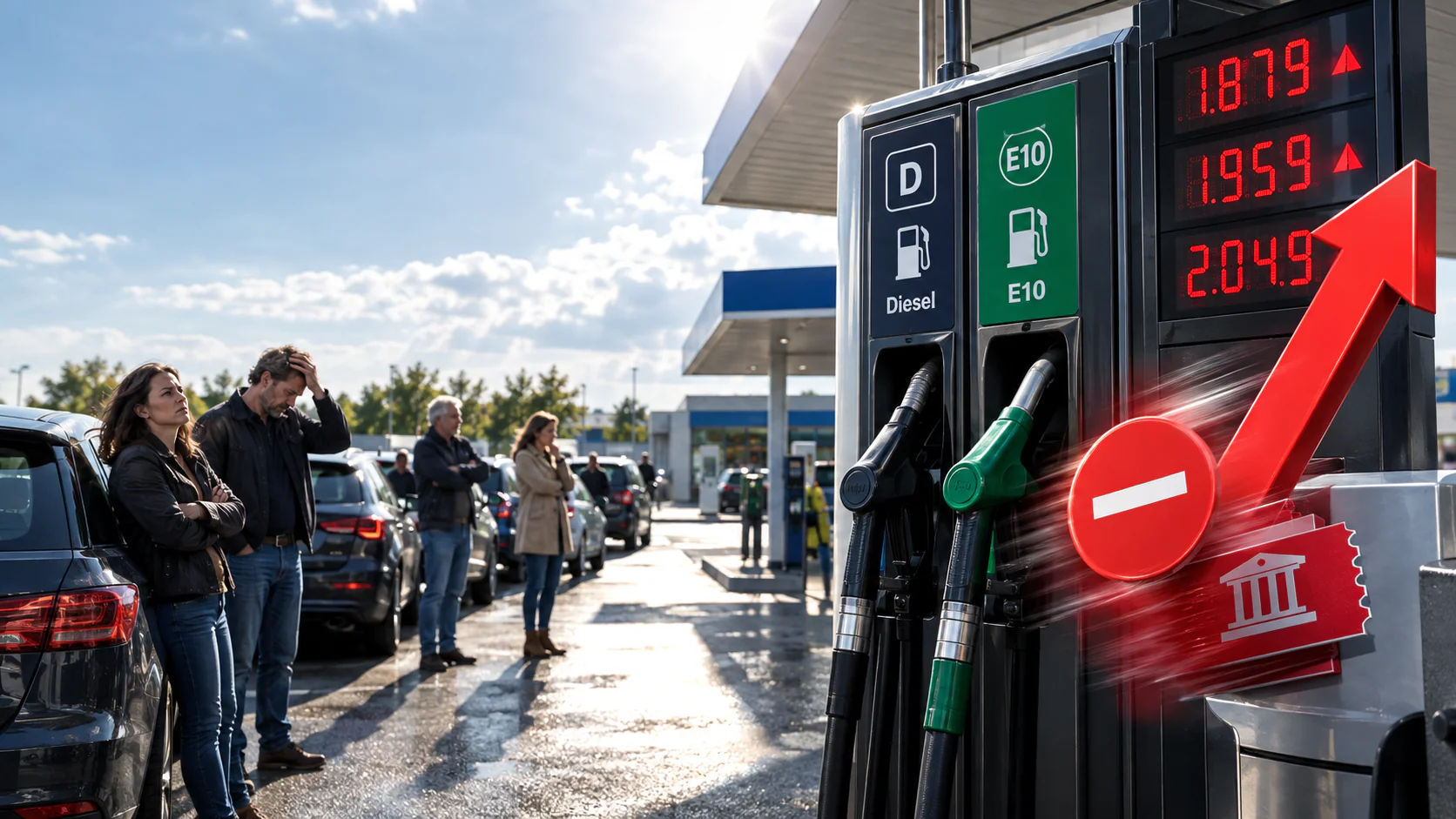
The situation highlights the dangerous dependence of the global economy on individual strategic hubs. Germany and Europe, in particular, which are heavily reliant on energy imports, would be disproportionately affected by the consequences of a blockade. The effects are already noticeable at German gas stations: Super E10 cost €1.749 per liter at the end of June, compared to €1.668 in mid-June. Heating oil prices rose from €87 per 100 liters in May to €94 in June.

Insurance risks and shipping under pressure

The shipping industry is already reacting nervously to these developments. Insurance premiums for passages through the Strait of Hormuz have risen dramatically, with war risk insurance for a single passage costing several hundred thousand dollars. Despite this, most shipping companies continue to navigate the strait, as there are virtually no alternatives and capitulating to threats would paralyze shipping worldwide.

The parallel to global vulnerability

The current crisis is reminiscent of the Ever Given's blockade of the Suez Canal in 2021, which held up 369 ships for six days and caused costs of $400 million per hour. However, a blockage of the Strait of Hormuz would have far more serious consequences, as it would affect not only the transport of goods but also the global energy supply. Unlike the Suez Canal, there are virtually no alternative routes for the Strait of Hormuz – only Saudi Arabia and the UAE have limited pipeline capacity, which could handle at most a quarter of the normally transported volume of oil.

The world is thus faced with a paradox: a de-escalation of tensions between the US and Iran would be crucial for both energy security and the global economy, yet the hardened fronts and mutual maximalist demands make a swift diplomatic solution unlikely. The Strait of Hormuz therefore remains not only a geographical strait, but also a symbol of the fragility of the globalized economy and the power of individual actors over critical infrastructure.


Xpert partner in warehouse planning and construction


From Hormuz to Suez: How maritime bottlenecks threaten our economy

The Strait of Hormuz: A strategic bottleneck of the global economy

The Strait of Hormuz is far more than just a geographical strait between the Persian Gulf and the Gulf of Oman – it is considered the most important maritime chokepoint of the global economy. This narrow waterway, only about 33 to 38 kilometers wide at its narrowest point, plays a central role in global energy supply and international trade. Its strategic importance is further enhanced by its location between Iran to the north and the United Arab Emirates and Oman to the south.

Its critical importance for global energy supply

Approximately one-fifth of the world's traded crude oil flows through the Strait of Hormuz daily – roughly 20 to 21 million barrels per day. This volume accounts for about 20 percent of global consumption of liquid petroleum products. In addition to crude oil, a significant portion of the world's liquefied natural gas (LNG) also transits this strategic route, with Qatar, the region's largest LNG exporter, shipping almost all of its liquefied natural gas through this strait.

The Gulf States are almost entirely dependent on this passage. Saudi Arabia, Iran, the United Arab Emirates, Kuwait, Iraq, Bahrain, and Qatar—all major oil producers and OPEC members—rely on this single sea route to transport their energy resources to world markets. International shipping has only two channels, each three kilometers wide, available, stretching for approximately 35 kilometers.

Global economic impact of a potential blockade

A blockade of the Strait of Hormuz would have devastating consequences for the global economy. Even the mere threat of a closure regularly leads to turbulence in commodity markets and causes oil prices to rise. The International Energy Agency warns emphatically: The sheer volume of oil exported through the Strait of Hormuz and the limited options for circumventing it mean that any disruption of oil flows would have a massive impact on global oil markets.

The economic consequences of a blockade would not be evenly distributed. Continental Europe and China, in particular, would be among the biggest losers, as both are heavily dependent on energy imports and lack domestic buffer capacity. Approximately 84 percent of the crude oil and 83 percent of the natural gas transported through the strait are destined for Asian markets, with China, India, Japan, and South Korea together accounting for 69 percent of all crude oil and condensate shipments.

The effects would quickly manifest in rising energy prices, increased inflation, and strained supply chains. Transportation costs would skyrocket, impacting all industries – from automobile production to the manufacture of consumer goods. Even Bavaria, which is hardly directly dependent on oil or gas imports from the Gulf region, would be affected by rising global market prices.

Alternative routes and their limitations

Alternatives to the Strait of Hormuz are limited and far from sufficient to handle the enormous transport volumes. Only Saudi Arabia and the United Arab Emirates have operational pipelines that can bypass the strait. Saudi Arabia operates the East-West pipeline with a capacity of five million barrels per day, which can be temporarily expanded to seven million barrels. The UAE has a similar pipeline from its onshore oil fields to the port of Fujairah on the Gulf of Oman.

According to the International Energy Agency, pipelines could transport approximately a quarter of the oil volume that normally leaves the Gulf by tanker. However, this would be far from sufficient to compensate for a complete blockade. Iran itself has no such alternative and would be deprived of its own exports if the blockade were imposed.

The geopolitical dimension and historical threats

Iran has repeatedly threatened to block the Strait of Hormuz, particularly in response to international sanctions or military tensions. These threats are not new – Tehran threatened a blockade as early as 2006/2007, 2011, and several times in recent years, but has never followed through.

Recent tensions following attacks on Iranian nuclear facilities have revived these threats. The Iranian parliament has already approved a potential blockade, though the final decision rests with the Supreme National Security Council, which is under the control of Supreme Leader Ali Khamenei.

Militarily, a blockade would certainly be feasible for Iran. The country could mine the strait, destroy oil facilities and pipelines, or attack tankers with drones and missiles. However, such an action would also significantly harm Iran itself, as it exports approximately 1.5 million barrels of oil daily through the strait and depends on these revenues.

Modern challenges: Navigation malfunctions and insurance risks

Besides the direct threat of physical blockade, ships in the region are increasingly confronted with electronic interference. GPS jamming and spoofing attacks regularly disrupt navigation systems, with the Automatic Identification System (AIS) being particularly affected. This interference causes ships to temporarily disappear from radar and leads to inaccurate position determination, which poses significant risks in these heavily trafficked waters.

Insurance costs for transiting the Strait of Hormuz have risen dramatically due to increased risks. During periods of heightened tension, premiums for a single transit exceeded $500,000. Following the recent attacks, premiums for ships bound for Israeli ports have increased fivefold – from 0.2 percent to one percent of the vessel's value.

The comparison to the Ever Given crisis in the Suez Canal

The importance of strategic shipping routes for the global economy was dramatically highlighted in 2021 by the blockade of the Suez Canal by the container ship Ever Given. The 400-meter-long and 60-meter-wide vessel, with a capacity of over 20,000 standard containers (TEU), blocked one of the most important trade routes between Europe and Asia from March 23 to 29, 2021.

The six-day blockade resulted in a massive backlog of up to 369 ships and caused estimated costs of $400 million per hour. The daily value of goods delayed by the blockade was approximately $9.6 billion – divided into $5.1 billion for westbound and $4.5 billion for eastbound traffic.

The Suez Canal accounts for approximately 12 percent of total global trade and handles roughly 30 percent of the world's container volume annually. The blockage highlighted the vulnerability of global supply chains, which rely on just-in-time deliveries. Many companies were unable to maintain production because essential goods were stuck on the Ever Given itself or on other stranded vessels.

Impact on modern supply chains

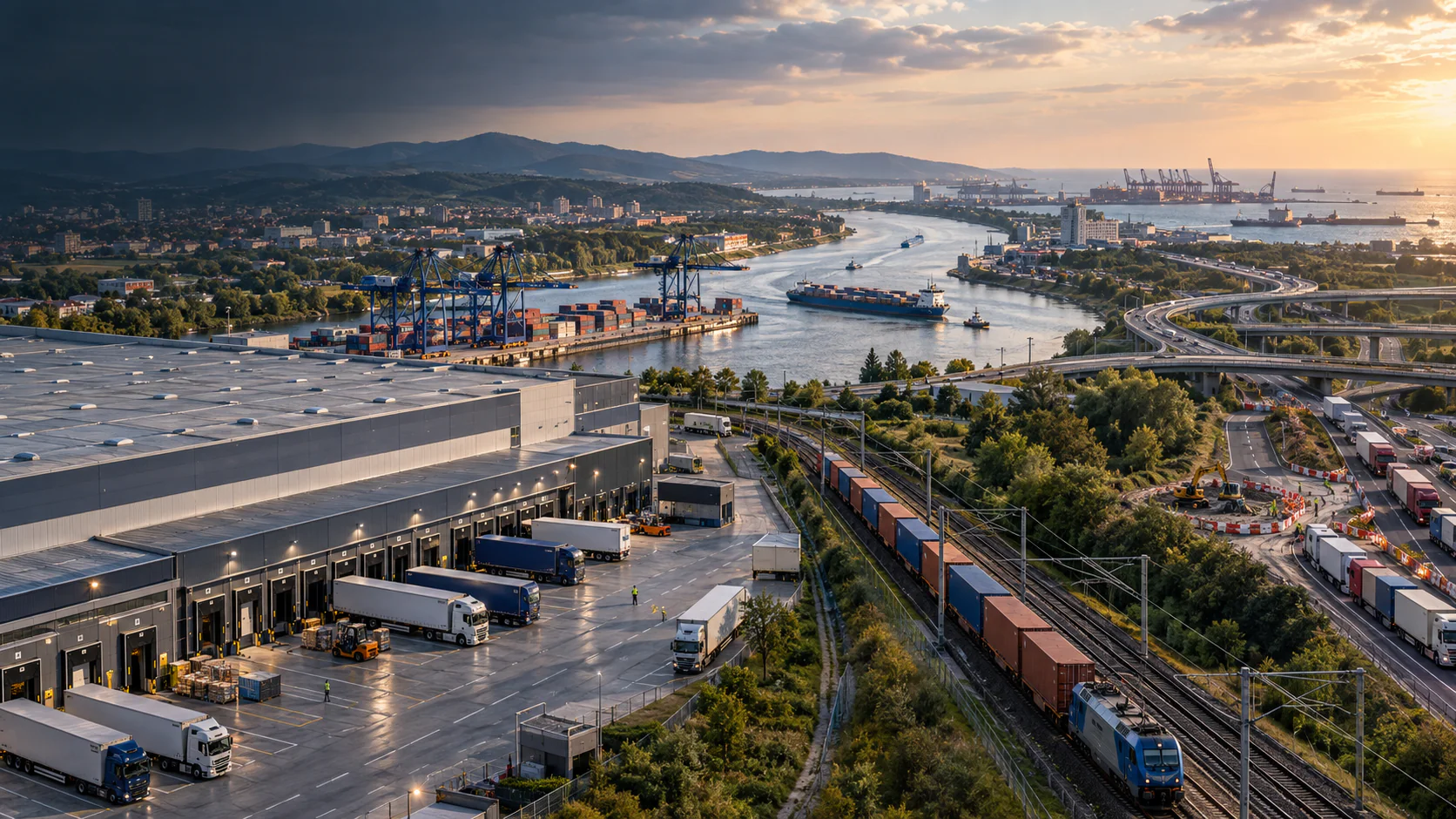
The modern global economy is based on highly complex, globally interconnected supply chains made possible by maritime links. More than 80 percent of international trade is conducted via sea routes. This dependence makes the global economy particularly vulnerable to disruptions at strategic hubs such as the Strait of Hormuz or the Suez Canal.

Container shipping has revolutionized and exponentially accelerated international trade since the 1960s. Modern container ships can transport up to 24,000 TEU, becoming floating cities that form the backbone of globalization. The standardization of containers enables seamless transfers between different modes of transport – from ships to trains and trucks.

Insurance and safety aspects

Maritime security in strategic waters such as the Strait of Hormuz requires significant international efforts. The European Union has strengthened its Coordinated Maritime Presence in the northwest Indian Ocean, which covers the sea area from the Strait of Hormuz to the Tropic of Capricorn.

War risks are excluded from standard marine insurance policies and require specialized war insurance. For high-risk areas such as the Strait of Hormuz, shipowners must inform their insurers before transiting and can obtain additional coverage for a premium. The Joint War Committee in London regularly reviews the classification of hazard zones and adjusts risk premiums accordingly.

Economic interdependence and strategic considerations

The Strait of Hormuz illustrates the complex interdependence of the modern global economy. A blockade would not only affect the Gulf's oil exporters but would also have global repercussions for energy prices, inflation, and economic growth. Even Iran, which has repeatedly threatened a blockade, would be affected, as it too relies on the strait for its exports.

The strategic importance of the strait extends beyond mere energy transport. It symbolizes the vulnerability of the globalized economy and the power that individual actors can wield over critical infrastructure. The international community is therefore compelled to deploy both diplomatic and military resources to ensure the continued operation of this vital trade route.

The experiences with the Ever Given in the Suez Canal and the ongoing tensions surrounding the Strait of Hormuz clearly demonstrate that the modern global economy must develop new strategies for minimizing risk. This could include diversifying transport routes, building strategic reserves, and strengthening regional supply chains to reduce dependence on individual critical passages.


Xpert.Plus warehouse optimization - high-bay warehouses such as pallet warehouses consulting and planning


B2B procurement: supply chains, trade, marketplaces & AI-supported sourcing

B2B procurement: Supply chains, trade, marketplaces & AI-powered sourcing with ACCIO.com - Image: Xpert.Digital

More about it here:


Your global marketing and business development partner

☑️ Our business language is English or German

☑️ NEW: Correspondence in your national language!


Konrad Wolfenstein

I would be happy to serve you and my team as a personal advisor.

You can contact me by filling out the contact form or simply call me on +49 89 89 674 804 (Munich) . My email address is: wolfenstein xpert.digital

I'm looking forward to our joint project.


☑️ SME support in strategy, consulting, planning and implementation

☑️ Creation or realignment of the digital strategy and digitalization

☑️ Expansion and optimization of international sales processes

☑️ Global & Digital B2B trading platforms

☑️ Pioneer Business Development / Marketing / PR / Trade Fairs

Exit the mobile version